Lodge
Lodge Cast Iron Skillet Reviews: Real Owner Reports + Our Verdict
By Sam Hollis · Updated September 2026
Independent editorial review. We never accept payment for coverage, though we may earn a commission if you purchase through our links.
Verdict
Owner sentiment on the Lodge is strongly positive and unusually well evidenced, because cast iron owners keep their pans long enough to have something worth saying. The dominant theme is that it simply does the job: owners at ten and twelve years report pans in great shape that they have never found a task beyond, including the eggs that supposedly demand a smooth surface. The second theme is the premium comparison, where the verdict from people who own both is consistently that the expensive pans look better and cook the same. The minority complaint is specific rather than vague, and it is worth respecting: warping, surface roughness and sticking, most often reported by owners who ran the pan hot and dry early on. Nobody argues the Lodge is refined. The argument owners keep winning is that refinement was never the point.
Read full take ↓Similar alternatives
Quick Take
Almost unarguable. Sand-cast in a single piece with no coating to fail, no rivets to loosen and no handle to come adrift, so the failure modes that end most cookware do not apply. Owners who spent up to eight times more on premium pans consistently report the same cooking results, with the extra money buying finish rather than performance.
The default answer in cast iron, and why it stays that way
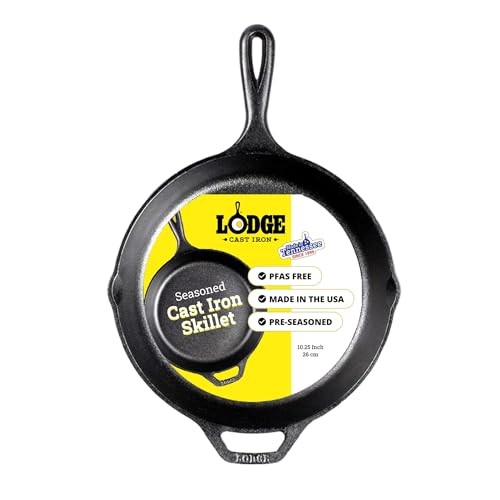
Cast iron is the rare category where the cheapest serious option is also the one most owners keep for decades. The Lodge 10.25-inch skillet costs about what a decent takeaway does, arrives pre-seasoned, and sits in more kitchens than every boutique foundry combined.
It's also the pan the internet fights about most, because a wave of premium makers now sell machined, glass-smooth cast iron at six to eight times the price. That comparison is the useful lens for this review. The question isn't whether the Lodge is good on its own, it's whether the expensive alternatives buy you anything.
What follows is our editorial verdict, scored across build, design, and value, grounded in what owners report after years and in several cases decades of daily cooking.
What you get for the price of a takeaway
The Lodge 10.25 inch is a single piece of sand-cast iron with a factory seasoning already baked on, so it's usable the night it arrives instead of after a weekend of preparation. No non-stick coating to scratch off, no bonded layers to separate, no plastic anywhere. The list of things that can go permanently wrong is remarkably short.
The 10.25 inch is the size to buy first if you're buying one. It holds a couple of steaks or a family batch of cornbread, sits on most hobs without overhanging badly, and stays liftable one-handed when full, which the 12 inch is not for everyone.
What you give up is refinement. This is a rough-surfaced, heavy, short-handled pan priced on the assumption that you won't be precious with it. Everything owners love and everything they complain about follows from that single decision.
The rough surface, and whether it matters
Modern Lodge pans leave the foundry with a visibly pebbled cooking surface. Premium makers machine theirs glass-smooth, and that difference is the entire basis of the price gap. It's also the Lodge's most-discussed flaw.
In practice the texture matters most in the first few months. Seasoning is a polymerised oil layer that builds in the low spots and gradually evens the surface out, so a pan that sticks in month one often behaves very differently in year two. That's why long-term owners and new owners describe the same pan so differently. One owner with a decade on theirs said there is nothing they would hesitate to cook in it that would cook better in an inherited vintage pan, and that eggs cook fine, provided you learn the pan and use the right heat with the right amount of fat.
The counter-experience is real too. Owners who fought sticking early are the ones most likely to have gone looking for a smoother pan. The surprise is how often that upgrade disappoints. A thirty-year Lodge owner who moved to a machined premium skillet reported it was much harder to season and that the smooth surface was not keeping food from sticking.
Warping, and when it happens
Warping is the one structural complaint that recurs, and it deserves a straight answer rather than a defence. Cast iron warps from thermal shock, which in kitchen terms means heating an empty pan hard and fast, or hitting a hot pan with cold liquid. Modern castings are thinner than the vintage pans people compare them to, which makes them somewhat less forgiving.
Owner experience splits on it. One owner reports multiple Lodge skillets with warping, rust and persistent sticking, and rates the premium pans genuinely superior. Others with several pans across a family report no warping at all, and put that down to bringing the pan up to temperature gradually rather than blasting it from cold.
The practical guidance that emerges is unglamorous: preheat gradually over medium rather than high, do not shock a hot pan with cold water, and go easy on long simmers of very acidic food while your seasoning is young. And if a cheap pan does warp, one owner's framing is the sane one, that a warp on a pan at this price is not worth agonising over.
Seasoning, and what people get wrong
The factory seasoning is a starting point, not a finished surface. It's enough to cook on immediately, and it improves with use, which is the part that confuses people coming from non-stick, where performance only ever degrades.
The mechanism is simple. Thin layers of oil polymerise under heat into a hard, slick coating bonded to the iron. Two things undermine it: too much oil, which leaves a sticky varnish rather than a hard layer, and cooking too cool, so the food sits in fat and welds itself on. Heat management does more for stick resistance than surface finish does.
Maintenance is genuinely light. Cook, wash, dry properly, and put a whisper of oil on while it is warm. The one thing that will beat you is leaving it wet, which is how the rust complaints start. A pan that has been neglected is not ruined either, and that's the quiet advantage of having no coating to destroy: it can be scrubbed back and reseasoned as many times as needed.
Lodge versus the premium pans
The strongest evidence in this whole review comes from owners who bought both. One who owns a premium 12 inch skillet and Dutch oven said flatly that they are in no way worth it over Lodge, that the equivalent Lodge pieces performed exactly the same, and that they bought the expensive versions because they look nice and can be engraved, at around eight times the cost.
That is the honest shape of the trade. Premium pans buy you a machined surface, better handle design, often lighter weight, and an object that is genuinely nicer to own. What the owner reports do not support is that they cook meaningfully better once a Lodge has been seasoned in.
There is even a cautionary direction to the upgrade. The thirty-year Lodge owner who switched found the premium pan harder to season, still sticky, heavier, and non-returnable once used. If you want a beautiful pan, buy one and enjoy it. Just don't expect the food to notice.
Who should buy it, and who shouldn't
Buy the Lodge 10.25 inch if you want cast iron cooking without a research project, if you'd rather spend the difference on ingredients, or if you're not yet sure how much cast iron you will use. It is the lowest-risk entry into the category by a wide margin, and a large share of the people who buy one never feel the need to upgrade.
Look elsewhere if a machined cooking surface genuinely matters to you, if you want a lighter pan with a better handle, or if you simply want a beautiful object on the hob. Those are legitimate reasons to spend more, and the premium pans deliver on them.
What the evidence does not support is buying an expensive skillet in the belief that your cooking will improve. The owners best placed to judge, the ones who have used both, keep saying otherwise.
Our Ratings
Overall score
Sand-cast iron in a single piece, with no coating to fail, no rivets to loosen, and no handle to come adrift, so the failure modes that end most cookware don't apply here. Owners routinely report a decade or more of daily use with the pan still in great shape. Not refined, but about as close to indestructible as cookware gets.
The Lodge's weakest dimension, and the reason a premium market exists at all. The cooking surface keeps the rough, pebbled texture of the sand casting rather than being machined smooth, which is genuinely divisive, and the pan is heavy and utilitarian rather than something you display.
Almost unarguable. Owners who spent up to eight times more on premium pans consistently report the Lodge cooks the same, with the extra money buying finish and pride of ownership rather than performance. Effectively consumable-free and endlessly re-seasonable, its cost per year of use trends toward negligible.
Lodge Cast Iron Skillet Reviews: Real Owner Reports + Our Verdict on Amazon.
What People Are Saying
Owner sentiment on the Lodge is strongly positive and unusually well evidenced, because cast iron owners keep their pans long enough to have something worth saying. The dominant theme is that it simply does the job: owners at ten and twelve years report pans in great shape that they have never found a task beyond, including the eggs that supposedly demand a smooth surface. The second theme is the premium comparison, where the verdict from people who own both is consistently that the expensive pans look better and cook the same. The minority complaint is specific rather than vague, and it is worth respecting: warping, surface roughness and sticking, most often reported by owners who ran the pan hot and dry early on. Nobody argues the Lodge is refined. The argument owners keep winning is that refinement was never the point.
Reddit and Houzz commentary are weighted 3× against blog and editorial sources in our sentiment score. Brand PR has a well-documented influence on editorial coverage — direct owner reports from message boards tend to be more candid.
What Reddit Is Saying
“I have a 12” skillet and a Dutch oven from Smithey. They are in no way “worth it” over Lodge. I had the exact same things from Lodge and they performed exactly the same. I bought the Smithey pieces because they look really nice. I also liked that I could get them engraved. And the glass-smooth inside is a cool bit of machining. If you like the aesthetics of Smithey and you can afford it, go for it. But there’s no meaningful improvement over Lodge and the cost is like 8x more.”View thread →
“I haven’t done this, but I have had a lodge now for maybe 10 years or so. I also have vintage Wagner cast iron pans from my great grandmother. There is nothing I would hesitate to cook in the lodge that I think would cook better in the vintage pans. Eggs cook fine in the lodge. Learn how to use the pan… care for it and use it and the pan gets better with age. Use the proper heat with the proper amount of fat. I love my vintage cast iron pans… but the lodge does the same job.”View thread →
“Throwing another ring into the “Lodge is a perfectly good pan” hat. I have two and use them regularly for the last 12 or so years. They’re in great shape and I’ve never found something they couldn’t do that a more expensive pan could.”View thread →
“In my opinion, no. I owned a set of Lodge cast iron skillets for about 30 years, but recently gave them to my son. I decided to invest in Smithey as replacements as I like the idea of the smooth surface. I've had it for a month now and I've been using it quite a bit. I'm finding it much harder to season, and the smooth surface is not keeping food from sticking to it. They are also much heavier. I wish I could return them, but you can't return them once you've used them.”View thread →
“I just saw Cook's Country do their 12" CI testing and they deemed the Smithey top dog but Lodge was their budget pick at about $40 . The Lodge was just as good for 1/4 the price....and has been their go to for years. I love my Lodge ...and my Griswold....”View thread →
“True on the warped pans, but it’s a modern lodge, I wouldn’t deal with a warp on a 25-35$ pan. But that’s just my opinion.”View thread →
“Superior quality than Lodge and it’s not close. I have a plethora of Lodge skillets with myriad issues; warping, rust, incessant sticking, etc…. I’ve had my Smithey no.’s 10 & 12 for 5+ yrs with ZERO problems. When it comes to cast iron, you truly get what you pay for.”View thread →
Frequently asked questions
Is the Lodge Cast Iron Skillet worth it?
Almost unarguable. Sand-cast in a single piece with no coating to fail, no rivets to loosen and no handle to come adrift, so the failure modes that end most cookware do not apply. Owners who spent up to eight times more on premium pans consistently report the same cooking results, with the extra money buying finish rather than performance.
How is the Lodge Cast Iron Skillet built?
Sand-cast iron in a single piece, with no coating to fail, no rivets to loosen, and no handle to come adrift, so the failure modes that end most cookware don't apply here. Owners routinely report a decade or more of daily use with the pan still in great shape. Not refined, but about as close to indestructible as cookware gets.
What styles does the Lodge Cast Iron Skillet work with?
The Lodge's weakest dimension, and the reason a premium market exists at all. The cooking surface keeps the rough, pebbled texture of the sand casting rather than being machined smooth, which is genuinely divisive, and the pan is heavy and utilitarian rather than something you display.
What do real owners say about the Lodge Cast Iron Skillet?
Owner sentiment on the Lodge is strongly positive and unusually well evidenced, because cast iron owners keep their pans long enough to have something worth saying. The dominant theme is that it simply does the job: owners at ten and twelve years report pans in great shape that they have never found a task beyond, including the eggs that supposedly demand a smooth surface. The second theme is the premium comparison, where the verdict from people who own both is consistently that the expensive pans look better and cook the same.
Options Worth Checking Out
Lodge Seasoned Cast Iron Skillet, 12 Inch
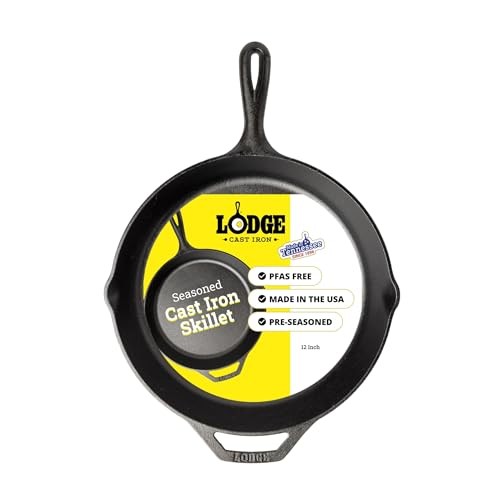
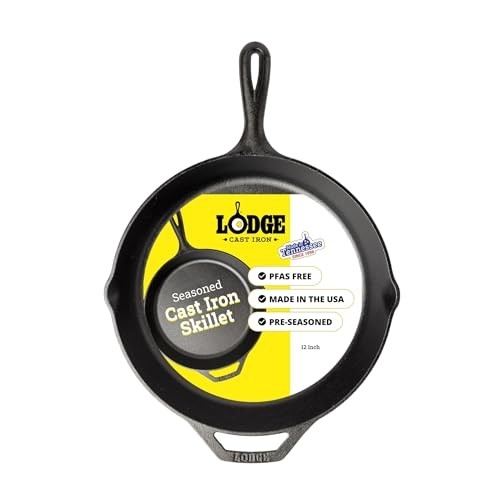
The size up, for anyone cooking for more than two or searing whole steaks. Same iron and same seasoning as the 10.25, with meaningfully more surface area. Heavy enough when loaded that most people end up using two hands.
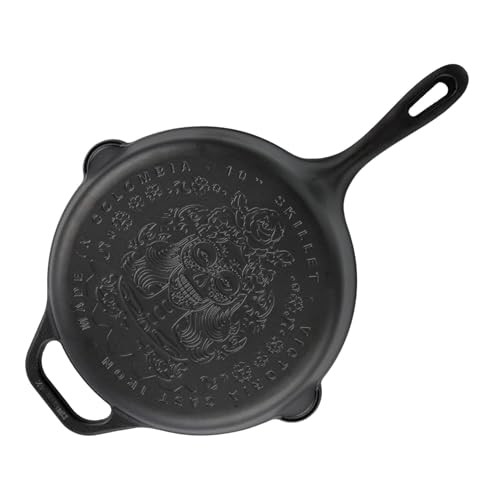
Victoria 10 Inch Cast Iron Skillet
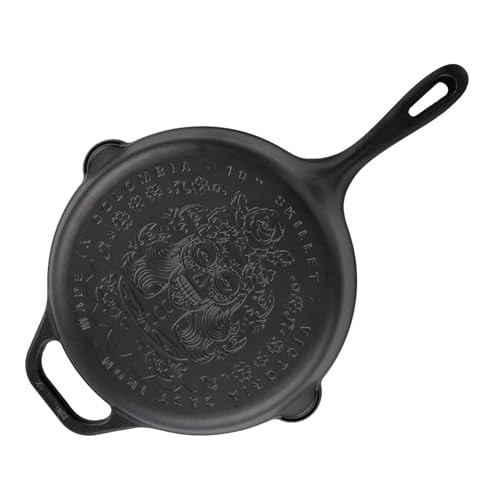
The closest same-price competitor, with a longer handle and a smoother factory finish than the Lodge. Worth a look if the pebbled Lodge surface is the specific thing putting you off, since it costs no more to find out.
You Might Also Need
Accessories worth grabbing alongside your purchase
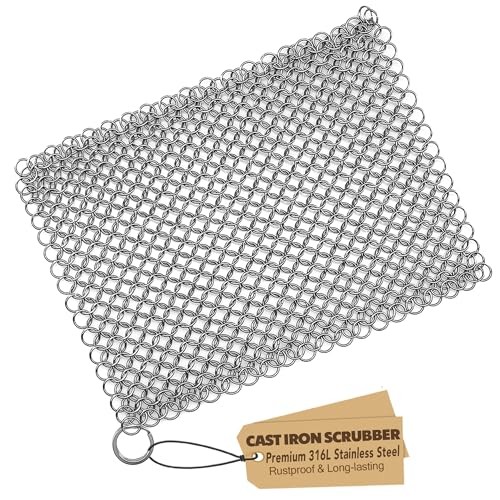
Cast Iron Chainmail Scrubber
The tool that makes cast iron maintenance trivial. It lifts stuck food without stripping seasoning the way steel wool does, which directly addresses the sticking and rust complaints that show up in owner reports.
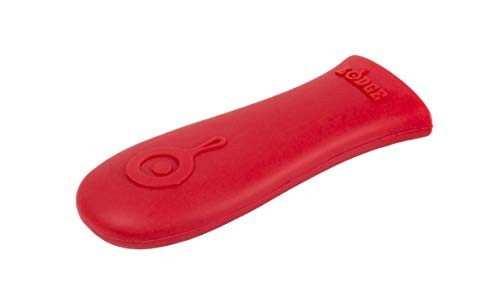
Lodge Silicone Hot Handle Holder
The Lodge handle is short and gets hot fast, which is the design complaint owners raise most after surface texture. This slips over it and stays put, and costs about a third of what a tea towel burn costs in dignity.