Fellow
Fellow Stagg EKG Review — Pour-Over Kettle Worth the Spend?
By Erin Mitchell · Updated August 2026
Independent editorial review. We never accept payment for coverage, though we may earn a commission if you purchase through our links.
Verdict
A focused review of the Fellow Stagg EKG electric pour-over kettle: the counterbalanced gooseneck spout, plus-or-minus 1 degree temperature control.
Similar alternatives
The Fellow Stagg EKG is a $165 electric pour-over kettle, and it's been the default answer in coffee subreddits since roughly 2020. Every buyer shows up with the same question, so this review answers that one first: at $165, is it worth the money, or is the $50 Cosori close enough?
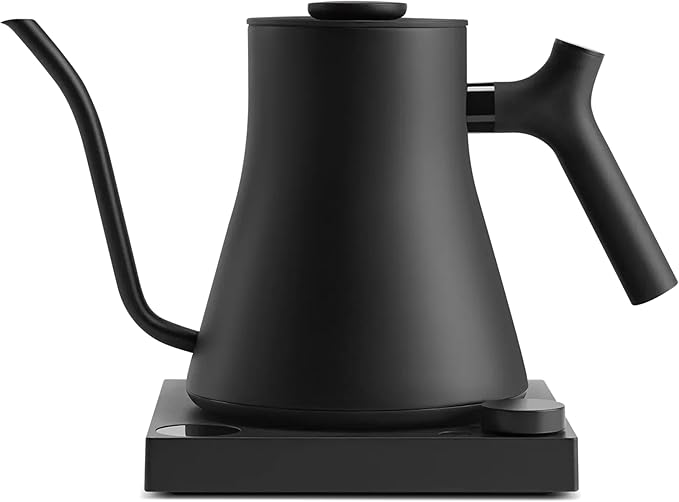
The Stagg EKG is Fellow's variable-temperature electric version of the original stovetop Stagg pour-over kettle, and the design idea carried over intact. A counterbalanced handle puts the weight over the base rather than the spout. The gooseneck is long and narrow for slow, controlled pours. The flat-top lid reads like a piece of industrial design instead of a kitchen appliance. What the EKG adds is an LCD base with variable temperature in 1 degree increments from 135F to 212F, a 60 minute hold mode that parks the water at target, and a built-in brew stopwatch.
Everything else in this review is about whether those upgrades, plus the Fellow brand polish, justify the premium over the alternatives.
How the Stagg EKG works
The mechanism is the whole reason this kettle costs $165 instead of $50. It sits on an LCD base with a single rotary dial and a small screen. Set a target temperature in 1 degree increments anywhere from 135F to 212F, the kettle heats to it, and a PID controller holds within roughly 1 degree for up to 60 minutes if hold mode is on. A second button starts a brew stopwatch on the base, which is the feature pour-over people use day to day.
Two design choices carry the rest. First, the gooseneck spout is counterbalanced, so the handle keeps the center of mass over the base rather than the spout and the kettle doesn't nose-dive when you tip it. That's what makes a slow, controlled pour repeatable. Second, the spout itself is narrow and long enough to pour at very low flow rates without breaking the stream. Combined with the temperature lock, that's what turns a pour-over recipe into something that tastes the same every morning instead of drifting cup to cup.
What the Stagg EKG does well
Pour control is the one thing this kettle does better than any sub-$100 alternative. The counterbalanced handle, the narrow spout, and the slight curve at the spout tip let you pour at a genuine trickle (roughly 1 to 2 grams per second) without the stream breaking into drips. On a pour-over that's the difference between a flat extraction and a balanced one. Reviewers keep describing the pour as intuitive rather than fussy, and they're right.
Temperature consistency is the second real win. The PID controller holds within roughly 1 degree of target across the 60 minute hold window, which is the claim Fellow makes on the product page. For pour-over coffee, 1 degree rarely matters. For green tea, first-flush black tea, and oolong, the 175F to 195F window is where flavor lives, and a kettle that drifts 5 degrees off target makes noticeably worse tea. If you brew more tea than coffee, that alone is the buy.
The brew stopwatch quietly justifies the price for daily users. One button on the base, counts up while you pour, and answers 'how long has this bloom been going' in a glance. Most pour-over recipes live or die on a 2:30 to 3:30 total brew time, and having the timer on the kettle instead of on a phone is the small ergonomic upgrade that gets used every single morning.
Build quality is a real step up from the $50 tier. Matte powder-coated stainless steel body, polymer-wrapped metal handle with some heft, and a lid that sits cleanly without the rattle most electric kettles develop. Fellow gives it a 2 year warranty, and owner reports on forums consistently show 3 to 5 years of daily use without failure. It looks like a $165 object on the counter, which is part of the value for buyers who care about kitchen aesthetics.
What owners complain about
Base footprint, most often. The Stagg EKG base is wide enough to crowd a small countertop, and owners with under-cabinet outlets sometimes find the cord too short to place it comfortably. Fellow hasn't changed the base design materially since the first generation. If counter space is tight, the Brewista Smart Pour 2 has a smaller one.
Capacity is the next complaint. The Stagg EKG holds 0.9 liters to the max line, enough for two pour-overs or one teapot, undersized for a household brewing three or more cups in a session. Fellow doesn't sell a larger version of this exact kettle. The Cosori at 0.8L is similar, the Brewista at 1.0L is marginally larger, and anyone who needs 1.5L+ should be shopping outside the gooseneck category entirely.
Hold-mode timing surprises people. Hold runs 60 minutes by default and then shuts off, so walk away for an hour and a half and the water is cool when you come back. Fellow did that on purpose (it cites energy use and safety), but owners who expected indefinite hold treat it as a missing feature. The workaround is leaving the kettle on the base and re-triggering, which takes 30 seconds to reheat 0.9L from warm.
Price drift is smaller but real. The Stagg EKG launched at $149 and now sits at $165, with regular markdowns to $135 to $145 on holiday weekends. Owners who paid full price a month before a sale notice. If you're not in a hurry, wait for a Fellow direct sale or a Prime Day before ordering.
Who the Stagg EKG is for
Daily pour-over drinkers, clearly. The pour control and temperature consistency together give you a noticeably better cup than a $50 Cosori, and that improvement gets paid out across roughly 700 cups a year. At that volume the premium works out to about 16 cents per cup, which is the right way to run the math if you brew every day.
Tea drinkers brewing anything below 200F are the second clear yes. Green tea at 175F, white tea at 185F, oolong at 195F: that's where 1 degree of precision changes the cup. A $50 kettle with five-degree temperature presets makes materially worse tea in this window, and any owner who has cross-tested will tell you so.
Third, anyone who already tried a $50 gooseneck and found the pour sloppy. The Cosori is fine, but its spout tip is slightly wider than the Stagg's and the handle balance sits forward of the base. Owners moving from a Cosori to a Stagg almost universally notice it on the first pour.
Who should skip the Stagg EKG
Drip coffee drinkers with no plans to pour over. The gooseneck, the temperature lock, the brew timer, all of it is wasted on an auto-drip workflow. A basic $30 variable-temperature kettle does the job and the $135 you save buys a lot of beans.
Anyone happy with their current Cosori. The Stagg is better, but incrementally, not night-and-day. If the current cup tastes good and the current kettle pours fine, this is a nice-object purchase rather than a functional fix. Buy a better grinder instead.
Households brewing 1.5L+ of coffee or tea per session. The 0.9L capacity is a hard ceiling, and refilling mid-brew undoes the temperature consistency that justifies the kettle in the first place. A larger variable-temperature kettle without the gooseneck is the better answer for volume.
The alternatives, ranked honestly
Fellow Stagg EKG Pro Studio Edition, roughly $200, is the design step up from the standard EKG. Same temperature engine, same gooseneck, but a bigger LCD that shows brew ratios and recipes, a real brew stopwatch with split times, and the matte studio colorways Fellow keeps adding. If you're already buying the EKG and the extra $40 is in budget, the Pro is the better object on the counter. Functionally it pours and heats identically; what you're paying for is the interface.
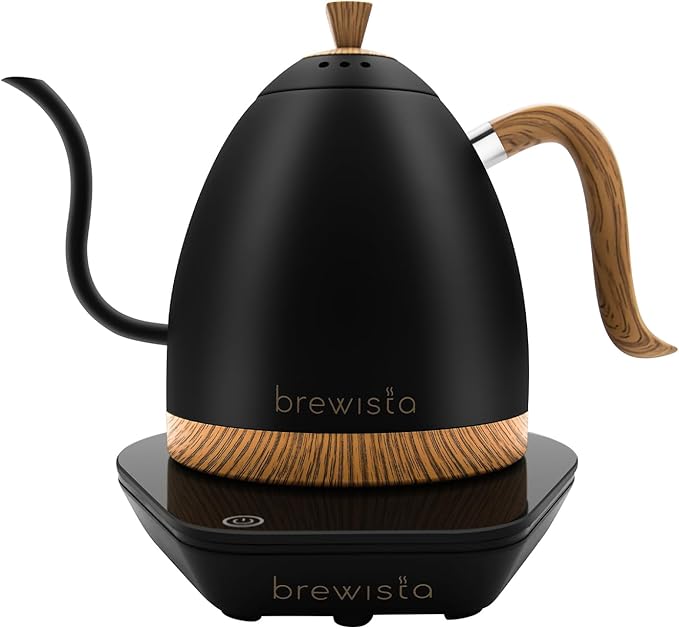
Brewista Smart Pour 2, roughly $160, is the closest real cross-shop. Same variable temperature in 1 degree increments, same hold mode, and a slightly longer gooseneck that some pour-over reviewers prefer for slower flow. Its base is smaller than the Stagg's, which matters on a tight counter. It loses on industrial design, since the Brewista looks like a barista tool and the Stagg looks like a kitchen object, and for a lot of buyers that's the whole reason the Stagg wins.
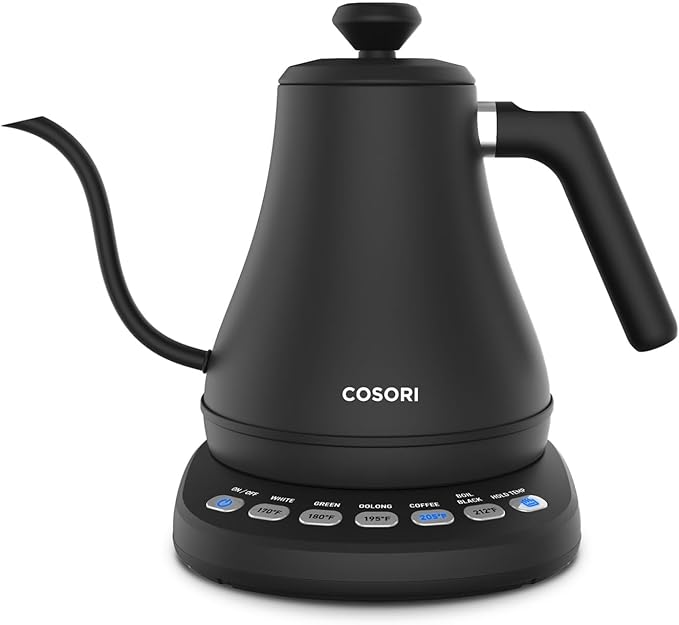
Cosori Electric Gooseneck, roughly $50, is the honest budget answer and the kettle this entire review is benchmarked against. It has 5-degree temperature presets (not 1 degree), a basic hold mode, and a gooseneck spout that pours fine but not as cleanly as the Stagg. If your answer to 'is the Stagg worth $165' is no, your answer to 'what should I buy instead' is almost always this. Roughly 80 percent of the Stagg's performance at 30 percent of the price.
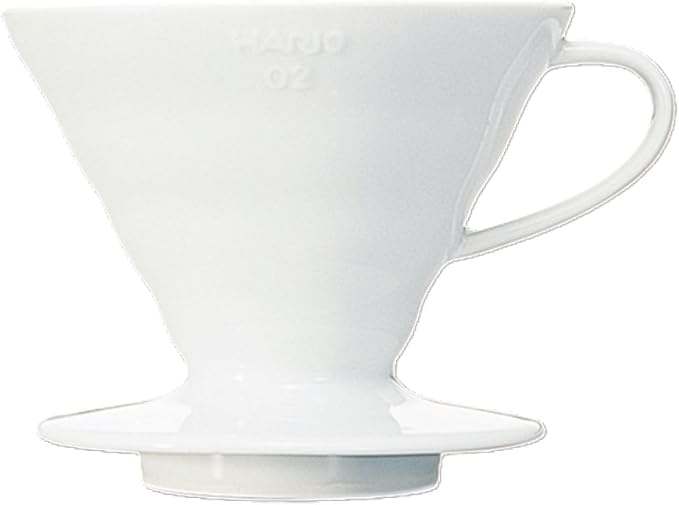
Hario V60 ceramic dripper, roughly $25, is the one companion purchase that pairs with any kettle on this list. The V60 is the dripper this whole variable-temperature kettle category exists to serve, and pouring slowly into a flat-bottom brewer throws away most of the Stagg's advantage. If you're buying the Stagg and don't already own a V60, buy both at the same time.
The verdict on $165
The Stagg EKG is worth $165 if you drink pour-over coffee or tea daily, if you want the cup to taste the same on Tuesday as it did on Sunday, or if the kettle lives on your counter and you want it to look intentional. In those cases the pour control, the temperature precision, and the build quality are real, and they pay out across years of daily use.
Skip it if you drink drip coffee, if your Cosori already makes you happy, or if you brew at volumes the 0.9L body can't handle. The honest recommendation in that case is the Brewista Smart Pour 2 when temperature precision is the goal but the Stagg base is too big, the Cosori when budget is the constraint, or the Stagg EKG Pro Studio Edition if you're already past $165 and want the better interface.
Our Ratings
Overall score
A counterbalanced gooseneck keeps mass over the base, so slow pours feel easy. Temperature is set in 1F increments from 135F to 212F, accurate to about plus-or-minus 1F in owner tests, plus a 60-minute hold and a base stopwatch. The long-term question is electronics: most failures are the PID base at the 2-to-4-year mark, and Fellow's 2-year warranty covers that window. The 0.9L capacity is small, right for single-cup pour-over.
One of the few small appliances that earns a spot on an open counter: flat-top lid, matte powder-coated body, machined gooseneck, and a base that reads like industrial design, not a kitchen gadget. The color options (matte black, polished steel, matte white, Studio Edition) all read intentional instead of appliance-beige. If counter aesthetics are part of why you'd spend $165 on a kettle, this is the category benchmark.
The math at $165 is harsh. The $50 Cosori gooseneck hits five temperature presets covering every common coffee and tea protocol, holds temp, and pours through a narrow gooseneck, giving roughly 80 percent of the experience at 30 percent of the price. The Stagg earns its premium in two cases: 1-degree control across multiple brew methods, or counter aesthetics worth the design tax. Otherwise, the honest verdict is buy the Cosori.
Fellow Stagg EKG on Amazon.
Frequently asked questions
Is the Fellow Stagg EKG worth it?
The math at $165 is harsh. The $50 Cosori gooseneck hits five temperature presets covering every common coffee and tea protocol, holds temp, and pours through a narrow gooseneck, giving roughly 80 percent of the experience at 30 percent of the price. The Stagg earns its premium in two cases: 1-degree control across multiple brew methods, or counter aesthetics worth the design tax.
How is the Fellow Stagg EKG built?
A counterbalanced gooseneck keeps mass over the base, so slow pours feel easy. Temperature is set in 1F increments from 135F to 212F, accurate to about plus-or-minus 1F in owner tests, plus a 60-minute hold and a base stopwatch. The long-term question is electronics: most failures are the PID base at the 2-to-4-year mark, and Fellow's 2-year warranty covers that window.
What styles does the Fellow Stagg EKG work with?
One of the few small appliances that earns a spot on an open counter: flat-top lid, matte powder-coated body, machined gooseneck, and a base that reads like industrial design, not a kitchen gadget. The color options (matte black, polished steel, matte white, Studio Edition) all read intentional instead of appliance-beige. If counter aesthetics are part of why you'd spend $165 on a kettle, this is the category benchmark.
Options Worth Checking Out
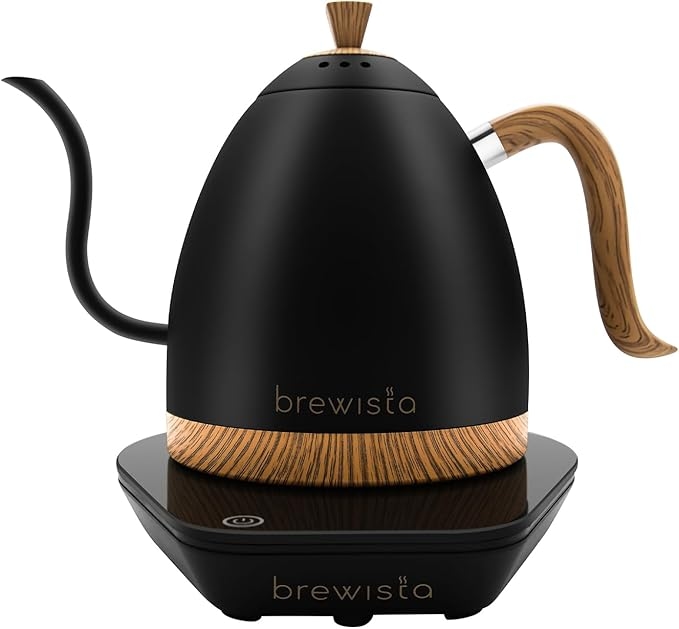
Brewista Smart Pour 2 Variable Temperature Kettle
The closest cross-shop to the Stagg EKG at a similar price. 1 degree temperature increments, hold mode, slightly longer gooseneck some reviewers prefer for slower flow, smaller base footprint. Loses on industrial design; wins on tight counters.
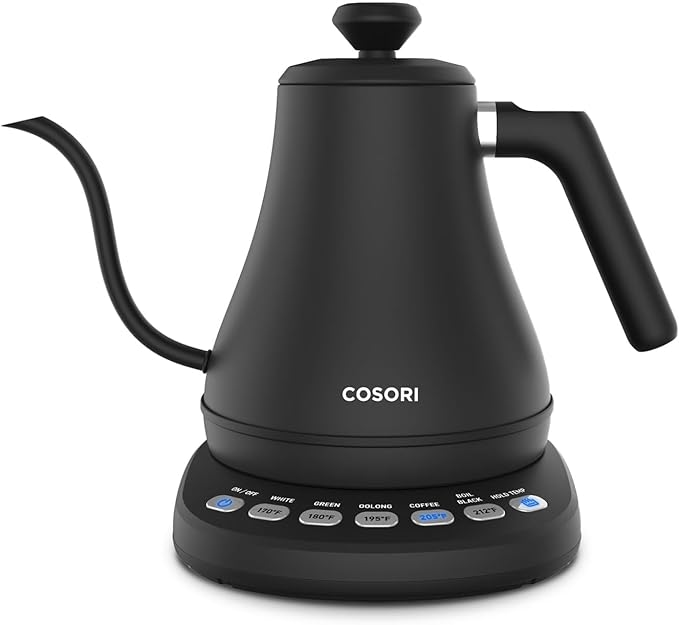
Cosori Electric Gooseneck Kettle 0.8L
The honest budget answer and the kettle this review is benchmarked against. 5-degree presets, basic hold, gooseneck pours fine. Roughly 80 percent of the Stagg's performance at 30 percent of the price. If the Stagg math says no, buy this.
You Might Also Need
Accessories worth grabbing alongside your purchase