Best Placemats for a Wood Farmhouse Table (Protective + Aesthetic)
By Daniel Reyes · Updated July 2026
Independent editorial guide. We never accept payment for coverage, though we may earn a commission if you purchase through our links.
Quick Take
On a wood farmhouse table the right placemat does two jobs at once: it shields the finish from heat marks, water rings, and dragged-plate scratches, and it adds the layered texture the style leans on. Cork-backed and woven-vinyl mats win on protection. Jute and rattan win on look but absorb spills. Cotton washes the easiest and gives almost no thermal buffer under a hot casserole. Most buyers want a set of 6 so family plus a few guests are covered without mixing brands.
If you serve hot dishes straight from the oven, pair any fabric mat with a trivet, or skip fabric and go vinyl. If the table is mostly decorative or used for cold meals, jute and woven cotton hold up fine and look better. Reversible mats stretch one set into two looks for seasons and guests.
Jump to the cork-backed, woven-vinyl, jute, and washable cotton sets below that protect a wood farmhouse top without fighting the aesthetic. See picks ↓
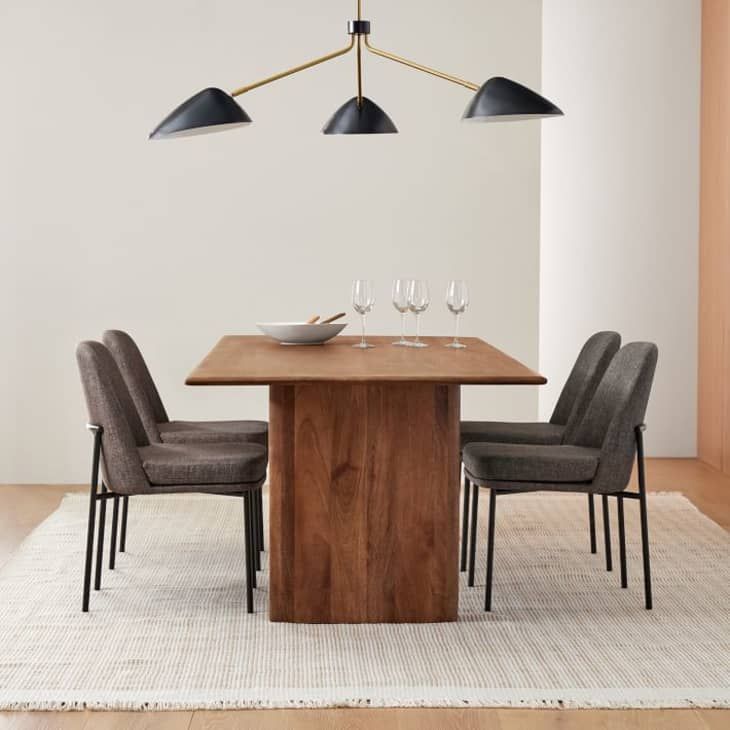
Wood farmhouse tables are made to be lived on, but the finish is still the finish. A hot serving dish leaves a milky heat mark in polyurethane. A sweating water glass etches a ring into wax or oil. A dragged stoneware plate scratches softwood like pine in one meal. Placemats are the cheapest insurance you can buy for a $600-2,000 table, and they double as the easiest way to restyle the room by season. The picks below are organized by material, because material decides whether the mat protects the top at all. Inside each material, sets of 6 won out: that covers a standard farmhouse seating plan and leaves room for two guests without making you mix patterns.
What a placemat is protecting on a wood table
Glass tops and stone tops don't care about heat or water. Wood does. A farmhouse table is usually solid pine, oak, or a reclaimed-look hardwood finished in polyurethane, hardwax oil, or tung oil, and each finish fails its own way: polyurethane clouds under heat, oil finishes spot under water, and wax buffs off where plates and bowls scrub. A placemat absorbs the daily insults so the finish lasts years instead of months.
Scratch repair on a finished wood top is no small job. Owners who ask the home-improvement subs about scratches get the same two answers every time: a tinted touch-up marker for cosmetic damage, or a full sand-and-refinish for anything deeper. Prevention is the cheaper plan.
Cork-backed mats, the best heat protection
Cork is the workhorse for heat. Its cellular structure traps air, which is what makes it insulating, and the soft surface grips the table so nothing slides when you cut. A cork-backed mat under a 350F casserole dish keeps the finish below the temperature where polyurethane clouds. The catch is looks. Most cork-backed mats are printed on top with a hard laminate, which reads more kitchen-counter than farmhouse-dinner. Use them as the daily set and swap in something prettier for guests.
Woven vinyl, the easiest cleanup
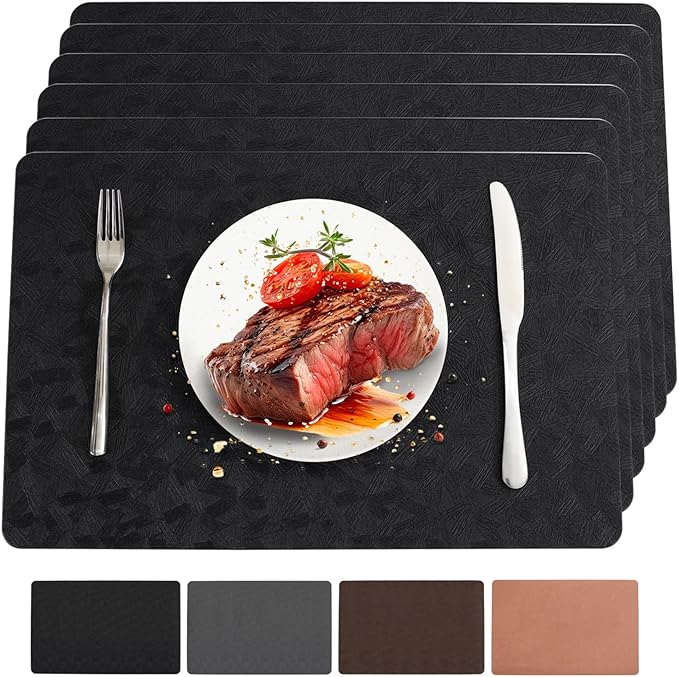
Faux-leather and woven-vinyl mats are the only genuinely waterproof category. Wipe with a damp cloth and the spill is gone. They handle heat up to roughly the temperature of a plated meal, though a just-out-of-the-oven dish still wants a trivet, they don't slide, and they come in muted PU colors that read modern farmhouse rather than rustic farmhouse. Best pick for kids, daily use, and anyone who hates laundry.
Jute and rattan, the best-looking and the worst with spills
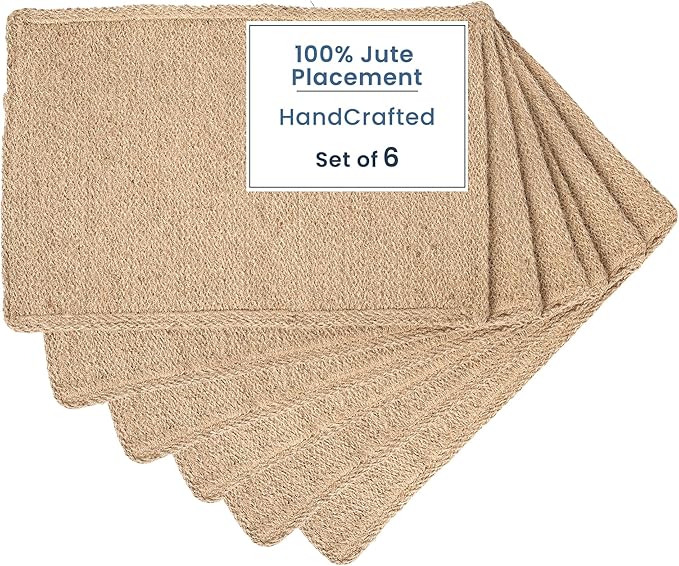
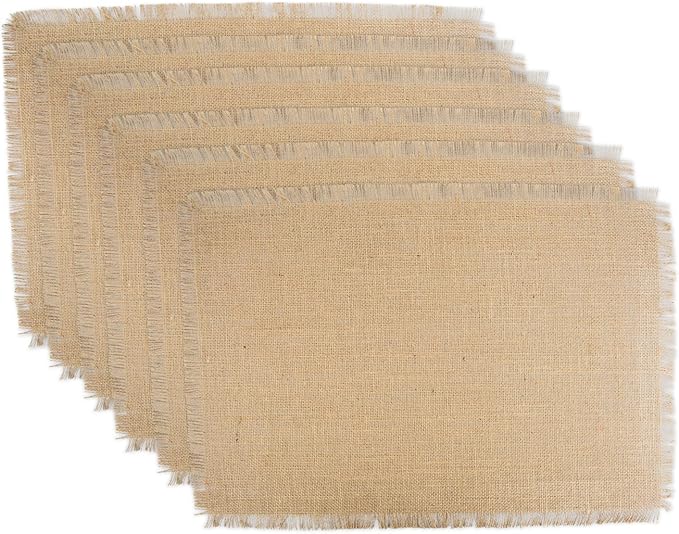
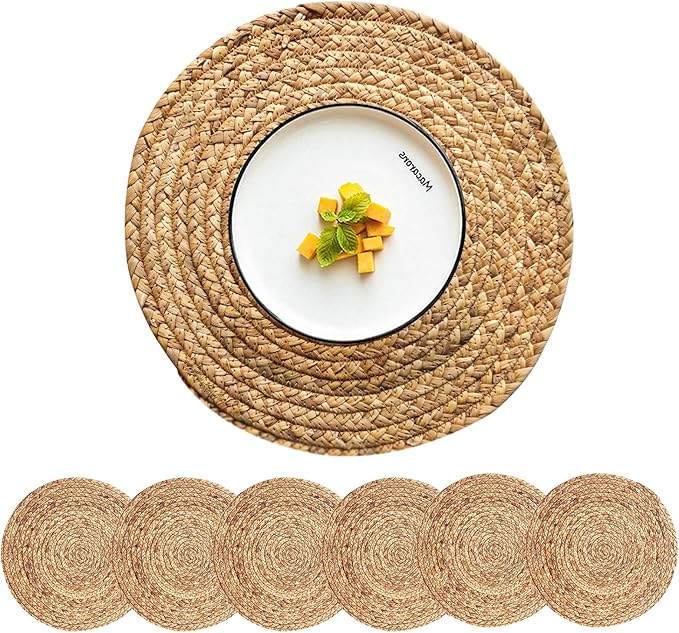
Jute, water hyacinth, and rattan are what most buyers picture when they search for farmhouse placemats. The texture is gorgeous, the color reads warm and natural against wood, and they layer well with linen napkins. They also absorb spills. A glass of red wine on a jute mat is a stain, and a long-soaked spot can wick through to the wood underneath. Treat these as a styling layer for low-risk meals, not as protection for a Sunday roast.
Cotton and quilted cotton, easy to wash and weak on heat
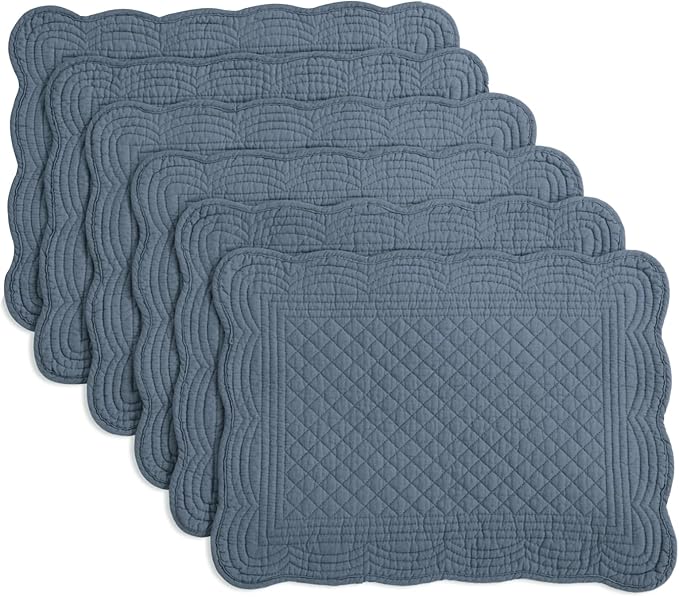
Quilted cotton is the right answer if you want something machine-washable that still looks soft and intentional. Patchwork and reversible designs here lean cottagecore, which complements a farmhouse top without competing with it. Heat is the weakness: a single layer of cotton is not insulation. A hot bowl transmits straight through to the table, so put a trivet underneath anything that came off the stove.
Buy a set of 6
Farmhouse tables seat 6. A 6-foot rectangular farmhouse fits 6 chairs (three on a side, none on the ends) or 4 plus two carvers. A set of 6 covers family meals and two-guest dinners without making you mix brands when one wears out. Sets of 4 are for breakfast nooks and apartments. Sets of 8 are for tables with leaves, which most farmhouse tables don't have.
Sizing for rectangular and round tables
Rectangular placemats in the 12x17 to 13x19 inch range fit a standard 10-inch dinner plate plus a salad or bread plate alongside. Round mats (13-15 inch) read more boho and are the right call if your table is round or if you only need to fit the dinner plate. Oversized dinner plates (12 inch) want a 14x20 rectangular mat.
Reversible mats are the cheap way to season-shift
Reversible designs in cotton and PU give you two looks for one set. An oatmeal neutral on the flip side takes you from holiday red to everyday beige without storing a second set. That matters more on a farmhouse table because the table itself anchors the room visually, so the textile layer above it is what changes with the season.
When to skip placemats entirely
A few hardwax-oil farmhouse tables (Tung-oiled solid oak, certain Restoration Hardware and reclaimed designs) are sold to develop a patina. Owners of those tables often go bare-wood and use a runner down the middle plus coasters under glasses. If that's your aesthetic, the accessory you want is a long linen or jute runner, not a per-seat placemat.
Recommended
Products related to this guide.
What owners say
Real owner reports from the threads and editorial sources we drew on for this guide.
“Napkin on lap, placemat on table, plate on placemat, problem solved!”
— r/HomeDecorating / AngryGirlWavingBrush
Frequently asked questions
What are the best placemats for a wood farmhouse table?
Natural Jute Placemats. The aesthetic flagship for a wood farmhouse table.
What are the best budget placemats for a wood farmhouse table?
DII Jute Burlap Placemat Set. The cheapest way to get a full farmhouse-look set of 6 on the table tonight.