West Elm
West Elm Harmony Sofa Reviews + Our Honest Verdict
By Daniel Reyes · Updated September 2026
Independent editorial review. We never accept payment for coverage, though we may earn a commission if you purchase through our links.
Verdict
The Harmony splits owners into two camps. Long-term owners, 4+ years in, consistently report satisfaction with comfort and durability, particularly in performance velvet fabric. The dissatisfied camp clusters around the back cushions, which several owners report going noticeably flat within 12-24 months. The seat foam cores hold up well in both groups. Nobody disputes the looks.
Read full take ↓Similar sofas
Quick Take
One of West Elm's most photographed sofas, and you pay a premium for that rather than for the build. Kiln-dried engineered hardwood with slot-and-tenon joinery on sinuous springs, cushions rated West Elm's softest, and a one-year warranty. On sale it competes; at list, Joybird gives a limited lifetime frame warranty for similar money.
Style that earns its price, with caveats
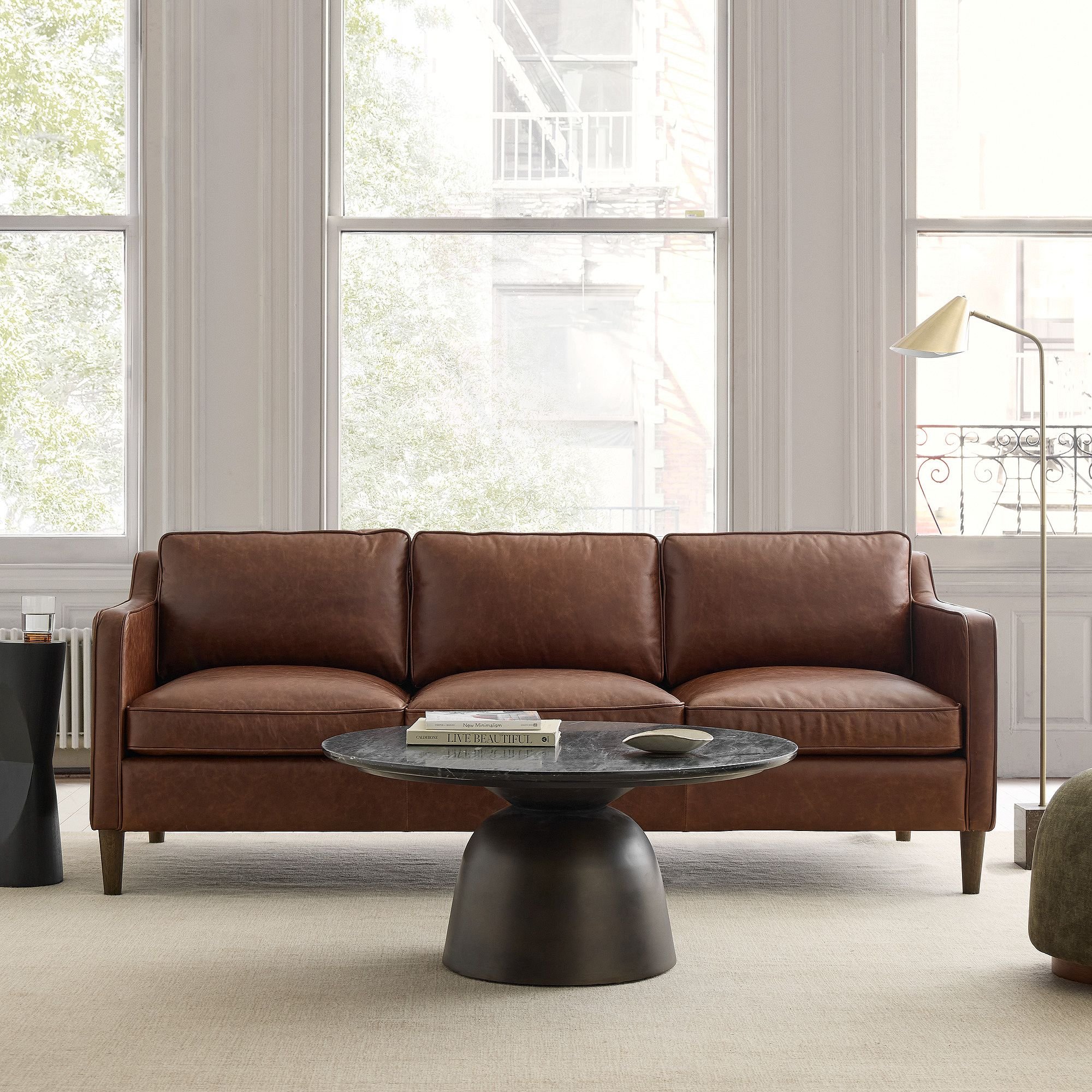
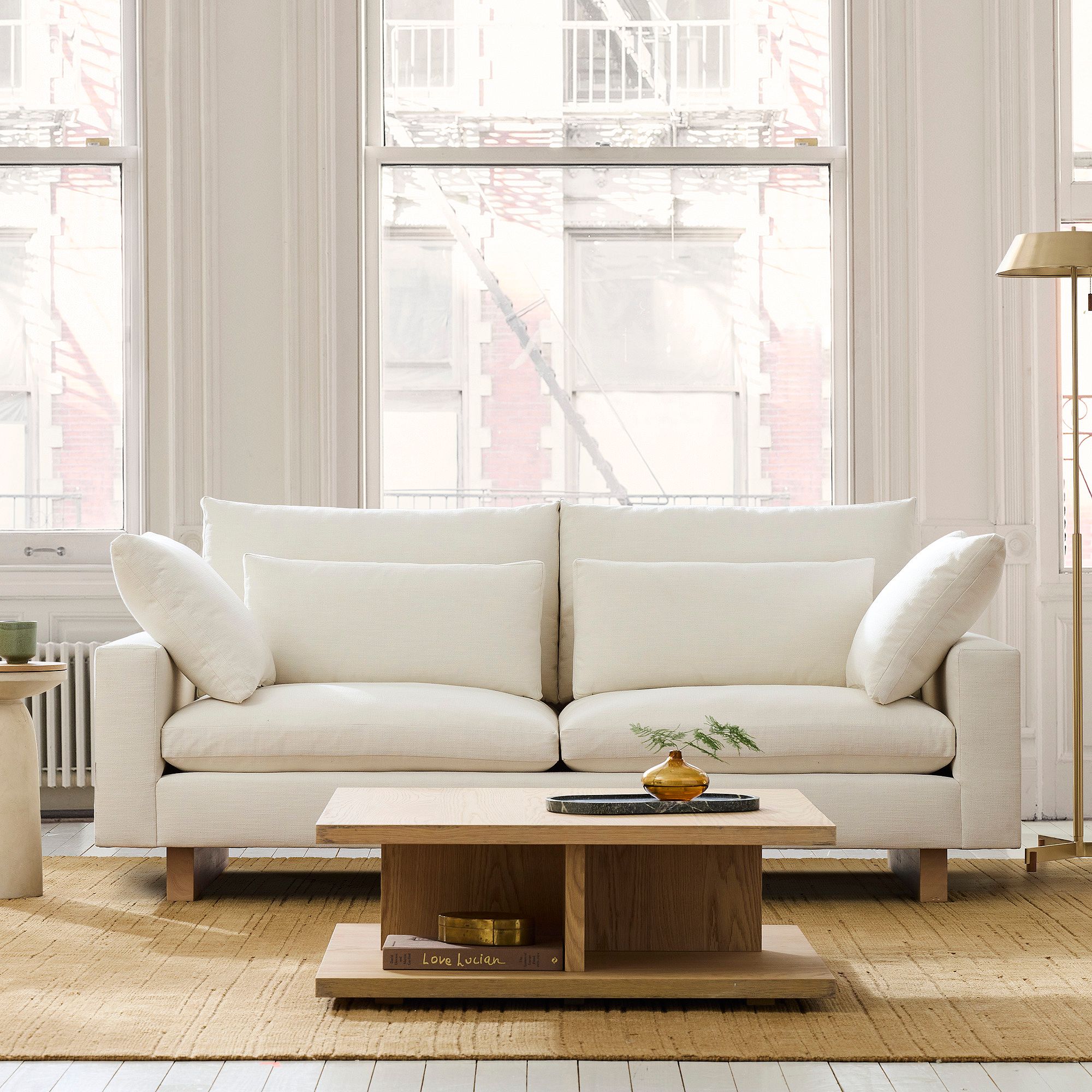
West Elm has built a brand around making people feel like they have good taste without asking them to develop any. The Harmony Sofa is the clearest expression of that: clean lines, low profile, mid-century proportions that photograph beautifully and look genuinely at home in a renovated apartment, a transitional living room or a staged open-plan condo. At $1,999 on the low end and $3,099 for the largest configurations in premium fabrics, it sits at the top of the "accessible" tier. Expensive enough to feel like a deliberate investment, cheap enough that most design-conscious buyers don't have to wait years to afford it.
The silhouette is its strongest argument. Gently tapered engineered wood legs with a veneered Dark Walnut or Blonde finish, a back angle reclined just enough without tipping into aggressive lounging, arms wide enough to be useful and narrow enough to keep the frame visually light. It reads as a sofa somebody edited. The fabric range is genuinely useful, including performance weaves that are worth paying up for if you have pets or kids, and the palette skews sophisticated: oatmeals, slates, deep navies and olive tones that won't age out in two years.
Who this sofa is for
The Harmony works best for buyers in their late twenties to early forties furnishing a real apartment or a first home, who want something current without being trendy, and who don't plan to sit on it for eight hours a day. If you host dinners and want a living room that makes guests feel like they've walked into a space someone thought hard about, the Harmony lands that impression immediately. If you work from home and spend your afternoons half-reclined with a laptop, this isn't your sofa. The back cushions aren't built for that kind of sustained use, and they'll show it.
Against the Joybird Hughes in a similar price range, the Harmony gives up some construction transparency. Joybird publishes kiln-dried solid wood spring rails and backs the frame with a limited lifetime warranty, where the Harmony runs a sinuous spring system on a one-year term. Joybird doesn't name the Hughes's suspension type, which at this price is most likely sinuous too, so the real gap is the warranty and the published frame detail, not the springs. Against the Article Sven, the Harmony loses on value, since the Sven gets comparable aesthetics at a lower price with a more generous warranty. What the Harmony has over both is the West Elm in-store experience: you can sit on it, see the fabric in person, and buy it with the confidence of a retail presence neither Joybird nor Article can fully match in most markets.
Comfort and real-world performance
The seat cushions use a high-resiliency polyurethane foam core wrapped in a fiber batting layer. Out of the box they feel substantial, somewhere between plush and supportive, closer to a boutique hotel lobby than to a purely functional piece. The problem, documented consistently by long-term owners, is that the back cushions start flattening and losing shape inside 12 to 18 months of regular use. The seats fare better because the sinuous springs are working underneath them. The backs are purely fill-dependent, and West Elm's fill specification doesn't hold its loft as well as Pottery Barn's, which uses a higher down ratio in comparable price tiers.
The spring system deserves a straight answer. Sinuous springs, also called no-sag springs, are a coiled wire running front-to-back rather than individual pocket coils. They're the industry standard at this price point and they perform adequately, but they don't distribute weight as evenly as pocket coils and they fatigue faster under daily heavy use. If the sofa is a gathering piece rather than the primary TV-watching seat, it's a non-issue. If two adults watch several hours of television on it nightly, you'll feel the difference by year three.
Price context and the warranty problem
West Elm's one-year warranty is the most significant red flag at this price. Joybird, by comparison, backs its frame with a limited lifetime warranty. On a sofa that starts at $1,999 and climbs to $3,099 in full configurations, a 12-month term communicates something about how the company views the product's expected lifespan. It doesn't mean the sofa will fail at 13 months. It means West Elm isn't willing to stand behind it if it does.
West Elm also doesn't publish on-site customer reviews for the Harmony, an unusual omission for a product at this price. Without aggregated owner feedback it's harder to assess how the sofa ages across different households and usage patterns. What does exist, across Reddit, interior design blogs and third-party review aggregators, is generally positive on aesthetics and moderately critical on long-term cushion performance, which is what the construction would predict.
If the budget is firm and durability is the primary concern, the Joybird Hughes is the stronger purchase. If aesthetics, fabric selection and the convenience of in-store shopping matter more, the Harmony earns its price, as long as you go in clear-eyed about what you're buying and what you aren't.
Where the Harmony's softness comes from
Frame
Kiln-dried hardwood. West Elm specifies this across their upholstered line, though they don't disclose the specific species in most configurations. Kiln-drying pulls moisture out of the wood before construction, which cuts warping and joint failure over time. It's the correct approach and a real quality differentiator against sofas built from green or air-dried lumber, which are more common at lower price points. The joints are described as corner-blocked: extra wood blocks glued and screwed into the interior corners of the frame to prevent racking. Corner blocking is standard practice on well-constructed sofas, so its presence here is expected, but it's worth confirming since plenty of lower-cost pieces omit it.
Spring system
Sinuous springs, also called no-sag springs, a continuous S-shaped wire running front to back across the seat deck and clipped into the frame at each end. They're the most common spring type in mid-range upholstered furniture and they hold up fine under normal residential use. They feel springier and bouncier than pocket coil systems, and they're cheaper and easier to manufacture, which is why they appear at this price tier. The trade against pocket coils, used in the West Elm Andes and in competitors like the Joybird Hughes, is less precise weight distribution and uneven fatigue if the sofa takes heavy, asymmetric use over years. For most households that's academic. For daily heavy use it matters on a three-to-five-year horizon.
Cushion construction
Seat cushions are a high-resiliency polyurethane foam core with a fiber wrap, inside a ticking cover that doesn't come off for washing. The foam core provides the structural foundation; the fiber wrap softens the feel and adds loft. The back cushions blend polyester fiber with duck feather and a small amount of down, 50/45/5 by West Elm's spec, with no foam core, which is exactly why owners report them flattening. Feather-and-fiber backs need regular rotation and occasional re-fluffing to keep their shape; skip that and they compress asymmetrically and develop a permanent lean. Seat cushion covers are zipper-removable and can be dry-cleaned; back cushion covers vary by fabric selection.
Fabric and performance options
The Harmony comes in a wide range of fabric grades, from entry-level woven fabrics to high-performance options branded "Performance" or "Distressed Velvet." The performance weaves really are more durable, typically 100% polyester or polyester-blend constructions with a tighter weave that resists pilling and cleans easily. With pets or children in the household, paying up for a performance grade fabric is money well spent. The natural fiber options, linen blends and cotton weaves, look and feel better initially but need more maintenance and stain and wear faster.
Warranty and support
The one-year limited warranty covers manufacturer defects in the frame, springs and fabric. It doesn't cover normal wear, cushion compression or fabric pilling. At this price point a one-year warranty is below industry standard: Joybird, for one, offers a lifetime frame warranty with three years on cushions and fabric. That gap belongs in any comparison-shopping decision, particularly on the higher-end configurations above $2,000. White-glove delivery costs an additional fee; standard delivery is threshold or doorstep only.
Competitive construction context
Against the Joybird Hughes at a comparable price, the Harmony gives up a limited lifetime frame warranty and published solid-wood construction in exchange for better in-store accessibility and a broader fabric range. Against the Article Sven, construction is comparable and the price is higher, with West Elm's retail presence and return policy as the offset. If long-term durability is the priority, look at the Hughes, or step up to Pottery Barn's upholstered line, which uses similar or better construction at a comparable or only slightly higher price point.
Our Ratings
Overall score
Kiln-dried engineered hardwood with slot-and-tenon joinery, not solid, on high-gauge sinuous springs. Seat cushions use fiber-wrapped high-resiliency foam rated Soft (1 of 5, West Elm's softest); the softness lives in the 45% duck-feather, 5% down backs. Legs are veneered engineered wood in Dark Walnut or Blonde, assembled in the USA. Owners keep flagging cushion shape loss and foam compression within one to two years, a real concern here.
The Harmony is one of West Elm's most photographed sofas, and it earns that. Clean track arms, tapered legs, and a profile that reads modern without going harsh. The broad fabric range consistently delivers on the promise of its studio shots.
At $1,999-$3,099, with West Elm running frequent sales of 20-40% off, the Harmony charges a meaningful premium for sinuous spring construction and a 1-year warranty. Joybird's Hughes gets you a limited lifetime frame warranty at comparable prices. The value case rests on aesthetics and brand availability, not on the build specification.
What People Are Saying
The Harmony splits owners into two camps. Long-term owners, 4+ years in, consistently report satisfaction with comfort and durability, particularly in performance velvet fabric. The dissatisfied camp clusters around the back cushions, which several owners report going noticeably flat within 12-24 months. The seat foam cores hold up well in both groups. Nobody disputes the looks.
Reddit and Houzz commentary are weighted 3× against blog and editorial sources in our sentiment score. Brand PR has a well-documented influence on editorial coverage — direct owner reports from message boards tend to be more candid.
What Reddit Is Saying
“We've had ours for over 8 years now. Ours is distressed velvet, which is washable. It still looks brand new and we've got multiple dogs that make it their jungle gym. I love the harmony so much I bought a couch for my office, and another one for our condo.”View thread →
“Just don't think it's very comfortable at all. And I ended up despising the two cushion design. I had a 70x35 piece of high density foam cut and wrapped and replaced the two cushions w one large one. It's like a full bed now. And my ass down sink all the way through the cushion at all.”View thread →
“This is the worst couch I have ever owned. DO NOT BUY!!!! The cushions do not provide any support and became misshapen by 6 months. It is still under a year and West Elm is not honoring the warranty.”View thread →
“I bought a 2 piece modular harmony sectional from West Elm and the pieces do not match in color. West Elm has sent me different replacement pieces 5 times and the color is always off from the other piece. This has been an 8 month process of returning and receiving couch pieces and not having a fully functional couch.”View thread →
“On their website it looks like the alabaster performance linen is actually made of 78% polyester and 22% linen. So it's more of a linen look that they modify to make more durable. Except clearly it's not very durable in this case.”View thread →
“I cannot recommend against WE strongly enough. We have had a custom Harmony section that was ~$4500 on sale and hated it from day one. The quality is extremely inconsistent. My hubby and I are convinced the sofa we received is not built the same as what we tested in store. Cushions have completely flattened and can feel the frame through. The 2 sections have significantly different heights so you cannot lay across where they connect. It feels like a Temu knockoff.”View thread →
“I purchased a harmony sofa from WE in 2022 and regret it. We could feel the frame through the seat cushions a year later.”View thread →
What Others Are Saying
“It's truly cloud-like to lie on, and the many pillows that adorn the sectional have varied amounts of fill, producing back support where it's needed and head, arm, and neck support on the sides.”Source →
“We absolutely love our West Elm Harmony sofa! We have zero regrets about purchasing it and have recommended it to countless people.”Source →
“The Harmony's platform-supported, extra-plush cushions make it reminiscent of the step-down sunken living rooms of the '60s while also being one of the most contemporary sofa styles West Elm has at the moment.”Source →
“the fabric I chose: Distressed Velvet (specifically Sand), has also been surprisingly stain-resistant.”Source →
Frequently asked questions
Is the West Elm Harmony Sofa worth it?
One of West Elm's most photographed sofas, and you pay a premium for that rather than for the build. Kiln-dried engineered hardwood with slot-and-tenon joinery on sinuous springs, cushions rated West Elm's softest, and a one-year warranty. On sale it competes; at list, Joybird gives a limited lifetime frame warranty for similar money.
How is the West Elm Harmony Sofa built?
Kiln-dried engineered hardwood with slot-and-tenon joinery, not solid, on high-gauge sinuous springs. Seat cushions use fiber-wrapped high-resiliency foam rated Soft (1 of 5, West Elm's softest); the softness lives in the 45% duck-feather, 5% down backs. Legs are veneered engineered wood in Dark Walnut or Blonde, assembled in the USA.
What styles does the West Elm Harmony Sofa work with?
The Harmony is one of West Elm's most photographed sofas, and it earns that. Clean track arms, tapered legs, and a profile that reads modern without going harsh. The broad fabric range consistently delivers on the promise of its studio shots.
What do real owners say about the West Elm Harmony Sofa?
The Harmony splits owners into two camps. Long-term owners, 4+ years in, consistently report satisfaction with comfort and durability, particularly in performance velvet fabric. The dissatisfied camp clusters around the back cushions, which several owners report going noticeably flat within 12-24 months.
Options Worth Checking Out
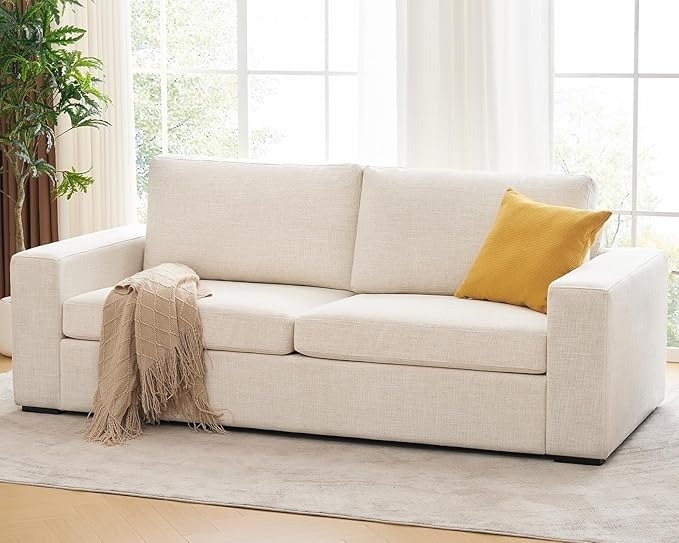
ELUCHANG 85" Natural Linen Sofa
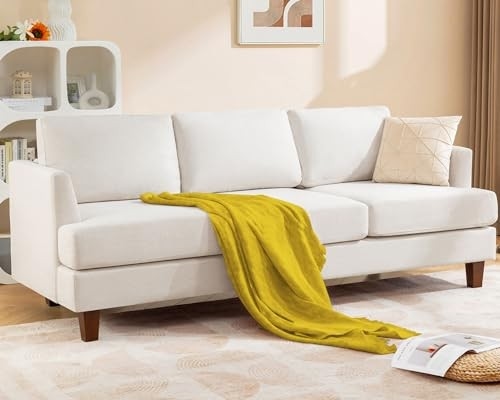
Busaurus 89" Deep Seat 3-Seater Sofa, Linen Fabric, Beige
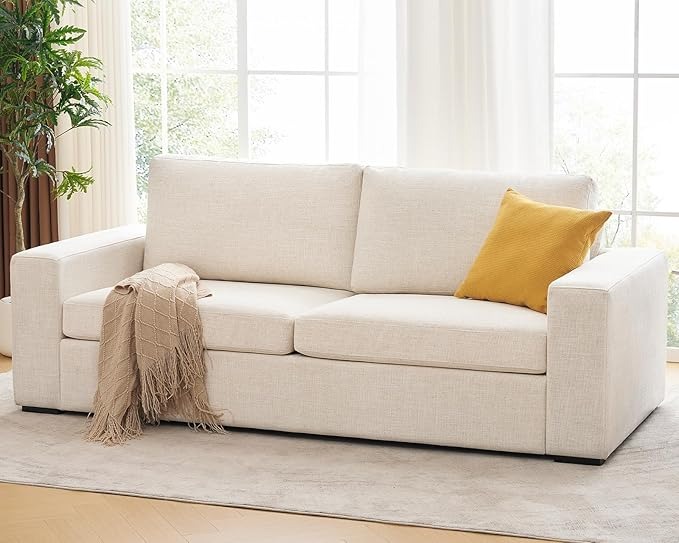
Eighty-nine inches of linen upholstery in beige with a genuinely deep seat, which is the Harmony's whole appeal. A much lighter build than the West Elm frame, so expect it to sit firmer and to flatten sooner.
You Might Also Need
Accessories worth grabbing alongside your purchase
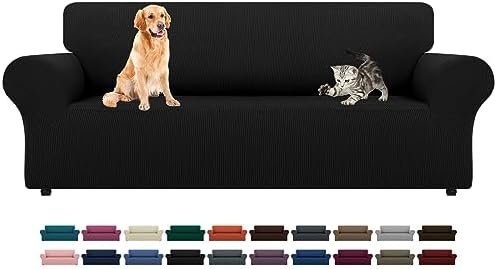
LURKA Stretch Sofa Slipcover (Large, fits 78–94")
Machine-washable stretch cover that protects the Harmony's fabric from pets and spills while keeping the silhouette clean.
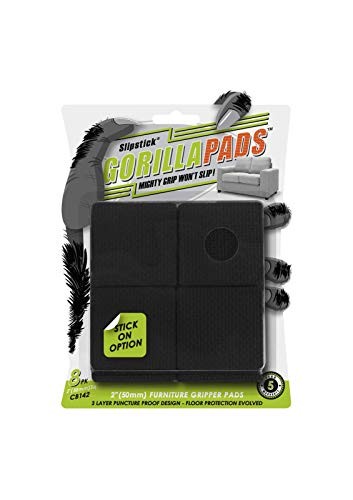
Slipstick GorillaPads Non-Slip Furniture Pads
Stick-on non-slip pads that protect hardwood from the Harmony's solid wood legs.
More West Elm Reviews
See all →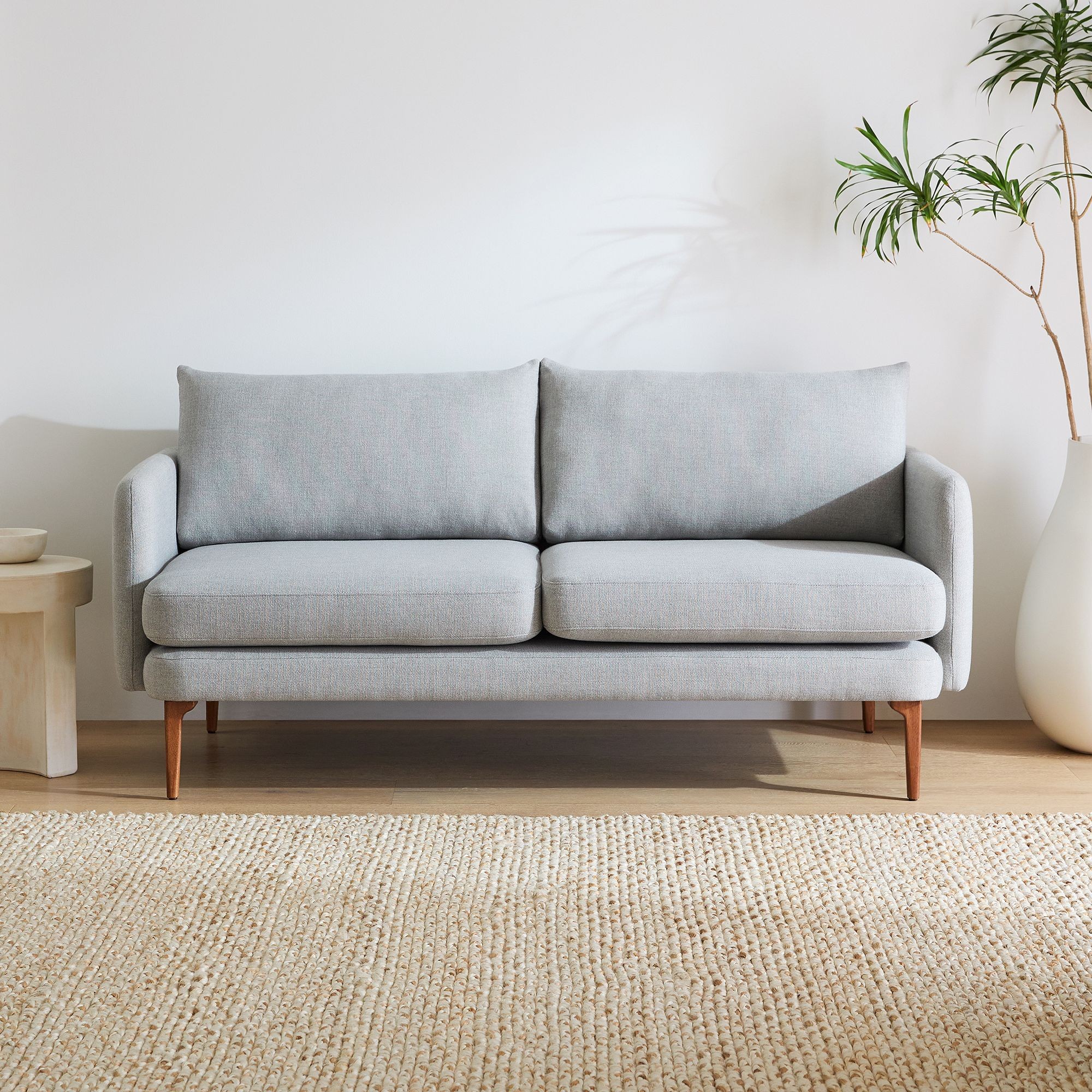
West Elm Auburn Sofa Review: Compact Build + Our Honest Verdict
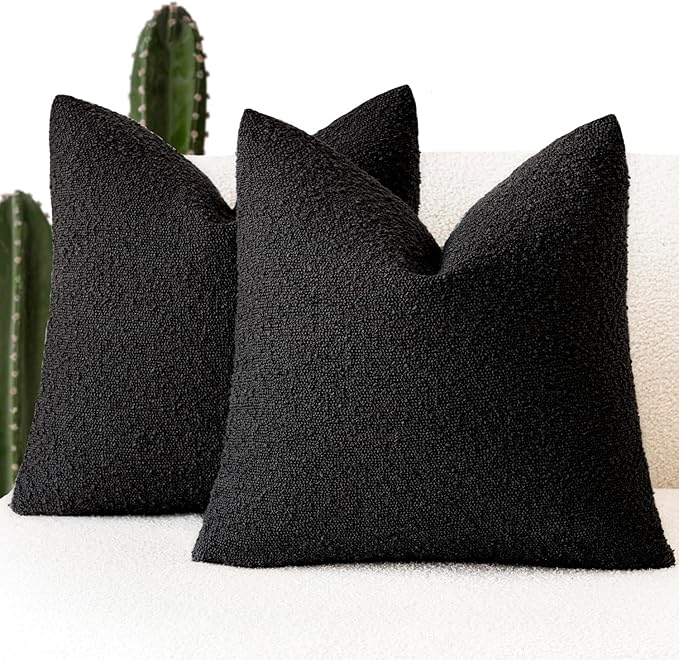
Best Throw Pillows for a West Elm Harmony Sofa: Sizes, Texture, and Layering
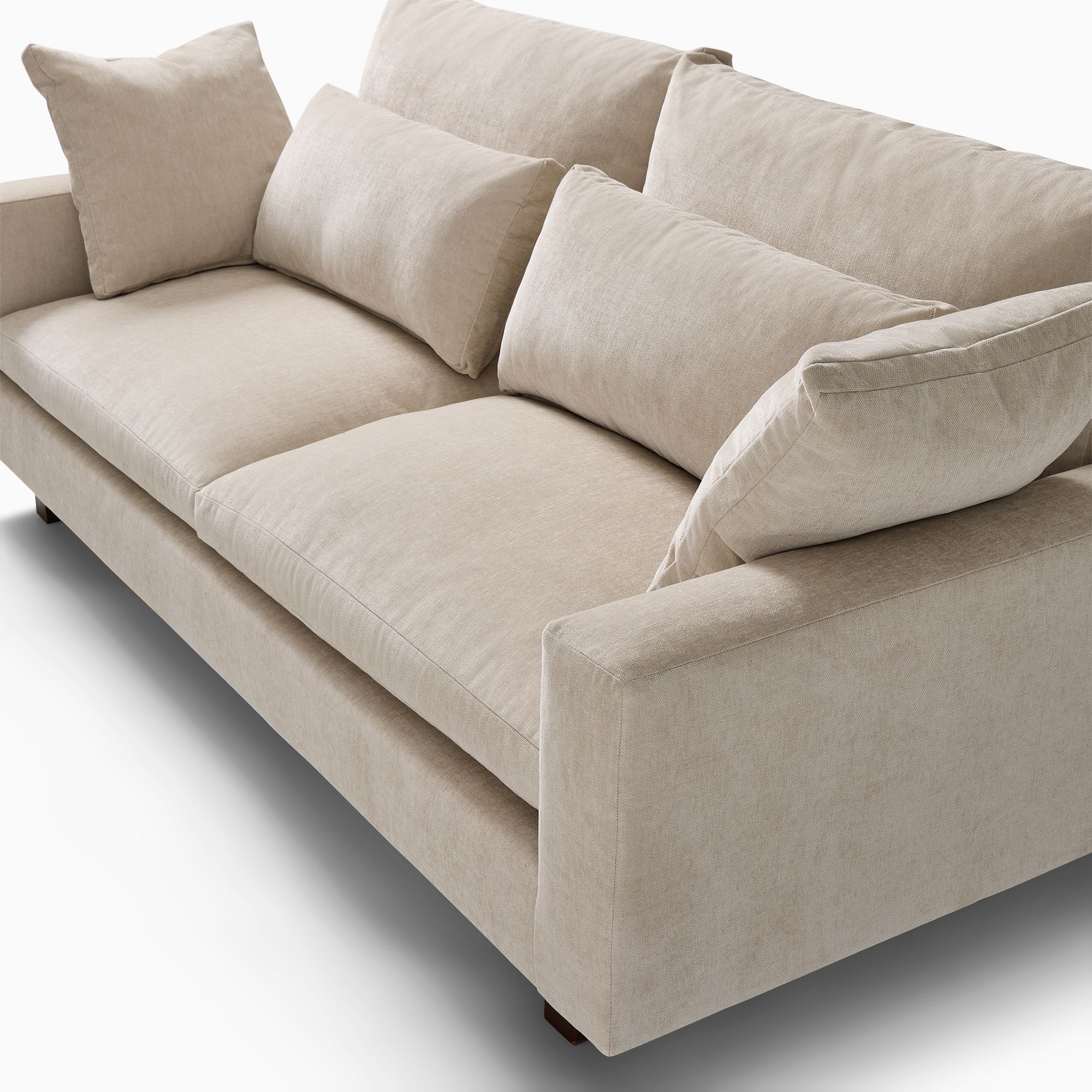
West Elm Harmony Cushions Sagging? The $40 DIY Fix (And When to Give Up)
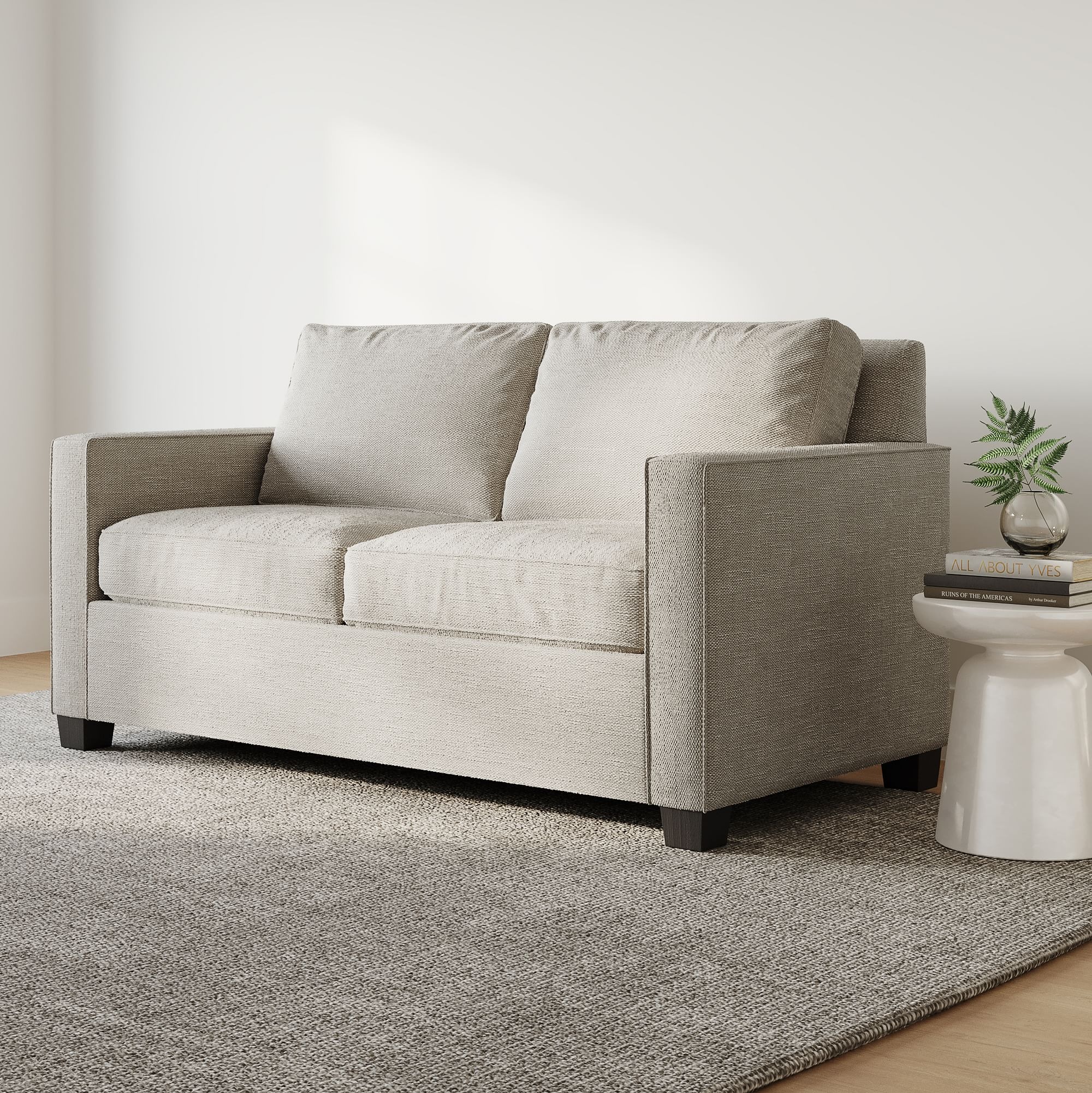
West Elm Peggy Sofa Reviews + Our Honest Verdict
How Does It Compare?
Side-by-side breakdowns featuring this product