West Elm
West Elm Anton Dining Table Reviews + Our Verdict
By Sam Hollis · Updated October 2026
Independent editorial review. We never accept payment for coverage, though we may earn a commission if you purchase through our links.
Verdict
The Anton collects more positive long-term owner reviews than most West Elm pieces, which reflects the durability advantage solid wood holds over upholstered furniture. The positives repeat: warmth, visual interest, value. So do the negatives: scratching, and surprise at the grain variation.
Read full take ↓Similar dining tables
Quick Take
Solid mango wood throughout with no veneer or composite, which is uncommon at this price, plus two flaws that hold the score down. Mango is a soft hardwood that marks easily, multiple owners report the top splitting at the seam, and the warranty runs one year. Get it on sale and accept that it will patina.
Solid wood that earns the description
The West Elm Anton is one of the few pieces in the West Elm catalog you can judge on material quality rather than on style. Most West Elm furniture is an aesthetic proposition with construction characteristics attached. The Anton runs the other way, a structurally solid piece of kiln-dried solid mango wood that also happens to be well designed. At $899 to $1,799 depending on size, it sits in a price range where plenty of dining tables use veneers, MDF cores, or particleboard while calling themselves wood furniture. The Anton does none of that.
Mango is a common choice for a casual dining table. It's a fast-growing tropical hardwood, but a relatively soft one: it registers around 1,070 on the Janka scale, close to walnut and well below oak or maple, so it dents and scratches more readily than its heft suggests. Plan for the surface to pick up marks under the kind of use a dining table really sees: serving dishes, serving ware dragged across the surface, children's plates, the corner of a laptop charger somebody drops on the table during a Sunday afternoon work session. It's warm wood, with significant grain variation and occasional natural character marks that make each table specific and unrepeatable. West Elm finishes the mango in Black, Burnt Wax, Cerused White, and Dark Walnut, and offers a Cool Walnut finish built in acacia instead, so the exact tone depends on which finish you pick.
What solid mango means for ownership
The biggest practical implication of solid wood construction is that the Anton can be refinished. When the surface collects scratches over five years of use, and it will, because every dining table collects scratches, you sand it lightly and reapply the finish to get back close to the original surface. You can't do that with veneer or MDF. It isn't a trivial project, but plenty of homeowners pull it off, and the ability to do it stretches the useful life of the table by decades rather than years. At a price point crowded with veneer alternatives, that's a genuine and durable value differentiator.
Grain variation deserves its own paragraph, because it surprises buyers on a predictable schedule. The Anton's mango varies a lot from plank to plank: different grain density, different figure, and in some configurations visible color variation across the tabletop where planks with different grain orientations sit side by side. West Elm's product photography tends to show tables with relatively uniform grain. The table that arrives may look quite different. That's not a quality defect, it's a fundamental characteristic of solid wood furniture. If you want perfect uniformity, buy a veneer or engineered wood product, which are more consistent. If you like natural variation, the Anton's grain makes every table genuinely its own.
Size options and practical considerations
The Anton comes in 72-inch, 86-inch, and 120-inch lengths. West Elm rates the 72-inch for six, the 86-inch for eight, and the 120-inch for ten, with the usual elbow-room compression once you seat people at the stated maximum. Depth is the same across the sizes and works with standard dining chairs. One thing people skip: confirm the table height (a standard 30 inches) and the leg placement against the chairs you already own. The Anton puts its legs close to the corners rather than centered, which changes how many chairs fit on each side without a conflict.
Competitive context, and where the Anton wins
The Anton competes most directly with the IKEA MÖRBYLÅNGA (oak veneer on MDF), the Crate & Barrel Basque table (comparable solid wood at a similar price), and a range of West Elm-adjacent solid wood tables from Article and Structube. Against the IKEA veneer option it wins decisively on material quality and refinishability, and loses on price. Against the Crate & Barrel Basque it's much closer, comparable solid wood construction at a comparable price, with aesthetics doing most of the deciding. The Anton's mango is warmer and more organic in character than Crate & Barrel's more uniform offerings, so if you prefer natural variation, lean Anton.
In the dining table category the Anton is one of West Elm's most consistently recommended pieces, and it's an easier recommendation to make than their upholstered furniture because solid wood construction has a more predictable quality story. The table will scratch. The finish will show wear in high-contact areas over time. Those aren't failures, they're what real wood does, and they can be managed or, if you want, restored.
Anton dining table construction, a deep-dive
Wood species and certification
The Anton is kiln-dried solid mango wood, sustainably sourced from trees that have stopped producing fruit and built in a Fair Trade Certified factory rather than carrying an FSC forest certification. Mango is a tropical hardwood, but a relatively soft one: it registers around 1,070 on the Janka hardness scale, close to walnut (1,010) and well below maple (1,450) and oak. In practice that means it marks, dents, and scratches more easily than harder dining woods, so the surface will show life with use. The one exception in the lineup is the Cool Walnut finish, which West Elm builds in acacia rather than mango.
Construction method
The Anton's tabletop is individual mango boards, edge-joined and glued into the full surface. Standard solid wood furniture construction. The planks get selected and oriented for the tabletop during manufacturing, but because mango has so much natural variation, the exact grain pattern, color distribution, and figure on any given table comes down to which boards were pulled. The joins between planks should be tight and nearly invisible on a well-constructed table. Visible gaps or uneven surfaces at plank joins are a defect, so flag them on delivery if you see them.
Finish
West Elm sells the Anton in several finish options. The Burnt Wax and Cerused White finishes are the popular picks, each working with the warm tones and open grain of the mango without masking it. The finish reads as a penetrating oil or oil-varnish blend rather than a surface film finish like polyurethane, which gives the wood a more natural feel and appearance and also means the surface isn't fully impervious to water infiltration. Use coasters for cold glasses; standing water left long enough will raise the grain or leave a mark. You can refresh the finish with food-safe wood oil without sanding, which stretches the maintenance cycle a long way.
Base and hardware
The Anton's legs are solid wood, matching the tabletop in species and finish. The base-to-top connection uses metal hardware rather than glue-only construction, which makes the table easier to assemble, move, and take apart if needed. The leg geometry sits the legs close to the table corners, good for structural stability, limiting for chair placement on the short ends. Check and tighten the hardware during assembly and again around the three-month mark, since wood movement as the table acclimates to its environment can loosen joints.
Long-term care and refinishing
Longevity is where the Anton makes its strongest case. Solid mango with a penetrating oil finish can be refinished by a woodworker or a capable DIYer: light sanding with 120-grit followed by 220-grit, removal of the old finish, then a new penetrating oil coat, and the surface comes back close to original condition. Figure four to six hours of work plus drying time. On a veneered table the veneer layer is too thin to survive sanding and the table is effectively unrepairable once the surface wears through. The Anton's solid wood construction gives it an indefinite service life with periodic care.
Warranty and delivery
The Anton carries West Elm's standard one-year limited warranty against manufacturing defects. In the sofa category a one-year warranty sits below industry standard; dining table warranties more commonly run one to three years across the category, so the Anton's coverage is less of an outlier here. The table ships flat-packed in most configurations, and assembly takes two people on the 120-inch version to handle the tabletop safely. White-glove delivery with assembly is available for an additional fee.
Our Ratings
Overall score
Kiln-dried solid mango wood throughout, no veneer or composite, sustainably sourced from non-fruiting trees and built in a Fair Trade Certified factory. Two caveats keep the score down: mango is a soft hardwood that marks and scratches easily, and multiple owners report the top splitting at the seam over time. The 1-year warranty is limited, so weigh that going in.
The Anton's straight farmhouse-edge profile and solid wood warmth make it one of the more compelling dining tables at this price. It anchors a room without demanding that everything around it match. One of West Elm's most consistently praised designs.
Solid-wood dining tables this size run from about $600 at the low end to past $3,000 at RH, and at $1,199-$1,299 the Anton sits in a rational middle on spec. What weakens the case at full price: a soft wood that scratches, documented seam-splitting, and a limited 1-year warranty. Buy it on sale, or buy it knowing the finish limitations going in.
What People Are Saying
The Anton collects more positive long-term owner reviews than most West Elm pieces, which reflects the durability advantage solid wood holds over upholstered furniture. The positives repeat: warmth, visual interest, value. So do the negatives: scratching, and surprise at the grain variation.
Reddit and Houzz commentary are weighted 3× against blog and editorial sources in our sentiment score. Brand PR has a well-documented influence on editorial coverage — direct owner reports from message boards tend to be more candid.
What Reddit Is Saying
“I have been looking into this issue as well. The table comes unfinished like this. The sales person said to wax it and the wax can be bought at home depot. I personally haven't done it yet. I am considering the ruelle finisher from crate and barrel vs Oddie's oil.”View thread →
“I have this table. Chairs fit at the end fine with no issue. As for water rings, I would not recommend. I left water pool (I guess I didn't see it) and wiped it too late and there is a spot there now. Now we use a thick napkin at all times and wipe up spills right away. Table also shows scratches very easily.”View thread →
“I love the looks of this table. But like another poster here, mine has split at the seam after less than a year. I did get it from the outlet, though, and it had some blemishes before. But it seems to be par for the course with this product.”View thread →
“We just purchased this 72" Anton Solid Wood dining table from West Elm in the Cerused White finish. It's listed as "Contract Grade" but this table seems like even the slightest spill would stain the wood. I don't know if this is a quality control issue that caused the finish to be applied incorrectly but the wood almost feels rough and unfinished. To test it, I poured just a couple tablespoons of water on the table and let it sit for only 10 seconds. I then wiped it off but it had already absorbed into the wood tabletop.”View thread →
“I have a coffee table from West Elm in this same finish. I contacted them when I realized how easily stained it is - learned it is not a QC issue. That's just what their Cerused White furniture does. What a ridiculous material to make a table out of.”View thread →
“Seriously! It's brand new and already stained from the tiniest things. So annoyed. Guess we will cover the entire thing with a table Cloth until we can figure out what to do to seal it.”View thread →
What Others Are Saying
“One of West Elm's best-selling dining tables, the Anton has the clean lines, symmetry, and natural wood aesthetic expected of mid-century modern furniture but with a striking level of minimalism that makes it more modern than mid-century.”Source →
“There are a handful of furniture items that are quintessentially West Elm, but the Anton Dining Table definitely tops the list, and it's not too surprising why it's one of the retailer's best-sellers. It's minimalist yet unique, modern but still soft.”Source →
Frequently asked questions
Is the West Elm Anton Dining Table worth it?
Solid mango wood throughout with no veneer or composite, which is uncommon at this price, plus two flaws that hold the score down. Mango is a soft hardwood that marks easily, multiple owners report the top splitting at the seam, and the warranty runs one year. Get it on sale and accept that it will patina.
How is the West Elm Anton Dining Table built?
Kiln-dried solid mango wood throughout, no veneer or composite, sustainably sourced from non-fruiting trees and built in a Fair Trade Certified factory. Two caveats keep the score down: mango is a soft hardwood that marks and scratches easily, and multiple owners report the top splitting at the seam over time. The 1-year warranty is limited, so weigh that going in.
What styles does the West Elm Anton Dining Table work with?
The Anton's straight farmhouse-edge profile and solid wood warmth make it one of the more compelling dining tables at this price. It anchors a room without demanding that everything around it match. One of West Elm's most consistently praised designs.
What do real owners say about the West Elm Anton Dining Table?
The Anton collects more positive long-term owner reviews than most West Elm pieces, which reflects the durability advantage solid wood holds over upholstered furniture. The positives repeat: warmth, visual interest, value. So do the negatives: scratching, and surprise at the grain variation.
Options Worth Checking Out
Plank+Beam Classic 72" Solid Wood Dining Table, Black Wirebrush
Solid wood in a black wirebrush finish, so it keeps the textured, grain-forward character that makes the Anton work while costing a fraction of it. Note the finish is black rather than a warm walnut, so it reads cooler in a room.
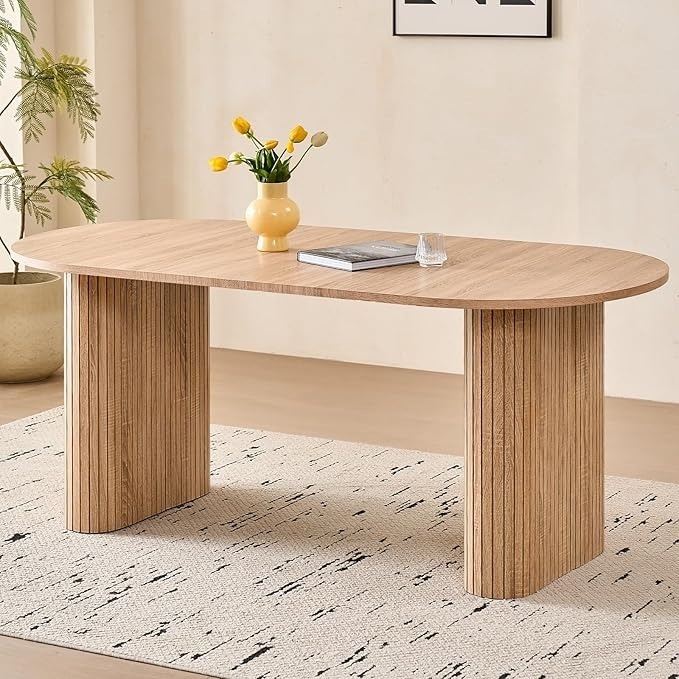
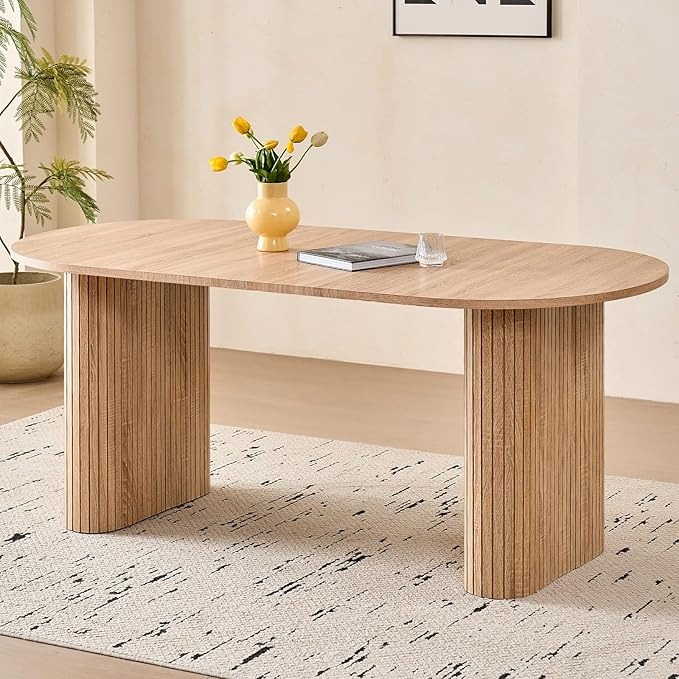
Lecafur Oval Leg Dining Table
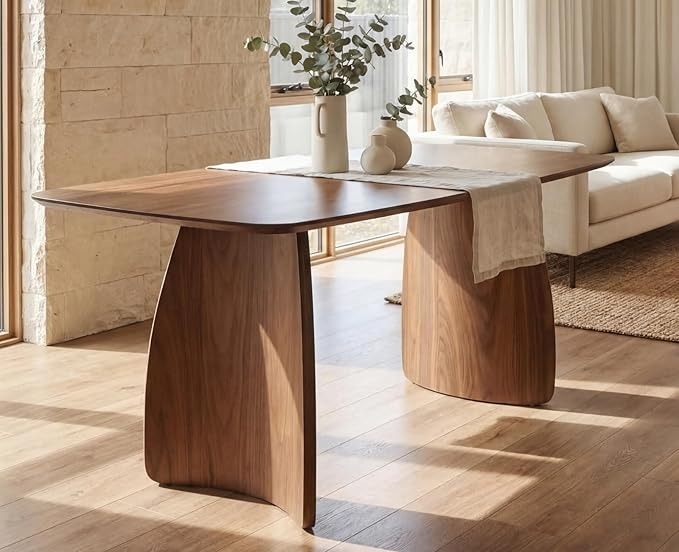
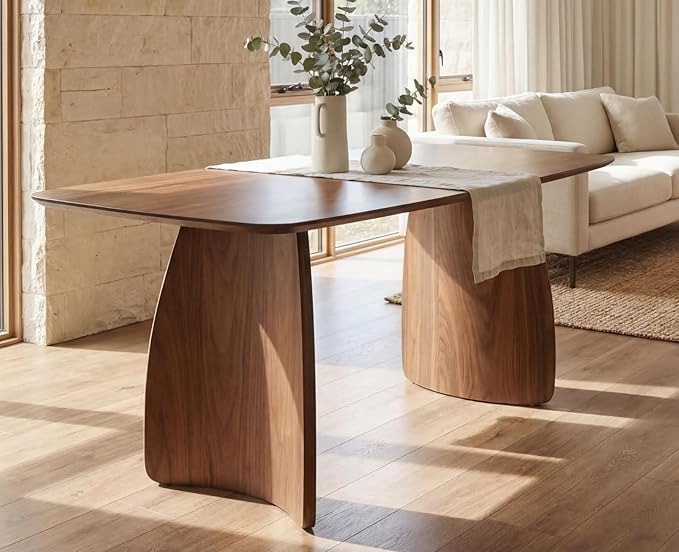
ROCITY Mid-Century Rectangular Dining Table
You Might Also Need
Accessories worth grabbing alongside your purchase
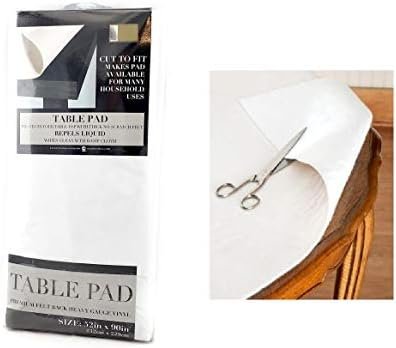
Homestyle Felt-Back Vinyl Table Pad (52x90")
Trimmable waterproof pad that shields the Anton's solid wood top from heat and spills. Cut to fit.
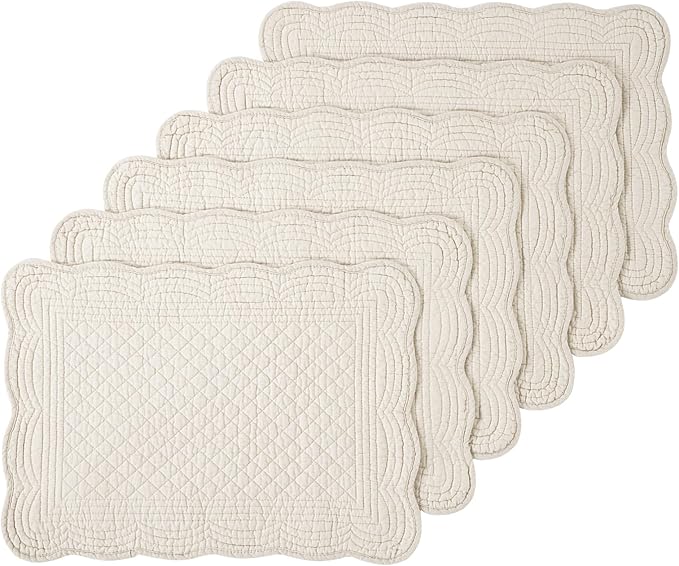
QUVIO Placemats Set of 6 — Washable
Woven washable placemats that complement the Anton's warm wood tones without hiding the grain.
More West Elm Reviews
See all →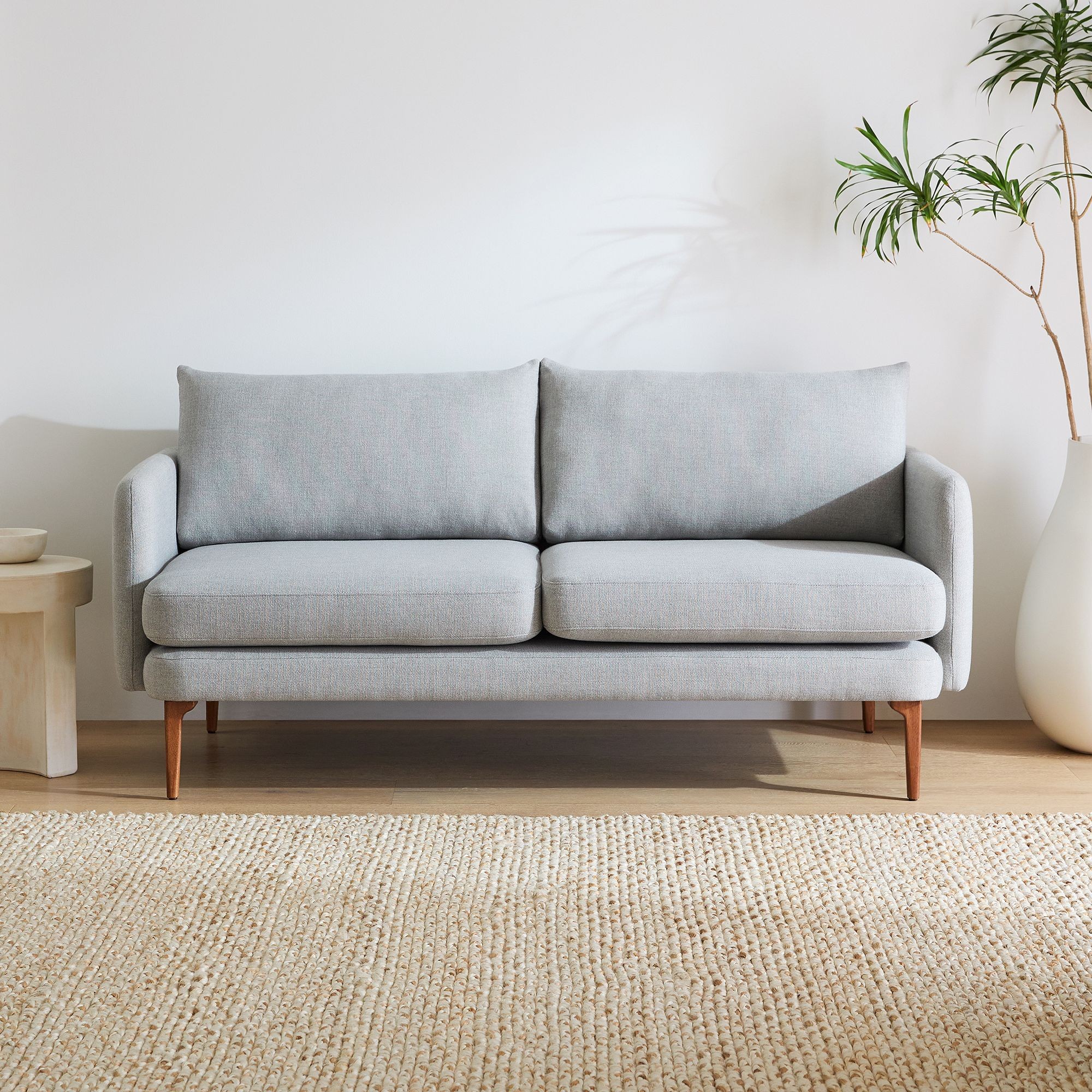
West Elm Auburn Sofa Review: Compact Build + Our Honest Verdict
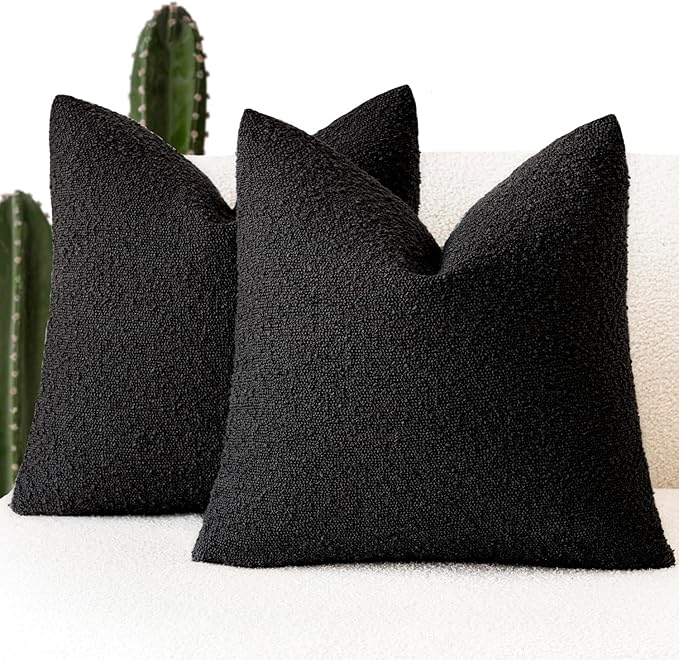
Best Throw Pillows for a West Elm Harmony Sofa: Sizes, Texture, and Layering
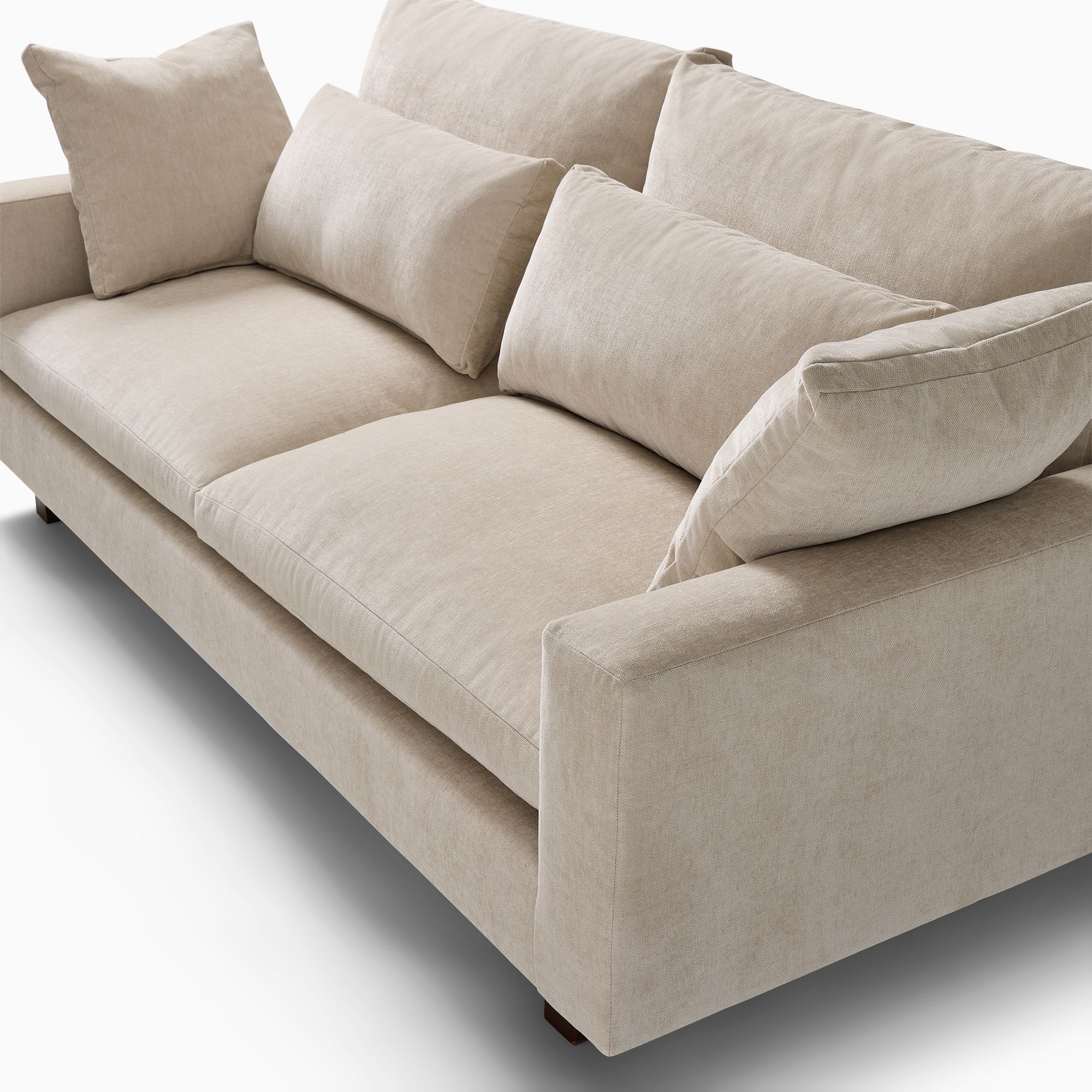
West Elm Harmony Cushions Sagging? The $40 DIY Fix (And When to Give Up)
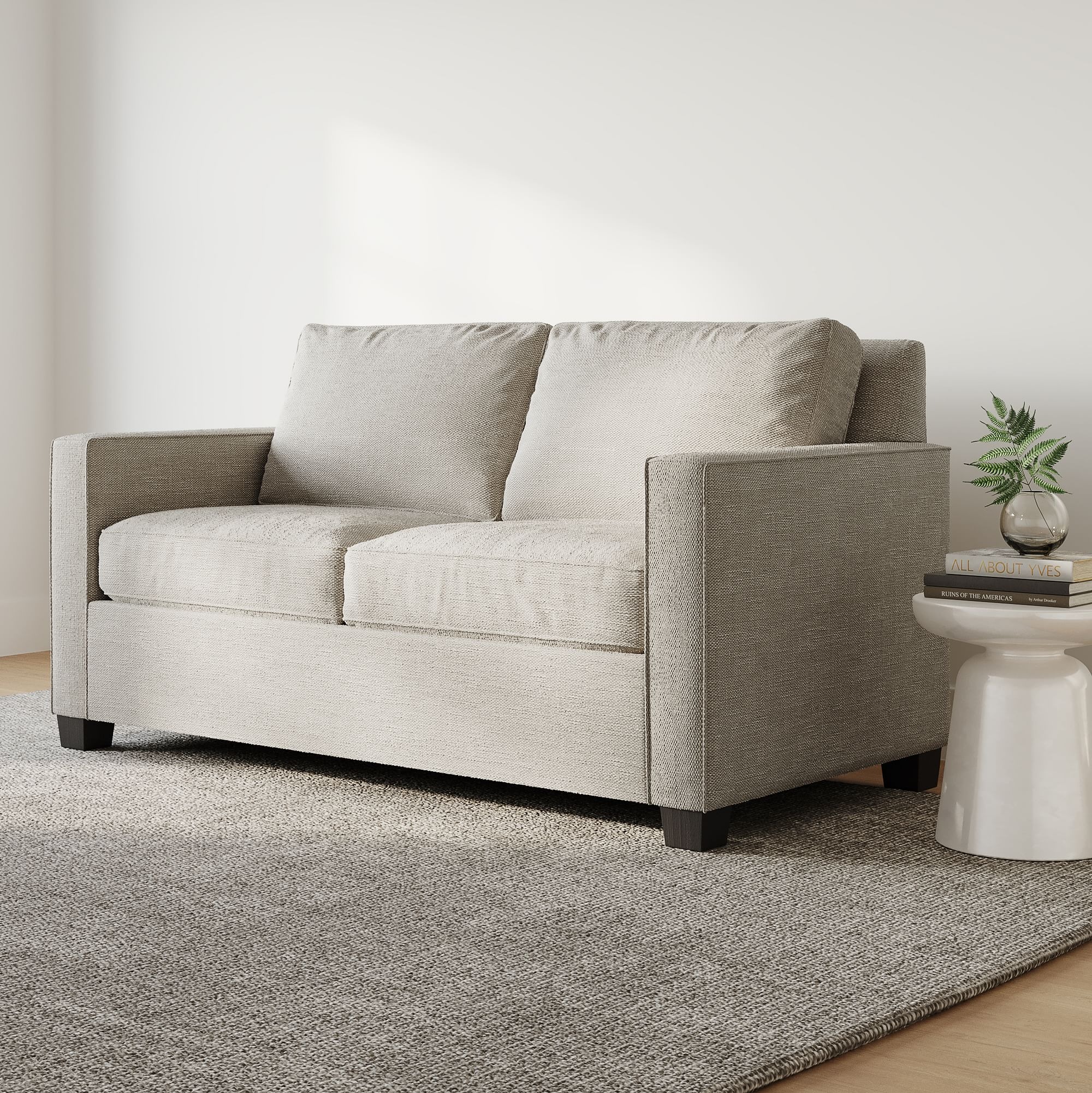
West Elm Peggy Sofa Reviews + Our Honest Verdict
How Does It Compare?
Side-by-side breakdowns featuring this product