West Elm
West Elm Hughes Desk Reviews + Our Verdict
By Erin Mitchell · Updated August 2026
Independent editorial review. We never accept payment for coverage, though we may earn a commission if you purchase through our links.
Verdict
The Hughes desk gets modest discussion volume next to West Elm's seating, but feedback on the broader office line is instructive. Multi-year desk owners at vivandtimhome.com report "frame chipped from chair bumping, leaving splinters along edges; drawers don't open/close well", which is what veneer construction does under daily contact. Another 4-year owner reported "veneer flaking from slight chair bumps; sharp drawer corners causing knee pain." The delivery experience gets consistent praise, since the desk arrives via white-glove service, fully assembled and placed in-room. The complaint pattern is always the same: buyers expecting solid hardwood durability at a solid hardwood price, receiving veneered particle board. Owners who buy with realistic material expectations, and who treat the surface carefully, are happy with it.
Read full take ↓Similar storage pieces
Mid-century office style with honest trade-offs
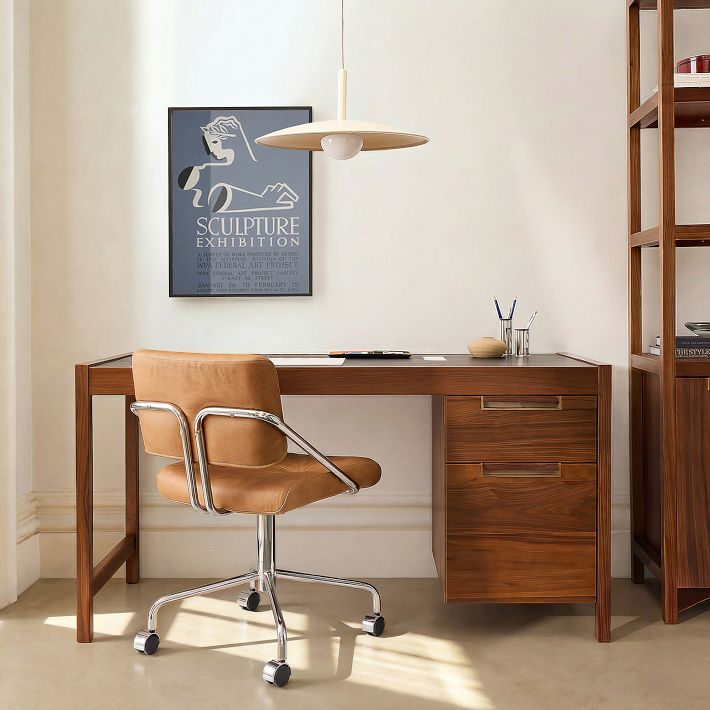
The West Elm Hughes Desk with File Cabinet is one of the most recognizable pieces in their office collection: a 56-inch desktop in warm walnut veneer, a black faux-leather surface, and a file cabinet that slides onto either side. At $1,099 for the set, it sits at the entry point of what you'd call serious office furniture, and it carries the visual weight to match. On Instagram and Pinterest it looks like the kind of desk that makes a home office feel intentional rather than improvised.
Whether it performs the way it looks is a different question. Answering it honestly means looking hard at the materials, and at what owners report after the honeymoon ends. The Hughes is a handsome desk with a real aesthetic advantage and a few construction realities you should know before you spend four figures on a workspace centerpiece.
What the materials are
The Hughes is built on a solid mahogany frame and legs, a genuine plus, with kiln-dried wood throughout. The structural integrity is real. The legs feel dense and planted, the desk doesn't flex or wobble under a monitor-and-laptop setup, and the built-in levelers handle uneven floors. West Elm designates the Hughes contract-grade, meaning the structural elements are tested to commercial use standards on top of residential ones. That designation means something for the frame.
The desktop is another story. It's particle board covered in black faux-leather. The file cabinet sides and drawers are particle board too, with mahogany framing. That's accurate for the price tier, since most desks under $1,500 do something similar, but name it out loud: the walnut veneer on the visible frame surfaces and the faux-leather desktop suggest a premium materiality the substrate doesn't fully support. The desk reads expensive; what you're really buying is a mahogany frame around particle board. You're paying for the design language and the West Elm collection ecosystem, not for all-solid-wood construction.
The trade-offs show up in ordinary use. The faux-leather surface and veneered particle board edges take impact damage badly. Owner reports document veneer flaking and surface chipping from chair leg contact and knee bumps within the first one to four years. Multiple owners were surprised by the sharp drawer corners at this price. None of that means the desk fails. It means it rewards careful use and thoughtful placement over daily rough contact. The mahogany frame can take abuse. The surface materials cannot.
Where the Hughes earns its price
This is where the Hughes justifies itself. Walnut veneer, brass-finished accents, and a black desktop make a genuinely attractive package, one that photographs the way it was drawn and reads as premium furniture in a home office. The contrast of warm wood and black faux-leather has a 1960s executive-desk character that works against white walls, dark walls, or a gallery-style setup. The 56-inch width is practical without being oversized, long enough for dual monitors and compact enough for most rooms.
West Elm sells the Hughes as a modular system, with matching bookcases, storage cabinets, and the desk itself in multiple widths. That coherence pays off when you're furnishing an entire office in one visual language. Being able to add a matching bookcase, lateral file, or storage cabinet from the same collection and have it all show up in the same walnut-brass-black palette is something one-off pieces can't match.
The mid-century silhouette reads timeless rather than trendy: tapered mahogany legs, clean horizontal lines, no ornamentation past the brass hardware. It won't look dated in three years the way pieces built around a specific trend moment do. If you want a desk that ages with the room instead of dating it, the Hughes look is a genuine long-term choice.
The trade-off nobody mentions
The faux-leather desktop is the biggest underdiscussed compromise. On first contact it feels substantial, slightly padded and smooth, with the quality impression the photographs promise. Over time it's less forgiving than hardwood or laminate. Pens drag differently on faux leather than on a hard surface, which matters if you write by hand. The surface marks from sharp objects and doesn't wipe as clean as lacquered hardwood after months of coffee rings and keyboard drag.
The 24-inch desktop depth is shallow by current home office standards. With a monitor stand or riser, the depth works. A monitor sitting directly on the desk ends up closer to you than ergonomic guidelines recommend for long screen sessions. If you work at this desk all day, plan on a monitor arm, which also frees up surface area. Without one the usable working surface is narrow.
The file cabinet comes with the set price and gives you two drawers on metal glides, fine for letter-size hanging files. They open smoothly but have no soft-close, so they land with a hollow thud that sits oddly against the desk's premium presentation. If you keep physical files, the cabinet is a practical add. If you're digital-first, its footprint may be dead weight.
The honest math on $1,099
At $1,099 for desk and file cabinet, the Hughes sits in an awkward market position. It's priced like solid hardwood furniture and built from particle board and veneer. The premium buys the West Elm design language, the mahogany frame, the collection ecosystem, and white-glove delivery. If those matter to you, the price makes sense. If you compare materials and construction spec for spec, you'll find solid wood alternatives at similar or lower prices from brands without a retail premium.
Comparable alternatives: the Pottery Barn Benchwright-style office desks use similar mixed construction at comparable prices, with a similar brand premium. CB2 and Article sell contemporary desks with solid wood tops at overlapping price points, though their collection ecosystems are thinner. Genuine solid hardwood throughout at $1,099 exists, but you have to step outside DTC retail-brand territory to find it.
West Elm runs regular sales, and 20% to 40% off the Hughes is common during seasonal promotions. Bought on sale at $650-$850, the desk is a much better proposition than at full price. If you're not on a deadline, wait for a sale.
Who should buy this
The Hughes is the desk to get if you want a cohesive mid-century office look with matching collection pieces available, you treat a desk with care rather than as a workhorse surface, you value white-glove delivery and professional assembly, and you're buying during a West Elm sale that pulls the price into solid-value territory.
Skip it if you need a working surface that survives daily impact and abrasion, if you're comparing material quality to price and want solid hardwood throughout, if your rolling chair will bang the desk frame and edge corners, or if you're paying full price and could find comparable aesthetic quality in a better-built alternative.
If the Hughes is the look you want, and it's a genuinely strong one, it delivers on that look every time. The desk looks exactly like its marketing photography in person, and the mid-century mix of walnut, black, and brass is one of the most coherent home office combinations at this price. The material caveats are real and manageable with careful placement and use. Treat it gently and it holds up. Expect it to take punishment and it will disappoint.
West Elm Hughes Desk with File Cabinet: Construction Deep-Dive
Frame
The Hughes Desk is built on a solid mahogany wood frame with solid mahogany legs, a genuine strength at this price. The mahogany is kiln-dried, which pulls moisture content down before construction and limits the seasonal movement that loosens joints over time. The frame gives the desk its visual mass and its tactile solidity. The legs feel dense and planted, and the desk doesn't flex or wobble under the weight of a monitor-and-laptop setup. Built-in levelers in the legs handle uneven floors.
The mahogany frame carries West Elm's contract-grade designation, meaning the structural elements meet commercial use standards rather than residential ones alone. Contract-grade construction usually means more rigorous testing of joint integrity and load-bearing capacity. In practice, the frame is built to take the kind of heavy-handed office use residential furniture never gets tested against.
Tabletop
The desktop is a particle board core covered in a black faux-leather surface. This is the gap between what the Hughes costs and what it's made of: the working surface you touch every day is not solid wood or veneer, it's particle board with a faux-leather laminate.
The faux-leather looks and photographs well, and the matte black has an executive-desk quality to it, but it takes impact damage badly. Owner reports document veneer flaking and surface chipping from chair leg contact and knee bumps within the first one to four years. The particle board substrate isn't water-resistant, so spills that get through the faux-leather surface or reach the edges cause swelling. The surface can't be repaired either. Damage means replacing the desk, not refinishing it. That's the sharpest contrast with solid-wood desks at the same price, which can be sanded and refinished as they wear.
Finish
The visible wood surfaces, the frame and leg faces, are finished in Cool Walnut veneer with Vintage Brass-finished metal hardware accents. The walnut veneer gives a warm, contemporary wood surface with a consistent grain that plays well against the black desktop and brass hardware. Walnut, black, and brass is the Hughes visual identity, and it's executed cleanly, with sharp, consistent transitions between materials.
The Vintage Brass hardware is brass-toned metal, not solid brass, which delivers the warm accent color at lower cost and weight than solid brass components. Brass finish of this type can show wear at contact points over years of use, though owner reports don't flag hardware degradation as a common complaint.
File cabinet construction
The file cabinet uses particle board for the sides and drawers with solid mahogany framing, the same split construction as the desk. The two drawers run on metal glides that are functional and quiet but have no soft-close mechanism, which you'd expect at this price in this competitive set. Owner reports note sharp drawer corners and a hollow feel to the drawers, consistent with particle board drawer boxes at this tier.
The cabinet mounts to either side of the desk on a bracket system, so it fits different room layouts. That left-or-right choice is a real practical advantage. The mounting holds securely under normal use loads, though the hardware won't take repeated repositioning.
Dimensions & weight
Desk: 56"W x 24"D x 29.6"H. Under-desk clearance: 26.3", enough for standard desk chairs and legs. The 56-inch width works for single or dual-monitor setups. The 24-inch depth is on the shallow end, which limits how far back you can push a monitor from where you sit. The file cabinet adds to the overall footprint once mounted.
Assembly
The Hughes Desk is sold as a set including the 56" desk and one file cabinet. West Elm includes white-glove delivery as standard, covering in-home placement, packaging removal, and assembly by the delivery team. You can assemble it yourself, but it involves a lot of components and hardware, so take the white-glove service if you don't want to manage the process.
Warranty
West Elm offers a 1-year limited warranty on furniture covering manufacturing defects. That's standard for the brand and below what competitors at comparable prices offer. The contract-grade designation covers commercial durability standards but doesn't extend the warranty term. Damage to the faux-leather desktop is explicitly excluded as normal wear, and based on owner reports that's the most likely surface issue you'll have.
Our Ratings
Overall score
Genuine mahogany frame and legs, kiln-dried, are the Hughes's real strength, but the particle-board desktop and veneered surfaces are its weak point. Multi-year owners document veneer flaking and chipping at the desktop edges from normal contact, and the drawers feel hollow with no soft-close. Under a monitor with careful use it holds up; in a high-contact workspace with rolling chairs and knocks, the materials don't justify the price.
The Hughes has a strong, coherent visual identity: warm walnut veneer, a black desktop, brass accents, and solid mahogany legs that read as a premium office setup. The modular system, matching bookcases, storage cabinets, a second file cabinet, and L-shaped configurations, pays off for a full home office. Few brands offer this much visual consistency in an office collection at this price.
At $1,099 you're paying mainly for the aesthetic and the West Elm brand system. The particle-board core and veneer are typical of $400-600 furniture, though the mahogany frame and contract-grade designation add real value. For design coherence the price is reasonable; for construction quality at the price, it isn't.
Frequently asked questions
Is the West Elm Hughes Desk worth it?
At $1,099 you're paying mainly for the aesthetic and the West Elm brand system. The particle-board core and veneer are typical of $400-600 furniture, though the mahogany frame and contract-grade designation add real value. For design coherence the price is reasonable; for construction quality at the price, it isn't.
How is the West Elm Hughes Desk built?
Genuine mahogany frame and legs, kiln-dried, are the Hughes's real strength, but the particle-board desktop and veneered surfaces are its weak point. Multi-year owners document veneer flaking and chipping at the desktop edges from normal contact, and the drawers feel hollow with no soft-close. Under a monitor with careful use it holds up; in a high-contact workspace with rolling chairs and knocks, the materials don't justify the price.
What styles does the West Elm Hughes Desk work with?
The Hughes has a strong, coherent visual identity: warm walnut veneer, a black desktop, brass accents, and solid mahogany legs that read as a premium office setup. The modular system, matching bookcases, storage cabinets, a second file cabinet, and L-shaped configurations, pays off for a full home office. Few brands offer this much visual consistency in an office collection at this price.
Options Worth Checking Out
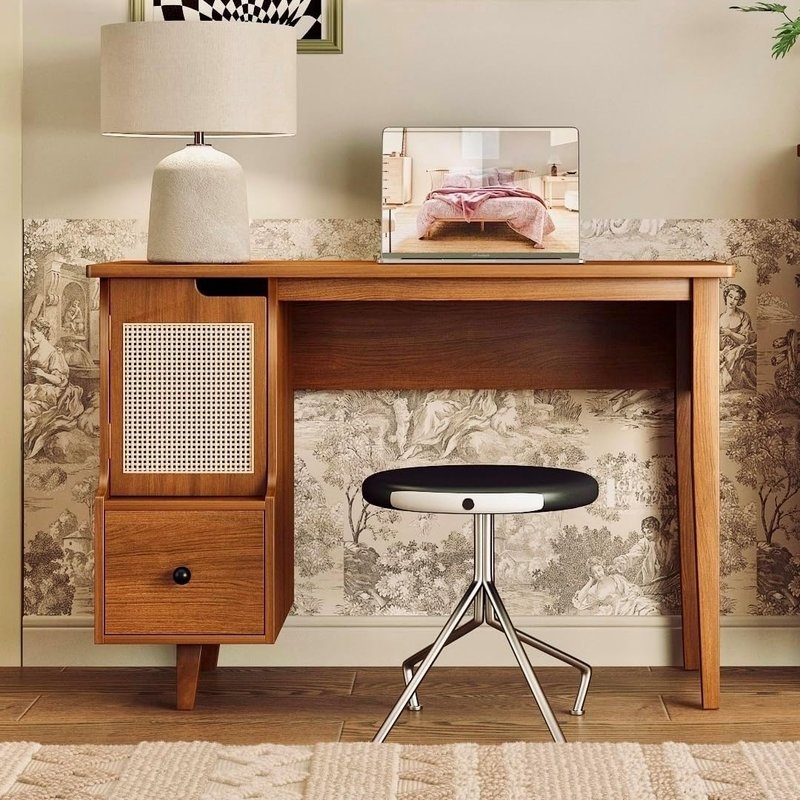
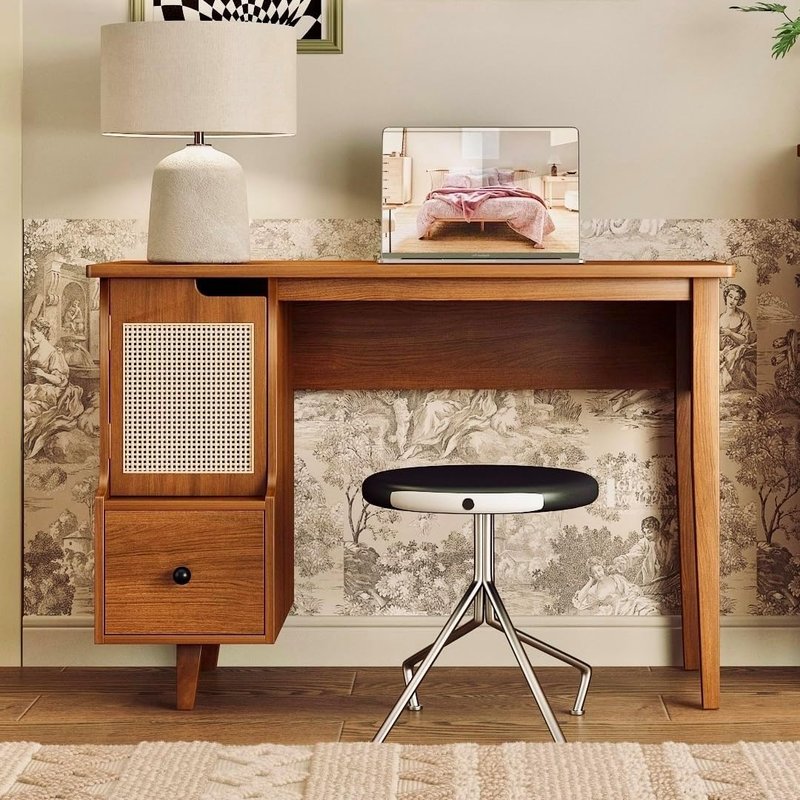
ukorua Vintage Mid-Century Modern Desk with Drawer & Storage
Solid mid-century desk with a built-in drawer and open shelf, filling the storage gap the Hughes leaves. Tapered legs and warm wood finish suit most home offices.
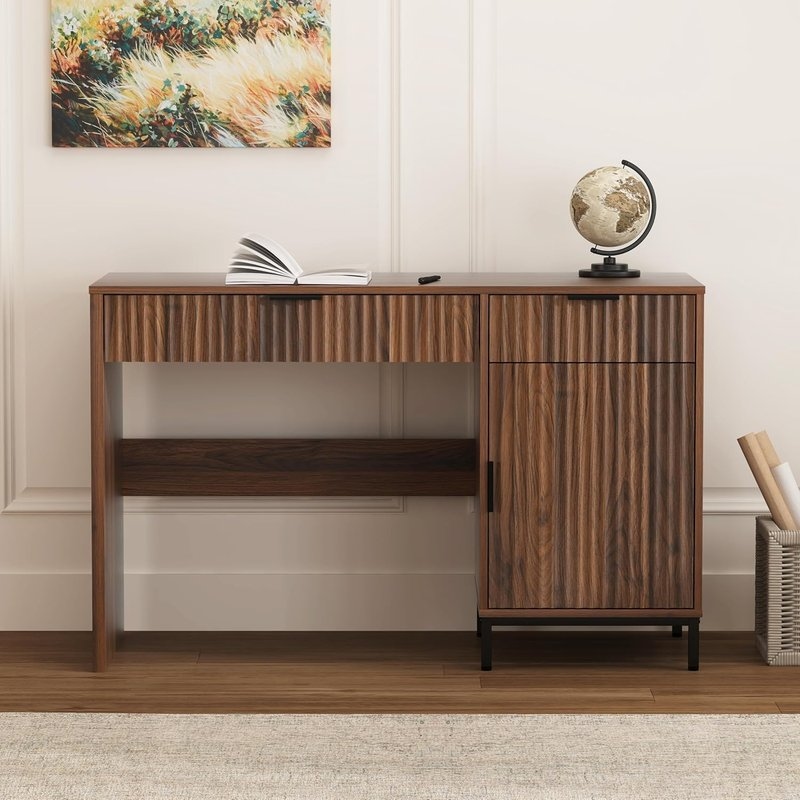
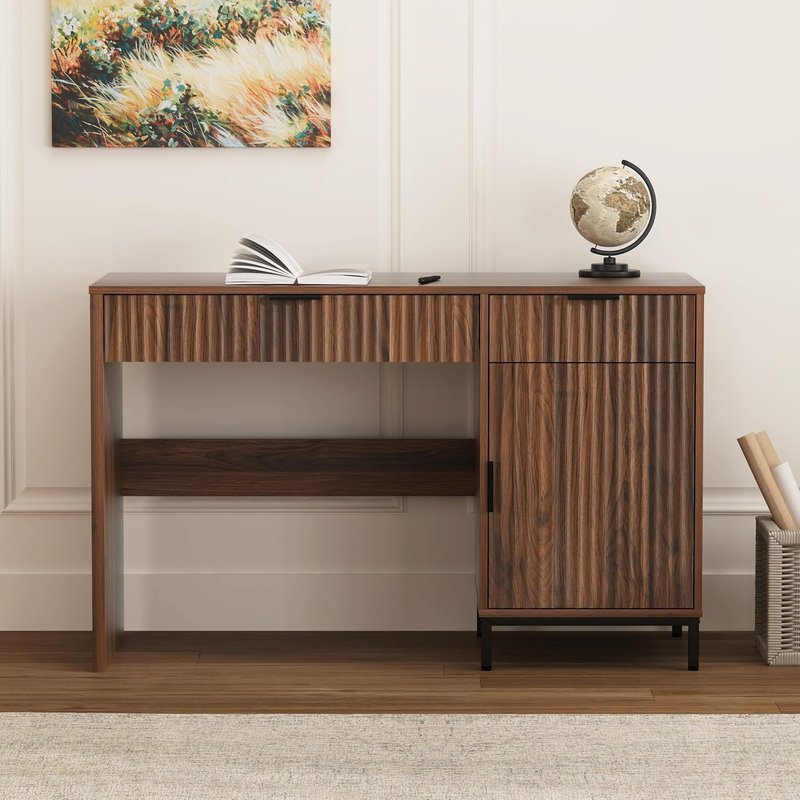
Moomjiee 47" Office Desk with Fluted Drawers & Storage
Same 47" mid-century footprint as the Hughes with a warm wood finish and more drawer storage at a lower price. Fluted drawer fronts add subtle texture.
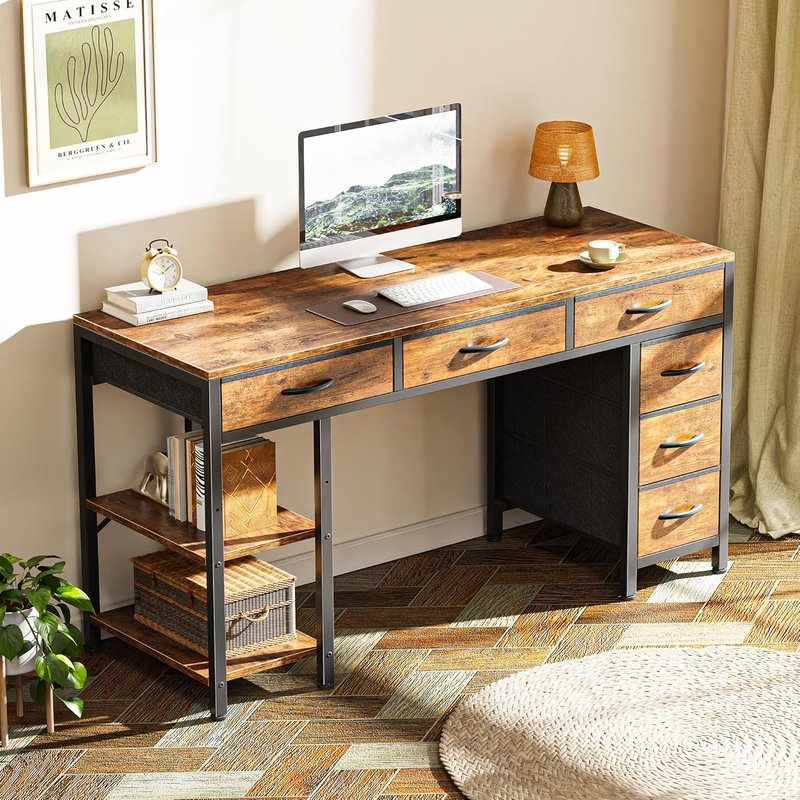
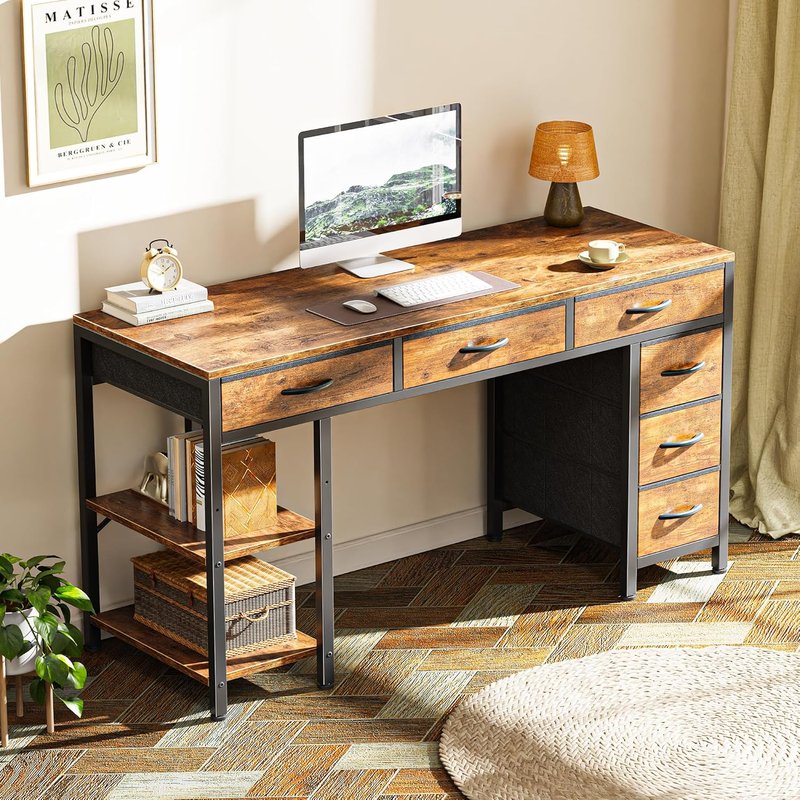
Huuger Computer Desk with 6 Drawers & Reversible Shelves
Six drawers plus reversible shelving you can flip to either side, so it slots into tight rooms the fixed Hughes layout can't fit. Trades the Hughes finish quality for budget pricing.
You Might Also Need
Accessories worth grabbing alongside your purchase
More West Elm Reviews
See all →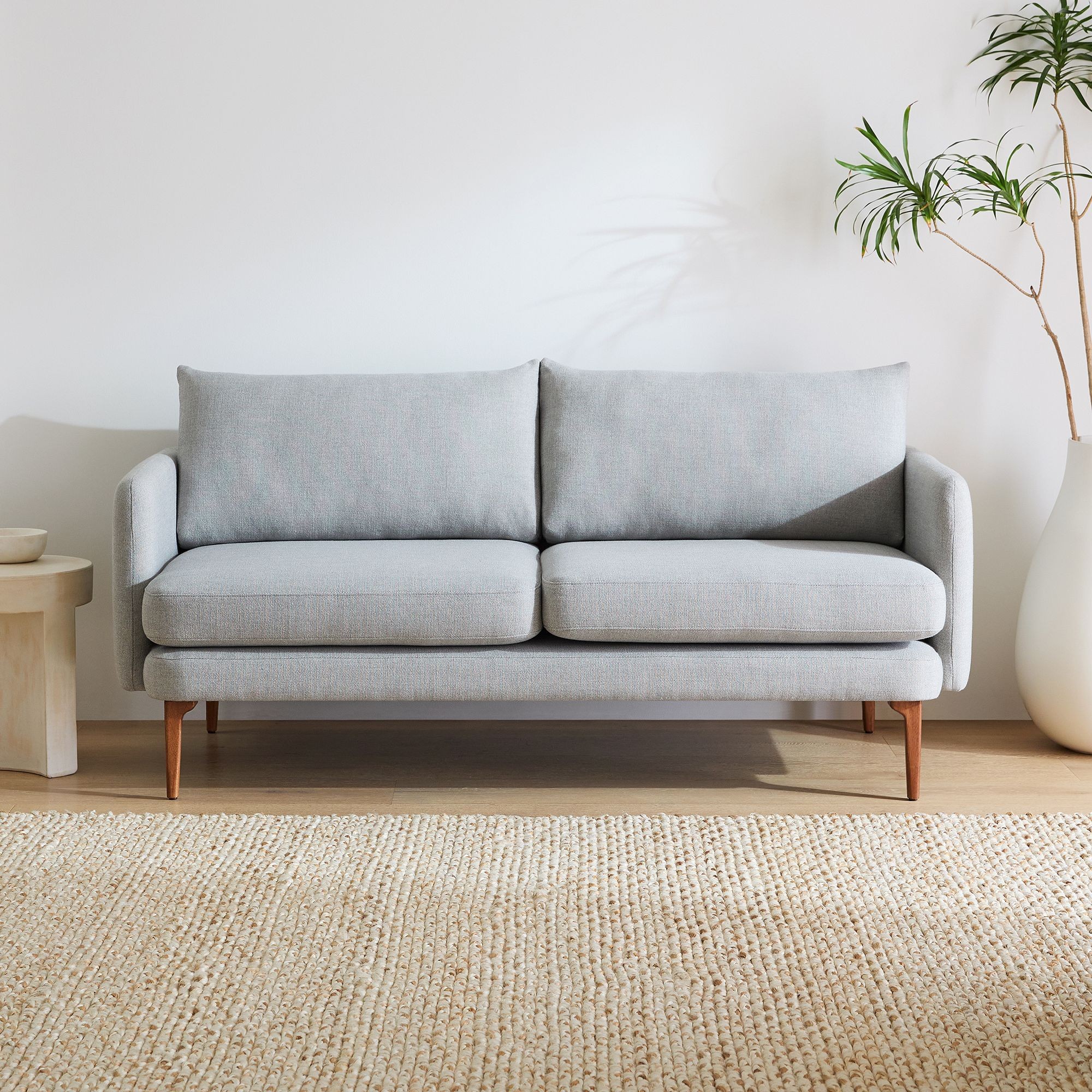
West Elm Auburn Sofa Review: Compact Build + Our Honest Verdict
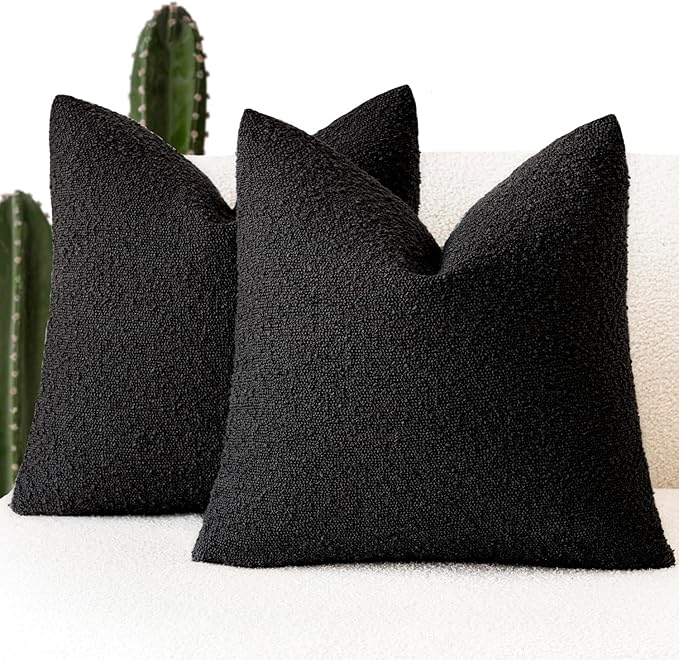
Best Throw Pillows for a West Elm Harmony Sofa: Sizes, Texture, and Layering
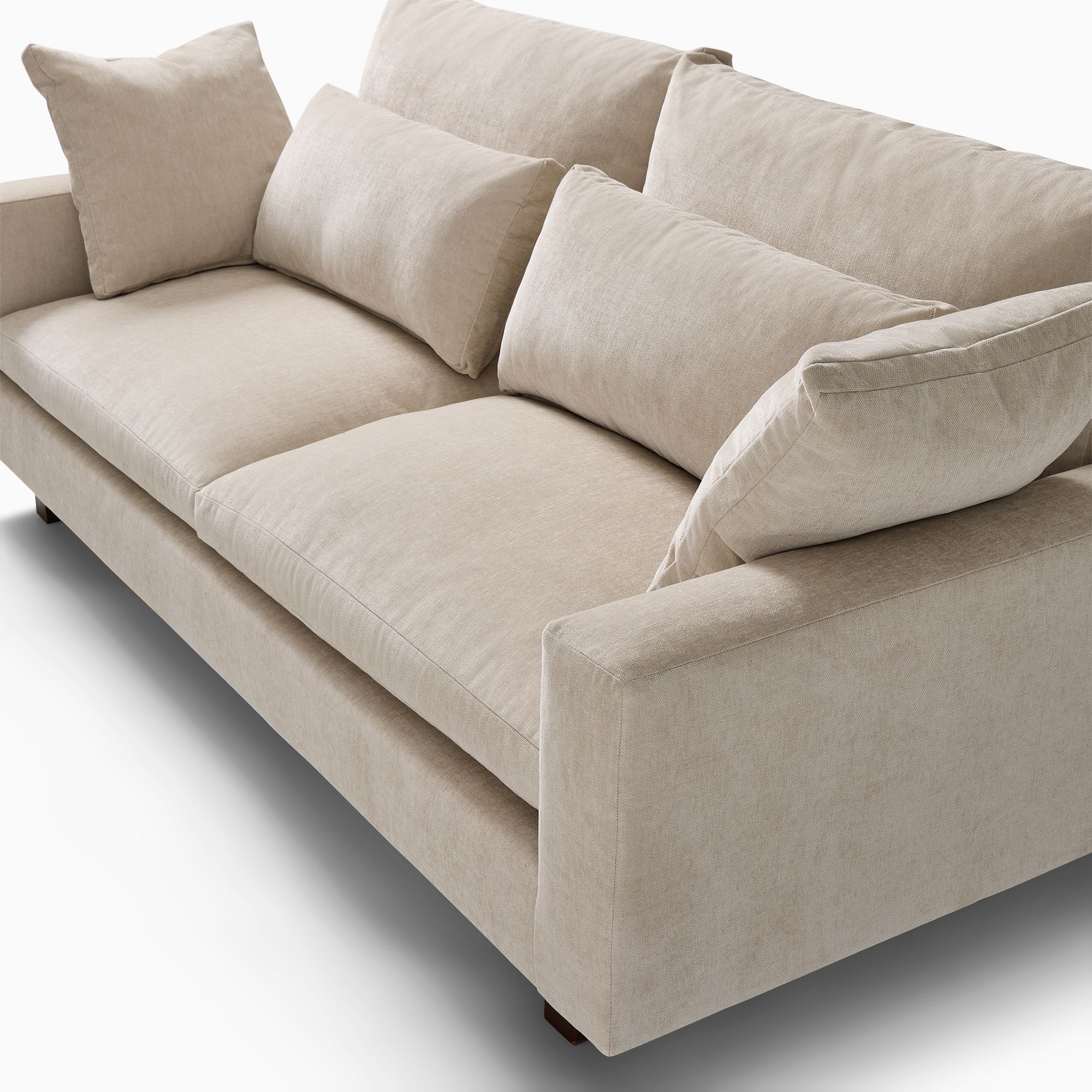
West Elm Harmony Cushions Sagging? The $40 DIY Fix (And When to Give Up)
West Elm Peggy Sofa Reviews + Our Honest Verdict
How Does It Compare?
Side-by-side breakdowns featuring this product