Pottery Barn
Pottery Barn Cameron Sofa Reviews + Our Verdict
By Sam Hollis · Updated September 2026
Independent editorial review. We never accept payment for coverage, though we may earn a commission if you purchase through our links.
Verdict
Cameron owners on Houzz report general satisfaction with the construction, calling it "well built" and comfortable for daily use, with the roll arms' lack of cushioning as a recurring note. Families with young children consistently push new buyers toward Sunbrella or performance fabric, and the ones who did it report zero regrets. Durability expectations look realistic: buyers treat this as a 5-8 year sofa rather than a multi-decade heirloom.
Read full take ↓Similar sofas
Quick Take
The warmer, more traditional alternative to the PB Comfort on the same suspension spec, for $200 to $400 less. No-sag steel sinuous springs in a corner-blocked frame with mortise-and-tenon joinery, upholstered at Pottery Barn's own Sutter Street Factory. The polyester-wrapped cushions sit firmer than the Comfort's down blend, so choose on cushion feel.
British country house character at an American retail price
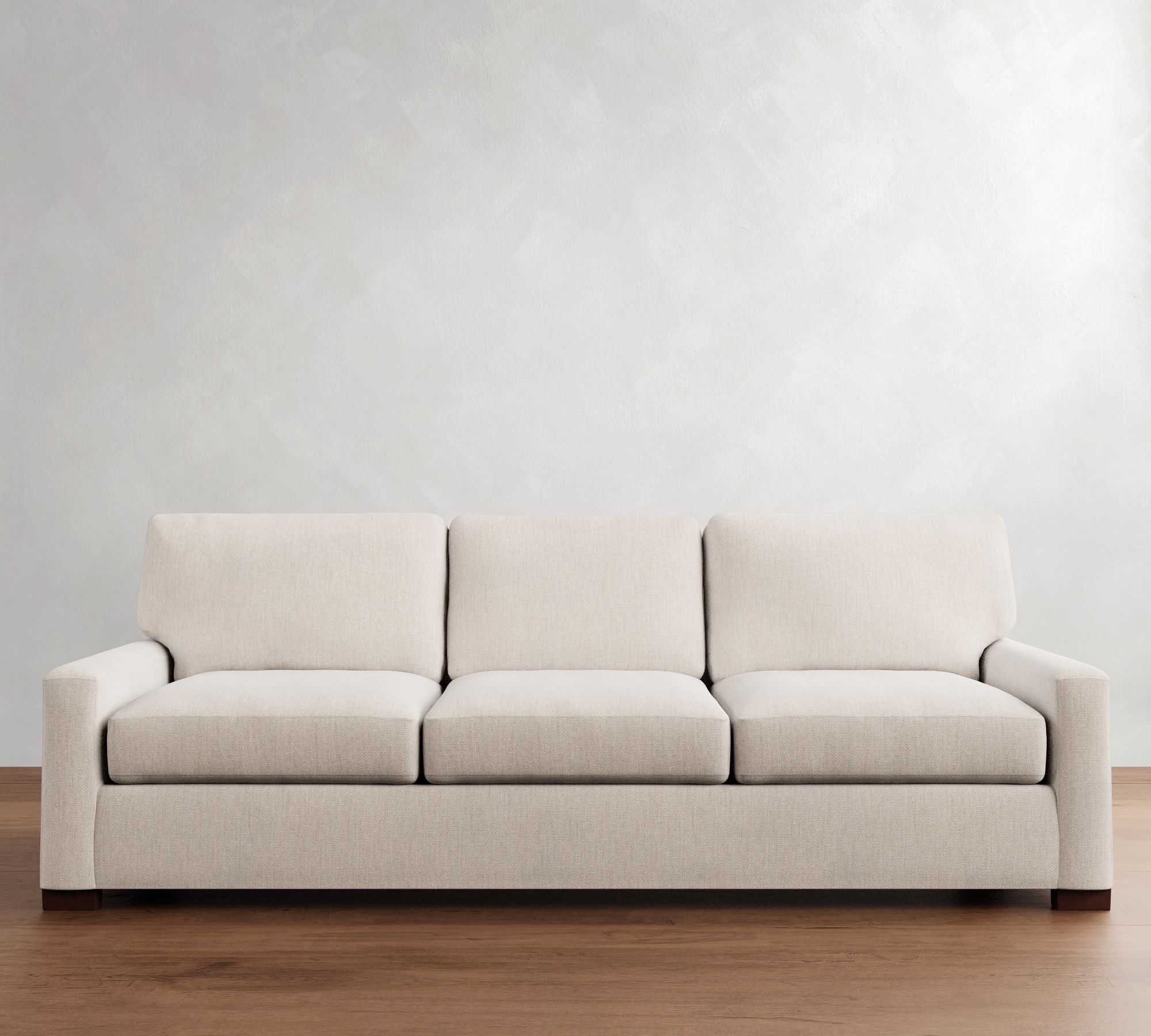
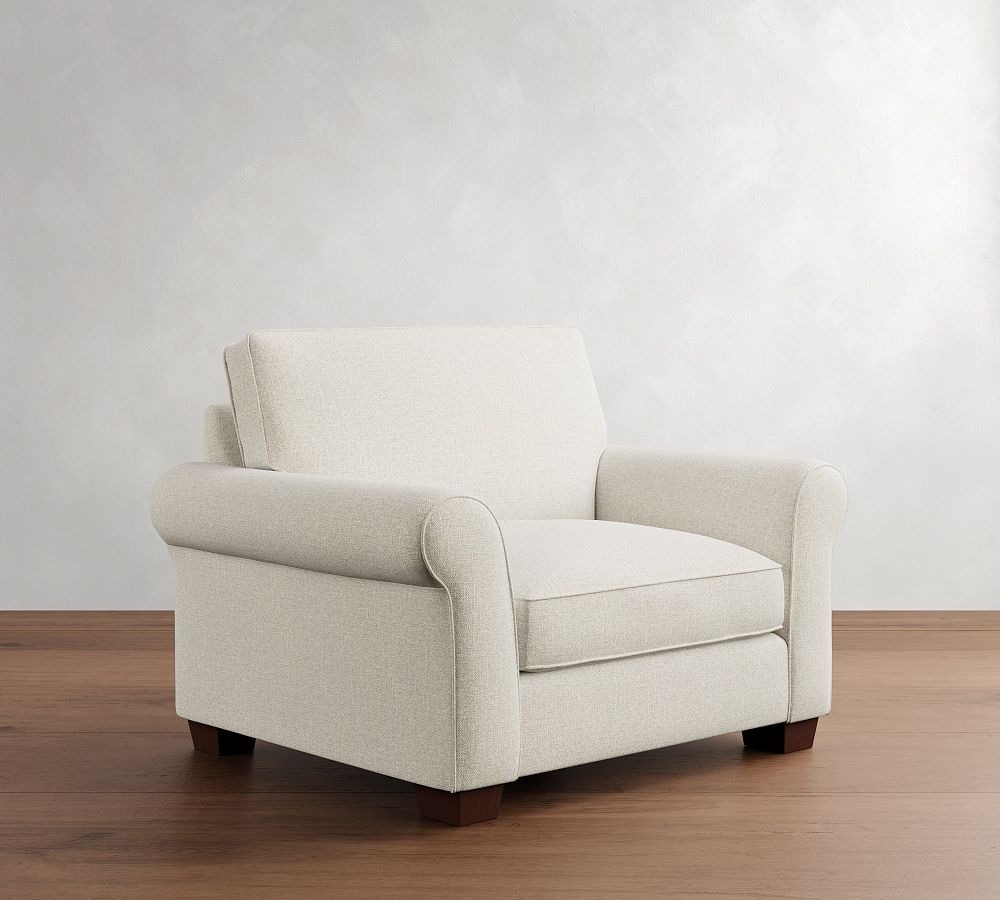
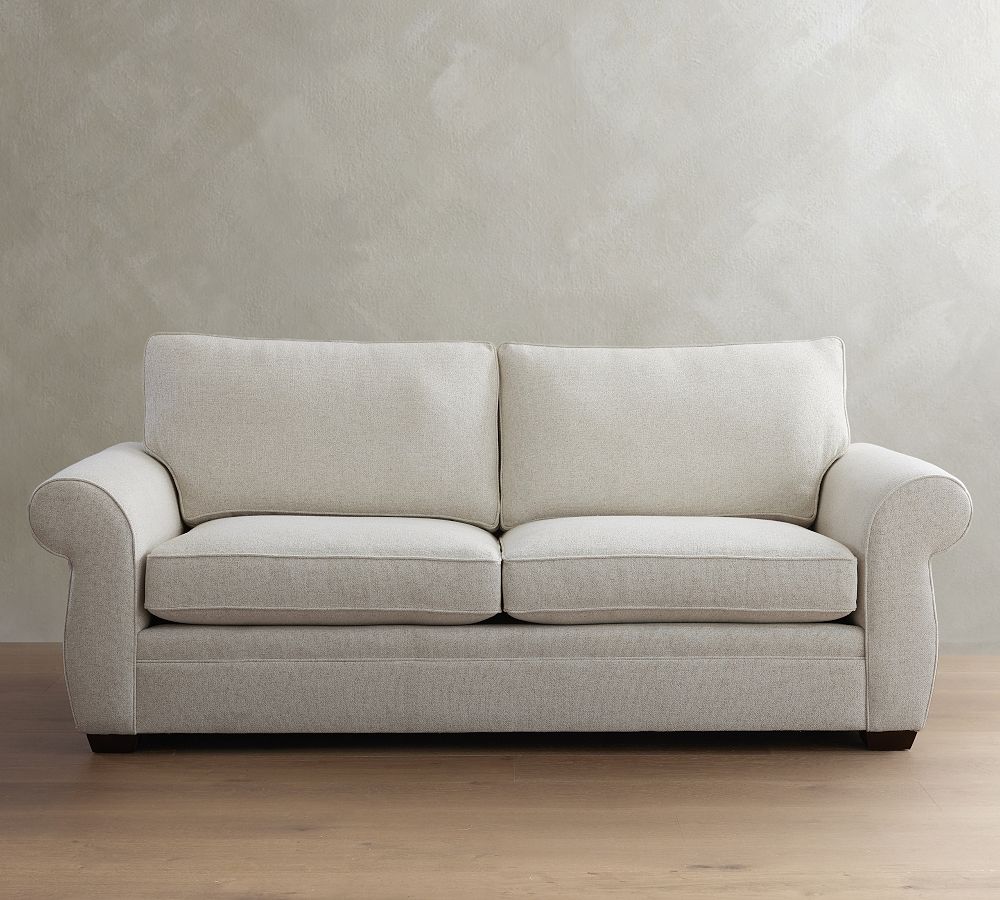
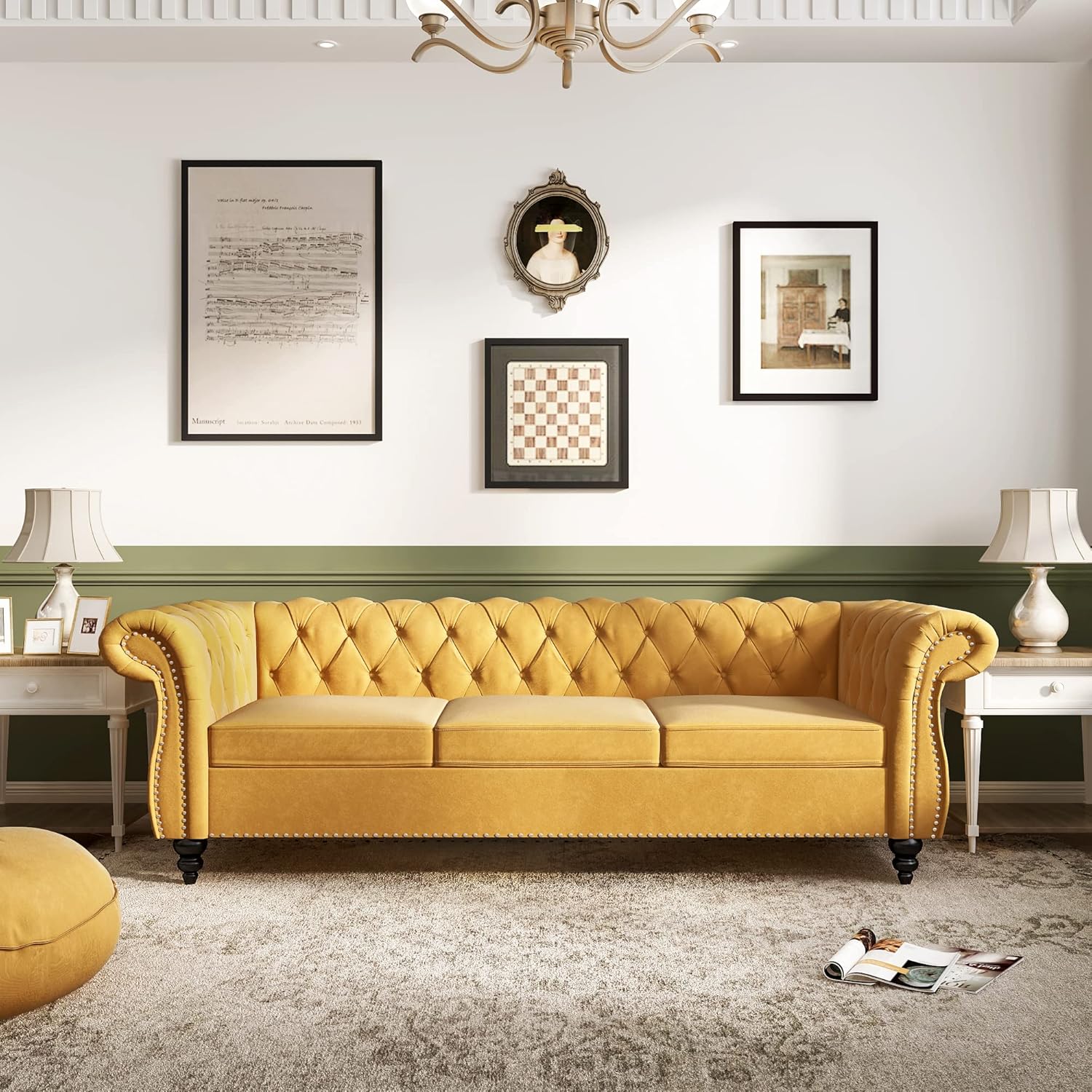
The Pottery Barn Cameron Roll Arm Sofa lands in a specific design niche and nails it: the relaxed, layered, antiques-adjacent living room that looks like it assembled itself over decades. The rolled arm is the signature detail that makes that possible. A square arm reads deliberate and contemporary. A rolled arm carries history, referencing the deep-cushioned English club sofas and country house drawing rooms that have been the aspirational picture of comfortable domesticity for generations. If you've ever walked into a room that mixed a worn leather Chesterfield with linen-upholstered seating and thought it looked put together without any visible effort, the Cameron is the new-sofa approximation of that. It doesn't try to look old. It just sits comfortably next to pieces that do.
The rolled arm as a design signature
The rolled arm is a signal more than a style preference. It tells a room this piece belongs to a tradition of comfortable, informal furniture. It pairs naturally with warm wood tones, brass hardware, layered textiles, and the kind of room that has books on the shelves rather than objects on pedestals. It doesn't pair as naturally with ultra-modern or industrial aesthetics. For a buyer who knows what they want, that specificity is a feature.
The Cameron commits to a design vocabulary, which is why it does one particular thing extremely well. If you want a neutral, works-anywhere sofa, the Comfort Square Arm serves you better. If you're building a room with warmth, layer, and a European residential feel, the Cameron is invaluable.
Sectional and chaise configurations
The Cameron comes in sectional configurations and with an optional chaise extension, which makes it workable in larger living rooms or open-plan spaces where a single sofa would look undersized. The sectional keeps the rolled arm profile on the exposed ends, so the design coherence that makes the piece work survives. The chaise suits informal family rooms where somebody always wants their feet up.
The same construction foundation as the Comfort
The Cameron shares the Comfort Square Arm's construction fundamentals: no-sag steel sinuous springs and an engineered wood frame with corner-blocked, mortise-and-tenon joinery. That is the genuine quality advantage of buying from Pottery Barn's upholstered line, and the frame carries UL GREENGUARD Gold certification for low chemical emissions.
One cushion note applies. The standard cushions are polyester-wrapped for a firmer feel and good shape retention, while Pottery Barn offers a down-blend wrap for a softer sit. The down-blend option needs regular fluffing to keep looking right, so if you choose it, factor the bench cushion upgrade into your decision, since it solves the maintenance question cleanly.
Fabric strategy for the Cameron
The Cameron's design language is warm and tactile, so fabric choice matters more here than on a more neutral silhouette. Performance velvet is the top recommendation across design press and owner reviews. It photographs beautifully, has the depth of tone the rolled arm profile deserves, and takes hard use, running well past the 50,000 double-rub residential standard. Navy, forest green, rust, and warm grey in performance velvet are the combinations that consistently photograph well and age gracefully.
For something more casual and layered, performance linen or a performance textured weave works. Standard linen is beautiful and more demanding, since pilling is common and you'll want a fabric shaver after a few years. A Cameron in warm white or oatmeal linen gets the English-country-house effect most fully and asks for the most care to hold it.
Honest pricing assessment
$2,099 for the base configuration, rising past $3,800 for sectional arrangements in premium fabrics, opens about $200 below the Comfort Square Arm's base and overlaps it across configurations. The same advice applies too: Pottery Barn runs 20-30% sales regularly, and paying full price is rarely necessary. At 25% off, solid sinuous-spring construction with a design profile that earns its price is a strong value.
The honest comparison is against comparable-quality custom upholstery, where a rolled arm sofa built to this construction standard would start around $4,000 and climb from there. Seen that way, a Cameron bought on sale is genuine value for buyers who know what they're getting.
Where the Cameron works and where it doesn't
It performs best in rooms whose design vocabulary is already warm, layered, or historically grounded. It reads naturally beside antique furniture, Persian rugs, warm hardwood floors, and the kind of accumulated room that looks like it evolved rather than got designed in one go. Against clean white walls, minimal furniture, and a Scandinavian or contemporary palette, the rolled arm can feel out of place, not wrong exactly, but slightly self-conscious.
Room planning matters here, so check the scale carefully. The Cameron's rolled arm is generous in its proportions, and the sofa reads larger than sofas with track or tight arms at the same nominal dimensions. In a living room under 250 square feet, the three-seat Cameron can dominate. At 300 square feet or more, the proportions are exactly right.
Keeping the back cushions from going flat
The down-blend back cushions are the one maintenance variable that needs active management across Pottery Barn's upholstered line. On the Cameron, where the whole design language leans on warmth and comfort, flat compressed back cushions fight the aesthetic goal directly. A Cameron with neglected back cushions looks tired in a way a square-arm sofa might not.
Two practical strategies handle it. Add a weekly five-minute fluffing and rotation routine to your cleaning schedule. Many Cameron owners report doing it on the same day as their regular cleaning, and the discipline disappears into the routine over time. Or take the bench cushion upgrade, which swaps loose back cushions for a more structured alternative, the clean solution especially on chaise and sectional configurations where the back cushion count runs higher.
Frame and suspension, PB's core construction standard
An engineered wood frame with corner-blocked, mortise-and-tenon joinery at the key stress points, the same foundation found across Pottery Barn's upholstered line. The rolled arm makes more structural demands than a track arm, with more upholstery area and a more complex form, and the frame construction answers that with reinforced attachment points where the arm meets the back and seat frame.
No-sag sinuous springs
The seat suspension is no-sag steel sinuous springs, heavy-gauge S-shaped wires run front to back and clipped to the frame. They give firm, even support across the seat and a responsive give under weight, and Pottery Barn uses partially recycled steel in them.
The sinuous system holds up well over years of regular use, and multiple Cameron owners report no change in seat character after five or more years of daily use.
Cushions and back maintenance
The standard seat and back cushions are polyester-wrapped for a firmer feel and reliable shape retention. Pottery Barn also offers a down-blend wrap for a softer sit, and that is the maintenance variable, since down-blend cushions compress with use and need regular redistribution. Weekly fluffing keeps them looking full and even. Skip it and they flatten and lose the plush character.
The bench cushion upgrade replaces the loose back configuration with something more structured. If you use the sofa daily and would rather not maintain a pillow arrangement, pay the additional cost. Multiple owners call it the configuration change they wish they'd made initially.
Performance velvet and the fabric library
Pottery Barn's performance velvet carries a 100,000+ double-rub count, well past the 50,000 standard specified for residential use, resists stains, and cleans with mild soap and water. It's the top recommendation for the Cameron on both durability and looks, since the pile depth suits the rolled arm profile and photographs with genuine richness.
The full fabric library runs over 100 options across cotton-linen blends, performance weaves, velvet, and premium choices. Warmer tones in heavier textiles serve the Cameron's design vocabulary best. Light performance fabrics can make the piece feel less substantial than its construction deserves.
Sectionals and delivery
Sectional and chaise configurations are built to the same construction standard as the base sofa. The modular connection system holds together well, with no documented loosening in owner reports. Pottery Barn's white-glove delivery gets good marks on large pieces including sectionals. Pottery Barn does not publish a manufacturer warranty on the sofa; the product page states none, and coverage is limited to the 30-day return window.
Our Ratings
Overall score
No-sag steel sinuous springs in a corner-blocked frame with mortise-and-tenon joinery, the same suspension as the PB Comfort, upholstered at Pottery Barn's Sutter Street Factory from USA and imported materials. Seat cushions are polyester-wrapped for a firmer, more structured feel, and the whole piece is GREENGUARD Gold Certified. The one catch: the product page states no manufacturer warranty.
The Cameron's roll arm and generous proportions give it a warmer, more traditional read than the Comfort's square arm, while staying inside PB's classic vocabulary. Strong in transitional and traditional rooms.
Priced $200-$400 below the Comfort at a comparable configuration, on the same sinuous spring construction spec. The polyester-wrapped cushions sit firmer than the Comfort's down-blend option. Slightly better value than the Comfort if you prefer the roll arm aesthetic and a firmer seat, and the GREENGUARD Gold certification is a practical bonus.
What People Are Saying
Cameron owners on Houzz report general satisfaction with the construction, calling it "well built" and comfortable for daily use, with the roll arms' lack of cushioning as a recurring note. Families with young children consistently push new buyers toward Sunbrella or performance fabric, and the ones who did it report zero regrets. Durability expectations look realistic: buyers treat this as a 5-8 year sofa rather than a multi-decade heirloom.
Reddit and Houzz commentary are weighted 3× against blog and editorial sources in our sentiment score. Brand PR has a well-documented influence on editorial coverage — direct owner reports from message boards tend to be more candid.
What Houzz Is Saying
“I've had the Cameron Slipcovered square arm sofas (86" with sleeper and 60"). They have held up well and are still comfortable after 6 years (purchased 2016). We have two boys and their neighborhood friends hang out on them. I'm sure a soccer ball has been kicked into them hundreds of times. I chose the Performance Tweed on Slate. I love it. It's gray with a hint of blue and is easy to coordinate with. Very few signs of wear and nothing stains it.”Source →
“we purchased the Cameron Sectional about a year ago and mostly happy with it! It appeared to be well built. We did upgraded to the Sunbrella Fabrics since we have 2 little ones. So far so good with the fabric. we also picked this one since it is one of the best fit for our space and very comfortable except for the armrest which have barely any cushioning.”Source →
“We bought a Cameron 88" sofa in the upgraded performance fabric in Desert color. We have had it less than a year and we are not happy with the way it is holding up. The arms are very hard (this was a problem from the beginning) and seem like there was no cushion wrapped around the arms. They are literally flat looking on the top of the arms, not rounded, and you can feel hard pieces of wood under the arm fabric. For an upgraded fabric, we are highly disappointed. Within one month (!) the fabric was pilling!”Source →
“I got 2 Cameron Roll Arm Sofas for a second home 4 months ago. I went to a store for a comfort test and thought it was pretty comfy (at least the one in the store was). Now that I have them, I agree with the above comment. You can NOT lounge on this sofa. It is very upright and short seated. The back cushions are pretty puffy/lumpy which takes up even more space and pushes you forward.”Source →
“I am returning our Cameron sectional because of the hard arms and lack of depth. It is comfortable to sit on, but not to lounge on. Thankfully PB was fantastic and refunded my money for it. I ended up with the Sullivan deep seat sectional instead and am waiting for it to come.”Source →
Frequently asked questions
Is the Pottery Barn Cameron Sofa worth it?
The warmer, more traditional alternative to the PB Comfort on the same suspension spec, for $200 to $400 less. No-sag steel sinuous springs in a corner-blocked frame with mortise-and-tenon joinery, upholstered at Pottery Barn's own Sutter Street Factory. The polyester-wrapped cushions sit firmer than the Comfort's down blend, so choose on cushion feel.
How is the Pottery Barn Cameron Sofa built?
No-sag steel sinuous springs in a corner-blocked frame with mortise-and-tenon joinery, the same suspension as the PB Comfort, upholstered at Pottery Barn's Sutter Street Factory from USA and imported materials. Seat cushions are polyester-wrapped for a firmer, more structured feel, and the whole piece is GREENGUARD Gold Certified. The one catch: the product page states no manufacturer warranty.
What styles does the Pottery Barn Cameron Sofa work with?
The Cameron's roll arm and generous proportions give it a warmer, more traditional read than the Comfort's square arm, while staying inside PB's classic vocabulary. Strong in transitional and traditional rooms.
What do real owners say about the Pottery Barn Cameron Sofa?
Cameron owners on Houzz report general satisfaction with the construction, calling it "well built" and comfortable for daily use, with the roll arms' lack of cushioning as a recurring note. Families with young children consistently push new buyers toward Sunbrella or performance fabric, and the ones who did it report zero regrets. Durability expectations look realistic: buyers treat this as a 5-8 year sofa rather than a multi-decade heirloom.