IKEA
IKEA KIVIK Sofa Reviews + Our Honest Verdict
By Sam Hollis · Updated October 2026
Independent editorial review. We never accept payment for coverage, though we may earn a commission if you purchase through our links.
Verdict
Reddit is more divided on the KIVIK than on almost any other IKEA sofa, and the fault line runs between old and new production runs. Longtime owners from the foam-cushion era report exceptional durability and comfort, while recent buyers on the pocket-spring version often say the cushions feel closer to a park bench than a living room sofa at delivery. Both camps praise the washable covers almost universally, and that's the feature that keeps even cushion-frustrated owners recommending the sofa. The r/IKEA subreddit has running threads on the break-in timeline, with the consensus landing at three to six months of daily use before the springs noticeably soften. Several owners suggest laying a folded blanket under the cushions during break-in to compress the springs from below. The aftermarket slipcover makers (Comfort Works, Bemz) now cover the KIVIK, so there are fabric upgrade options once the originals wear out.
Read full take ↓Similar sofas
Quick Take
A pragmatic build that a decade of owner reports says holds up, with the washable slipcover as the real advantage over its direct-to-consumer rivals. Solid and engineered wood with side arms bolted to the back frame rather than relying on cam locks, and every fabric surface comes off. A good pick if you want a low, neutral sofa you can strip and wash.
Is the IKEA KIVIK a comfort baseline or a compromise?
The IKEA KIVIK has been one of the most talked-about sofas in the budget-to-midrange category for years, and the conversation online has never been more split than it is now. On one side, longtime owners whose KIVIK has held up beautifully for eight to ten years through multiple moves and three kids. On the other, recent buyers who find the cushions so firm they're comparison-shopping within months of delivery. Both experiences are real, and explaining why they diverge is the most useful thing this review can do.
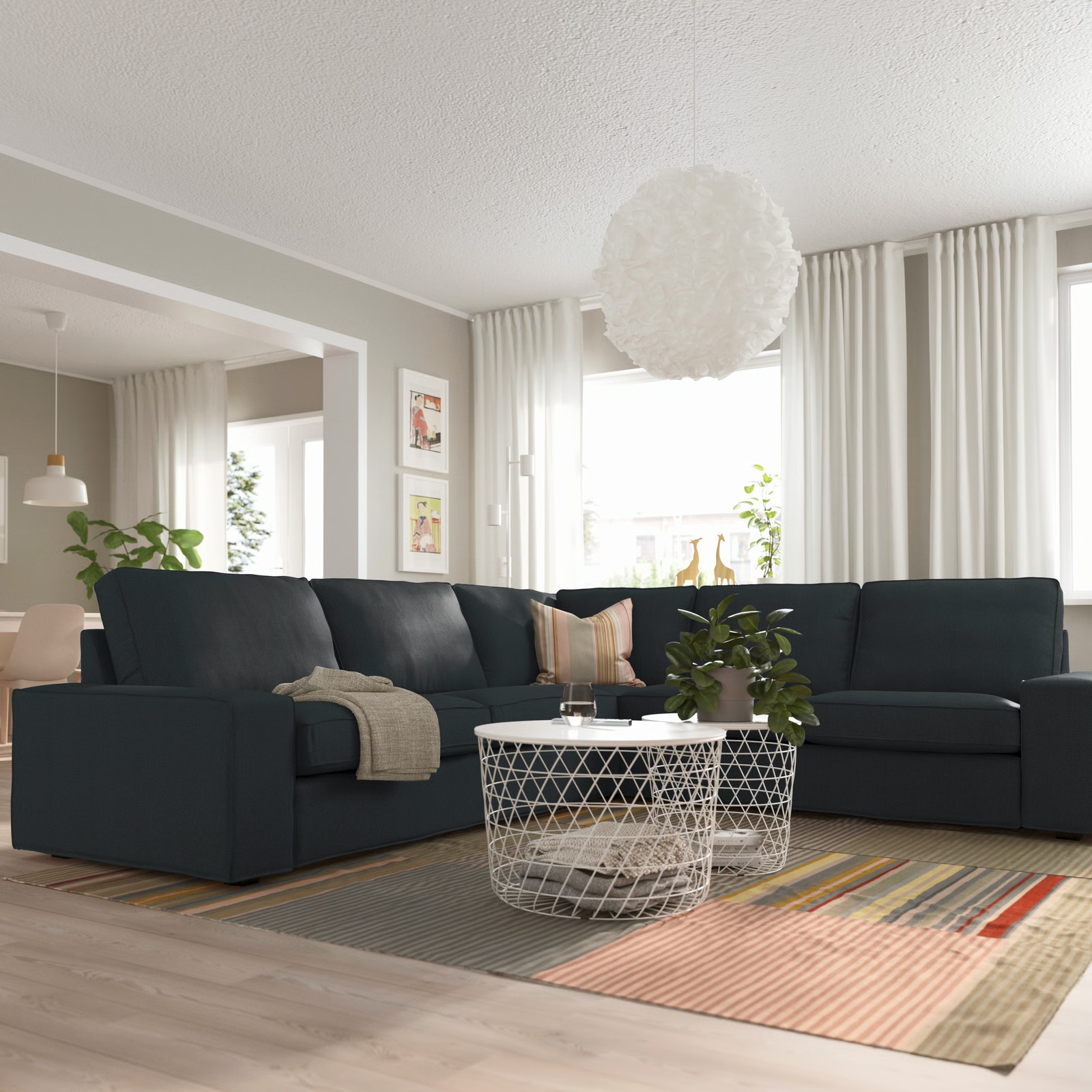
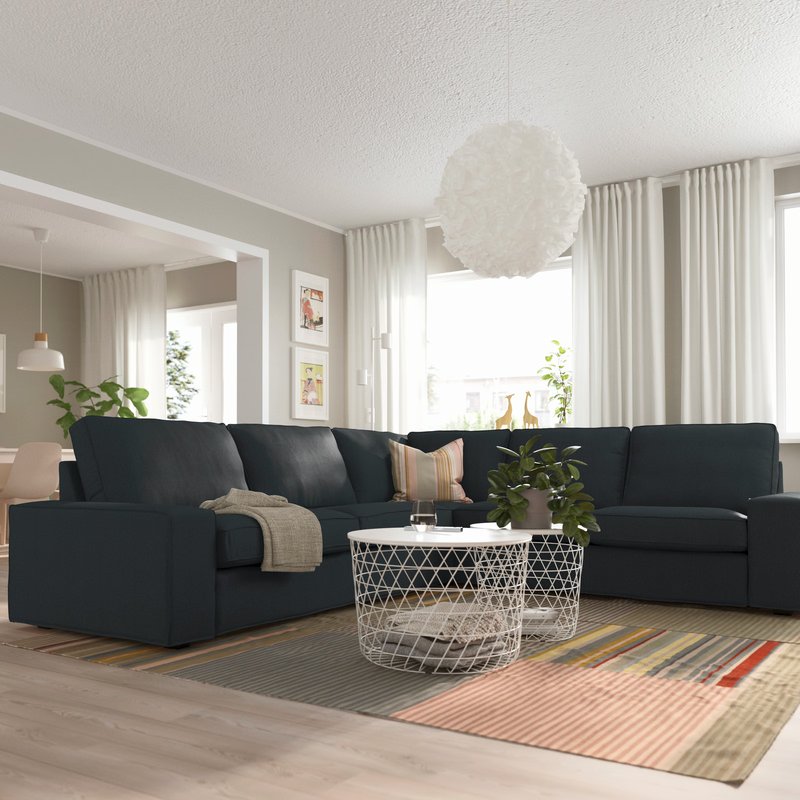
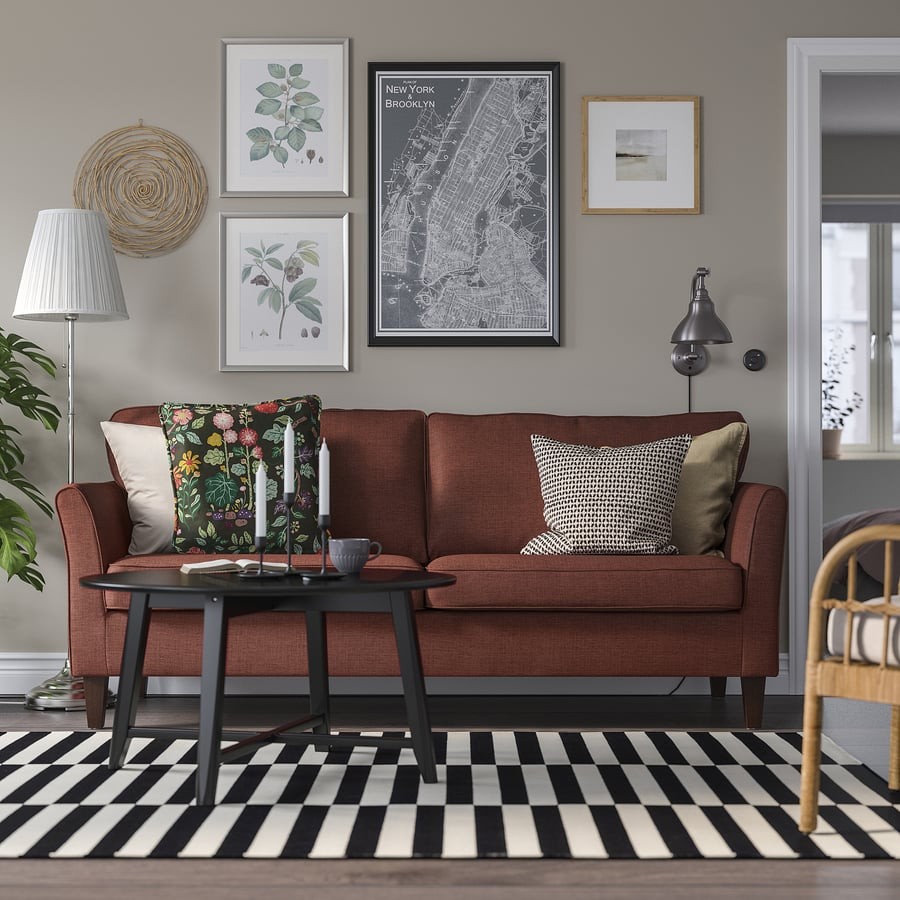
In most respects the KIVIK is a plain sofa. It comes in two-seat, three-seat, and three-seat-with-chaise configurations, with a low-profile silhouette that reads contemporary-casual rather than styled. The seat is deep, which suits people who curl up instead of sitting upright. The covers come off and go in the washing machine, and that's the feature the subreddits praise more than any other. At around $799 for a three-seat, it lands against the whole field of mid-tier online sofa brands while staying cheap by retail furniture standards.
Cushions are where it gets complicated. IKEA changed the KIVIK's cushion construction in recent years, moving from a foam-forward build to pocket springs embedded in the seat cushions. The springs are there to hold shape better over the long haul. In practice the new cushions are much firmer than the old ones, and they need a real break-in that some owners never come to like. Reddit has noticed, and the sharpest negative reviews come from buyers who owned older KIVIKs.
That's the tension in the KIVIK story. A sofa with excellent washable upholstery, an honest price, and a long durability record, muddied by a cushion reformulation that let down some loyal buyers. What follows should give you enough to figure out which camp you'll land in.
Sit on a KIVIK for the first time and the impression is of a sofa that knows what it is. No luxury pretensions. Pragmatic proportions, functional fabric options, an aesthetic that's clean without being distinguished. This is furniture for living rooms that get used, and every choice reflects that. The low frame works in small apartments without eating visual space. The deep seat rewards the sprawling, cross-legged, fully horizontal habits most people bring to their own sofa, whatever they'd tell a designer.
The cover system deserves extra space, because nothing else in the market matches it. Most sofas under $1,000 are either fully upholstered, meaning no washability, or come with a single loose cushion cover that leaves the base fabric alone. The KIVIK's slipcover covers everything: armrests, seat deck, back, cushions. So the whole sofa cleans up on a normal household wash cycle, and that's not an abstraction. It's why KIVIK owners stay happy after years of use, pets, and children. A $799 sofa you can put through the washing machine solves a problem $3,000 sofas with dry-clean-only upholstery never touch.
Construction and materials
The KIVIK frame combines solid wood and engineered wood components, in line with what IKEA uses across its sofa line at this price. It's not solid hardwood throughout, and anyone expecting furniture-grade construction at $799 should adjust. Even so, owner reports spanning a decade or more show real durability, with structural failures rare given how many of these sofas are out there.
The upholstery is the KIVIK's most distinctive piece of engineering. The whole sofa is slip-covered, so every fabric surface has a removable, machine-washable cover. The covers zip off and go into a standard home washer, which makes the KIVIK far easier to live with than a conventionally upholstered sofa. Owners with pets, kids, or just a busy living room cite this as why they picked the KIVIK and why they keep recommending it.
The cushions now use pocket springs instead of straight foam. In principle that's a real upgrade, since pocket springs hold shape better than foam alone over time. The execution produced cushions that arrive quite firm and take a lot of sitting before they get anywhere near the softness buyers expect from a budget-segment sofa. Owners upgrading from an older KIVIK are often startled by the change; buyers with no prior reference tend to take the firmness as a characteristic.
Variability between older and newer KIVIK production runs is worth understanding. IKEA has revised the internal components over the years, and the move to pocket-spring seat cushions is the biggest recent change. Pocket springs went in to improve long-term shape retention, since foam alone compresses permanently over years while springs keep their height through regular flexing. In theory, an upgrade. In practice, the springs deliver a firmness at delivery that some owners dislike until break-in does its work, which can take three to six months of regular use.
Frame connections are solid by IKEA standards. The side arms bolt to the back frame rather than using cam locks, which resists lateral loading better, the kind you get when someone drops onto the sofa sideways or when it gets moved repeatedly. The feet are plastic with floor protection built in. None of this matches a higher-end piece, but for the price and the use profile the record holds up: owners regularly report KIVIK frames intact after a decade, moves and reassembly included.
Our Ratings
Overall score
The KIVIK mixes solid and engineered wood, a pragmatic build a decade of owner reports says holds up, with side arms bolted to the back frame rather than relying on cam locks. Every fabric surface comes off for machine washing, which almost no sofa at any price offers. The catch is the recent pocket-spring cushions: they arrive much firmer and need a break-in, with owners reporting 3-6 months before they soften. Honest for the money.
What the KIVIK doesn't do defines its look: a low, clean profile with slab arms and soft curves, neutral enough for contemporary, Scandinavian, transitional, or casual traditional rooms. IKEA offers it in a range of fabrics, so you match it to the room instead of redesigning around it. The low seat is deliberate and good for lounging, though it feels awkward for older buyers and anyone who sits upright. Its restraint reads as competence.
At $799 for a three-seat and $999 with the chaise, the KIVIK takes on the direct-to-consumer tier from Burrow, Albany Park, and Apt2B, and the washable slipcover is what they mostly don't match here (Burrow's upholstery is fixed, Albany Park's covers spot-clean only). Owner reports spanning eight to ten years make its cost per year compare well even against cheaper options. The caveat is the cushions: expect a break-in, not immediate softness.
What People Are Saying
Reddit is more divided on the KIVIK than on almost any other IKEA sofa, and the fault line runs between old and new production runs. Longtime owners from the foam-cushion era report exceptional durability and comfort, while recent buyers on the pocket-spring version often say the cushions feel closer to a park bench than a living room sofa at delivery. Both camps praise the washable covers almost universally, and that's the feature that keeps even cushion-frustrated owners recommending the sofa. The r/IKEA subreddit has running threads on the break-in timeline, with the consensus landing at three to six months of daily use before the springs noticeably soften. Several owners suggest laying a folded blanket under the cushions during break-in to compress the springs from below. The aftermarket slipcover makers (Comfort Works, Bemz) now cover the KIVIK, so there are fabric upgrade options once the originals wear out.
Reddit and Houzz commentary are weighted 3× against blog and editorial sources in our sentiment score. Brand PR has a well-documented influence on editorial coverage — direct owner reports from message boards tend to be more candid.
What Reddit Is Saying
“Our kivik is over twenty years old now, still kicking after multiple moves and assembly. It's still our favorite sofa, it just needs new covers.”View thread →
“We've had ours for almost 6 years now and love it. We have three kids and a dog and it's held up very well, the washable covers are amazing. They tighten up a little after washing which helps the cushions to retain their firmness as well.”View thread →
“I got a 2-seater Tallmyra Kivik last year and it is great, best sofa purchase in 25 years. Firm enough to stay in shape for ages, and yet comfy for both heavy and light persons, thanks to the pocket springs embedded into the cushions.”View thread →
“I think it depends on the model. We have a Kivik and it's comfortable and has maintained its shape really well. We've had it for four years.”View thread →
“Big No for the new Kivik. I had the older version for 10 years and absolutely loved it — incredibly comfortable, and I even used to sleep on it. The new version may look the same, but it's a huge disappointment. The cushions are extremely firm and it's uncomfortable to sit on for more than 30 minutes. I had to return mine after just one week.”View thread →
“I bought a kivik in 2022 and it was rock hard when I got it. A year later after heavy use it hadn't improved and I managed to return it for store credit. When I bought it the one on the showroom floor was soft and comfortable which I assumed was from all the people sitting on it and I thought mine would soften over time. Nope!”View thread →
What Houzz Is Saying
“we have kivik and love it. looks way sturdier and better made than some of our other ikea stuff. Oddly our back cushions are very sturdy and don't slump at all. we got ours about 3 years ago and it has worn extremely well. we also have karlstadt but it is a much smaller sofa”Source →
“You can't go wrong with the Kivik, we have a Crate & Barrel couch in our living room that cost twice as much and it is SO uncomfortable. All of the cushions are caved in and sagging after 1.5 years. Our Kivik is 4 years old and in perfect shape. I can't wait to replace it with one from Ikea!”Source →
“I have 2 Karlstad couches in leather with Aluminum legs in my family room. They get a lot of use and abuse from couch potatoes, food, cats (with claws) etc. They look brand new even though they are a few years old. I don't have any problems with the back cushions because they are velcroed into place and never move. We had looked at the Kivik in leather but I didn't like how the arms are wider and lower. Personal choice, I felt they weren't in proportion with the couch. Otherwise it was comfortable and our second choice.”Source →
“We have a kivik. What I like: cosy, deep seating, modern looking, fun slipcovers, seems fairly sturdy, the seat cushions. What I don't like: I find the back cushions tend to plump down, so it can look kind of shlumpy. That said, my husband is a big guy and like a max-lounger, so this may not happen to you if you don't abuse your couch. Edit - put another way, the back cushions are soft foam don't have a ton of structural integrity so they can get droopy and need frequent rotation. I wish they had used firmer foam.”Source →
“This couch is about a firm as has ever existed... except maybe that rock one in the Flintstones home. If thats what you consider comfortable, then you'll love it.”Source →
“I just bought toady Ikea's kivik fabric sofa whith Chase. I picpicked up at a Kitchener store and put everything together ( waited 2 weeks for it) I am very disappointed. One of the back cushion is flat and it looks like it has been used already.”Source →
Frequently asked questions
Is the IKEA KIVIK Sofa worth it?
A pragmatic build that a decade of owner reports says holds up, with the washable slipcover as the real advantage over its direct-to-consumer rivals. Solid and engineered wood with side arms bolted to the back frame rather than relying on cam locks, and every fabric surface comes off. A good pick if you want a low, neutral sofa you can strip and wash.
How is the IKEA KIVIK Sofa built?
The KIVIK mixes solid and engineered wood, a pragmatic build a decade of owner reports says holds up, with side arms bolted to the back frame rather than relying on cam locks. Every fabric surface comes off for machine washing, which almost no sofa at any price offers. The catch is the recent pocket-spring cushions: they arrive much firmer and need a break-in, with owners reporting 3-6 months before they soften.
What styles does the IKEA KIVIK Sofa work with?
What the KIVIK doesn't do defines its look: a low, clean profile with slab arms and soft curves, neutral enough for contemporary, Scandinavian, transitional, or casual traditional rooms. IKEA offers it in a range of fabrics, so you match it to the room instead of redesigning around it. The low seat is deliberate and good for lounging, though it feels awkward for older buyers and anyone who sits upright.
What do real owners say about the IKEA KIVIK Sofa?
Reddit is more divided on the KIVIK than on almost any other IKEA sofa, and the fault line runs between old and new production runs. Longtime owners from the foam-cushion era report exceptional durability and comfort, while recent buyers on the pocket-spring version often say the cushions feel closer to a park bench than a living room sofa at delivery. Both camps praise the washable covers almost universally, and that's the feature that keeps even cushion-frustrated owners recommending the sofa.
Options Worth Checking Out
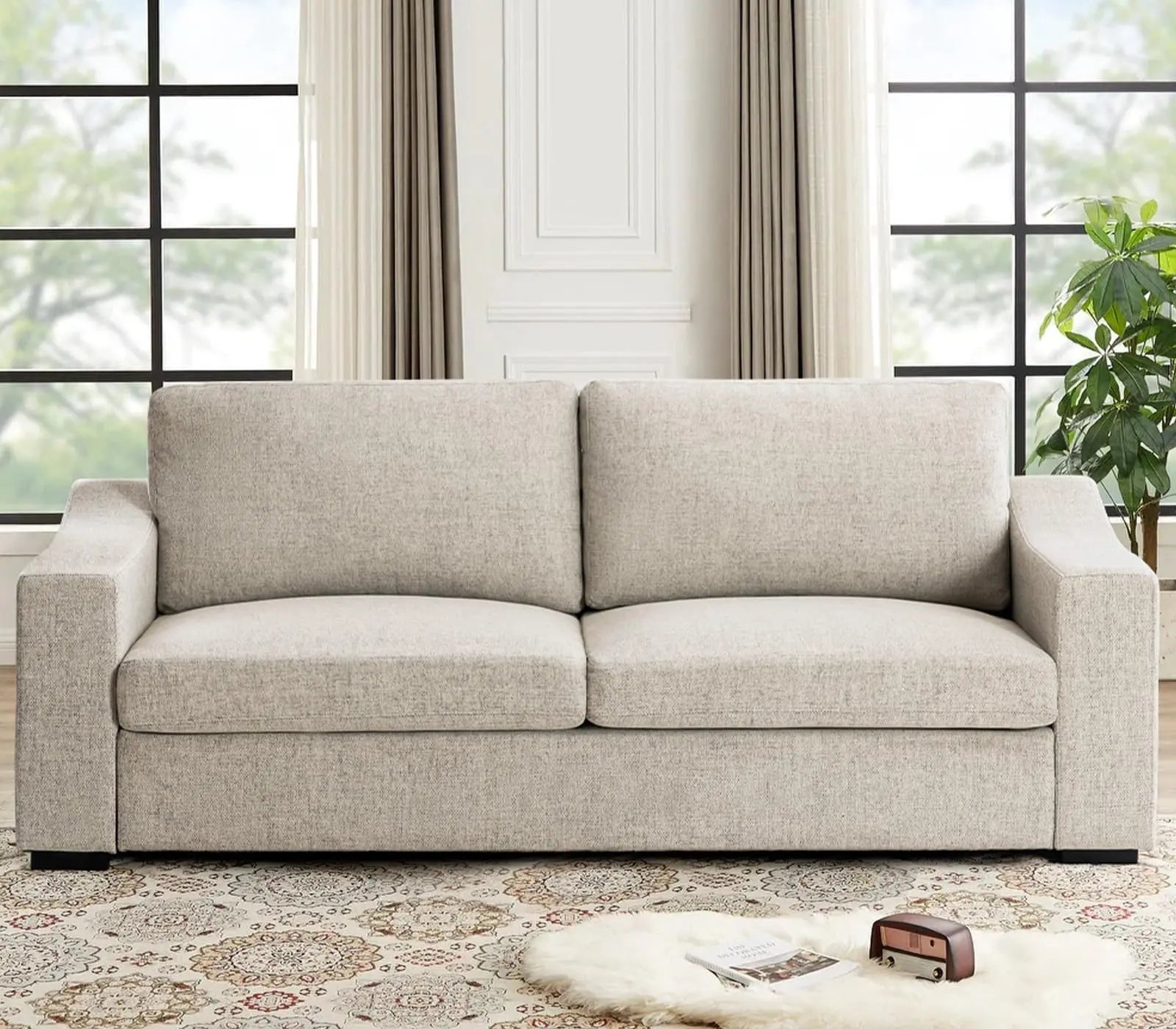
ELUCHANG 85" Deep Seat Sofa, Natural Linen, Detachable Cover
Deep-seat linen with removable, washable cushion covers, practical everyday durability in a clean minimalist silhouette at a fraction of the KIVIK price.
115" Cloud Modular Sectional Sofa, Deep Seat with Ottoman, Chenille
Oversized 115" boneless sectional with deep chenille seating and an included ottoman, cloud-soft comfort and modular flexibility at a competitive price.
You Might Also Need
Accessories worth grabbing alongside your purchase
More IKEA Reviews
See all →
How Does It Compare?
Side-by-side breakdowns featuring this product