IKEA KIVIK Sagging Cushions: Refluff, Refill, or Recover
By Maya Chen · Updated August 2026
Independent editorial guide. We never accept payment for coverage, though we may earn a commission if you purchase through our links.
Quick Take
Most KIVIK sag is the back cushions, not the seats, and a good share of it isn't dead fill at all. Two of the most common causes cost nothing to fix: the cushions get put back in the wrong positions after a wash, and the cover creeps around the insert until it bunches. Check those before buying anything. If the fill really is flat, opening the insert seam and adding polyfill runs about $20 to $27 and takes an evening.
A brand-new KIVIK that feels hard isn't broken and doesn't need restuffing. Owners consistently report it softening over roughly three months. Match the fix to the part that failed: fill for a flat back cushion, foam for a collapsed seat, a support board only if the deck under the cushions has given way, and a new cover only if the fabric is the problem.
Jump to the fill, foam, support, and cover options that match each of those fixes. See picks ↓
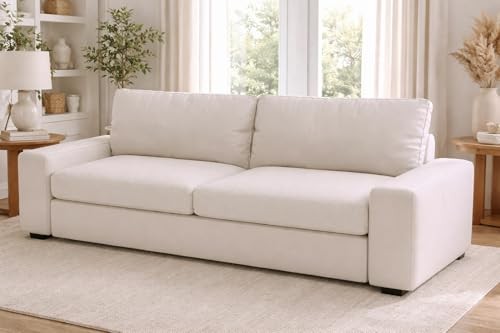
The KIVIK is one of IKEA's longest-running sofas, and the complaint that follows it around is cushion sag. Search it and you land in r/IKEA threads full of photos of drooping cushions with a hundred different diagnoses underneath.
Read enough of those threads and a pattern shows up that the panic misses: a lot of the sofas in the photos aren't broken. In one widely-answered post asking whether a used KIVIK's flat cushions were a dealbreaker, the top replies all pointed out the same thing, which was that the seller had the back cushions sitting in the seat positions. The sofa looked destroyed because it was assembled wrong.
This guide sorts the free fixes from the ones worth spending on, using what long-term KIVIK owners report about which parts fail and which hold up. The short version is that the back cushions are the ones that go soft, the seat foam usually outlasts them, and the product you buy should depend entirely on which of those has happened to yours.
Start with the three checks that cost nothing
Before any purchase, rule out the causes that aren't fill failure at all.
First, confirm the cushions are in the right positions. KIVIK back cushions are shallower and softer than the seat cushions, so a swapped pair reads as catastrophic sag when nothing is wrong. It happens constantly after cover washes and second-hand moves, and it's the single most common false alarm in KIVIK threads.
Second, reseat the cover. The cover shifts around the insert with normal use the way a pillowcase creeps around a pillow, and once it bunches, the cushion looks collapsed at one end. Pulling the cover square again fixes the look in about a minute.
Third, rotate and flip. Both the seat and back cushions are symmetrical enough to turn end for end, which redistributes the compression instead of letting one seating spot take all of it. Owners who do this on a schedule report far less permanent sag than owners who don't.
Which cushion is sagging changes what you buy
The KIVIK's two cushion types fail on completely different timelines, and buying for the wrong one wastes money.
The back cushions are fiber-filled. Fiber compresses and doesn't spring back on its own, so these soften first, usually inside the first couple of years of daily use. They respond well to refluffing early on and to added fill once refluffing stops working.
The seat cushions are foam with a fiber wrap, and they hold their shape much longer. Owners several years in routinely describe seats that still look new sitting under back cushions that have gone flat. If your seats have genuinely collapsed rather than softened, that's a foam replacement, not a fill top-up.
There's a third failure that gets misdiagnosed as cushion sag: the deck. That's the platform under the seat cushions, and if the webbing or the frame there has given way, new fill and new foam will both sink into the same dip.
Refilling a back cushion insert
The inserts don't have a zip, so refilling means opening them. The method owners use is to cut along one seam, add fill by hand until the insert holds its shape under light pressure, then close the seam. Sewing it shut is tidier, but duct tape along the cut is a documented long-term fix and stays hidden under the cover.
Polyfill is the right material here because it matches what's already inside and keeps the soft, leanable feel the back cushions are meant to have. Add it in small handfuls and work it into the corners first, since the corners are where a flat cushion looks worst. Expect to overfill slightly, because fresh fill settles within a few weeks.
Quilt batting is a reasonable alternative if you'd rather not deal with loose fiber. Cut sheets to the insert's footprint and layer them in, which gives a flatter, more even result than loose fill and is easier to control.
Rebuilding a seat cushion with foam
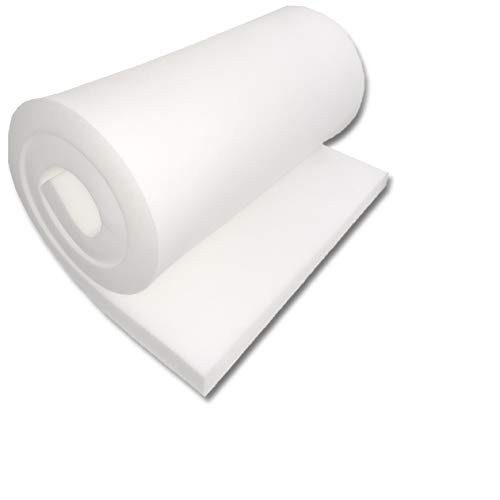
A seat cushion that has genuinely bottomed out needs new foam cut to size. High-density upholstery foam is the material that lasts. Cut it about half an inch larger than the cover in each direction so it fills the corners rather than leaving the cover slack.
Wrapping the foam in batting or a folded quilt before it goes in softens the edges and stops the finished cushion looking like a hard block. Skip this on the back cushions, though. Foam gives them a rigid, upright feel that fights what a back cushion is for, and owners who have tried it say so.
A support board is for a sagging deck, not a flat cushion
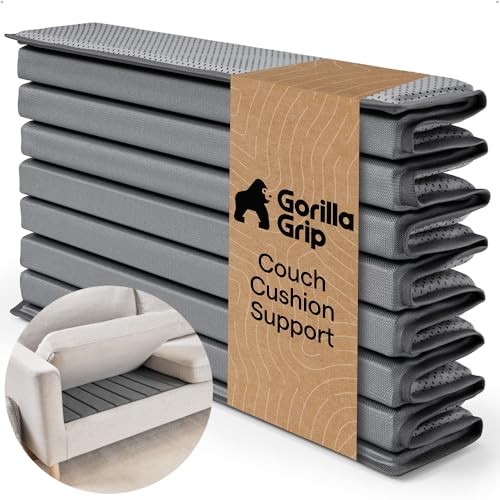
Support boards get recommended for every kind of sofa sag, and for KIVIK owners that advice is mostly wrong. The board sits under the seat cushions and spans the deck, so it does one job: it stops cushions sinking into a platform that has lost its tension.
If the problem is a flat back cushion, a support board changes nothing. If the seat cushions are soft but the deck is solid, it changes very little. Buy one only when you can press on the deck with the cushions removed and feel it give.
A new cover fixes fabric, not fill
Covers are worth it when the fabric is stained, faded, or torn, and they transform how the sofa looks. They do nothing for a collapsed insert, so a cover bought to solve sag is money spent on the wrong layer.
Third-party KIVIK covers have a real quality spread. Owners who've swapped an older part-cotton IKEA cover for a fully synthetic replacement report wrinkling and gapping that the original didn't have, so fabric content is worth checking before ordering. Cover care also varies by fabric: some KIVIK covers are labelled dry clean only while others go through a normal wash, and owners have gone both ways on ignoring that label.
The torn fabric underneath is a different job
If the damage is the thin black fabric stretched across the underside, that's cambric, a dust cover. It isn't structural, and it tears easily because it's the cheapest material on the sofa. Replacing it properly means pulling staples and re-stapling, which is genuinely fiddly work, and owners who've done it recommend using a woven upholstery fabric rather than the non-woven stuff IKEA uses, since the original tears again.
When to stop spending on it
Fill plus foam plus a cover runs past $250, and at that point the arithmetic matters. A used KIVIK in good condition often sells for less than that, and a new one is not far above it.
The case for fixing it is strongest when one component has failed on a sofa that's otherwise solid, which is the usual situation, since the KIVIK frame tends to outlive its cushions. The case against is a sofa with a sagging deck, flat backs, and tired covers all at once. Long-term owners are clear-eyed about the tradeoff: cushions get saggier over the years and the sofa still earns its keep at the price.
Recommended
Products related to this guide.


What owners say
Real owner reports from the threads and editorial sources we drew on for this guide.
“the sofa in this picture has the back and seat cushions swapped. the larger square-ish cushions are the seats, and the saggier looking ones are the backs. from my experience, the back cushions do tend to sag a bit, but “re-fluffing” them puts them right back into shape. the seat cushions on mine still look brand new even after almost two years.”
— r/IKEA / lightsandswirls
“It looks like they have the cushions backwards. The back cushions on a kivik aren't that tall. Look at pictures online and you'll see. The cushions that are sagging are actually the back cushions but they have them as the seat cushions!”
— r/IKEA / mmmarta11
“I love my kivik just added a chaise to mine and I love it even more. The back cushions and seat ones do look switched the back isn’t that square lol. I have found easily re fluffed mine if I sit in one spot too long.”
— r/IKEA / Allybluu
“Sag happens from repeatedly sitting/scooting the fabric around the cushion, like how your pillowcase shifts on your pillow. It's simple to adjust the cover back on properly, and you can flip the cushion so that the sag is backwards and fixes itself. This is a common occurrence in most non-leather sofas, so I wouldn't worry about it.”
— r/IKEA / scooterdood
“I bought a used non-IKEA sofa that had the same issue. I went down to a fabric/craft store and bought some thick quilt batting. I unzipped the cushion covers and added cut pieces of quilt batting. That fluffed up the cushions and made them look amazing. The fabric on the lower frame of the sofa ( below the cushions) is also sagging. You should be able to tune the sofa over and use a stable gun to tighten that up underneath. Hope you get a great deal on this!”
— r/IKEA / CityChicken8504
“A quick fix would be to cut open the inner cushion, along a seam. Remove and refill & then duck tape back together.”
— r/IKEA / anxiously_impatient
“Looks great! Good work! We have an inner cushion that has been duct taped together for 3 years and the tape is still holding strong!”
— r/IKEA / anxiously_impatient
“Buy a good piece of dense upholstery foam and then wrap a twin duvet/comforter around it- could secure with safety pins, or just wrap it in a manner it doesn’t move much when putting on the cushion.”
— r/IKEA / Belle_Requin
“I could see that working for the bottom/seat cushion, but that’d make for a much more rigid looking back cushion, no?”
— r/IKEA / MarvelousMapache
“Meh. I have a kivik, dogs and boys that love to jump on my couch. These base cushions look much saggier than mine, and with foam of current cushions, hard to imagine this is “ light” wear. Maybe it’s older? True that it’s probably somewhat easy to hide/mend. If you get it, I highly recommend the kivik covers from LindaKale. A brand new couch, almost.”
— r/IKEA / wendiewill
“How do you find the comfort? Do you sink into the pillows? We bought one based on the model in store (which was comfortable), but the one we got is hard as rock (we have one back pillow that's somehow squishy and soft, but the others are hard).”
— r/IKEA / Alert_Peanut_9912
“They will get softer with time! Three months of using and they’re perfect. 💚”
— r/IKEA / MartyTheWeird