Best Knife Sets Under $150 on Amazon (2026 Kitchen Guide)
By Daniel Reyes · Updated July 2026
Independent editorial guide. We never accept payment for coverage, though we may earn a commission if you purchase through our links.
Quick Take
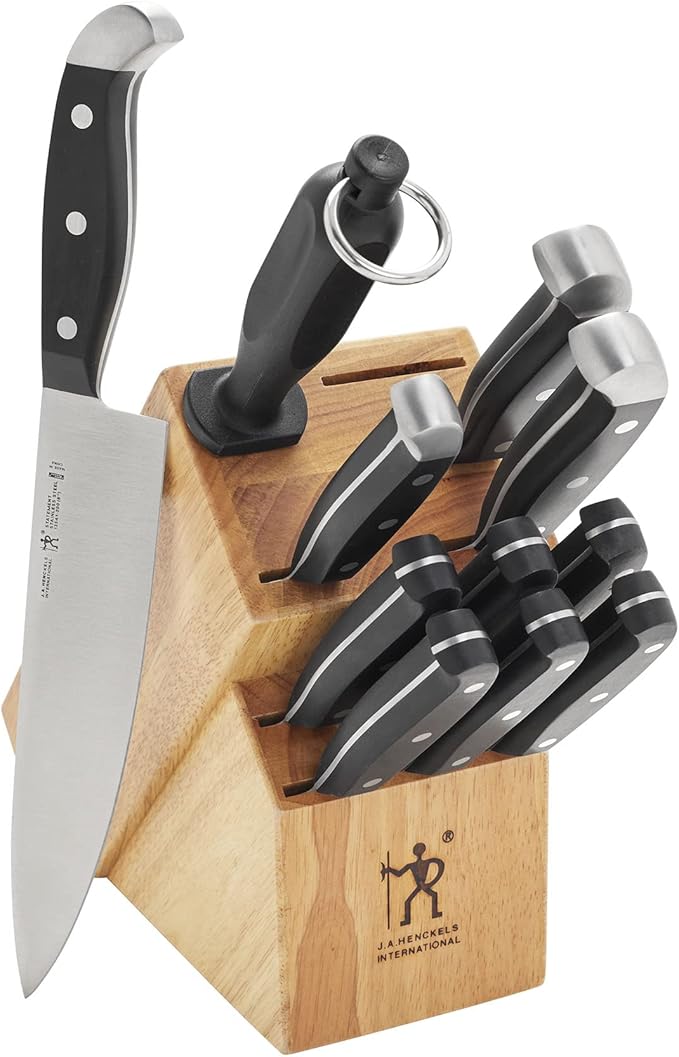
Under $150 on Amazon, the honest answer is a block set with a chef knife that has a forged feel, a paring knife, a serrated bread knife, and a handful of steak knives you won't cry over. The Henckels Solution 12-piece at around $130 is the safest first-kitchen pick: full-tang stamped blades from a brand that's been making knives in Solingen since 1731, plus a wood block and built-in sharpener slot.
Caveats: at this price nearly every set is stamped steel, not forged, and that's fine for a starter kitchen as long as you accept the trade-off in edge retention. None of these belong in a dishwasher, ever. And if you only cook a few times a week, three good knives (chef, paring, serrated) will outperform a 15-piece block of mediocre ones.
Jump to the block sets that earn their counter space in a first kitchen, including a forged-feel step-up, a Cuisinart workhorse, and an honest budget pick. See picks ↓
Knife sets are the most popular wedding-registry kitchen item and one of the most criticized purchases in chef forums. Pros will tell you three knives cook everything: a chef knife, a paring knife, and a serrated bread knife. A 15-piece block is mostly steak knives and shears propping up the marketing photo.
Still, for a first kitchen the block set does a real job. It puts every knife you might reach for on the counter at once, gives you a backup when one is in the sink, and throws in steak knives so you aren't shopping for those separately. Under $150 the field is nearly all stamped steel, so the question becomes which brands stand behind that steel. Below are five sets worth comparing, the trade-offs at this price, and the cooking-forum guidance that should shape how you use them.
Stamped vs forged at this price
Forged blades get hammered or pressed from a single billet of heated steel. Stamped blades get cut from a flat sheet of steel like a cookie cutter. Forged usually means a thicker bolster, more heft, and longer edge retention. Stamped means lighter, cheaper to produce, and easier to sharpen.
Under $150 for a full block set you're almost certainly buying stamped, including the Henckels Solution line, the Cuisinart C77 line, and every Astercook, MOSFiATA, and imarku set in this guide. That isn't a knock. Stamped knives from a serious brand are perfectly capable kitchen tools, they just want honing more often and a quick pass on a stone every few months. If forged is a hard requirement, a real forged block set starts closer to $250-400, which is out of scope here.
The three-knife rule
Cooking forums and pro guides land on the same minimum kit: an 8-inch chef knife, a 3 to 4 inch paring knife, and a 7 to 8 inch serrated bread knife. Those three cover roughly 95% of home cooking tasks. Everything else in a 15-piece block, the utility knife, santoku, slicer, kitchen shears, steak knives, is convenience and visual fill.
If you already own a chef knife you trust, a block set is the wrong buy. Buy a paring knife and a bread knife on their own and keep the $100. The block set wins when you're starting from zero, you want matching steak knives, or you want a single counter object that stores everything.
What the block itself gets you
A wood block keeps edges away from other metal in a drawer, keeps blades visible so you grab the right one, and lets them dry by gravity if you sheath knives blade-up. The costs: slots collect crumbs, the block eats counter space, and it needs a bottle brush now and then. Magnetic strips and in-drawer trays are alternatives, but for a first kitchen the block is the default.
All five picks below ship with a block. The Henckels Solution and Cuisinart blocks include a built-in honing slot, which is genuinely useful. It nudges you into running the blade through every few uses, and that keeps a stamped edge straight far longer than waiting until things feel dull.
Keep them out of the dishwasher
Every set in this price band gets marketed as dishwasher safe somewhere along the chain. Ignore it. Detergent dulls edges, high heat warps thinner stamped blades, and knocking around with other utensils chips the tip. Hand wash with warm soapy water, dry immediately, and the same set will last years longer.
This is the single piece of care advice separating a 1-year-old block set that looks tragic from a 5-year-old set that still cuts a tomato cleanly.
Honing vs sharpening
Honing realigns an edge that has rolled slightly off-true from normal use, and you do it often, a swipe or two every few uses. Sharpening grinds metal away to cut a new edge, and you do it rarely, a few times a year for a home cook.
The pull-through sharpener slot built into the Henckels Solution block and the Cuisinart C77 block is technically a hone, which is what you want for regular use. For real sharpening, a cheap whetstone or a trip to a local sharpening service does the job. Keep aggressive electric sharpeners away from stamped blades; they remove too much metal.
Price-tier reality check
At $40-60 (Astercook, MOSFiATA budget sets), expect serviceable stamped steel that holds an edge through a few months of light cooking. Fine for a college kitchen or a vacation rental. Not a daily driver.
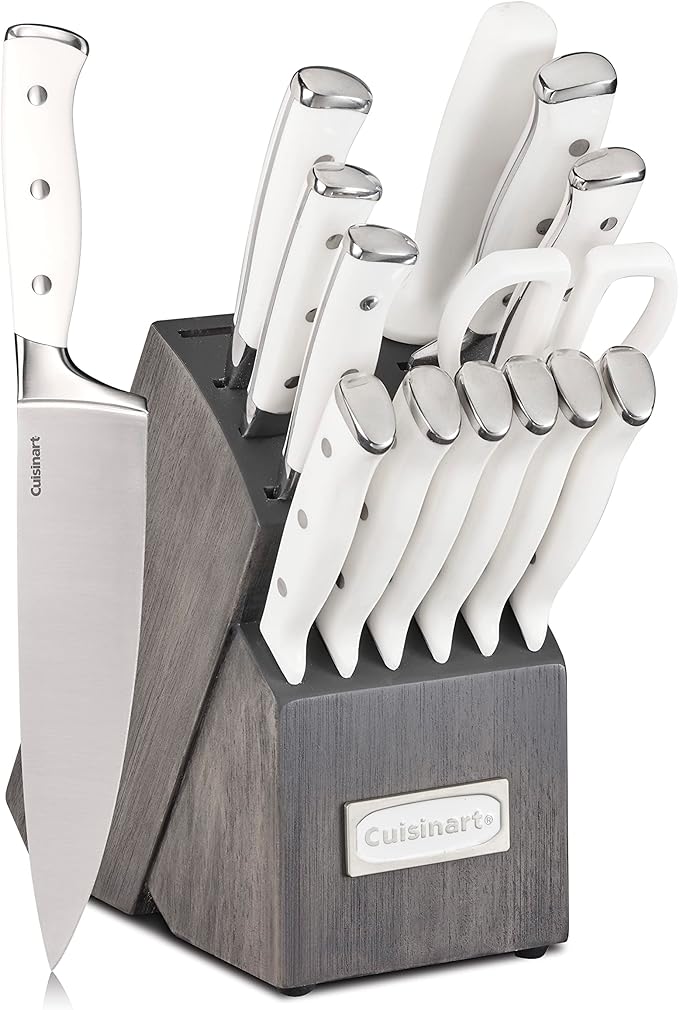
At $80-130 (Henckels Solution, Cuisinart C77), expect stamped steel from a brand that does this for a living, with quality control you can see in straight blades, properly seated handles, and blocks that don't crack. This is where the under-$150 money goes furthest.
At $150 and just over (imarku German steel sets), expect heavier blades, sometimes with full bolsters that mimic the forged feel. Edge retention improves a step, though not dramatically at this price.
Recommended
Products related to this guide.
Frequently asked questions
What are the best knife sets under $150?
HENCKELS Solution 12-Piece Knife Block Set. The safest first-kitchen pick.
What are the best budget knife sets under $150?
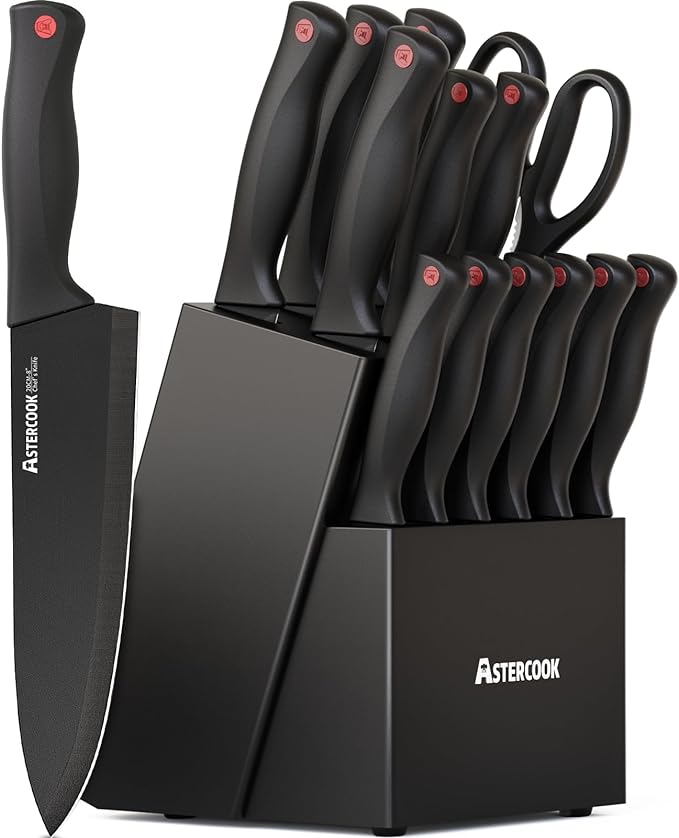
Astercook 15-Piece Knife Block Set with Built-In Sharpener. The honest budget pick for a college kitchen or rental.
What are the best premium knife sets under $150?
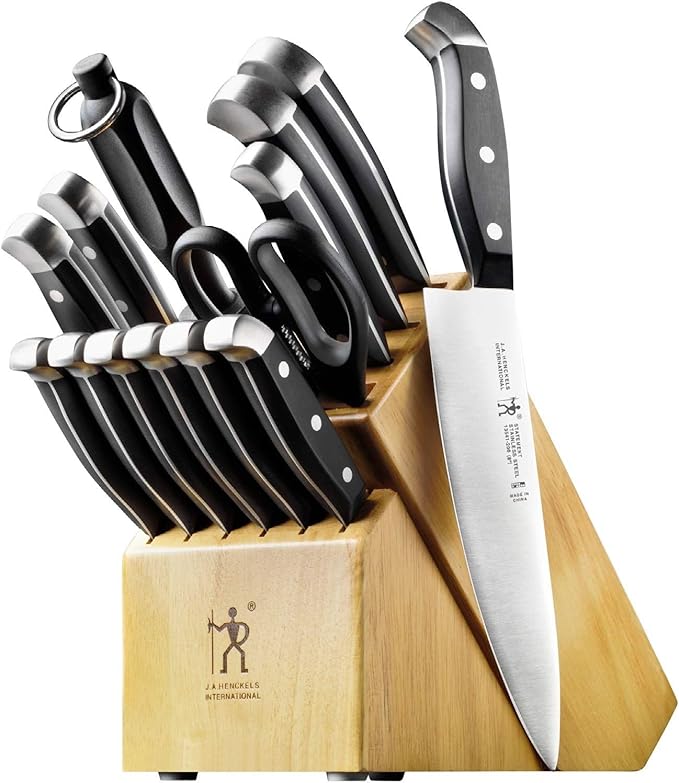
HENCKELS Statement 15-Piece Knife Block Set. Step up to fifteen pieces, larger block, and a heavier handle.