The Best Cordless Vacuums for Apartments on Amazon (2026)
By Sam Hollis · Updated July 2026
Independent editorial guide. We never accept payment for coverage, though we may earn a commission if you purchase through our links.
Quick Take
For apartments where the vacuum gets pulled out 2 to 4 times a week, the cordless stick category has effectively two answers: Dyson at the premium end, Shark in the middle, plus a single Tineco pick under $200 for renters who want cordless without spending Dyson money. Robot vacuums are a different product. This guide is about handheld stick vacuums you grab for a 10 minute pickup before guests arrive.
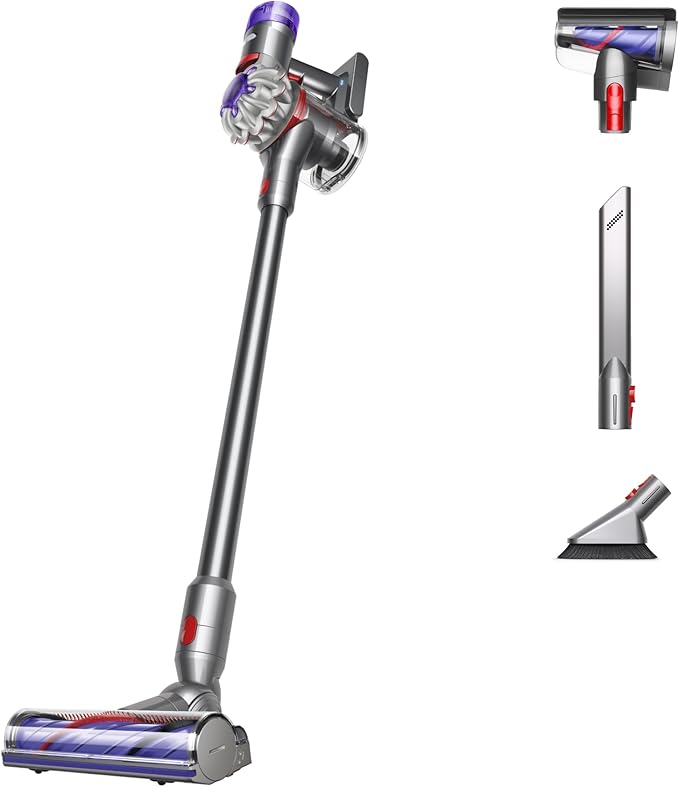
The picks below are sorted by how hard the vacuum has to work. The Dyson V8 Origin is the default recommendation for most apartments between 600 and 1,200 square feet; it has the suction to pull pet hair out of a low-pile rug and the runtime to finish the job on one charge. The V15 Detect is the upgrade for larger spaces or households where the vacuum runs daily. Shark Stratos is the honest alternative if Dyson pricing is a non-starter, and the Shark IX141H is the floor for hard-floor-only apartments under $130.
Skip anything under $100 advertising 25 KPa or 30 KPa suction. The numbers are unverified and the batteries fail inside a year. See picks ↓
Cordless stick vacuums have replaced the upright in most apartments for one reason: storage. A stick hangs on a wall hook or stands in a closet corner, which matters more in a 700 square foot one bedroom than any spec on the box. The old trade-off was suction and runtime. The current generation of Dyson and Shark sticks pulls more out of a rug than the corded uprights they replaced.
The catch is a category now flooded with sub-$200 lookalikes claiming the same specs as a Dyson V8. The shortcuts never change: a smaller battery that quits before the apartment is done, a weaker motor that leaves pet hair behind, and a dust bin that clogs every 30 seconds. The picks below were filtered on real runtime, real pickup on pet hair, and whether the brand still answers warranty claims two years in.
What an apartment vacuum needs
Three things matter for apartment use and almost nothing else does. Runtime has to clear the place in one pass, which for most one and two bedroom layouts means 30 minutes minimum on the standard power setting, not the max-power number the brand puts on the box. Weight has to stay under 7 pounds for one-handed use on stairs and edges. And the dust bin has to empty without launching debris back into the air, which sounds obvious until you own a cheap one.
Suction numbers (KPa, AW) are the spec brands lean on hardest and the one that means least at this price point. Every pick below has enough suction for apartment carpet and hard floors. The brush head is what separates them: a soft roller for hard floors, stiff bristles for carpet, and ideally both in the box.
Dyson is still the default for most apartments
The Dyson V8 Origin tops this list because it does the boring job well. Real runtime is 35 to 40 minutes on the standard setting, enough to finish a 1,000 square foot apartment with margin. The motor pulls hair out of low-pile rugs without wrapping the brush, at least through the first year. Build quality survives being yanked off a wall mount twice a week.
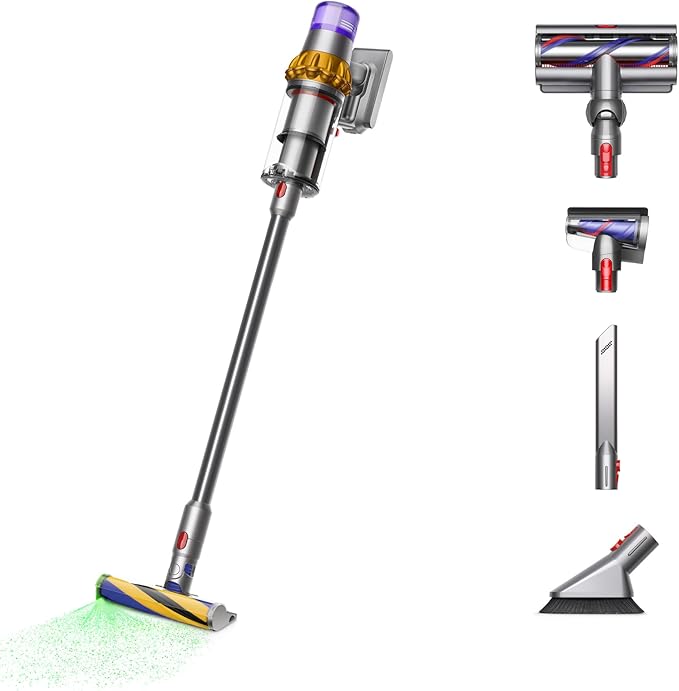
The V15 Detect is a genuine upgrade rather than a marketing one, in two cases: apartments over 1,200 square feet, and households with a long-haired shedding pet. The laser dust detection is a gimmick most of the time; the anti-tangle brush bar is the reason to step up. Short of those two cases, the V8 is enough vacuum.
Shark is the alternative if Dyson is out of budget
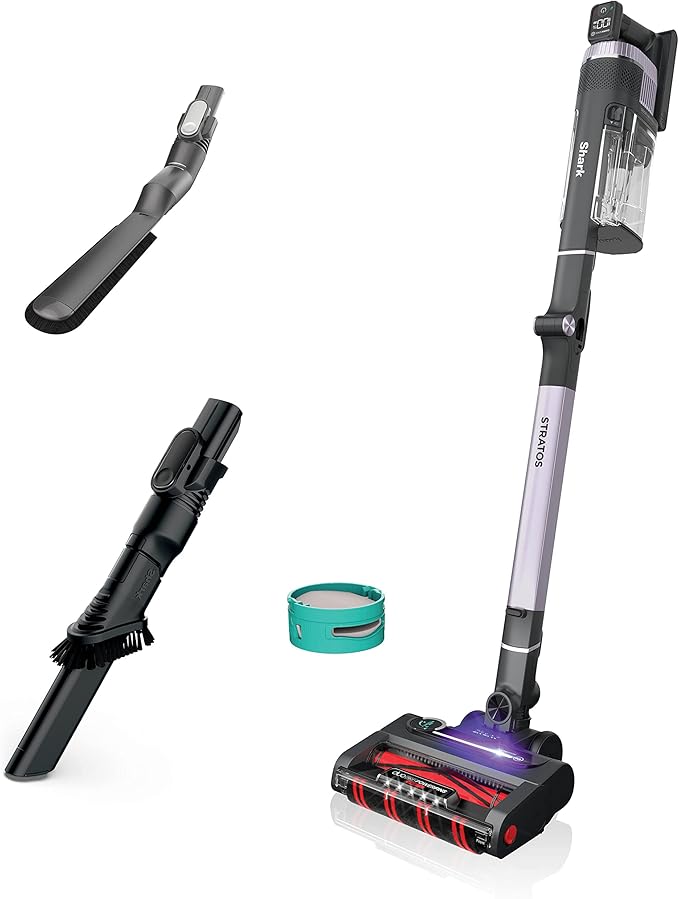
Shark Stratos, the IZ862H designation, is the honest mid-tier answer. Suction lands within striking distance of the V8 on carpet, the DuoClean head handles hard-floor-to-rug transitions without flipping, and on sale it runs $150 to $200 below the equivalent Dyson. The battery is the weak point. Expect 25 to 30 minutes of real runtime, not the 60 minute number on the box, which is measured with no brush attached.
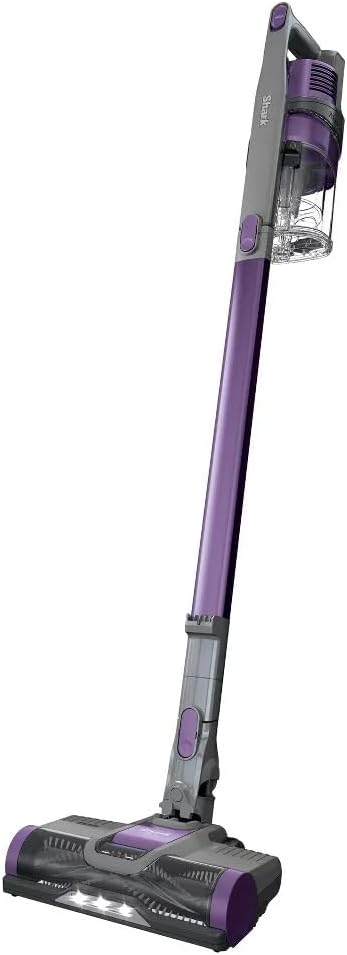
The Shark IX141H is the budget floor for hard-floor-dominant apartments. It isn't enough vacuum for thick carpet or a heavy shedder, but for a 600 square foot studio with hardwood and one area rug it's the cheapest cordless stick that does the job without falling apart in a year.
Tineco is the only sub-$200 brand worth considering
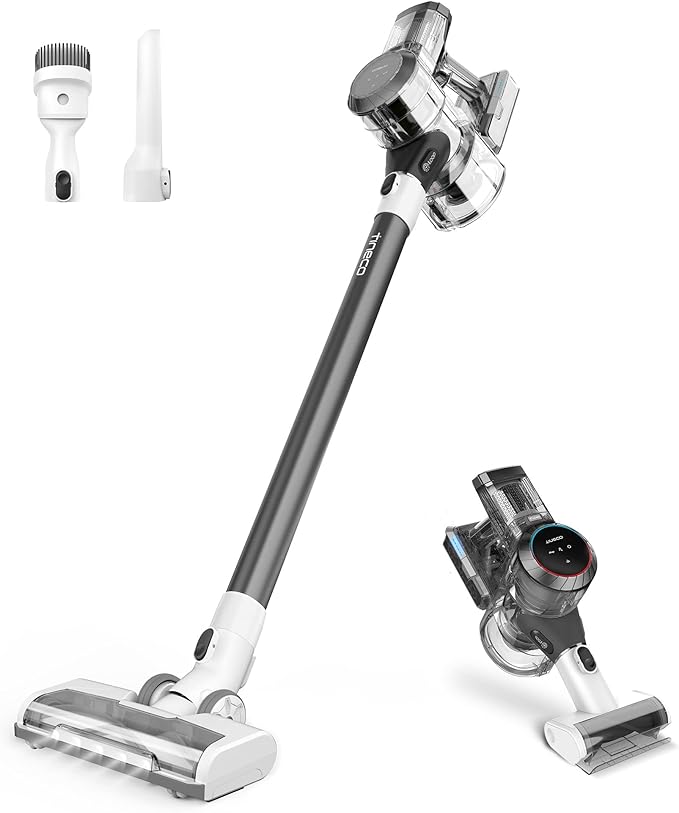
Below $200, the Amazon cordless category is mostly white-label brands with 6 month battery lifespans. Tineco is the exception: an established brand with parts availability, a warranty process that works, and motors that hold up. The A11 Hero is the pick when the budget is hard at $200 and a Shark IX141H is out of reach.
Be clear about what you give up. Tineco is a step down from Shark on pickup performance, not only on price. Carpet performance is noticeably weaker and the brush head is smaller, so you make more passes per room. Worth it if cordless mobility is the priority and budget is the constraint.
Skip these
Anything claiming 35 KPa or higher under $150. That number is measured at the motor inlet, not at the floor head, and the motors in this price range can't sustain that draw for more than a few seconds before thermal cutoff. Suction at the floor is half the advertised number, at best.
Cordless vacuums with non-replaceable batteries. Every battery in this category degrades to 60 to 70 percent capacity within 2 years of daily use. If the battery isn't user-replaceable, the vacuum is disposable. Dyson, Shark, and Tineco all sell replacement batteries; most no-name brands don't.
Stick vacuums marketed as also a mop. The wet-dry combo units leak, the dirty water tank molds, and the suction motor can't survive moisture long-term. Buy a separate flat-head mop for $25 and a dedicated stick vacuum.
Accessories that earn their keep
A wall mount other than the included one. The mount Dyson and Shark ship in the box requires drilling into a stud, which most apartment leases discourage. A $20 over-the-door or freestanding mount solves the storage problem without touching your damage deposit.
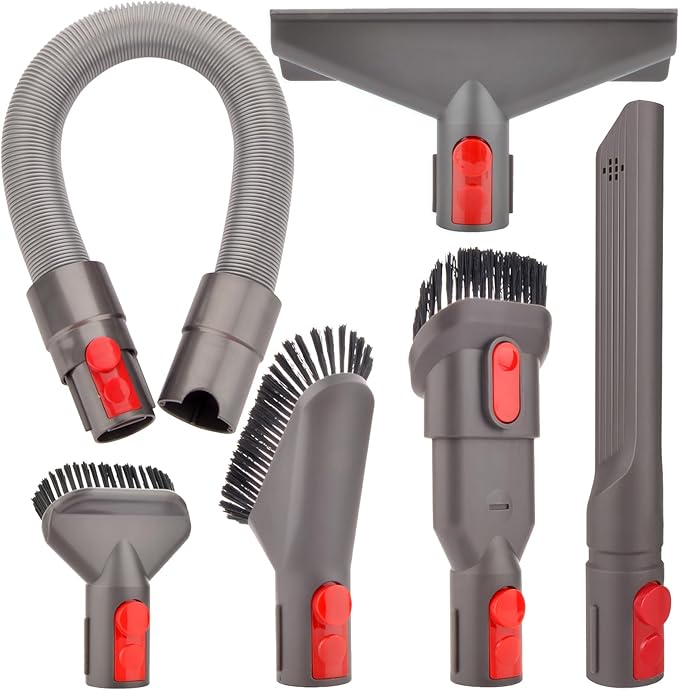
A handheld attachment kit for car interiors, mattresses, and upholstery. The full-size floor head is too large for any of those jobs. A small motorized head plus a crevice tool covers everything the main vacuum can't reach.
Replacement filters bought ahead of time. Filters in this category are washable but degrade after 12 to 18 months. Buying the replacement filter when the vacuum is new costs $15 and saves a scramble two years in, once the original first-party stock has rotated.
Robot or stick
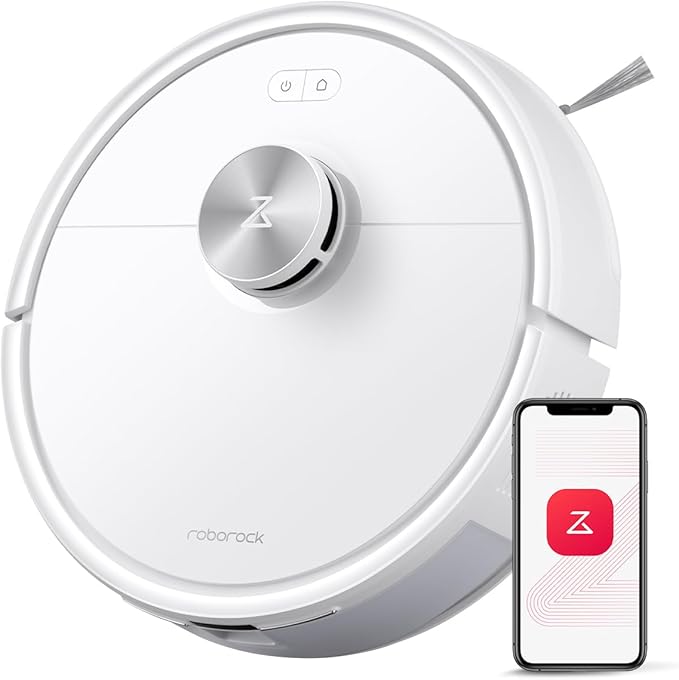
Robot vacuums make sense in houses with consistent open floor plans and the budget for a $400+ unit with a self-empty base. In an apartment the robot has to navigate around dining chairs, cables, and a coffee table that never moves, and it does that poorly. The stick takes 10 minutes and does a better job.
The exception is a shedding pet in an apartment where nobody is home for 8+ hours a day. A cheap robot running daily plus a stick for the weekly deep pass is a real combination. For everyone else, one good stick vacuum is the whole answer.
Recommended
Products related to this guide.
Frequently asked questions
What are the best cordless vacuums for apartments?
Dyson V8 Origin Cordless Vacuum. The default cordless stick for most apartments.
What are the best budget cordless vacuums for apartments?
Shark IX141H Pet Cordless Stick Vacuum. The floor for hard-floor-dominant apartments.
What are the best premium cordless vacuums for apartments?
Dyson V15 Detect Cordless Vacuum. The upgrade for apartments over 1,200 square feet or households with a long-haired shedding pet.