The Best Over-Sink Dish Racks for Small Kitchens on Amazon (2026)
By Erin Mitchell · Updated June 2026
Independent editorial guide. We never accept payment for coverage, though we may earn a commission if you purchase through our links.
Quick Take
For most small kitchens the right over-sink dish rack is an expandable stainless-steel design in the $20 to 30 range that adjusts from roughly 17 to 26 inches, drips straight into the basin, and uses 304 stainless rods rather than coated carbon steel. That combination gets back the whole stretch of countertop the rack would otherwise sit on, and it skips the rust streaks that finish off cheaper racks by month six.
Two-tier and dual-basin designs read well on a listing page, but in a small kitchen they tend to block the faucet swing or sit too high under the upper cabinets. Measure sink width, faucet clearance, and cabinet-bottom height before you commit to anything taller than a single tier. Coated-wire racks under $15 work as a stopgap, though the coating chips at every rod intersection and rust follows inside a season if you wash dishes every day.
Below: the expandable, in-sink, two-tier, and budget picks worth buying for an apartment-sized kitchen, sorted by how wide the sink is and how much vertical room you have to work with. See picks ↓
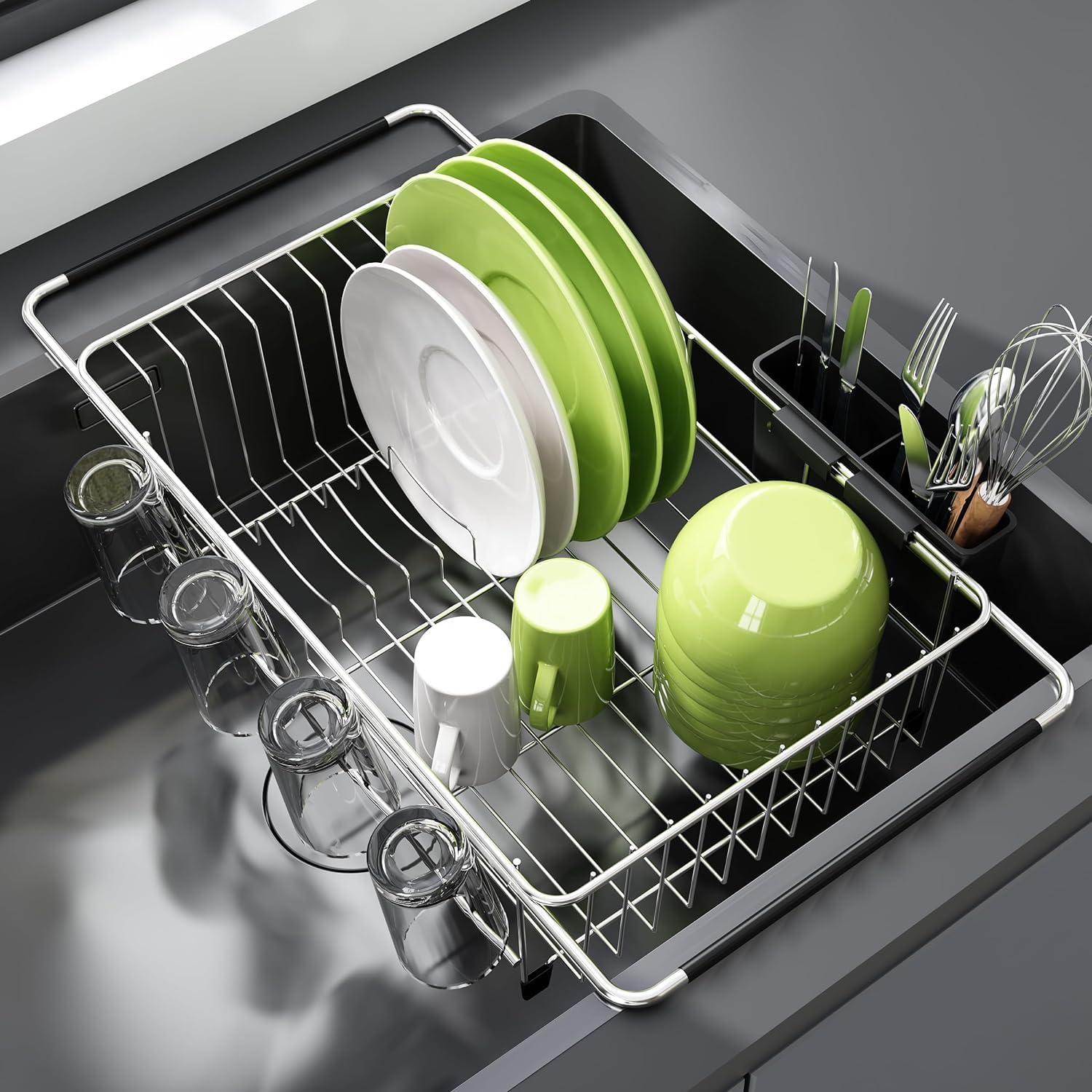
Over-sink dish racks are one of the few small-kitchen products that hand you back counter space instead of shuffling clutter around. A good one spans the sink, drips into the basin, and disappears when it's empty. A bad one rusts in three months, blocks the faucet, or doesn't fit the sink you bought it for.
This guide sorts the racks built for real apartment sinks, 16 to 22 inches wide, usually with a tall gooseneck faucet and cabinets right overhead, from the oversized two-tier designs sold for the same job but sized for 30-inch farmhouse sinks. The picks cover expandable single-tier racks, in-sink drainers that sit down in the basin, a two-tier option for kitchens with the cabinet clearance to take it, and a budget stopgap that's honest about its limits.
Measure the sink width, faucet swing, and cabinet clearance first
The number one reason these racks get returned is fit. Measure three things before you buy: the inside width of the sink at the rim, not the basin floor, the height from the rim to the bottom of the faucet spout at its lowest point, and the clearance from the rim up to the underside of any upper cabinet. Expandable racks usually adjust 17 to 26 inches, but that range assumes both feet land on a flat rim. Sinks with raised drain boards or angled edges eat 1 to 2 inches of usable span.
Faucet clearance is the second trap. A standard expandable rack stands roughly 4 to 6 inches above the sink rim. A pull-down gooseneck that swings 180 degrees needs that same vertical zone clear. If the faucet hits the rack anywhere in its swing, the rack lives permanently shoved to one side, which defeats the whole point of going over the sink.
304 stainless versus coated carbon steel
Listings get vague about material ("stainless steel," "rust-resistant coating," "high-grade alloy"). The distinction that matters is solid 304 stainless versus coated carbon steel. 304 stainless is the food-grade standard used in commercial kitchen equipment and takes daily wet use for years. Coated carbon steel leans on a thin epoxy or PVC layer to keep water off a rust-prone core. That coating chips at every rod intersection and every spot a dish clatters against, and once it goes, rust runs across the rest of the rack fast.
Price is a decent proxy. Solid 304 stainless racks in this category start around $20 to 25, and anything under $15 is coated carbon steel no matter what the listing language says. Pay the difference if you'll use the rack daily. The cheap one only makes sense as a temporary fix on a short lease.
Single-tier expandable, two-tier, and in-sink
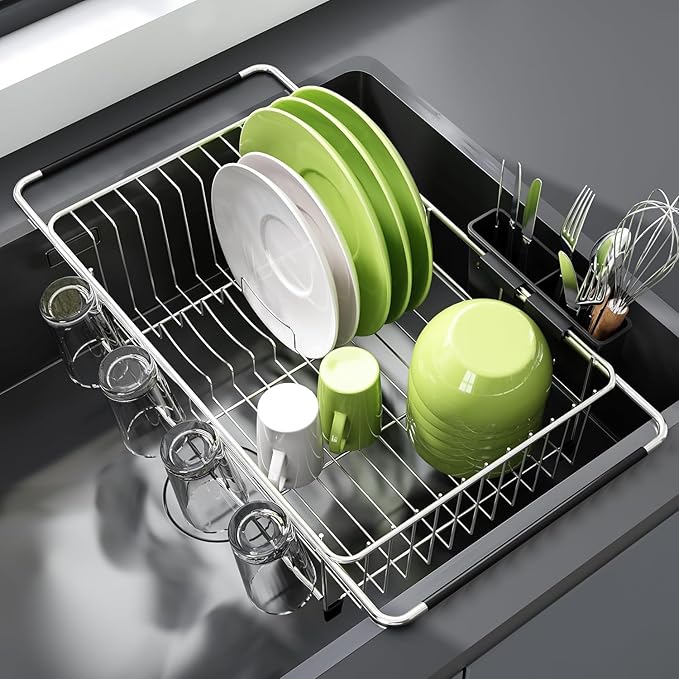
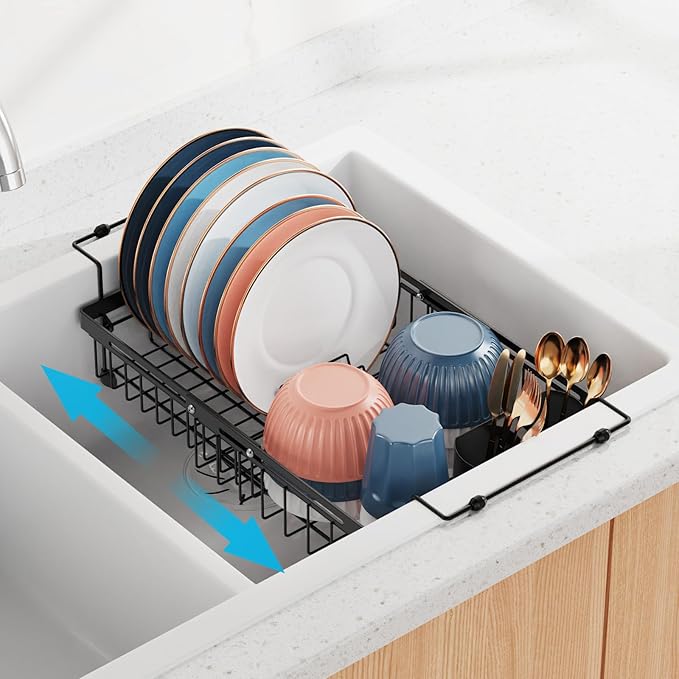
Single-tier expandable racks sit on top of the sink and span the rim. They suit kitchens with a tall faucet, limited cabinet clearance, and a narrow-to-medium sink of 16 to 22 inches. They hold a full load of dinner dishes for two and drip straight into the basin, so there's no separate drip tray to deal with.
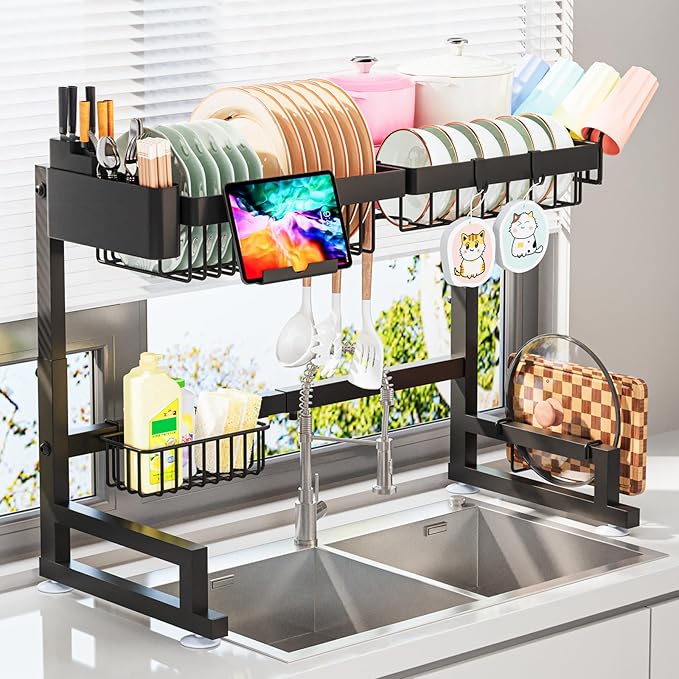
Two-tier racks add a second deck above the first. Good for a serious cooking household that generates two loads of dishes between drying cycles, but the second tier wants 10 to 12 inches of vertical clearance above the first, which means upper cabinets have to start at least 18 inches above the sink rim. In a typical apartment kitchen, they don't.
In-sink dish drainers sit down in the basin instead of over it. They free the whole countertop the same way an over-sink rack does, but the sink is out of commission while dishes dry. They make sense in a kitchen with two basins, where one drains while the other handles washing.
Drainage and counter contact
The appeal of an over-sink rack is that water goes back into the sink instead of pooling on the counter. Check that the rack does that before you buy. Some "over-sink" designs put their feet on the counter an inch or two from the sink edge, which lands the drip zone on the counter rather than in the basin. Look for feet that rest directly on the sink rim, or a sloped drip channel that visibly tilts toward the basin.
Silicone-tipped or rubber-footed designs protect the sink rim from scratches and grip better when wet. Bare metal feet on a stainless or composite sink leave marks within weeks and slide around under the weight of a loaded rack. Small detail, easy to confirm in the listing photos.
Utensil holders, cup hooks, and accessories
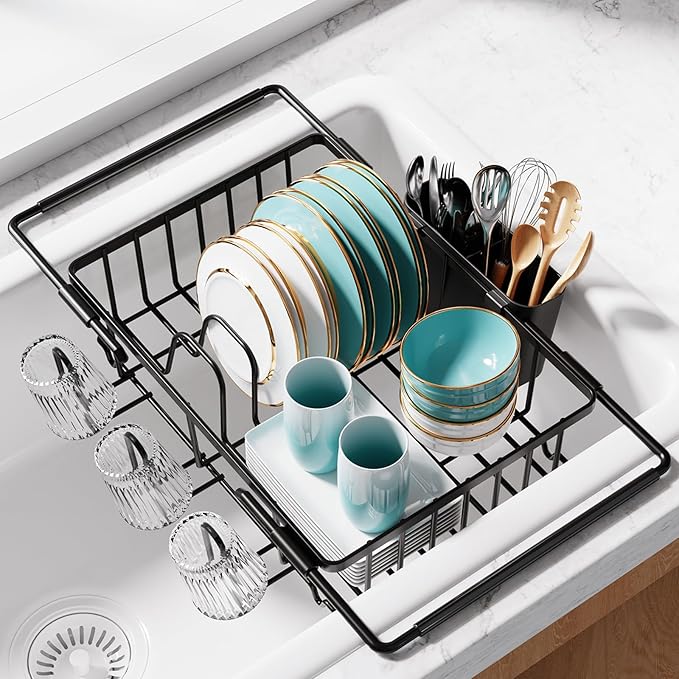
The accessory that earns its space on a small-kitchen rack is a removable utensil holder, either sitting inside the rack or hanging off the side. It keeps forks and knives from wedging between the rods with the plates, and it stays in the dripping zone so it dries between uses.
Cup hooks and wine-glass rails are the usual upsell. They work fine for lightweight items, but don't hang heavy mugs or stemless glasses off them. That cantilevered weight flexes the side rail on an expandable rack enough to bow the whole structure over time. Put heavy things on the main rack surface and save the hooks for tea cups, espresso cups, and the like.
Realistic price ranges for over-sink dish racks
Under $15: coated carbon steel, lightweight construction, plastic feet. Workable as a 6-month stopgap or for a college dorm, not for daily long-term use. Rust shows up at the first chip in the coating.
$15 to 25: where usable 304 stainless single-tier expandable racks start. Single or dual basket utensil holder, silicone-tipped feet, a basic adjustment range. The everyday small-kitchen pick lives here.
$25 to 37: heavier-gauge stainless, multi-compartment utensil holders, removable cutting-board slots, sloped drip channels, and two-tier options. Worth the money for a household doing two-load dish days, or a kitchen where the rack is a visible piece of the room.
Care and longevity
Even solid 304 stainless racks last longer with a little care. Wipe the rack dry once a week so minerals don't build up at the rod intersections, and lift the utensil holder out to dump whatever has collected in the bottom. Hard-water deposits look like rust but scrub off with a paste of baking soda and water. Real rust pits the metal, and that's permanent.
On an expandable rack, check the extension mechanism every few months. The telescoping side rails collect grit that binds the slide; a quick rinse and a wipe with a dry cloth keeps the adjustment moving. If you ever need to reset the rack to a different sink width, do it dry and clean so the rails don't seize partway.
Recommended
Products related to this guide.
Frequently asked questions
What are the best over-sink dish racks for small kitchens?
JASIWAY Expandable Stainless Steel Dish Drying Rack (In-Sink / Over-Sink). The everyday answer for a small-kitchen sink.
What are the best budget over-sink dish racks for small kitchens?
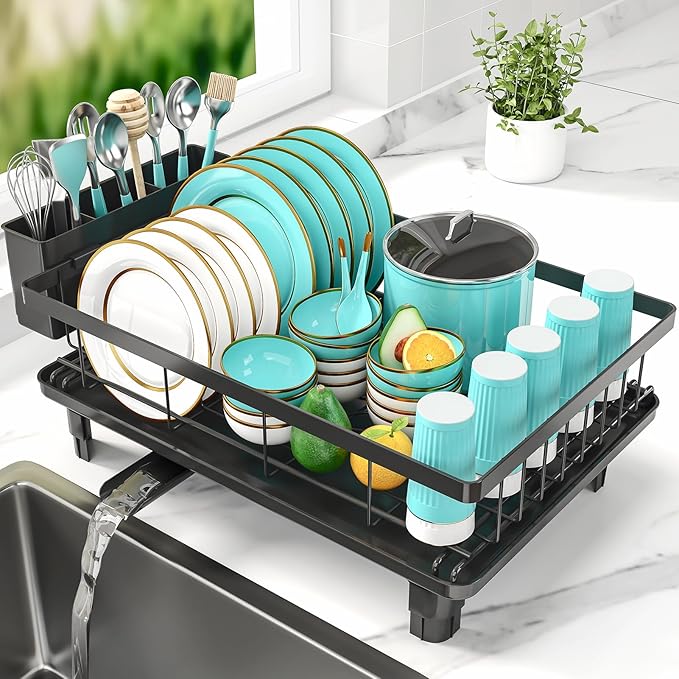
MERRYBOX Dish Rack with 3-Compartment Utensil Holder. The honest budget pick at $15.
What are the best premium over-sink dish racks for small kitchens?
ADBIU Over The Sink Dish Drying Rack (Expandable Height and Length. Two-tier pick for cooking households with enough cabinet clearance.