West Elm
West Elm Wright Dresser Reviews + Honest Verdict
By Erin Mitchell · Updated September 2026
Independent editorial review. We never accept payment for coverage, though we may earn a commission if you purchase through our links.
Verdict
Wright feedback is driven heavily by visual reaction. Buyers who want a darker, more sculptural dresser tend to be enthusiastic. The mixed responses usually revolve around price and whether the premium over simpler West Elm dressers feels fully earned.
Read full take ↓Similar storage pieces
Quick Take
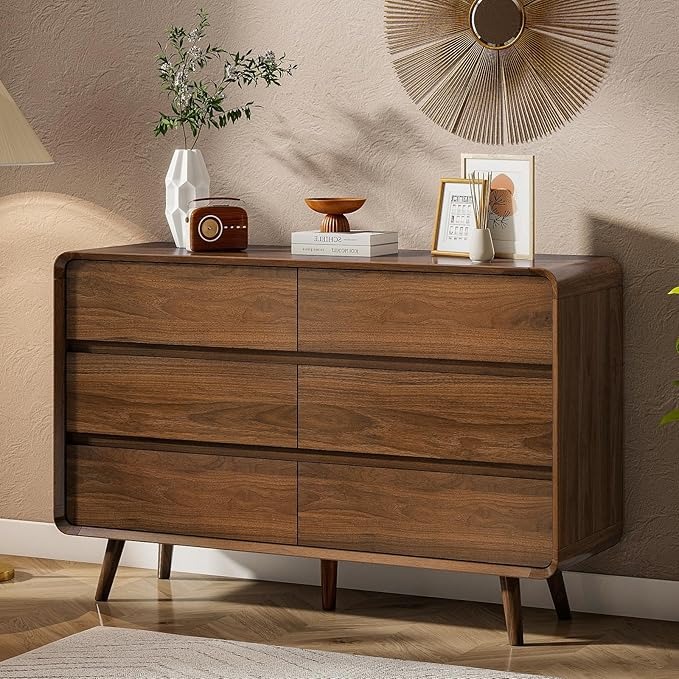
A better material split than most West Elm case goods, since the solid wood sits where it matters. Solid eucalyptus at the load-bearing base and frame, with walnut veneer over engineered wood on the top and sides. The premium over the Mid-Century Dresser is purely for the Italian-inspired legs, so buy it only if you want that look.
The West Elm Wright 6-Drawer Dresser
The Wright Dresser is West Elm's answer to a specific buyer question: what if you want the mid-century bedroom vocabulary but prefer something that reads as more distinctive and less ubiquitous? The Mid-Century Dresser is everywhere; the Wright is less commonly seen, and the design differences that explain why are worth examining carefully before deciding which one belongs in your bedroom.
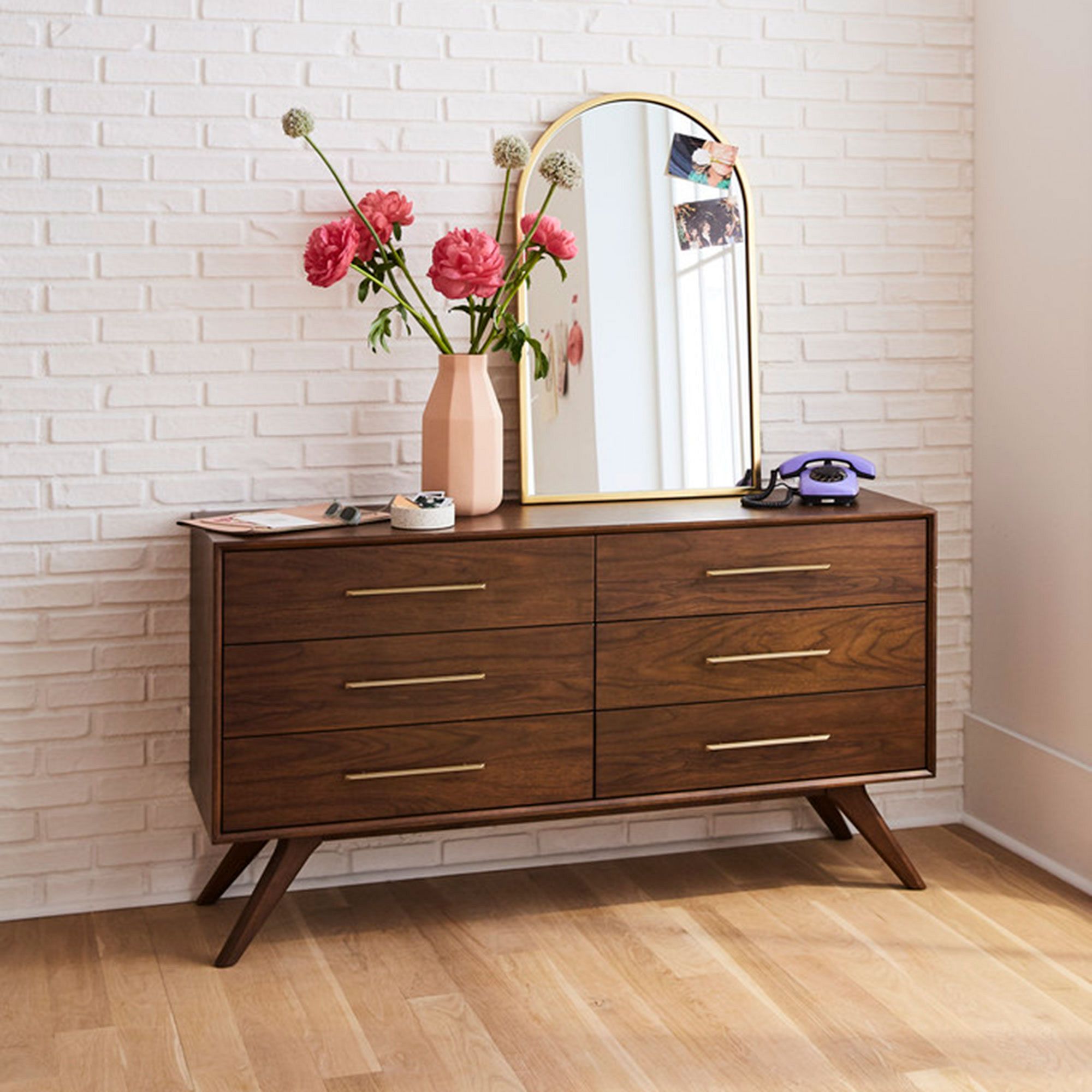
The most immediate visual difference is the base. Where the Mid-Century Dresser uses four individual tapered legs at the corners, the Wright uses an angled, architectural base that runs the full width of the case. The base gives the dresser a more grounded, monolithic quality: it reads as a single sculptural object rather than a case sitting on legs. This is not a better or worse aesthetic choice in absolute terms; it is a different aesthetic choice that suits some rooms and some buyers more than others. Paired with darker wall tones, richer textiles, or a room with more visual density, the Wright's base reads as intentional and sophisticated. In a lighter, more spare setting where the Mid-Century Dresser would recede appropriately, the Wright can feel slightly heavy.
The tonal range of the Wright skews darker than the Mid-Century collection. The available finishes trend toward espresso, walnut-adjacent dark tones, and richer browns that photograph well in moody, layered bedroom setups. Buyers who have built their bedroom around lighter woods, linen tones, or a Scandinavian-influenced palette will find the Wright less natural. Buyers who lean toward darker, more saturated palettes, warmer rooms with heavier textiles, or a contemporary interpretation of mid-century with more drama will find the Wright a better fit than the brighter walnut of the standard Mid-Century line.
Construction
The Wright Dresser carries a price premium over the Mid-Century Dresser, typically $200 to $300 more for the same drawer count. Buyers looking for a corresponding construction upgrade will not find one. The Wright uses the same engineered wood core and veneer surface approach as the rest of the West Elm case goods line. The case panels are MDF or comparable manufactured board with veneer applied to visible surfaces. The angled base is solid eucalyptus, the strongest material in the piece, so its visual premium is backed by genuine solid wood and not only an aesthetic story. The engineered-wood core with walnut veneer is limited to the top and side panels.
This is the honest summary of where the Wright's premium goes: into the design complexity of the base geometry and the darker finish execution, not into material quality. This is a legitimate trade-off if the design is specifically what you want; it is worth naming clearly so buyers have accurate expectations. The Wright is not a more durable dresser than the Mid-Century. It is a more visually distinctive dresser at a higher price, with the same underlying construction quality.
Drawer quality and daily use
The Wright's six drawers are the same practical matter that they are across West Elm's case goods line: adequate construction under normal use, with some reported variation in drawer tracking across production runs. The drawer slides provide a functional action; soft-close mechanisms vary by specific configuration and should be verified at time of purchase. Owners who compare the Wright to the Mid-Century Dresser on drawer quality generally report similar experiences, which is consistent with shared underlying construction.
The Wright's deeper tonal finish means that wear marks and scratches are potentially more visible than they would be on a lighter surface, depending on the contrast with the surface underneath. Minor surface abrasions that would be nearly invisible on lighter veneer can show as lighter marks against darker tones. Buyers who are particular about maintaining a dresser top that looks pristine should use a tray or protective pad under accessories from day one.
Who the Wright Is For
The Wright serves buyers who have looked at the Mid-Century Dresser and found it a little too common, a little too expected, and who are willing to pay a modest premium for something with more distinctive character. This is a design preference with a price, and whether the price is worth paying depends entirely on how much that distinction matters to you.
It also serves buyers who are building bedrooms with a more dramatic, layered aesthetic where the darker tones and stronger base presence of the Wright fit more naturally than the lighter, more restrained Mid-Century. Rooms with dark walls, dramatic bedding, or a moody interior direction benefit from a dresser with more visual weight, and the Wright delivers that quality more readily than the Mid-Century line.
The value honest assessment
At roughly $1,100 to $1,600, the Wright is priced at the high end of what the construction warrants. The design premium over the Mid-Century Dresser is real and visible; the construction is not better. For buyers who love the aesthetic and are choosing between this and the Mid-Century, the premium is the cost of owning the less common version of what is already a well-executed design vocabulary.
For buyers who are debating the Wright against solid wood alternatives from Room and Board, Gat Creek, or comparable makers, the construction gap is significant at a price differential that has narrowed. A solid wood dresser with drawer construction that will outlast engineered wood by decades starts at around $1,600 to $1,800. The Wright's premium positioning makes that comparison more relevant than it would be for the more accessibly-priced Mid-Century. Buyers who expect to own a dresser for 15 or more years should look carefully at that price range before committing to the Wright.
Wright 6-Drawer Dresser: Construction Details
The Wright Dresser uses engineered wood cores, primarily MDF, with veneer applied to visible exterior surfaces. The angled base is constructed from solid eucalyptus, which is the strongest material in the piece, which is a construction choice that affects both the material quality of the base and its long-term durability relative to a solid wood base. The case panels are standard production quality for the West Elm case goods line.
Base construction
The angled base is the Wright's most visually distinctive feature and the element that most distinguishes it from the Mid-Century Dresser. The base construction uses solid eucalyptus legs with the signature shapely mid-century Italian profile, creating a continuous architectural form rather than four individual legs. The base-to-case connection uses hardware attachment at the interior junction points. The base's engineering is adequate for the loads a dresser places on it, but the engineered wood construction of the top and side panels is susceptible to moisture damage and impact damage in the same ways as the rest of the case construction.
Drawer construction and slides
The six drawers use metal runner slides with a functional action that is consistent with West Elm's standard case goods construction. Drawer box construction uses manufactured board components with joinery appropriate for the price tier. Soft-close mechanisms are included on some configurations; verify at time of purchase. The drawer faces use the same veneer as the case exterior, providing visual consistency. Drawer interiors are unveneered manufactured board.
Veneer and finish
The Wright's darker finish tones are achieved through a combination of veneer species selection and stain application. The veneer thickness is consistent with West Elm's other case goods at this tier, typically between 0.6mm and 1mm. The darker finish makes surface scratches more visible as lighter marks against the darker background; protective measures for the top surface are more important than on lighter-finished pieces. The finish has been reported to hold its depth and consistency well under normal conditions by the majority of long-term owners.
Assembly and warranty
Assembly requires two people and takes approximately 60 to 90 minutes. The base assembly, where the angled panels must be precisely aligned before attaching the case, is the most technically demanding step. Following the assembly instructions carefully for the base section prevents misalignment that is difficult to correct once the case is seated. West Elm provides a one-year limited warranty on manufacturing defects. The angled base geometry, while visually distinctive, does not add warranty complexity; coverage terms are consistent with the rest of the West Elm case goods line.
Our Ratings
Overall score
Solid eucalyptus at the load-bearing base and frame, with walnut veneer over engineered wood on the top and sides, a better material split than most West Elm case goods since the solid wood sits where it matters structurally. Metal drawer glides rather than soft-close. FSC-certified, GREENGUARD Gold, and Contract Grade rated for commercial durability, made in Vietnam.
The Wright takes its cues from Italian mid-century design, the jaunty shapely legs are the visual signature, combined with elongated Light Bronze drawer pulls that stand out against the richly grained walnut veneer body. More deliberate and architectural than the Mid-Century line; a stronger choice for buyers who want the room to notice the dresser.
The Wright commands a slight premium over the Mid-Century Dresser for styling differences with no meaningful construction upgrade. At $1,100-$1,600, it asks for a premium that is purely aesthetic. Fine for buyers who want the look; harder to justify on spec alone.
Frequently asked questions
Is the West Elm Wright Dresser worth it?
A better material split than most West Elm case goods, since the solid wood sits where it matters. Solid eucalyptus at the load-bearing base and frame, with walnut veneer over engineered wood on the top and sides. The premium over the Mid-Century Dresser is purely for the Italian-inspired legs, so buy it only if you want that look.
How is the West Elm Wright Dresser built?
Solid eucalyptus at the load-bearing base and frame, with walnut veneer over engineered wood on the top and sides, a better material split than most West Elm case goods since the solid wood sits where it matters structurally. Metal drawer glides rather than soft-close. FSC-certified, GREENGUARD Gold, and Contract Grade rated for commercial durability, made in Vietnam.
What styles does the West Elm Wright Dresser work with?
The Wright takes its cues from Italian mid-century design, the jaunty shapely legs are the visual signature, combined with elongated Light Bronze drawer pulls that stand out against the richly grained walnut veneer body. More deliberate and architectural than the Mid-Century line; a stronger choice for buyers who want the room to notice the dresser.
Options Worth Checking Out
More West Elm Reviews
See all →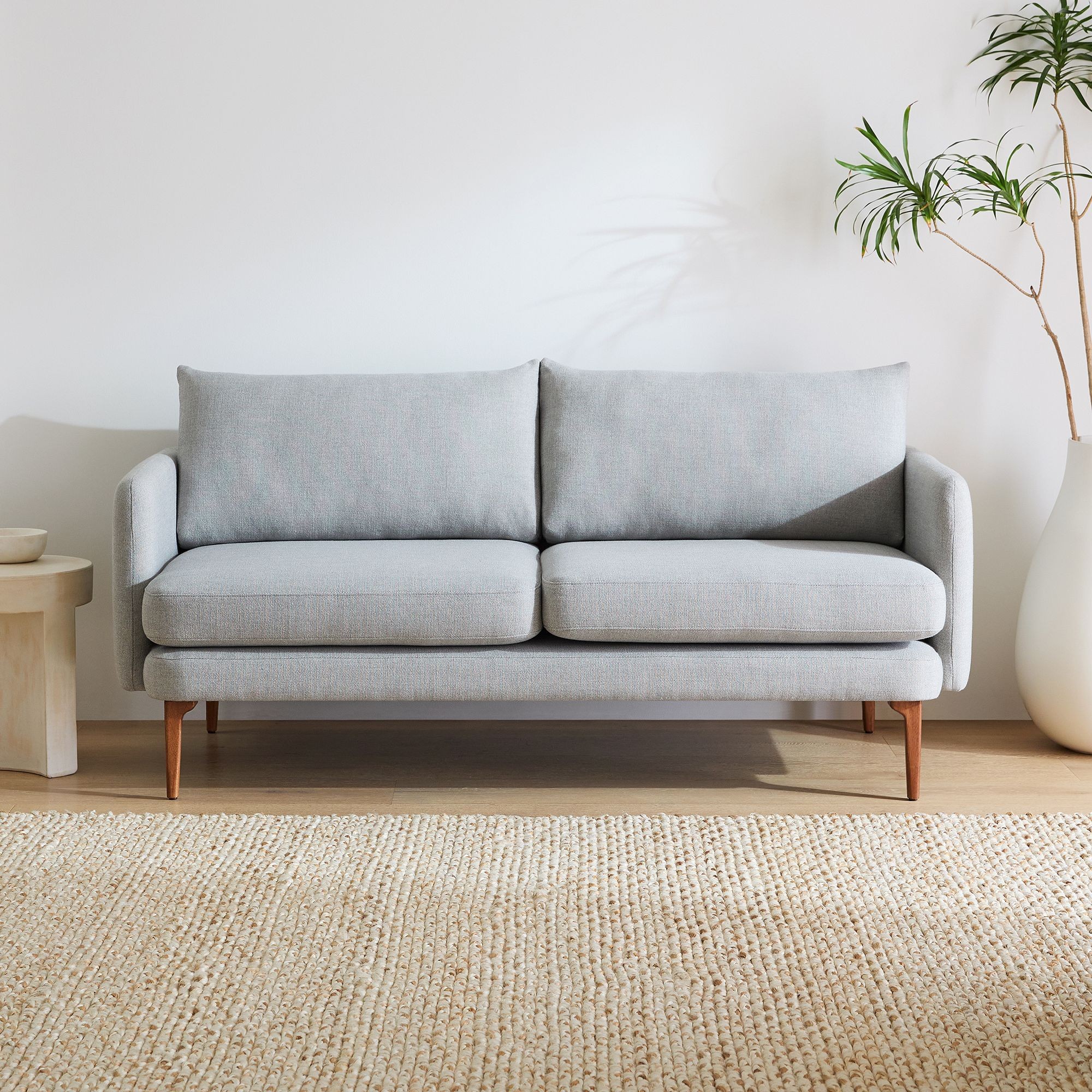
West Elm Auburn Sofa Review: Compact Build + Our Honest Verdict

Best Throw Pillows for a West Elm Harmony Sofa: Sizes, Texture, and Layering
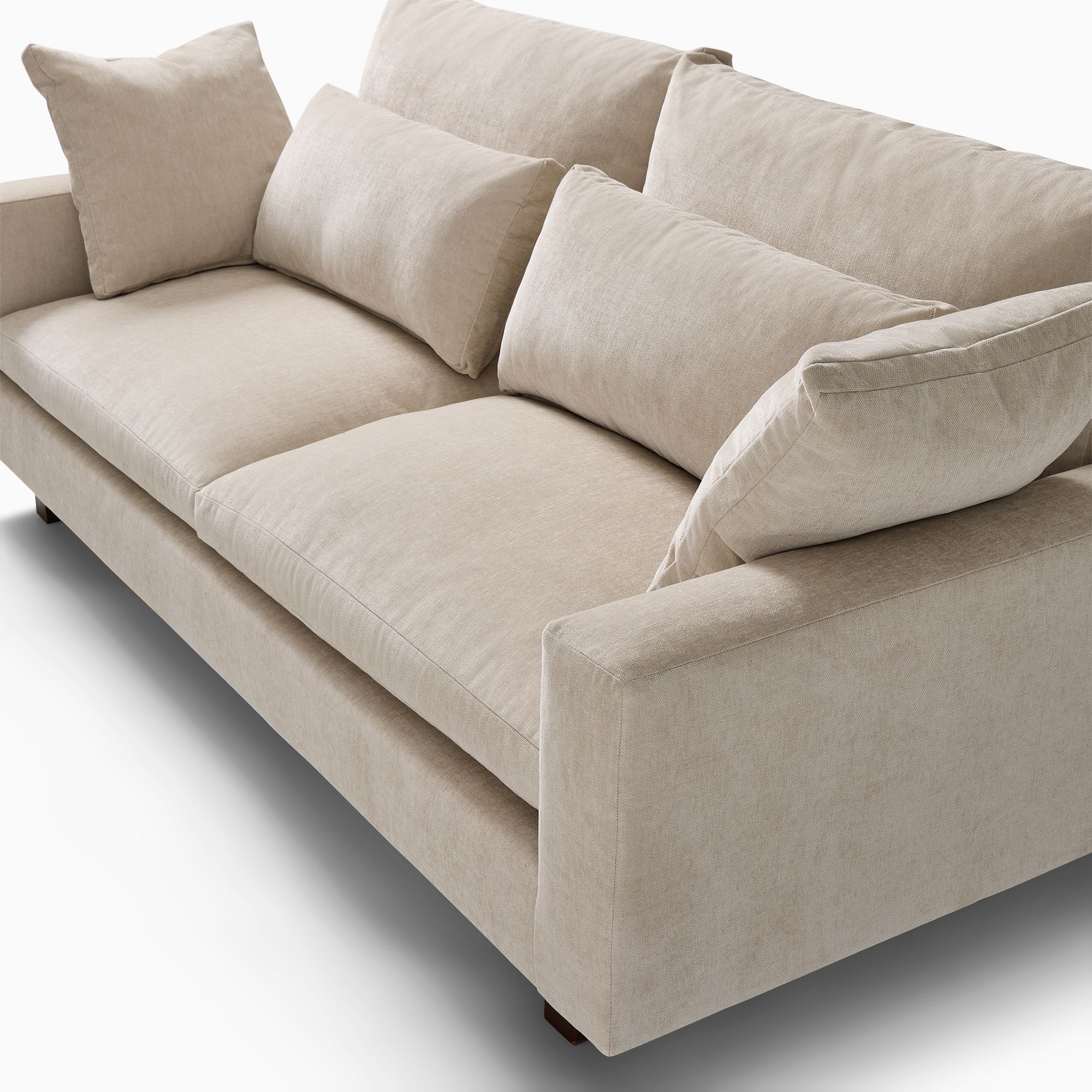
West Elm Harmony Cushions Sagging? The $40 DIY Fix (And When to Give Up)
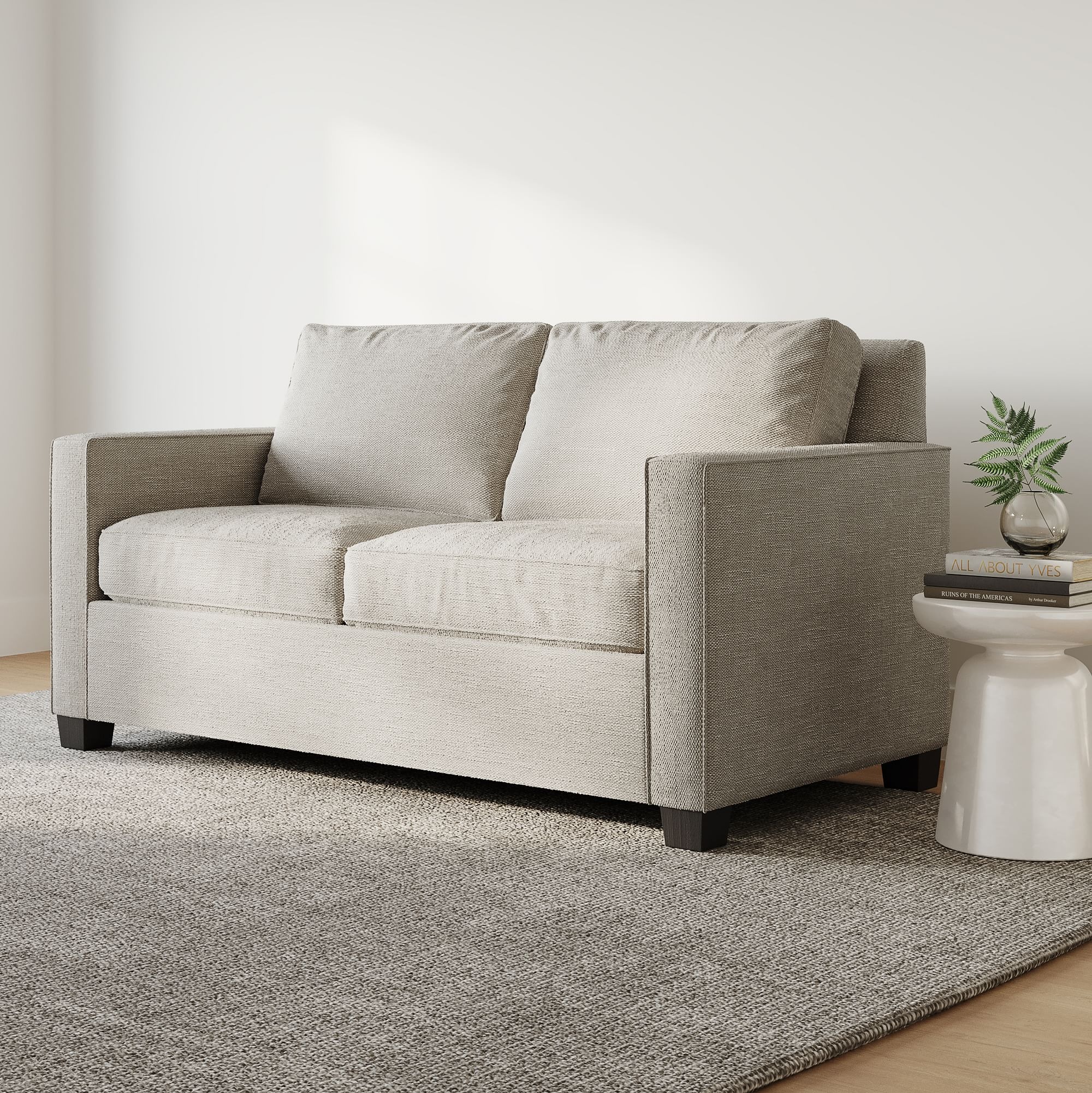
West Elm Peggy Sofa Reviews + Our Honest Verdict
How Does It Compare?
Side-by-side breakdowns featuring this product