West Elm
West Elm Tilly Ottoman Reviews + Our Take
By Daniel Reyes · Updated September 2026
Independent editorial review. We never accept payment for coverage, though we may earn a commission if you purchase through our links.
Verdict
Community coverage of the Tilly is thinner than West Elm's sofa and sectional lines. The piece is newer and more design-specific, so it draws committed buyers rather than casual shoppers, and there's less post-purchase discussion. Design editorial (Apartment Therapy, Domino) features it positively as a statement accent piece. Buyer reviews on the West Elm site cluster around positive aesthetic satisfaction, with multiple reviewers saying the shape looks better in person than in photographs. The practical notes in community discussions land on the non-removable cover as a maintenance limitation and the firmness as adequate for occasional seated use but not for extended sitting. The Tilly shows up in r/malelivingspace and r/femalrlivingspace styling posts, usually as an anchor piece in a styled room setup rather than as a standalone purchase recommendation.
Read full take ↓Similar alternatives
Quick Take
Above average construction for the category, where most rivals at this price use all particleboard. A solid pine and engineered-wood frame assembled in the USA, with solid pine at the leg attachment and corners where ottomans usually loosen. It sits at the top of the statement-ottoman market at list, so buy it during one of West Elm's regular promotions.
When the shape is the point
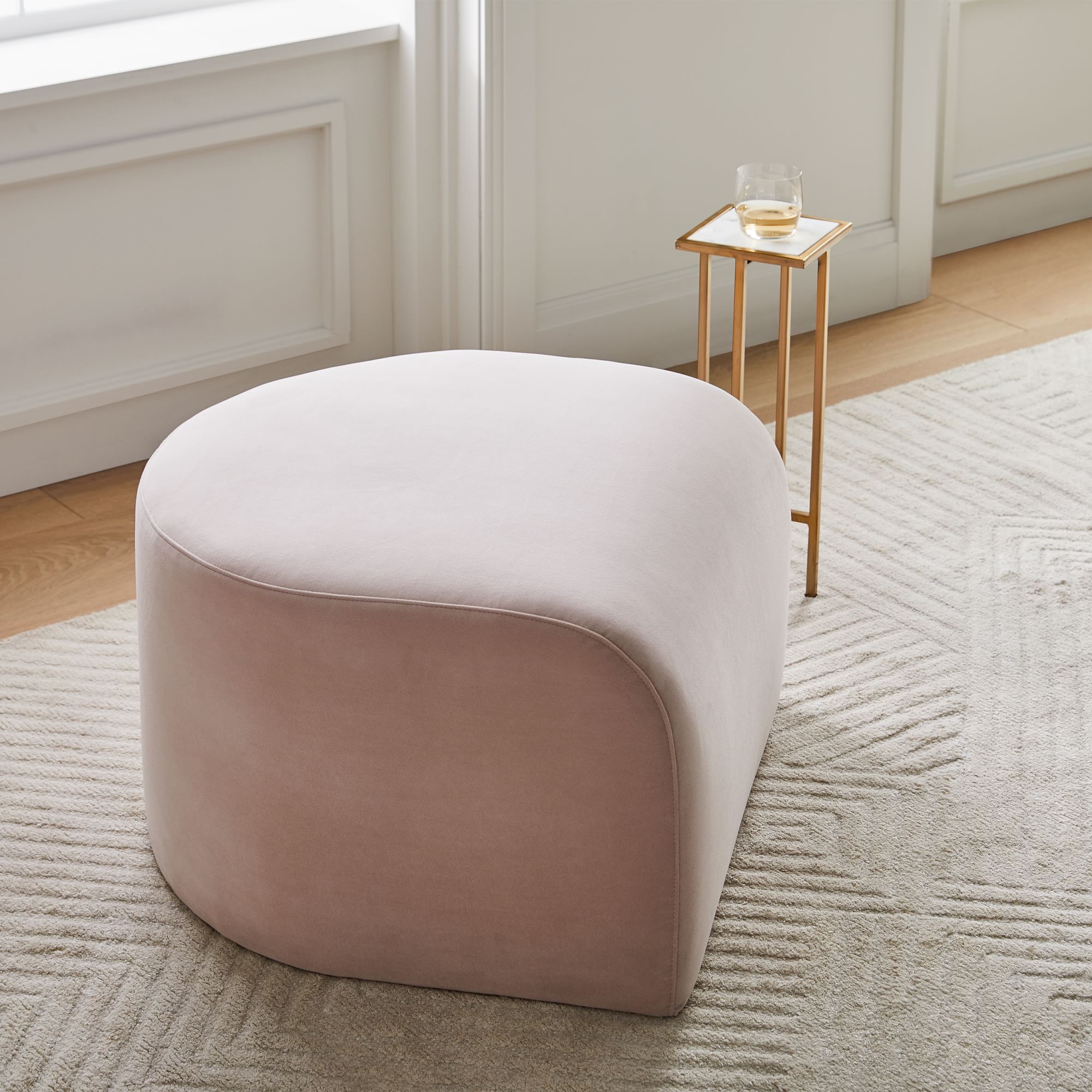
Most ottomans are subordinate furniture, a foot rest that disappears into the room. The West Elm Tilly Ottoman (Large) doesn't. Its rounded, organic silhouette is conspicuous in the best sense, a deliberate design choice that adds visual weight and personality to a room without needing a sectional or a statement sofa to carry it. At 40.5 inches wide and 18 inches deep, the Large Tilly can anchor a seating arrangement, stand in for a coffee table, or hold its own at the end of a bed in a larger bedroom.
It's assembled in the United States on a solid pine and engineered wood frame, filled with polyurethane foam, and offered across West Elm's upholstery library. At $549 to $699 depending on fabric selection, it sits at the upper end of the mid-market ottoman category, where you're paying for design and brand positioning as much as for construction. The solid pine frame and US assembly are genuine quality notes. The non-removable cover is a genuine limitation, and you should weigh it against the cleaning your household really generates.
Organic shape in a rectilinear world
Interior design has drifted toward organic, curved forms for several years now, and the Tilly rides that current. Where a square or rectangular ottoman reads as functional infrastructure, the Tilly's rounded corners and low profile read as styling with intent. It pairs naturally with mid-century modern furniture, contemporary organic interiors, and transitional rooms where one curved piece softens an otherwise linear space. The shape also moves through a room easily, with no sharp corners to catch shins or interrupt traffic flow.
At 40.5 inches wide, the Large Tilly is nearly sofa-scale in footprint. That makes it work as a coffee table substitute, as a seating surface for guests, or as an end-of-bed piece in rooms where a standard bench looks too narrow. The 16.5-inch height puts it at standard ottoman level, comfortable under your feet and usable as a low surface for trays, books, or remote controls with a firm tray underneath.
Who this ottoman is for, and who it isn't
The Tilly is for buyers who've made a specific aesthetic decision and want a piece that delivers on it. If the rounded, organic silhouette is what you're after, the Tilly executes it cleanly at a price below comparable design from Room and Board or Crate & Barrel.
If you need removable upholstery for easy cleaning, and that means households with young children, pets, or frequent spills, the non-removable cover is a real problem. The polyurethane foam fill is durable and holds its shape well, but the cover doesn't unzip and go in the wash, which narrows your options when maintenance is required.
The Tilly also sits outside the typical ottoman use cases in a way that changes how you should judge it. A standard rectangular ottoman is a foot rest, a coffee table substitute, or extra seating when you need it. The Tilly's organic, curved silhouette is more awkward as impromptu seating, since perching on a curved edge is uncomfortable, and less useful as a hard-surface coffee table stand-in, since an upholstered top wants a tray under any drink. What it does exceptionally well is anchor a seating arrangement visually. The shape brings organic warmth to a room of clean-lined sofas and chairs in a way a rectangular ottoman can't. Decide which use case is primary before you buy.
Above-average bones for an ottoman
Frame
Solid pine and engineered wood, assembled in the USA. Solid pine is a legitimate quality note for an ottoman at this price, a step above the all-engineered-wood or particleboard frames common in the $200 to $400 ottoman category. Pine is softer than hardwood species like oak or maple, but an ottoman carries static load rather than the dynamic stress of sofa seating, so it's the right wood for the job. The engineered wood components fill in where solid wood would be unnecessarily expensive or structurally redundant.
Fill and cover
Fill is polyurethane foam, the standard for ottomans and lower-maintenance than feather-down alternatives. It keeps its shape over time without the refluffing a down blend demands. West Elm doesn't disclose the density of the foam it uses, but the Tilly is widely described as firm enough to work as a casual seating surface and as a foot rest, which points to higher-density foam. The cover is non-removable, the significant construction limitation of this piece. West Elm recommends spot cleaning only, so spills have to be caught immediately, and machine washing isn't an option.
Dimensions and weight
The Large Tilly measures 40.5 inches wide by 18 inches deep by 16.5 inches high and weighs 35 pounds. The generous width makes it work as both a foot rest and a casual seating surface. At 16.5 inches high it sits slightly lower than a standard sofa seat, typical for ottomans meant to hold feet. The 35-pound weight means it moves, but not casually, and repositioning it in a room takes a deliberate effort rather than an incidental nudge.
Upholstery options
The Tilly comes in a range of West Elm upholstery options including performance velvet, performance twill, and textured weaves. Performance fabrics earn the modest upcharge in a house that expects regular use, since they resist staining and respond better to spot treatment than untreated natural fiber options. With a non-removable cover, that fabric choice matters more on the Tilly than on pieces with washable slipcovers. Choose your upholstery assuming you'll be spot cleaning it for the life of the piece.
Our Ratings
Overall score
A solid pine and engineered-wood frame, assembled in the USA, above average for the ottoman category, where most $300-$600 rivals use all-particleboard. Solid pine at the leg attachment and corners resists the rocking loads an ottoman takes as several people use it as seating or a footrest. The foam won't bottom out under one seated adult but isn't a dining-chair substitute. The main limit is the non-removable, spot-clean-only cover.
A rounded, organic silhouette that suits contemporary-modern and organic-modern rooms, playing against the angular geometry of most seating; it reads intentional where other curves appear and slightly off in strict right-angle rooms. It comes in West Elm's upholstery library, and velvet suits the sculptural shape best. Three sizes keep the organic identity across scales, even the 40.5-inch Large, and it adapts to almost any placement.
At $549 to $699 for the Large, it sits at the upper end of the statement-ottoman market, near the Article Sit and CB2 Rouka ($400-$800). West Elm's 20-30% promos pull it to $385-$490, the more defensible price. The main caveat is the non-removable, spot-clean cover, where rivals like Article offer washable ones, and the warranty is West Elm's standard one year. Bought as a decorative anchor rather than hard-use seating, the value holds up.
What People Are Saying
Community coverage of the Tilly is thinner than West Elm's sofa and sectional lines. The piece is newer and more design-specific, so it draws committed buyers rather than casual shoppers, and there's less post-purchase discussion. Design editorial (Apartment Therapy, Domino) features it positively as a statement accent piece. Buyer reviews on the West Elm site cluster around positive aesthetic satisfaction, with multiple reviewers saying the shape looks better in person than in photographs. The practical notes in community discussions land on the non-removable cover as a maintenance limitation and the firmness as adequate for occasional seated use but not for extended sitting. The Tilly shows up in r/malelivingspace and r/femalrlivingspace styling posts, usually as an anchor piece in a styled room setup rather than as a standalone purchase recommendation.
Reddit and Houzz commentary are weighted 3× against blog and editorial sources in our sentiment score. Brand PR has a well-documented influence on editorial coverage — direct owner reports from message boards tend to be more candid.
What Reddit Is Saying
“Every single thing I bought from them fell apart within a couple of years. Article is far better quality for similar designs.”View thread →
“We had a similar frustrating experience; they only delivered half our couch, lost the other half and then for three months had excuses about why they didn't have updates. If you haven't already, go through Williams Sonoma support instead. They own West Elm, and within twenty minutes of speaking to their customer service they immediately ordered an entirely new couch for us (for free) and set up a delivery date.”View thread →
Frequently asked questions
Is the West Elm Tilly Ottoman worth it?
Above average construction for the category, where most rivals at this price use all particleboard. A solid pine and engineered-wood frame assembled in the USA, with solid pine at the leg attachment and corners where ottomans usually loosen. It sits at the top of the statement-ottoman market at list, so buy it during one of West Elm's regular promotions.
How is the West Elm Tilly Ottoman built?
A solid pine and engineered-wood frame, assembled in the USA, above average for the ottoman category, where most $300-$600 rivals use all-particleboard. Solid pine at the leg attachment and corners resists the rocking loads an ottoman takes as several people use it as seating or a footrest. The foam won't bottom out under one seated adult but isn't a dining-chair substitute.
What styles does the West Elm Tilly Ottoman work with?
A rounded, organic silhouette that suits contemporary-modern and organic-modern rooms, playing against the angular geometry of most seating; it reads intentional where other curves appear and slightly off in strict right-angle rooms. It comes in West Elm's upholstery library, and velvet suits the sculptural shape best. Three sizes keep the organic identity across scales, even the 40.5-inch Large, and it adapts to almost any placement.
What do real owners say about the West Elm Tilly Ottoman?
Community coverage of the Tilly is thinner than West Elm's sofa and sectional lines. The piece is newer and more design-specific, so it draws committed buyers rather than casual shoppers, and there's less post-purchase discussion. Design editorial (Apartment Therapy, Domino) features it positively as a statement accent piece.
Options Worth Checking Out
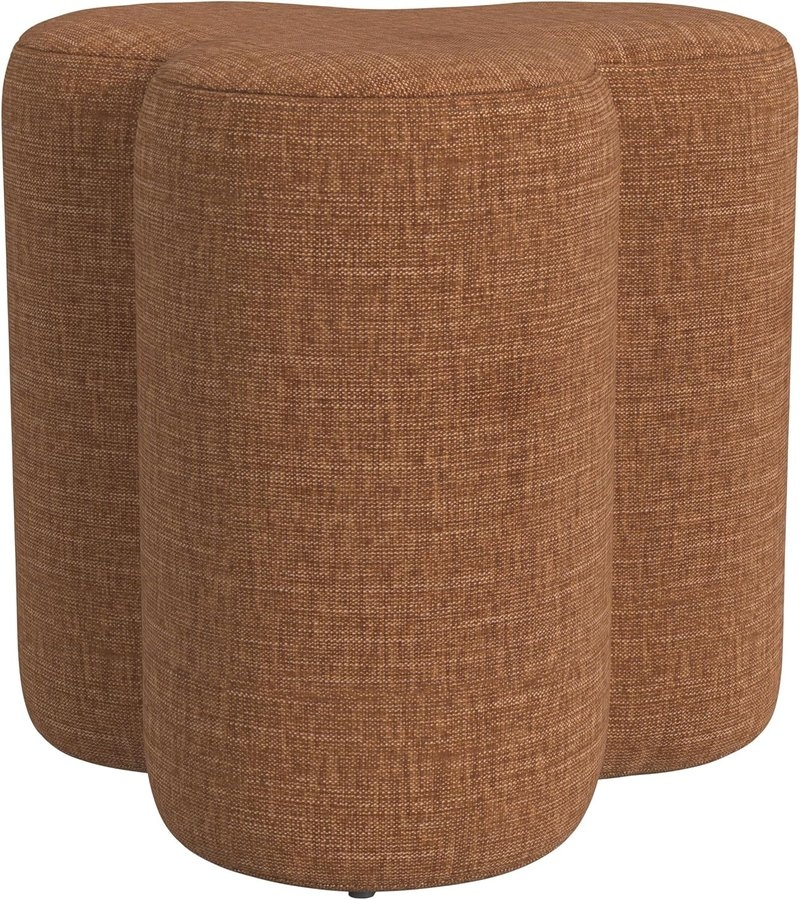
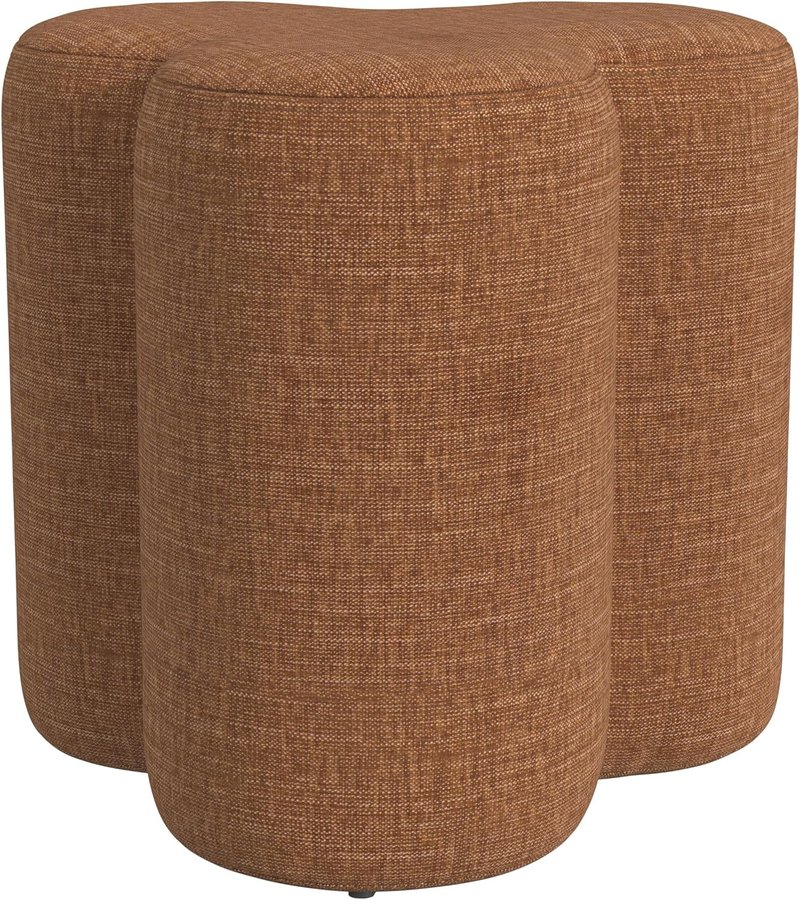
HomePop Upholstered Clover-Shaped Ottoman, Rust Orange Chenille
Sculptural clover shape in rust orange chenille, shares the Tilly's organic curved silhouette at a fraction of the price.
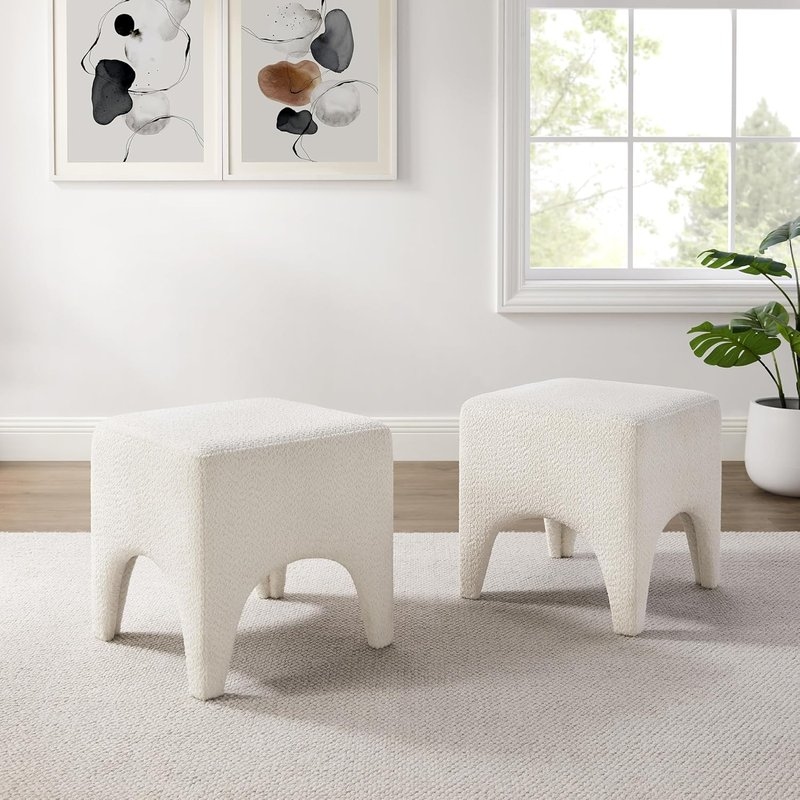
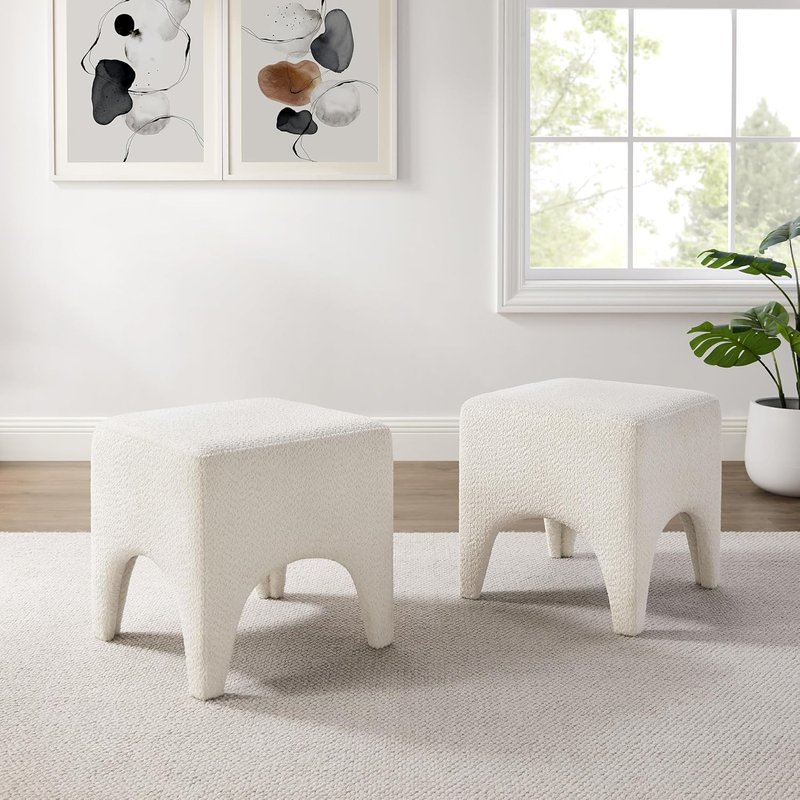
Arcrinte 17" Boucle Rectangle Ottoman, Upholstered Foot Stool, White
Compact boucle ottoman with a clean rectangular profile, versatile as a footrest or accent piece, easy to tuck under a coffee table.
More West Elm Reviews
See all →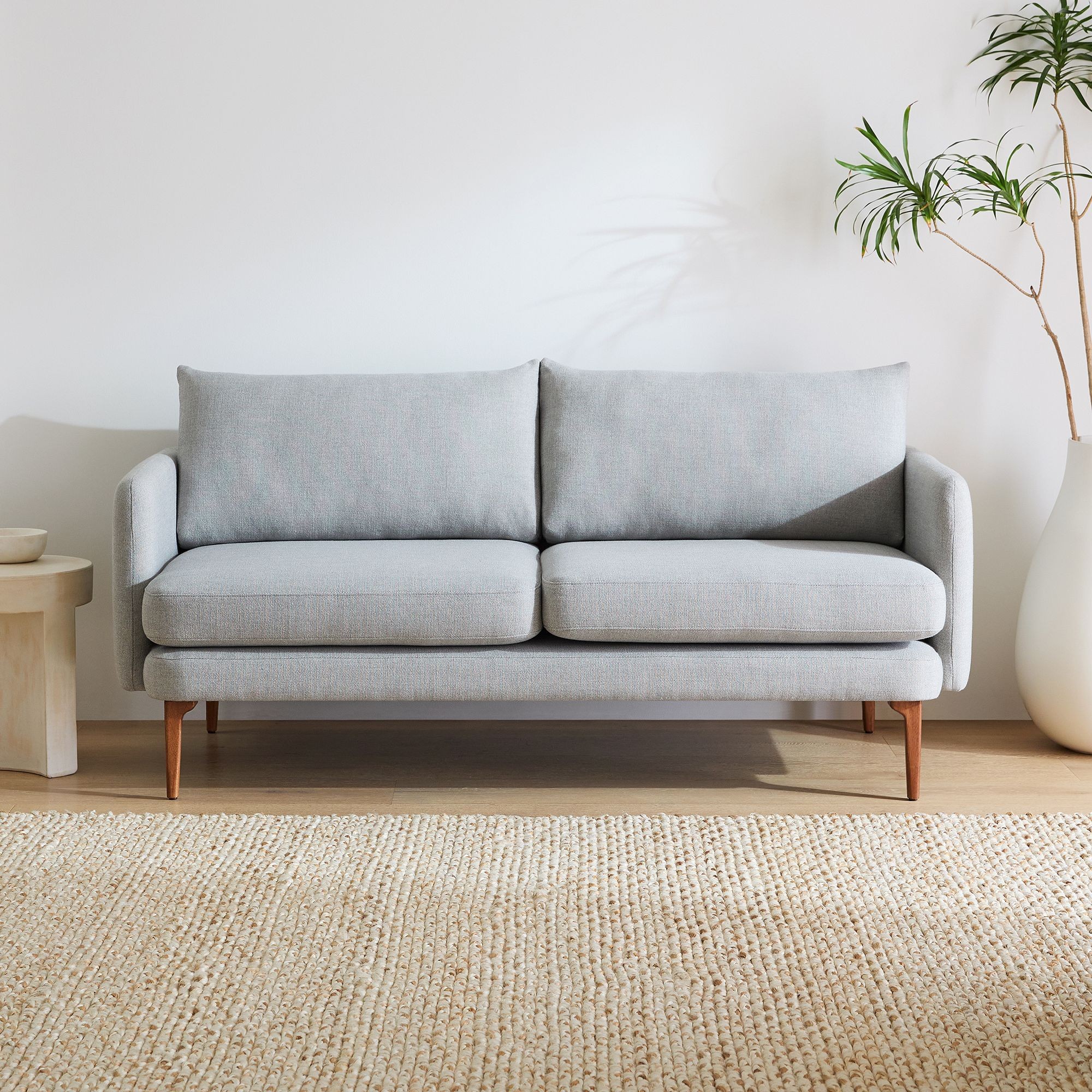
West Elm Auburn Sofa Review: Compact Build + Our Honest Verdict
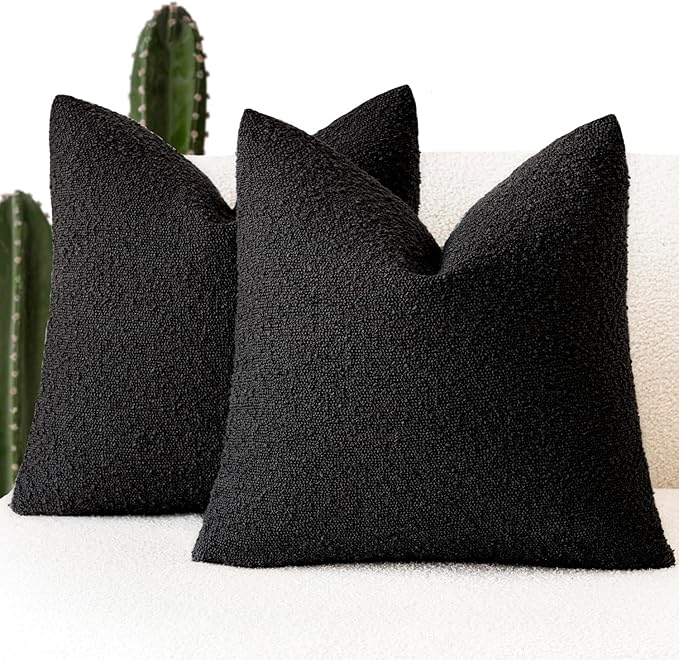
Best Throw Pillows for a West Elm Harmony Sofa: Sizes, Texture, and Layering
West Elm Harmony Cushions Sagging? The $40 DIY Fix (And When to Give Up)
West Elm Peggy Sofa Reviews + Our Honest Verdict
How Does It Compare?
Side-by-side breakdowns featuring this product