West Elm
West Elm Portside Dining Table Reviews + Our Honest Verdict
By Erin Mitchell · Updated June 2026
Independent editorial review. We never accept payment for coverage, though we may earn a commission if you purchase through our links.
Verdict
Reddit feedback on the Portside dining table is mixed-to-positive. Most owners like the clean teak-look aesthetic at well under solid-teak money, but several threads flag that the acacia needs consistent oiling to keep it from cracking and greying. A handful of users reported minor warping after heavy rain exposure, mostly on tables stored uncovered. Keep up with seasonal maintenance and it holds up well; for a low-maintenance patio, the aluminum alternative is the common recommendation.
Read full take ↓Similar dining tables
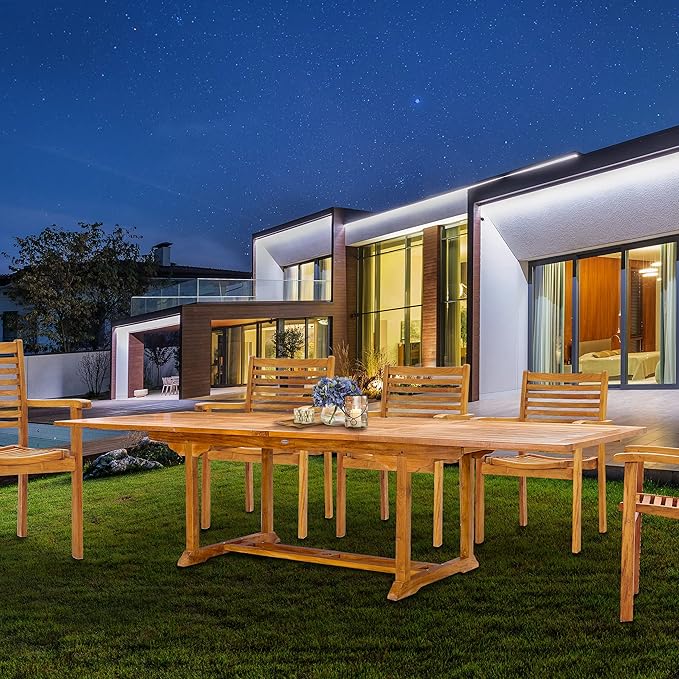
A teak-look dining table that earns its place on the patio
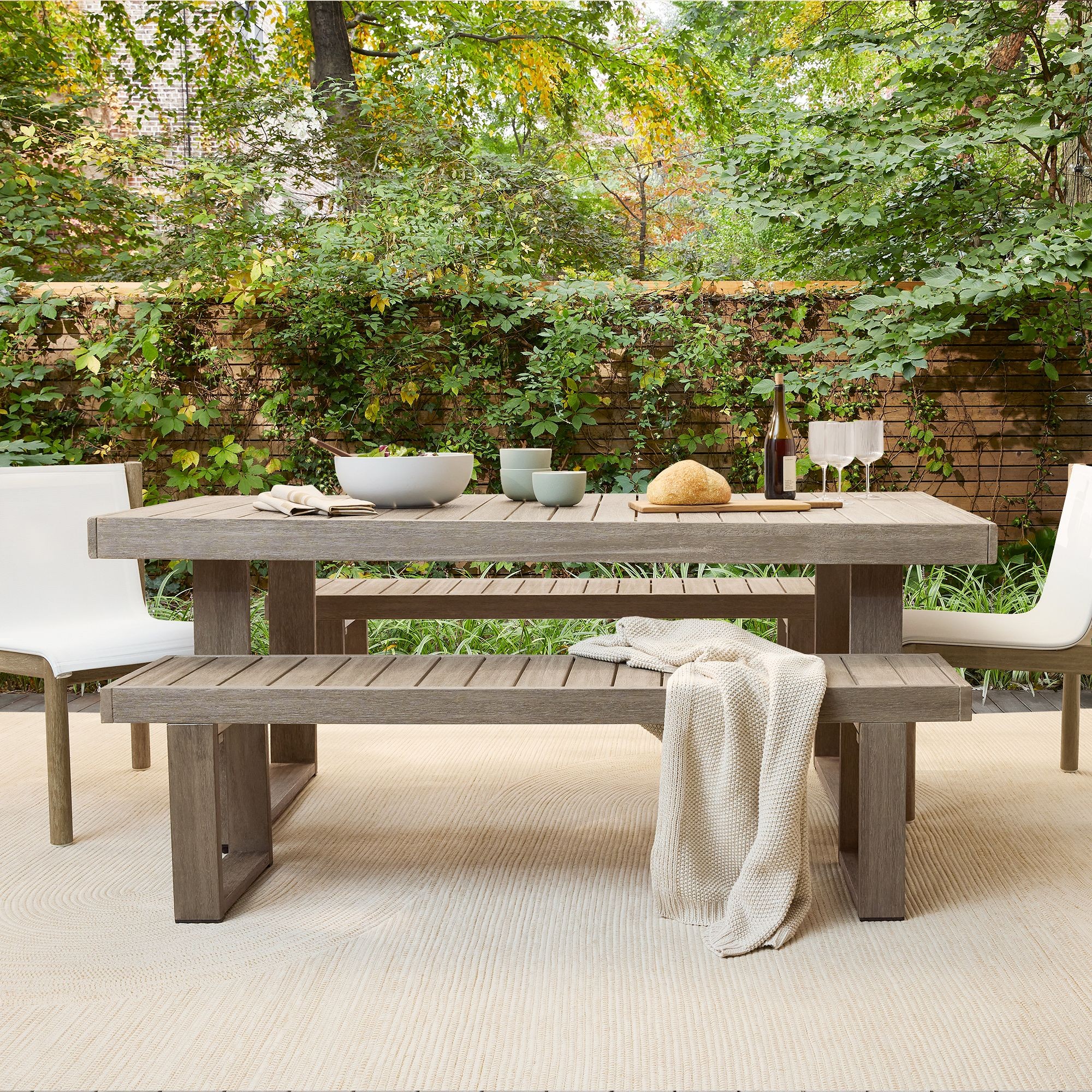
The West Elm Portside Outdoor Dining Table is one of the brand's longest-running outdoor staples, and it deserves the run. The clean-lined silhouette, FSC-certified acacia slat top, and warm natural finish read like teak furniture costing several times more. At $599 to $799 depending on size, it sits in the upper-mid outdoor dining market, competitive enough to deserve a look, but still a West Elm premium over equivalent construction elsewhere.
It comes in two sizes. The 58-inch seats four comfortably and six in a pinch. The 79-inch seats six with room for platters and drinks down the center. Both share the same slatted tabletop design, tapered acacia legs with aluminum cross-bracing, and a straightforward bolt-together assembly. The table photographs beautifully and reads as intentional design rather than big-box patio furniture.
It's also not a table you can ignore once you own it. Acacia is a durable tropical hardwood, cheaper than teak but more prone to checking, greying, and surface cracking if it goes unprotected through wet seasons. West Elm recommends oiling once or twice a year, and that guidance isn't optional if you want the wood to hold its color and dimensional stability over multiple seasons.
Who this table is for
The Portside makes most sense for buyers who want a warm, organic dining table on a covered patio or in a space with seasonal furniture storage, and who don't mind the maintenance rhythm acacia asks for. In a dry climate, or if you keep the table covered between uses or bring it in for winter, it'll last many years. If you want a set-and-forget outdoor dining table, the aluminum version or a resin option saves you the frustration.
The look works in modern and transitional outdoor spaces alike. The slatted top pairs well with metal or woven seating, and the warm natural tone sits comfortably next to linen, rattan, or teak accessories. It's not a statement piece. It's handsome the way good utility furniture usually is.
Dimensions and configuration
The 58-inch version measures 58 inches wide by 36 inches deep by 29.5 inches tall. The 79-inch version measures 79 inches wide by 36 inches deep by 29.5 inches tall. Both sit at a standard dining height. There's no extension function, so buy the size that fits your typical gathering rather than hoping to stretch it for larger events.
Most owners rate assembly as moderate. The cross-bracing under the tabletop takes patience to align, but the hardware package is complete and one person can manage it, though a second set of hands makes stabilizing the frame while tightening much easier.
Weather durability and the care it needs
FSC-certified acacia is a teak-adjacent hardwood that holds up to several seasons of outdoor exposure, but it isn't maintenance-free the way teak is. Owners who skip the seasonal care report visible greying setting in over roughly 18 to 24 months of full-sun use, with grain raising following where freeze-thaw cycles or repeated rain exposure are part of the climate. In reality the finish West Elm applies at the factory is a protective polyurethane topcoat over the wood's natural oils, so a covered, well-kept table holds its tone far longer than an unsealed piece would.
Treat the Portside as a piece with a defined annual ritual: a light sanding pass, a coat of UV-inhibiting outdoor wood oil, and a follow-up coat partway through the season if it lives in direct sun. Owners who cover it through the off-season and oil it in spring report the warmest, most consistent tone. Owners who leave it uncovered through winter get a silvered surface that takes more aggressive sanding to bring back. Neither outcome is a defect, both are predictable acacia behavior, but they raise the cost of ownership if you want the look to stay close to the showroom photo.
Value assessment
At $599 to $799 this isn't a budget table. FSC-certified acacia dining tables with comparable slat construction go for $300 to $450 on Amazon and Wayfair, often out of the same Southeast Asian factories that supply multiple brands. What West Elm's sourcing and quality control buy you is more consistent finish quality and tighter dimensional tolerances than the generic options, which matters when you set it on a level patio and want it to stay flat.
The value math comes down to maintenance discipline. Oil it annually, store it covered, and you get years out of a legitimately attractive table. Leave it exposed through a Pacific Northwest winter and forget to treat it, and it degrades faster than the price justifies. The table gives back what you put in.
Assembly and set-up notes
Assembly is the part of the Portside experience owners underestimate most. The cross-bracing under the tabletop is what gives the table its stability, and seating it correctly takes two people and a methodical pass through the instructions, not a fast flat-pack rhythm. Owners who try the larger 79-inch version solo report stripped fasteners and misaligned bracing, both avoidable with a second set of hands and a light touch on torque.
Once built, it's heavy enough to treat as a permanent placement. Sliding an assembled Portside across a paver patio risks loosening the cross-braces and gouging the bottoms of the legs. If you reposition it seasonally, lift it in two-person carries instead of dragging it. Re-tighten the underside hardware once a year and the joints stay put through the cycle of expansion, contraction, and dining-load stress.
The gap between buyers who treat the Portside as a piece needing annual attention and buyers who treat it as set-and-forget decides long-term satisfaction more than anything else. The first group describes the table fondly years in. The second describes a table that didn't hold up. It's the same table in both cases.
Construction and materials
The Portside tabletop is FSC-certified acacia wood, finished with a water-based stain and a top coat of outdoor-rated sealer. The slats run lengthwise on the 79-inch version and crosswise on the 58-inch, both with consistent gapping of roughly 3/8 inch for drainage and expansion. The legs are solid acacia with tapered profiles, joined to an aluminum cross-brace system that adds lateral rigidity without visual bulk. The aluminum hardware is powder-coated against rust, and the junction points between wood and metal are finished cleanly.
West Elm doesn't publish whether the joinery is mortise-and-tenon or bolt-through, but owner disassembly photos suggest the legs bolt to a metal plate system underneath the top, with the cross-bracing bolted on separately. Fully assembled and tightened it's sturdy, but it isn't single-piece solid-wood construction.
Material specifics
Tabletop: FSC-certified acacia wood, slatted, water-based stain finish Legs: solid acacia, tapered profile Hardware: powder-coated aluminum cross-bracing, zinc-alloy fasteners Finish: outdoor-rated sealer over stain; requires annual oiling Weight capacity: approximately 200 lbs (not officially stated)
Weather resistance
Acacia is naturally oil-rich and more weather-resistant than most domestic hardwoods, but it isn't teak. Teak's natural silica content makes it nearly impervious to moisture; acacia needs active maintenance to get anywhere close. West Elm recommends teak oil or a dedicated hardwood oil, applied before the first season and again annually after that. Neglected tables show surface checking (fine surface cracks) and grey discoloration within 18 to 24 months in most climates. That's the natural behavior of the material rather than a defect, but it's a commitment.
The powder-coated aluminum hardware should hold up across climates without extra treatment. The failure point, if there is one, is the wood-metal junction, where moisture collects if the table isn't tilted to drain after rain. A furniture cover when the table isn't in use is the single most effective maintenance step for owners who'd rather not oil often.
Assembly notes
West Elm rates assembly as a two-person job. You attach the leg assemblies to the tabletop through bolted metal plates, then install the cross-braces between the leg pairs. Most owners report 45 to 75 minutes. The instruction booklet is illustration-only with no written steps, which slows down the first run. A socket wrench (not included) is considerably faster than the included Allen key on the larger bolts.
Our Ratings
Overall score
Options Worth Checking Out
West Elm
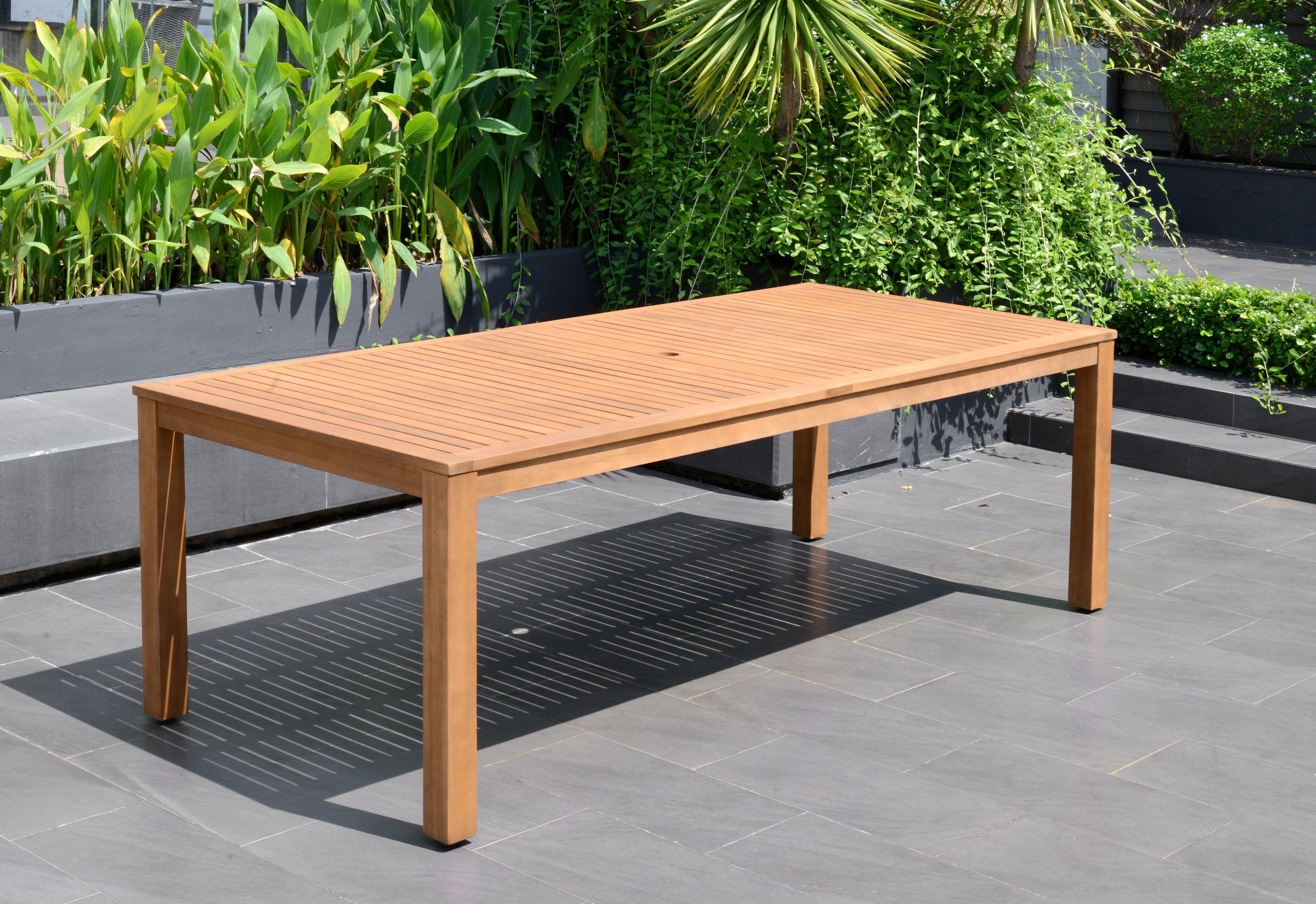
Amazonia Towson 7-Piece Outdoor Teak Dining Set
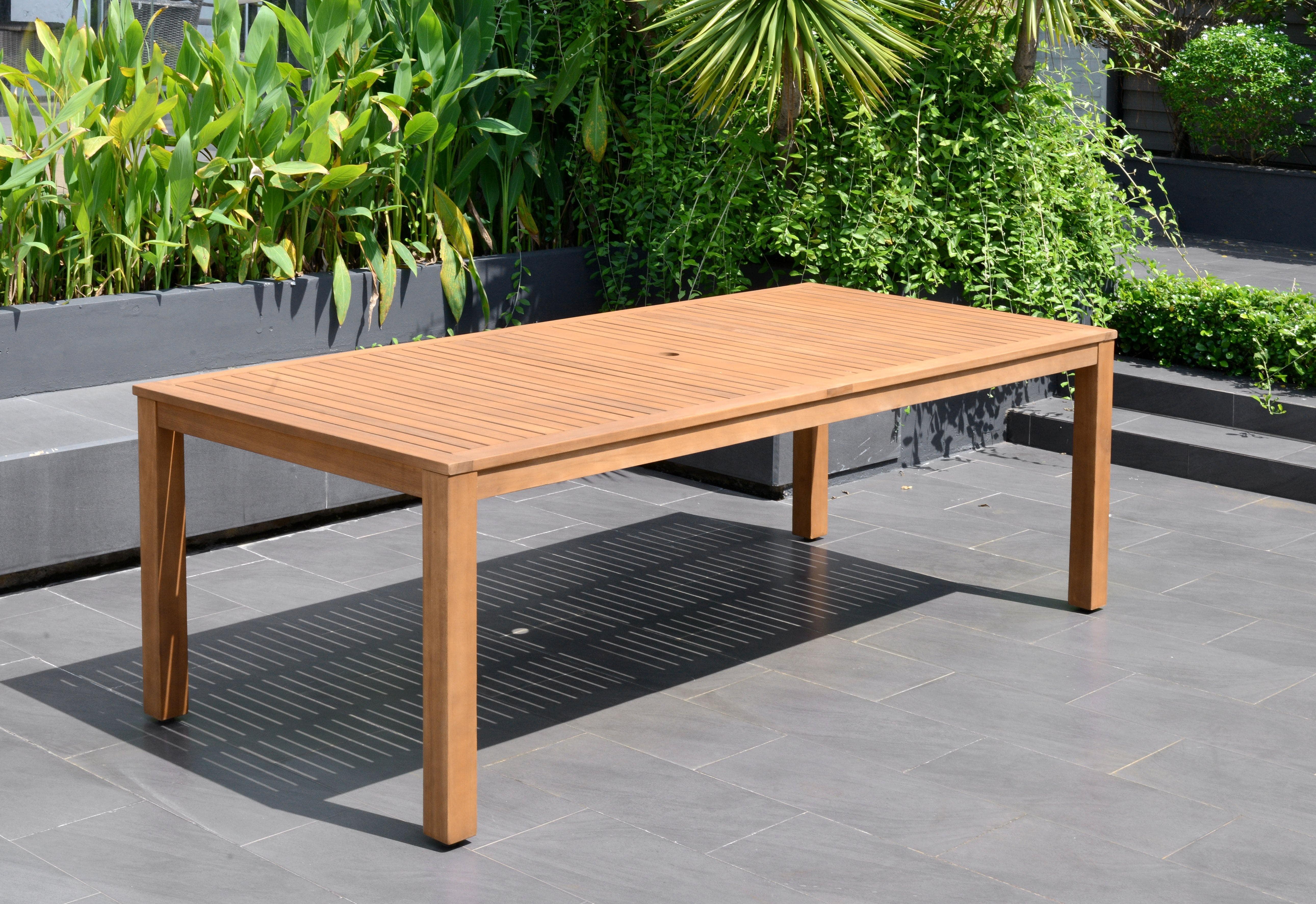
FSC-certified acacia dining table with similar slatted construction at a much lower price than the Portside. Seats four to six comfortably.
West Elm
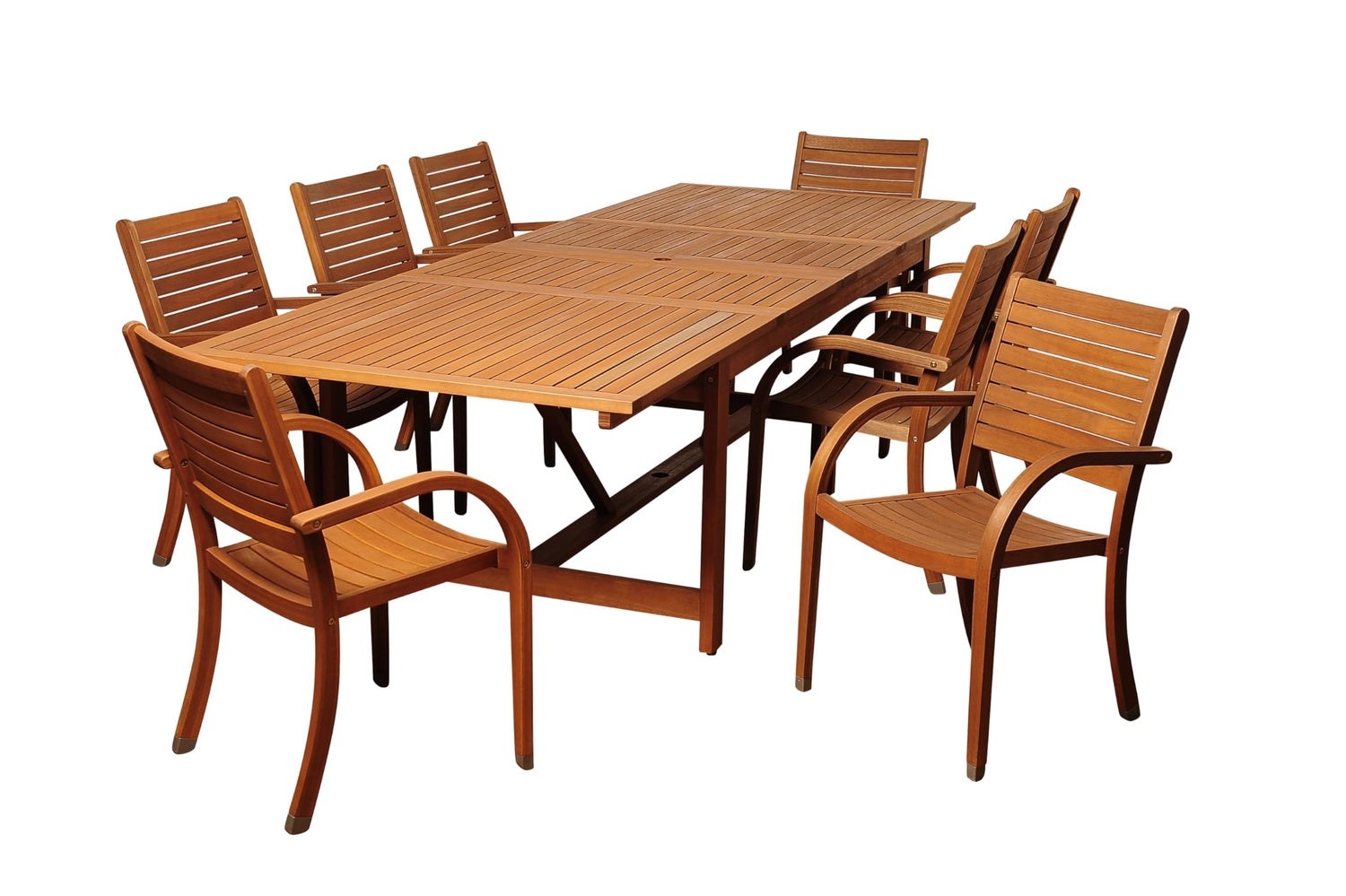
Amazonia Arizona Eucalyptus Extendable Outdoor Dining Set
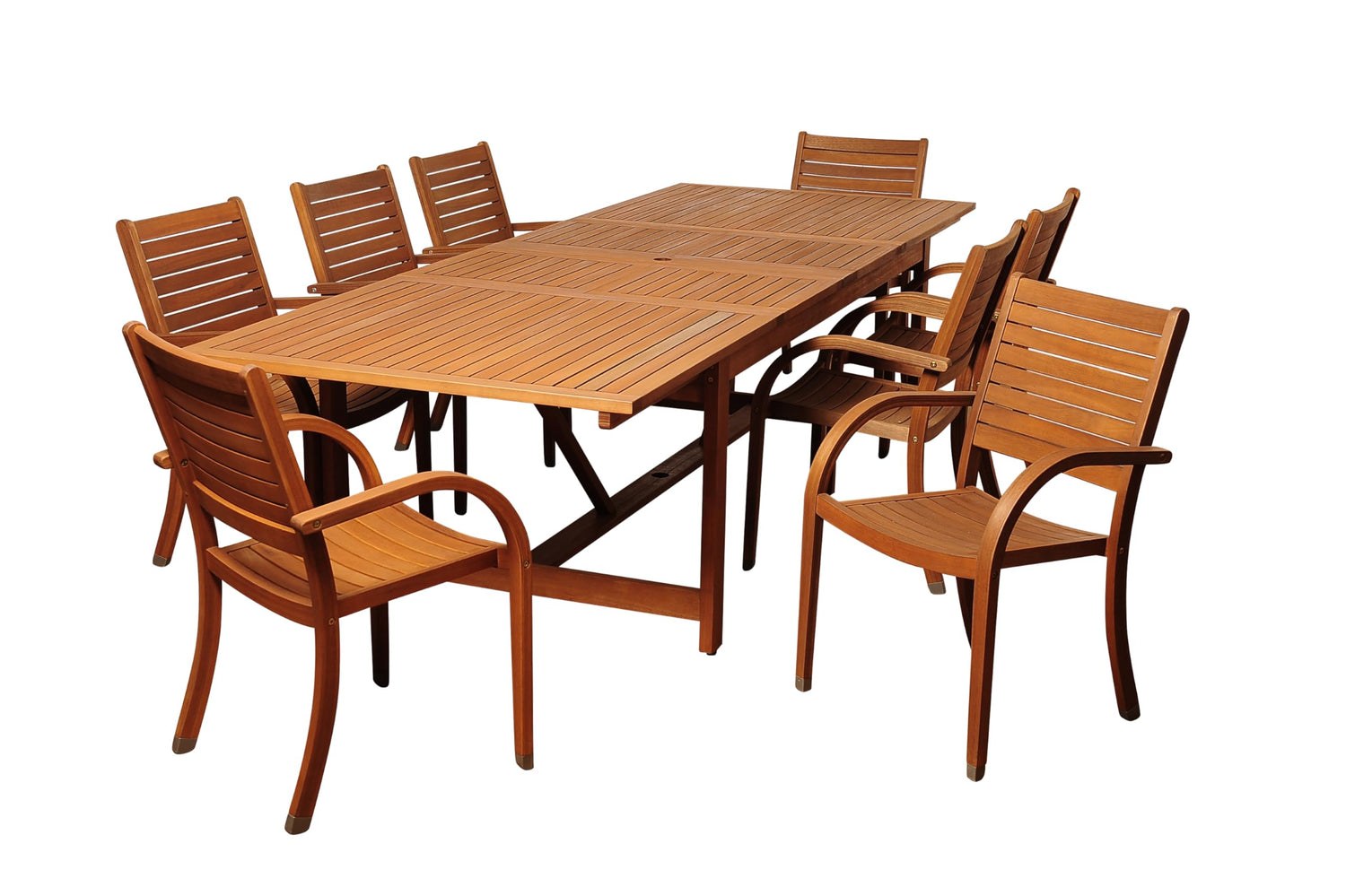
Acacia table with cross-leg design and natural wood finish. Weather-resistant build suited to covered or semi-covered patios where the Portside would weather faster.
West Elm
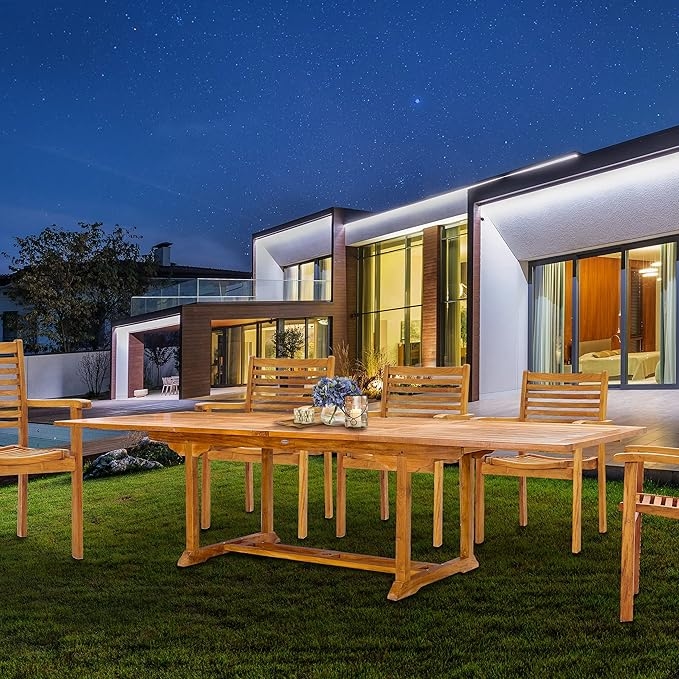
Best Choice Products 6-Person Acacia Outdoor Dining Table
Solid acacia outdoor table with slatted top and rust-resistant hardware, seating six. Plain budget version of the Portside's slatted-teak look.
More West Elm Reviews
See all →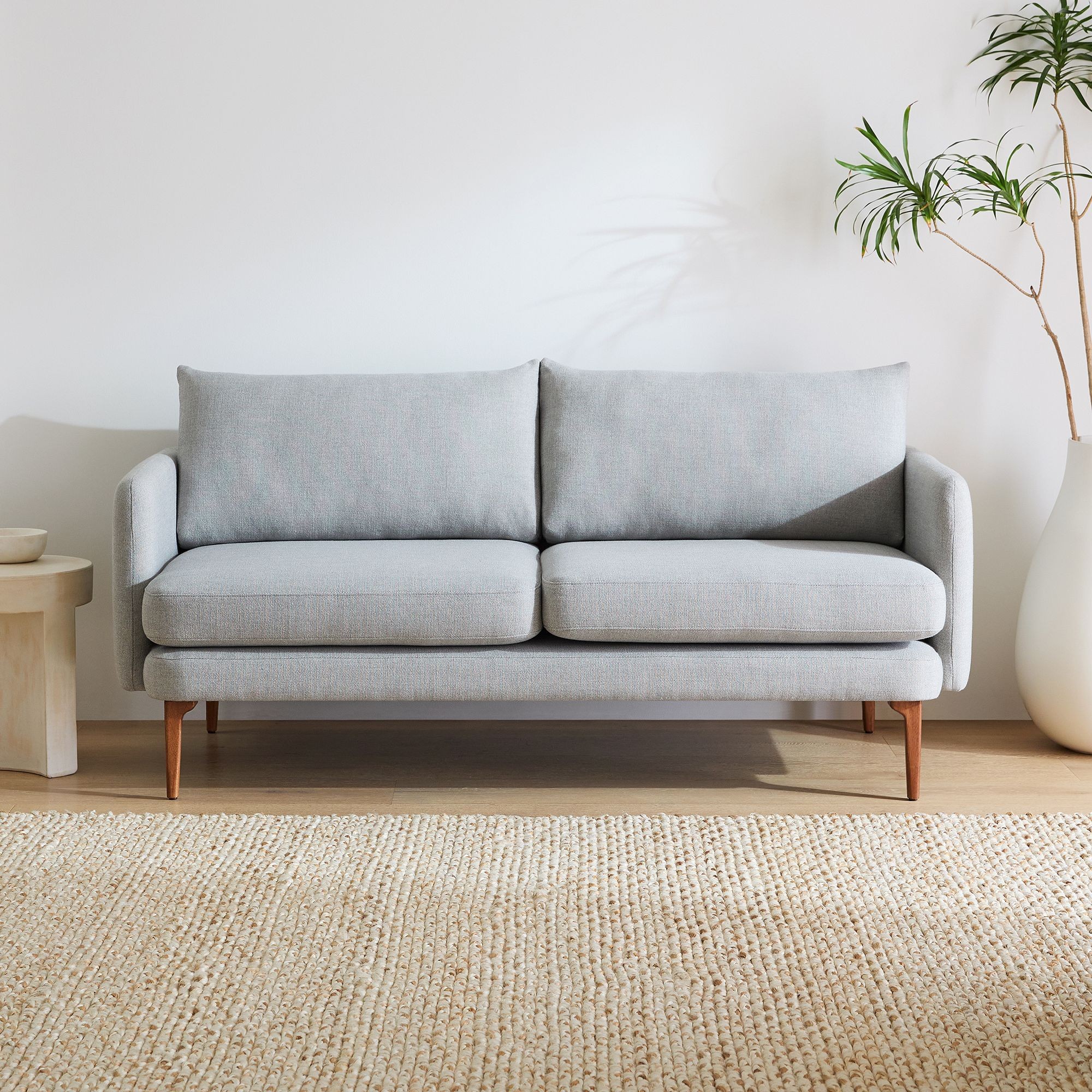
West Elm Auburn Sofa Review: Compact Build + Our Honest Verdict
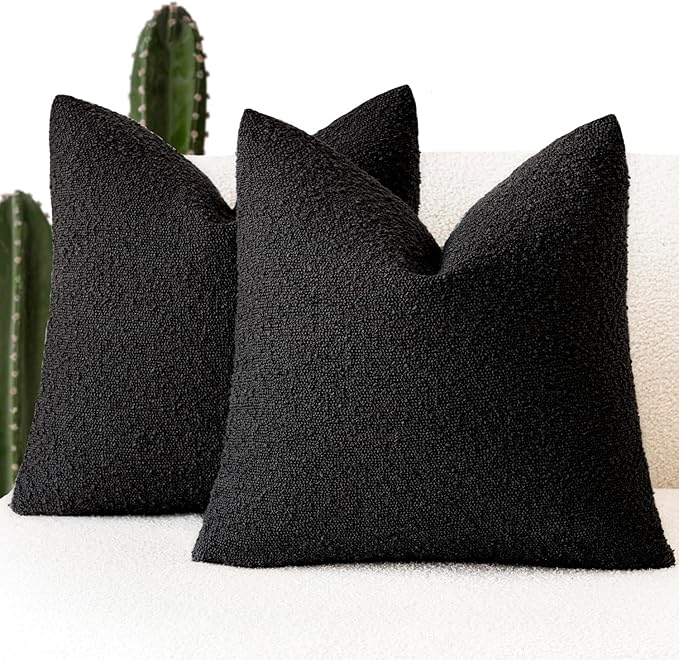
Best Throw Pillows for a West Elm Harmony Sofa: Sizes, Texture, and Layering
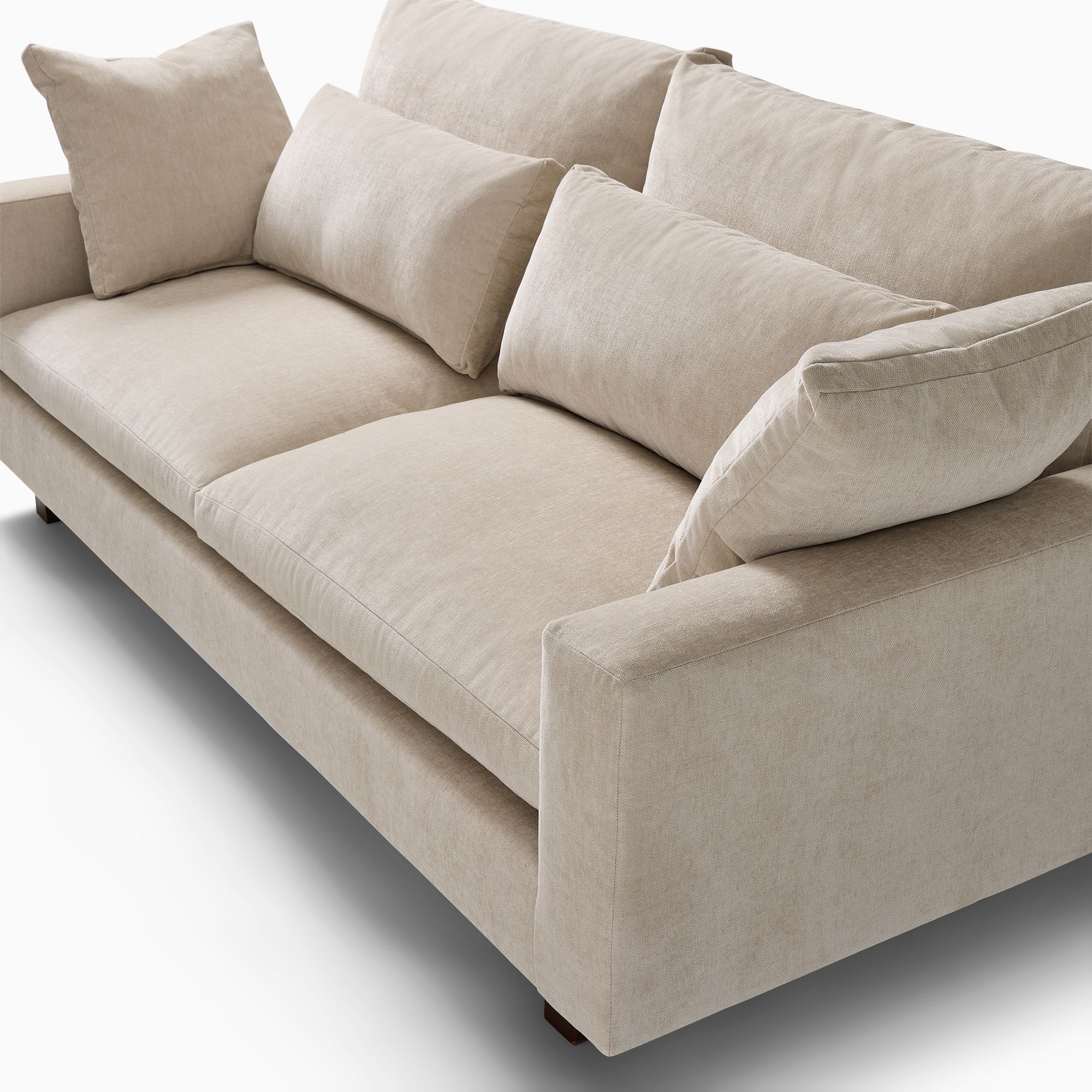
West Elm Harmony Cushions Sagging? The $40 DIY Fix (And When to Give Up)
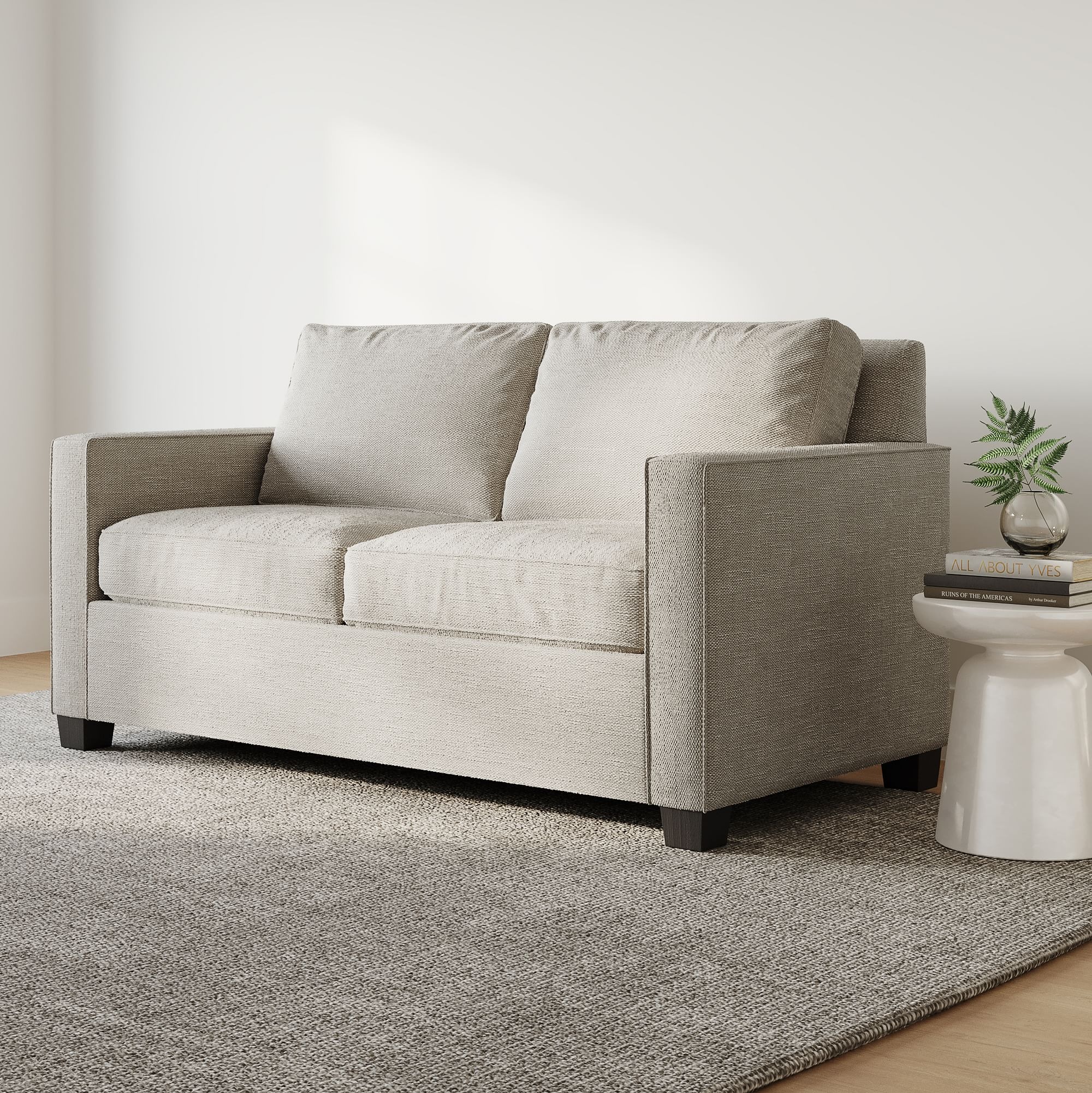
West Elm Peggy Sofa Reviews + Our Honest Verdict
How Does It Compare?
Side-by-side breakdowns featuring this product