West Elm
West Elm Penn Chair Reviews + Our Honest Verdict
By Daniel Reyes · Updated September 2026
Independent editorial review. We never accept payment for coverage, though we may earn a commission if you purchase through our links.
Verdict
Penn sentiment is mostly pleasant surprise. Buyers say it looks better than they expected and sits more usefully than they expected. The limiting factor is what it is: an accent chair, not a plush lounge throne. Keep expectations calibrated to that and it delivers.
Read full take ↓Similar chairs
Quick Take
Priced fairly against comparable accent seating from Article, CB2 and Pottery Barn, and built to match. A kiln-dried solid pine and engineered wood frame on sinuous springs, with fiber-wrapped high-resiliency foam cores in both seat and back that hold their shape over time. Works equally well as a desk chair or a supporting seat in a living room.
Small-scale precision, done right
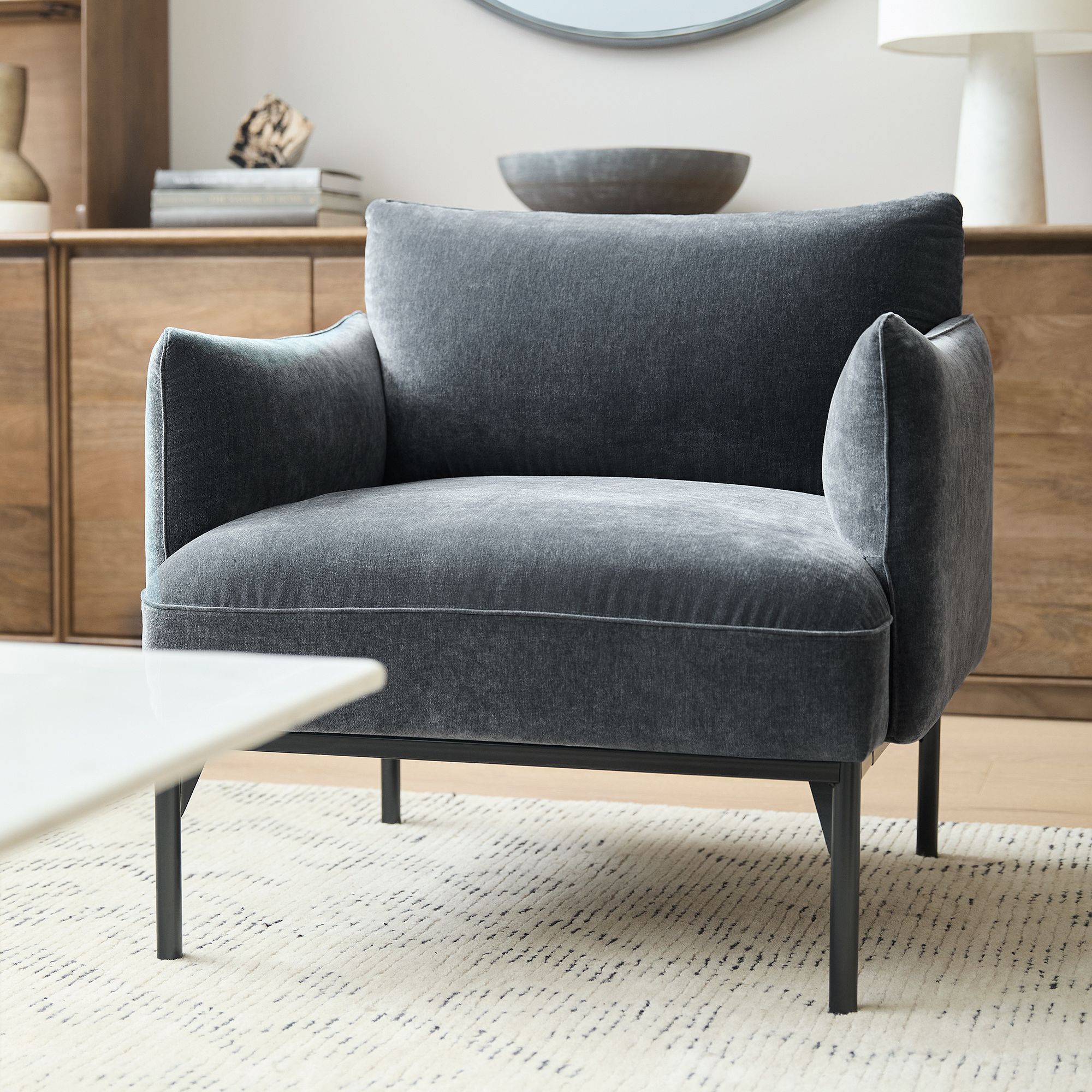
The West Elm Penn Chair isn't trying to be the centerpiece of your living room. It's trying to be the right chair for a reading corner, an accent spot next to a sofa, a bedroom sitting area, or a smaller space that needs a functional seat with a clean visual presence. At that job it succeeds, and with more construction integrity than most West Elm upholstered pieces at comparable money.
It earns a stronger recommendation than the brand's larger sofas, partly because the semi-attached cushion design with fiber-wrapped foam cores sidesteps the fill-compression problems that plague loose-cushion pieces, and partly because the black metal legs and slim profile are genuinely good design for the price.
At $499 to $799 depending on fabric, the Penn sits mid-range for accent chairs. You can spend less and get less, and you can spend more for genuinely better construction from makers like Joybird or Room and Board. But the price-to-quality ratio holds up, with clear eyes about where the chair sits in its category. If you need a design-forward accent chair and don't want to spend $1,200, the Penn deserves a look.
Why small scale matters
A lot of residential furniture gets sized for average Americans and ends up oversized for the rooms most Americans live in. The Penn's small-scale proportions push back on that. It reads as properly scaled in rooms from 200 to 600 square feet, works as secondary seating without dominating the visual field, and fits places like a bedroom corner or an entryway nook where a standard club chair would feel bulky and out of place.
The semi-attached cushion design is the construction detail that carries it. Seat and back cushions both sit on high-gauge sinuous springs with fiber-wrapped foam cores. The look is structured and tailored, and it reads as sophisticated from mid-century modern through contemporary transitional rooms.
Who this chair is and is not for
The Penn works best as secondary seating rather than a primary lounging chair. The scale and semi-attached cushions make it good for reading, for working at a side table, for sitting upright in conversation, and for giving a room a seating option that looks designed. It's not a chair you curl up and disappear into. Seat depth is moderate, and the back, firm and comfortable for upright use, doesn't envelop you the way a bigger, softer chair does.
For a bedroom it's a strong pick. Bedrooms often need a small seat for getting dressed, for setting clothes down, or for sitting when a partner is asleep, and most accent chairs sold for that job are either too small to be comfortable or too large to fit without crowding the room. The Penn's proportions thread that needle, and the black metal legs stay visually clean and pair well with bedrooms where darker metal accents complement the existing furniture tones.
Construction quality relative to price
The Penn uses a kiln-dried solid pine and engineered wood frame, the right spec for an accent chair at this price. The metal legs in a Black finish are a quality signal you can see immediately: sturdy, clean-lined, and durable in a category where cheap legs are common.
The semi-attached cushions are where the Penn pulls ahead. Seat and back both use fiber-wrapped, high-resiliency polyurethane foam cores. They hold their shape, and the fiber wrap keeps straight foam from developing that hard-edge feel. Seat firmness is rated medium-firm (4/5), so this is an upright, supportive chair rather than a lounge piece.
Fabric selection and practical considerations
The Penn comes in a wide range of fabrics, and the choice matters more here than on a bigger piece, because at this scale the fabric takes up more of what you see. In a solid performance velvet the chair reads clean and expensive. In a patterned or textured fabric, the small scale can tip toward busy depending on the pattern repeat and the color. Neutral performance weaves are the safe pick if you're unsure where your taste is heading long term.
Owners consistently rate the performance velvet well on durability and looks. Natural velvet shows directional shading from rubbing and use; the performance velvet on the Penn develops an even patina instead, and it holds up across a range of lighting conditions. If the chair is going into heavy incidental use, a bedroom chair that gets sat on constantly, the performance fabric is worth the modest upcharge.
How it compares
At $499 to $799 the Penn is up against accent chairs from CB2, Crate and Barrel, and Pottery Barn. The CB2 Reed Chair is the closest comparable on scale and aesthetic positioning; the Penn has better leg quality and a more refined semi-attached construction. The Pottery Barn Margot Chair is slightly larger with a longer warranty, but the price difference is modest and the Penn's proportions suit smaller spaces better. Room and Board's comparable accent chairs start around $1,100 with better construction guarantees, a meaningful jump if budget is the binding constraint.
For the specific use case of a well-designed accent chair at or below $1,000, the Penn holds its own against every direct alternative and is one of the cleaner values in the West Elm catalog. The construction is honest, the design is resolved, and it asks almost nothing of you in maintenance.
Frame, springs, and the semi-attached back
Frame
The Penn Chair uses a kiln-dried solid pine and engineered wood frame with corner-blocked joints throughout. A small chair concentrates point loads more than a sofa frame of the same materials does, so those corner blocks matter most at the leg-to-rail connections, where the vertical load of sitting turns into horizontal and torsional stress on the frame. The walnut-finished legs are solid wood, which gives better dimensional stability and visual quality than the painted alternatives further down the price ladder.
Semi-attached cushions
The back cushion is semi-attached rather than fully loose, fixed at the base so it holds its position while keeping a cushioned feel. Both seat and back cushions use fiber-wrapped, high-resiliency polyurethane foam cores over high-gauge sinuous springs. The back foam runs firm enough to support upright sitting without the hard-edge feel of straight foam. Because the cushion stays put, it needs less fluffing and repositioning than a fully loose back, which is a practical advantage in a secondary-use accent chair.
Seat cushion
The seat cushion is foam-core, with or without a fiber batting wrap depending on the fabric selection. At the Penn's size, a seat cushion shows localized compression from single-spot use sooner than a larger sofa cushion would. Rotate it when the zipper closure allows and the surface stays even longer. The cover is typically zipper-removable for dry cleaning.
Fabric and leg options
Fabric options span West Elm's standard range. At the Penn's small scale, performance velvet and performance woven fabrics work particularly well, since the tighter construction reads more refined on a small piece than looser natural fiber weaves do. The metal legs come in a Black finish, and that dark tone suits most mid-century and contemporary interior directions.
Warranty and competitive context
The Penn carries West Elm's standard one-year limited warranty. At $499 to $799, one year is more proportionate to the price than it is on West Elm's $2,500-plus sofas, though the category standard is still two to three years for well-constructed accent chairs. On construction the Penn is competitive with direct alternatives from CB2 and Crate and Barrel, and the metal leg quality stands out favorably against price-equivalent options from both.
Our Ratings
Overall score
Kiln-dried solid pine and engineered wood frame with semi-attached cushions rather than a tight back, on Black metal legs. Sinuous spring support under fiber-wrapped high-resiliency foam cores in both seat and back, with seat firmness rated medium-firm (4 of 5). The semi-attached cushions hold a structured silhouette with more give than a fully tight seat, and it's made in China.
A clean, well-proportioned accent chair that works as either a desk seat or a supporting player in the living room. The black metal legs and semi-attached cushion profile give it a precise, modern look that reads as deliberately designed. Not a statement piece, but it earns its spot in a lot of rooms.
At $499-$799, the Penn Chair is priced well against comparable accent seating from Article, CB2, or Pottery Barn. The semi-attached cushion construction with fiber-wrapped foam cores holds up over time, which makes it a genuinely fair value for the category.
What People Are Saying
Penn sentiment is mostly pleasant surprise. Buyers say it looks better than they expected and sits more usefully than they expected. The limiting factor is what it is: an accent chair, not a plush lounge throne. Keep expectations calibrated to that and it delivers.
Reddit and Houzz commentary are weighted 3× against blog and editorial sources in our sentiment score. Brand PR has a well-documented influence on editorial coverage — direct owner reports from message boards tend to be more candid.
What Reddit Is Saying
“I'm 95% sure this chair is one West Elm/Pottery Barn white labels (like many of their products). It's almost certainly available at AllModern/Wayfair for cheaper. It's the same chair from the same Chinese factory, just priced differently according to each retailer's customer.”View thread →
What Houzz Is Saying
“I just received our chair and ottoman and it is very comfortable and sturdy. It fits perfectly in our guest room. The ottoman is about the same width as the chair.”Source →
What Others Are Saying
“West Elm isn't necessarily known for 'affordable' home goods compared to the likes of Target. But this chair is surprisingly affordable, and pretty good looking to boot.”Source →
“The dark metal legs give it a refined edge, but it's the slightly curved arms and the gorgeous upholstery that truly make it stand out. It's inviting — like the perfect spot to throw on a blanket and enjoy a cup of coffee.”Source →
Frequently asked questions
Is the West Elm Penn Chair worth it?
Priced fairly against comparable accent seating from Article, CB2 and Pottery Barn, and built to match. A kiln-dried solid pine and engineered wood frame on sinuous springs, with fiber-wrapped high-resiliency foam cores in both seat and back that hold their shape over time. Works equally well as a desk chair or a supporting seat in a living room.
How is the West Elm Penn Chair built?
Kiln-dried solid pine and engineered wood frame with semi-attached cushions rather than a tight back, on Black metal legs. Sinuous spring support under fiber-wrapped high-resiliency foam cores in both seat and back, with seat firmness rated medium-firm (4 of 5). The semi-attached cushions hold a structured silhouette with more give than a fully tight seat, and it's made in China.
What styles does the West Elm Penn Chair work with?
A clean, well-proportioned accent chair that works as either a desk seat or a supporting player in the living room. The black metal legs and semi-attached cushion profile give it a precise, modern look that reads as deliberately designed. Not a statement piece, but it earns its spot in a lot of rooms.
What do real owners say about the West Elm Penn Chair?
Penn sentiment is mostly pleasant surprise. Buyers say it looks better than they expected and sits more usefully than they expected. The limiting factor is what it is: an accent chair, not a plush lounge throne.
Options Worth Checking Out
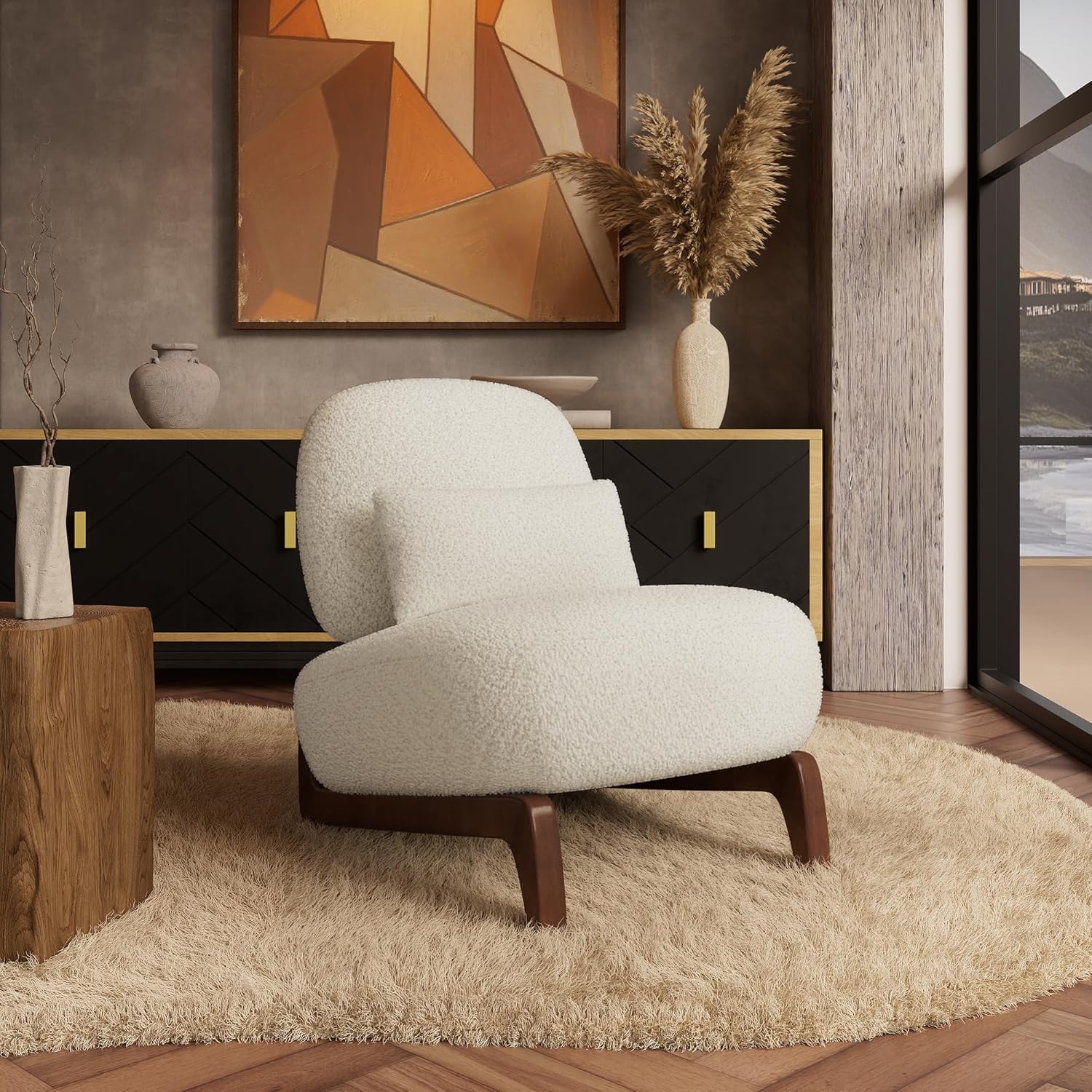
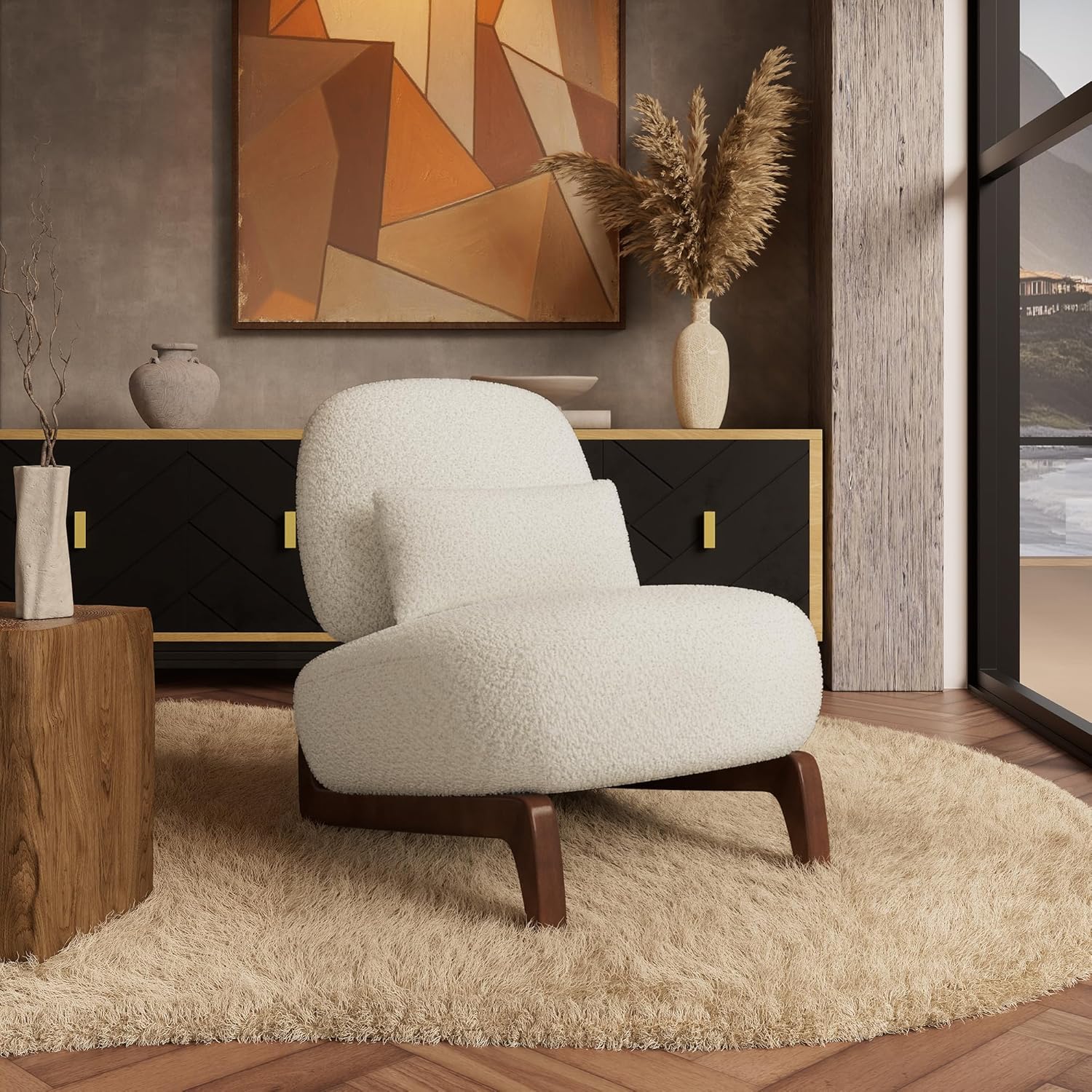
Morden Fort Boucle Accent Chair
Lower-cost modern boucle accent chair with a clean armless silhouette and tilted wood legs, solid budget alternative without the West Elm price tag.
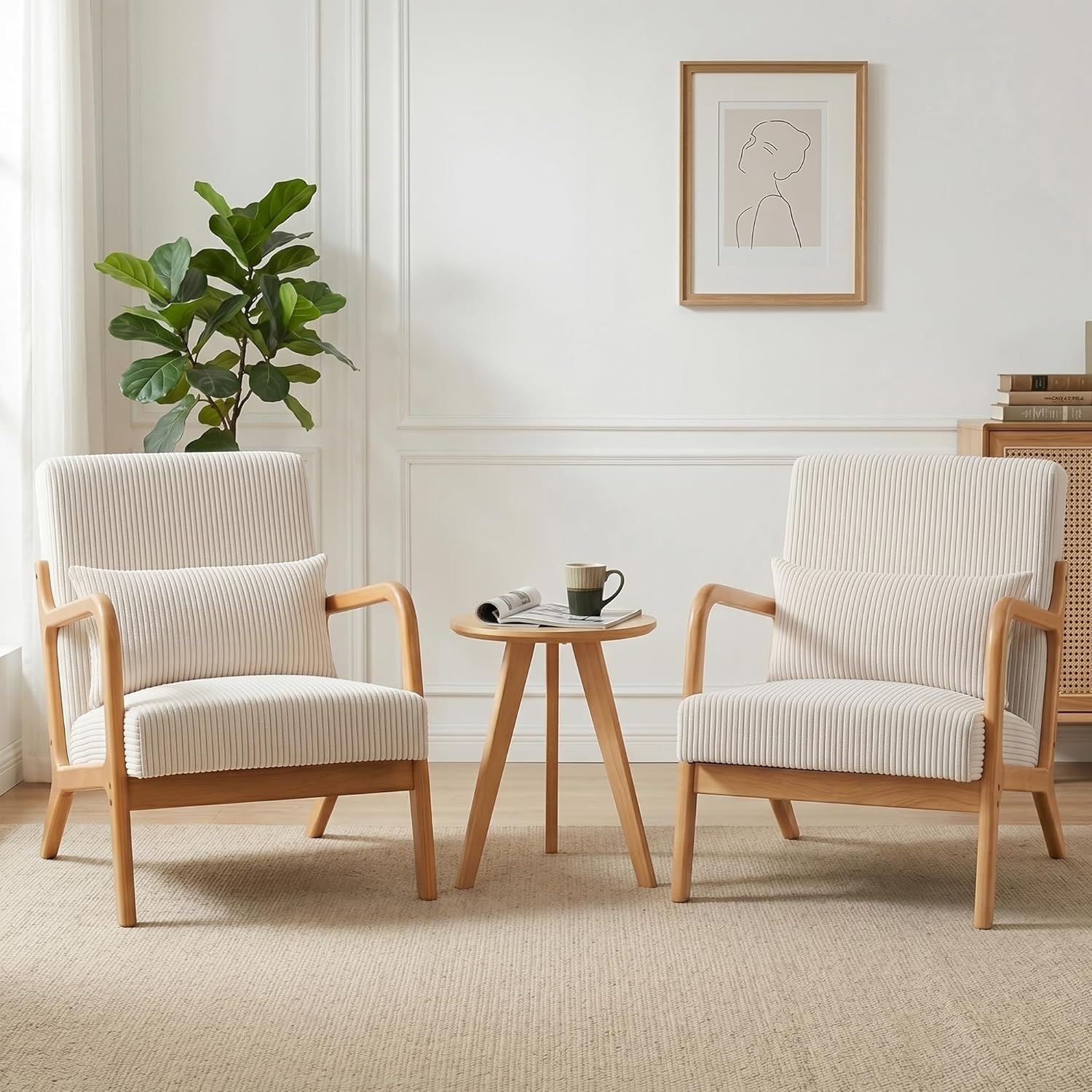
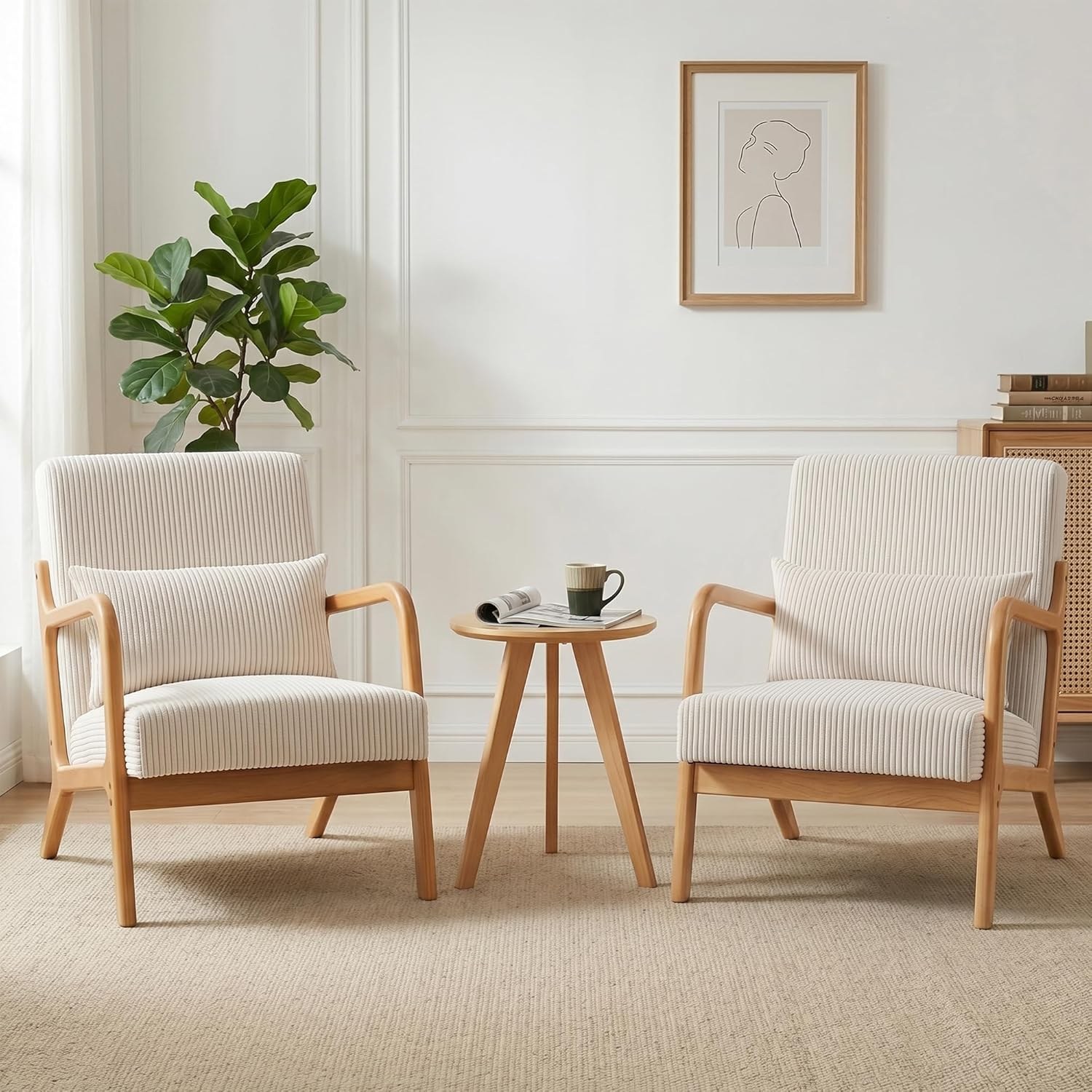
Mid Century Modern Accent Chairs Set of 2, Upholstered Corduroy Armchairs with Lumbar Pillows, Solid Rubberwood Frame for Living Room, Bedroom
More West Elm Reviews
See all →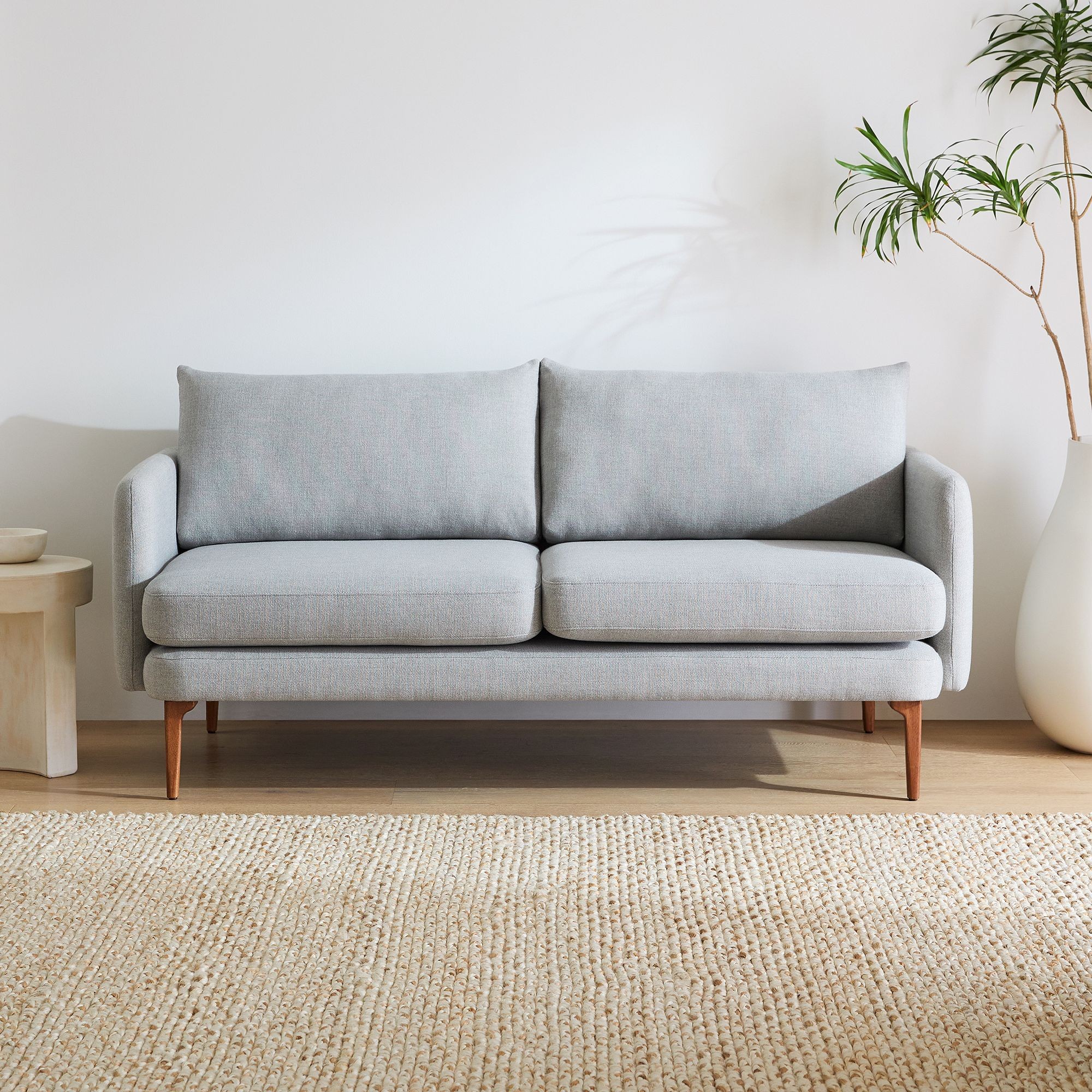
West Elm Auburn Sofa Review: Compact Build + Our Honest Verdict
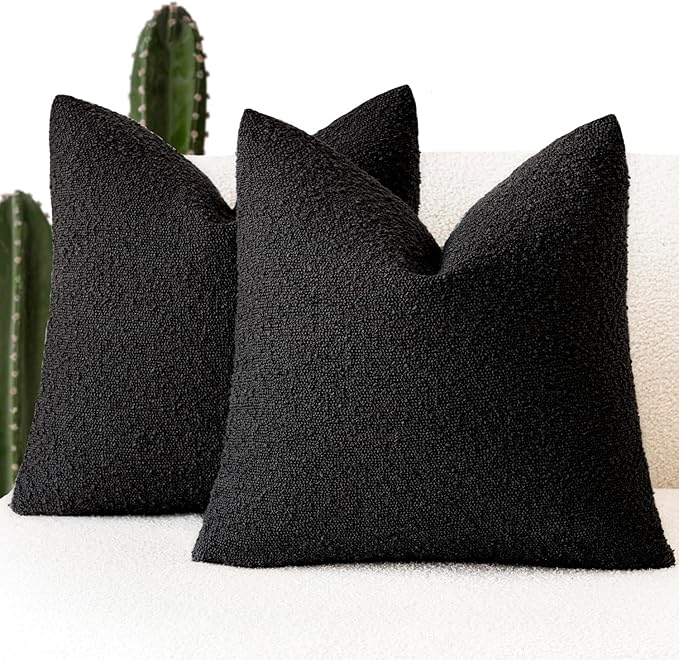
Best Throw Pillows for a West Elm Harmony Sofa: Sizes, Texture, and Layering
West Elm Harmony Cushions Sagging? The $40 DIY Fix (And When to Give Up)
West Elm Peggy Sofa Reviews + Our Honest Verdict
How Does It Compare?
Side-by-side breakdowns featuring this product