West Elm
West Elm Paidge Chair Reviews + Honest Verdict
By Erin Mitchell · Updated October 2026
Independent editorial review. We never accept payment for coverage, though we may earn a commission if you purchase through our links.
Verdict
Owners are positive on durability and on the performance fabric, with several reporting 3-5 years of heavy use and a frame that's still solid. The recurring maintenance notes are cushion fill compressing over time, enough that people restuff or supplement it, and pilling on the heavier-use fabrics. Seat height (19.5") keeps coming up as a problem for taller buyers. People who know they want a firm, medium-sit compact chair consistently praise it.
Read full take ↓Similar chairs
Quick Take
Hand-built frames and hand-finished upholstery assembled in the USA, which is uncommon at this price. A kiln-dried hardwood frame with welted seams, under fiber-wrapped high-resiliency foam cushions. Its strongest case is for buyers who need a small-footprint chair that still looks considered.
The Paidge's best quality is its size
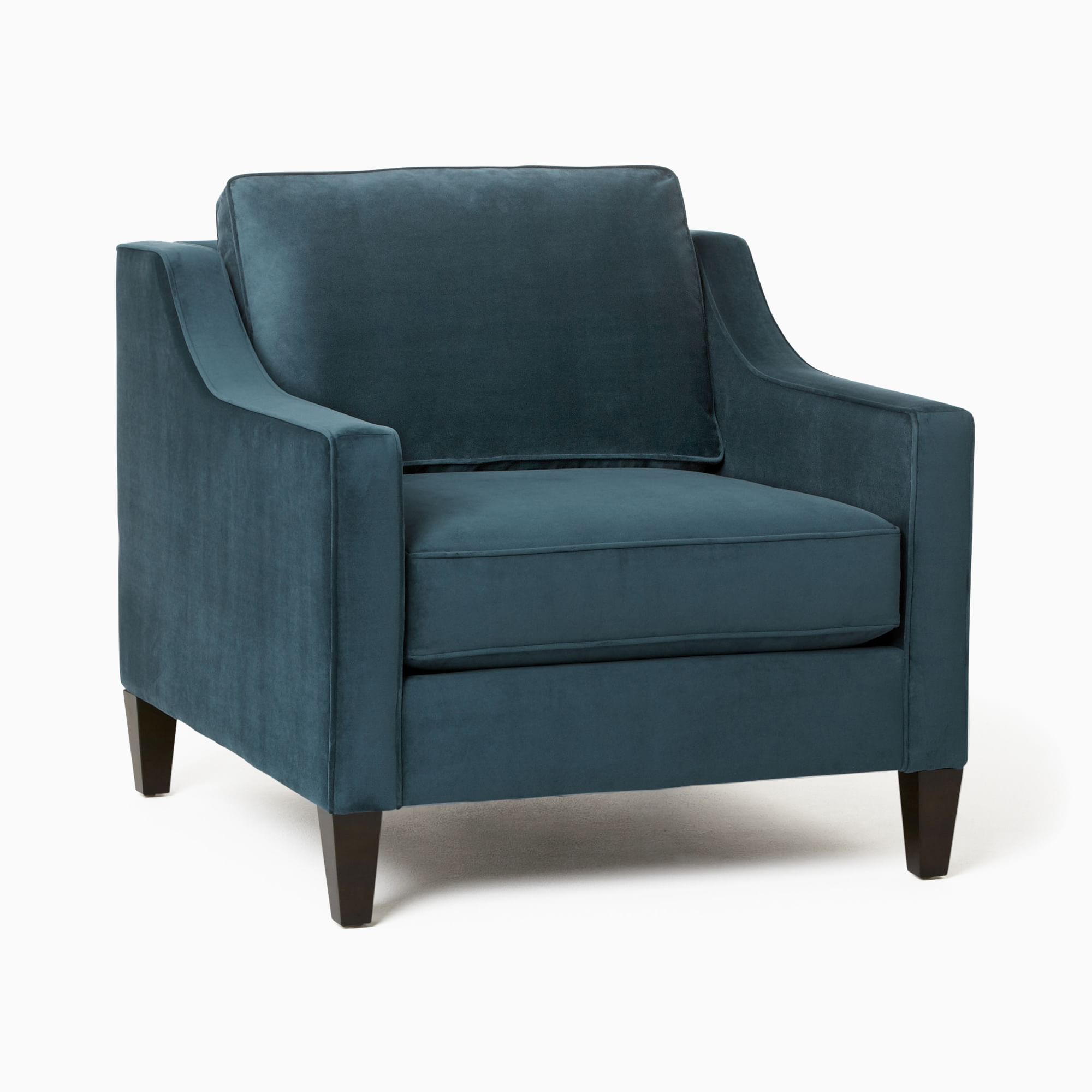
The Paidge Chair isn't the biggest or most dramatic accent chair West Elm sells, and it isn't trying to be. It's aiming to be the most adaptable small chair in the lineup, and it mostly gets there. The compact footprint, tapered legs, and clean proportions let it work as a living room accent, a home office seat, or a bedroom reading chair without looking wrong in any of those rooms.
That flexibility counts for more than it sounds like. Plenty of accent chairs are style-specific enough to work in exactly one setting. The Paidge isn't. Its silhouette stays quiet enough to absorb whatever room it lands in. Useful if you rent, move often, or want one good chair that can follow you around for years.
It has been one of West Elm's steadiest accent sellers since it launched, which tells you something. Trend pieces disappear from the lineup fast. The Paidge stuck around because it answers a real need: a small, well-drawn chair that doesn't feel like a compromise.
Compact proportions and what they mean in practice
The Paidge measures roughly 28 inches wide, 30 inches deep, and 32 inches tall. That's noticeably smaller than most living room accent chairs, which usually run 30 to 34 inches wide. In a small apartment already carrying a sofa and a coffee table, that saved width shows. Two inches can decide whether a room flows or feels crowded.
Seat height is one dimension to check against your other seating. The Paidge sits at 19.5 inches off the floor, a standard-height seat rather than the low lounge profile some accent chairs use. That suits both relaxing and shorter work sessions. If you're eyeing it as a desk chair, sit in one or check the height against your desk clearance before you order.
If you're over 6 feet, the low seat can be a real limit. Nothing is wrong with the chair structurally; the proportions were drawn for an average height range. Taller sitters tend to say the back ends lower than they'd like, leaving the upper back without contact. That's true of compact chairs in general, not a Paidge defect, but it should be said plainly.
The tight back
The Paidge uses tight-back construction, so the back upholstery is fixed to the frame instead of sitting there as a separate removable cushion. It's one of the chair's quieter functional advantages. Tight backs keep their shape, never need refluffing, and don't go lopsided the way loose-back accent chairs do after a year or two of regular use.
On a chair this small it matters even more. A loose back cushion this size would be too light to settle itself by gravity and would look rumpled fast. The tight back sidesteps that entirely. You give up the ability to swap or adjust the cushion yourself, and for most buyers the durability is worth that trade.
The seat uses a foam cushion, so the sit is firmer than a cloud-style chair. Some people find that a relief after seats that start soft and flatten out. Anyone who wants a deep, plush sit will be disappointed. The firmness reads closer to a well-padded dining chair than a lounge chair, which fits the dual-role pitch but won't satisfy buyers chasing maximum softness.
Performance fabric and color range
West Elm offers the Paidge in a wide fabric range, and the performance tier deserves a look on this chair specifically. Because it doubles as a desk chair, it sees more friction and more repeated directional pressure than a purely decorative accent chair. Performance fabrics take that better, resist abrasion longer, and spot-clean more easily.
Color and texture is one of the Paidge's strengths. The shape is neutral enough to carry a bold fabric without looking confused. A deep forest green or a warm terracotta velvet works here because the silhouette stays disciplined and lets the color lead. If you want one accent chair to carry a room's color story, the Paidge is a better vehicle than a bigger, visually busier chair.
The tapered walnut-tone legs pull their weight. They put the chair in a mid-century vocabulary without shouting about it, and they play well with warm wood tones elsewhere in the room. Some configurations offer other leg options, so check what's currently on offer if your palette runs darker or lighter.
Assembly and weight capacity
Assembly is close to nothing. The legs attach with four bolts and it's done in under 15 minutes. Being small, the chair is light by accent chair standards, usually 40 to 45 pounds, so you can move it and reposition it without help.
Weight capacity lands around 250 to 300 pounds, standard for a compact accent chair at this price. The frame isn't built for extreme loads, and buyers at the top of that range should know it will be working harder. For average and moderate use it holds up without issue.
Delivery often comes by standard parcel rather than white glove, which cuts the effective cost and shortens the wait. That's a practical edge over bigger chairs that need freight handling.
Where it fits best
The Paidge makes the most sense for small-space buyers, apartment dwellers, and anyone who needs a good-looking compact chair that can play several roles. It earns its price when it's the only extra seat in an apartment living room, when it pulls double duty as desk and lounge chair, or when you want a bedroom reading chair that won't swamp everything around it.
It's a weaker choice for tall buyers, for anyone who wants a deep lounge chair for long stretches of relaxing, or for buyers who need a high seat for medical or accessibility reasons. Those buyers should look at the Blake or the Swivel Base Chair for more generous proportions. Within the West Elm lineup the Paidge is the compact specialist. If you want a small chair that looks genuinely drawn rather than merely small, it's one of the cleaner options at this price.
Frame, legs, cushion, and assembly details
The Paidge sits on a kiln-dried hardwood frame that carries both the seat and the back. Kiln-dried wood is a meaningful baseline at this retail price, since it cuts the moisture swings that make joints flex or loosen over time. The frame is small, so the leg joints take less cantilever stress than they would on a bigger chair, which generally helps long-term stability.
Legs come as cone (round taper) or tapered (square taper), each in Chocolate or Pecan stain, and they're removable. They hold the chair steady vertically and tie the mid-century inspired silhouette together. Leg caps are included, so hardwood and tile stay unscratched.
The seat cushion is a fiber-wrapped, high-resiliency polyurethane foam core. West Elm rates the firmness Medium, 3 out of 5. The back cushion is 100% poly-filled. If you're used to softer cloud-style seating the Paidge will read distinctly firm, which suits upright desk work and underwhelms for lounging. Foam quality matches West Elm's other mid-tier upholstered chairs; expect it to hold its profile through two to four years of regular daily use.
The tight back is a structural decision as much as an aesthetic one. Fixing the back upholstery to the frame kills the maintenance headaches loose-back compact chairs run into and keeps the chair looking the same year after year. Back padding is thinner than the seat, giving contact and light support rather than deep cushioning, which fits the way this chair gets used.
Assembled weight is roughly 40 to 45 pounds, with capacity around 250 to 300 pounds. Warranty follows West Elm's standard terms: one year on the structural frame under normal residential use, with no explicit extension for fabric or cushion performance past that. The frame is good enough to justify professional reupholstery later, which stretches the chair's life if the base structure is still sound.
Our Ratings
Overall score
Hand-built frames and hand-finished upholstery, assembled in the USA, which you don't often see at this price, on a kiln-dried hardwood frame with welted seams. Seat cushions are fiber-wrapped high-resiliency foam rated Medium (3 of 5); the back is fully poly-filled. Seat height is 19.5 inches, on the low side, which taller buyers should know going in.
A modern read on a traditional silhouette: sweeping arms, welted seams, and a polished upholstered form that looks more expensive than it costs. Cone or tapered legs in Chocolate or Pecan let you dial in exactly how much mid-century register you want. It works as a reading chair or bedroom accent as easily as it works as a desk chair alternative.
At $599 to $849 the Paidge is priced fairly for a well-styled compact accent chair with real material quality. The value shows up strongest for buyers who need a small-footprint piece that holds together visually across more than one room context.
What People Are Saying
Owners are positive on durability and on the performance fabric, with several reporting 3-5 years of heavy use and a frame that's still solid. The recurring maintenance notes are cushion fill compressing over time, enough that people restuff or supplement it, and pilling on the heavier-use fabrics. Seat height (19.5") keeps coming up as a problem for taller buyers. People who know they want a firm, medium-sit compact chair consistently praise it.
Reddit and Houzz commentary are weighted 3× against blog and editorial sources in our sentiment score. Brand PR has a well-documented influence on editorial coverage — direct owner reports from message boards tend to be more candid.
What Reddit Is Saying
“I have had this sleeper in Performance Velvet for 5 years. It has been puked on and spilled on numerous times (cats) and still looks like new. The sleeper is very comfortable.”View thread →
“i purchased this sofa 3+ years ago. Today , the frame is still in good condition , i have been looking to replace the cushion filling but other than that its great. i would recommend”View thread →
Frequently asked questions
Is the West Elm Paidge Chair worth it?
Hand-built frames and hand-finished upholstery assembled in the USA, which is uncommon at this price. A kiln-dried hardwood frame with welted seams, under fiber-wrapped high-resiliency foam cushions. Its strongest case is for buyers who need a small-footprint chair that still looks considered.
How is the West Elm Paidge Chair built?
Hand-built frames and hand-finished upholstery, assembled in the USA, which you don't often see at this price, on a kiln-dried hardwood frame with welted seams. Seat cushions are fiber-wrapped high-resiliency foam rated Medium (3 of 5); the back is fully poly-filled. Seat height is 19.5 inches, on the low side, which taller buyers should know going in.
What styles does the West Elm Paidge Chair work with?
A modern read on a traditional silhouette: sweeping arms, welted seams, and a polished upholstered form that looks more expensive than it costs. Cone or tapered legs in Chocolate or Pecan let you dial in exactly how much mid-century register you want. It works as a reading chair or bedroom accent as easily as it works as a desk chair alternative.
What do real owners say about the West Elm Paidge Chair?
Owners are positive on durability and on the performance fabric, with several reporting 3-5 years of heavy use and a frame that's still solid. The recurring maintenance notes are cushion fill compressing over time, enough that people restuff or supplement it, and pilling on the heavier-use fabrics. Seat height (19.5") keeps coming up as a problem for taller buyers.
Options Worth Checking Out
More West Elm Reviews
See all →
West Elm Auburn Sofa Review: Compact Build + Our Honest Verdict
Best Throw Pillows for a West Elm Harmony Sofa: Sizes, Texture, and Layering
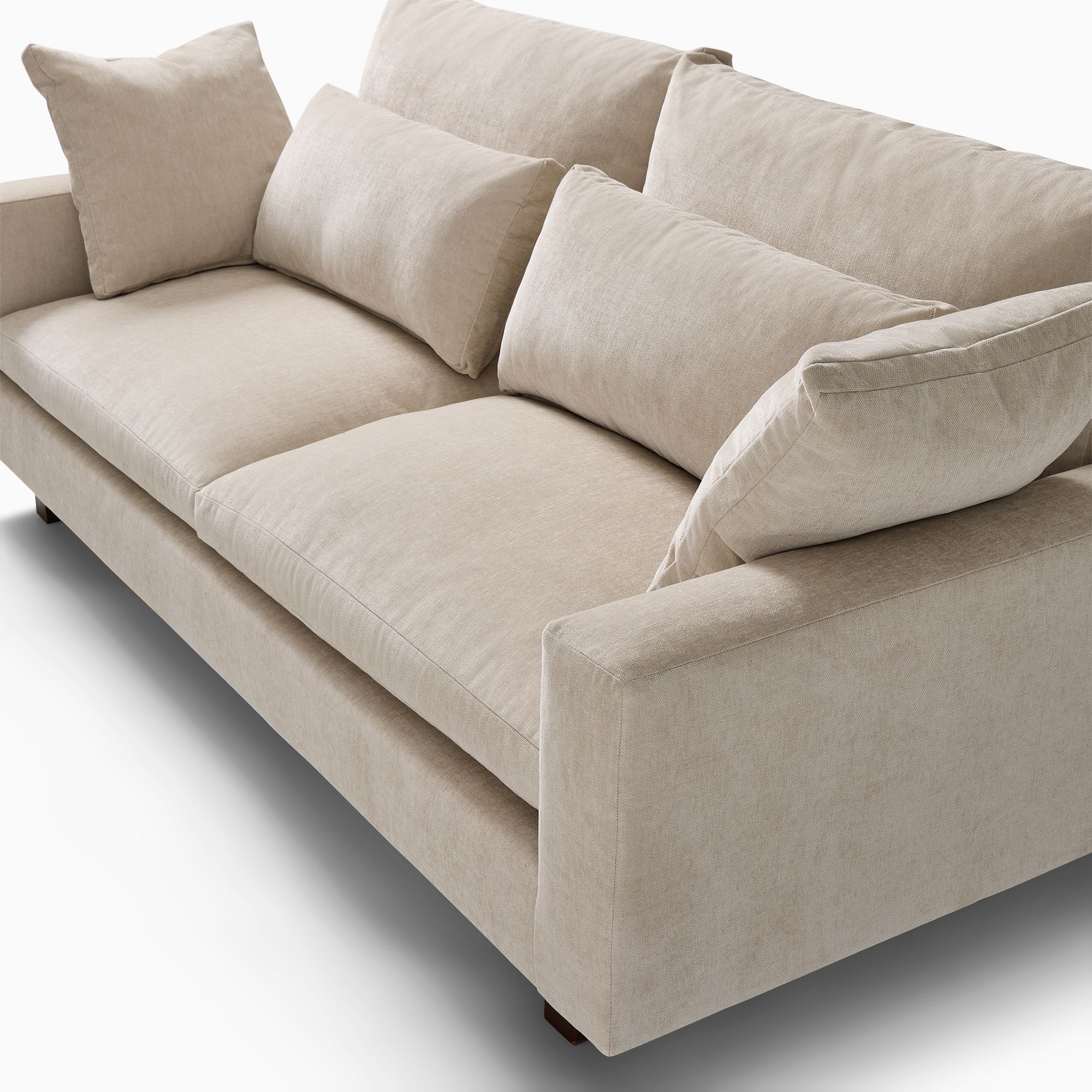
West Elm Harmony Cushions Sagging? The $40 DIY Fix (And When to Give Up)
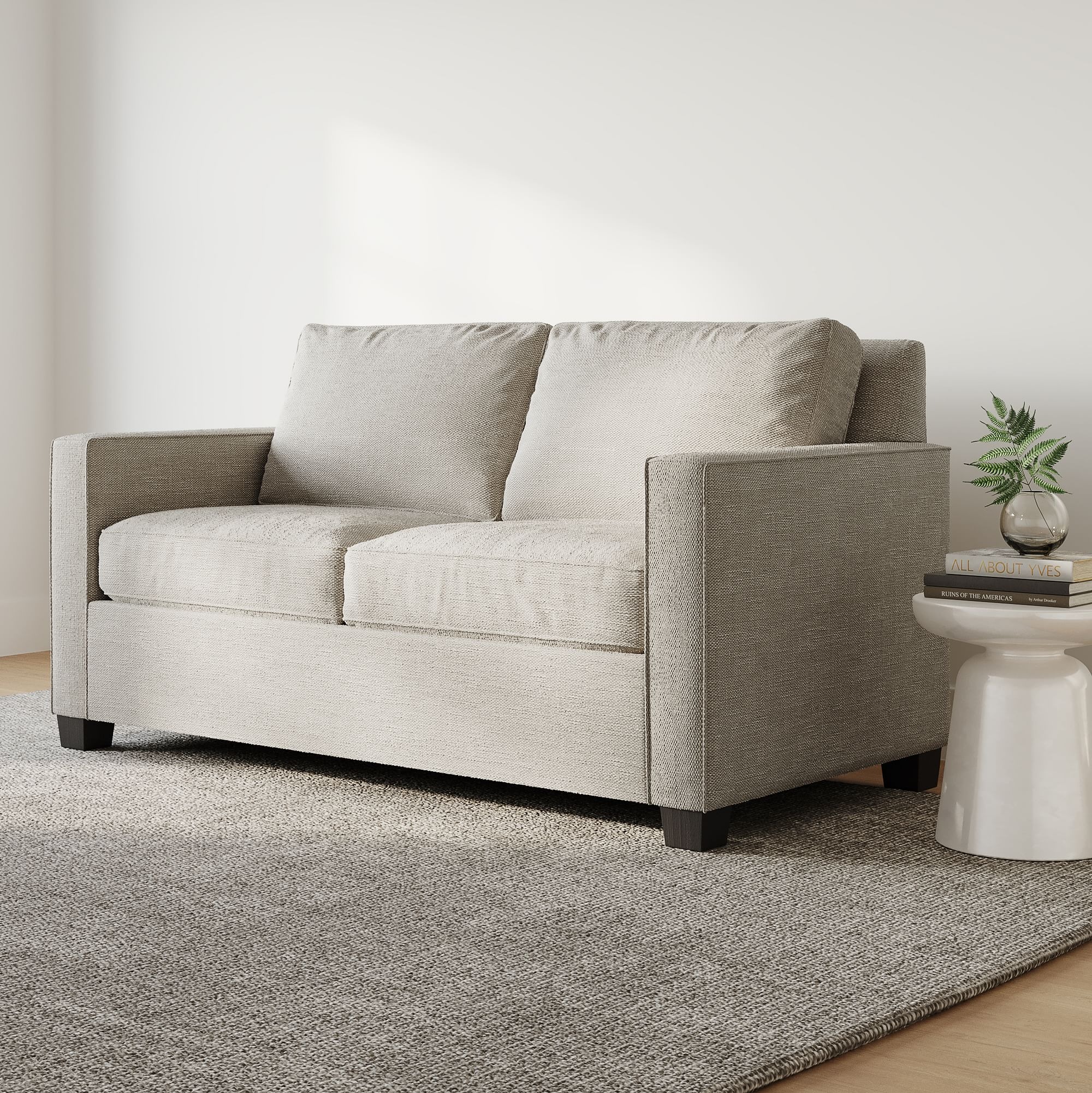
West Elm Peggy Sofa Reviews + Our Honest Verdict
How Does It Compare?
Side-by-side breakdowns featuring this product