West Elm
West Elm Mid-Century Nightstand Reviews + Our Verdict
By Maya Chen · Updated September 2026
Independent editorial review. We never accept payment for coverage, though we may earn a commission if you purchase through our links.
Verdict
Feedback runs the way it does for durable staples: people like the look, appreciate the size options, and mostly find day-to-day use satisfactory. The critical comments cluster on one thing, wanting premium drawer hardware at a price that isn't quite premium.
Read full take ↓Similar storage pieces
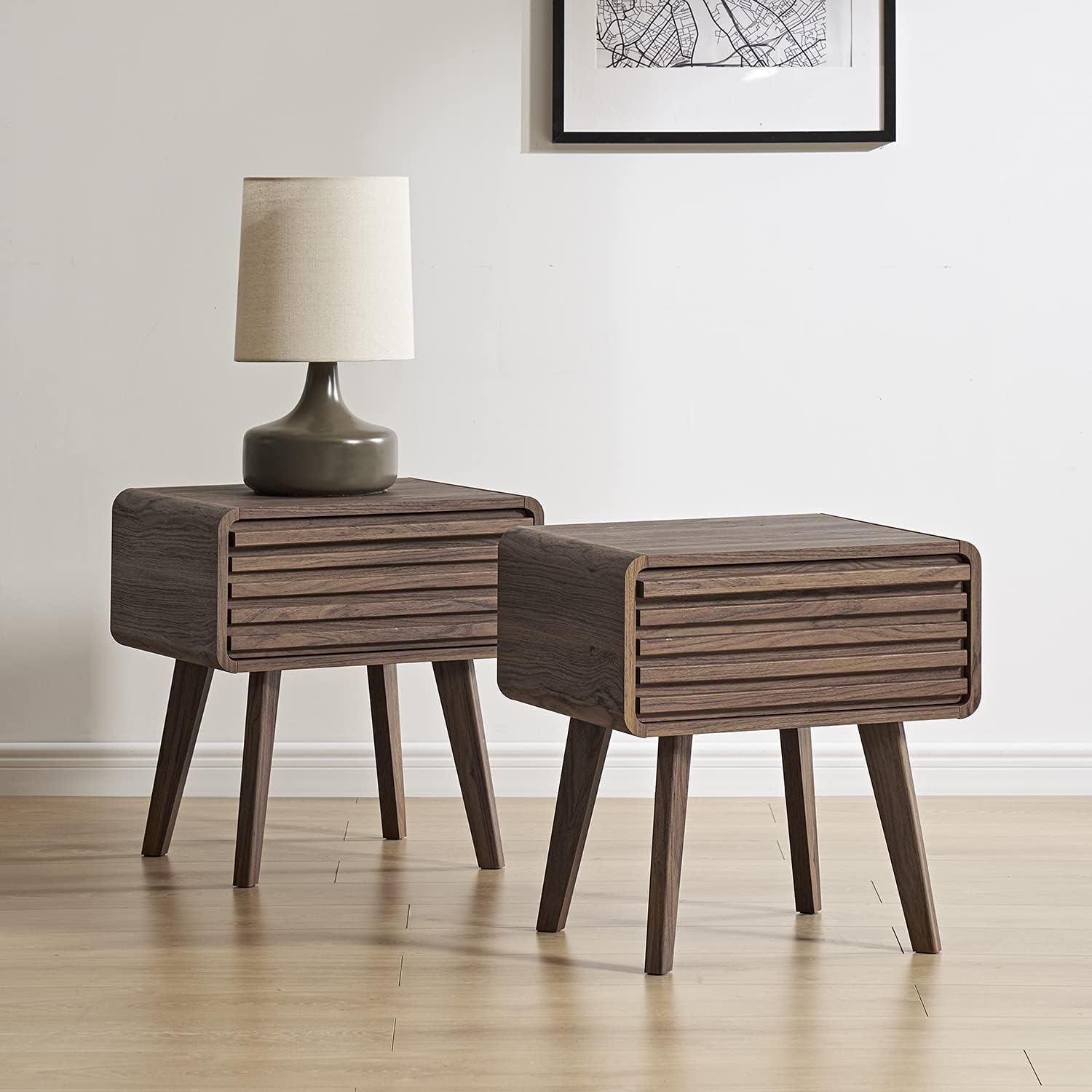
Quick Take
A lot of look for the money, and the drawer hardware is where it beats the copies. An engineered-wood body with solid eucalyptus or ash legs, frame and drawer fronts, all kiln-dried, with two drawers running on solid wood glides. Most pieces with this aesthetic either cost more or cut corners on the drawers.
Nightstands are supposed to be the supporting cast
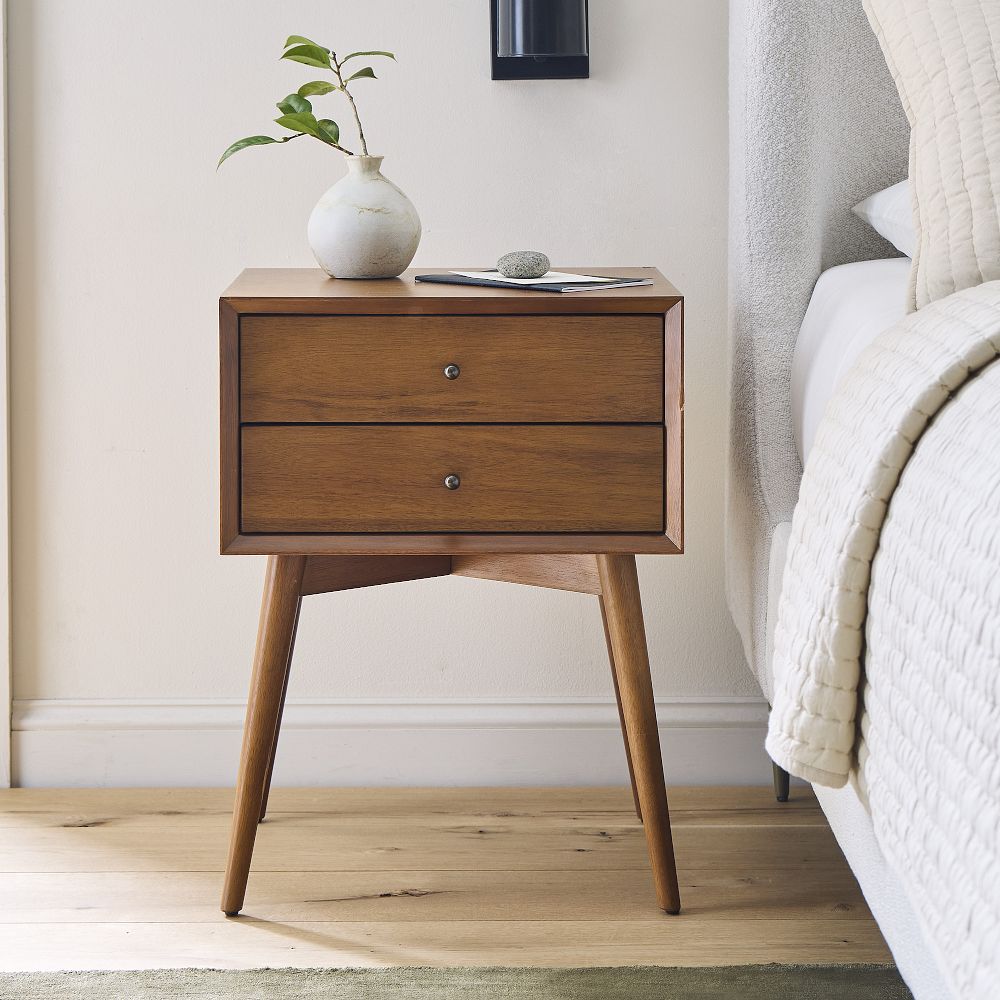
They sit beside the bed, hold the lamp, store the phone charger, and try not to draw attention. The West Elm Mid-Century Nightstand doesn't play it that way. It's the supporting actor that steals every scene it's in. At $299 to $499 it's one of the most over-achieving pieces in the West Elm catalog: two drawers, FSC-certified wood veneers, acacia for Acorn, ash for Pebble, oak for Cerused White, and tapered solid wood legs, and in almost any room it reads like something that cost a lot more.
The design is a compressed version of the mid-century vocabulary running through the wider West Elm Mid-Century collection. Tapered legs at each corner, a clean rectangular case with no applied molding or decorative hardware beyond simple pulls, drawer proportions that feel considered instead of dictated by whatever fit inside the case. Small piece, a lot of visual confidence, and it earns that confidence on proportions cheaper nightstands routinely get wrong.
It's been in the West Elm catalog in one form or another for nearly a decade, and that persistence is its own endorsement. Pieces that don't sell get discontinued; pieces that do get iterated and kept. This one keeps selling because it photographs beautifully in bedroom setups, pairs easily with West Elm's own bed frames and with other manufacturers' pieces, and lands at a price that doesn't require a week of deliberation. If you've already committed to mid-century for the bedroom, it's the natural complement and a low-stakes buy.
What you are buying
The honest construction summary: an MDF core with wood veneer on the visible surfaces, and solid wood legs. Same approach as the Mid-Century Desk and most of the rest of the West Elm Mid-Century line. The veneer is real wood, acacia, ash, or oak depending on the finish, so the grain is genuine and the tones are accurate rather than printed or simulated. The MDF core is what makes the case uniform and the price accessible, and it's also why the piece won't shrug off moisture or edge impacts the way solid wood does.
On a nightstand, MDF is easier to defend than it is on a desk or a dresser. A nightstand takes less heavy-use stress than either. It doesn't hold much weight beyond a lamp and a few small items, and the drawers see lighter cycling than a dresser's. Nobody is asking it to do structural work it can't handle. The concerns about MDF veneer construction are real, but they stay mostly theoretical on a piece like this.
Drawer performance and daily reality
The two drawers are where construction meets daily ownership. They run on a mix of box joinery and solid wood glides, with quality varying a little across production runs. On most reported units the action is smooth: the drawers glide without binding or wobble, and the boxes don't flex under normal loads.
What you don't get is soft-close, and at this price that's a real omission. Soft-close has gone from premium feature to category expectation at the $300 to $400 tier. IKEA puts it on the HEMNES series for less. Several Article and similar direct-to-consumer nightstands include it at comparable prices. Its absence here isn't a functional problem, the drawers work fine, but you notice it at the moment of closure, every single time. Over three years of nightly use that adds up.
Drawer interiors aren't lined, which is standard practice at this price. The MDF drawer bottom is smooth and does the job. Aftermarket organizer trays fit well if you want to sort the inside, since the dimensions are standard.
Why it overperforms
The nightstand's best quality is its price-to-appearance ratio. At $299 to $499 it hits a look other manufacturers charge $500 to $700 to match. The wood veneer reads warm and real from any viewing distance, and the tapered legs give it a visual lightness that block or turned legs can't. In a well-styled bedroom it reads as an investment purchase rather than a budget compromise.
That's why it gets recommended so consistently across design media. The construction isn't exceptional; it's adequate, the design is very good, and the pairing at this price is unusual. If you're building a bedroom aesthetic on a budget, you'll get more visual impact per dollar here than from almost anything else in the category.
Who should buy it, and who shouldn't
It works best as part of a coordinated bedroom aesthetic. It pairs naturally with the West Elm Mid-Century Bed Frame and the Mid-Century Dresser, and it sits happily next to mid-century adjacent pieces from other manufacturers. The warm wood finish complements most wood tones without demanding a matching set.
It's a poor fit if you need real storage from a nightstand. Two drawers cover bedside essentials, books and charger cables, but anyone who treats a nightstand as a meaningful storage unit will run out of room. There's also no shelf under the drawer case, so the open spot some buyers rely on for books or larger items doesn't exist here.
If you're sensitive to construction quality and you want the piece to still look new years from now, think hard about whether a veneer surface meets that expectation at the three- and five-year mark. In normal use the veneer holds up well. Under regular moisture, direct sunlight, or rough handling, it'll show its construction origins more plainly than solid wood would. Eyes open.
Mid-Century Nightstand: construction details
The case is engineered wood, predominantly MDF, with real wood veneer bonded to the visible exterior surfaces, acacia, ash, or oak depending on the finish. Top, sides and drawer faces get veneer; interior surfaces usually don't. The tapered legs are solid wood in a matched finish, attached to the case with metal hardware. That hardware is strong enough for normal use, but check and tighten it after initial assembly and periodically after that, since seasonal humidity moves the wood and loosens the fit.
Drawer construction and slides
The two drawers ride on solid wood glides with a smooth action. The boxes themselves mix manufactured board with thin hardwood or plywood panels, depending on the production run. West Elm doesn't publish detailed drawer construction specifications for this piece, and owner teardowns suggest the joinery varies batch to batch. No dovetails or anything equivalent, just functional production joinery for the price tier. Soft-close mechanisms aren't included, and that's the gap owners bring up most.
Surface durability
The wood veneer gives you an accurate read of solid wood while keeping the cost accessible. Veneer at this price tier usually runs 0.6mm to 1mm thick, fine for normal surface use, too thin to sand or refinish if something scratches through. The top is the highest-use area: lamps, glasses of water, phones, whatever else lands beside the bed. A thin felt pad under the lamp base prevents scratching and keeps the surface looking right. Water rings from glasses set down without a coaster are the most commonly reported damage.
Weight capacity and structural notes
West Elm doesn't publish a weight capacity for the nightstand. Solid wood legs plus an MDF case are structurally fine for what a nightstand carries: lamps, books, small electronics, bedside accessories. The drawers aren't built for heavy storage, and loading each past roughly 15 to 20 pounds will wear the slides or flex the drawer box over time. The top handles lamp and accessory weight without flexing under normal conditions.
Assembly and warranty
Assembly is minimal, usually leg attachment and sometimes drawer slide installation. One person, 15 to 20 minutes. The hardware package is normally complete and the instruction quality is adequate. West Elm covers manufacturing defects in frame and joinery under a one-year limited warranty. Surface damage, veneer wear and normal use deterioration fall outside that coverage.
Our Ratings
Overall score
Engineered-wood body with solid eucalyptus or ash legs, frame and drawer fronts, all kiln-dried, and an acacia, ash, or oak veneer on the case depending on finish. The two drawers run on solid wood glides. FSC-certified and GREENGUARD-rated wood from a Fair Trade Certified factory in Vietnam, with water-based finishes and Oil-Rubbed Bronze hardware.
The Mid-Century Nightstand is the most-copied design in its price category. The tapered legs, the two-drawer profile and the three finish options, Acorn, Pebble and Cerused White, look far more expensive than they are, and that's the whole reason it keeps selling.
At $299-$499 the Mid-Century Nightstand returns a lot of look for the money. Most comparable pieces with the same aesthetic either cost more or cut corners on drawer hardware. Strong value for the category.
What People Are Saying
Feedback runs the way it does for durable staples: people like the look, appreciate the size options, and mostly find day-to-day use satisfactory. The critical comments cluster on one thing, wanting premium drawer hardware at a price that isn't quite premium.
Reddit and Houzz commentary are weighted 3× against blog and editorial sources in our sentiment score. Brand PR has a well-documented influence on editorial coverage — direct owner reports from message boards tend to be more candid.
What Others Are Saying
“I would absolutely classify this nightstand as being a small-enough size for tiny bedrooms, so it's great for apartment renters and frequent movers.”Source →
“I know that the angled and tapered legs are a vintage detail, but they seem a bit flimsy.”Source →
“When we went in person to check it out we didn't really think the nightstand drawers were that great for the price.”Source →
Frequently asked questions
Is the West Elm Mid-Century Nightstand worth it?
A lot of look for the money, and the drawer hardware is where it beats the copies. An engineered-wood body with solid eucalyptus or ash legs, frame and drawer fronts, all kiln-dried, with two drawers running on solid wood glides. Most pieces with this aesthetic either cost more or cut corners on the drawers.
How is the West Elm Mid-Century Nightstand built?
Engineered-wood body with solid eucalyptus or ash legs, frame and drawer fronts, all kiln-dried, and an acacia, ash, or oak veneer on the case depending on finish. The two drawers run on solid wood glides. FSC-certified and GREENGUARD-rated wood from a Fair Trade Certified factory in Vietnam, with water-based finishes and Oil-Rubbed Bronze hardware.
What styles does the West Elm Mid-Century Nightstand work with?
The Mid-Century Nightstand is the most-copied design in its price category. The tapered legs, the two-drawer profile and the three finish options, Acorn, Pebble and Cerused White, look far more expensive than they are, and that's the whole reason it keeps selling.
What do real owners say about the West Elm Mid-Century Nightstand?
Feedback runs the way it does for durable staples: people like the look, appreciate the size options, and mostly find day-to-day use satisfactory. The critical comments cluster on one thing, wanting premium drawer hardware at a price that isn't quite premium.
Options Worth Checking Out
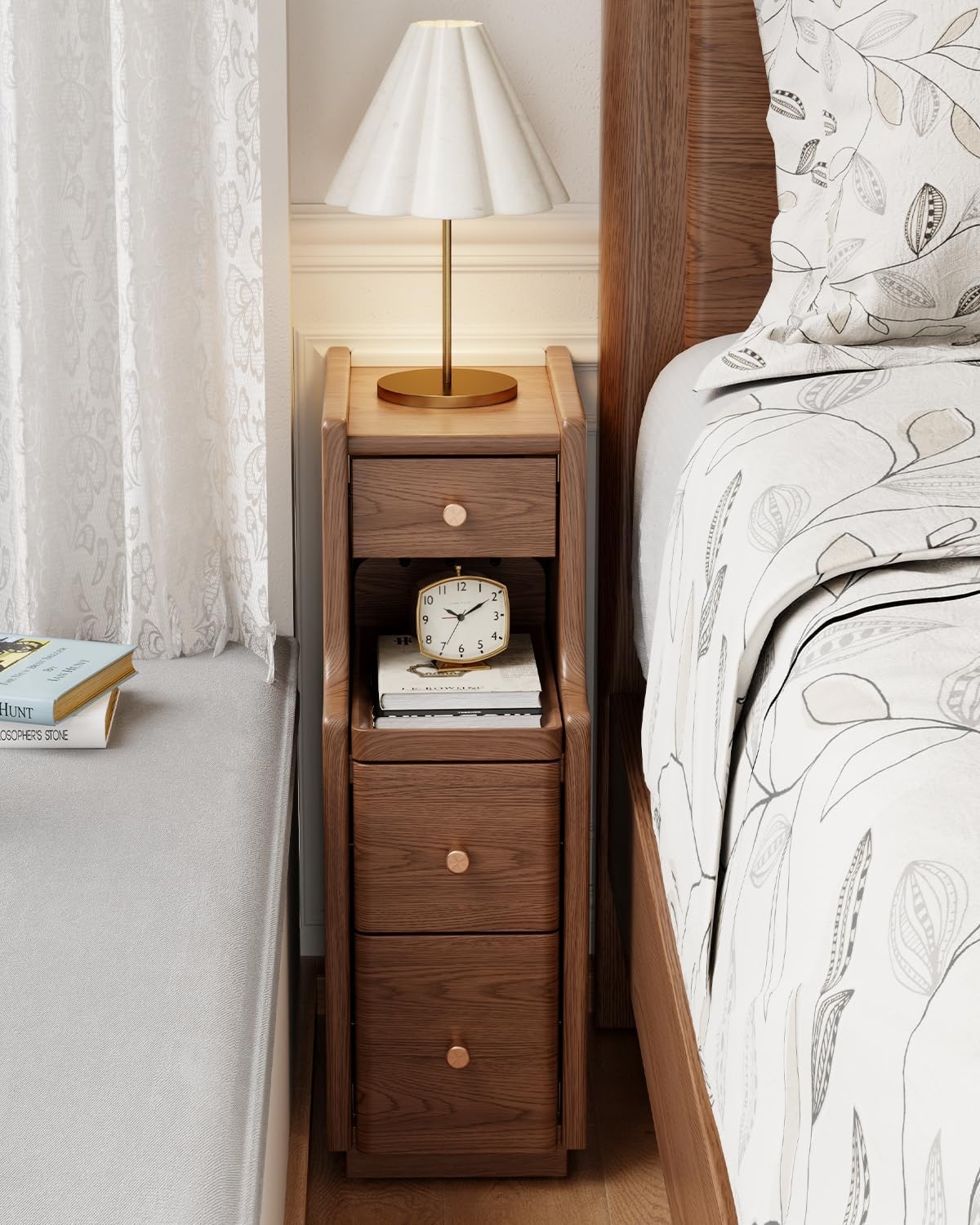
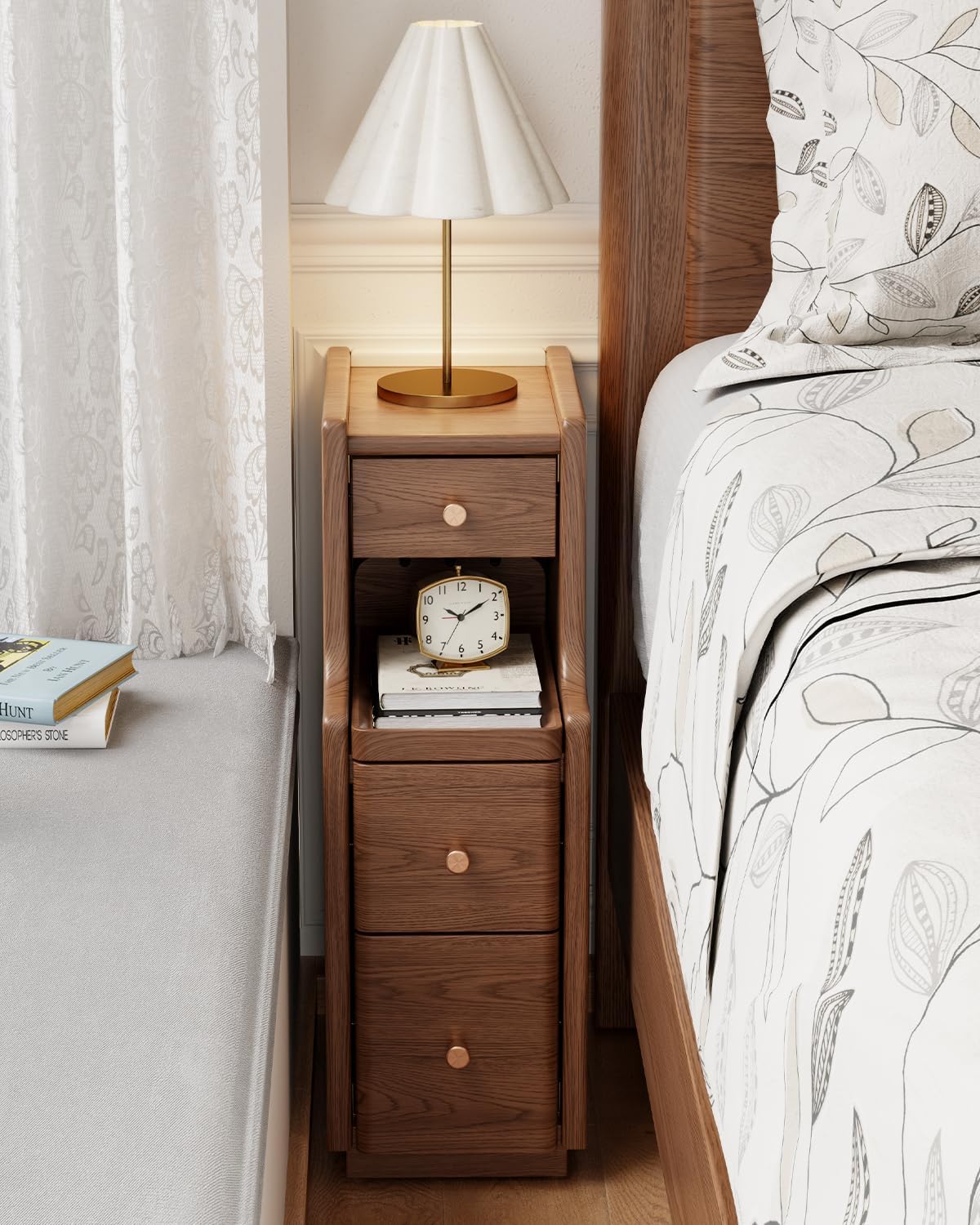
Narrow Solid Wood Walnut Nightstand
Lower-cost nightstand aimed at the same warm modern bedroom look, less refined, but the shape vocabulary will appeal to the same buyer.
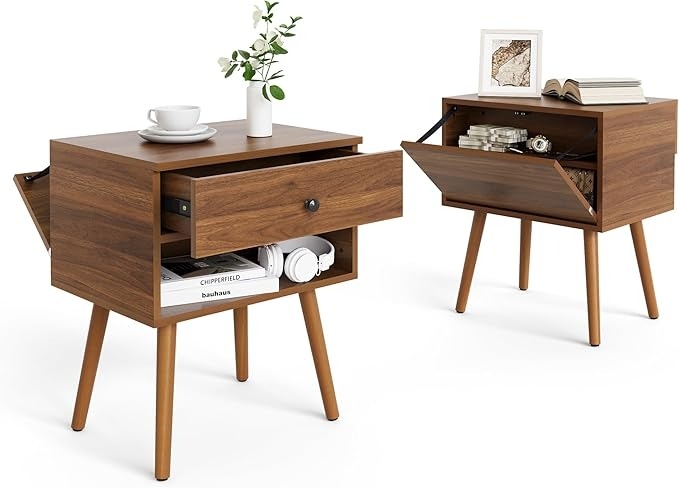
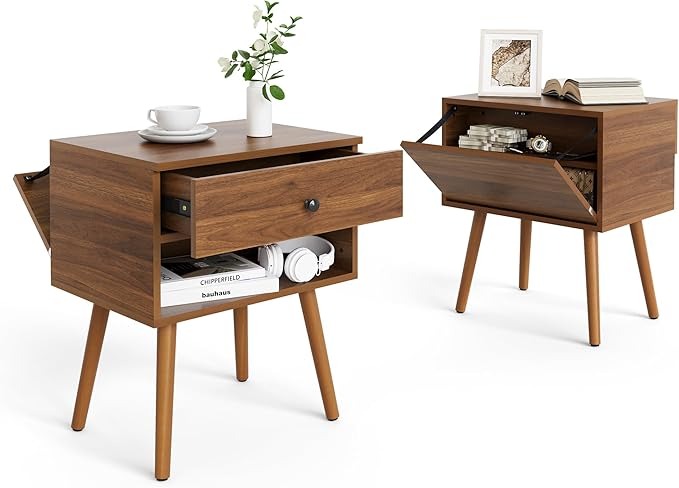
Mid-Century Nightstand Set of 2
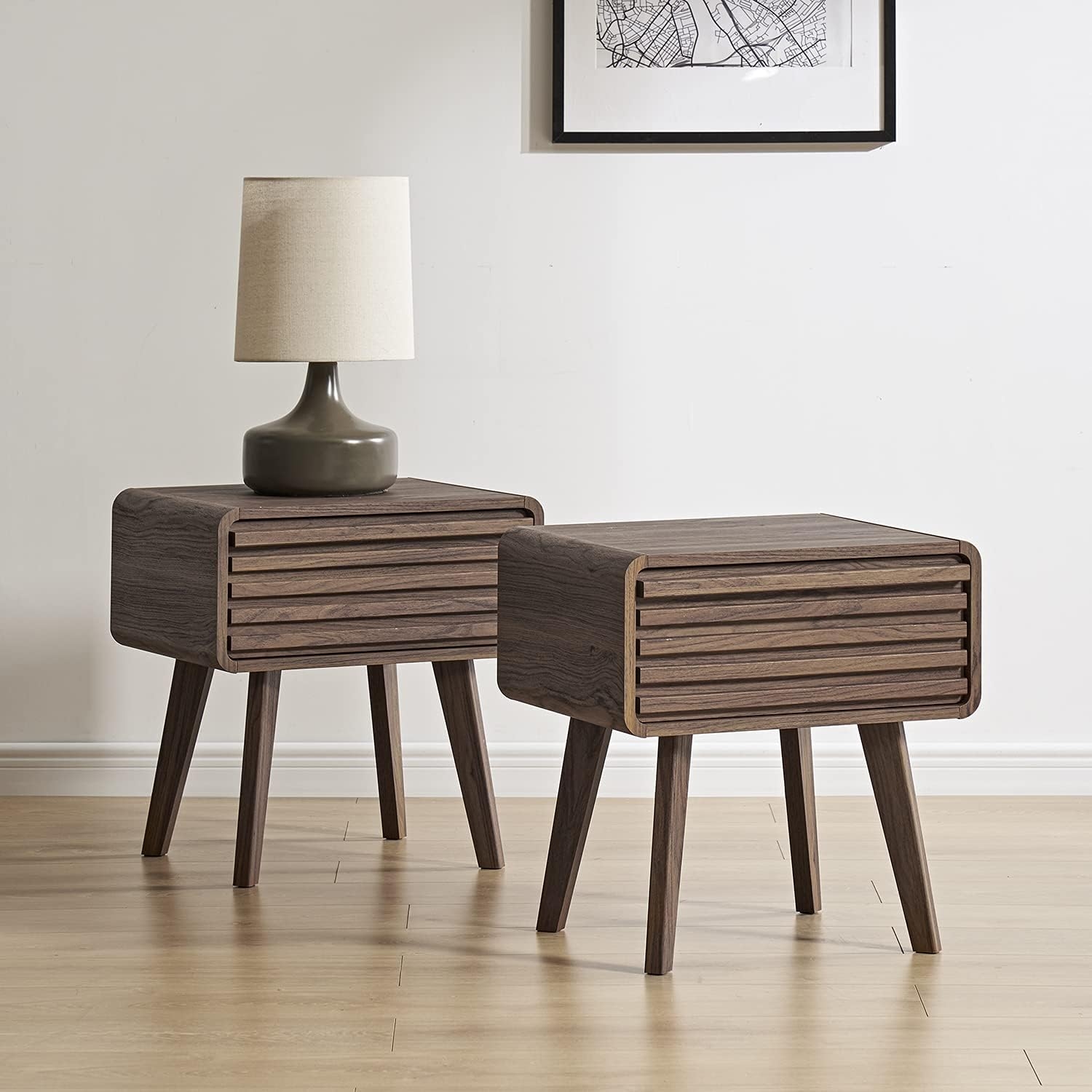
mopio Ensley Mid Century Modern Nightstand, Bedside Table with Drawer, Walnut (Set of 2)
More West Elm Reviews
See all →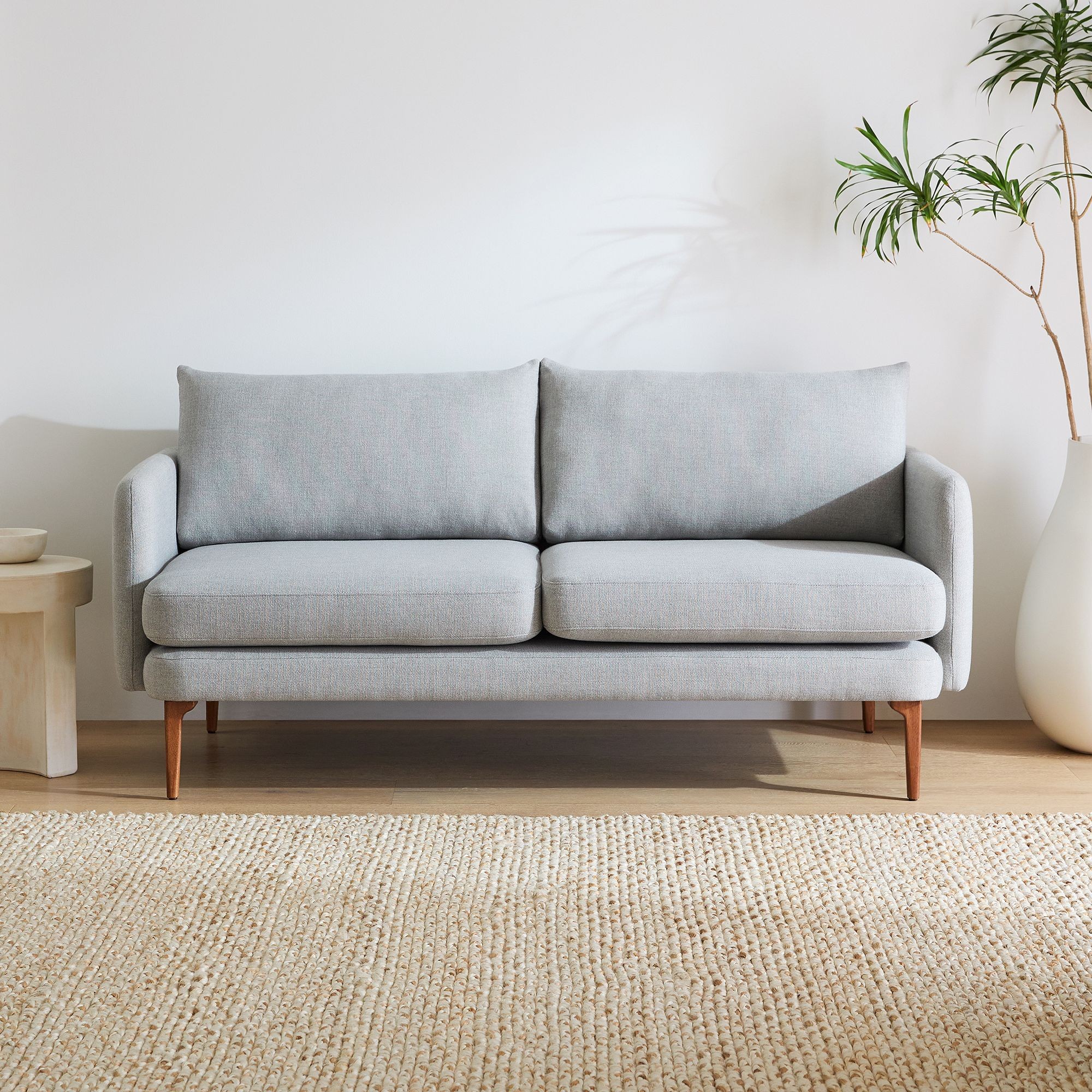
West Elm Auburn Sofa Review: Compact Build + Our Honest Verdict

Best Throw Pillows for a West Elm Harmony Sofa: Sizes, Texture, and Layering
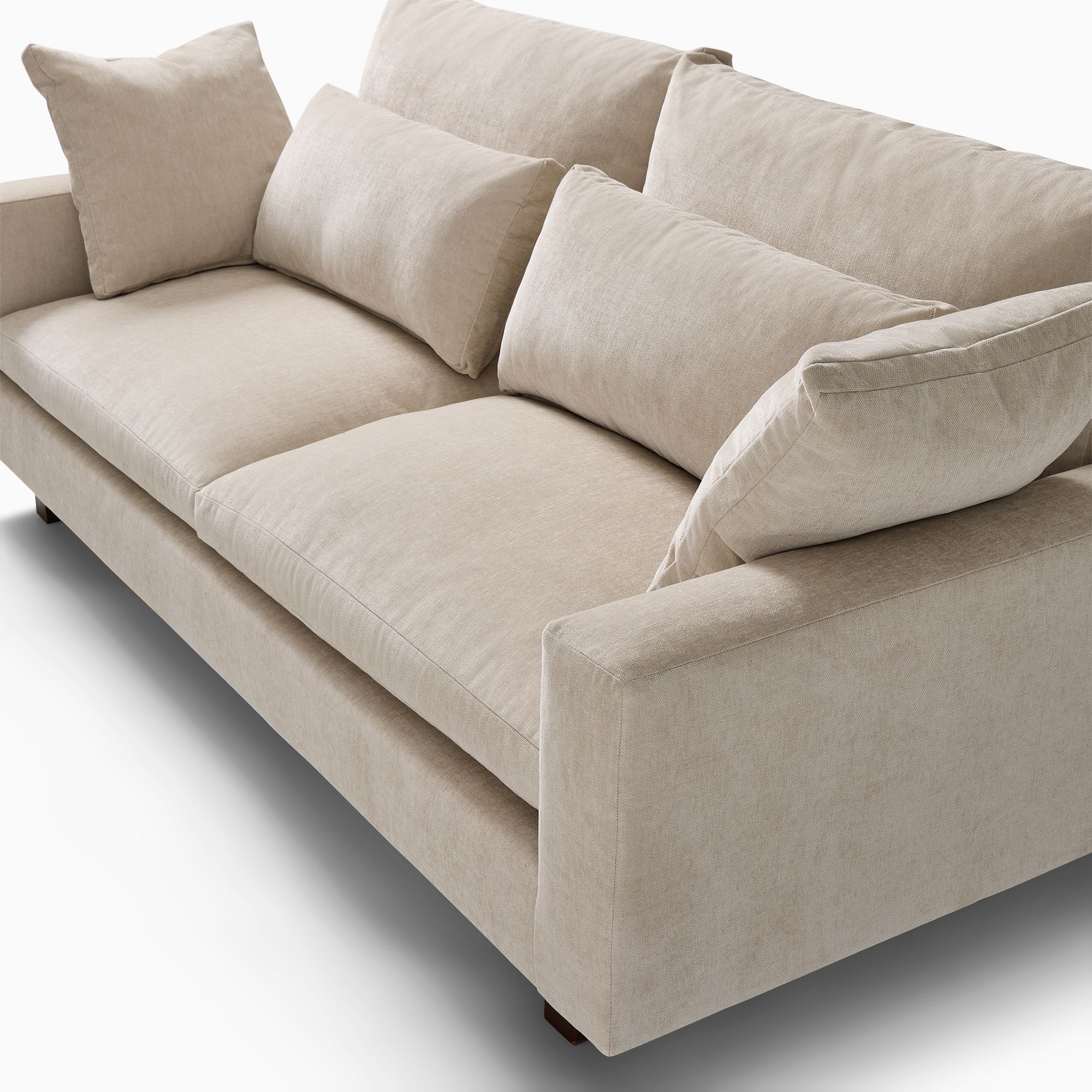
West Elm Harmony Cushions Sagging? The $40 DIY Fix (And When to Give Up)
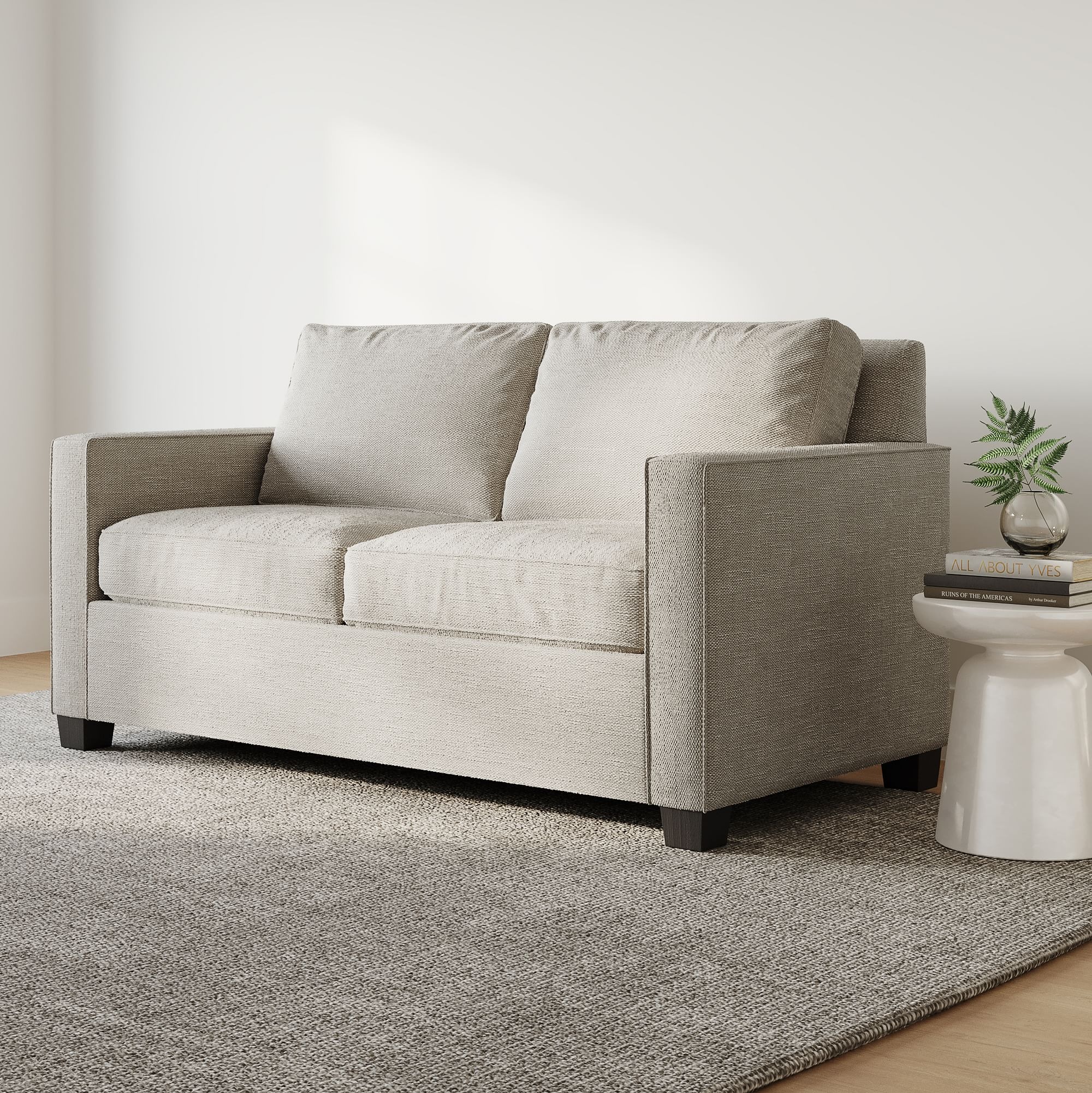
West Elm Peggy Sofa Reviews + Our Honest Verdict
How Does It Compare?
Side-by-side breakdowns featuring this product