West Elm
West Elm Mid-Century Desk Reviews + Our Verdict
By Sam Hollis · Updated September 2026
Independent editorial review. We never accept payment for coverage, though we may earn a commission if you purchase through our links.
Verdict
The Mid-Century Desk has a deeply split owner record. Fans praise the looks, the warmth, and the surface area, and multiple owners report years of daily use without trouble. The critics are just as consistent: veneer chips and flakes from routine chair contact, drawer hardware has been known to dislodge, and the drawers develop friction over time. West Elm has replaced units under warranty, though the process frustrates people. The divide tracks how the desk gets used, and buyers who add a glass top or desk pad and keep it clear of hard chair-back contact tend to have better experiences.
Read full take ↓Similar storage pieces
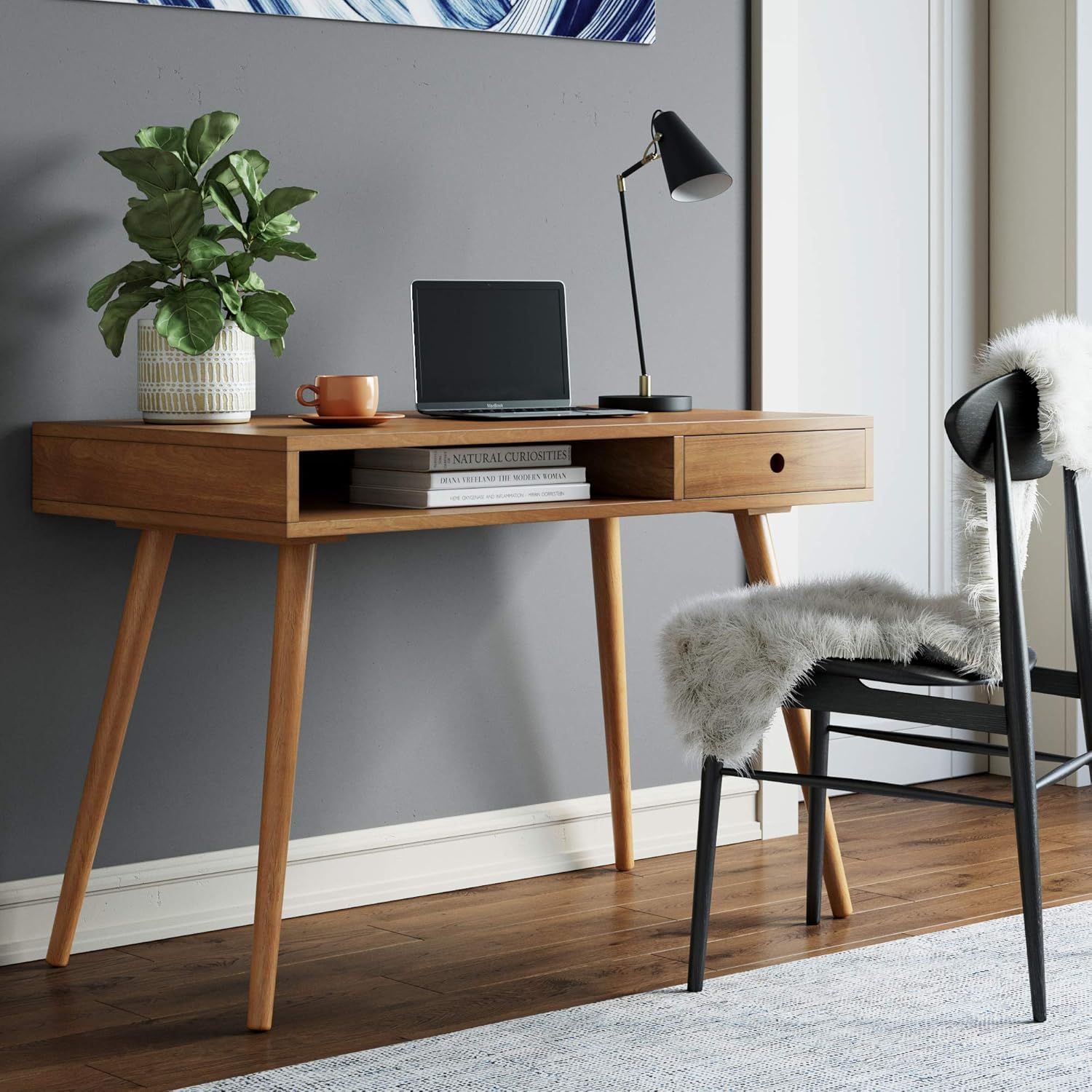
Quick Take
Well priced against its visual impact, and honest about what it is. Kiln-dried solid eucalyptus and engineered wood under acacia veneer, with water-based finishes and drawers running on wooden rather than metal glides. Comparable desks with solid wood frames cost considerably more, which makes the veneer a fair trade here.
The West Elm Mid-Century Desk is an icon with an honest asterisk
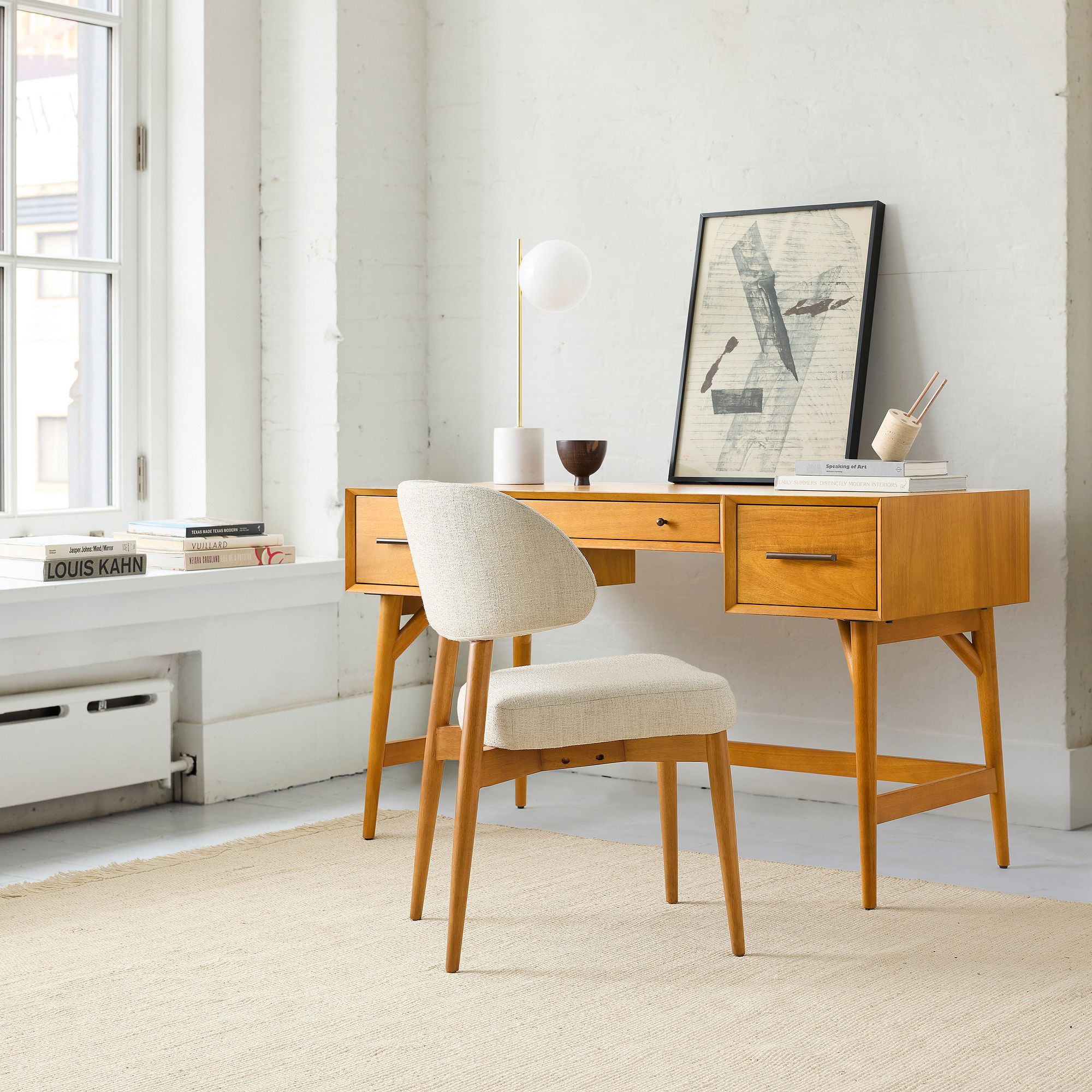
The West Elm Mid-Century Desk is one of the most photographed pieces of home office furniture on the internet. Search any interior design blog, Pinterest board, or apartment makeover post from the past eight years and it's there: acacia veneer surfaces, tapered solid wood legs, open lower shelving, and a clean rectangular form that sits inside the mid-century modern canon without leaning so hard into the aesthetic that it turns into a costume. At $799 to $999 depending on size and current promotions, the price is genuinely accessible for a piece with this much visual ambition.
The design case isn't in question. West Elm executed this one well. The proportions are right, the leg taper is right, and putting open storage under the desk surface solves a practical problem, where the printer goes, where the filing tray goes, in a way that reads as designed rather than improvised. The result is a desk that makes a home office feel intentional instead of assembled from whatever was around. That's not a small thing, and it's worth paying something for.
The asterisk is what the desk is made of. West Elm builds it as a wood veneer over an engineered core, and buyers who haven't navigated furniture materials before sometimes arrive expecting solid wood and find engineered wood cores with a thin acacia veneer on the surface. This is a legitimate construction method used across most furniture at this price tier, and it isn't inferior for a desk. It does carry different maintenance implications, a different feel when you knock on it, and a different lifespan if it gets wet or takes edge impacts. Knowing what you're buying before you buy it leads to a happier owner afterward.
Who this desk is for
The Mid-Century Desk serves one buyer profile extremely well: someone who works from home part of the time, wants a dedicated desk that looks considered rather than utilitarian, and is furnishing a home office, bedroom workspace, or studio apartment nook on a budget where solid wood desks from premium makers are out of reach. For that buyer, the visual return on investment is exceptional. Nothing at this price hits this silhouette this consistently.
It suits buyers who need a lot of work surface less well. The standard configuration gives you a functional but modest surface, and the open lower shelving, attractive as it is, eats floor space that an alternative under-desk storage unit might not. If you run multiple monitors, work with large format materials, or need to spread out for long sessions, the width will feel tight. West Elm sells the desk in two sizes, and going up to the larger format is worth considering before you order.
If you work standing, or expect to convert to a sit-stand setup, know that this desk won't take the modification. The leg structure and mounting points aren't compatible with standard aftermarket sit-stand legs, and the veneer surfaces complicate any modification. Sit-stand on your roadmap means a different desk.
The veneer reality and why it matters
Most furniture buyers never think hard about veneer construction until something goes wrong. The Mid-Century Desk uses acacia veneer over an engineered wood core, so the visible surface is real acacia while the structural material underneath is MDF, particleboard, or a similar manufactured panel. That approach is everywhere at this price tier and isn't a problem on its own.
The trouble shows up in specific situations. Veneer takes moisture damage more easily than solid wood. A water glass without a coaster, a spilled coffee, or sustained humidity can bubble, peel, or delaminate the veneer from the core in ways solid wood would shrug off. The edges, where veneer meets core, are the weak points, and edge impacts from moving furniture or repositioning items chip or lift the veneer there. None of this is hypothetical. These are the scenarios behind the most critical owner reviews at the one- to two-year mark.
In normal use the veneer holds up fine. Owners who keep the surface dry, use a desk pad or blotter for daily work, and handle the piece with reasonable care report no meaningful veneer issues after years. The material isn't fragile or high-maintenance; it asks for the same basic consideration you'd give any wood-surfaced furniture. What matters is understanding what you're working with so you calibrate the care from day one.
Open shelving and its practical trade-offs
The open lower shelf is central to the look and one of the most discussed features in owner accounts. In photographs, and in the first weeks of ownership, it's a styling asset. Books, a small plant, a basket with cables, and the whole thing looks deliberate. By year two, the shelf is usually either a dust collector or a catchall for things without another home. Neither outcome is a design failure, and both reflect the fact that open shelving in a home office needs ongoing upkeep to keep looking good.
Cable management is the bigger practical concern. The desk has no meaningful integrated cable management. The open surface and the shelf position mean power strips, chargers, and monitor cables pile up visibly unless you actively route them through external solutions. West Elm sells cable management accessories, and there's a small market of third-party clips and routing products that fit this geometry. If you're setting up a multi-monitor, multi-device office, plan for it before you buy rather than discovering it mid-setup.
Comparing the Mid-Century Desk to its competition
At $799 to $999, the Mid-Century Desk goes up against veneer-and-engineered-wood desks from IKEA, Article, and similar mid-market retailers. Against the IKEA ALEX or MICKE, West Elm wins decisively on aesthetics and loses on storage and price. The IKEA pieces give you more drawer storage per dollar; the West Elm gives you a far more refined profile. If you care how your workspace looks, that trade is easy.
Against Article and other direct-to-consumer retailers selling mid-century desks at similar prices, it's closer. Several Article desks use the same veneer-over-engineered-wood construction and sometimes cost a bit less. West Elm's edge is retail presence. You can see and touch the desk in a store before buying, which cuts real risk when you're spending this much on something you'll live with for years.
Solid wood alternatives at this price barely exist. Desks using actual solid hardwood throughout start around $1,000 to $1,200 at comparable dimensions, and quality small-batch pieces run $1,500 and up. If you want solid wood and will pay for it, the IKEA KULLABERG or a simple solid wood desk from an independent maker is a different tier. If you want this specific look and you're comfortable with veneer, the West Elm is the clearest expression of that design vision in its price range.
Mid-Century Desk construction details
The desk uses engineered wood cores, most likely medium-density fiberboard (MDF) or a comparable manufactured panel, with acacia veneer on the visible surfaces. The legs are solid wood with a walnut finish, and they're one of the desk's strongest features, since solid wood legs give real structural stability and a tactile quality engineered wood can't replicate. The veneer is bonded to the core panels with adhesive, and the quality of that bond determines how well the surface resists edge lifting and delamination over time.
Drawer construction
The desk has three drawers, a long center drawer and two side drawers. The drawer boxes use joinery consistent with the price tier, though West Elm has not consistently published which method applies to this piece, and owner-reported teardowns suggest it varies by production run. The drawer slides are wooden glides, a good material choice that runs smooth and quiet in most configurations. Soft-close isn't standard here, which stands out at a price where soft-close is becoming expected. Drawer capacity fits the category: fine for office supplies and documents, not deep enough for hanging file folders in standard letter size.
Veneer quality and surface durability
Acacia veneer over engineered wood is common construction and performs fine under normal conditions. Veneer thickness on mid-market pieces like this usually runs between 0.6mm and 1.5mm, enough for normal surface use and too thin to sand if the surface gets scratched. Scratches that go through the veneer expose the MDF core, which absorbs moisture and can swell or crumble if it isn't sealed. Desk pads and blotters extend the veneer's working life a lot. Treat one as a practical investment rather than an optional accessory.
Frame stability and weight capacity
The frame is stable under normal desktop loads. West Elm doesn't publish a weight capacity, but solid wood legs plus engineered wood frame construction carry standard desktop equipment, monitors, and office accessories without flex. The leg-to-surface connection uses metal hardware rather than glue alone, which is correct for a joint under regular downward load. The open lower shelf is meant for display and light storage, not heavy loads, and stacking heavy books or equipment on it can bow the shelf panel over time given the MDF construction.
Assembly and warranty
The desk arrives flat-packed. Assembly is straightforward and one person can usually finish in 30 to 45 minutes. The hardware package is complete in most reported cases and the instructions are decent. The finished desk has some wobble tolerance, so check and tighten the leg-to-surface connection at final assembly and again at the 30-day mark as the wood settles. West Elm provides a one-year limited warranty on manufacturing defects. Veneer surface damage from normal use, edge chipping, and moisture exposure aren't covered.
Our Ratings
Overall score
Kiln-dried solid eucalyptus and engineered wood under an acacia veneer, with water-based finishes and Oil-Rubbed Bronze hardware. The three drawers run on wooden glides rather than metal: a shallow 2-inch center drawer and two deeper 6-inch side drawers. FSC-certified, GREENGUARD Gold, and built in a Fair Trade Certified factory in Vietnam, honest veneer construction for the price rather than solid throughout.
The Mid-Century Desk set the template for modern home-office styling that dozens of competitors have copied since. Tapered legs, an angular base, and beveled front edges land the mid-century silhouette cleanly. The Acorn finish, kiln-dried eucalyptus with acacia veneer, adds warmth without going dark. It's one of West Elm's most enduring designs.
At $799-$999, the Mid-Century Desk is well priced against its visual impact and its construction honesty. Comparable desks with solid wood frames cost considerably more. The veneer construction is a fair trade at this price.
What People Are Saying
The Mid-Century Desk has a deeply split owner record. Fans praise the looks, the warmth, and the surface area, and multiple owners report years of daily use without trouble. The critics are just as consistent: veneer chips and flakes from routine chair contact, drawer hardware has been known to dislodge, and the drawers develop friction over time. West Elm has replaced units under warranty, though the process frustrates people. The divide tracks how the desk gets used, and buyers who add a glass top or desk pad and keep it clear of hard chair-back contact tend to have better experiences.
Reddit and Houzz commentary are weighted 3× against blog and editorial sources in our sentiment score. Brand PR has a well-documented influence on editorial coverage — direct owner reports from message boards tend to be more candid.
What Reddit Is Saying
“I have this exact desk and it's awesome. It's been in my office getting daily use for three years now and it still links great. I had a piece of glass cut to cover the top because I enjoy having a lot of drinks on my desk while I work.”View thread →
“I've had this desk for about a month and I love it so far. It's is very good looking and solidly built. Feels very sturdy, aka doesn't wobble or feel like it'll break if something to heavy sits on it. All the drawers feel solid and slide smoothly.”View thread →
“I owned this desk! The drawers broke almost immediately, if I remember correctly it was the hardware dislodging from the chipboard. West Elm did replace the desk, but it was a pain in the ass.”View thread →
“It is a beautiful piece but the wood chips very easily. (Already chipped the front of the desk while moving). The drawers are faulty and poorly constructed - It gets stuck at times. overall just not worth paying over 1000 cad regular price or even 650 cad.”View thread →
What Others Are Saying
“The desk itself is sturdy and pretty well-built. It really encompasses the mid-century modern look I was going for and truly anchors the whole office.”Source →
“The kiln-dried wood helps prevent warping — a crucial factor for furniture placed near windows or heating vents.”Source →
“The drawers glide out smoothly and click back into the surrounding beveled edges when closed, confirming this piece as a high-quality, well-built desk that can be in your life for decades.”Source →
“The frame has chipped terribly over time from the inevitable chair bumping it, leaving splinters all along the edge. The drawers do not open and close well. It's a beautiful looking piece...but it's garbage quality for the price.”Source →
Frequently asked questions
Is the West Elm Mid-Century Desk worth it?
Well priced against its visual impact, and honest about what it is. Kiln-dried solid eucalyptus and engineered wood under acacia veneer, with water-based finishes and drawers running on wooden rather than metal glides. Comparable desks with solid wood frames cost considerably more, which makes the veneer a fair trade here.
How is the West Elm Mid-Century Desk built?
Kiln-dried solid eucalyptus and engineered wood under an acacia veneer, with water-based finishes and Oil-Rubbed Bronze hardware. The three drawers run on wooden glides rather than metal: a shallow 2-inch center drawer and two deeper 6-inch side drawers. FSC-certified, GREENGUARD Gold, and built in a Fair Trade Certified factory in Vietnam, honest veneer construction for the price rather than solid throughout.
What styles does the West Elm Mid-Century Desk work with?
The Mid-Century Desk set the template for modern home-office styling that dozens of competitors have copied since. Tapered legs, an angular base, and beveled front edges land the mid-century silhouette cleanly. The Acorn finish, kiln-dried eucalyptus with acacia veneer, adds warmth without going dark.
What do real owners say about the West Elm Mid-Century Desk?
The Mid-Century Desk has a deeply split owner record. Fans praise the looks, the warmth, and the surface area, and multiple owners report years of daily use without trouble. The critics are just as consistent: veneer chips and flakes from routine chair contact, drawer hardware has been known to dislodge, and the drawers develop friction over time.
Options Worth Checking Out
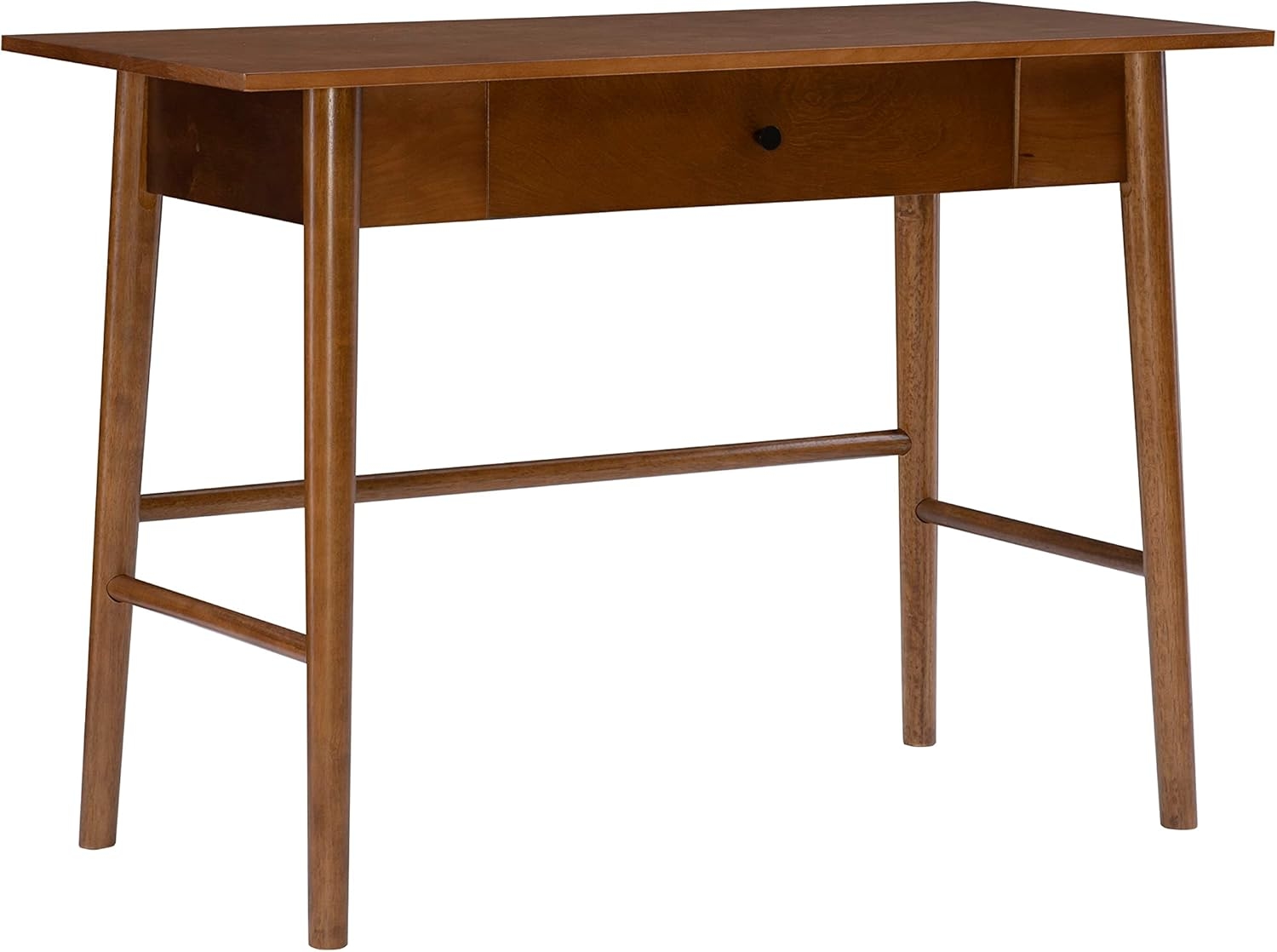
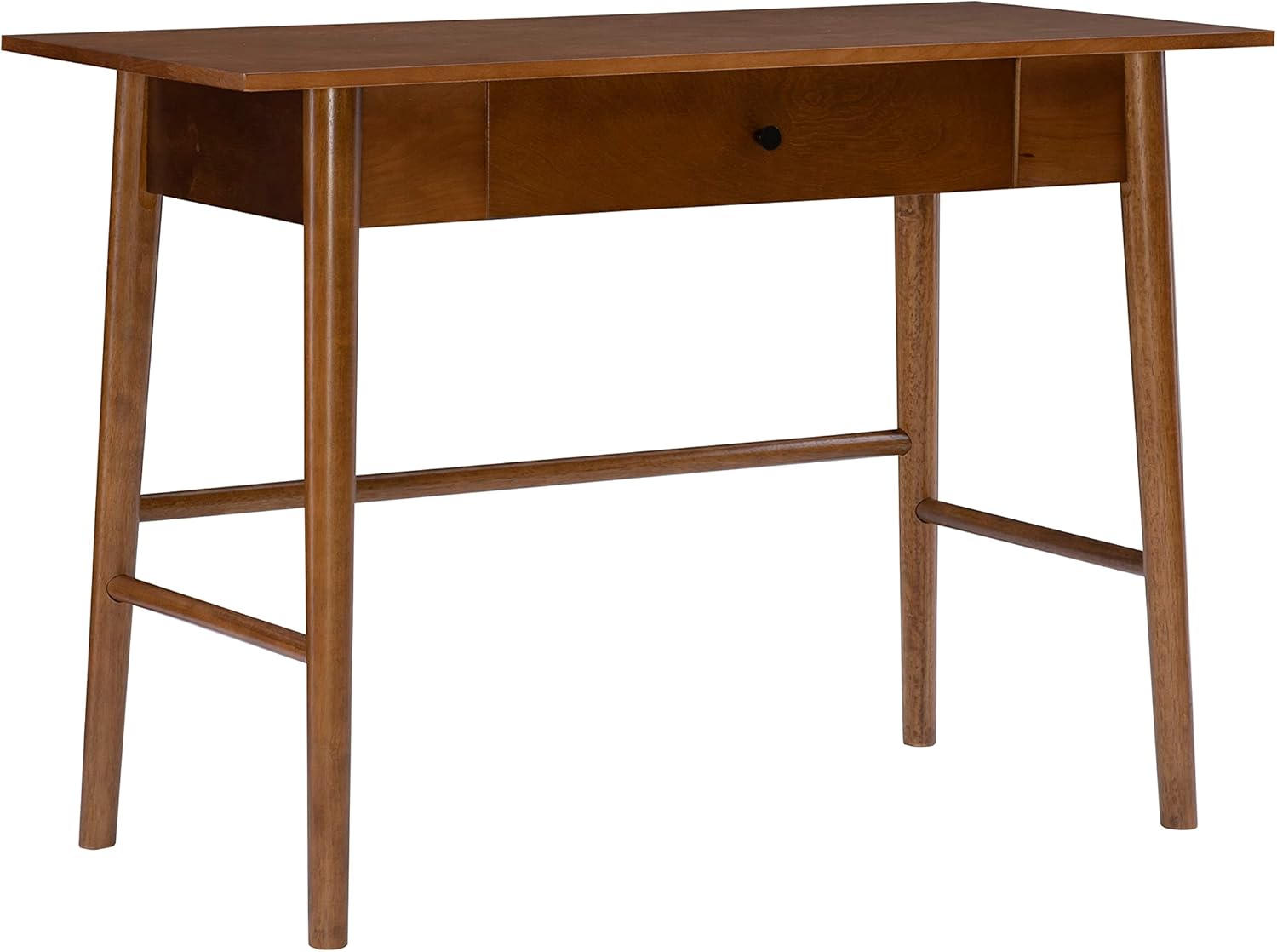
Linon Melissa Mid-Century Walnut Desk
More affordable modern desk for the same buyer who wants a home-friendly work surface rather than something corporate or industrial-looking.
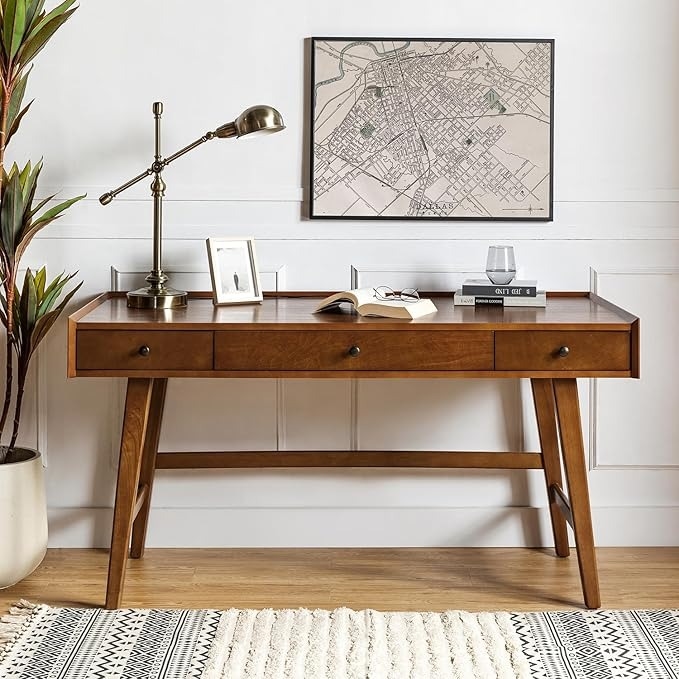
HULALA HOME Mid-Century Charging Desk
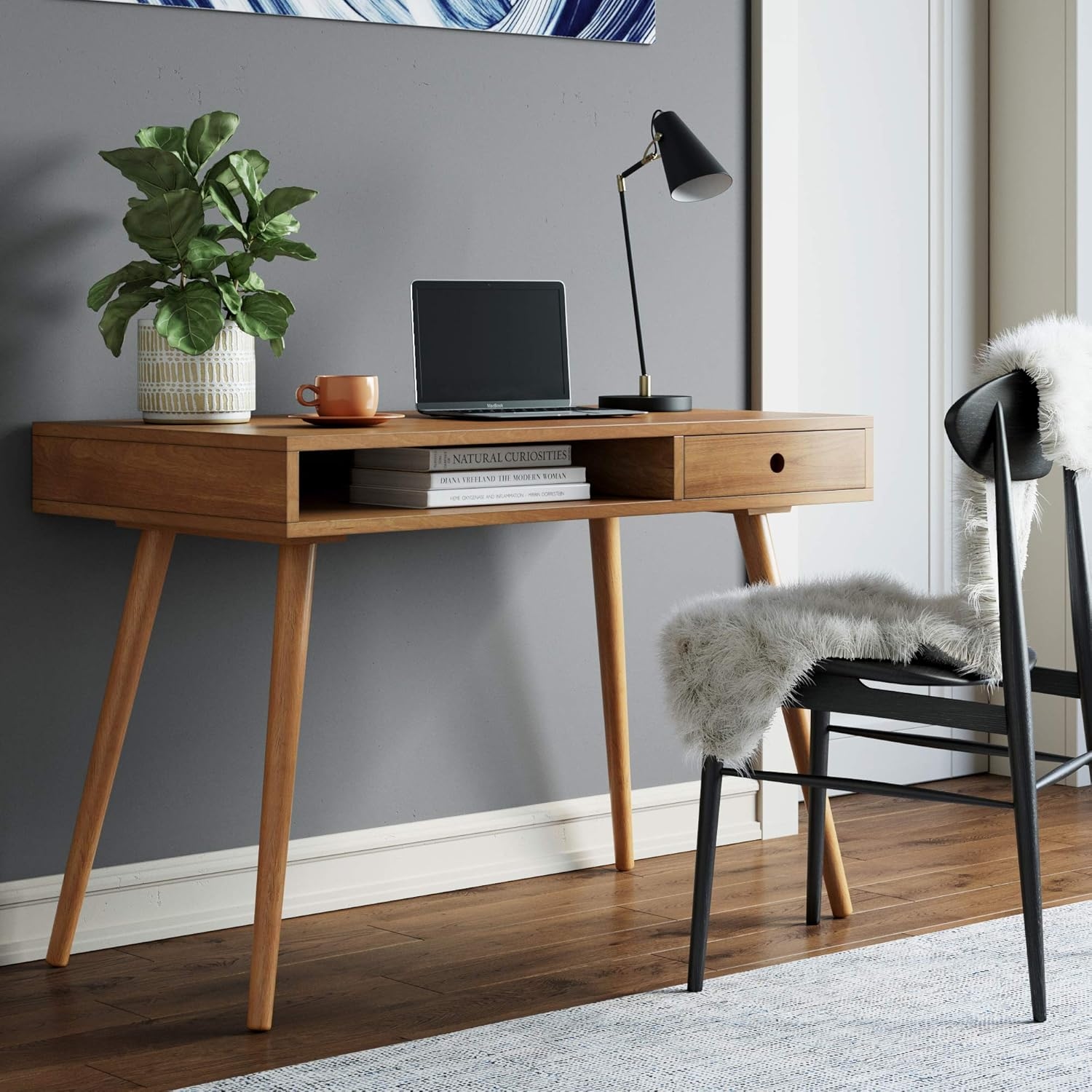
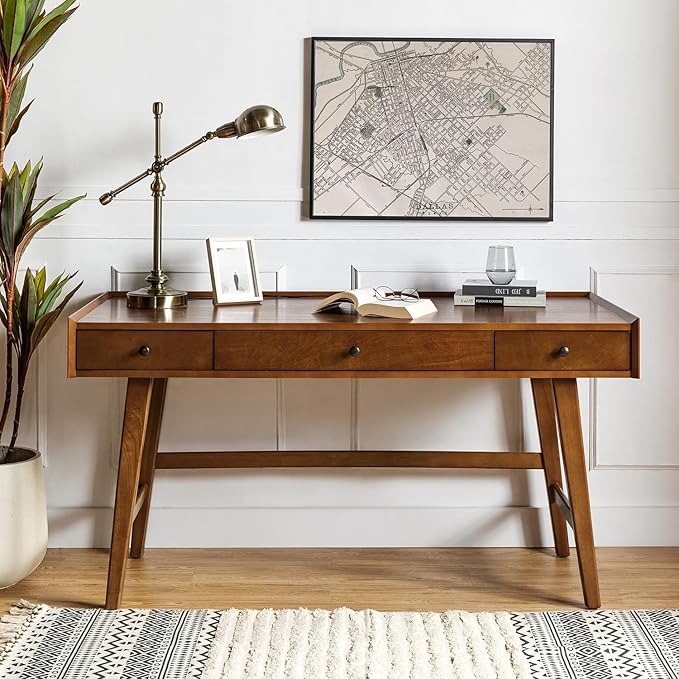
Nathan James Parker Modern Home Office Writing Desk, Mid-Century Walnut Wood with Drawer
You Might Also Need
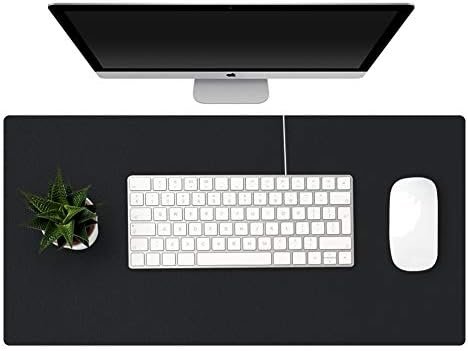
Accessories worth grabbing alongside your purchase
More West Elm Reviews
See all →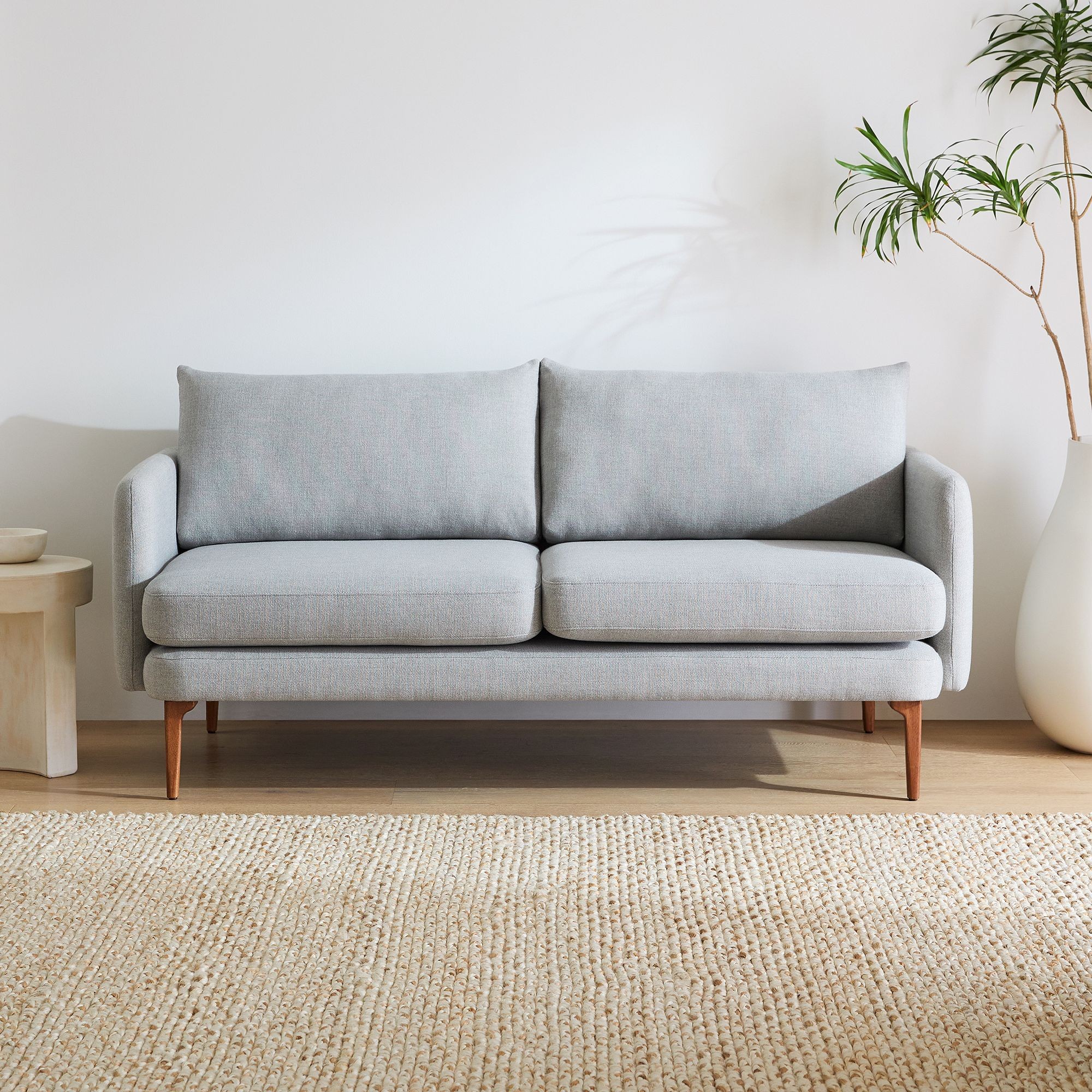
West Elm Auburn Sofa Review: Compact Build + Our Honest Verdict
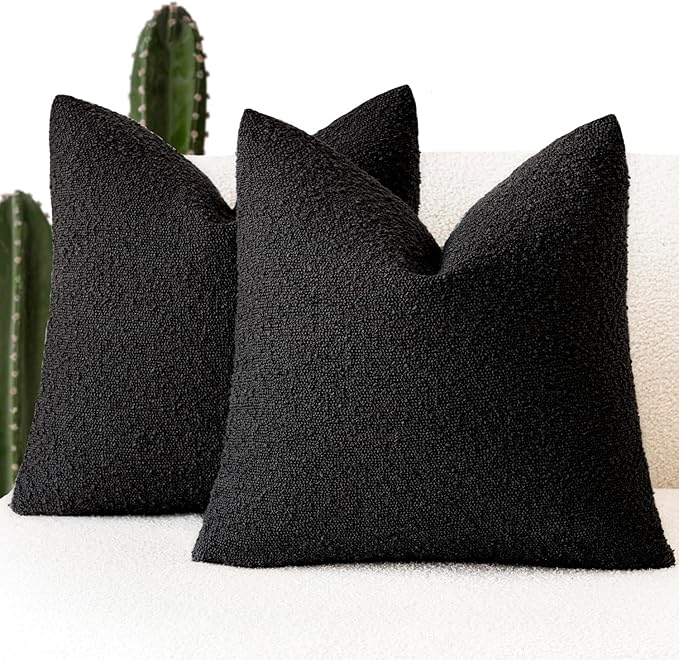
Best Throw Pillows for a West Elm Harmony Sofa: Sizes, Texture, and Layering
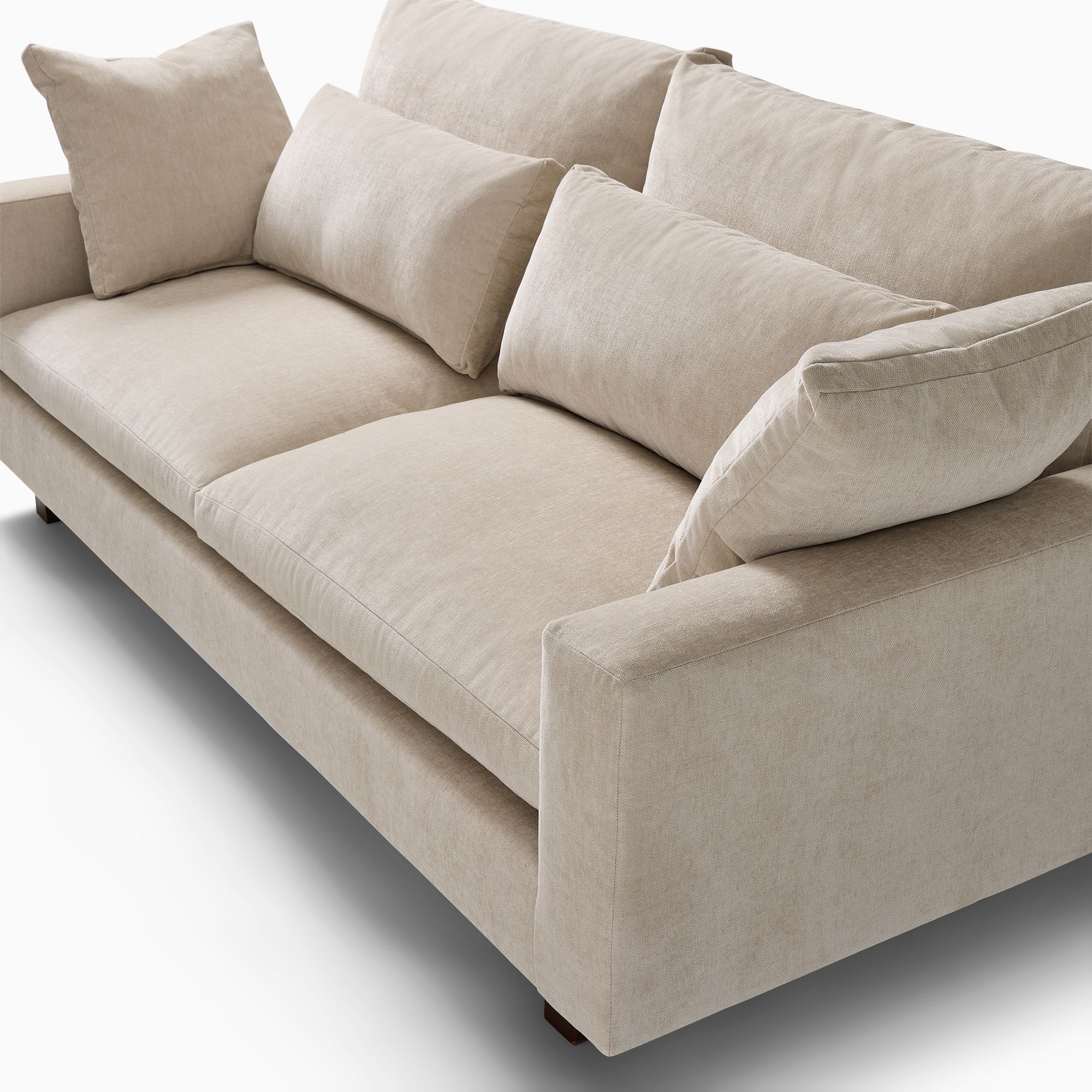
West Elm Harmony Cushions Sagging? The $40 DIY Fix (And When to Give Up)
West Elm Peggy Sofa Reviews + Our Honest Verdict
How Does It Compare?
Side-by-side breakdowns featuring this product