West Elm
West Elm Mid-Century 6-Drawer Dresser Reviews + Editorial Take
By Sam Hollis · Updated September 2026
Independent editorial review. We never accept payment for coverage, though we may earn a commission if you purchase through our links.
Verdict
Long-term sentiment around the Mid-Century dresser runs stable and positive. Owners like the look, the capacity, and the way it pulls a bedroom together the day it goes in. The recurring gripe is the drawer action, which owners describe as plain rather than luxurious for what the dresser costs.
Read full take ↓Similar storage pieces
Quick Take
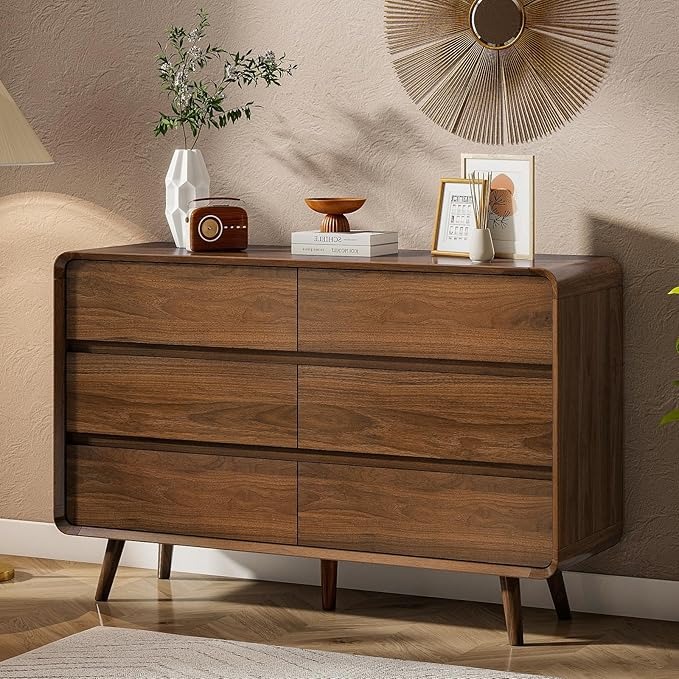
You are paying for the look here, and on that count it pays out. A kiln-dried solid wood frame and legs over an engineered-wood body, drawers riding on solid wood glides, and FSC plus GREENGUARD Gold certification. If you want solid wood throughout, shop Pottery Barn or Arhaus and expect to pay more.
The dresser everyone copies
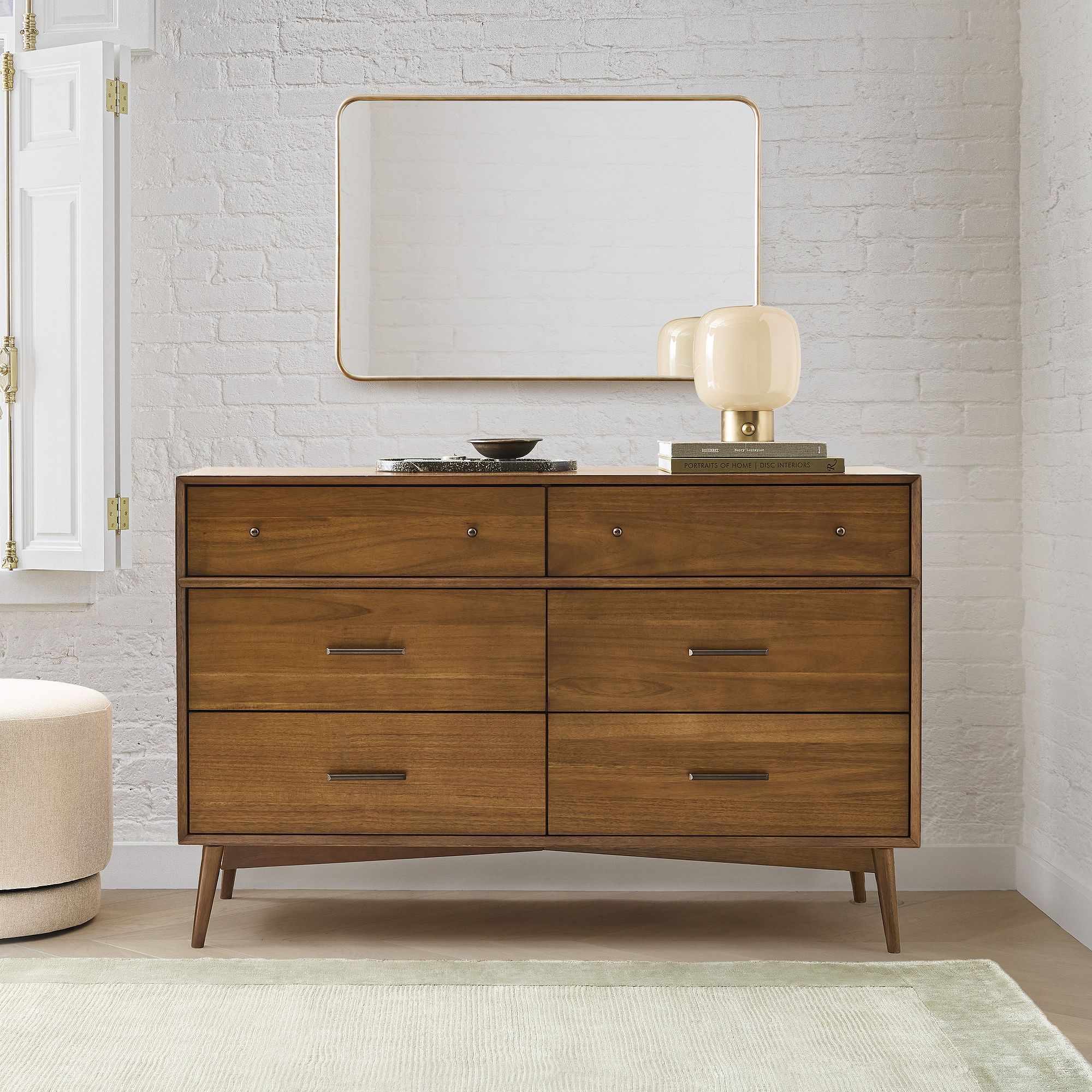
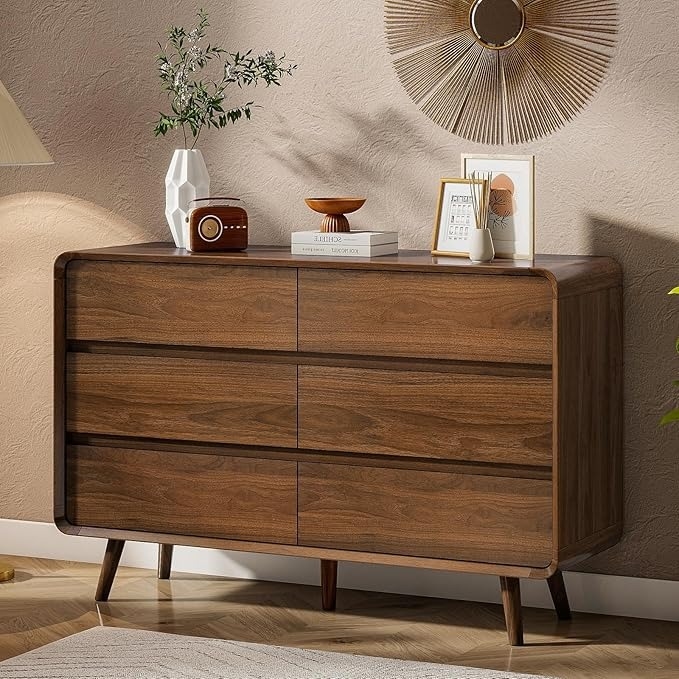
Walk through almost any accessible furniture catalog and you'll find a version of this dresser. Rectangular case, tapered legs, simple horizontal pulls, a warm mid-century finish (available in Acorn, Pebble, and Cerused White). West Elm refined the shape and everyone else followed. The Mid-Century 6-Drawer Dresser has been the reference point for an entire category of accessible bedroom furniture for close to a decade now, and that reads as hyperbole until you start comparing competitors, at which point it becomes obvious.
The design pulls off something harder than it looks. It makes a six-drawer case piece look light. Most dressers with six drawers go squat and blocky, reading as storage rather than bedroom furniture. This one gets around that with leg height and drawer proportion. The tapered solid wood legs lift the case off the floor and open up breathing room underneath, which cuts the bulk. The drawer faces are sized and stacked in proportions that feel considered instead of maxed out for capacity. You end up with a piece that swallows a lot of clothing while still looking like something someone chose rather than something someone settled for.
What's under the veneer
West Elm's copy says wood veneer (acacia for Acorn, ash for Pebble, oak for Cerused White) and solid wood legs. Both are true, and buyers still read more into them than they should. The case is engineered wood, most likely MDF or some mix of MDF and particleboard, with real wood veneer on the visible exterior surfaces. The legs are solid wood. The drawer interiors are usually bare manufactured board.
That is the industry standard for case goods at this price. IKEA does it, Pottery Barn does it, Article does it. Veneer thickness, how well it's applied, and the precision of the joinery between case components all vary by manufacturer and even by production batch, but the basic material approach is shared across the category. Anyone shocked to learn their dresser isn't solid wood throughout skipped the research step before buying.
So the question is whether West Elm executes it well enough to justify the price. Mostly yes, with documented exceptions. Most owners get a dresser that assembles cleanly, arrives with consistent veneer application and no bubbling or edge lifting, and still looks good two or three years in. The exceptions cluster around drawer quality, which is the loudest complaint in long-term owner accounts and deserves an honest conversation.
The drawers are the weak point
Six-drawer dressers get used every day, several times a day. Figure 1,000 to 2,000 open-and-close cycles per drawer per year in a household where this is the primary clothing storage. Over five years that's 5,000 to 10,000 cycles. Drawer box construction, the slides, and the box joinery decide whether the thing is still pleasant to use in year five or whether it has turned into a small daily annoyance.
Owner reports here are mixed in a pattern that points to production run variation rather than a design flaw. Some owners, especially on more recently produced units, report smooth consistent action holding up over multiple years of use. Others say the drawers tracked badly from the beginning, need a slight lift to close fully, or started wobbling in their slides after 18 to 24 months. Soft-close mechanisms aren't included across all configurations and price points, so check the specific product listing at the time you buy.
That inconsistency is the biggest problem at this price. A $1,299 dresser with six smooth drawers in year three is money well spent. A $1,299 dresser where two of the six need a workaround by year two is a daily irritation. The variation makes it hard to recommend with the unqualified confidence the aesthetics would otherwise earn.
How it compares
The IKEA HEMNES 6-drawer dresser costs about a third as much and uses solid pine instead of veneer, so it wins on material and loses badly on looks. The HEMNES looks like an IKEA product; the West Elm looks like a design investment. If you care more about material longevity than aesthetics and you're comfortable with the IKEA design vocabulary, the HEMNES is the more durable purchase per dollar.
Pottery Barn's Sausalito dresser sits in the same aesthetic lane at a similar price , though Pottery Barn publishes no manufacturer warranty where West Elm gives one year. The construction approaches are comparable, but the longer warranty says Pottery Barn is more confident in how the piece will hold up. If you're cross-shopping this against the competition at this price, that gap belongs in the decision.
Solid wood alternatives with real case construction, from Gat Creek, Room and Board, or Vermont Woods Studios, start around $1,800 to $2,200 for a comparable six-drawer configuration. Those use solid hardwood throughout, with drawer boxes and case construction that will outlast the West Elm by decades under equivalent use. If you plan to keep a dresser 20 years, the math favors solid wood at that spread. If you're furnishing a first apartment and expect your taste and needs to shift over the next five to seven years, the West Elm is a fair compromise.
Living with it over the years
Years of ownership don't do much to the wood veneer (acacia for Acorn, ash for Pebble, oak for Cerused White) surface, which holds up well under normal conditions. Owners at the three-year mark who kept it out of direct sunlight, avoided moisture, and treated it with reasonable care say the surface looks close to how it did new. The veneer won't develop the patina solid wood does, but it also won't fade or discolor much in normal indoor conditions.
The long-term structural worry is case panel integrity around the drawer openings. MDF construction there can develop micro-cracking or edge fatigue under repeated loading over many years, especially if the drawers get overloaded. It's a decade-out concern rather than an immediate one, and it matters less in households that use the dresser for standard clothing storage instead of as a general-purpose storage unit.
Case and legs
The material details are ordinary for the category. A solid wood frame paired with engineered wood panels, the exterior faced in wood veneer whose species depends on the finish: acacia on Acorn and White, ash on Pebble, oak on Cerused White. The interior drawer walls and the case interior are usually unveneered manufactured board. The solid wood tapered legs attach to the case base with metal hardware. Veneer quality across West Elm's production runs for this piece is generally consistent, and the grain shows the warm tone and natural variation you'd expect from the species.
Drawer construction and slides
Drawer boxes pair manufactured board sides with solid wood glides, the wood-on-wood runners West Elm specs for this line. The joinery varies across production runs. West Elm hasn't consistently published whether dovetail or some alternative joinery is used, and owner teardowns report variation. The wood glides run smoothly on well-constructed examples, and the tracking problems some owners describe point to variation in glide fit or installation precision rather than a universal defect. Wood glides don't carry a soft-close mechanism, so don't expect the self-closing action of a metal drawer system here.
Veneer and surface durability
Wood veneer over engineered board is the standard approach in this price category. Thickness typically runs between 0.6mm and 1mm, thin enough that sanding out a deep scratch isn't an option. The top is the highest-risk surface for moisture damage, so put a felt-bottomed lamp base or a tray under your accessories. The edge areas, where veneer meets the case panel edges, chip most easily on impact. Most long-term owners report the veneer holds its appearance well under normal conditions.
Stability and load
Assembled, the dresser is stable under normal loading. West Elm recommends wall anchoring, standard advice for any tall dresser and non-negotiable in a household with children. Drawer weight capacity is fine for standard clothing storage. A fully stocked six-drawer case weighs more than the leg attachment loading wants to carry, which makes anchoring both a safety and a structural precaution. The top surface handles standard accessories without flex.
Assembly and warranty
Assembly takes two people and runs 60 to 90 minutes. The flat-pack configuration needs careful alignment of the case panels and the drawer slide installation, which is where most owner-reported assembly errors happen. The hardware package is complete in most cases. The finished piece is heavy, so position it before you load the drawers. West Elm's one-year warranty covers manufacturing defects and excludes surface wear, veneer damage, and normal use deterioration.
Our Ratings
Overall score
Kiln-dried solid wood frame and legs over an engineered-wood body, with the veneer species shifting by finish (acacia on Acorn, ash on Pebble, oak on Cerused White). The six drawers ride on solid wood glides, and it carries FSC, GREENGUARD Gold, and Fair Trade factory credentials. Water-based finishes, Oil-Rubbed Bronze hardware, and anti-tip hardware in the box.
This is the case piece that defined a generation of West Elm buyers and spawned a hundred imitators. Tapered legs, beveled drawer fronts, Oil-Rubbed Bronze hardware, the most-copied dresser silhouette in accessible modern furniture. It comes in Acorn, Pebble, and Cerused White, and the design still holds up.
Starting around $1,299 this lands in the middle for a six-drawer piece, neither cheap nor extravagant. What you get back is looks, and on that count it pays out well. If you want solid wood throughout, shop Pottery Barn or Arhaus and expect to pay more.
What People Are Saying
Long-term sentiment around the Mid-Century dresser runs stable and positive. Owners like the look, the capacity, and the way it pulls a bedroom together the day it goes in. The recurring gripe is the drawer action, which owners describe as plain rather than luxurious for what the dresser costs.
Reddit and Houzz commentary are weighted 3× against blog and editorial sources in our sentiment score. Brand PR has a well-documented influence on editorial coverage — direct owner reports from message boards tend to be more candid.
What Others Are Saying
“We were instantly taken with its rich caramel-brown hue, as it was glossier and smoother than that of the other dressers we viewed.”Source →
“The dressers themselves don't look as sturdy as they should. I probably wouldn't purchase the whole bedroom set since the dressers don't really instill confidence in their durability.”Source →
“We also weren't a huge fan of their dresser drawers, just from trying it out in-store.”Source →
Frequently asked questions
Is the West Elm Mid-Century 6-Drawer Dresser worth it?
You are paying for the look here, and on that count it pays out. A kiln-dried solid wood frame and legs over an engineered-wood body, drawers riding on solid wood glides, and FSC plus GREENGUARD Gold certification. If you want solid wood throughout, shop Pottery Barn or Arhaus and expect to pay more.
How is the West Elm Mid-Century 6-Drawer Dresser built?
Kiln-dried solid wood frame and legs over an engineered-wood body, with the veneer species shifting by finish (acacia on Acorn, ash on Pebble, oak on Cerused White). The six drawers ride on solid wood glides, and it carries FSC, GREENGUARD Gold, and Fair Trade factory credentials. Water-based finishes, Oil-Rubbed Bronze hardware, and anti-tip hardware in the box.
What styles does the West Elm Mid-Century 6-Drawer Dresser work with?
This is the case piece that defined a generation of West Elm buyers and spawned a hundred imitators. Tapered legs, beveled drawer fronts, Oil-Rubbed Bronze hardware, the most-copied dresser silhouette in accessible modern furniture. It comes in Acorn, Pebble, and Cerused White, and the design still holds up.
What do real owners say about the West Elm Mid-Century 6-Drawer Dresser?
Long-term sentiment around the Mid-Century dresser runs stable and positive. Owners like the look, the capacity, and the way it pulls a bedroom together the day it goes in. The recurring gripe is the drawer action, which owners describe as plain rather than luxurious for what the dresser costs.
Options Worth Checking Out
More West Elm Reviews
See all →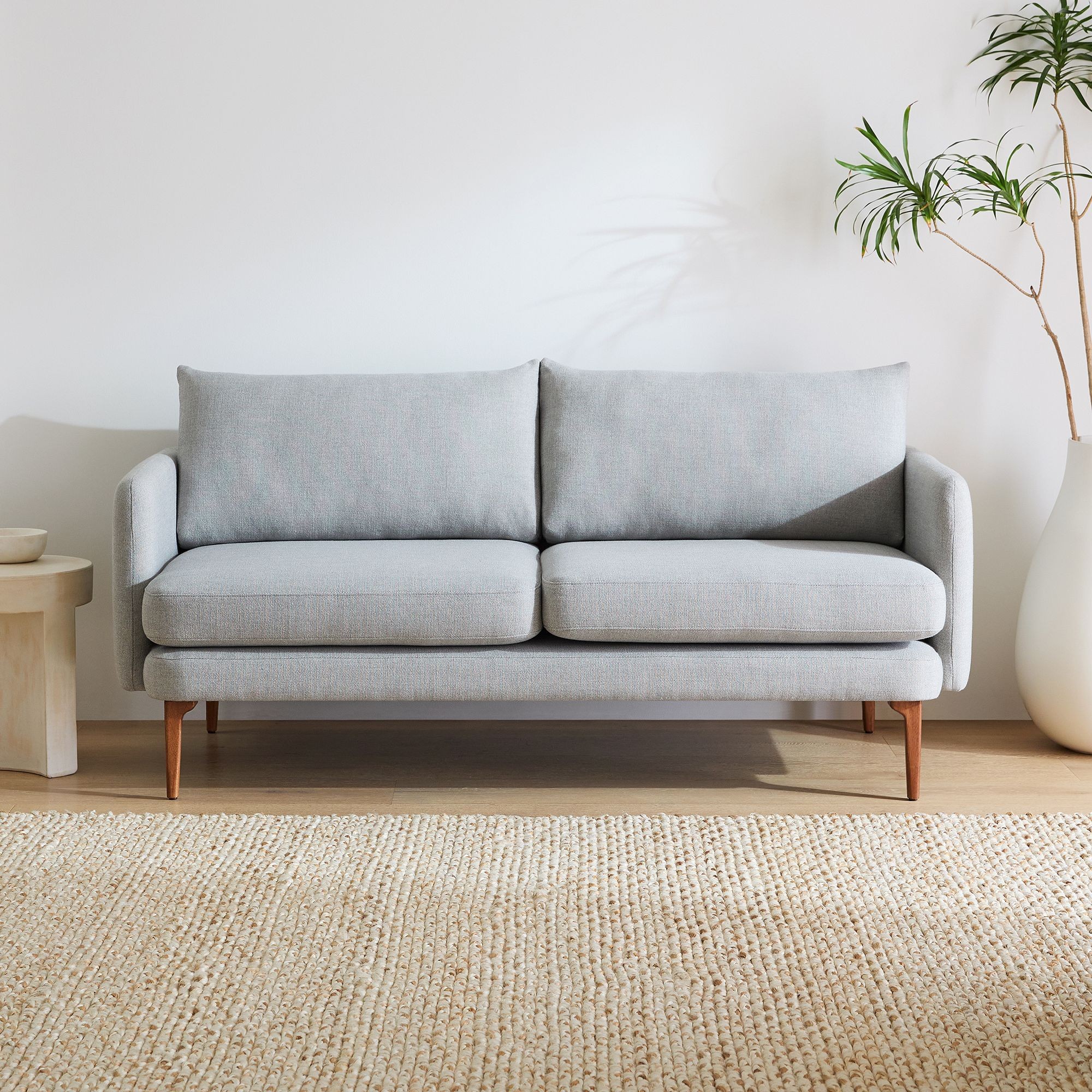
West Elm Auburn Sofa Review: Compact Build + Our Honest Verdict

Best Throw Pillows for a West Elm Harmony Sofa: Sizes, Texture, and Layering
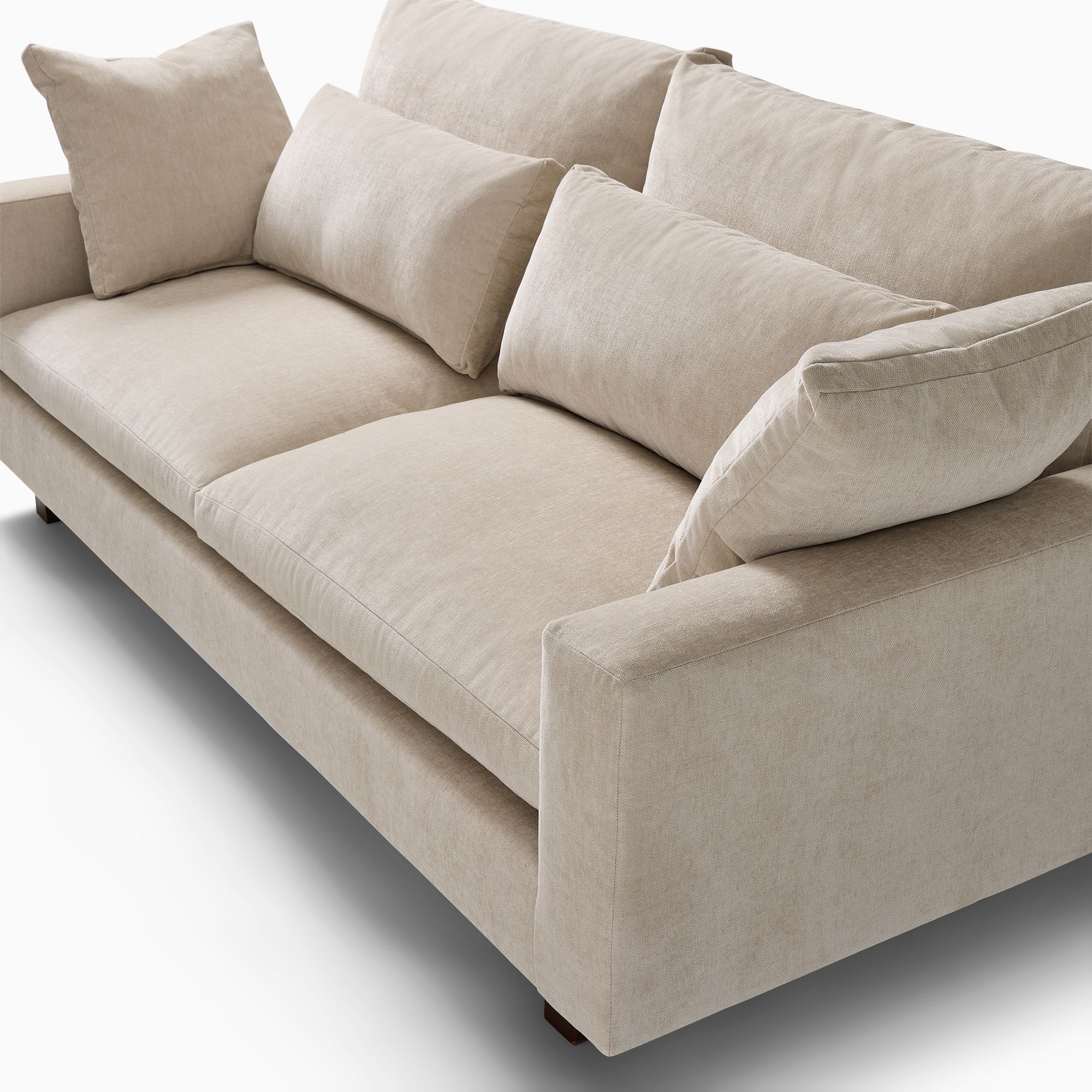
West Elm Harmony Cushions Sagging? The $40 DIY Fix (And When to Give Up)
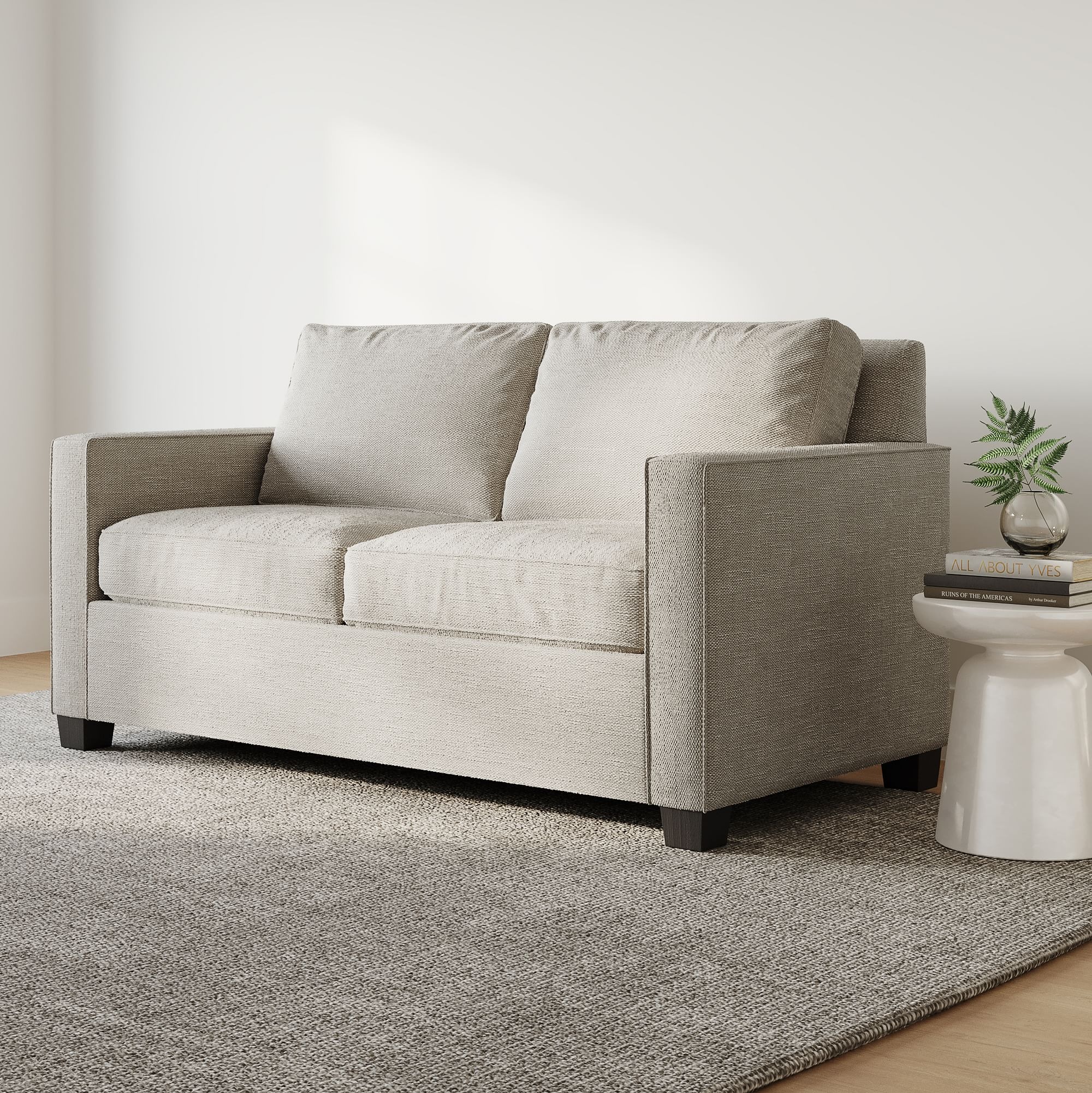
West Elm Peggy Sofa Reviews + Our Honest Verdict
How Does It Compare?
Side-by-side breakdowns featuring this product