West Elm
West Elm Marin Sofa Reviews + Our Editorial Verdict
By Sam Hollis · Updated September 2026
Independent editorial review. We never accept payment for coverage, though we may earn a commission if you purchase through our links.
Verdict
Marin sentiment is remarkably consistent: it looks inviting, it feels soft, and it usually satisfies buyers who knew that's what they were paying for. The common pushback isn't that it's uncomfortable, it's that it's exactly as maintenance-prone as soft loose-cushion sofas always are.
Read full take ↓Similar sofas
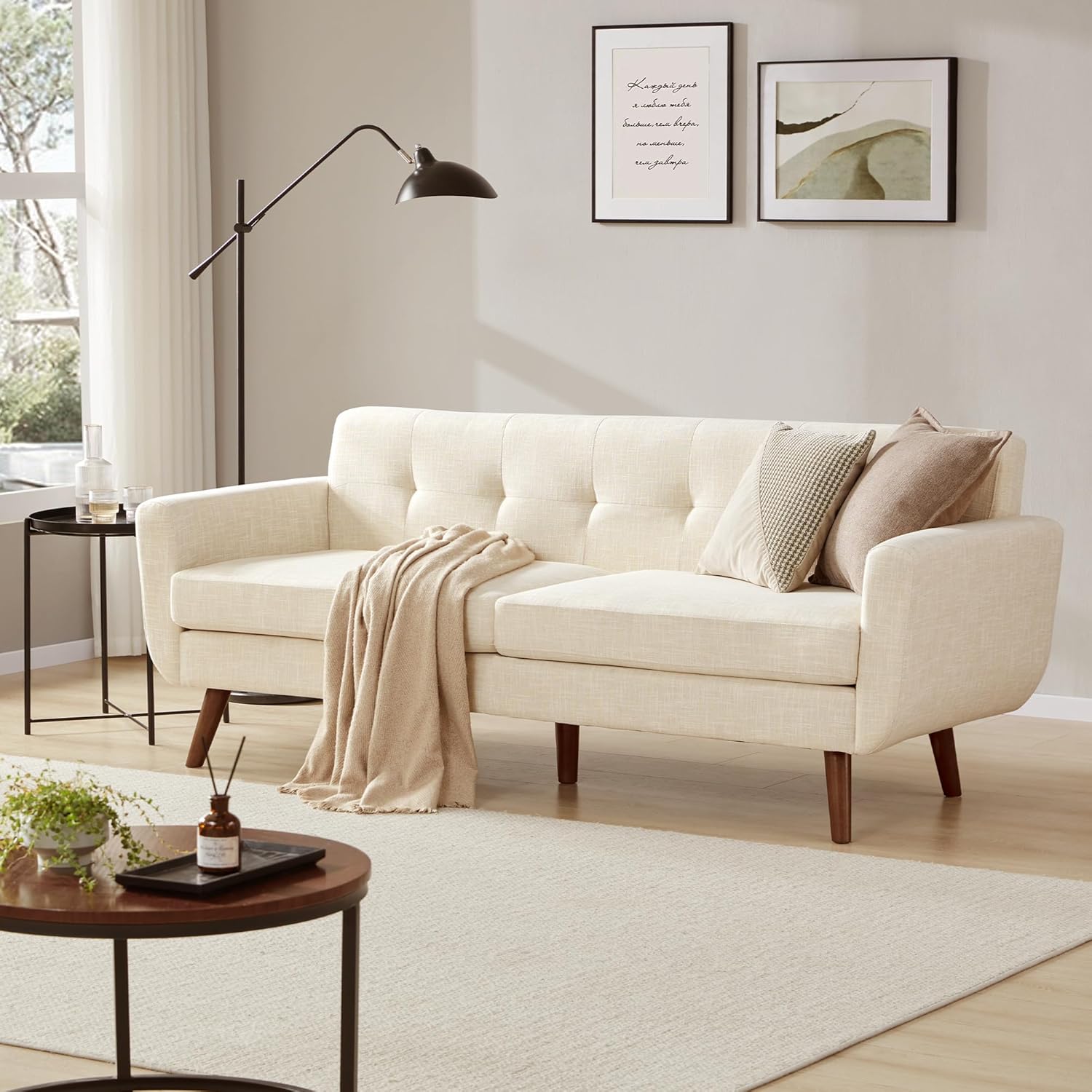
Quick Take
A coastal-casual sofa that photographs beautifully and asks for maintenance in return. The kiln-dried solid wood frame is a step up from the Harmony's engineered hardwood, though the support legs are plastic. The down-fill cushions add cost without adding durability, so look elsewhere if you want low-maintenance lounging.
Coastal ease with maintenance strings attached
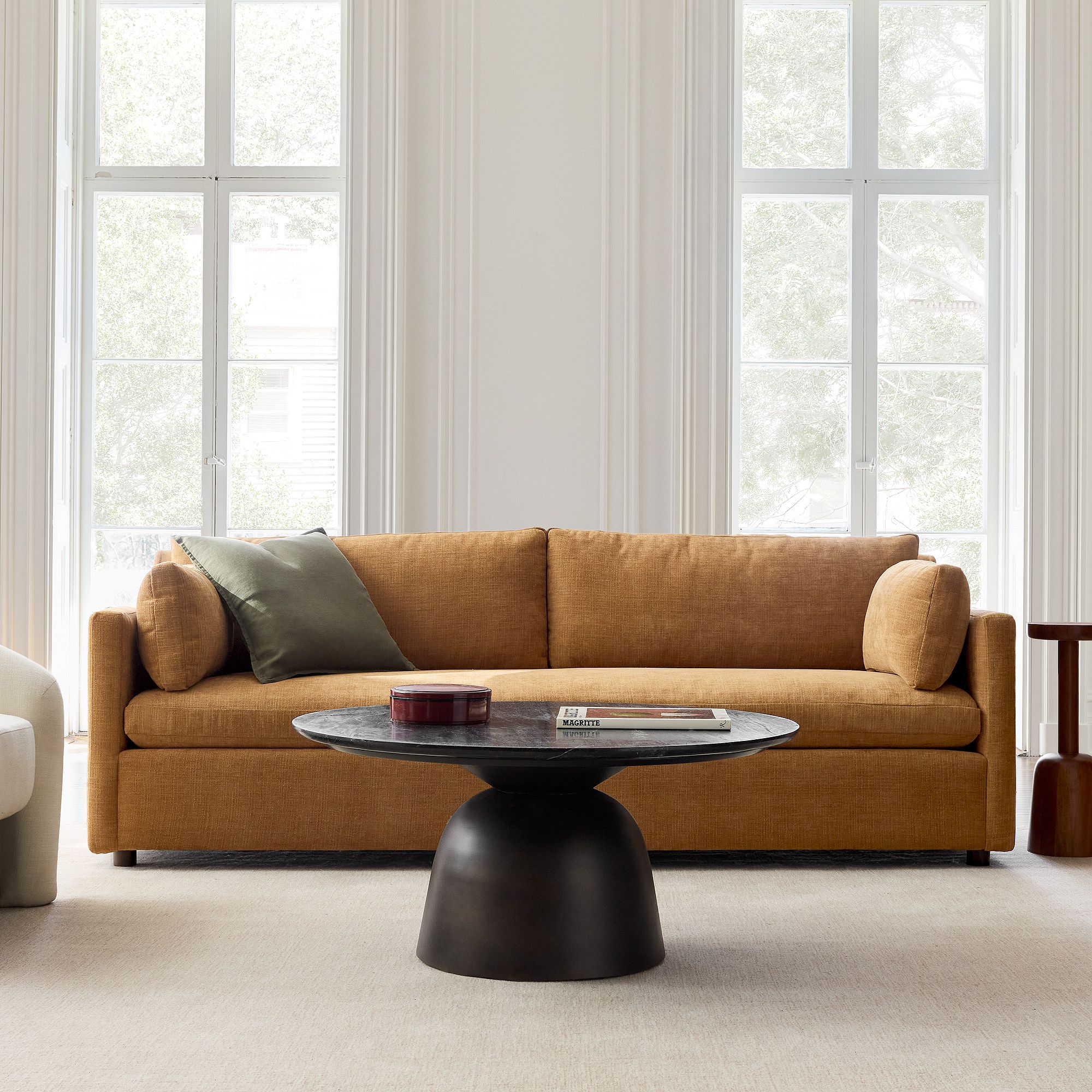
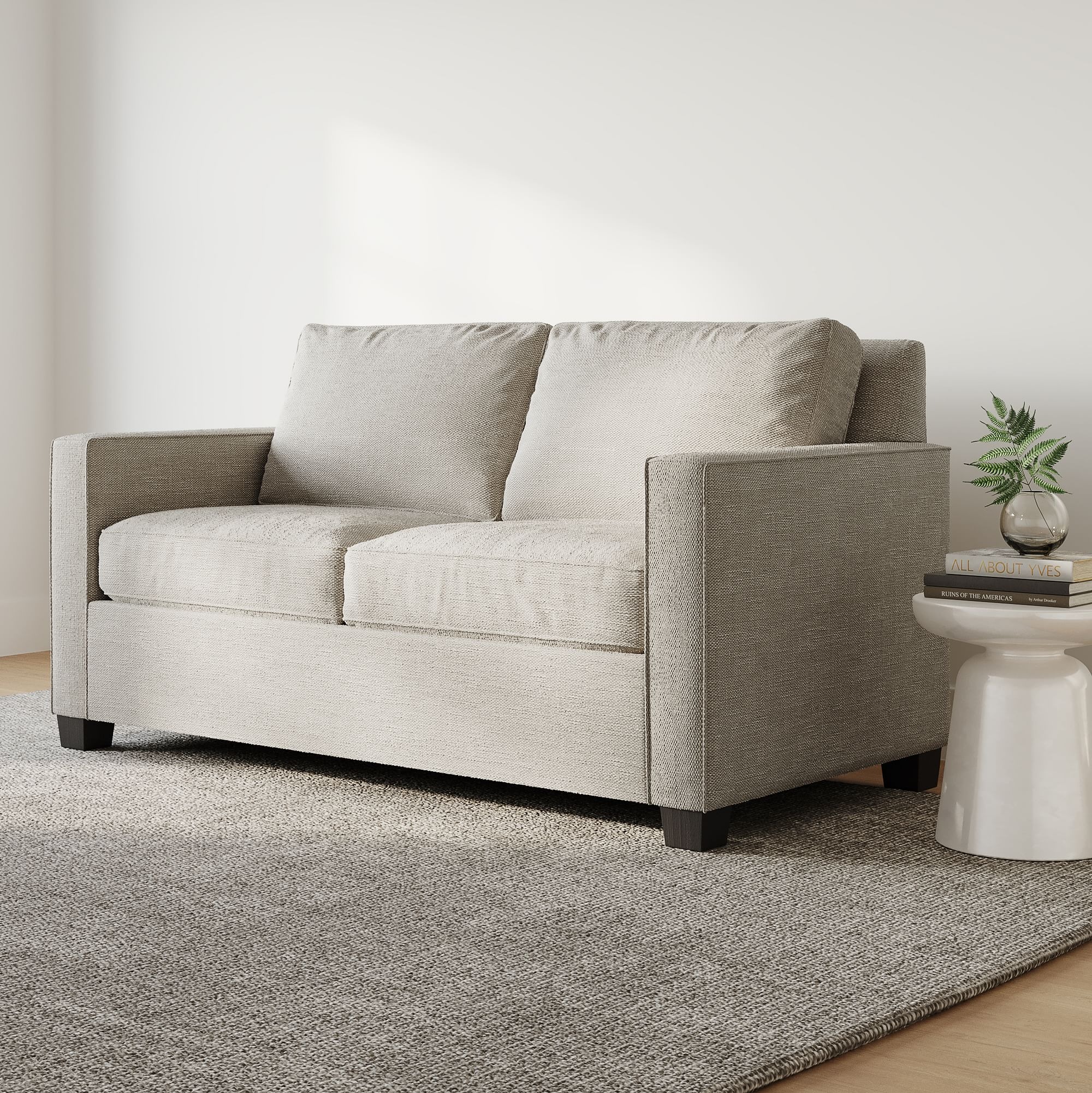
The Marin Sofa is West Elm doing the thing West Elm does best: taking a relaxed, lived-in look and packaging it with enough visual precision that it reads as intentional instead of accidental. Deep seat, loose back cushions, wide track arms, low-slung profile. Together they make a sofa that looks like it belongs in a light-filled California living room with white oak floors and a view. If you're chasing that mood, the Marin is a fast way there. If you need a sofa to hold up under daily, serious use with no ongoing maintenance, it asks more of you than it lets on up front.
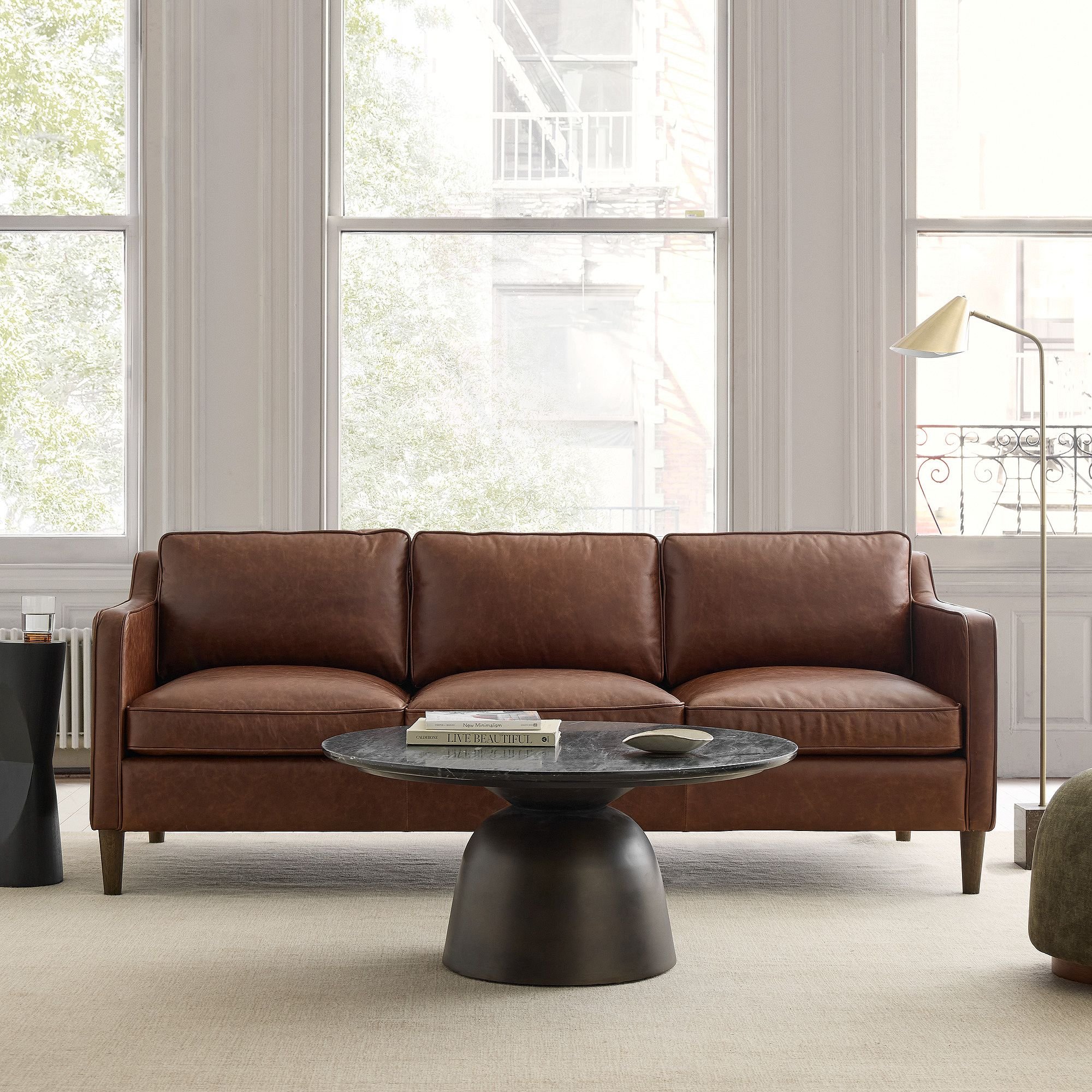
At $1,799 to $3,200 depending on size and fabric, the Marin sits in the upper middle tier of the West Elm lineup. A loveseat in a standard woven fabric starts below $2,000, but a three-seat in performance velvet or a premium textured fabric pushes well past $2,500. That puts it head to head with sofas from Article, Joybird and Albany Park that offer more defensible construction for the same money or less.
Design language and who this sofa is for
The aesthetic case is strong. The loose back cushions give it a deliberately relaxed silhouette, different from the structured, attached-back look of the West Elm Haven or Pottery Barn's Comfort Collection. The deep seat, around 25 inches of usable depth, handles cross-legged sitting and full horizontal lounging with equal ease. The arms are track-style with enough padding to work as a head rest if you're watching television on your side. In darker, muted tones like slate, aged velvet or warm sand, the Marin photographs like a page out of a design magazine.
It suits someone in their late twenties to mid-forties furnishing a casual living space, hosting often, wanting the room to feel relaxed and welcoming rather than formal. It's very good where the sofa is a gathering point for conversation and entertaining. It's much weaker as a primary workstation or an extended-sitting surface. The deep seat and loose cushions are an invitation to lounge. If you spend hours a day on your sofa with a laptop, the Marin will need supplemental lumbar support and may still leave your lower back sore.
Shorter buyers should sit on one first. The depth that feels luxurious at five-foot-eight and up leaves the lower back unsupported at five-foot-four and under unless you add a lumbar pillow. That's a known trade-off with deep-seat designs rather than something specific to the Marin, but it's better felt in person than accepted from a list of dimensions.
The construction reality
The Marin uses a kiln-dried hardwood frame with corner-blocked joints, the correct spec for the price range. Suspension is sinuous springs, sometimes called no-sag springs, the standard for mid-market upholstered furniture. They're adequate for normal residential use, and they aren't pocket coils, so don't compare the two. Sinuous springs spread weight less evenly than individually wrapped coils and pick up localized fatigue sooner over years of heavy use. In a house where the same one or two people sit in the same spots every night, that shows up as a subtle sag by year three or four.
The loose back cushions need their own paragraph. They define the design and they're the highest-maintenance part of the sofa. The fill is a down-and-fiber blend, and at the Marin's price the ratio leans fiber rather than down. Fiber-forward fills compress faster and don't recover their loft as fully when you fluff them. Owners who don't stay on top of fluffing and rotating report flattened, asymmetric backs within 12 to 18 months of daily use. It isn't a defect in the strict sense. It's a predictable outcome of how the cushion is built, and avoiding it takes steady owner effort.
The seat cushions do better. They sit on the sinuous springs and hold their shape longer than the backs. West Elm doesn't publish the foam core density, but the seated feel suggests a medium that's comfortable out of the box. Compression in the seats is slower and less visually obvious than in the backs, because the springs underneath give them structural support the back cushions never get.
Comparison to direct competitors
The Albany Park Kova Sofa is the most serious threat to the Marin at this price. Albany Park sells direct with no retail markup, specs a denser foam, and ships a more generous warranty for less money. The Kova gets to a similar relaxed, deep-seat look without the loose-cushion upkeep. If value efficiency is your main concern, the Kova is the more defensible purchase. The Marin wins on in-store availability and the West Elm brand experience, and loses on construction spec.
Against the Article Timber sofa in the deep-seat category, the Marin has a more distinctive silhouette and comparable construction underneath. Article's direct-to-consumer pricing means the Timber often gets you similar aesthetics and the same sinuous spring construction for meaningfully less, with a longer warranty behind it. The Marin's edge is the West Elm retail network and the chance to see and touch the sofa before buying.
Pottery Barn's performance-fabric sofas in this aesthetic range publish no manufacturer warranty where West Elm gives one year, and Pottery Barn's fill specifications have a stronger track record for cushion longevity. The price difference is modest. If the relaxed coastal look is the goal and you aren't committed to West Elm specifically, put Pottery Barn's equivalents on the list alongside it.
Warranty and the long-term ownership conversation
West Elm's one-year limited warranty is the most significant structural weakness of buying the Marin at this price. Owners consistently report cushion compression at 12 to 18 months for the backs and 24 to 36 months for the seats in high-use areas, which means the sofa starts showing its most visible aging right as coverage closes. West Elm doesn't publish on-site customer reviews for the Marin either, so verifying long-term performance through an official channel is harder than it should be. What exists across Reddit, apartment design blogs and independent review aggregators is consistent on both counts: praise for the way it looks, concern about the way the cushions hold up.
Buy it and plan on cushion fluffing as part of regular ownership, budget for possible down insert top-offs within three to four years if loft loss gets visually prominent, and choose performance fabrics over natural fibers if the sofa will take heavy daily use. None of that is a dealbreaker. All of it changes the total cost of ownership against the sticker price.
Solid wood frame, plastic legs
Frame
Kiln-dried hardwood throughout, the appropriate baseline for upholstered furniture at this price. Kiln-drying pulls excess moisture out of the wood before construction, which cuts the risk of warping, shrinkage and joint failure as the piece adjusts to whatever humidity your house runs at. The joints are corner-blocked: extra wood blocks glued and fastened into the interior corners of the frame to resist the racking stress repeated use creates over time. West Elm doesn't disclose which hardwood species goes into the Marin's frame, a common omission at this price tier. The approach is right; the species is unknowable from what's published.
Spring suspension
Sinuous spring suspension across the seat deck. These are S-shaped wire springs that run front to back across the seat frame, clipped into place at each end. They're the most common suspension system in mid-market upholstered furniture because they're cost-effective to manufacture and support normal residential use fine. Against individually wrapped pocket coils they lose precision in weight distribution and pick up localized fatigue sooner. Serviceable in the Marin, but not a construction differentiator at this price point.
Cushion fill and the loose back cushion system
Seat and back cushions are both foam and down filled, West Elm's real-down spec rather than the down alternative used on the Haven. The foam does the structural work; the down softens the feel and adds loft. Real down holds its loft longer than synthetic fiber, but it still needs regular fluffing and redistribution to keep its shape, since down migrates and packs down where you sit and lean. That upkeep is the design decision behind the cushion maintenance demands long-term Marin owners keep describing.
Fabric options
The Marin comes in West Elm's full fabric range, performance weaves and velvets included. On a deep-seat, loose-cushion design, performance-grade fabric is the more practical choice than natural fibers. Loose back cushion covers take more creasing and handling stress than attached-back covers, and performance weaves absorb that much better over time. Natural linen and cotton weaves show wear and creasing faster under the fluffing and repositioning that owning a Marin requires. Cushion covers are generally zipper-removable for dry cleaning.
Warranty
One-year limited warranty covering manufacturing defects in the frame, springs and fabric. Cushion compression and fabric pilling count as normal wear and are excluded. At the Marin's price a one-year term is below category average, especially next to Joybird's limited lifetime frame coverage on comparable upholstered pieces. That gap is one of the biggest things to weigh when you're comparing the Marin against competing options at similar prices.
Our Ratings
Overall score
Kiln-dried solid wood frame. The Marin uses solid wood, not the engineered hardwood found in the Harmony. Support legs are plastic shadowline in a Black finish, not wood or metal. High-gauge sinuous springs. Seat and back cushions are foam and real down filled, not down alternative, unlike the Haven. Seat firmness is rated Medium, 3 out of 5. Loose, reversible cushions. Assembled in the USA.
The Marin pulls off coastal-casual with a depth and softness that photographs beautifully. Deep seat, wide arms, a relaxed profile that suits livable, unprecious rooms. One of the more visually distinct pieces in the West Elm lineup.
Priced in the same tier as the Harmony on a similar construction spec. The Marin's down-fill cushions add cost without adding durability. If you want low-maintenance lounging, the Marin's value falls short.
What People Are Saying
Marin sentiment is remarkably consistent: it looks inviting, it feels soft, and it usually satisfies buyers who knew that's what they were paying for. The common pushback isn't that it's uncomfortable, it's that it's exactly as maintenance-prone as soft loose-cushion sofas always are.
Reddit and Houzz commentary are weighted 3× against blog and editorial sources in our sentiment score. Brand PR has a well-documented influence on editorial coverage — direct owner reports from message boards tend to be more candid.
What Reddit Is Saying
“Just my 2 cents - Go with the West Elm Marin, the other 2 sofas I just don't personally like. I was going to order the West Elm Marin but ended up going the West Elm Harmony sofa and I LOVE it! It's really comfortable, no breaking in period and it's very well made. And it shipped within the quoted time frame.”View thread →
“I've had the Marin. It looks nice, but that jute like material didn't make it too comfortable on the skin. Luckily I was able to sell it closer to its retail price because I kept it in great condition and I live in a popular city where there is demand.”View thread →
“I have had the Marin sofa for two years and it's shit quality. We paid 2k with the white glove delivery and not only did we have to deliver twice (they damaged it during delivery first time), but now the cushions are so deflated and the feathers keep getting through the fabric and poking us when we sit on it. Terrible quality - stay away from it.”View thread →
“I have the west elm Marin sofa. I absolutely hate it lol. It is single-handedly the most uncomfortable for sitting on. I hate the low back. It offers 0 back support. The cushions are simultaneously saggy and not soft? The only way I can enjoy this couch is by lounging/laying down on it but for sitting with guests, I often times end up sitting on the floor. :/”View thread →
“Really like the looks of the Westelm just don't trust their quality and business practices. If you end up liking that one, just do some research if it will actually arrive in less than 6 months and quality.”View thread →
“Room & Board is good quality, West Elm you will be lucky to get five years out of it.”View thread →
What Others Are Saying
“The back cushions are extremely soft and comfortable but require frequent fluffing. The seat cushion has a foam core which gives it firmness but the down wrap adds softness.”Source →
“The cushions are filled with foam and down, which means you'll definitely need to do some plumping here and there.”Source →
Frequently asked questions
Is the West Elm Marin Sofa worth it?
A coastal-casual sofa that photographs beautifully and asks for maintenance in return. The kiln-dried solid wood frame is a step up from the Harmony's engineered hardwood, though the support legs are plastic. The down-fill cushions add cost without adding durability, so look elsewhere if you want low-maintenance lounging.
How is the West Elm Marin Sofa built?
Kiln-dried solid wood frame. The Marin uses solid wood, not the engineered hardwood found in the Harmony. Support legs are plastic shadowline in a Black finish, not wood or metal.
What styles does the West Elm Marin Sofa work with?
The Marin pulls off coastal-casual with a depth and softness that photographs beautifully. Deep seat, wide arms, a relaxed profile that suits livable, unprecious rooms. One of the more visually distinct pieces in the West Elm lineup.
What do real owners say about the West Elm Marin Sofa?
Marin sentiment is remarkably consistent: it looks inviting, it feels soft, and it usually satisfies buyers who knew that's what they were paying for. The common pushback isn't that it's uncomfortable, it's that it's exactly as maintenance-prone as soft loose-cushion sofas always are.
Options Worth Checking Out
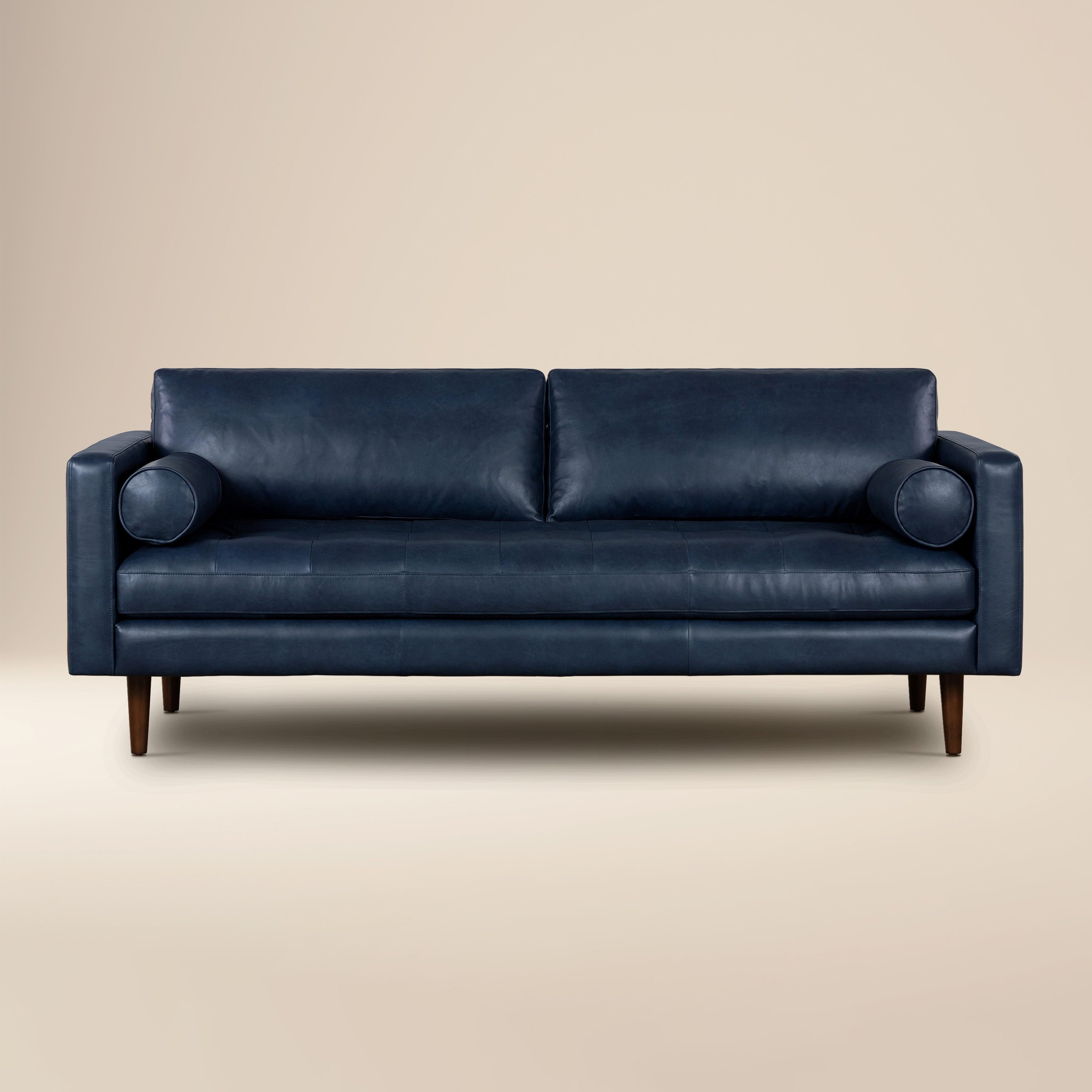
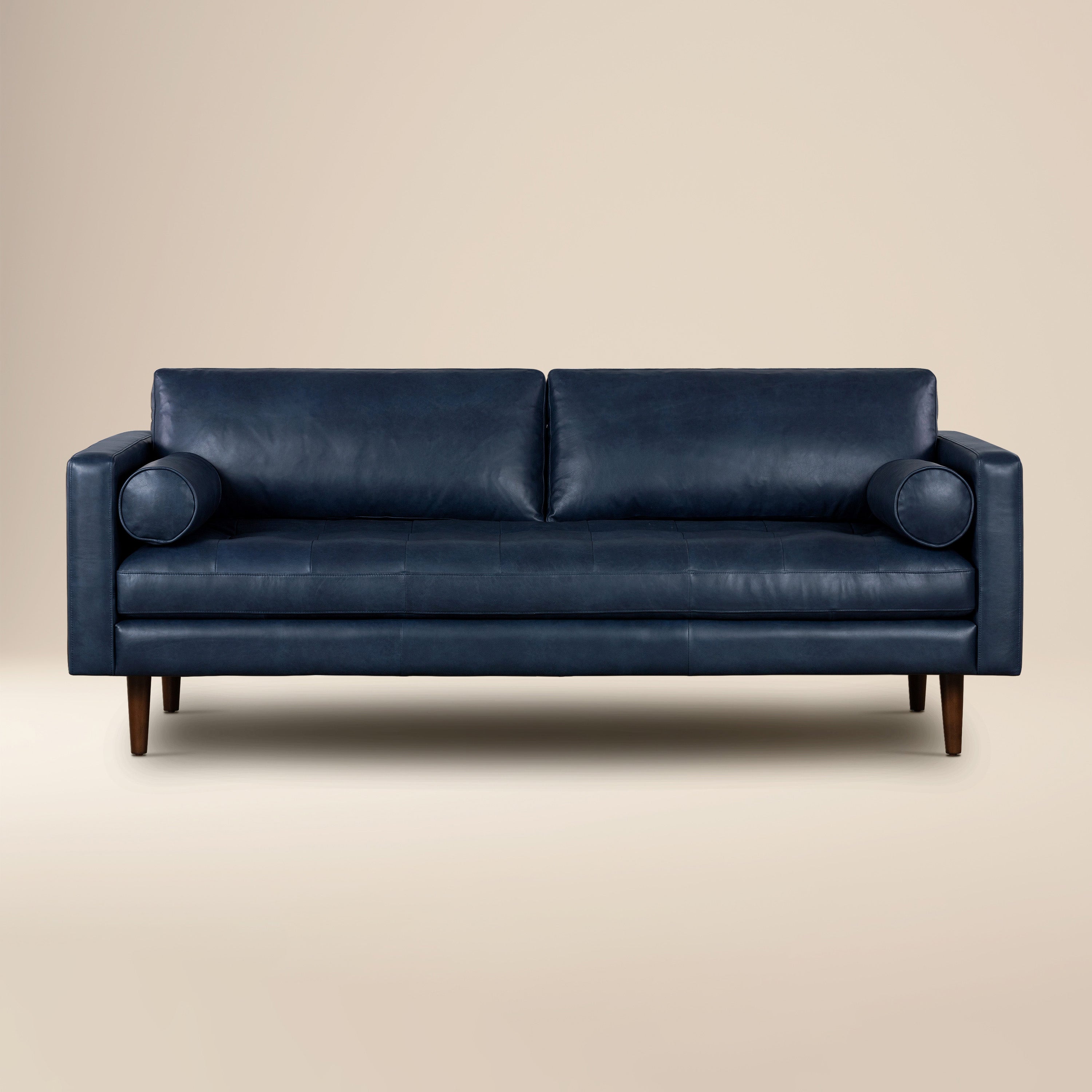
POLY & BARK Napa 88.5" Full-Grain Italian Leather Sofa
Closest match to the Marin in scale and quality for buyers who want leather over fabric, full-grain Italian aniline that improves with wear, the opposite of fabric's aging curve.
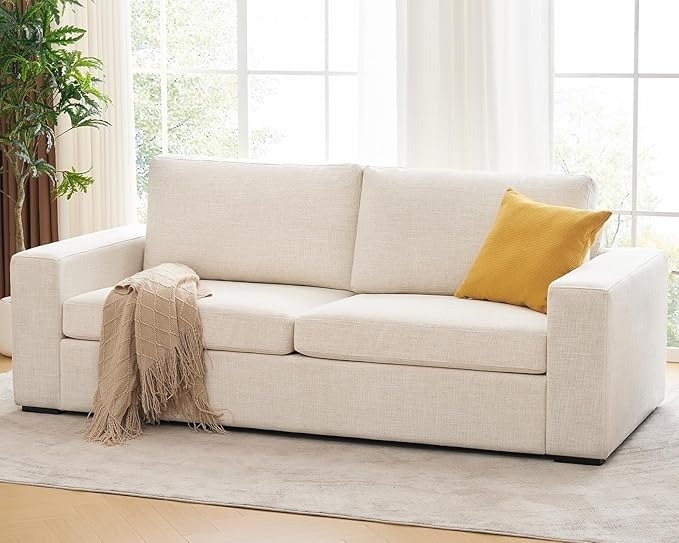
ELUCHANG 85" Natural Linen Sofa
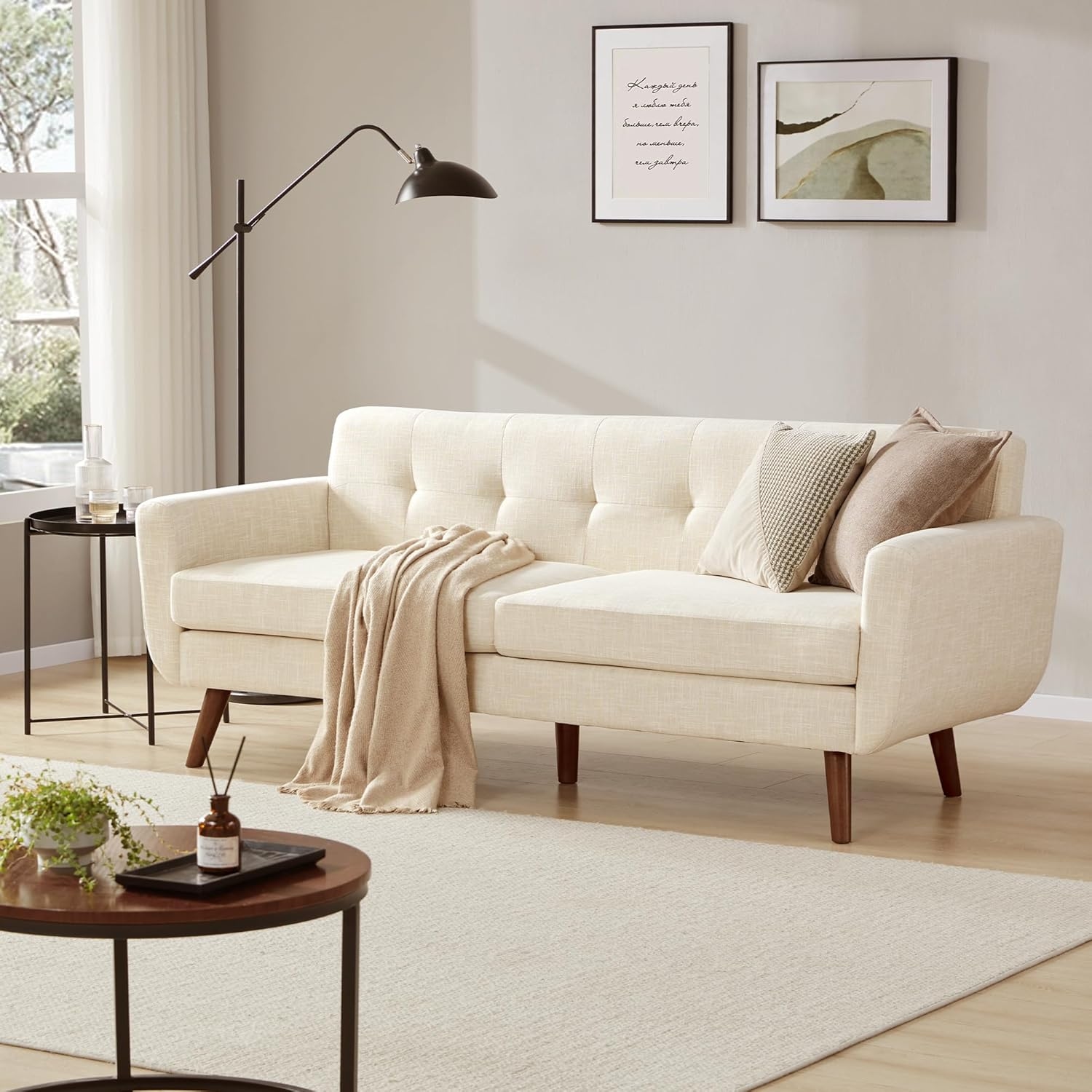
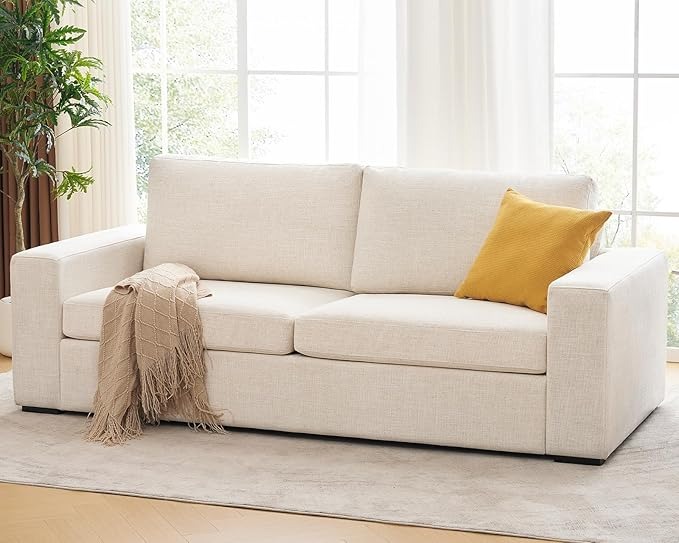
Tbfit 77.2" Linen Sofa Couch, Mid Century Modern Loveseat Couch, Neutral Beige
You Might Also Need
Accessories worth grabbing alongside your purchase
More West Elm Reviews
See all →
West Elm Auburn Sofa Review: Compact Build + Our Honest Verdict
Best Throw Pillows for a West Elm Harmony Sofa: Sizes, Texture, and Layering
West Elm Harmony Cushions Sagging? The $40 DIY Fix (And When to Give Up)
West Elm Peggy Sofa Reviews + Our Honest Verdict
How Does It Compare?
Side-by-side breakdowns featuring this product