Best Outdoor Rugs for a Deck (Waterproof, UV-Resistant, 2026)
By Daniel Reyes · Updated July 2026
Independent editorial guide. We never accept payment for coverage, though we may earn a commission if you purchase through our links.
Quick Take
For a deck, the right outdoor rug is polypropylene, reversible, and loose enough in the weave that water drains through instead of pooling on the boards underneath. Budget polypropylene rugs run $25 to 30 for 5x7 sizes and last 1 to 2 seasons. Mid-tier 8x10s sit around $60 to 80. Safavieh's branded outdoor lines cross into $125 to 200 territory.
Waterproof is a marketing word here. What you want is a rug that doesn't absorb water, hoses clean, and doesn't trap moisture against the deck boards. UV resistance varies more by brand than by spec sheet, so plan on rotating or replacing a budget rug after a summer of direct sun. Mildew shows up fast if a thicker rug stays wet underneath.
Below: the polypropylene picks across budget, mid-tier, and premium, sized for the most common deck footprints. See picks ↓
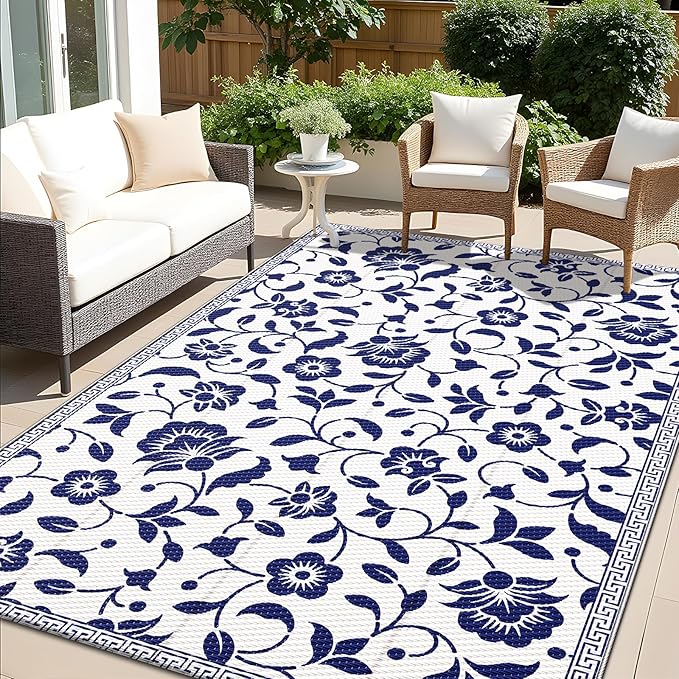
Most outdoor rug listings promise the same three things: waterproof, UV-resistant, mildew-proof. Only one of those matters at the moment you buy. The other two follow from how the rug is built and how you take care of it. This guide is organized around the ways rugs fail on a deck, water pooling between boards, sun bleach, an underside that never dries, and the polypropylene rugs that handle all three well at four price tiers.
Polypropylene is the only fiber that belongs on a deck
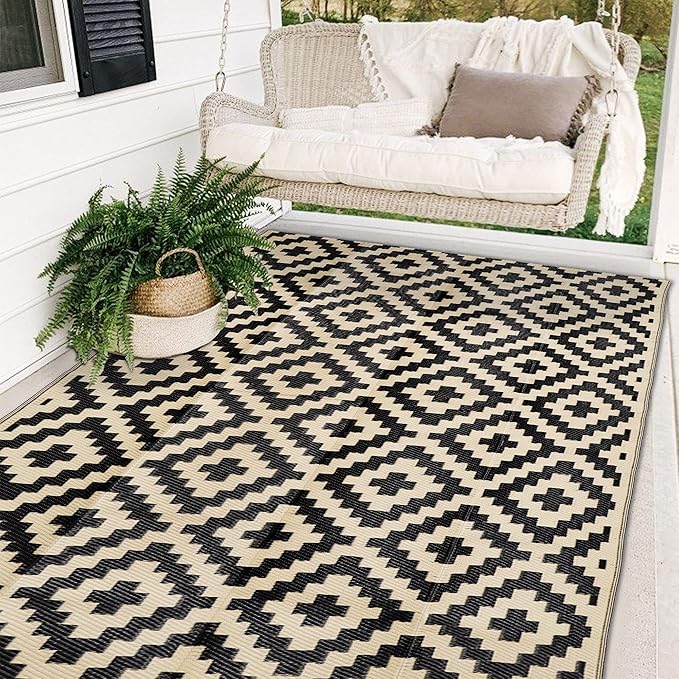
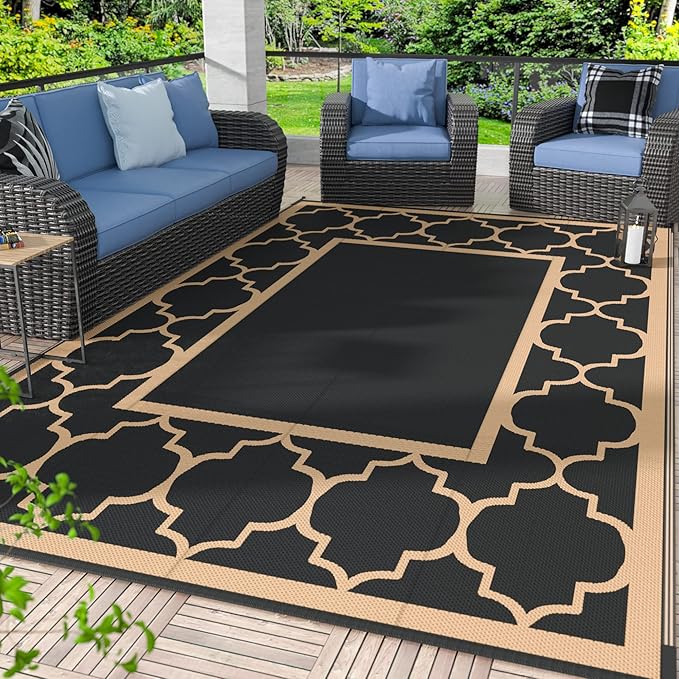
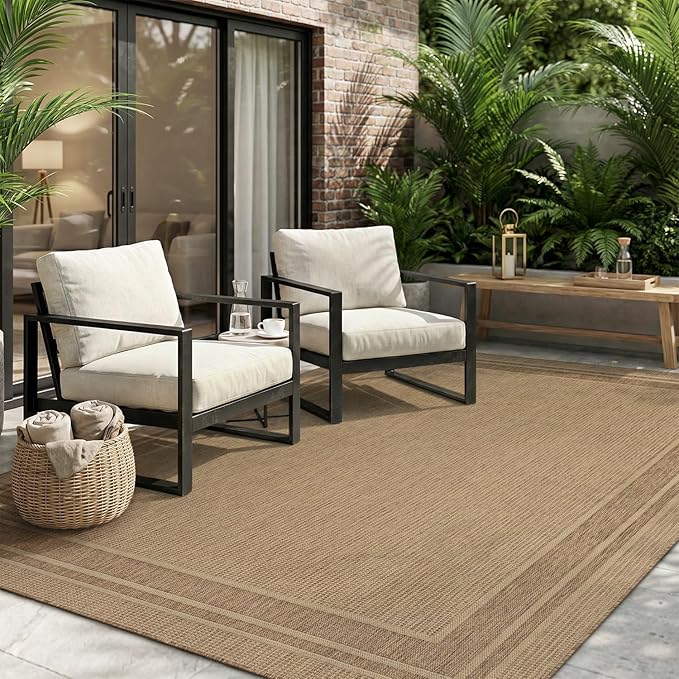
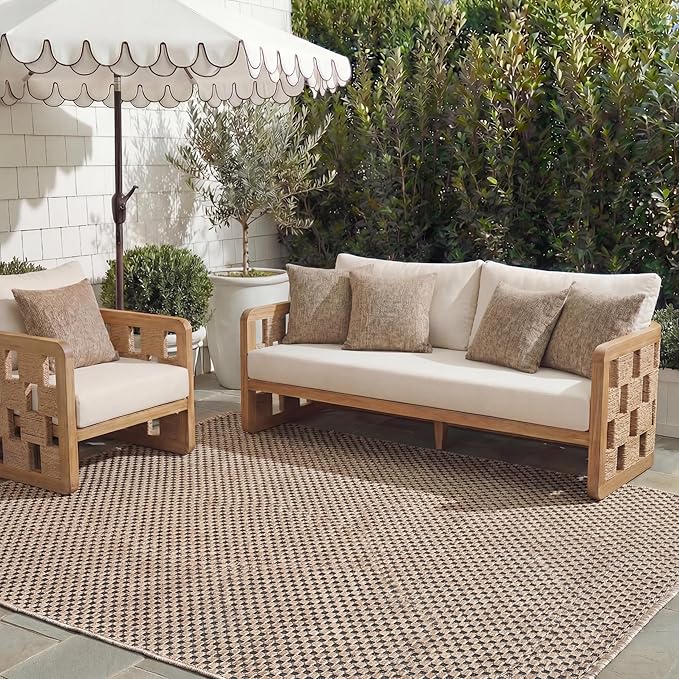
Polypropylene doesn't absorb water. That's the whole pitch. Water runs through the weave and out the back, or evaporates off the surface, instead of soaking into the fibers the way wool, cotton, or jute would. A deck is a worst-case substrate for any rug, because the gaps between boards trap whatever doesn't drain, and a non-polypropylene rug holds that moisture against the wood and speeds up rot. Every pick in this guide is polypropylene. The Sand Mine and OLANLY are the plastic straw weave style, flat and almost mat-like. GENIMO is the same construction in larger sizes. MontVoo uses a denser textured weave that's easier on chair feet. Safavieh's Courtyard line is power-loomed polypropylene with patterned designs, closer to an indoor rug in looks but rated for outdoor fade resistance.
What the waterproof label covers
The word "waterproof" on an outdoor rug is doing two jobs. First, the fibers don't absorb water, which is true of all polypropylene. Second, the construction is open enough that water passes through to the surface below. That second part is where the reversible plastic-straw weave wins. It's a flat woven mat with no backing, so rain falls through and the underside dries as fast as the top.
Denser textured rugs (MontVoo, Safavieh Courtyard) trade some of that drainage for a more rug-like feel underfoot. They still shed water, but the underside takes longer to dry, and that matters more on a deck than on a concrete patio. Shaded, slow-drying deck? Take the reversible straw style.
UV resistance varies by brand, not by spec sheet
Every outdoor rug claims UV resistance. In practice the cheap polypropylene rugs fade visibly after one full sun season. Sand Mine and OLANLY are honest budget picks: they'll fade, and at $25 to 30 that's the trade. Safavieh's outdoor lines are rated for longer fade resistance, and that's most of what the price premium buys. Rotating the rug 180 degrees mid-season evens the fade out. So does moving it into shade during peak afternoon hours, if the deck gives you that option. Neither trick adds years to a budget rug's life, but both can stretch a season into two.
Sizing for typical deck footprints
5x7 fits a bistro setup or a pair of chairs around a small side table. 5x8, the Sand Mine size, is the same footprint with a little extra for chair pull-out. 8x10 anchors a full dining set with chairs that stay on the rug when they slide back, or a small sectional with the front feet of the seating on the rug. Going bigger than 8x10 on a deck is rare; most decks under 200 square feet do fine with an 8x10. The rule that matters: every furniture leg on the rug, or every furniture leg off it. Mix the two and the edge catches and lifts the rug when chairs slide back.
Reversibility, mildew, and the underside problem
Reversible rugs solve two problems at once. The obvious one is flipping it when one side fades or stains. The less obvious one is that flipping airs out the underside, which is where mildew starts on a deck. Even a polypropylene rug can trap enough moisture against the boards for mildew to grow underneath it or on the deck wood itself.
Every pick here is reversible. The plastic-straw rugs (Sand Mine, OLANLY, GENIMO) reverse to a different color or pattern, so a flip doubles as an aesthetic refresh. The MontVoo textured weave reverses to the same pattern. The Safavieh Courtyard isn't reversible in pattern, but the underside is the same polypropylene and benefits from periodic airing.
Drainage and the gaps between deck boards
Deck boards have gaps, usually 1/8 to 1/4 inch. Water drains through them, which is why decks dry faster than patios. A rug that drains as fast as the deck underneath keeps that advantage. A rug that doesn't (rubber-backed indoor-outdoor rugs, latex-backed kitchen-style mats) cancels the deck's drainage and traps the moisture. Every pick here is backing-free polypropylene. None of them have the rubber or latex backing that ruins decks. Treat that as non-negotiable. A rubber-backed rug on a wood deck is one summer away from leaving a dark stain in its own shape.
Hose-off cleaning, mid-season rotation, off-season storage
Cleaning is the easy part. Hose off the surface, flip the rug, hose off the other side, then leave it draped over a railing to dry. For stains, a soft brush and a drop of dish soap, rinsed thoroughly. No pressure washer, it shreds the weave. No bleach, it speeds up fade.
Mid-season, rotate 180 degrees once and flip the rug at least once. Off-season, roll it up and store it dry, indoors. Leaving a polypropylene rug outside through winter won't strictly destroy it, but it's what turns a 2-season rug into a 1-season rug.
When the budget pick is the right pick
If the deck rug is going on a rental, a temporary setup, or a high-traffic spot that takes a lot of food and drink spills, the $25 to 30 Sand Mine and OLANLY rugs are the editorially honest answer. They fade. They aren't luxurious. They cost less than a single dinner out. Replace one annually and the lifetime cost is still under what a single premium rug costs upfront.
The Safavieh Courtyard premium pick suits an established deck that's part of the house's main outdoor entertaining space, where the rug will live for 3 to 5 years and look intentional in photos. The mid-tier GENIMO and MontVoo cover larger decks where the budget rugs come in the wrong size.
Recommended
Products related to this guide.
Frequently asked questions
What are the best outdoor rugs for a deck?
OLANLY Outdoor Rug 5x7 Waterproof Reversible Patio Rug. The best balance for a typical deck.
What are the best budget outdoor rugs for a deck?
Sand Mine Reversible Mats Plastic Straw Rug 5x8. The cheap-and-cheerful entry.
What are the best premium outdoor rugs for a deck?
Safavieh Courtyard Collection Indoor Outdoor Rug. The design-forward option.