The Best Non-Slip Bath Mats with Fast Drying on Amazon (2026)
By Erin Mitchell · Updated June 2026
Independent editorial guide. We never accept payment for coverage, though we may earn a commission if you purchase through our links.
Quick Take
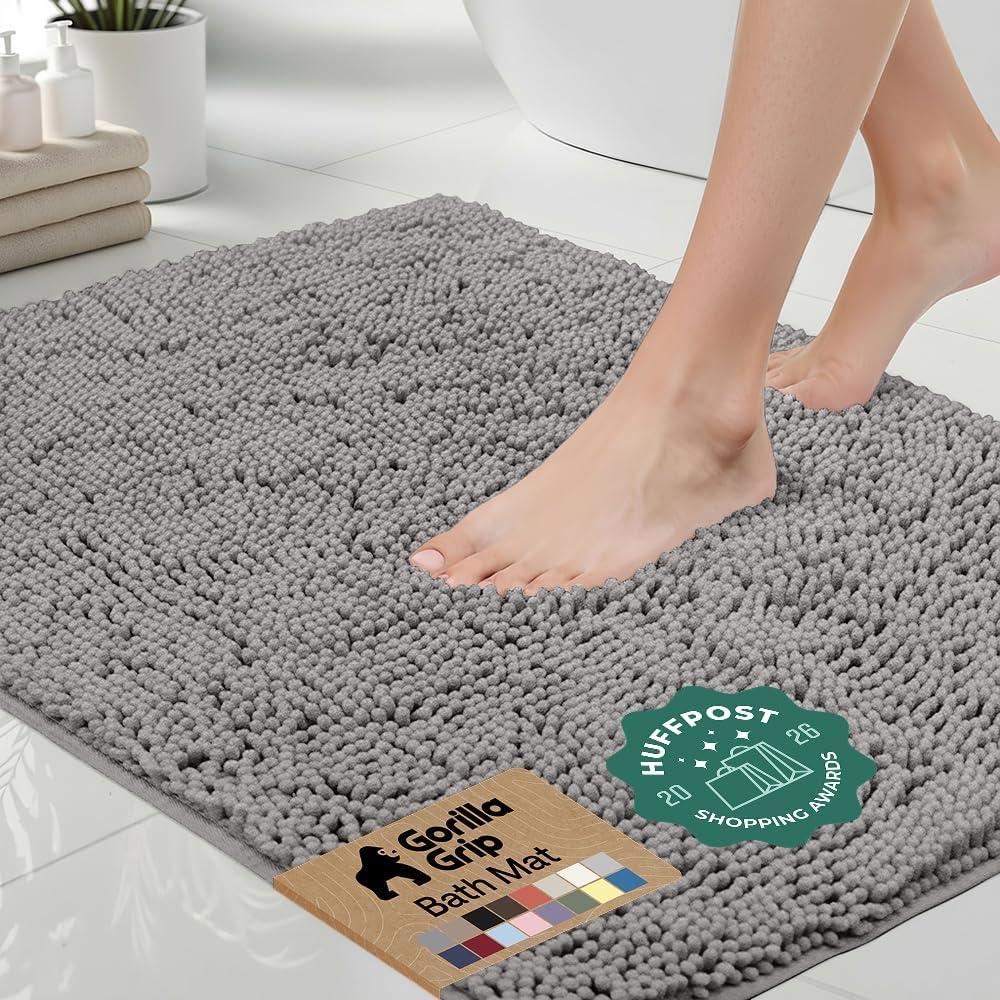
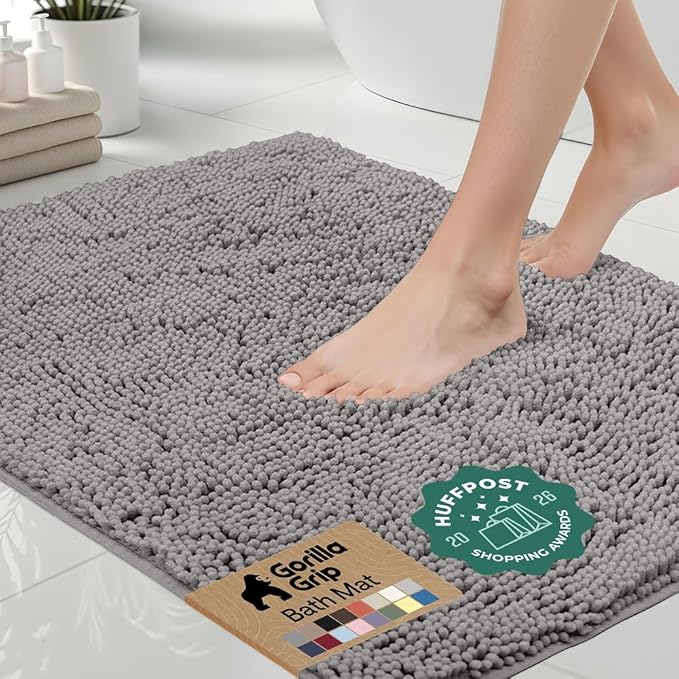
For the post-shower puddle problem the answer is a rubber-backed chenille mat. The Gorilla Grip chenille rug under $12 is the default: dense pile pulls water off the soles of your feet on contact, the rubber bottom doesn't slide on wet tile, and it survives a hot wash and tumble dry without the backing crumbling. That crumbling is the failure mode that kills most cheap bath mats inside a year.
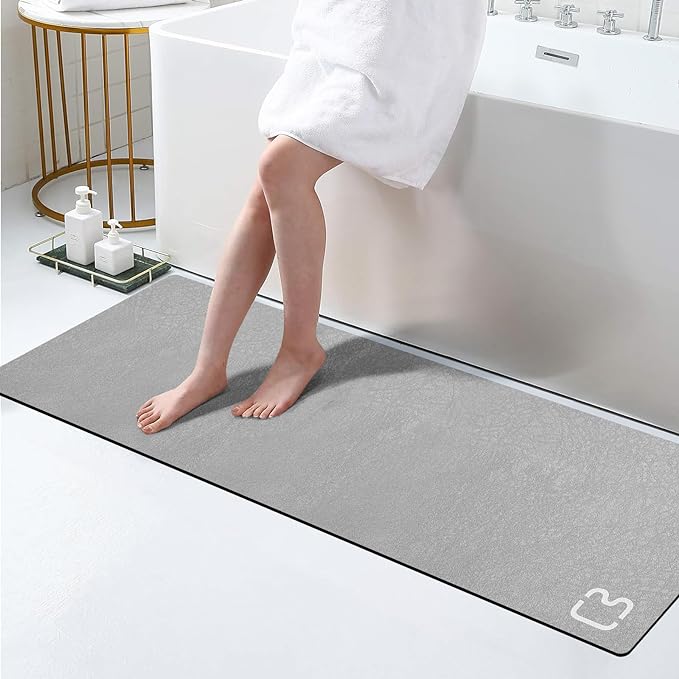
If you'd rather not have a fabric mat sitting wet on the floor at all, a diatomaceous earth stone mat is the other honest answer. It's hard underfoot and looks industrial, but water vanishes from the surface in seconds and there's no mold or mildew smell to manage.
Skip memory foam. It feels great dry, then stays wet for hours, and the rubber backing on the cheap ones disintegrates in the wash. Below: the rubber-backed chenille, stone, and budget microfiber picks that solve the wet-floor and slip problem without the smell. See picks ↓
Bath mats are a category where the cheap option and the right option are often the same product, and the listing gives you no way to tell which is which. Every mat on Amazon claims to be non-slip, quick-dry, machine washable, and ultra-absorbent. Most of them are exactly one of those things. This guide is about the two failures that send people out for a new mat: the mat slides on wet tile, or the mat stays wet long enough to start smelling. The picks below are sorted by which problem you're trying to solve, not by price.
What makes a mat non-slip
A rubber or TPR backing that covers most of the underside, not a printed grid of dots. The dot pattern looks like grip in product photography, but on wet tile the dots float on a film of water and the mat planes around like a bar of soap. A solid rubber sheet under the fabric is the only backing style that passes the wet-floor test with any consistency.
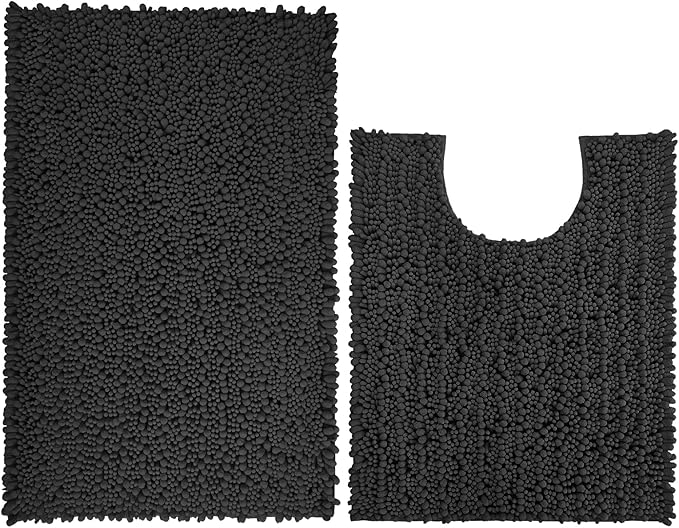
Weight is the second factor. A 17x24 mat at 200g will skate no matter what the backing is. The Gorilla Grip chenille and the Yimobra both come in around 600-900g for a 21x34, heavy enough that the mat stays put while you step onto it dripping.
The two kinds of fast-dry
Two separate claims hide inside fast-dry marketing. One is surface dry: how quickly the visible face of the mat stops feeling wet. The other is structurally dry: how long before the inside of the mat stops holding water that will start to smell. Chenille and microfiber can be surface-dry in 30-60 minutes and still be structurally wet 6-12 hours later.
Diatomaceous earth stone mats invert that. Water passes through the porous stone and into the air on the underside, so no internal layer holds moisture. It's the one category that's genuinely dry top to bottom within minutes of the last wet foot.
Memory foam is the wrong answer here
Memory foam feels luxurious for about a week. Then the foam compresses, the rubber backing on the cheap mats starts peeling after two or three hot washes, and the foam itself holds water like a sponge. As a kitchen mat or a vanity mat, somewhere it never gets soaked, memory foam is fine. Directly outside a shower it's the slowest-drying option in the category and the likeliest to develop a mildew smell.
Chenille or microfiber
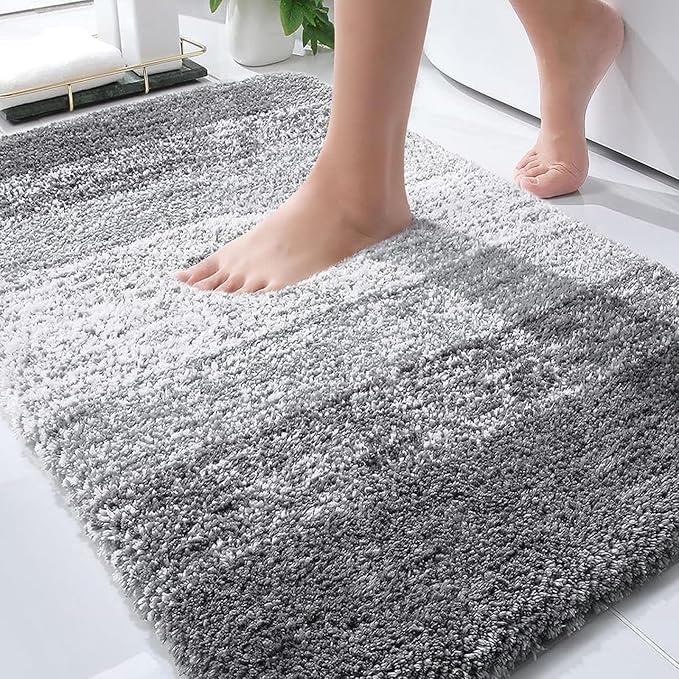
Chenille is twisted yarn in a longer pile. Softer, holds more water per square inch, and the texture hides dirt between washes. Microfiber is shorter and tighter, so it dries faster on the surface, but it flattens faster too and starts looking grungy sooner. The Gorilla Grip chenille and the Yimobra are both chenille. The OLANLY budget pick is microfiber. Chenille if the mat is going to look at you all day in a master bath; microfiber if it's a guest bath or a rental where appearance matters less than initial cost.
The case for and against stone mats
In favor: water disappears from the surface in seconds, the mat is structurally dry within minutes, there's no fabric to wash, and there's no mildew risk. Owners who switched from fabric mats consistently report that the smell problem goes away entirely.
Against: the mat is hard. Standing on a stone mat barefoot feels like standing on a tile floor, because that's essentially what it is. The look is clean and industrial and won't match every bathroom. And they're brittle. Drop one on a hard floor and it cracks.
Size and fit
Two sizes cover most bathrooms. A 17x24 mat sits directly in front of a standard tub or shower stall. A 20x32 or 21x34 mat covers the same spot plus a step or two further out, which is the right call if the floor is cold tile or if more than one person uses the bathroom. The runner-length stone mat at 16x48 is for spanning the full length of a vanity or a galley bathroom.
Washing without destroying the backing
What kills bath mats is washing them hot and tumble-drying them on high heat. The rubber or TPR backing on every fabric mat in this category cracks and flakes within a dozen high-heat washes. Cold wash, low-heat tumble dry, and the same mats last years instead of months. The stone mat sidesteps all of it because there's nothing to wash. A wipe with a damp cloth every few weeks is the whole routine.
Recommended
Products related to this guide.
What owners say
Real owner reports from the threads and editorial sources we drew on for this guide.
“We changed to one of those stone ones (sorry I wish I knew what it was called) and it has been awesome. Non slip and there’s no worry about mold/mildew or smells.”
— r/BuyItForLife / elloguvner
Frequently asked questions
What are the best non-slip bath mats with fast drying?
Gorilla Grip Chenille Bath Rug. Dense chenille pile soaks up a post-shower puddle in seconds, the rubber backing actually grips wet tile, and the whole mat goes in the washer.
What are the best budget non-slip bath mats with fast drying?
OLANLY Microfiber Bath Rug. Under ten dollars and still has the non-slip rubber backing plus a quick-dry microfiber face.
What are the best premium non-slip bath mats with fast drying?
Yimobra Original Luxury Chenille Bath Mat. Larger footprint and a denser chenille loop than the Gorilla Grip, with the same rubber-backed grip pattern.