Dyson V8 vs V15 Detect — Which Cordless Vacuum Is Worth It?
By Sam Hollis · Updated July 2026
Independent editorial guide. We never accept payment for coverage, though we may earn a commission if you purchase through our links.
Quick Take
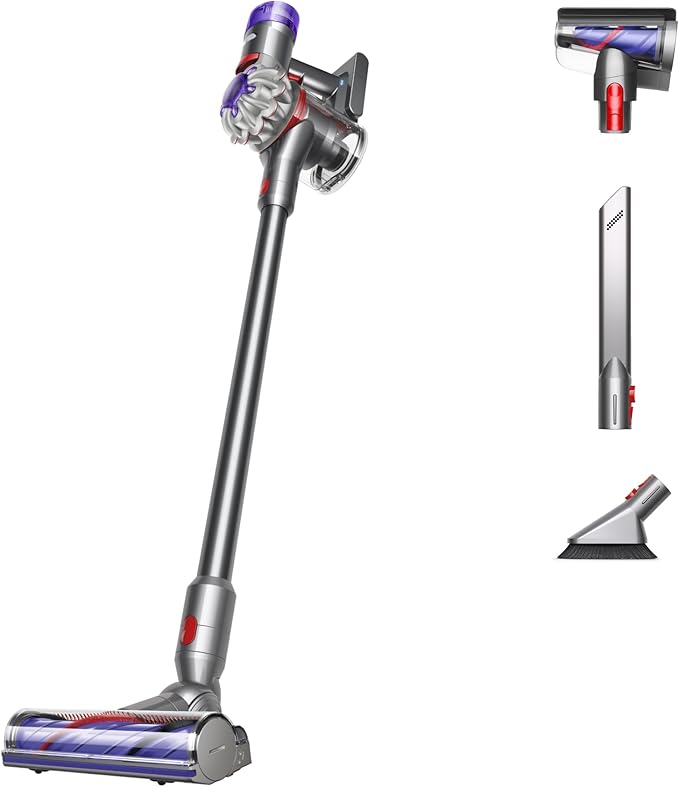
For most apartments and small to mid-size houses, the Dyson V8 Origin is enough vacuum and the V15 Detect is overkill. The V8 has the suction to pull pet hair out of low-pile rugs, real runtime in the 35 to 40 minute range on standard power, and it costs roughly half what the V15 does. The V15 Detect earns its price in two specific cases: homes over about 1,200 square feet where the longer runtime matters, and households with a long-haired shedding pet where the anti-tangle conical brush bar saves real cleanup time.
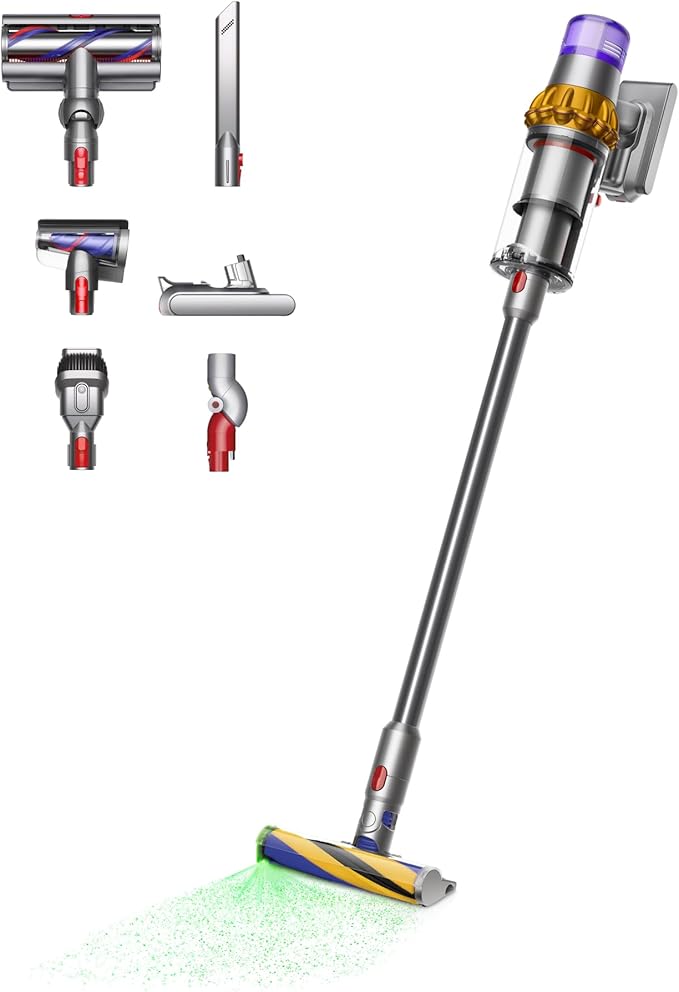
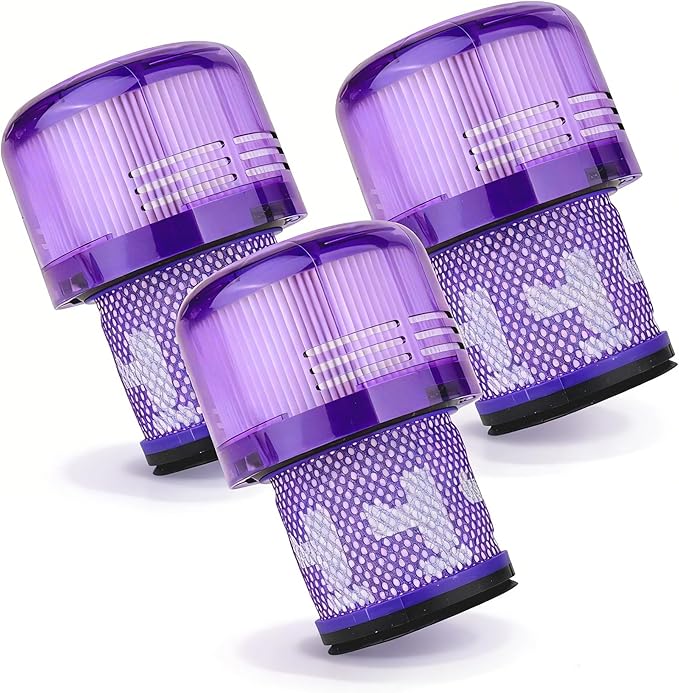
The laser dust illumination on the V15 is genuinely useful on hard floors and genuinely a gimmick on carpet. The LCD screen counting particles is a gimmick everywhere. What you are paying up for is the brush bar and the bigger battery, not the lights and the screen. If the choice is V8 today or V15 next paycheck, the V8 today is almost always the right call: it is the more honest tool, and the money saved buys a wall mount, an attachment kit, and replacement filters with room to spare. See picks ↓
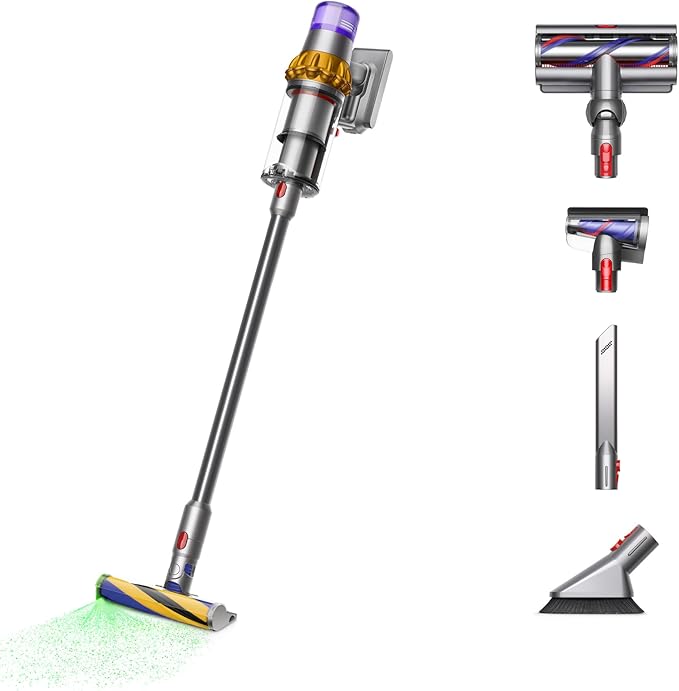
The Dyson V8 and the V15 Detect are the two cordless sticks most buyers cross-shop right now. Both are real Dysons, both have the build quality and parts availability that make the brand worth its premium, and both will outlast the sub-$200 lookalikes by years. The question is whether the V15 is $300 better than the V8, or the same vacuum with a laser glued to the front.
Short version: the V15 is meaningfully better, in specific cases only. Below is the head to head on suction, runtime, weight, and the brush bar that separates them, plus a clear verdict on who each one is for.
Suction
On paper the V15 Detect pulls about 230 air watts at the head and the V8 Origin pulls about 115, which reads like twice the vacuum. On apartment carpet and area rugs the gap is narrower than the spec suggests, because what limits most surfaces is brush head agitation, not raw airflow. Both vacuums lift surface debris and pet hair from low-pile rugs in a single pass.
The V15 pulls ahead on thick carpet, deep pile rugs, and pet hair worked into upholstery. The higher airflow does real work there. On hardwood, tile and low-pile rugs, the surfaces in most apartments, the V8 is enough vacuum and the extra suction of the V15 never shows up.
Runtime
Dyson rates the V8 at up to 40 minutes and the V15 Detect at up to 60 minutes, both measured on the standard power setting with a non-motorized tool. Put the motorized floor head on and run it the way people run it, and you get closer to 30 to 35 minutes from the V8 and 45 to 55 from the V15.
Under about 1,000 square feet, either vacuum finishes the job on one charge with margin to spare. Above 1,200 square feet, or in a home where the vacuum runs daily and gets stretched, the V15's extra runtime is the difference between one pass and stopping to recharge. The V15 also charges faster from empty, roughly 4.5 hours versus 5 for the V8, though nobody buys a vacuum for its charge time.
Weight
The V8 Origin weighs about 5.6 pounds and the V15 Detect about 6.8 pounds. Small gap on paper. Five minutes into doing overhead vents or a staircase, it is the biggest practical difference between the two vacuums. The V8 is easier to hold one-handed for long stretches and much less of a wrist workout on stairs.
For floor-only vacuuming the weight difference does not matter, both push easily on hard floors and rugs. For households that vacuum upholstery, ceilings, blinds or car interiors with the stick rather than just floors, the lighter V8 is the nicer tool to live with over the long term.
The brush bar
The V15 Detect ships with a conical anti-tangle brush head built to keep long hair from wrapping the roller. With a long-haired shedding pet in the house, or anyone with shoulder-length or longer human hair, that one feature saves more time than the laser, the LCD and the runtime combined. The V8's brush bar is conventional and it will wrap with long hair. Cutting it clean is a regular chore.
So if hair management is what is pushing you to upgrade, the V15 is the right call and the laser and the screen are bonuses. Short-hair household or no pet, the V8 brush bar is fine and the V15 premium buys capability you will never need.
Who should buy the V15 Detect
Buy the V15 if any of these apply: the home is over 1,200 square feet, there is a long-haired shedding pet, there are multiple long-haired humans in the household, or the vacuum runs daily as the primary cleaning tool. In those homes the longer runtime plus the anti-tangle brush bar are the difference between a vacuum that works for the home and one that fights it.
The laser dust illumination earns its keep on dark hardwood floors, where it reveals dust that is invisible in normal room light. That is a real benefit, not a gimmick. On carpet and lighter floors you notice it once and then ignore it. The LCD particle counter is decorative.
Who should stick with the V8 Origin
Buy the V8 if the home is under 1,200 square feet, there is no long-haired pet or only a short-hair pet, and the vacuum's job is twice-a-week maintenance rather than daily heavy-duty work. That description covers most apartments and a majority of small houses. The V8 does the boring job correctly and saves you $300 doing it.
It also wins on long-term consumable cost. The filter, battery and brush bar are all user-replaceable and run roughly 30 to 40 percent cheaper than the V15 equivalents. Over a 5 year ownership window that difference compounds.
Verdict
For the median buyer cross-shopping these two vacuums, take the V8 Origin. It is enough vacuum, it weighs less, it costs roughly half, and the consumables stay cheaper for the life of the tool. The V15 Detect is the pick for the specific household with a long-haired pet, a larger home, or a daily-driver use case, and in those homes the anti-tangle brush bar and the extra runtime are worth the premium.
Either way, both are real Dysons that will outlast the sub-$200 category by years. The wrong move is paying the V15 premium for a small apartment with no pets and then resenting the weight on stairs every weekend.
Recommended
Products related to this guide.