The Best Gardening Tool Sets for Beginners on Amazon (2026)
By Maya Chen · Updated July 2026
Independent editorial guide. We never accept payment for coverage, though we may earn a commission if you purchase through our links.
Quick Take
A beginner gardening tool set should cover four jobs: a hand trowel for planting, a transplanter for moving seedlings, a hand rake or cultivator for loosening soil, and pruners for trimming. Everything past that, the kneeling pads, soil testers, gloves, totes, is convenience rather than necessity. In the under-$35 tier the bottleneck is handle quality, not piece count. A 10-piece kit with brittle plastic handles is worse than a 4-piece kit with solid aluminum or stainless heads and ergonomic grips.
Honest caveat on these all-in-one kits: they're starter tools, not heirloom tools. The frame of reference is one to three seasons of light raised-bed and container work, not breaking ground in clay soil. Anyone planning to dig new beds, divide perennials, or prune woody shrubs should pair the kit with a dedicated bypass pruner and a long-handled shovel instead of leaning on the kit's smaller versions. Stainless heads resist rust better than coated steel once the coating chips, and rubberized non-slip handles outlast bare wood in outdoor storage.
Jump to the beginner-friendly sets and the one premium upgrade worth the extra money once you know you're sticking with it. See picks ↓
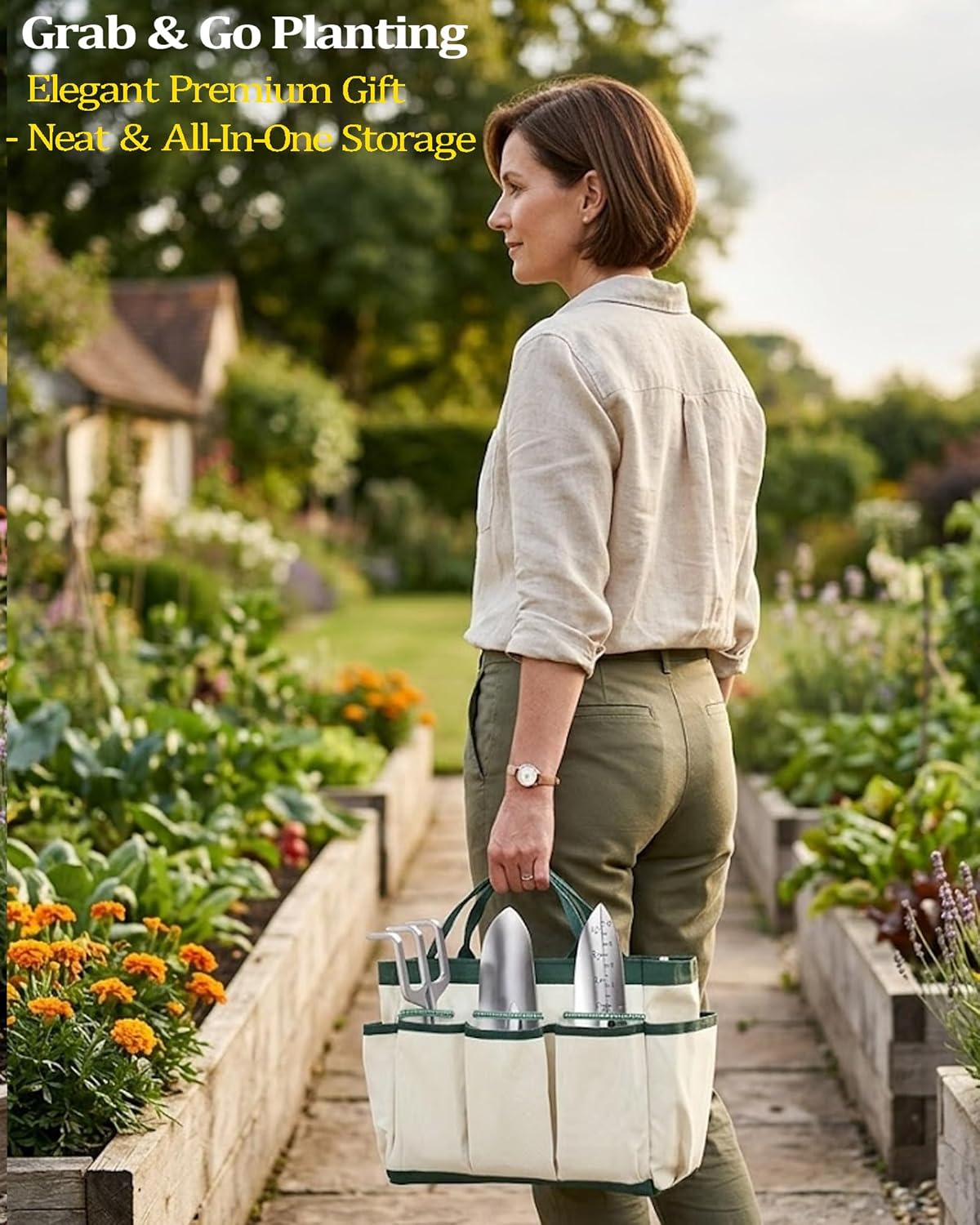
First-year gardeners get sold piece counts. A 10-piece set sounds like more value than a 4-piece set, but most kits pad the count with a spray bottle, twist ties, plant labels, and a pair of generic cotton gloves. The tools that do the work, the trowel, transplanter, cultivator, and pruner, are the same four items in nearly every kit on Amazon.
What separates a kit that lasts the season from one that snaps in week three is build, not piece count. Aluminum or stainless heads, single-piece construction with the head and tang forged together, and a soft non-slip grip that won't blister your palm after an hour of weeding. The picks below were chosen on those terms: which sets hold up through a beginner's first one to three seasons of container, raised-bed, and small-plot gardening.
What a beginner needs in a starter kit
The non-negotiable core: a hand trowel for digging planting holes, a hand transplanter with a narrower blade for seedlings and bulbs, a hand cultivator or three-prong rake for breaking up compacted soil and pulling weeds, and pruning shears or snips for deadheading and trimming. Most other items in these kits are nice-to-haves.
Past the core four, the genuinely useful extras are a kneeling pad, which saves your knees on long planting sessions, a tote or apron with pockets so tools don't vanish into the bed, and gloves with reinforced fingertips. A soil pH and moisture tester earns its place the first season while a new gardener calibrates intuition, then becomes a drawer item.
Handle and head materials
Heads come in three tiers. Painted carbon steel is the cheapest and rusts fast once the paint chips, which happens within a season. Aluminum is rust-proof but bends under load in rocky or clay soil. Stainless steel wins on durability: rust-resistant, holds an edge, takes years to dull. For a beginner kit, buy aluminum or stainless heads, not painted steel.
Handles matter as much as heads. A wood handle looks nice and feels traditional, but bare wood soaks up moisture if left outside and cracks at the head-tang joint. Rubberized or TPR-coated handles cost a few dollars more per set and survive the inevitable left-on-the-patio-overnight mistake. Look for an ergonomic curve at the grip rather than a straight cylinder. Beginners tend to overgrip, and a contoured handle cuts hand fatigue a lot over a long weeding session.
Why piece count is a vanity metric
Amazon kits routinely advertise 10, 12, even 15 pieces. The pad usually breaks down as 4-5 real tools, 1 pair of gloves, 1 tote bag, 1 kneeling pad, 1 plant sprayer, 1 set of plant tags, 1 twist-tie roll, and sometimes a soil tester. The 10-piece kit and the 5-piece kit have the same four tools doing the work.
The questions that matter: are the four core tools any good? Is the storage tote sturdy enough to hold them without splitting? Are the gloves usable or throwaway? A 5-piece set with stainless tools and a real canvas tote beats a 12-piece kit with stamped-steel tools and a polyester pouch.
Where the kits fall short and what to add separately
Three jobs the all-in-one kits don't do well. Heavy digging: the kit's hand trowel is undersized for breaking new ground, so pair it with a long-handled round-point shovel ($25-40 separately). Pruning anything thicker than a pencil: the included snips are deadheading scissors, not bypass pruners, and a dedicated Fiskars or Felco bypass pruner ($20-50) handles the rose canes and small branches that the kit's clippers will chew. Long-reach weeding in a raised bed: kit hand cultivators have 6-8 inch shafts, while a long-handled hoe or stirrup hoe reaches in without you leaning over the bed.
Most beginners find these gaps in the first season and end up buying piece by piece anyway. That's fine. The kit's job is to cover the first few months cheaply so a beginner can work out which tools they reach for, then upgrade those.
Making a kit last more than one season
The biggest killer of cheap garden tools is leaving them outside. Moisture rusts even painted steel, splits wood handles at the ferrule, and weakens plastic. After each use, knock off the dirt, wipe the blade dry, and store the tool in a shed or garage. A monthly wipe with a lightly oiled rag, any cooking oil works, keeps stainless heads from spotting and lubricates the pruner pivot.
The totes in most kits aren't weather-rated, so treat them as indoor storage. If a tote is going to live on the patio, move the tools to a galvanized bucket or a wall-mounted rack. Sharpening hand tools each spring with a basic mill file adds years of useful life, and the first time a sharpened trowel cuts a planting hole in dense soil, you'll feel the difference.
How much to spend
Under $20: single brand-name tools, not a kit. Edward Tools and Fiskars both sell individual hand trowels in this range that will outlast any $30 kit's trowel by years. Useful as add-ons, or as a starter buy for someone gardening on a balcony with one or two pots.
$25-35: where beginner kits make sense. Enough headroom for stainless or coated aluminum heads and decent grips. This is the tier where the all-in-one kits earn their keep for someone setting up a first raised bed or container garden.
$45-60: premium tier. Fiskars and similar brands make sets with hardened steel heads, lifetime-limited warranties, and replaceable parts. Worth the upgrade only once a beginner knows they're going to keep gardening past year one. Spending here in month one is buying ahead of the use case.
Recommended
Products related to this guide.
Frequently asked questions
What are the best gardening tool sets for beginners?
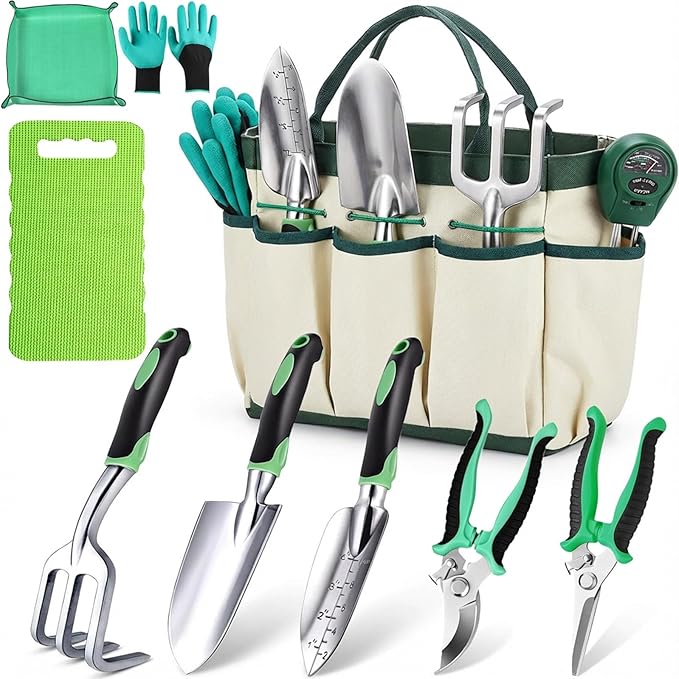
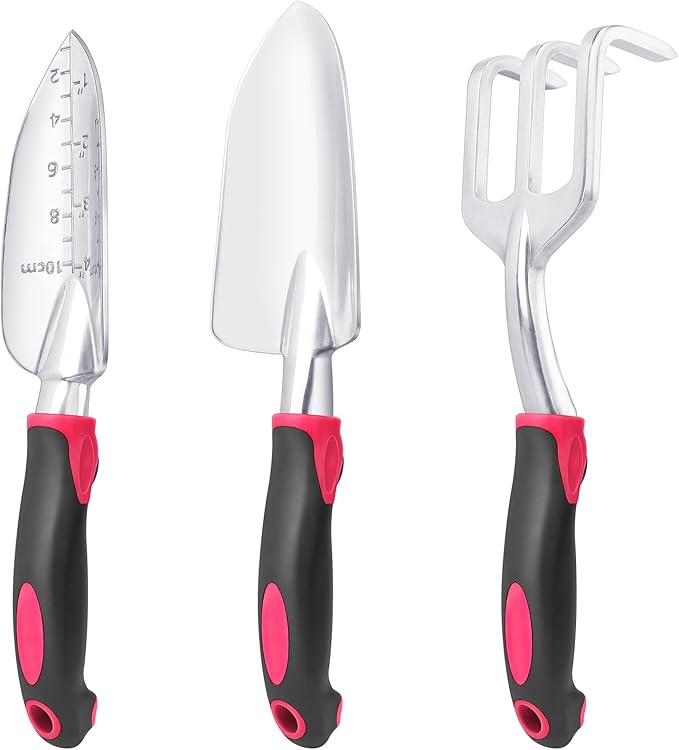
TOMCARE 10-Piece Heavy-Duty Garden Tools Set for Beginners. Best balance of the core four tools plus the genuinely useful extras a first-year gardener will actually use.
What are the best budget gardening tool sets for beginners?
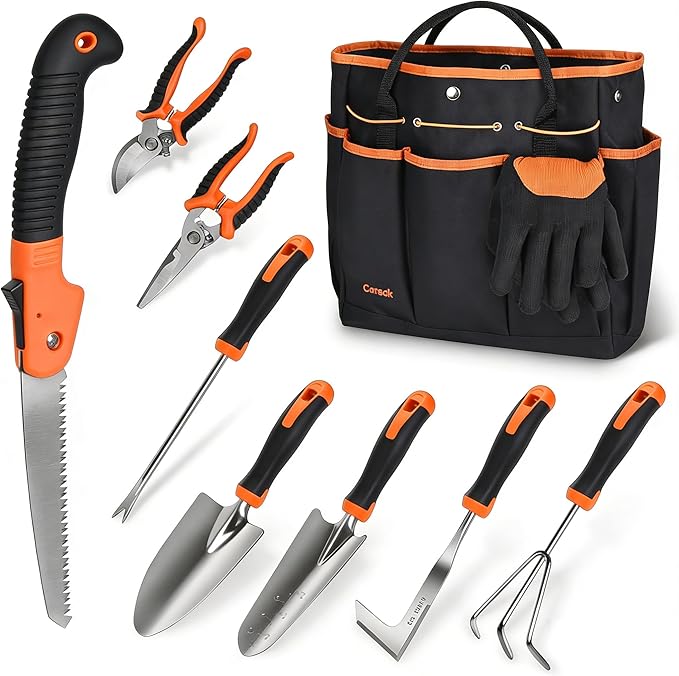
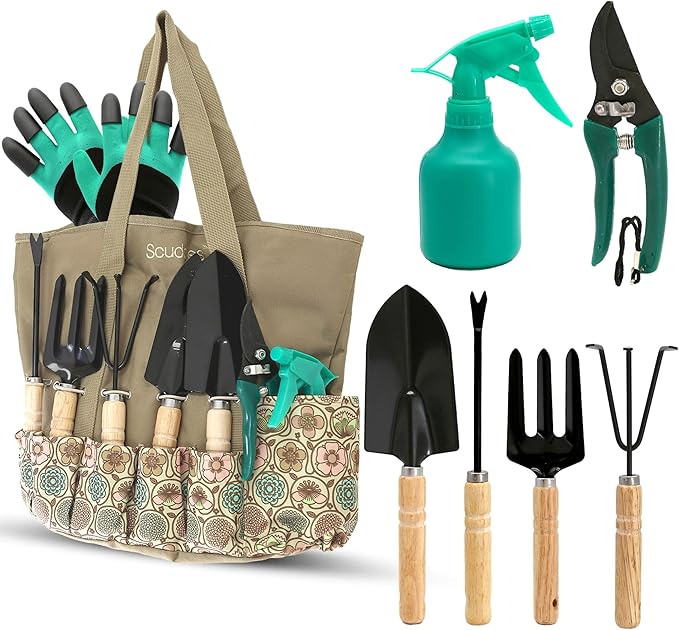
Garden Tools Set. Brand-name budget pick recommended by editorial review.
What are the best premium gardening tool sets for beginners?
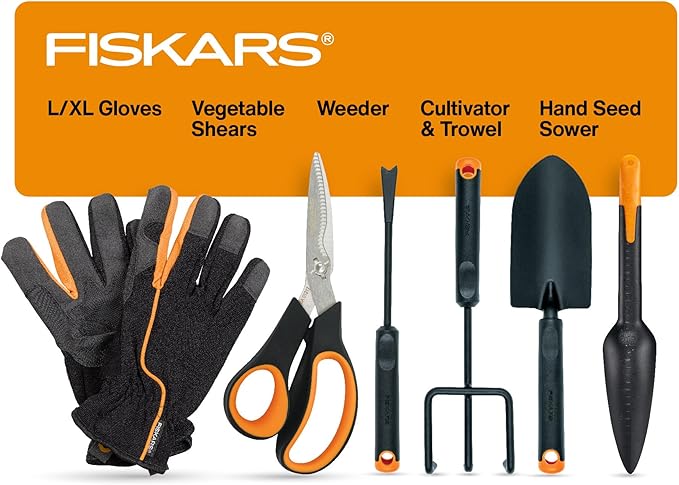
Fiskars Premium Garden Tool Set. The upgrade pick once a beginner knows they're staying with gardening past year one.