The Best Dog Cameras with Treat Dispensers on Amazon (2026)
By Daniel Reyes · Updated July 2026
Independent editorial guide. We never accept payment for coverage, though we may earn a commission if you purchase through our links.
Quick Take
For most households leaving a dog alone 6 to 10 hours a day, this category has one default: Furbo. The 360 model is the brand-name workhorse, the classic Furbo is the cheaper way in if the rotating base is overkill, and Petcube Bites 2 Lite is the honest alternative if Furbo's subscription model is a dealbreaker. Almost everything else on Amazon under $80 is a rebranded white-label cam with a treat hopper bolted on. The catch here is subscriptions. Furbo's best features (barking alerts, smart notifications, cloud video history) sit behind the Furbo Nanny plan at roughly $7 to $10 per month. Petcube Care works the same way. Without a subscription the hardware still runs as a live-view camera and manual treat-tosser, but the AI alerts that made you want the product go dark. Budget the subscription into the decision alongside the sticker price. Skip anything advertising '3K resolution' and 'AI barking detection' under $50. The dispensers jam, the apps disconnect, and the brand is gone in six months. See picks ↓ See picks ↓
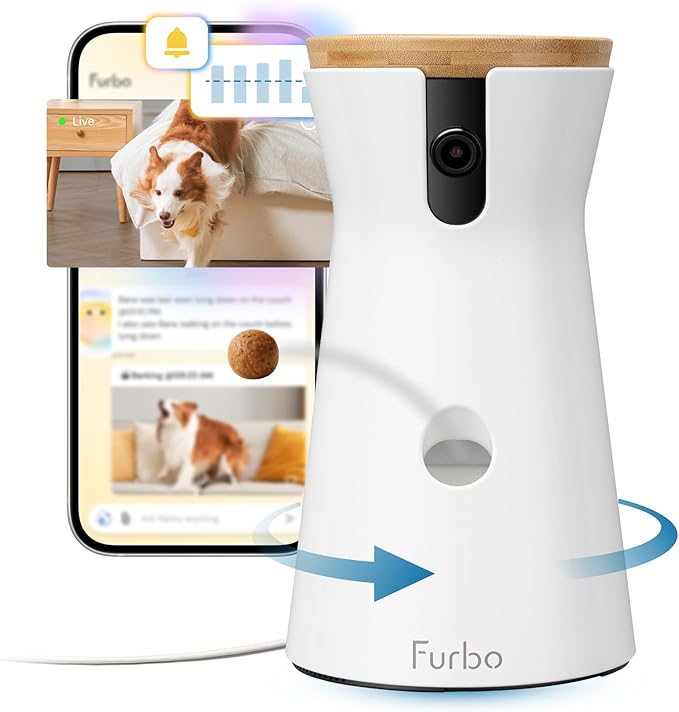
A dog camera with a treat dispenser is two products in one box: a pet-monitoring cam and a remote feeder. Both halves have to work or the unit isn't worth keeping. The camera has to give a usable live view through a phone app without lag, and the dispenser has to fling a treat across the room the moment you tap the button. Most of the Amazon listings in this category fail one or both.
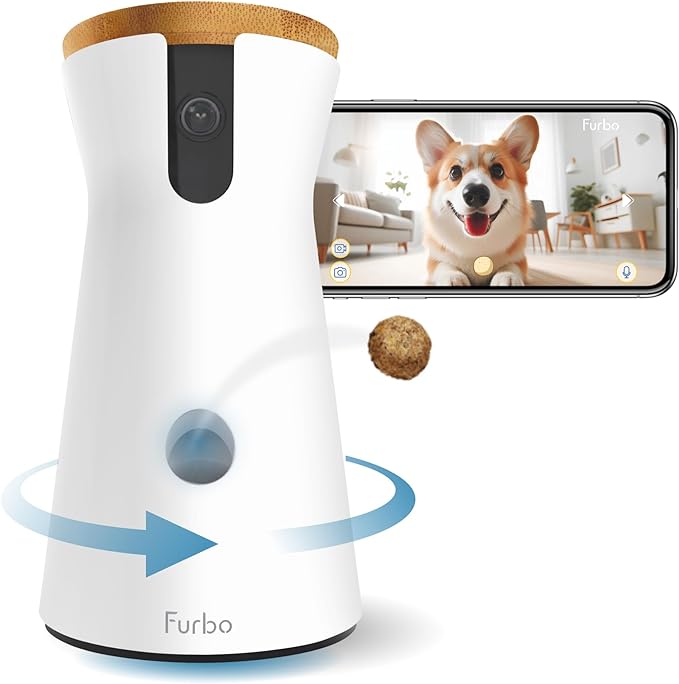
Furbo built the category and still owns it. The 360 model is the default recommendation because the rotating base solves the problem every flat-mount camera has: dogs don't stay in the frame. The alternatives below were filtered on dispenser reliability (does it toss the treat or drop it), app stability (does the live view connect without a 30 second handshake), and whether the brand still answers warranty claims a year in. Subscription honesty is called out per pick, because this category lives or dies on recurring fees.
What this product has to do
Three things matter. The dispenser has to toss treats reliably, which means handling the specific size and shape of the treat you load; over-large or sticky treats jam the wheel and break the unit. The camera has to connect on the first tap of the app, not after a loading spinner that times out. And the notifications have to be quiet enough that you don't mute them inside a week, which usually means tuning the AI sensitivity instead of switching everything on by default. Resolution numbers (1080p, 2K, 3K) matter less than every brand claims. A 1080p stream from a stable connection beats a 3K stream that buffers. Night vision is genuinely useful and the budget tier skimps on it first. Two-way audio is the feature owners reach for every day, more than the treat toss; pick a unit with a speaker loud enough to carry across a room, not a tinny chirp.
Furbo is still the default
The Furbo 360 sits at the top because it solves the framing problem. Flat-mounted cameras lose the dog the moment it walks two feet to the left; the 360 rotates to track. Its treat dispenser is the standard the rest of the category gets measured against, and the app is more polished than anything else on this list. The catch is the subscription. The Furbo Nanny plan ($7 to $10 per month) is where the barking alerts, person detection, and video history live. Without it the hardware works and the smart features go dark.
The classic Furbo (non-360) is the way in for owners who don't need rotation, usually because the dog hangs out in a predictable spot: a couch, a crate, a kitchen corner. Same dispenser, same app, same subscription model, lower sticker price. If the dog roams the whole apartment, pay up for the 360. If it sleeps on one bed all day, the classic is enough camera.
Petcube, the honest alternative
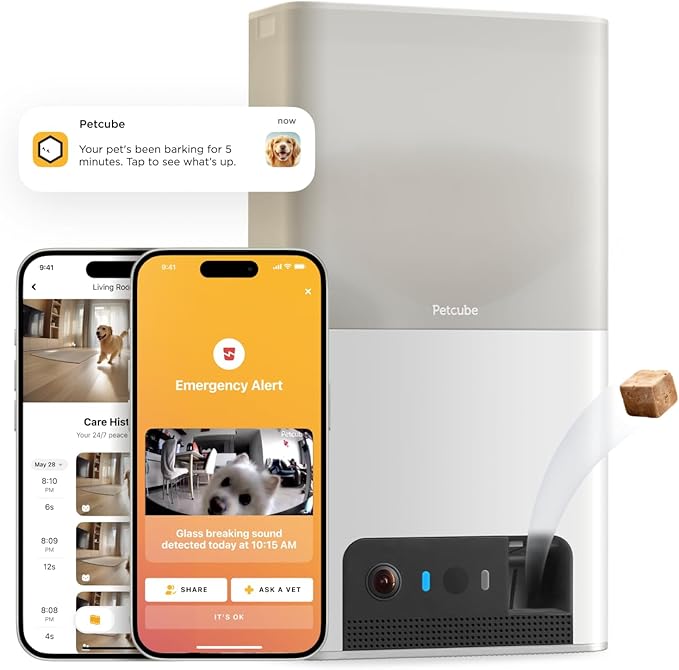
Petcube Bites 2 Lite is the pick when Furbo's subscription model is the dealbreaker. The dispenser tosses rather than drops, which matters for engagement, and the price runs well below the Furbo 360. Petcube Care is the equivalent paid plan, with the same caveat: the AI features need it. The hardware does more out of the box than Furbo does without a subscription, which is what makes Petcube the honest pick for owners who want to skip the recurring fee entirely.
The trade-offs are real. The Petcube app is less polished, the two-way audio is quieter, and the brand has been slower on firmware updates than Furbo. For a household that wants a working dog cam and treat tosser with no monthly bill, it's the right pick. For a household that wants the best-in-class smart features, Furbo plus Nanny is still the upgrade.
Mid-tier and what you give up
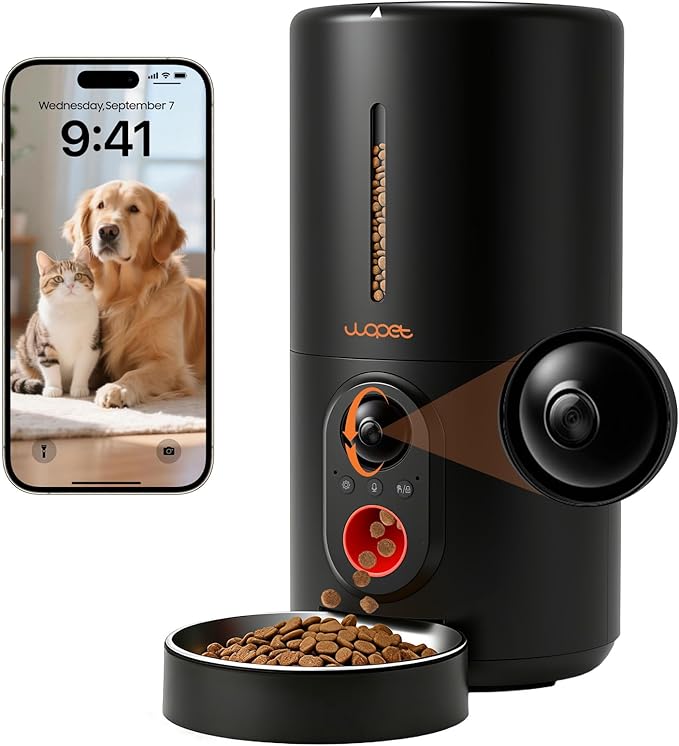
Below $130 the category gets honest about itself: a generic indoor security cam with a treat hopper added. The Wopet Smart Feeder Camera is the cleanest of these. The dispenser works, the app connects, and no subscription is required. What's missing is the AI layer Furbo and Petcube charge for: no barking alerts, no person detection, no smart notifications. Live view and manual treat toss are the whole feature set. For plenty of households that's enough product. A retired owner home most of the day who wants to see what the dog is doing in the next room has no use for barking alerts. The Wopet is the pick for that, at half the Furbo price and zero recurring cost.
Check the treat size before anything else
Every dispenser in this category specifies a treat size range, usually 1 cm round-ish kibble-shaped pieces. Stray outside it and the dispenser jams. Furbo sells a first-party treat (Furbo Treats) sized for the dispenser, which is the safe choice and the most expensive way to feed. The cheaper move is testing small training treats in the Wellness or Zukes range; most are dispenser-compatible and a third the cost of brand-locked treats. Avoid anything sticky (peanut butter coated, soft jerky), anything larger than 1.5 cm, and anything that breaks into crumbs. Crumbs are what kill the dispenser motor over time. If the dog is on a prescription or single-protein diet, read the treat ingredient lists and budget for first-party Furbo Treats when no third-party option fits.
What the subscriptions buy
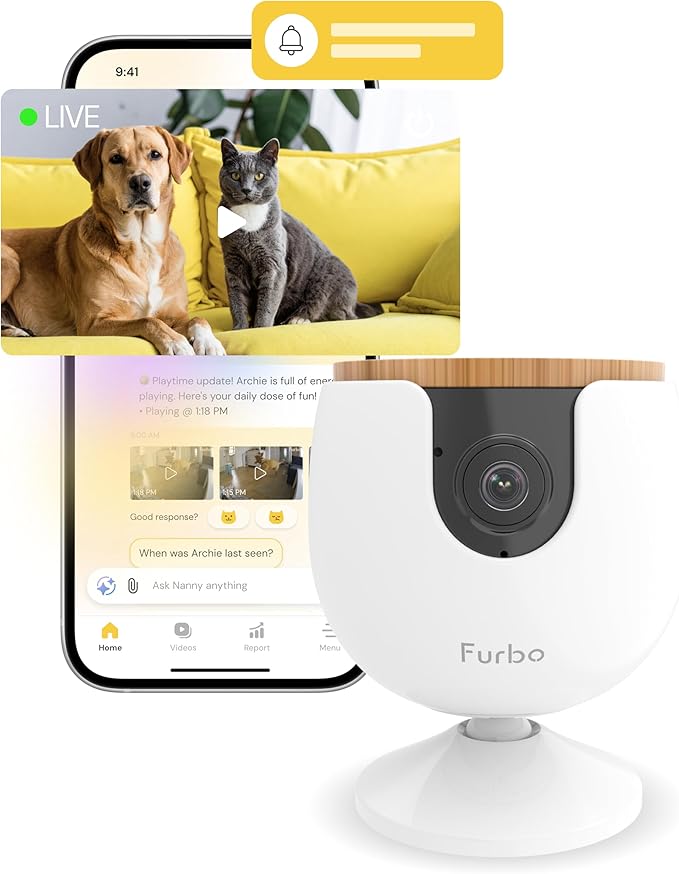
Furbo Nanny ($7 to $10 per month depending on plan) unlocks barking alerts, person detection, activity alerts (dog selfie, dog activity), and cloud video history. The free tier gives you live view, manual treat toss, and two-way audio. For most households the barking alerts alone justify the subscription; for a quiet senior dog they may not. Petcube Care is structured the same way, with alerts and history behind the paywall and live view and treat toss free. Wopet and most sub-$130 alternatives don't offer or require a subscription at all, which is part of the appeal. So budget $80 to $120 per year on top of the sticker price if you're buying Furbo or Petcube, and $0 if you're buying Wopet.
What to skip
Anything under $50 advertising 3K resolution, AI barking detection, and 360 degree rotation. The dispensers at that price use low-grade motors that jam on the third or fourth load, the apps are rebadged generic security cam apps with no pet-specific features, and the brand listings rotate names every quarter. There's no warranty to call.
Wet-food or kibble-dispensing units marketed as a dog camera. Those are scheduled feeders with a camera bolted on rather than interactive treat tossers, and the dispenser mechanism can't handle the kind of engagement this category exists for, one or two treats at random intervals. Buy a dedicated scheduled feeder if that's the need.
Cameras with no night vision. Dogs spend more of the work day in rooms with the blinds drawn than most owners realize, and a camera that can't see in low light misses half the use case. Every pick below has functional IR night vision.
Recommended
Products related to this guide.
Frequently asked questions
What are the best dog cameras with treat dispensers?
Furbo 360 Dog Camera with Treat Dispenser. The category-leading dog cam.
What are the best budget dog cameras with treat dispensers?
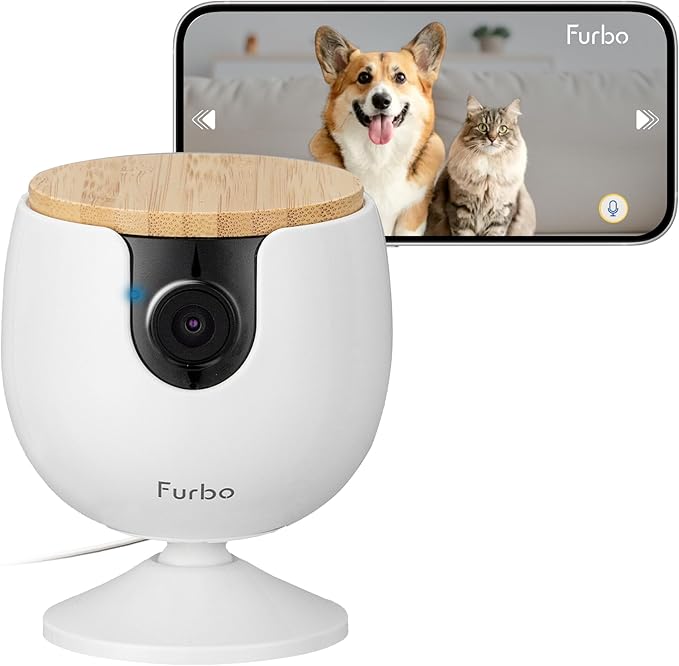
Furbo Mini Pet Camera. The Furbo entry point for owners who want the brand and app but not the dispenser.