The Best Curtain Rods for Large Windows on Amazon (2026)
By Erin Mitchell · Updated July 2026
Independent editorial guide. We never accept payment for coverage, though we may earn a commission if you purchase through our links.
Quick Take
For windows wider than 60 inches, the rod is the easy part. Middle support is the hard part. Any 1-inch rod spanning more than 60 inches sags under lined or blackout drapes if it only has end brackets. Fix it with a 3-bracket setup, a center bracket added to whatever rod you buy, anchored into a stud or a heavy-duty drywall anchor rated for the panel weight.
The picks below cover three situations: a straight wide window up to 144 inches, a bay or corner layout that needs a connector, and a renter setup where you can't add a center bracket without drilling new holes. Rods run roughly $18-44, plus a few dollars for an extra bracket if yours doesn't ship with one. Cheap thin rods (5/8 inch) bend, so stick to 1 inch diameter or larger for anything over 72 inches.
Jump to the wide-span rods, bay-window connectors, and bracket upgrades that keep large-window drapes hanging straight. See picks ↓
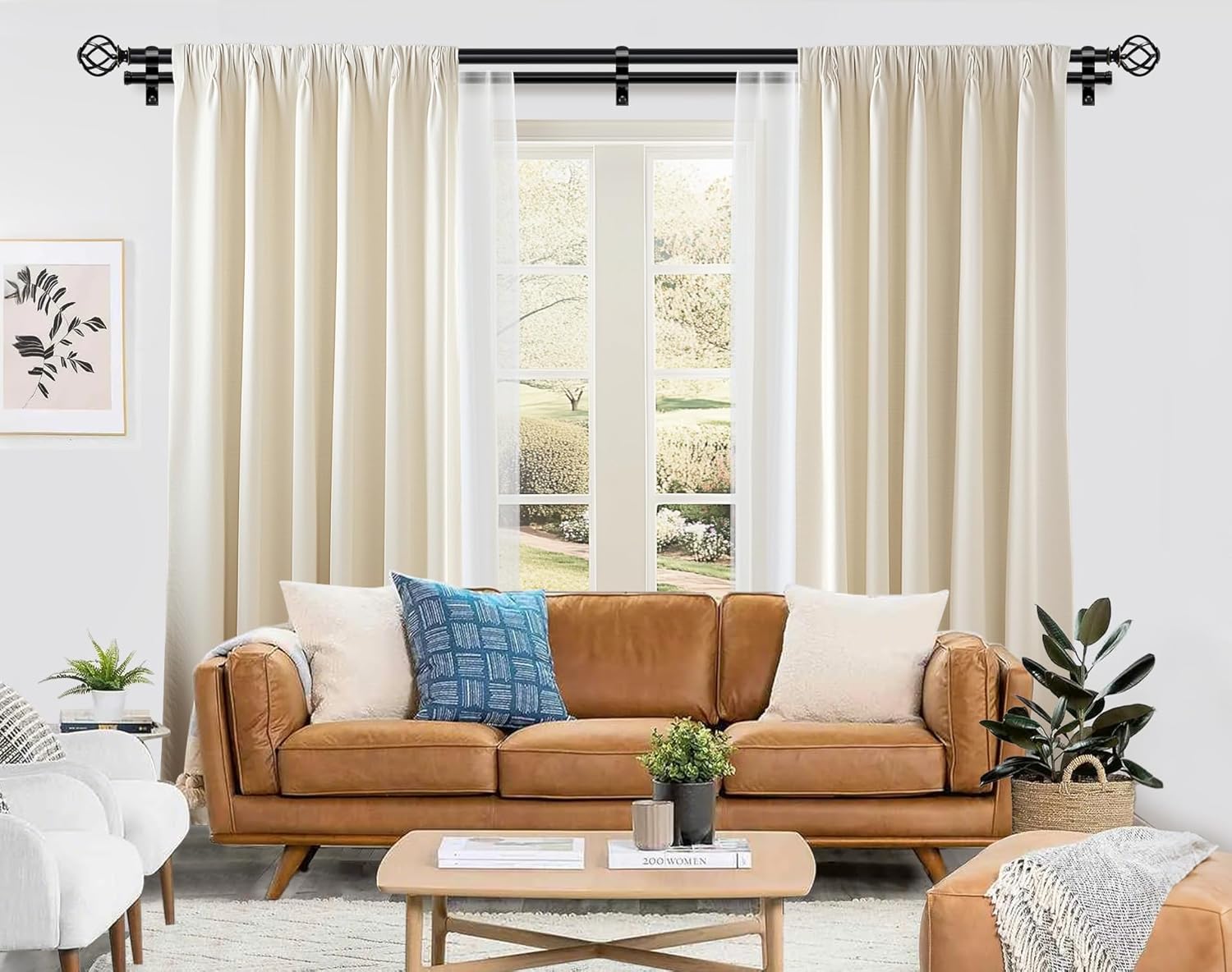
Large windows expose every weakness in a curtain rod. A rod that holds two light sheers across a 36-inch bedroom window will visibly bow across an 8-foot living room window the moment you hang lined panels. Diameter, bracket spacing, and wall anchor all start to matter, and most off-the-shelf telescoping rods sold as "large window" rods were never engineered for spans over 72 inches without center support.
This guide sticks to Amazon-available rods that hold up on windows in the 60-144 inch range, plus the hardware that makes them work: a center bracket, a bay window corner connector, and beefier brackets for heavy drapes. Picks skew toward living room and primary bedroom windows, where drapery weight is what breaks things.
How wide is "large"?
In curtain hardware terms, "large" starts where a single 2-bracket rod stops being safe, roughly 60 inches. Past that span, even a 1-inch metal rod droops in the middle under fully lined panels, and the droop worsens as the panels move, since drawing curtains tugs the rod toward the floor. Below 60 inches almost any rated rod is fine. Above 60 inches you need a center bracket or a thicker rod. Above 96 inches you almost always need both.
Telescoping rods advertising "up to 144 inches" are usually two rod sections joined in a sleeve, and the sleeve is the weak point. Without a center bracket directly under that sleeve, the join sags visibly within weeks under any real panel weight.
Rod diameter matters more than length
Thin 5/8 inch rods are cheap and look fine in a packaging photo. They bend permanently after a few months on anything wider than 60 inches. For large windows, 1 inch diameter is the floor, and 1-1/8 to 1-1/4 inch is better for any window over 96 inches or with heavy lined drapes. A heavier rod resists bending, and it gives the brackets more thread to grip, which matters when you're driving anchors into drywall instead of studs.
The center bracket problem
Most off-the-shelf large-window rods ship with 2 brackets. That's enough for the marketing photo and not enough to hold drapes on a wide window without sag. Two fixes: add a third bracket centered between the end brackets, often a $7-9 add-on, or buy a 3-bracket rod set from the start. If the rod uses a finial that screws into the end, the center bracket has to be a saddle-style mount the rod drops into, not a closed-loop bracket you slide the rod through.
Bay windows and corner connectors
Bay windows and L-shaped corner windows need either a curved rod or a corner connector joining two straight rods at the bend. Connectors usually cost less and give you more room to work, because you size each leg independently. The Ivilon corner connector below fits any 5/8 to 1-1/8 inch rod and pivots from roughly 75 to 180 degrees, which covers nearly every bay angle in a house.
Anchoring into drywall
Studs in a typical American framed wall sit 16 inches on center, and they almost never line up with where curtain rod brackets need to land. So most brackets end up anchored into drywall, and the anchor is where things fail. For a 12-foot rod carrying lined drapes, plan on roughly 5-10 lbs of load per bracket. Standard plastic expansion anchors won't hold that long-term. Toggle bolts or self-drilling metal anchors rated for 25-50 lbs each are the realistic baseline. If a stud happens to land near a bracket position, mount that bracket straight into it and skip the anchor there.
Renter-friendly options
Tension rods dodge the wall-anchor questions entirely, but they hit a hard ceiling. A 1-inch tension rod is rated for light to medium fabric panels up to about 72 inches of span. Go wider and the spring loses tension before the rod is fully extended, and the rod comes down. For renters with windows wider than 72 inches, the cleanest path is still drilling small bracket holes and patching them at move-out. A $4 tub of spackle covers a year of curtain holes.
Rods to walk past
Skip rods sold as "telescoping up to 240 inches." The physics don't work. Skip plastic-tipped tension rods for large windows. Skip rod sets whose brackets are stamped sheet metal under 1 mm thick, because they twist under load. Skip 5/8 inch rods over 60 inches. None of them last a year.
What good hardware looks like
A large-window setup that holds: a 1-inch or larger metal rod sized to the window width plus 8-12 inches per side for stack-back, 3 brackets minimum (4 if the rod is a 2-section telescoping piece), wall anchors rated for at least 25 lbs each, and panels with a generous header. The picks below cover the three rod choices and the two hardware add-ons that get you from a rod hanging on the wall to a rod still hanging straight a year from now.
Recommended
Products related to this guide.
What owners say
Real owner reports from the threads and editorial sources we drew on for this guide.
“This is my biggest gripe, we wanted to, and tried, but I think it was something like studs or something with the wall (it was a while ago now) that prevented us from hanging it lower. I might try again though.”
— r/HomeDecorating / allymacster
“May not be the look you want, but picture rails are an option if you can’t hang it lower. Or maybe just the chains with a single decorative knob instead of a rail.”
— r/HomeDecorating / Xalowe
“if the picture isn’t terribly heavy, you can use those command strips. I’ve had great luck with them.”
— r/HomeDecorating / Various_Ad_3223
“Beautiful changes. Looks very refined. The print over the sofa is way too high. It should come down 6-8 inches to relate to the space.”
— r/HomeDecorating / 12Afrodites12
Frequently asked questions
What are the best curtain rods for large windows?
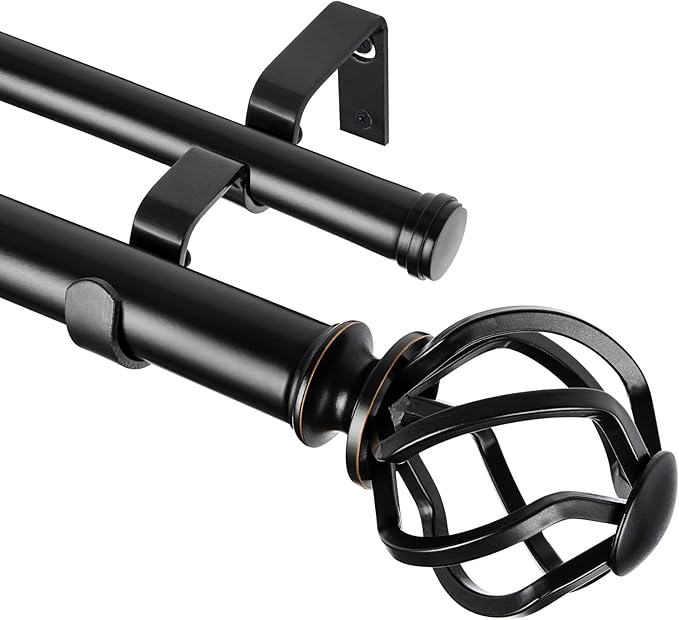
KAMANINA 1 Inch Double Curtain Rods 72 to 144 Inches. The default answer for windows in the 60-144 inch range.
What are the best budget curtain rods for large windows?
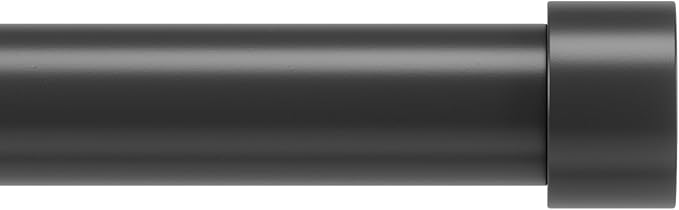
Umbra Cappa 36 to 72 Inch Adjustable Curtain Rod. Best pick when the "large window" is on the smaller end of large (60-72 inches).
What are the best premium curtain rods for large windows?
Rod Desyne Heavy Duty Curtain Rod. Rod Desyne is the recognized brand for heavy-duty drapery hardware.