The Best Fabric Waterproof Shower Curtains on Amazon (2026)
By Maya Chen · Updated June 2026
Independent editorial guide. We never accept payment for coverage, though we may earn a commission if you purchase through our links.
Quick Take
For most bathrooms, buy a heavy-weight waffle-weave polyester curtain in the 230-260 GSM range and hang a separate waterproof liner behind it. You get the hotel-look drape and texture people want out of fabric, and a $10-15 liner takes the splash abuse instead of the decorative panel. Plan on $25-40 all in for the pair. If you'd rather have one piece than two, look for polyester explicitly labeled water-repellent with a weighted hem and a magnet strip at the bottom, which holds it sealed to the tub without a separate liner. Cotton and cotton-blend waffles look the nicest and still wick water through the weave, so they need a liner either way. Extra-long 84 inch and 96 inch panels exist for tall ceilings or curved rods, at roughly twice the price of the standard 72 inch. Jump to the waffle, liner, and extra-long picks below; each one covers a different path, with notes on which bathroom it suits. See picks ↓ See picks ↓
Fabric shower curtains get sold on two promises that mostly contradict each other: they look like a hotel, and they keep water off the floor. The cheap ones deliver neither. The expensive ones usually deliver the first and stop there.
So this guide sorts the formats by what changes anything in a real bathroom: fabric weight (GSM), whether the curtain repels water on its own or is a decorative panel that needs a liner behind it, how the hem is built, and the length math for rods that sit at non-standard heights. Five picks, plus a dedicated liner pick for buyers who go the two-piece route.
Decorative panel or water-repellent fabric
Most fabric shower curtains on Amazon are decorative panels, and they aren't waterproof. Polyester wicks less than cotton, but water still works its way through the weave, and the first shower you take without a liner puts water on the floor. The product photos rarely make that clear. A genuinely water-repellent fabric curtain has a coating or a weave tight enough to bead water, a weighted or magnetized hem that seals against the tub edge, and a listing that says waterproof liner curtain, hotel curtain with magnets, or 3-in-1 fabric liner. Those you can hang solo. Everything else needs a clear plastic liner behind it, no exceptions.
What GSM tells you
GSM (grams per square meter) is the proxy for how a curtain hangs and how long it lasts. Cheap polyester runs 70-110 GSM and feels like a hospital gown. It flies inward on a hot shower, wrinkles permanently after one wash, and pills along the hem inside a few months. Hotel-quality waffles run 230-260 GSM and hang with enough weight to resist that inward suction on their own. Above 260 GSM you're into cotton-blend territory, which looks beautiful but gets heavy enough that grommets start failing on lightweight rods and drying time after a wash stretches to 24+ hours. For most buyers, 230-260 GSM polyester is where drape, longevity, and washability all land at once.
Waffle, flat weave, and damask
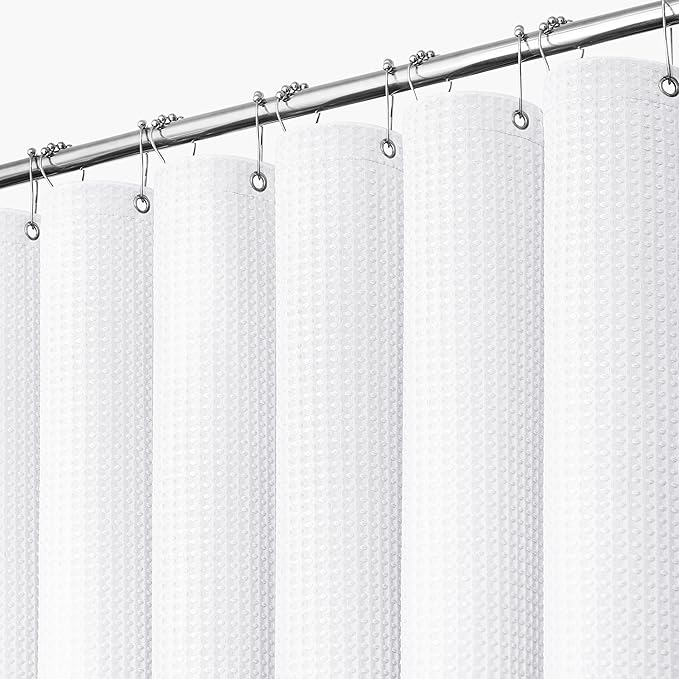
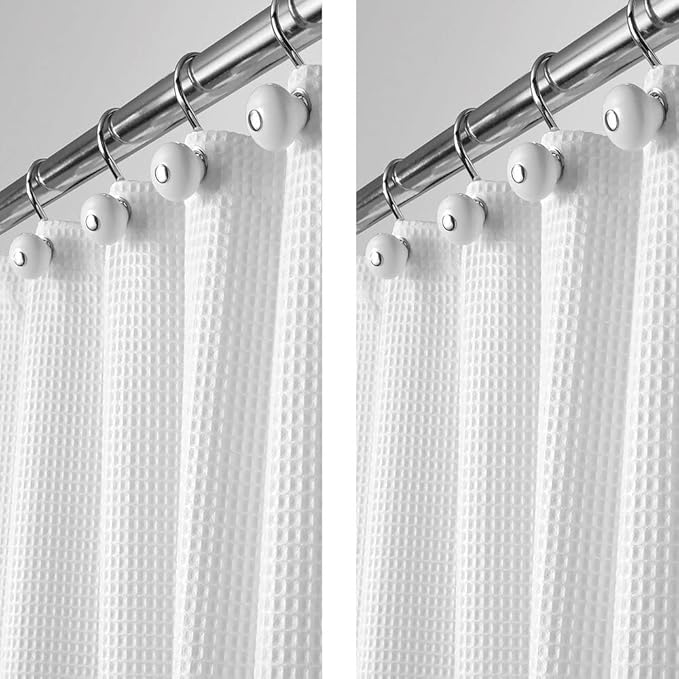
Waffle weave dominates this category for a reason. The raised diamond hides the way polyester drapes more bluntly than cotton, gives the panel visual texture without needing a print, and usually means heavier yarn, which is why most heavy GSM curtains are waffles. Flat weave polyester is fine if you want a smooth surface to carry a printed pattern. Damask and jacquard look the nicest in person and show every soap splash, so you'll be washing them more often. Stick with waffle unless the bathroom design asks for something else.
Hems, magnets, and the seal at the tub edge
The bottom of the curtain is where most waterproofing falls apart. A flat hem with no weight blows inward on the slightest breeze (or shower draft) and lets water out underneath. A weighted hem with sewn-in metal beads helps. Best is a hem with embedded magnets that snap onto a steel tub edge and seal physically, the same trick hotels use on heavy plastic liners. In a two-piece setup the liner does that work and the decorative curtain hangs in front of it, never touching water. In a one-piece setup, hem magnets are roughly the cost-effective line between curtains that contain water and curtains that only look nice.
Length, width, and tall ceilings
Standard fabric curtains are 72x72 inches, sized for a standard 8 foot ceiling with the rod about 75 inches off the floor, which describes almost every American bathroom built from 1950-2000. Modern construction with 9-10 foot ceilings or vault clearances needs an 84 inch or 96 inch panel, and those run roughly $25-35 against $15 for the standard size. Width is usually 72 inches for a single panel covering a standard tub. Curved rods bow outward 4-6 inches and buy you shoulder room in the shower, but they need an oversized 78-84 inch wide curtain to cover the bowed span. Hang the 72 inch standard on a curved rod and it falls straight, leaving a slight gap.
Washing, drying, and mildew
Polyester waffle curtains machine wash cold and tumble dry low, which is the whole reason the category exists. Throw one in with two towels every 6-8 weeks (the towels help scrub) and it comes out clean. Cotton-blend waffles want a cold wash and an air dry to avoid shrinkage, and that drying time is the practical limit on how often most buyers will bother. Mildew in the bottom 6 inches is the universal failure point for every fabric curtain in a humid bathroom. The fix is a bathroom fan that works, letting the curtain air out full-width after each shower instead of bunching it to one side, and washing on schedule. A curtain that lives bunched against tile in a poorly-vented bathroom will mildew regardless of fabric or price.
Recommended
Products related to this guide.
Frequently asked questions
What are the best fabric waterproof shower curtains?
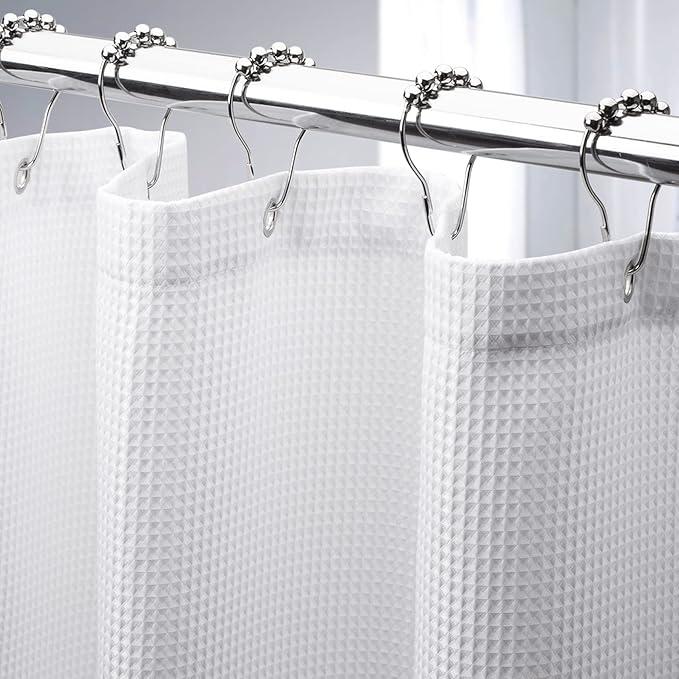
Dynamene White Fabric Shower Curtain. The default answer for most bathrooms.
What are the best budget fabric waterproof shower curtains?
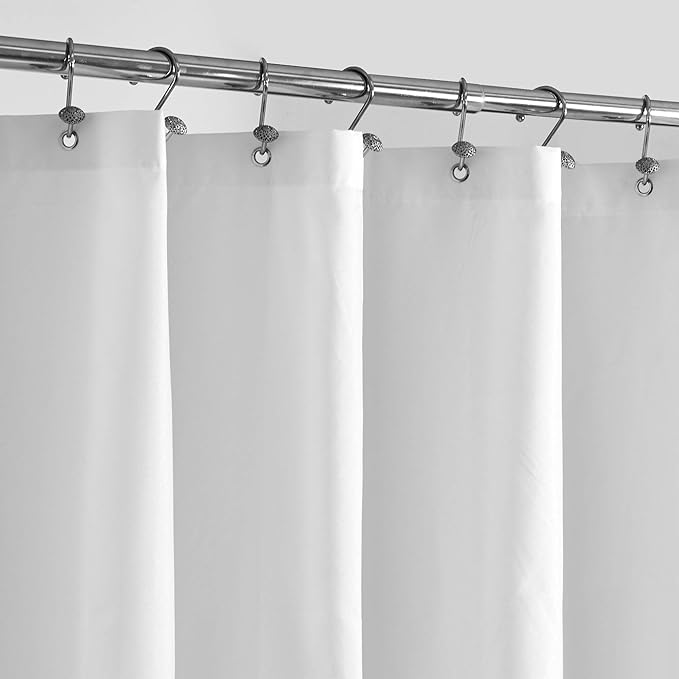
ALYVIA SPRING Waterproof Fabric Shower Curtain. The all-in-one cheap path: a single fabric curtain marketed as water-repellent with a weighted hem, no separate liner required.
What are the best premium fabric waterproof shower curtains?
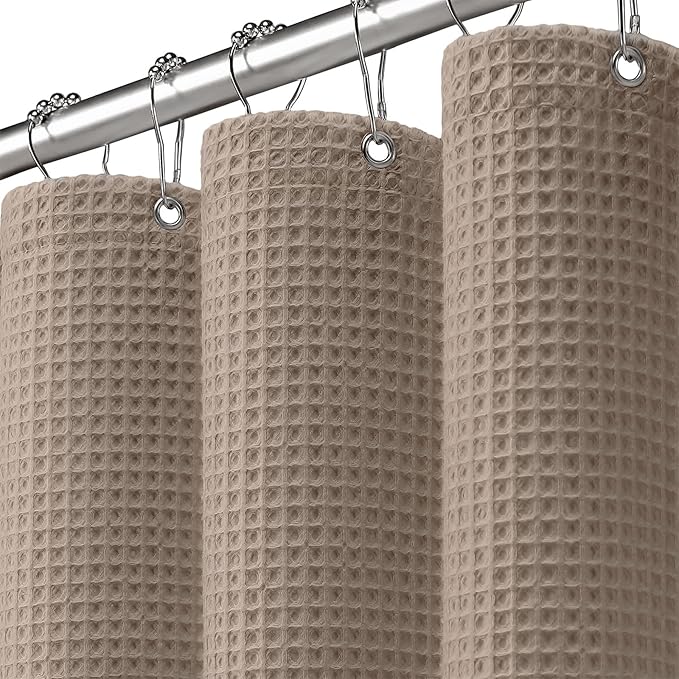
Beige Cotton Waffle Weave Heavyweight Shower Curtain. The cotton waffle upgrade for buyers who want the natural fiber drape and don't mind air-drying after a wash.