The Best Cat Litter Mats for Trapping Tracking on Amazon (2026)
By Erin Mitchell · Updated July 2026
Independent editorial guide. We never accept payment for coverage, though we may earn a commission if you purchase through our links.
Quick Take
For most apartments and houses where the litter box gets used 2 to 4 times a day, this category has three answers: a large honeycomb-pattern mat that catches the maximum amount of tracked litter at the box edge, a two-layer trap-then-dump mat for owners who want to empty the trapped litter in seconds instead of vacuuming the mat itself, and a softer silicone honeycomb mat for cats with sensitive paws. All three work. Which one you want depends on how much you hate the cleanup step. The Gorilla Grip XL is the default recommendation and the category bestseller for a reason. The raised honeycomb pattern catches more litter than a flat ridged mat, the XL size covers the whole scatter zone rather than the patch directly under the box, and the rubber backing stays put on hardwood and tile. The iPrimio Trapper EZ Clean is the step up: two layers, so trapped litter falls through the top honeycomb into a hidden bottom tray, and resetting it means lifting the top layer and dumping the tray back into the box. Skip flat foam mats and anything under $10 marketed as "litter trapping." The pattern is decorative, not functional. See picks ↓ See picks ↓
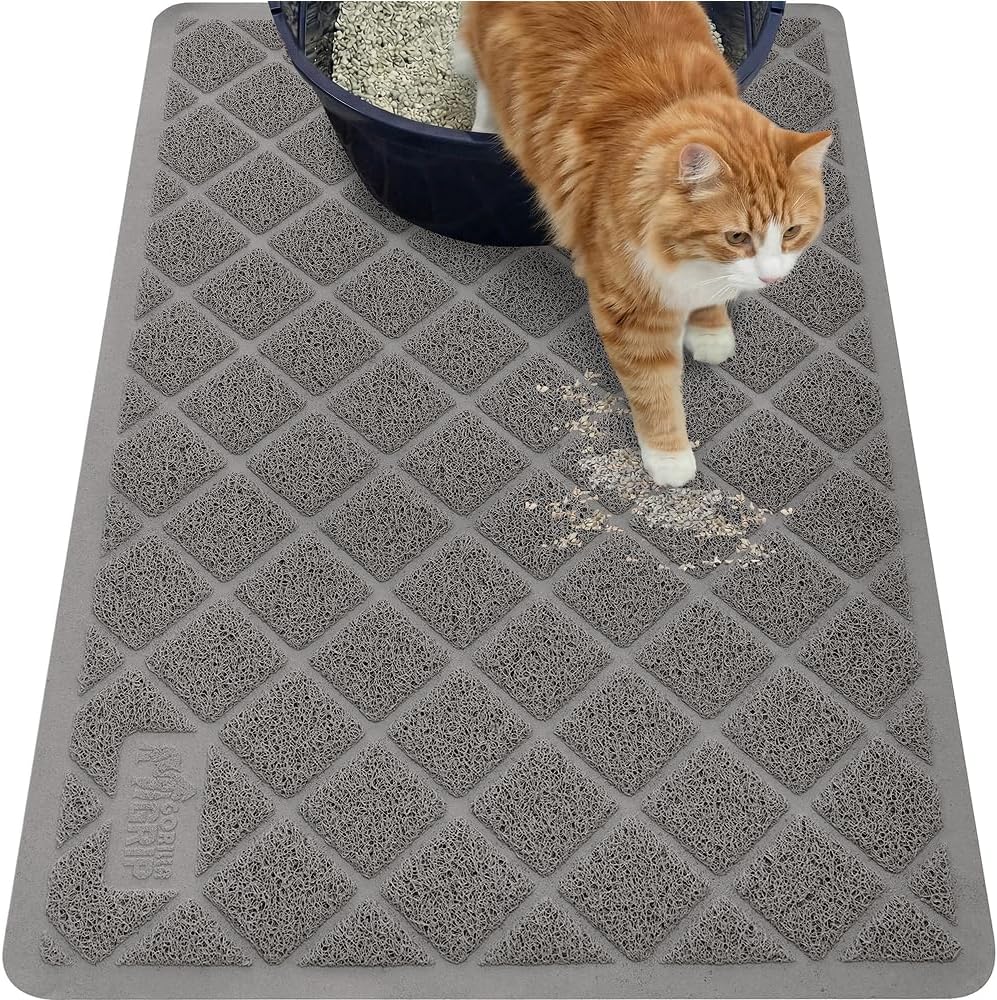
Cat litter mats are one of those categories where the cheap options aren't slightly worse, they're useless. A flat rubber mat with a printed pattern catches almost nothing; the litter slides off the edges as the cat walks across it. What traps litter is the physical geometry of the surface: raised honeycomb cells the grains drop into and stay in, or two-layer designs where the top layer has holes and the bottom layer collects whatever falls through.
The picks below are sorted by how aggressive the trapping needs to be. A single-cat household with a covered box and a short-haired cat can get away with a large honeycomb mat. Multi-cat households, kittens, or long-haired cats that fling litter on the way out need either a very large mat or a two-layer trap-then-dump design. Either way, size matters more than brand. A mat smaller than the scatter zone is the same as no mat at all.
What traps litter
Three features separate a mat that works from a mat that decorates the floor. The first is surface geometry: raised honeycomb cells, deep ridges, or a two-layer hole-and-tray design. Flat textured surfaces, however grippy the marketing copy claims they are, don't catch litter that's already in motion. The grains need somewhere to fall into and stay. The second is size. The litter scatter zone extends 12 to 18 inches out from the box opening on a covered box, further on an open tray. A mat that fits under the box but not in front of it catches almost nothing useful. Look for at least 30 inches on the long axis, ideally 36 inches or more. The third is a non-slip backing. A mat that slides across the floor every time the cat steps off stops being a mat within a week.
Honeycomb mats catch the most
Of all the surface geometries on the market, raised honeycomb cells trap the most litter per square inch. The cell walls are tall enough that grains don't bounce back out, and the open pattern lets the cat's paw release the litter instead of carrying it across the room. Honeycomb mats also clean up fast: lift the mat, tip it into the trash or back into the box, done.
Gorilla Grip is the bestseller here and the workhorse for good reason. The XL size at 35 by 23 inches covers the scatter zone, the honeycomb pattern is deep enough to catch litter rather than textured for show, and the rubber backing stays put on hardwood and tile without bunching. It's also waterproof, which matters more than the listing lets on; a mat that absorbs a urine accident becomes a permanent odor source within a week.
Two-layer trap-then-dump mats reset in seconds
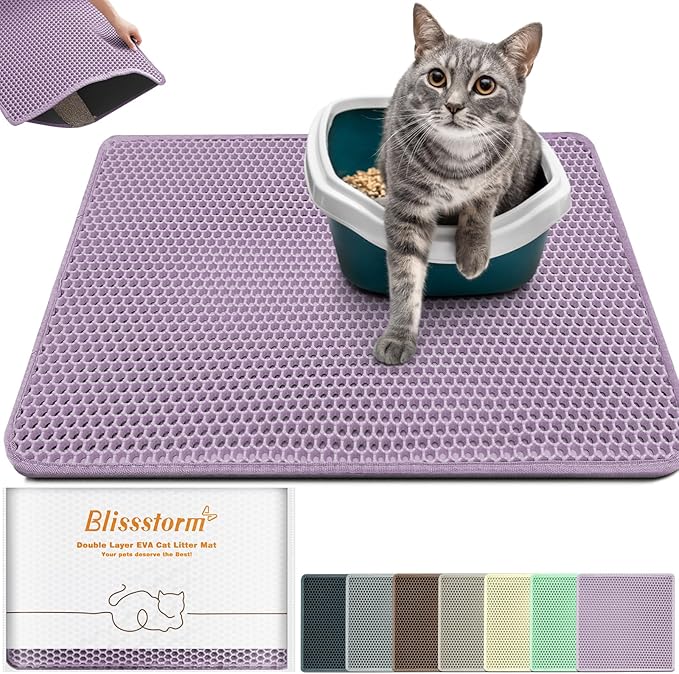
The next step up in convenience is a two-layer design. The top layer has hexagonal or circular holes; the bottom layer is a smooth tray. Litter walked onto the mat falls through the holes into the tray below and stays there out of sight until you lift the top layer and dump the tray back into the box. No vacuuming, no shaking, no scooping the mat itself. The iPrimio Trapper EZ Clean is the canonical example and the premium pick of this guide. It costs roughly twice what a single-layer honeycomb mat does, and the cleanup difference is real: a 30 second dump against a 5 minute vacuum-and-shake routine every few days. For multi-cat households, or anyone who hates the litter step in particular, it pays back fast.
Silicone mats for soft paws
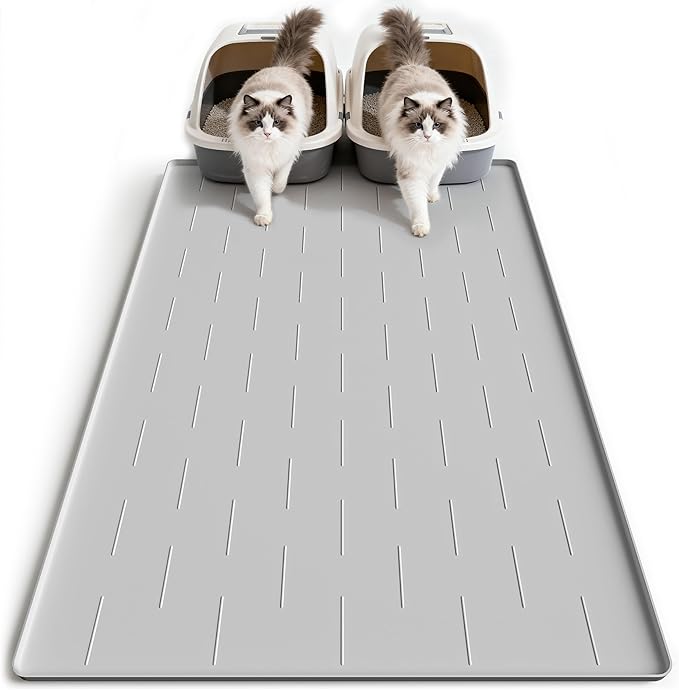
Silicone honeycomb mats are the third format worth a look. They're softer underfoot than rigid rubber, which matters for cats with sensitive paws (older cats, declawed cats, or cats recovering from injury). The Pieviev XL silicone mat is the most consistent option in this format: 40 by 28 inches, waterproof, and washable in a sink. The trade-off is that silicone grips the cat's paw better than rigid rubber, so slightly less litter leaves the mat in the first place, but the mat itself is harder to flick clean. Trapped litter sticks to the silicone instead of falling off when you lift it. Cleanup takes a rinse, not a shake.
Sizing the mat to the box
The biggest mistake in this category is buying a mat that's too small. A 24 by 18 inch mat fits under most boxes and catches almost no scatter, because cats exit the box at an angle and the litter lands on the floor beside the mat. The minimum useful size is 30 by 20 inches; the size that works is 35 by 23 inches or larger.
For open-top boxes, scale up further. Open boxes scatter litter in a 360 degree pattern instead of out one entry, so a 40 by 28 inch mat isn't overkill. For covered boxes with a single entry, the long axis of the mat should run at least 18 inches longer than the box, positioned so the scatter zone sits centered over the mat rather than the box.
What to skip
Flat foam or microfiber mats with a printed pattern. The pattern is decorative and there's no physical geometry to trap litter. The mat absorbs odors, holds urine after an accident, and displays the litter on top instead of catching it. These are the bulk of the sub-$15 listings and they all fail the same way.
Mats with stitched fabric edges. The stitching traps litter permanently and the fabric frays within a few months of foot traffic. A clean rubber or silicone edge with no stitching is what holds up. If the listing photo shows a fabric border, skip it no matter how good the reviews look.
Anything under $10 marketed as litter trapping. The mat is too small, the material is too thin, and the backing isn't non-slip in any real sense. The bestseller workhorse runs $20 to $25 for a reason: below that price the category has no working product, just listings.
Pair it with the right litter
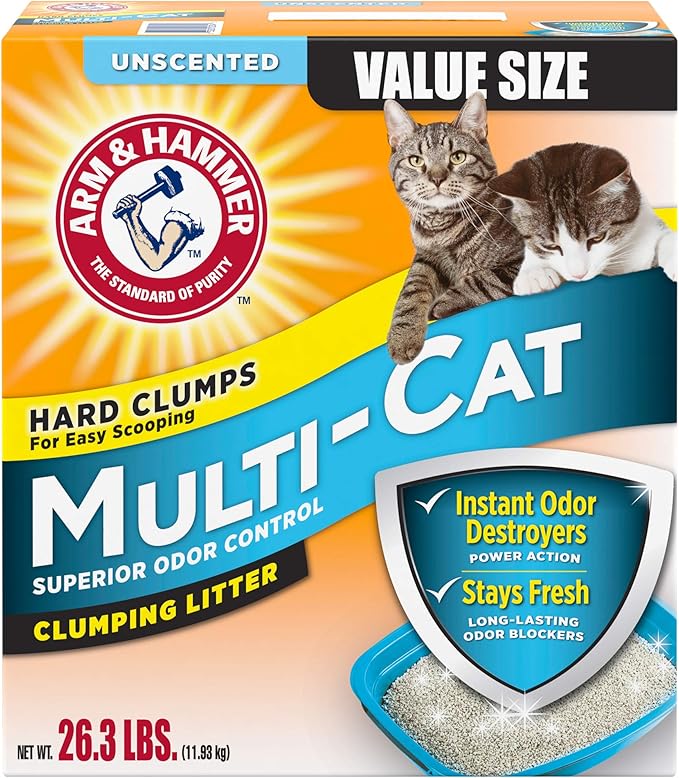
How well a mat performs depends partly on what's in the box. Heavy clumping clay litter (Arm and Hammer Clump and Seal, Dr. Elsey's) tracks less than lightweight scoopable or crystal litter, because the grains are denser and fall off the paw faster. If a mat is underperforming, switching to a heavier litter often does more than buying a bigger one. The other variable is litter depth. Boxes filled to 4 inches or deeper scatter more than boxes at the recommended 2 to 3 inch depth, because the cat digs harder to bury and flings grains out the back. Mat plus correct litter depth plus a covered box is the three-part fix for tracking. No single piece of it solves the problem alone.
Recommended
Products related to this guide.
Frequently asked questions
What are the best cat litter mats for trapping tracking?
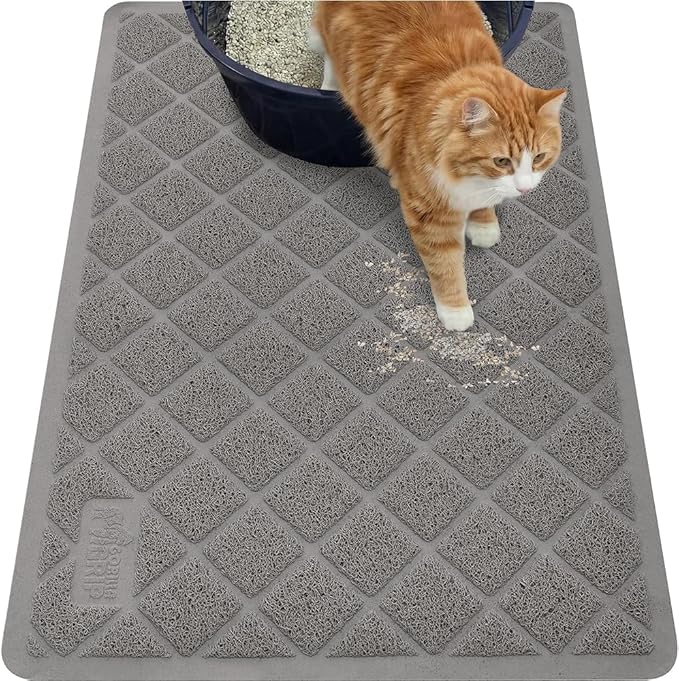
Gorilla Grip XL Cat Litter Mat. The bestseller workhorse and the default recommendation.
What are the best budget cat litter mats for trapping tracking?
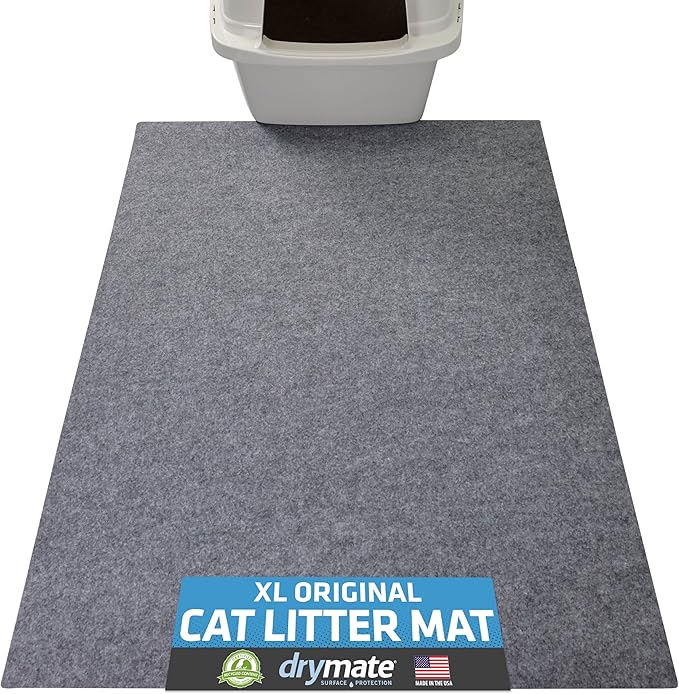
Drymate Cat Litter Mat. The honest floor for the category at under $20.
What are the best premium cat litter mats for trapping tracking?
iPrimio XL Cat Litter Trapper EZ Clean Two-Layer Mat. Two-layer trap-then-dump design: litter falls through the top honeycomb into a hidden bottom tray, and reset means lifting the top and dumping the tray back into the box.