Vitamix
Vitamix 5200 Review — The Last Blender You'll Buy?
By Sam Hollis · Updated September 2026
Independent editorial review. We never accept payment for coverage, though we may earn a commission if you purchase through our links.
Verdict
A focused review of the Vitamix 5200: the 2hp motor, variable speed dial, 64 oz tall container, the 7-year warranty plus restorable bearings longevity claim.
Similar alternatives
Quick Take
The Vitamix 5200 is worth $450-550 if you blend daily, if you make hot soups or nut butters in the blender, or if you've already burned out one or two cheap blenders and want to stop buying replacements. It is the wrong buy at $450-550 if you mostly make frozen smoothies a few times a week, since the $100 Ninja BL610 does that one job nearly as well. The 2-horsepower motor, the variable-speed dial with no presets, and the rebuildable bearing design are what hold the price up. The look and the brand are nice, but they aren't what you're paying for.
Longevity is where the 5200 earns its keep. The 7-year full warranty from Vitamix, the user-restorable drive socket and bearing assembly, and a motor built to run minutes at a time without thermal shutdown add up to owners regularly reporting 15-20 years of daily use on this exact model. Where it loses people is the tall 64 oz container, which won't fit under standard upper cabinets, and the missing preset buttons some buyers expect at this price. The Vitamix E310 Explorian at roughly $380 is the honest Vitamix-brand budget step-down, the Blendtec Total Classic at $380 is the premium alternative, and the Ninja BL610 at $100 is the smoothie-only answer for buyers the 5200 doesn't suit.
One product here: the Vitamix 5200, the $450-550 classic-line blender that has been the default recommendation in cooking forums for nearly two decades. Every potential buyer asks the same question, so that's the one this review answers. At $450-550, is this the last blender you'll buy, or does the $100 Ninja BL610 get close enough?
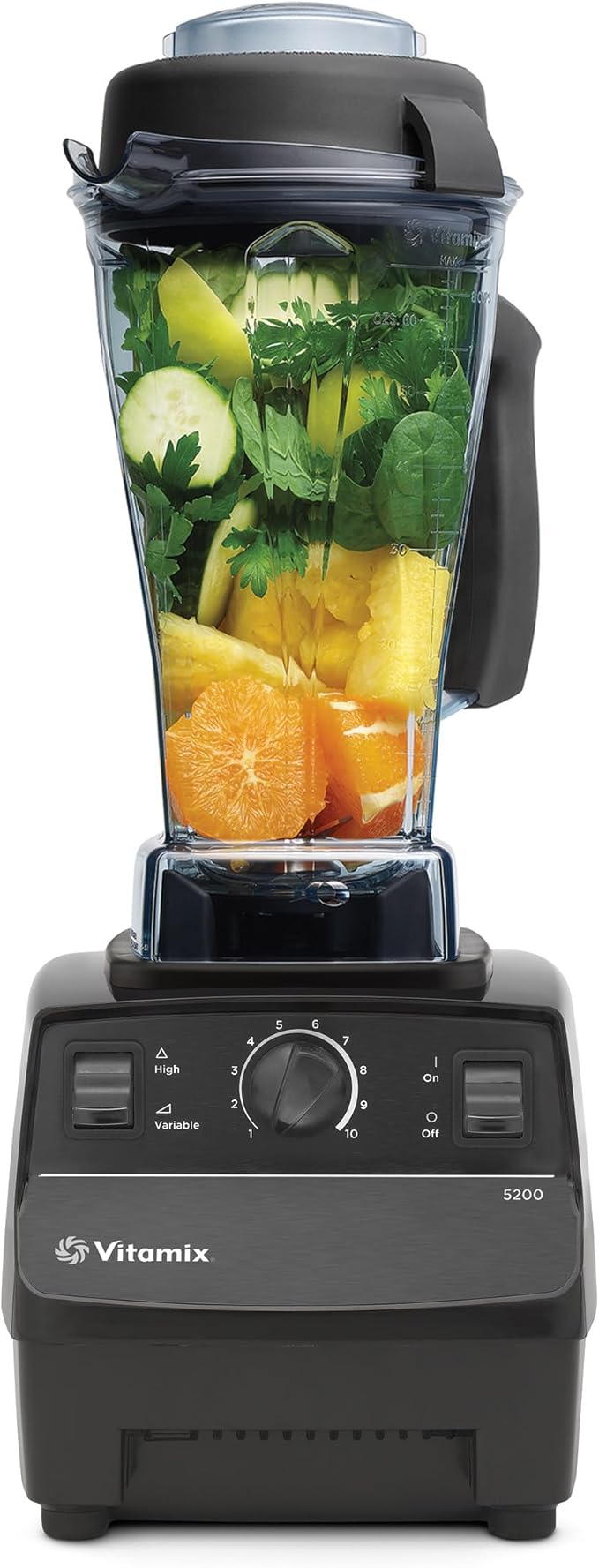
The Vitamix 5200 has been in continuous production since 2007, unusual for a kitchen appliance and a clue about how the company thinks about the product. A 2-horsepower motor drives hardened stainless blades inside a 64 oz tall container, controlled by a single variable-speed dial and a high/variable toggle. There are no presets, no app, no screen. The 5200 carries the design choices Vitamix considers settled: aircraft-grade stainless blades, a motor base rated for continuous use without thermal cutoff, and a drive socket plus bearing assembly the company sells as user-replaceable parts. Everything else in this review is about whether those choices, plus a 7-year full warranty, justify the premium over alternatives.
How the Vitamix 5200 works
The mechanism is the entire reason the 5200 costs $450-550 instead of $100. A 2-horsepower motor sits in the base, direct-coupled through a drive socket to the blade assembly in the 64 oz container. The variable-speed dial runs from 1 to 10, with no presets and no microprocessor in the path; the toggle picks high speed or variable. The blades are blunt rather than sharp, which surprises first-time buyers. Motor torque pulls food down into the vortex, and sharpness has nothing to do with it.
Two design choices carry the machine. First, the tall 64 oz container is shaped to create a downward vortex even at low fill levels, which is why a Vitamix can blend a small smoothie without the ingredients flying around the walls. Second, the motor is rated for several minutes of continuous use, and that enables the two recipes no $100 blender can match: hot soup, blended from raw ingredients by friction over 5-7 minutes, and nut butter, ground from whole nuts over 3-4 minutes. Cheap blenders thermally shut down inside two minutes attempting either.
What the Vitamix 5200 does well
Longevity is the thing this product does better than any alternative in the category. Vitamix offers a 7-year full warranty on the 5200 (parts, labor, and two-way shipping), and the drive socket plus bearing assembly are sold as user-replaceable parts straight from Vitamix. Owners on cooking forums regularly report 15-20 years of daily use on this exact model, often on the original motor. That's the most-cited reason owners stay with the product and the honest answer to 'is it worth $500'.
Texture is the second win. Motor torque plus the tall-container vortex produces smoothies, soups, and purees with no detectable grit, which lower-power blenders can't match no matter how long they run. Frozen-fruit smoothies blend in 30 seconds with no ice chunks. Whole-leaf greens disappear. Cashew cream comes out silky. This is where the price tag stops feeling absurd, and it's why restaurant kitchens default to Vitamix.
Hot soup is the trick buyers underestimate. Running the blender on high for 5-7 minutes makes enough friction heat to take raw vegetables to steaming-hot soup in the container, with no stove involved. It's a genuine time-saver on a weeknight and it is the demo that sells the product in stores. Cheap blenders can't do it; they shut down on thermal protection first.
Build quality is what you would expect at the price. The motor base is heavy enough to stay planted under load, the dial feels like a piece of equipment rather than an appliance, and the container is impact-resistant copolyester. Vitamix backs it with the 7-year warranty and a 30-day satisfaction guarantee, both of which owners report as honored without a fight.
It won't fit under a standard cabinet
Container height, more than anything else. The 64 oz tall container plus the motor base stands roughly 20.5 inches assembled, which won't fit under most standard upper cabinets (typically 18 inches of clearance). Owners with the cabinet problem store the container separately on the counter, drag the base out for each use, or buy the shorter 48 oz container as an aftermarket fix. Vitamix says nothing about this on the product page, and it is the loudest complaint in forums.
No presets is the second recurring complaint. At $450-550, buyers expect a smoothie button, an ice-crush button, a soup button. The 5200 has none; you turn the dial. Vitamix treats that as a feature (more control, fewer parts to fail), but buyers coming from a preset-driven Ninja or Blendtec find the first week frustrating. The owners' manual recipe book does the work of presets if you read it.
Noise is a standing complaint. At high speed the 5200 is loud, in the same range as a vacuum cleaner. Vitamix publishes no dB rating, but owners describe it as wake-the-house loud first thing in the morning. The same motor goes into the quieter 'G' series Vitamix sells at a premium. The 5200 is the unmuffled classic. If quiet matters, this is the wrong product line.
Accessory cost is smaller but persistent. The personal cup adapter is sold separately at around $140 from Vitamix (third-party versions run $30-65), the dry-grains container is a separate purchase if you want to grind flour, and replacement blade assemblies run $50-80. Buyers who expect one purchase to cover every blender job are doing the math wrong.
Who the Vitamix 5200 is for
Daily blender users, clearly. The labor and durability math only works in your favor if the machine runs every day; at one smoothie a week, a $100 Ninja outlasts your interest. At one smoothie a day plus weekly soup or sauce work, the 5200 pays for itself over a 10-year horizon and probably twice that.
Cooks who make hot soup, nut butters, or grain flours in the blender are the second clear yes. These are the recipes that physically destroy cheaper machines and the ones the 5200 was engineered around. If you've read recipes calling for blended hot soup or cashews ground into butter and assumed your blender couldn't do it, this is the upgrade that opens them.
Owners who have already burned out one or two cheaper blenders are the third yes. The forum pattern is consistent: buy a $100 Ninja, replace it in two years, buy another $150 blender, replace it in three years, then buy a Vitamix and stop. If you're on your second dead blender, the 5200 is the machine that breaks the cycle.
Who should skip the Vitamix 5200
Occasional smoothie makers who blend a few times a week. The longevity advantage is wasted when the machine sits unused most days, and the noise and footprint of the 5200 punish casual use. A Ninja BL610 at $100 does frozen-fruit smoothies nearly as well and lives in the cabinet without protest.
Kitchens with standard upper cabinets and no dedicated counter space. The 20.5-inch assembled height is a real problem the marketing never mentions. If the only home for the blender is under a cabinet, pick a Vitamix model with the shorter low-profile container (the Ascent line, more expensive) or pick a different brand.
Buyers who want preset buttons and an app. The 5200 is a 2007 design with a dial and a toggle, and that's on purpose. If smart-blender features matter, look at the Vitamix Ascent series or Blendtec, both of which include presets at this price point.
Blenders that cost less, and what gives
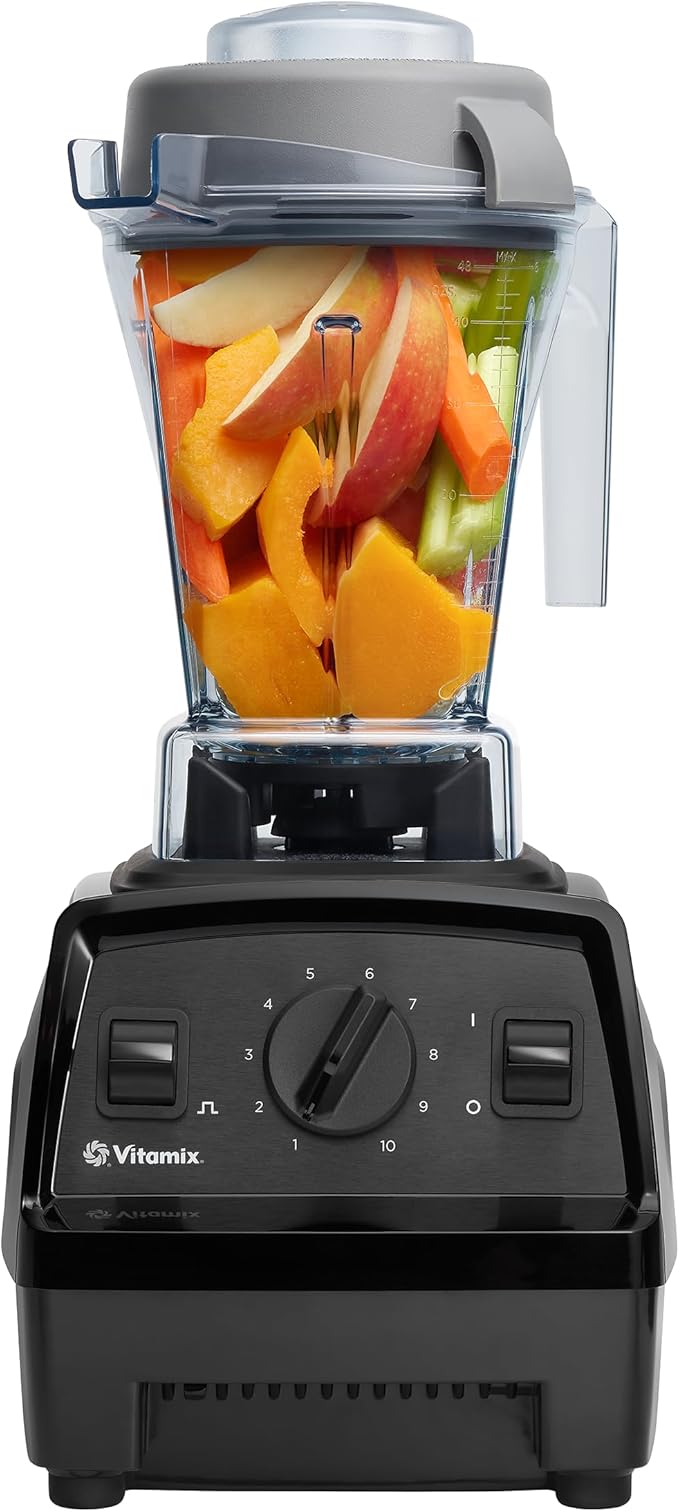
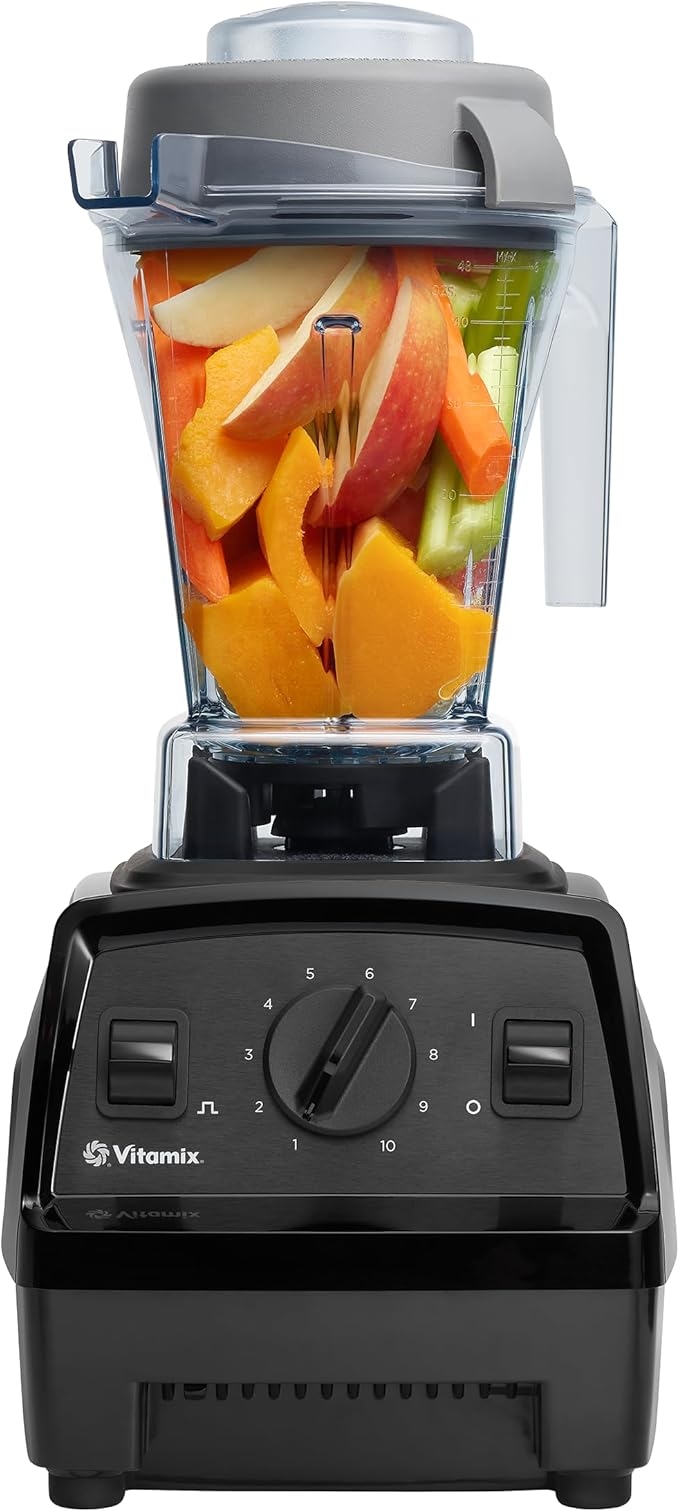
Vitamix E310 Explorian at roughly $380 is the honest Vitamix-brand budget step-down. Same 2-horsepower-class motor, same variable-speed dial, shorter 48 oz container that fits under cabinets, 5-year warranty instead of 10. You give up batch size and half the warranty period; everything that makes a Vitamix a Vitamix is intact. For most buyers who want the brand without the 5200 footprint, this is the answer.
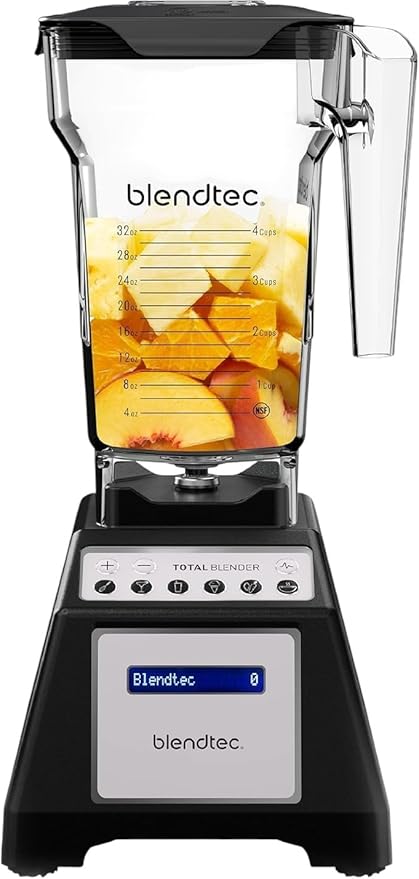
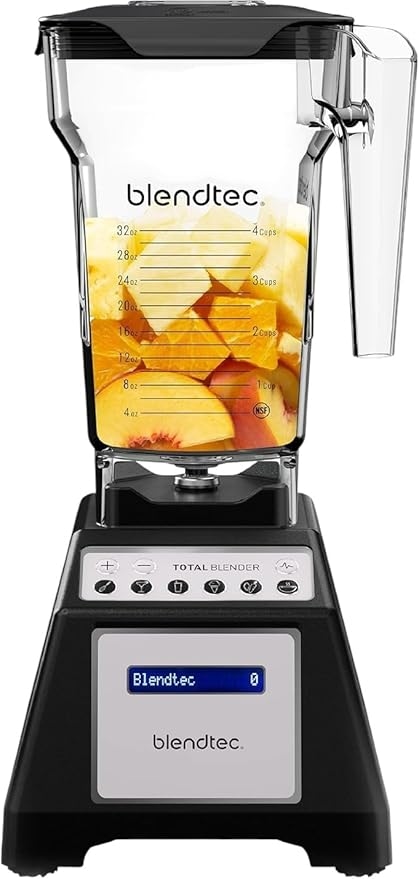
Blendtec Total Classic Original at roughly $380 is the premium alternative if you want presets. Same horsepower class, blunt blades, a jar that fits under cabinets, and a panel of preset buttons (smoothie, ice crush, soup) the 5200 refuses to include. Warranty is 8 years against Vitamix's 10. Food-texture results land within rounding distance of a 5200 in side-by-side tests, so the choice is mostly ergonomics.
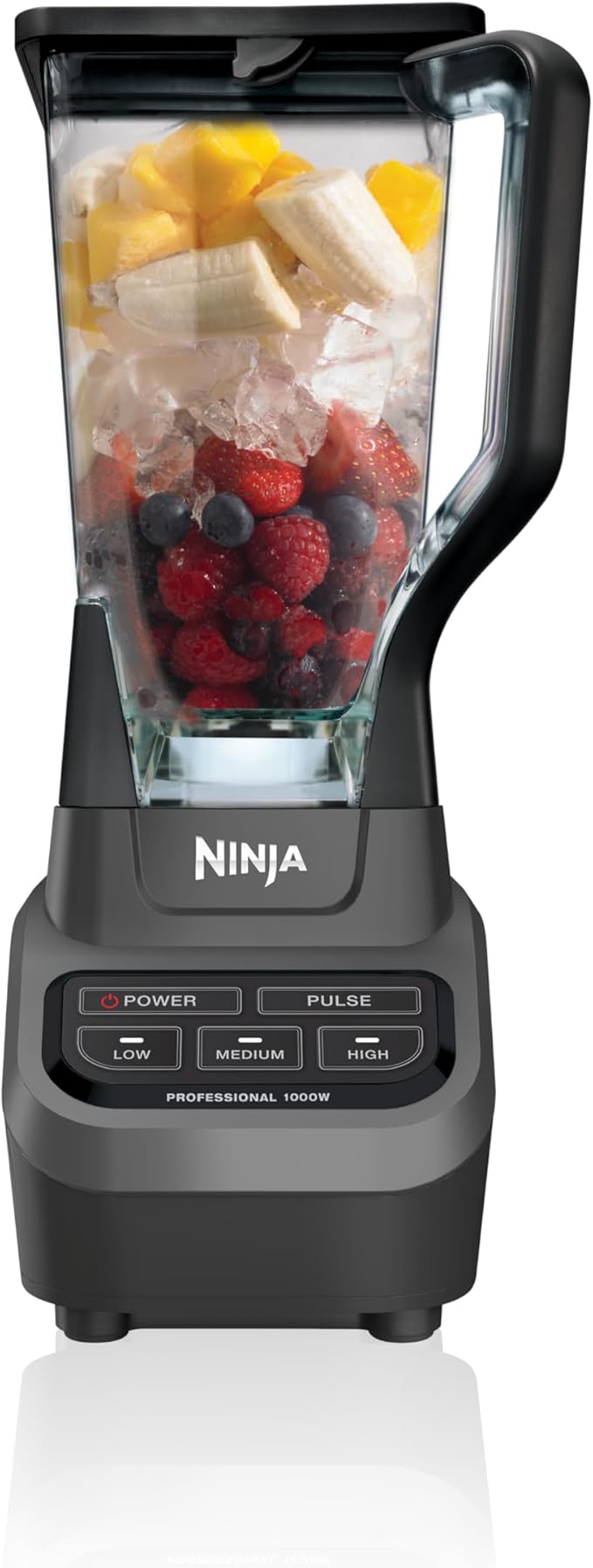
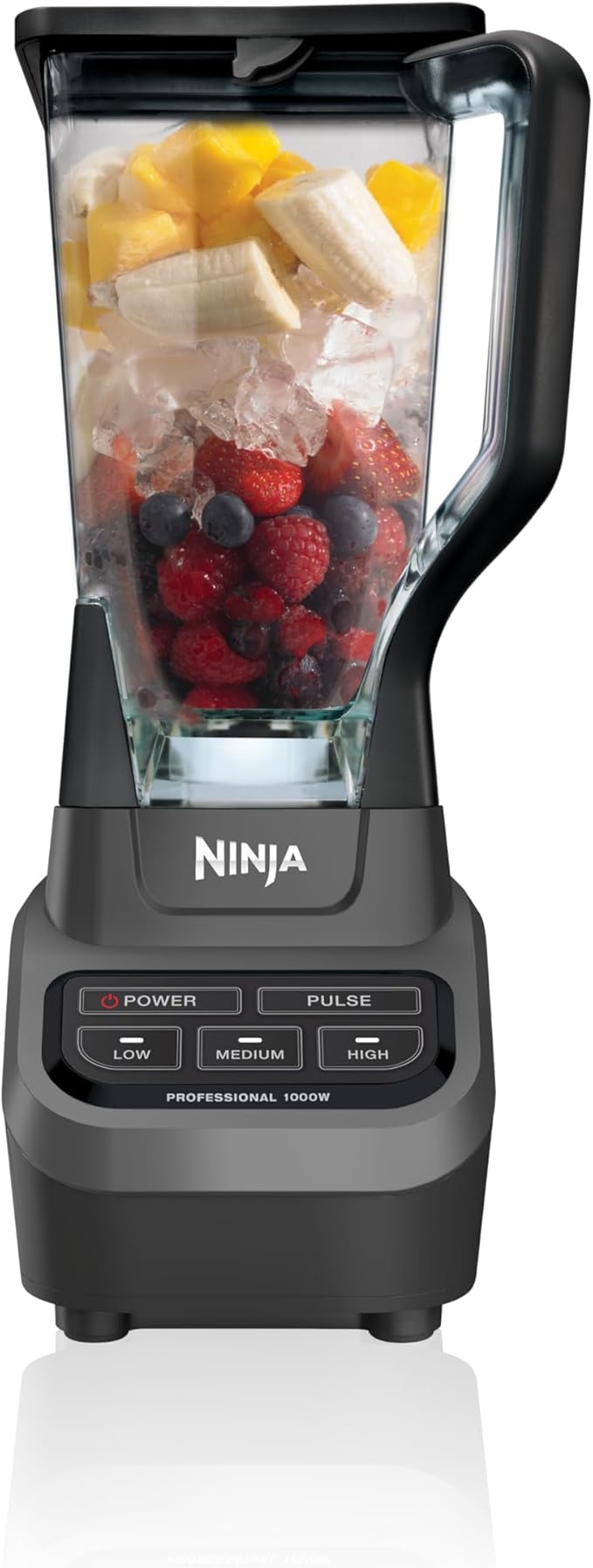
Ninja BL610 Professional at roughly $100 is the budget answer for smoothies and nothing else. It's what most kitchens use, it makes a frozen-fruit smoothie in 30 seconds, and it costs less than a fifth of the 5200. The limits are honest: it thermally shuts down on hot soup, it grinds nut butter into hot paste rather than smooth butter, and owners replace it every 2-4 years. If the answer to 'is the 5200 worth $500' is no, this is almost always what to buy instead.
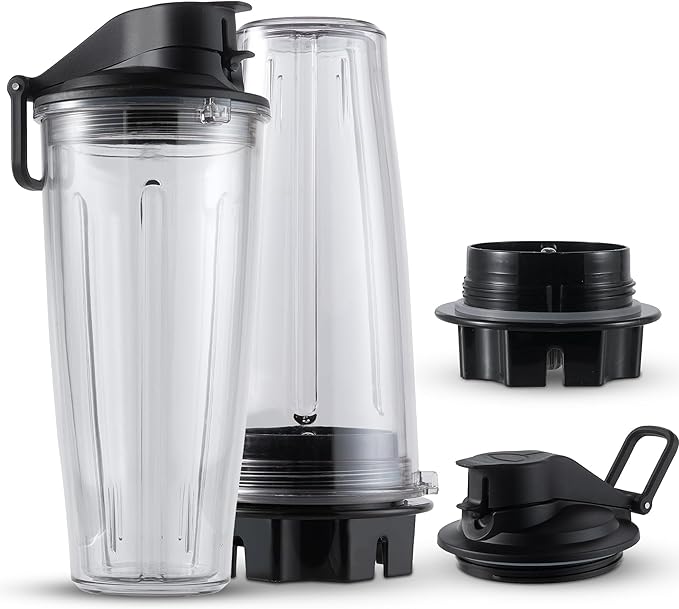
A personal cup adapter is the one accessory that pairs with the 5200 itself. The MRX Solutions adapter at around $65 lets the 5200 blend a single-serve smoothie straight into a 20 oz cup, which closes the biggest convenience gap between a Vitamix and a Ninja. At $65 it is the cheapest upgrade to the 5200 setup and the one accessory the owners' forum recommends without qualification.
The verdict on $450-550
The Vitamix 5200 is worth $450-550 if you blend daily, if you make hot soup or nut butter in the blender, or if you've already burned out one or two cheaper machines. In those cases the longevity, the texture, and the recipe range are real, and the build holds up long enough (owners report 15-20 years of daily use) that the price looks cheap on a per-year basis. The 7-year warranty plus user-replaceable bearings isn't marketing copy; it's how Vitamix services the product.
Skip it at $450-550 if you make smoothies a few times a week and nothing else, if your only counter space is under an upper cabinet, or if you want preset buttons. The product is excellent at what it does, but at $500 it's a daily-use tool rather than a smoothie maker. In that case buy the Vitamix E310 Explorian if you still want the brand, the Blendtec Total Classic if presets matter, or the Ninja BL610 if smoothies are the whole job.
Our Ratings
Overall score
A 2-horsepower motor rated for continuous duty without thermal cutoff drives hardened stainless blades in a 64 oz container, built in Olmsted Township, Ohio. The drive socket and bearings are user-replaceable, so the 5200 can be torn down and rebuilt on a counter instead of thrown out, which feeds Vitamix's certified reconditioned program. The 7-year full warranty runs double or triple the category norm.
The 64 oz tall container is the defining choice and compromise: full assembled height is roughly 20.5 inches, too tall for standard 18-inch upper cabinets, so either the pitcher comes off or the blender lives on the counter. The interface is unapologetically industrial, a chrome speed dial, a high/variable toggle, and a pulse switch, with no screen, app, or presets. Iconic or dated depending on the buyer, and almost nobody finds it neutral.
At $450-550 the value splits cleanly on usage. Blend three-plus times a week and the 10-plus-year service life amortizes to roughly $40 a year, with restorable bearings stretching it further. Smoothie-only households get an acceptable smoothie in 30 seconds from the $100 Ninja BL610 and replace it every two to four years. Strong value for cooks, poor value for the rest.
Vitamix 5200 on Amazon.
Frequently asked questions
Is the Vitamix 5200 worth it?
The Vitamix 5200 is worth $450-550 if you blend daily, if you make hot soups or nut butters in the blender, or if you've already burned out one or two cheap blenders and want to stop buying replacements. It is the wrong buy at $450-550 if you mostly make frozen smoothies a few times a week, since the $100 Ninja BL610 does that one job nearly as well. The 2-horsepower motor, the variable-speed dial with no presets, and the rebuildable bearing design are what hold the price up.
How is the Vitamix 5200 built?
A 2-horsepower motor rated for continuous duty without thermal cutoff drives hardened stainless blades in a 64 oz container, built in Olmsted Township, Ohio. The drive socket and bearings are user-replaceable, so the 5200 can be torn down and rebuilt on a counter instead of thrown out, which feeds Vitamix's certified reconditioned program. The 7-year full warranty runs double or triple the category norm.
What styles does the Vitamix 5200 work with?
The 64 oz tall container is the defining choice and compromise: full assembled height is roughly 20.5 inches, too tall for standard 18-inch upper cabinets, so either the pitcher comes off or the blender lives on the counter. The interface is unapologetically industrial, a chrome speed dial, a high/variable toggle, and a pulse switch, with no screen, app, or presets. Iconic or dated depending on the buyer, and almost nobody finds it neutral.
Options Worth Checking Out
Vitamix E310 Explorian Blender
The honest Vitamix-brand budget alternative if the 5200 footprint is the dealbreaker. Same motor class, shorter 48 oz container that fits under cabinets, 5-year warranty instead of 10. Smaller batches; everything that makes it a Vitamix is intact.
Blendtec Total Classic Original Blender
The premium alternative for buyers who want presets the 5200 refuses to include. Same horsepower class, blunt blades, jar fits under cabinets, smoothie / ice / soup preset buttons. 8-year warranty. Texture is within rounding distance of a 5200.
Ninja BL610 Professional Blender
The honest budget answer if the 5200 math does not work. 1000W motor makes a frozen smoothie in 30 seconds for a fifth of the price. Will thermal-shut on hot soup and cannot make smooth nut butter; most owners replace it every 2-4 years.
You Might Also Need
Accessories worth grabbing alongside your purchase