Thuma
Thuma Classic Bed Reviews + Our Editorial Verdict
By Erin Mitchell · Updated September 2026
Independent editorial review. We never accept payment for coverage, though we may earn a commission if you purchase through our links.
Verdict
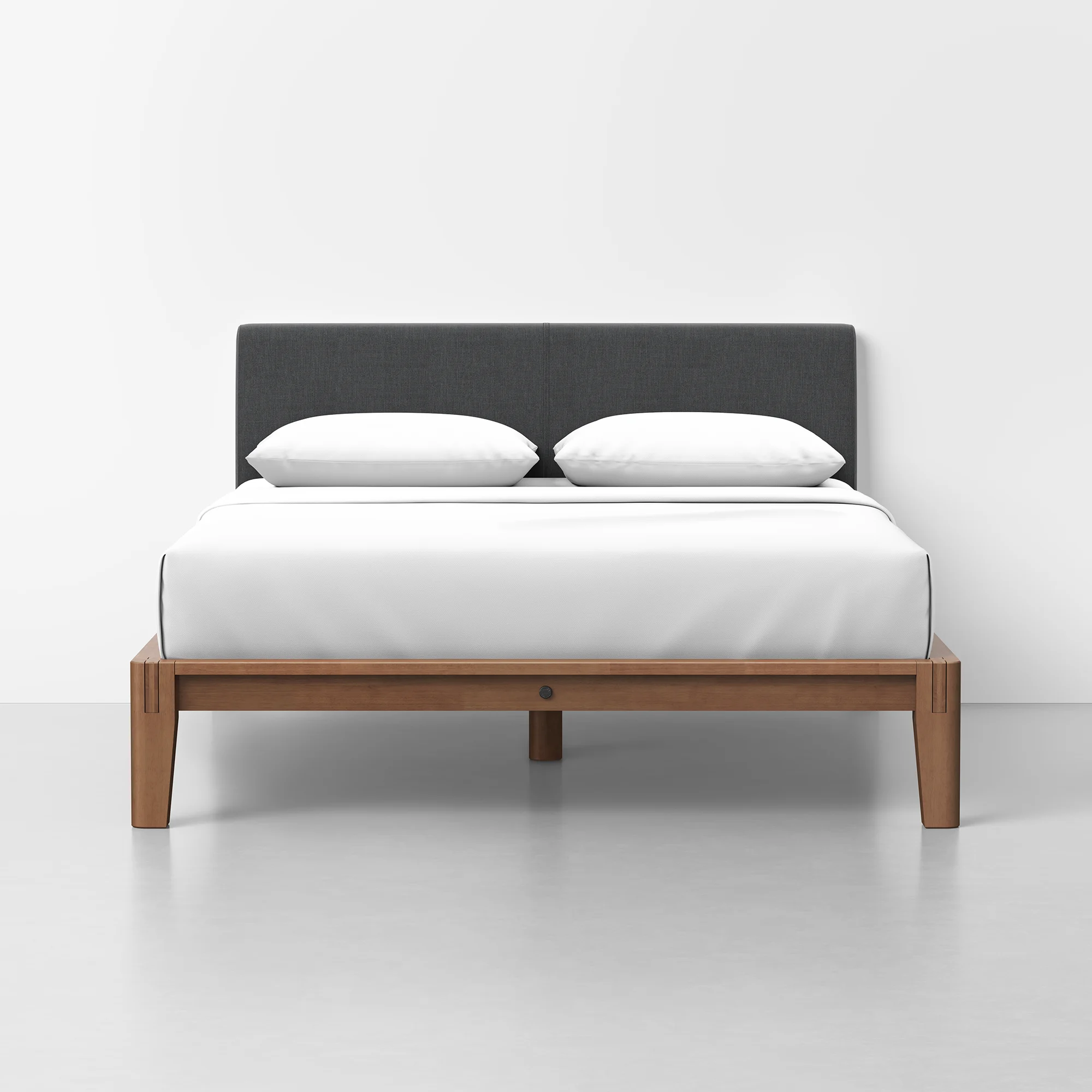
The Thuma Classic Bed earns strongly positive coverage from editorial and owner communities alike. Wirecutter includes it in their best platform bed frames list; Mattress Clarity and Sleep Advisor both score it 4.8/5. The Quality Edit, The Good Trade, and The Zoe Report all reviewed it positively, with near-universal praise for the tool-free assembly and the sustained silence. Reddit owner reports on r/BuyItForLife run the same way, with owners at 3, 5, and 6 years reporting no squeaks and no structural decline. The dissent is specific: slat mold in humid climates (a recurring BBB complaint that Thuma's warranty excludes), occasional QC variance on arrival, and the increase from the ~$895 launch price to $1,195 today. The PillowBoard's wall-lean-only design draws a steady minor complaint. Sentiment overall stays firmly positive, with the humid-climate caveat as the exception that matters.
Read full take ↓Similar beds
Quick Take
Solid rubberwood with Japanese joinery and a lifetime frame warranty, assembled without tools, which is what the premium over IKEA buys. The double-strength felt-lined slats outperform most competitors at this price. Slat mold is a documented issue in humid climates, so air it out if you live somewhere damp.
The tool-free bed that changed what people expect from bedroom assembly
The Thuma Classic Bed sells one specific promise: a platform bed frame that assembles in five minutes without tools, stays silent for years, and comes from real wood with a real backstory. At $1,195 for a queen it's a premium product in a category where IKEA charges $150 and West Elm charges $1,699. Thuma has carved out a position between those two poles, priced in the middle and more distinctive than either in how it works and how it feels to live with.
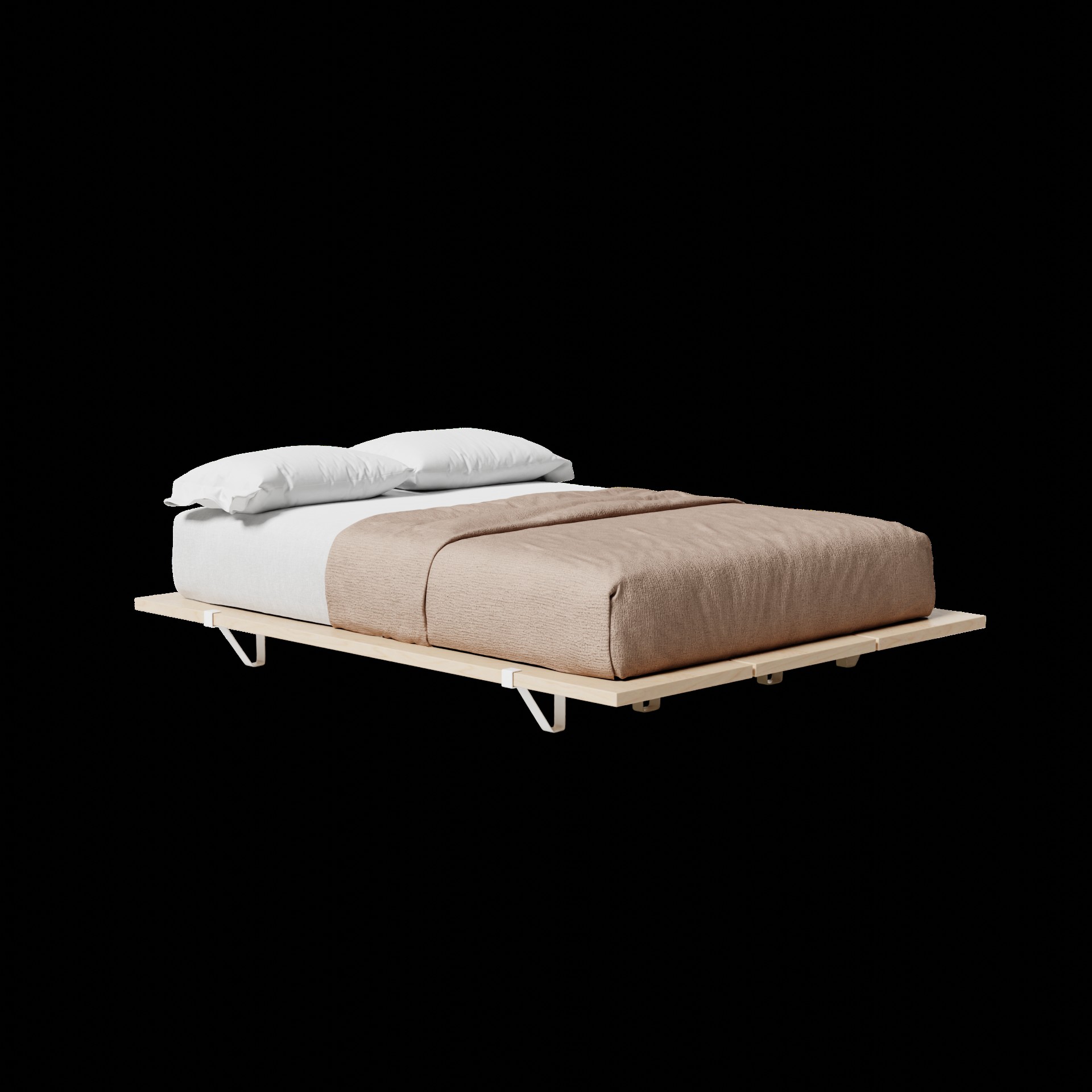
Thuma launched in 2018 with one product and one argument: furniture assembly had been needlessly complicated for too long, and the Japanese joinery tradition offered a better model. The Classic Bed uses a mortise-and-tenon-style wood-on-wood connection system that holds the frame together through compression and fit rather than mechanical fasteners. No Allen wrenches, no cam locks, no stripped bolts. The only hardware in the whole assembly is two hand-tightened screws that anchor the slat support system. Everything else clicks and locks into place.
Owners put it together in 5 to 20 minutes, usually without instructions in hand, and describe it as one of the most satisfying furniture experiences they've had. That isn't marketing language. It's a consistent pattern across independent reviews, community forums, and five-year owner reports. Assembly is the Thuma's clearest competitive advantage, and it holds up at scale.
The assembly experience, Thuma's clearest competitive advantage
The Japanese joinery system is the thing to understand about the Thuma Classic Bed before you evaluate anything else. Most platform beds, including offerings from West Elm, IKEA, Article, and every Amazon brand, rely on hardware-based assembly: bolts, cam locks, Allen screws, and plastic fasteners that need specific torque, strip with overtightening, and have to be tracked and not lost across multiple moves. Once stripped or misplaced, they compromise the structural integrity of the whole frame.
Thuma eliminates nearly all of that. The frame rails slot into the headboard and footboard posts through shaped wood joints. The slats slide in and lock. Two hand-tightened screws secure the center support bracket, and that's the extent of it. Most owners, including people who call themselves entirely non-handy, finish the build solo without instructions. One owner described their old IKEA bed as having 'approximately 30 screws and other various hardware', with slats 'half as thick' as the Thuma's, then called the Thuma 'easily one of the best pieces of furniture I now own.' That account repeats across hundreds of others.
The downstream benefit matters just as much: the bed comes apart and goes back together just as cleanly after a move. No hardware pieces to lose, no cam locks to strip, no screws that stop gripping in compressed fiberboard. Owners who have moved several times with the Thuma report that reassembly is identical to first assembly, the joints still fit, the slats still lock, the frame still sits solid. Anyone who has watched an IKEA frame degrade across two or three apartments knows what that's worth.
One practical planning note: once assembled, the Thuma is heavy and hard to reposition. Multiple owners recommend putting the frame in its final location and confirming wall clearance, power outlet positions, and room orientation before finishing the build. It doesn't slide easily on hardwood or tile once it's together.
Rubberwood, and what 'upcycled wood' means
Thuma markets the Classic Bed as '100% upcycled wood.' The material is rubberwood, Hevea brasiliensis, the same plantation tree used to produce natural latex. Rubber trees yield latex for roughly 25-30 years, and after that they're typically burned or left to decompose. Thuma sources wood from trees at the end of that productive cycle, kiln-dries it to 6-8% moisture content for dimensional stability, then machines and finishes it for furniture use. 'Upcycled' is accurate here: the trees exist for rubber production, and the wood is a second use for material that would otherwise be discarded.
There's been fair debate in the community about what 'upcycled' means in practice. Rubberwood takes real processing to reach furniture grade: kiln-drying, an oil-based finish coat, and machining precise enough to hit the tight joint tolerances the assembly system needs. It's no simple reclamation material. The sourcing claim still holds up and is auditable rather than marketing language stapled onto a standard supply chain, and the GREENGUARD Gold certification independently verifies that the finished product meets strict chemical emissions standards for indoor air quality.
Physically, rubberwood is a genuine hardwood, Janka hardness around 960 lbf, denser than pine and comparable to cherry or black walnut in feel. The frame has real weight to it, which owners read as a good signal; it doesn't feel like a hollow structure. The oil-based finish builds a patina over time, which Thuma acknowledges and positions as a feature rather than wear. Knots, grain variation, and other natural imperfections show up in every piece.
One minor quality complaint recurs in owner reports: some slats and frame surfaces arrive not fully sanded, slightly rough to the touch. It isn't structural and doesn't affect assembly or durability, but at $1,195 you notice it.
Felt slats, no hardware, no noise
The second major selling point after assembly is noise performance, and the documentation is just as good. The Classic Bed's double-strength slats are wrapped in eco-fi felt, made from recycled plastics, which dampens both slat-to-slat contact and mattress movement against the frame. Add the absence of metal hardware anywhere in the main frame, no bolts vibrating in bolt holes, no cam locks rattling, no screw heads touching wood surfaces, and the bed makes essentially no sound in ordinary use.
The advantage compounds over time. Metal hardware in wood furniture loosens through the micro-movements of daily use and thermal expansion cycles, so a bed that's quiet at purchase can start squeaking within 18 months. The Thuma's compression-fit joinery doesn't have that failure mode. The wood-on-wood connections keep their fit as long as the wood itself is structurally sound. Long-term owners at 18 months, 3 years, and 5 years report the same silence they had on day one.
This is the Thuma's most compelling functional argument and the most consistent theme across community reports. Owners with partners who move all night, households with pets who join the bed, and self-described restless sleepers all report sustained silence. For anyone who has lain awake listening to a bed squeak at 3 a.m., that's not a small thing.
The slat mold problem is real, and documented in humid climates
The Thuma Classic Bed has one recurring, documented failure mode that deserves direct attention: mold on slats. Multiple Better Business Bureau complaints describe slats developing mold roughly 12 to 24 months after purchase. Worse, replacement slats sent under warranty have molded in later years too. The affected owners skew heavily toward high-humidity environments, coastal cities, apartments with poor ventilation, bedrooms where the windows stay closed.
The mechanism is simple. The eco-fi felt that wraps the slats is good at dampening sound and can trap moisture when the under-bed environment has poor airflow. The low-profile platform gives roughly 9 inches of clearance below the frame, enough for some air circulation but not generous. In humid climates without steady air conditioning or dehumidification, moisture accumulates in the felt.
Thuma's warranty explicitly excludes 'mold, odors, and/or discoloration caused by abnormal care including liquid spills, improper ventilation, humid climates and/or exposure to excessive water or humidity.' Owners who hit mold in year one or two are understandably frustrated that a known failure mode sits outside coverage. The problem shows up in enough independent complaint records to count as a pattern rather than isolated incidents, and Thuma's response, replacement slats that sometimes mold as well, points to a climate-driven issue rather than individually defective parts.
Practical guidance: if you live somewhere humid and don't run air conditioning consistently, price this risk into the purchase decision. A dehumidifier running in the bedroom, or regularly checking and airing the slat surface, cuts the risk without eliminating it. In dry climates and well-ventilated spaces, it doesn't appear in owner reports at all.
The PillowBoard, an optional headboard with a wall-lean limitation
Thuma sells the PillowBoard as a companion product, a padded headboard-style piece that sits between the mattress and the wall. It comes upholstered in either Performance Linen (70% polyester, 24% viscose, 6% linen, OEKO-TEX Class 2 certified) or Italian Wool Felt (70% recycled wool, 25% recycled polyamide, GREENGUARD Gold certified and made from 100% recycled materials). The cover is interchangeable, so you can swap the upholstery later if you want a different look.
The core limitation is structural: the PillowBoard doesn't attach to the bed frame. It leans on the wall, held in position by the mattress pressing against it from the front. That's a deliberate design choice, since Thuma's assembly ethos extends to the headboard and its lack of mounting hardware, but it creates a functional inconvenience. If you sit upright in bed a lot, push back against the headboard, or have a mattress that shifts, the PillowBoard drifts away from the wall. With a thick mattress (15.5"+ profile), the gap to the wall can leave it tilted or looking unanchored.
The PillowBoard is explicitly excluded from the Classic Bed's lifetime warranty, which covers the wood frame and slats only. For a foam-and-fabric product taking daily compression and body oils that exclusion is unsurprising, but flag it if you're buying the full system with lifetime ownership in mind.
Value at $1,195, and how it stacks up against West Elm, IKEA, and Amazon dupes
The value case for the Thuma Classic Bed has shifted as the price climbed. The bed launched at approximately $895-$995 for a queen, where the premium over a solid IKEA frame was small in absolute terms and easy to justify on assembly and noise grounds. At $1,195, roughly 25% higher, the equation takes more thought.
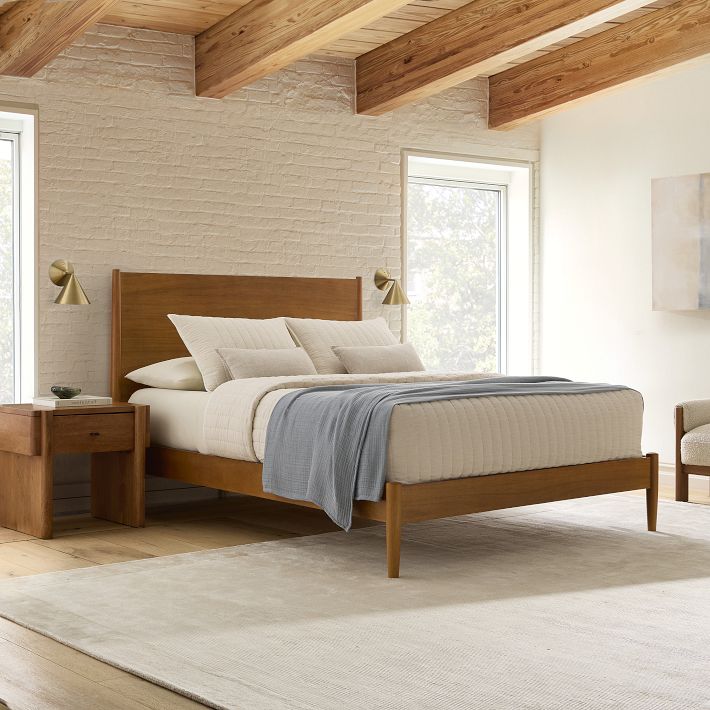
Against West Elm and Pottery Barn the Thuma wins clearly. West Elm bed frames in the same aesthetic range run $1,499-$1,899 and use plywood or MDF (medium-density fiberboard, an engineered wood board) construction with standard hardware assembly. Solid rubberwood, tool-free assembly, a lifetime warranty, and the noise performance add up to a genuine value advantage at a lower price. Same story against Pottery Barn and Crate & Barrel at similar price points.
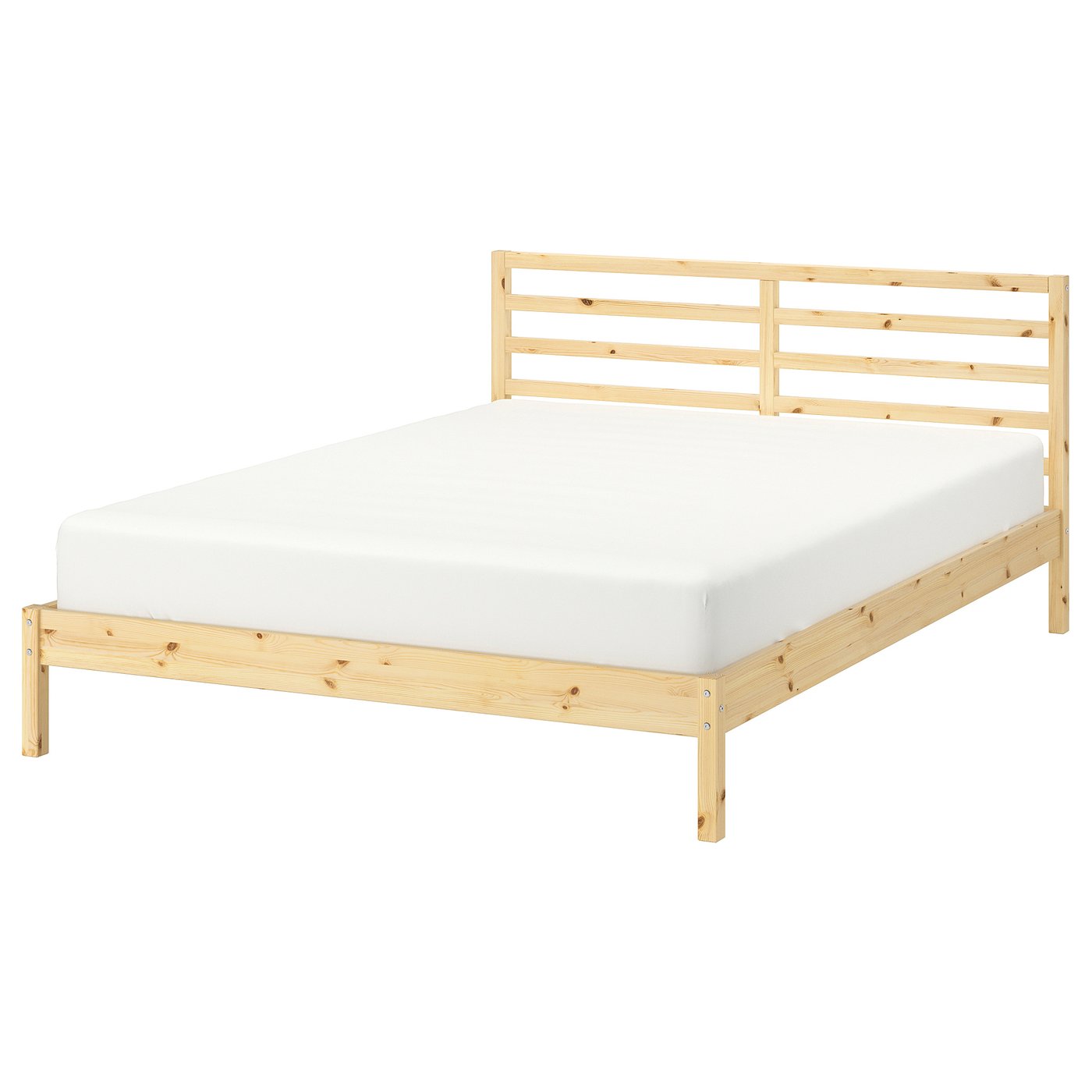
Against IKEA the math is harder. An IKEA HEMNES or MALM with a solid slat kit runs $250-$450 all-in, so the Thuma costs 2.5-4x more. The IKEA frames are real wood (pine) and assemble with tools in 30-60 minutes. They creak sooner and degrade with repeated moves, but if you don't prioritize silence and rarely move, the functional difference doesn't justify $800 in premium. The Thuma is a better bed. Whether it's $800 better depends entirely on which features you value.
The Amazon dupe market complicates things further. A growing range of Japanese-joinery-inspired platform beds from mid-tier brands, often out of the same Southeast Asian manufacturing regions as Thuma, retail for $300-$600. Whether those dupes approach the Thuma's build quality is still an open community argument. The lifetime warranty, GREENGUARD certification, documented customer service for warranty claims, and 5+ year track record are real advantages the Amazon alternatives don't match yet. Still, the price gap has narrowed Thuma's exclusivity claim.
The most honest framing: the Thuma Classic Bed is worth $1,195 if assembly experience, sustained silence, and verified certifications matter to you, and if you're in a dry-to-moderate climate. It's a tighter case than it was at $895, and it remains the strongest option in its specific market position, better than West Elm and Pottery Barn at a lower price, more refined than the Amazon alternatives, and a different experience entirely from IKEA.
Thuma Classic Bed construction, a deep-dive
Frame
Solid rubberwood (Hevea brasiliensis) throughout. No MDF core, no particleboard, no veneer over engineered wood. Rubberwood is a genuine hardwood taken from rubber trees after their latex-yielding years are complete. Janka hardness approximately 960 lbf, comparable to cherry wood. The frame is kiln-dried to 6-8% moisture content for dimensional stability. Natural grain variation, knots, and color differences between pieces come with the material. Total weight capacity: 1,500 lbs.
Assembly system
Japanese joinery-inspired compression-fit connection system. Frame rails slot into headboard and footboard posts through shaped wood joints, with no bolts, no cam locks, no Allen wrenches. Two hand-tightened screws anchor the center slat support bracket. Full tool-free assembly runs 5-20 minutes solo. The connection points hold through compression rather than hardware tension, which removes the loosening-over-time failure mode of hardware-dependent frames. It comes apart and goes back together identically after moves, with no hardware to degrade.
Slats
Double-strength slats, described as twice the thickness of IKEA-standard slats at a third the width, wrapped in eco-fi felt made from recycled plastics. The felt dampens slat-to-slat contact and mattress movement against the frame, producing zero noise under ordinary use. Slats lock into place to prevent slipping and mattress movement. Slat spacing is set for mattress breathability. The known vulnerability: felt can trap moisture in high-humidity environments, which leads to mold on slats in 12-24 months. That failure mode is excluded from the lifetime warranty under the humidity and improper ventilation clause.
Finish and certifications
Oil-based finish applied over raw rubberwood. It develops a natural patina over time, which Thuma treats as an expected characteristic rather than wear. Avoid moisture exposure and direct sunlight. Clean with a soft cloth, no chemical cleaners. GREENGUARD Gold certified for indoor air quality, independently verified for low chemical emissions rather than self-reported.
PillowBoard (optional add-on)
CertiPUR-US certified foam core with an interchangeable upholstery cover. Two cover options: Performance Linen (70% polyester, 24% viscose, 6% linen, OEKO-TEX Class 2 certified) and Italian Wool Felt (70% recycled wool, 25% recycled polyamide, GREENGUARD Gold certified, 100% recycled materials). The PillowBoard rests between the mattress and the wall and does not attach to the frame. The wall-lean design means the board can shift with a thick mattress (15.5"+) or active use. NOT covered under the lifetime warranty, since foam and fabric components are excluded.
Dimensions and sizing
Available in Twin, Twin XL, Full, Queen, King, and California King. Standard platform height gives roughly 9 inches of under-bed clearance, enough for low-profile storage boxes but not suitcases. Ships in 2-4 boxes sized to navigate stairs and hallways. Two-person assembly recommended for King and California King; Queen and smaller go solo.
Warranty
Lifetime warranty on the wood frame and slats for the original purchaser, covering breakage and defects in normal bedroom use. Exclusions: damage from moving or relocation, humidity-related mold or discoloration, physical abuse, normal wear and tear, and use in hospitality or rental contexts. The PillowBoard and PillowBoard Covers are explicitly excluded from the lifetime warranty. There's a 30-day trial for first-time purchasers, with complimentary return shipping if you're unsatisfied within 30 days.
Our Ratings
Overall score
Solid rubberwood construction with Japanese joinery and a lifetime warranty on the frame. The double-strength felt-lined slats outperform most competitors at this price. Slat mold in humid climates is a documented vulnerability.
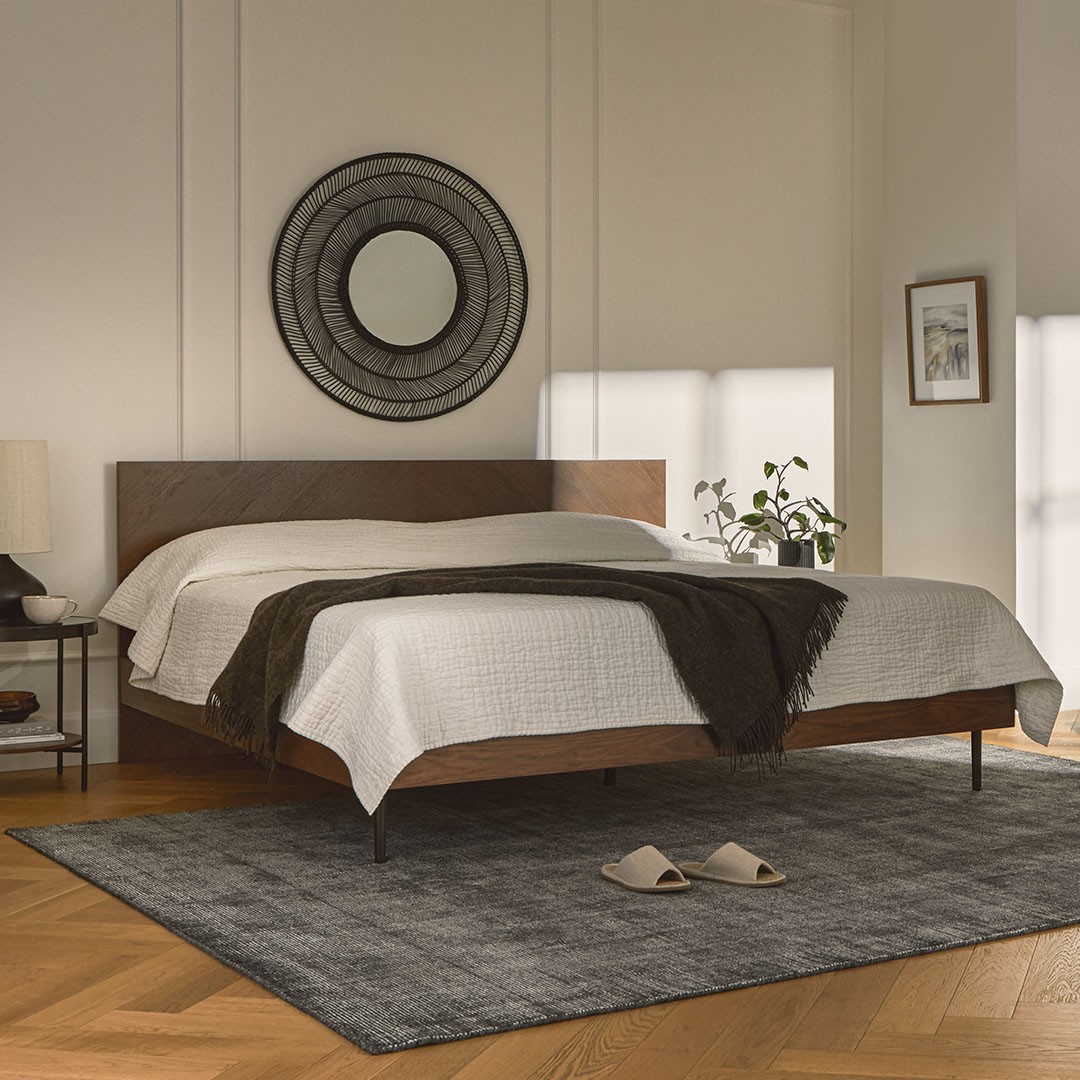
Clean minimalist platform profile in natural rubberwood or walnut stain. Distinctive without chasing a trend, and it sits comfortably in Japandi, mid-century modern, and transitional rooms alike. The low-profile silhouette photographs well and scales correctly in most bedroom sizes.
At $1,195 for a queen, the Thuma is competitive against West Elm and Pottery Barn and considerably more expensive than IKEA and the Amazon alternatives. The assembly experience and lifetime warranty justify the premium for plenty of buyers, though the case is tighter than it was at the original $895-$995 launch price.
What People Are Saying
The Thuma Classic Bed earns strongly positive coverage from editorial and owner communities alike. Wirecutter includes it in their best platform bed frames list; Mattress Clarity and Sleep Advisor both score it 4.8/5. The Quality Edit, The Good Trade, and The Zoe Report all reviewed it positively, with near-universal praise for the tool-free assembly and the sustained silence. Reddit owner reports on r/BuyItForLife run the same way, with owners at 3, 5, and 6 years reporting no squeaks and no structural decline. The dissent is specific: slat mold in humid climates (a recurring BBB complaint that Thuma's warranty excludes), occasional QC variance on arrival, and the increase from the ~$895 launch price to $1,195 today. The PillowBoard's wall-lean-only design draws a steady minor complaint. Sentiment overall stays firmly positive, with the humid-climate caveat as the exception that matters.
Reddit and Houzz commentary are weighted 3× against blog and editorial sources in our sentiment score. Brand PR has a well-documented influence on editorial coverage — direct owner reports from message boards tend to be more candid.
What Reddit Is Saying
“I have one and love it. It is shockingly sturdy and can take abuse. It's made it through a rough move and doesn't budge when you're in it. The locking mechanisms are genuinely cool and really work. Thuma is a 10/10 for me.”View thread →
“I've had my Thuma for 5 years and it's been absolutely fantastic. No movement, totally silent, easy to put together. However! My Tempur Pedic did NOT feel the same even though Thuma and Tempur Pedic both say the slats' size/shape/spacing should be fine for the mattress. I gave it a couple weeks to make sure I wasn't imagining things and finally gave up and added Tempur's 2" flat foundation, which fixed it.”View thread →
“I'm coming at this post a bit late, but with about 18 months in my thuma bed. I'm a petite woman. I set it up myself. I'm not super handy and it was HEAVY. It has also been amazing, every single night. I know that when I move again, it's something I will move with and enjoy for many many years to come. No squeaks, no dents. It was absolutely worth the price.”View thread →
“Absolutely. 6 years in for us and it's moved twice. Not a squeak, not a moment of instability.”View thread →
“It’s sturdy af, easy to assemble (you really do not need any tools), and genuinely looks great. I will use this frame probably forever, it is as nice as the day I got it a couple years ago. The pieces fit together using castle joints if you want to look that up. My one complaint is that there is no headboard mounting mechanism. The headboard they sell merely squeezes between the wall and the mattress, feels like an after thought.”View thread →
“I've had it for four years and moved it three times already. It's pretty solid, absolutely no squeaks, but it's not going to be a family heirloom. The actual quality of the grain isn't well selected IMO. Definitely not as nice as the ads. That being said I'm happy to have bought it as someone that has had to move it a bunch.”View thread →
“thuma is expensive because of marketing, in the way that apple kind of is. it's a certain aesthetic that you pay a premium for. there are plenty of bad reviews in their subreddit. just know what you're in for and if you're fine paying that premium, then go for it.”View thread →
“Just to share another perspective, I really wanted my Thuma bed to work, but ultimately returned it. Maybe it was because I got it with the headboard, but I couldn't get the joints to lock in place and it did squeak and move. Customer service was helpful — first thing to try was pull on all the legs to make sure they were stable. No luck. Then they instructed that the pieces can be assembled a few different ways and to try reassembling to get a better joint fit.”View thread →
Frequently asked questions
Is the Thuma Classic Bed worth it?
Solid rubberwood with Japanese joinery and a lifetime frame warranty, assembled without tools, which is what the premium over IKEA buys. The double-strength felt-lined slats outperform most competitors at this price. Slat mold is a documented issue in humid climates, so air it out if you live somewhere damp.
How is the Thuma Classic Bed built?
Solid rubberwood construction with Japanese joinery and a lifetime warranty on the frame. The double-strength felt-lined slats outperform most competitors at this price. Slat mold in humid climates is a documented vulnerability.
What styles does the Thuma Classic Bed work with?
Clean minimalist platform profile in natural rubberwood or walnut stain. Distinctive without chasing a trend, and it sits comfortably in Japandi, mid-century modern, and transitional rooms alike. The low-profile silhouette photographs well and scales correctly in most bedroom sizes.
What do real owners say about the Thuma Classic Bed?
The Thuma Classic Bed earns strongly positive coverage from editorial and owner communities alike. Wirecutter includes it in their best platform bed frames list; Mattress Clarity and Sleep Advisor both score it 4.8/5. The Quality Edit, The Good Trade, and The Zoe Report all reviewed it positively, with near-universal praise for the tool-free assembly and the sustained silence.
Options Worth Checking Out
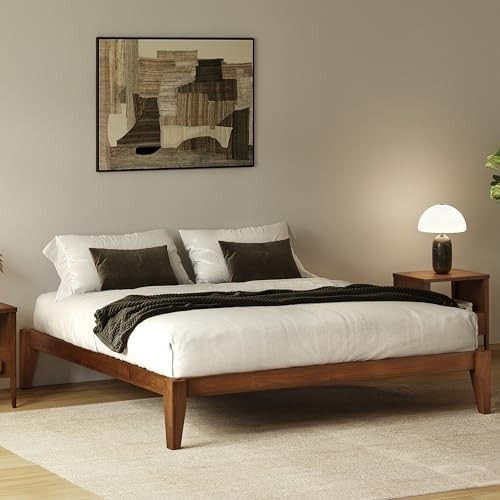
AllForWood Thor Japanese Joinery Bed Frame, Queen, Solid Walnut
Solid walnut on Japanese joinery with tool-free assembly, which is the same pitch the Classic Bed makes at roughly a third of the money. A smaller company with a far shorter track record, and no upholstered headboard option.
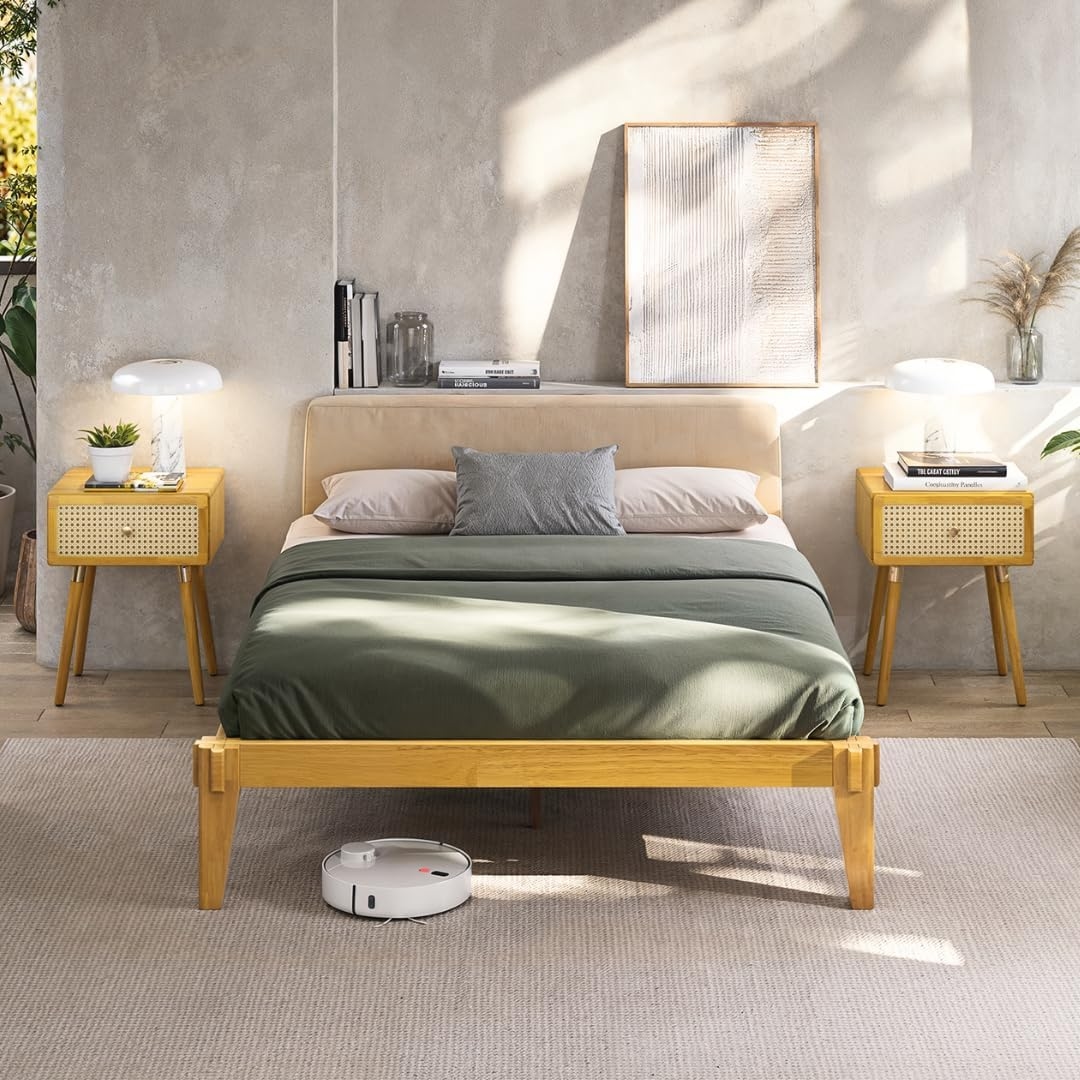
Bme Chalipa Signature Platform Bed
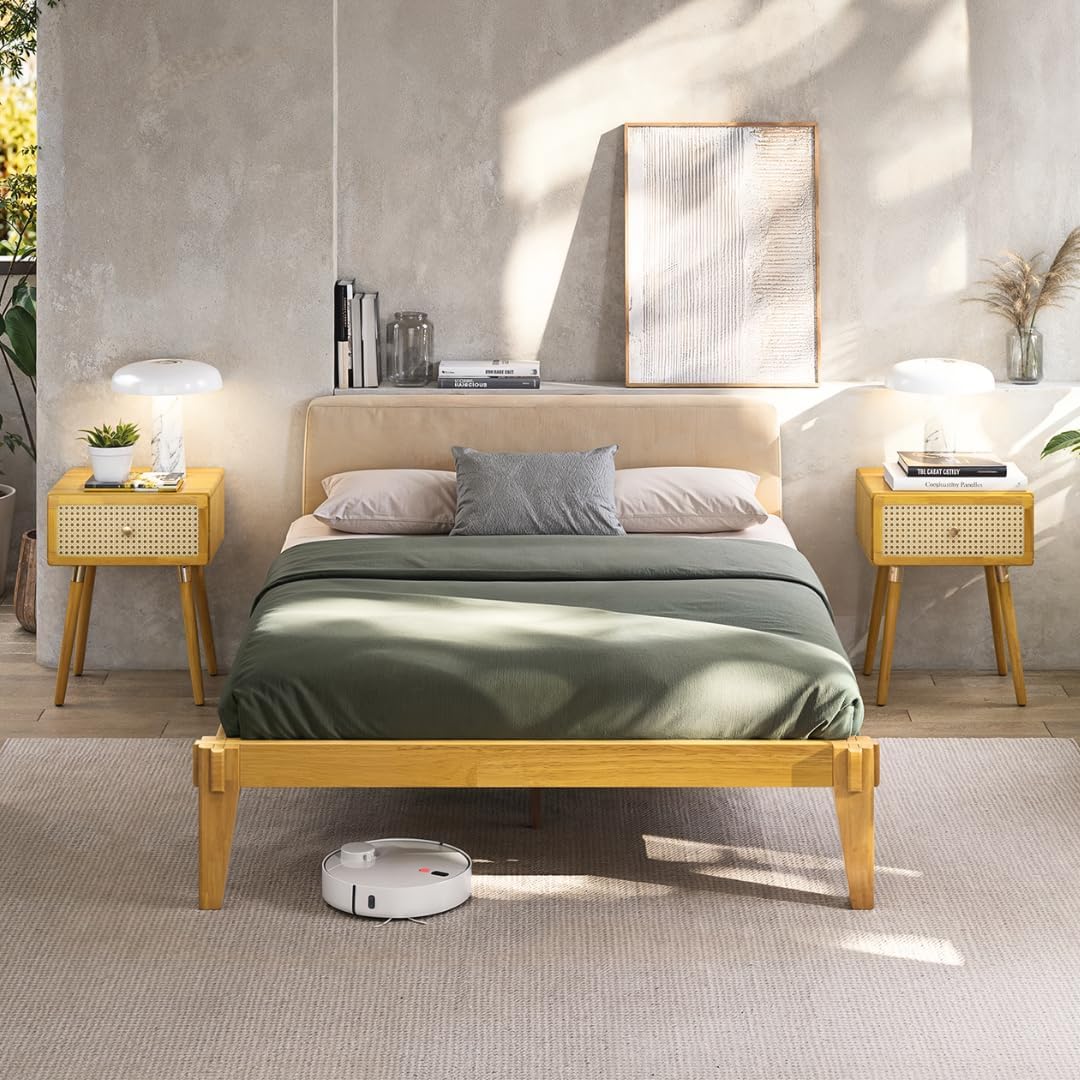
Japanese joinery-inspired solid wood frame frequently compared to the Thuma in community forums. No box spring, minimal-tool assembly, sub-$300.
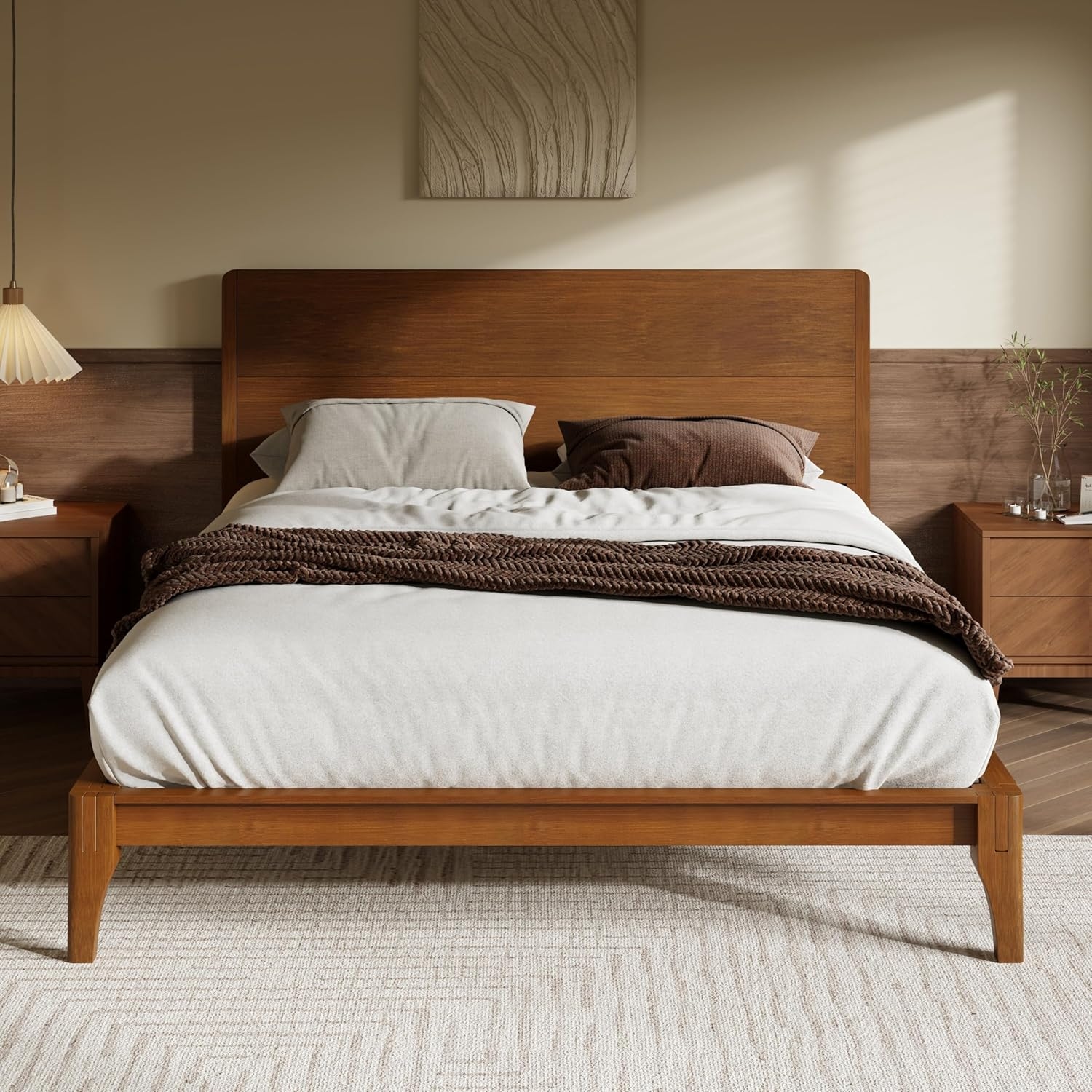
Merax Solid Wood Platform Bed with Headboard
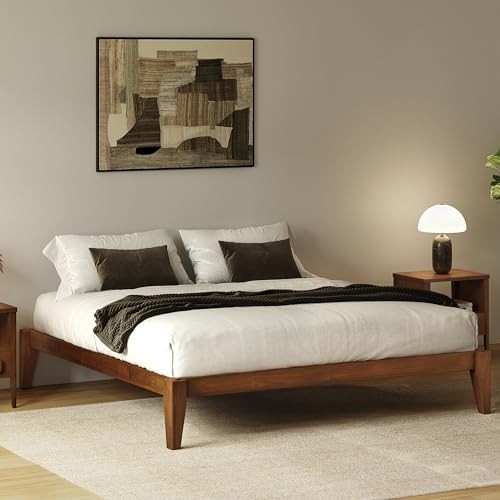
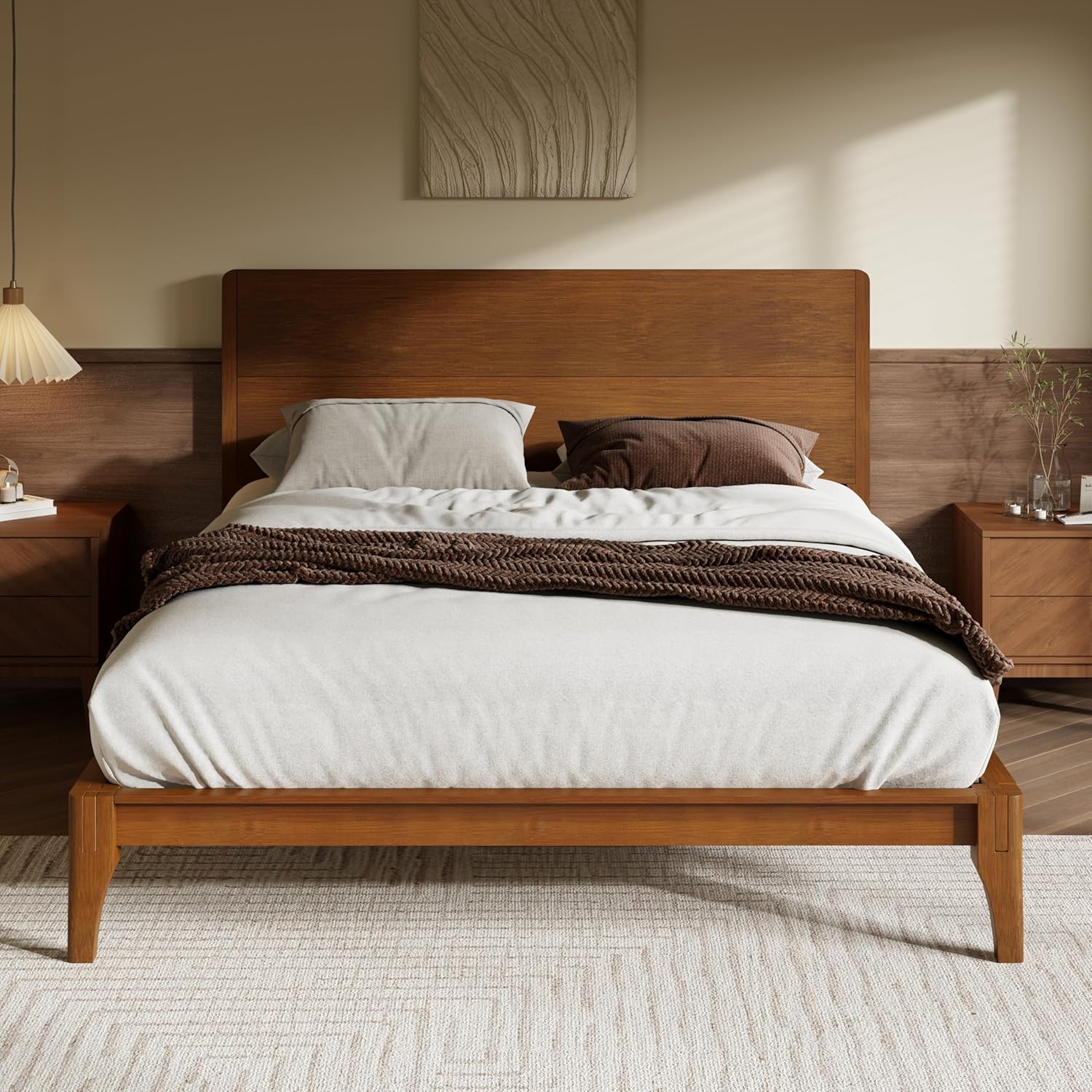
Solid wood platform with integrated headboard and warm tones similar to the Thuma Classic. Standard hardware assembly; sits between IKEA budget and Thuma premium.