Philips Hue
Philips Hue White and Color Starter Kit Review — Worth the Bridge?
By Maya Chen · Updated September 2026
Independent editorial review. We never accept payment for coverage, though we may earn a commission if you purchase through our links.
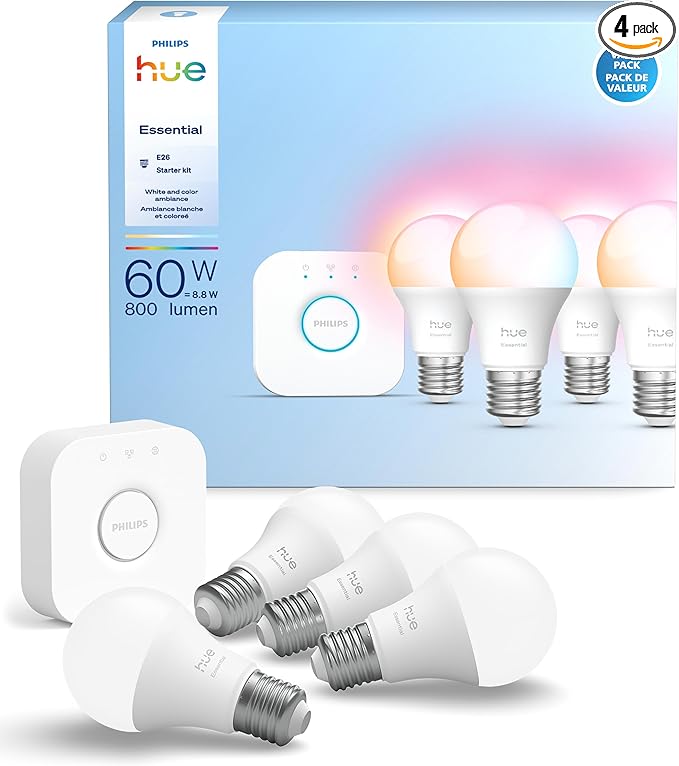
Verdict
A focused review of the Philips Hue White and Color starter kit: what the Zigbee Bridge actually buys you, when Govee or Kasa WiFi bulbs are the smarter call.
Similar alternatives
Quick Take
The Philips Hue White and Color starter kit is worth the Bridge tax if you're running six or more bulbs, want rock-solid scenes that fire in under a second, and care that your lighting still works when the WiFi router reboots. It isn't worth the Bridge for two or three color bulbs in a bedroom and a voice assistant; Govee and Kasa WiFi bulbs cover that case for a third of the price. The Zigbee mesh, the 16 million colors, and the Matter bridging are why the kit holds its price. The app polish and the ecosystem depth are why owners stay.
Hue earns its premium on reliability at scale. A 20-bulb Hue setup behaves like one appliance; a 20-bulb Govee setup behaves like 20 appliances on a flaky WiFi network. It loses people on entry cost: a starter kit with the Bridge plus two color bulbs runs about $145, and each additional color A19 is roughly $50. Govee A19 color bulbs are $20 with no hub, Kasa KL130 is $20 and works with Alexa and Google out of the box, and a bulb-only Hue extension is the right buy if you already own a Bridge.
One product, one question. The Philips Hue White and Color Ambiance starter kit bundles the Hue Bridge with two or three color A19 bulbs, and it's been the default recommendation for serious smart lighting for most of a decade. The question this review answers is the one every potential buyer is asking in 2026: do you still need the Bridge, or have Bluetooth and WiFi-only smart bulbs (Govee, Kasa, Wyze) finally closed the gap?
The kit is built around the Hue Bridge, a small white square that plugs into your router and speaks Zigbee 3.0 to the bulbs. Each color bulb does 16 million colors and roughly 50,000 shades of white, warm 2000K up to cool 6500K. The Bridge handles up to 50 lights plus dozens of accessories, fires scenes locally so they keep working when the internet is down, and since late 2023 ships with Matter support, which means Apple Home, Google Home, and Amazon Alexa can all drive the same bulbs at once without vendor-specific integrations. Everything else in this review is about whether that Bridge, plus Signify's ecosystem maturity, justifies the premium over a $20 Govee bulb that screws in and talks to Alexa directly.
How the Hue starter kit works
The Bridge is the reason this product exists. It plugs into an open Ethernet port on your router, pairs with each Hue bulb over Zigbee (a low-power mesh protocol built for smart-home devices), and exposes the whole system to your phone, voice assistants, and Matter controllers. The bulbs are dumb in the useful sense. They take commands from the Bridge, they never need your WiFi credentials, and they form a mesh that extends range as you add more.
Scenes fire fast and they fire reliably. Tap the Hue app, hit the Hue Dimmer Switch on the wall, or poke the Apple Home widget, and twelve bulbs come on in under a second with no visible stagger. The Bridge builds the scene locally and pushes the Zigbee commands in parallel, so no bulb has to negotiate with a cloud server on its own. Owners who have lived with both Hue and a WiFi-only setup call this the biggest day-to-day difference.
Matter support, added by firmware in late 2023, changed the math again. The Bridge now exposes every paired Hue bulb to any Matter controller (Apple Home, Google Home, SmartThings, Alexa) over the local network. No more picking one ecosystem, the same bulb can sit in a HomeKit scene and an Alexa routine at the same time. That is a Bridge-only feature. The Hue Bluetooth-only bulbs don't get it.
What the starter kit does well
Color quality comes first. Hue color bulbs cover a wider, more accurate gamut than the WiFi competition. Reds are red instead of orange, deep blues don't wash out to teal, and the 2000K to 6500K white range is genuinely useful whether you want a warm reading scene or a cool task light. Govee and Kasa have narrowed this on paper, but side by side, Hue still wins in the deep blues and the saturated reds.
Multi-bulb scene reliability comes second, and it's what owners cite most when they defend the cost. A Hue scene with twelve bulbs across three rooms fires as one event. The same twelve bulbs on Govee will have one or two lag by half a second, or miss entirely when the WiFi network is busy. Invisible at two bulbs. Obvious at twelve.
App and ecosystem depth show up in the small stuff. Wake-up alarms that ramp the bedroom from 2000K to 4000K over 15 minutes. Geofencing that kills the lights when the last person leaves the house. Hue Dimmer Switches that stick to any wall with adhesive and run a specific room without your phone. Hue Sync Boxes that mirror what is on your TV onto the bulbs behind it. None of that is unique to Hue anymore, but Hue's versions work without a forum-thread deep dive.
Then there's longevity, the quiet win. Signify has been building Hue bulbs for over a decade and owners routinely report bulbs still going after 7+ years of daily use. The Bridge keeps getting firmware, including real feature adds (Matter, Bluetooth fallback, Entertainment areas) years after purchase. Set that against the WiFi competition, where bulb-firmware abandonment after 3 years is common, and the premium starts reading as amortization rather than luxury.
The price is the complaint
Price, loudest and most legitimate. A starter kit with the Bridge plus two color bulbs runs around $145, and each extra color A19 is roughly $50. A comparable Govee 4-pack is $60 with no hub required. If you want three color bulbs in a bedroom and a voice assistant, that gap is indefensible. The Bridge pays off at scale, not at a minimum viable setup.
Bridge dependency, and it's a fair hit. If the Bridge dies, the whole system goes with it. Hue bulbs can drop to Bluetooth-only mode, pairing straight to your phone, but it's a downgrade: smaller scenes, slower response, and most of the ecosystem (Dimmer Switches, Matter, geofencing) goes away. Anyone running one Bridge for a whole house should plan on replacing it somewhere in year 5 to 7.
The accessory upsell. Hue Dimmer Switches are $25 each. Motion sensors are $40. The Hue Sync Box for TV lighting is $230. None of it is essential, but the full Hue experience the marketing implies needs several of them, and a serious setup lands closer to $500 than $145 once the wall controls are in.
Extension bulb pricing stings worst. Once you own the Bridge, more Hue color bulbs are still $50 each while WiFi equivalents run $15 to $20. Buyers who assume the Bridge drops the marginal cost of each bulb find out it doesn't. The Bridge is a one-time charge plus a permanent premium on every bulb you add.
Do you need the Bridge?
Probably not for two or three bulbs. If your smart-lighting goal is color-changing bulbs in a bedroom or living room, voice control through Alexa or Google, and the occasional scene, Govee or Kasa WiFi bulbs do it for $20 a bulb with no hub. Setup is screwing in the bulb and scanning a QR code. At that scale the Bridge buys you almost nothing, and the $43 Bridge plus the $50-per-bulb premium is hard to defend.
It earns its keep at six or more bulbs, especially spread across rooms. Scene reliability, response time, and ecosystem polish all compound as the bulb count climbs. A 20-bulb Hue system behaves like a single appliance. A 20-bulb Govee or Kasa system behaves like 20 independent devices, with all the WiFi congestion and per-bulb failure modes that implies. Past that point, Bridge buyers stop second-guessing the purchase.
The Bridge is also right if you want the lighting to outlive the WiFi router. Hue bulbs paired to a Bridge don't need the internet for scenes, schedules, or wall-switch control. WiFi bulbs go dark on every router reboot, every ISP outage, and eventually when the vendor turns off its cloud servers. If you're treating this as a 5-to-10-year investment in the house, the Bridge is the answer that doesn't lean on somebody else's cloud.
Matter, Alexa, and the ecosystem question
Matter changes the conversation without erasing the Bridge. With Matter running on the Bridge, every paired Hue bulb turns up in Apple Home, Google Home, and Alexa at once, controlled locally, no vendor lock-in. It's the closest the smart-home world has come to a universal standard, and Hue's Matter implementation has been solid since launch. WiFi bulbs are catching up slowly, Kasa and Govee both have some Matter SKUs now, but the implementations are spottier and the bulbs still lean on the vendor's cloud for firmware and plenty of features.
For basic on-off-color commands, voice assistant pairing is a wash across Hue, Govee, and Kasa. The gap opens in advanced automation. Hue's Entertainment areas sync lights to music or video at frame rates WiFi bulbs can't hit, and the Hue API hands every bulb attribute to scripts and Home Assistant in a way Govee's locked-down cloud API won't. Tinkerers know this. It never shows up on a spec sheet.
Who the Hue starter kit is for
Owners planning six or more bulbs across multiple rooms. That is the clearest yes in this review. Scene reliability, response time, mesh range, and ecosystem polish all favor Hue as the count goes up, and the per-bulb premium shrinks as a share of total spend once the system matures. The Bridge is the foundation for whole-house lighting that behaves like one system.
Owners who care about long-term reliability and want the lighting to outlast the router. Hue bulbs paired locally to a Bridge keep working for the life of the bulb no matter what the internet, the ISP, or the vendor cloud is doing. If you think about lighting as infrastructure rather than gadgets, this is your pick.
Tinkerers who want Home Assistant, advanced scripting, or video-sync entertainment lighting. Hue's local API and Entertainment areas are genuine technical advantages over WiFi bulbs, and the Bridge is the gateway to both.
Who should skip the starter kit
Renters and minimum-viable-setup buyers. Two or three color bulbs in a bedroom plus a voice assistant? The Govee A19 4-pack at $60 covers that use case completely. No hub, no Bridge to depend on, and the bulbs move with you. The Hue starter kit is overkill here and the $145 goes further elsewhere.
Owners who already have an Echo or Google Nest hub and want the simplest possible smart-lighting experience. Kasa KL130 bulbs at $20 each pair to Alexa or Google in 30 seconds with no app switching, work with the voice assistant the user already trusts, and skip the second app (Hue) entirely. The Hue Bridge buys very little here.
Anyone whose lighting goal is single-bulb accent lighting, a smart lamp, or a TV-backlight strip. WiFi or Bluetooth bulbs and strips handle all of those cases, and the Bridge overhead can't be justified.
Smart bulbs without the Hue tax
Bulb-only Hue extensions at roughly $50 a bulb, the right buy for owners who already have a Bridge. Same color quality, same ecosystem, no second Bridge needed. If you have the starter kit and want to expand to a third room, start here.
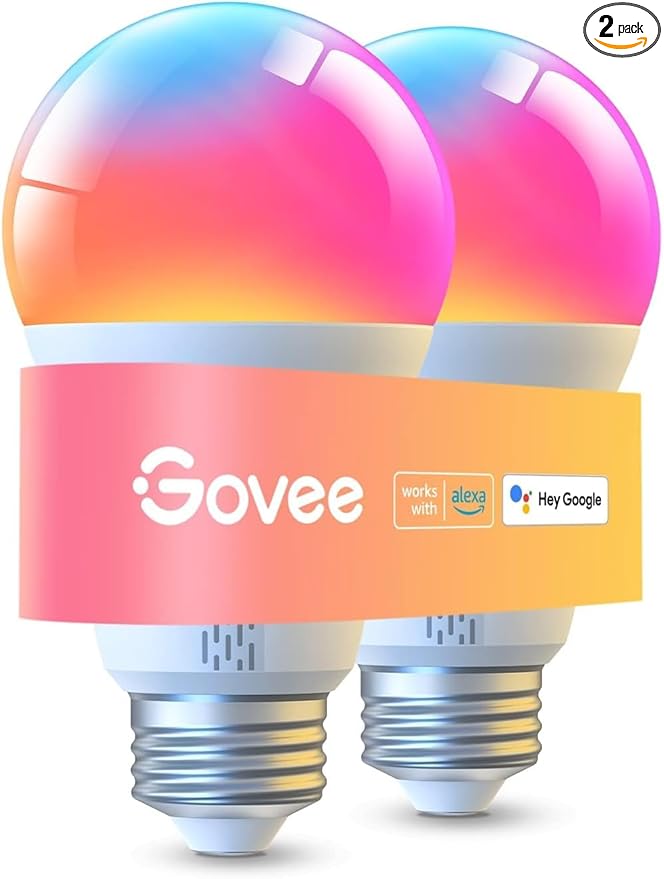
Govee A19 color bulbs at roughly $20 a bulb, the strongest WiFi-only alternative. Color quality has improved noticeably over the last two generations, the app is polished, and Alexa and Google integration is painless. The honest pick if you want color bulbs in two or three rooms and no hub.
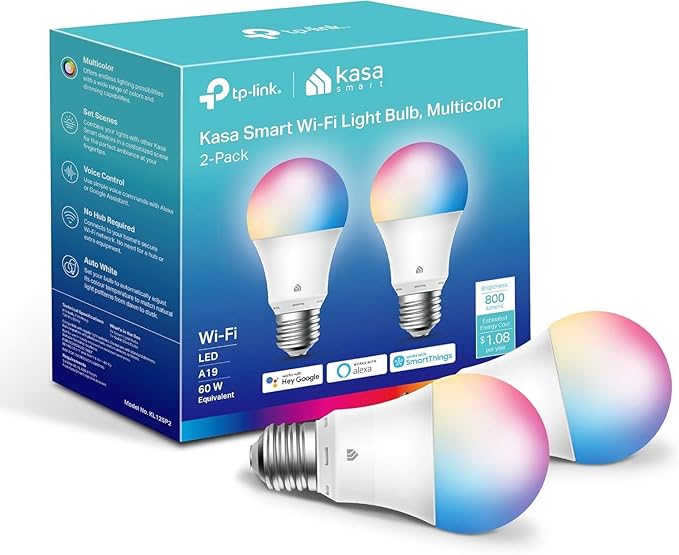
Kasa KL130 at roughly $20 a bulb, the budget answer that just works. TP-Link has been making Kasa bulbs for years, the app is stable, and Alexa or Google pairing is a 30-second flow. Color quality is a step below Govee and well below Hue, but for general-purpose color bulbs in non-critical rooms (closets, hallways, accent lighting) it's the right call.
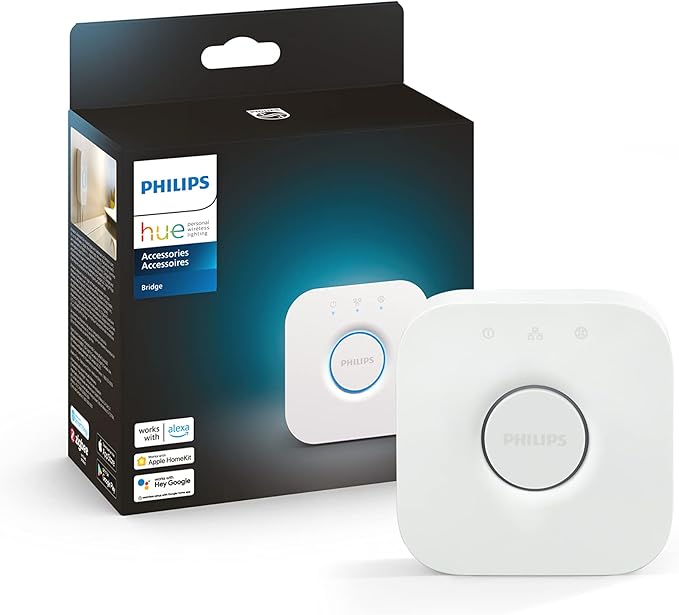
The Hue Bridge sold separately at roughly $43, the companion pick for owners who already have Hue Bluetooth bulbs and want Matter, multi-bulb scenes, and Dimmer Switch support. It's the upgrade path that doesn't make you replace existing bulbs.
The verdict on the Bridge
The Philips Hue White and Color starter kit is worth the Bridge tax if you're planning a six-plus-bulb setup, care about scenes firing reliably at scale, or want smart lighting that doesn't depend on the internet and cloud servers to function. The color quality, the Matter implementation, and the 10-year reliability story all hold up, and the Bridge is the foundation for a system that behaves like infrastructure rather than gadgets.
It isn't worth the Bridge for two or three color bulbs in a bedroom and voice control. Govee A19 bulbs handle that case for a third of the price, Kasa KL130 handles it for the same money with TP-Link reliability behind it, and neither asks the user to think about hubs or Zigbee. The honest recommendation there is a Govee 4-pack and whatever smart speaker the user already owns.
Our Ratings
Overall score
The Bridge is the whole argument: Zigbee 3.0 fires scenes locally so they survive WiFi outages, handles 50 lights cleanly, and Matter lets Apple Home, Google, and Alexa share the bulbs without re-pairing. Each color bulb does 16M colors and whites from 2000K to 6500K, and multi-bulb scene sync is where WiFi competitors fall apart. Nine years of firmware on 2017 hardware is real ecosystem depth.
Nothing here to evaluate. A Hue A19 looks like every other A19, frosted white globe, standard E26 base, and it disappears into any fixture that takes a bulb. The product is the light it emits, not the object. The score reflects the category, not a design failing.
The starter kit lands around $145 for two color bulbs plus the Bridge, with added bulbs at $50 each, where a Govee or Kasa color A19 is $20 into the same socket. For two bulbs that change color on voice command, Hue costs roughly triple for benefits most buyers never miss: local scenes, sync reliability, Matter. Worth it only if you're committing to 6+ bulbs and the scene-based workflow that gives the Bridge a job.
Philips Hue White and Color Starter Kit on Amazon.
Frequently asked questions
Is the Philips Hue White and Color Starter Kit worth it?
The Philips Hue White and Color starter kit is worth the Bridge tax if you're running six or more bulbs, want rock-solid scenes that fire in under a second, and care that your lighting still works when the WiFi router reboots. It isn't worth the Bridge for two or three color bulbs in a bedroom and a voice assistant; Govee and Kasa WiFi bulbs cover that case for a third of the price. The Zigbee mesh, the 16 million colors, and the Matter bridging are why the kit holds its price.
How is the Philips Hue White and Color Starter Kit built?
The Bridge is the whole argument: Zigbee 3.0 fires scenes locally so they survive WiFi outages, handles 50 lights cleanly, and Matter lets Apple Home, Google, and Alexa share the bulbs without re-pairing. Each color bulb does 16M colors and whites from 2000K to 6500K, and multi-bulb scene sync is where WiFi competitors fall apart. Nine years of firmware on 2017 hardware is real ecosystem depth.
What styles does the Philips Hue White and Color Starter Kit work with?
Nothing here to evaluate. A Hue A19 looks like every other A19, frosted white globe, standard E26 base, and it disappears into any fixture that takes a bulb. The product is the light it emits, not the object.
Options Worth Checking Out
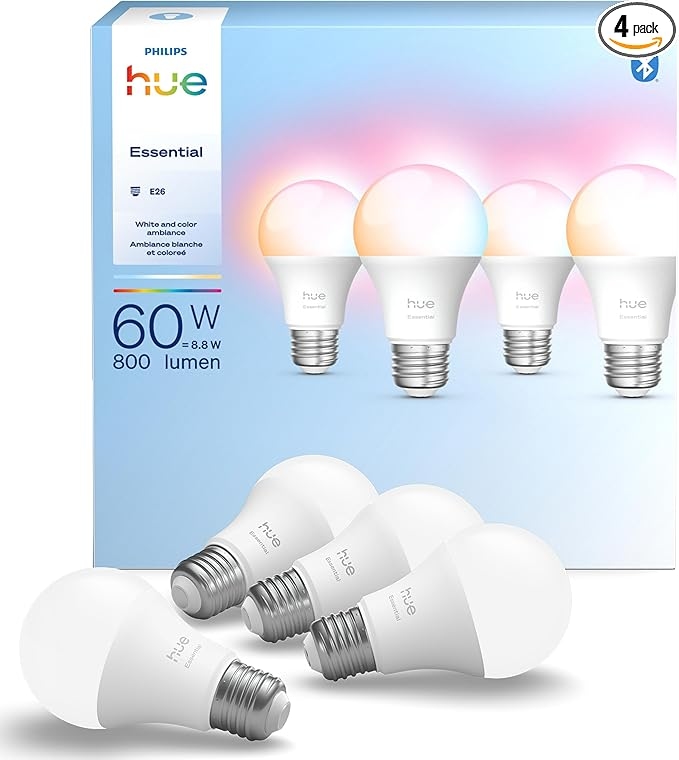
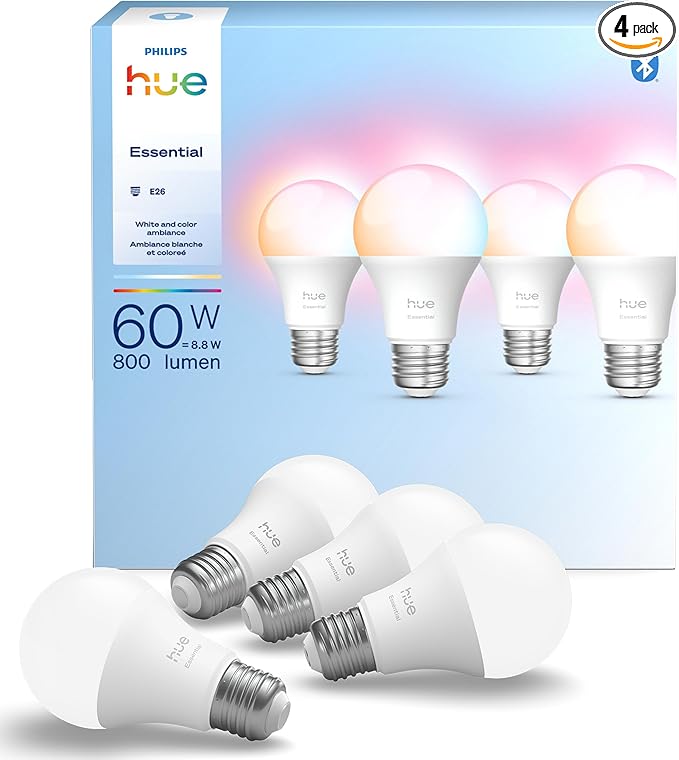
Philips Hue White and Color Ambiance A19 Bulb (Bridge required)
The right extension if you already own a Hue Bridge. Same color quality and Zigbee reliability as the starter kit; pairs to the Bridge in under a minute. The default add-on for expanding into a third or fourth room without a second hub.
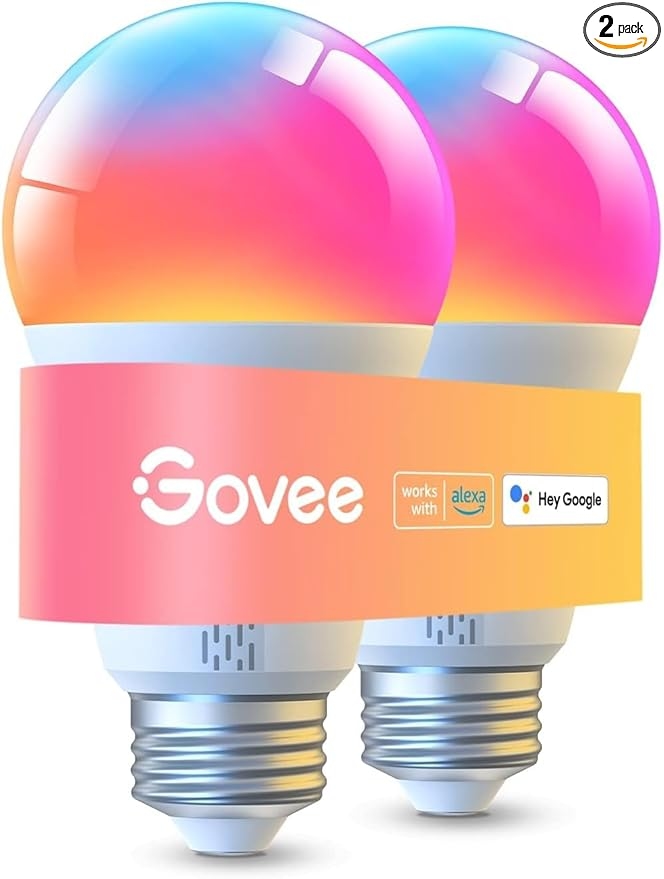
Govee Smart Color A19 Bulbs (WiFi, no hub)
The honest WiFi-only alternative if the Bridge does not earn its keep. Color quality is closer to Hue than it used to be, app is solid, Alexa and Google pair in 30 seconds. The right pick for two or three color bulbs in a bedroom or living room.
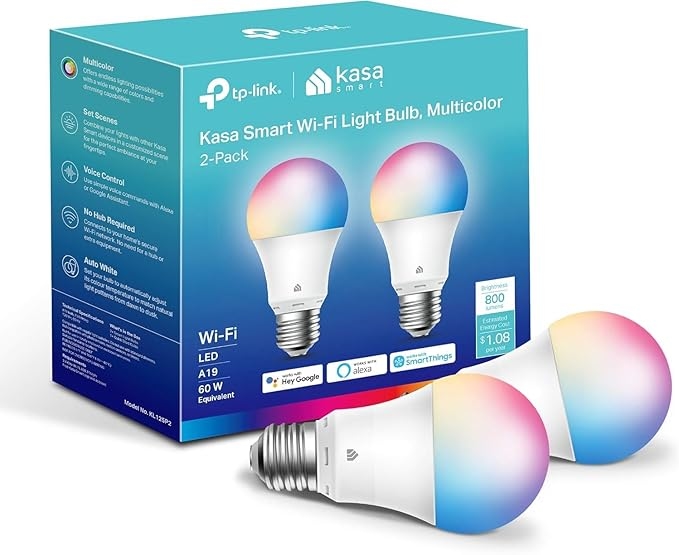
Kasa Smart Multicolor KL130 A19 Bulb (WiFi)
The budget WiFi answer when Hue math does not work. TP-Link reliability, no hub required, Alexa and Google pair quickly. Color quality is a step below Hue and Govee but fine for closets, hallways, and accent lighting where saturation does not matter.
You Might Also Need
Accessories worth grabbing alongside your purchase
More alternatives Reviews
See all →
Shark Stratos Cordless Review — Dyson Alternative at Half the Price?
Dyson V15 Detect Review (2026): Worth $700 With Tineco S15 At $400?
Ergotron LX Monitor Arm Review: Is the AmazonBasics Rebrand Worth 1/4 the Price?
Roomba j7+ Review (2026): Still Worth It After iRobot's Bankruptcy?