Maiden Home
Maiden Home Downing Chair Reviews + Editorial Take
By Sam Hollis · Updated August 2026
Independent editorial review. We never accept payment for coverage, though we may earn a commission if you purchase through our links.
Verdict
Maiden Home's community of owners lives in design-forward blogs and Instagram rather than Reddit, which likely reflects both the brand's marketing channels and its price positioning. The most informative long-term owner reports come from bloggers who wrote candid multi-year follow-ups to their original reviews. The pattern across them: structural satisfaction (no frame issues at 2-3 years), fabric satisfaction for performance upholsteries (wine, pets, and daily use handled well), and frustration with lead times that ran past expectations. The one documented Houzz thread about the Downing specifically came from a buyer cross-shopping it against the Sullivan Chair and Rowe's Kara Swivel, which puts the Downing in a genuinely upscale consideration set. The worst report in the broader Maiden Home community came from a buyer whose sofa arrived with a nail protruding from the foot and developed cushion issues within five months, a quality control failure that was eventually remedied, but only after sustained pressure. Nothing comparable turned up about the Downing Chair itself, which has a smaller but consistently positive owner footprint. Buyers who receive their chair in good condition are overwhelmingly satisfied at multi-year marks.
Read full take ↓Similar chairs
American craft at a direct price
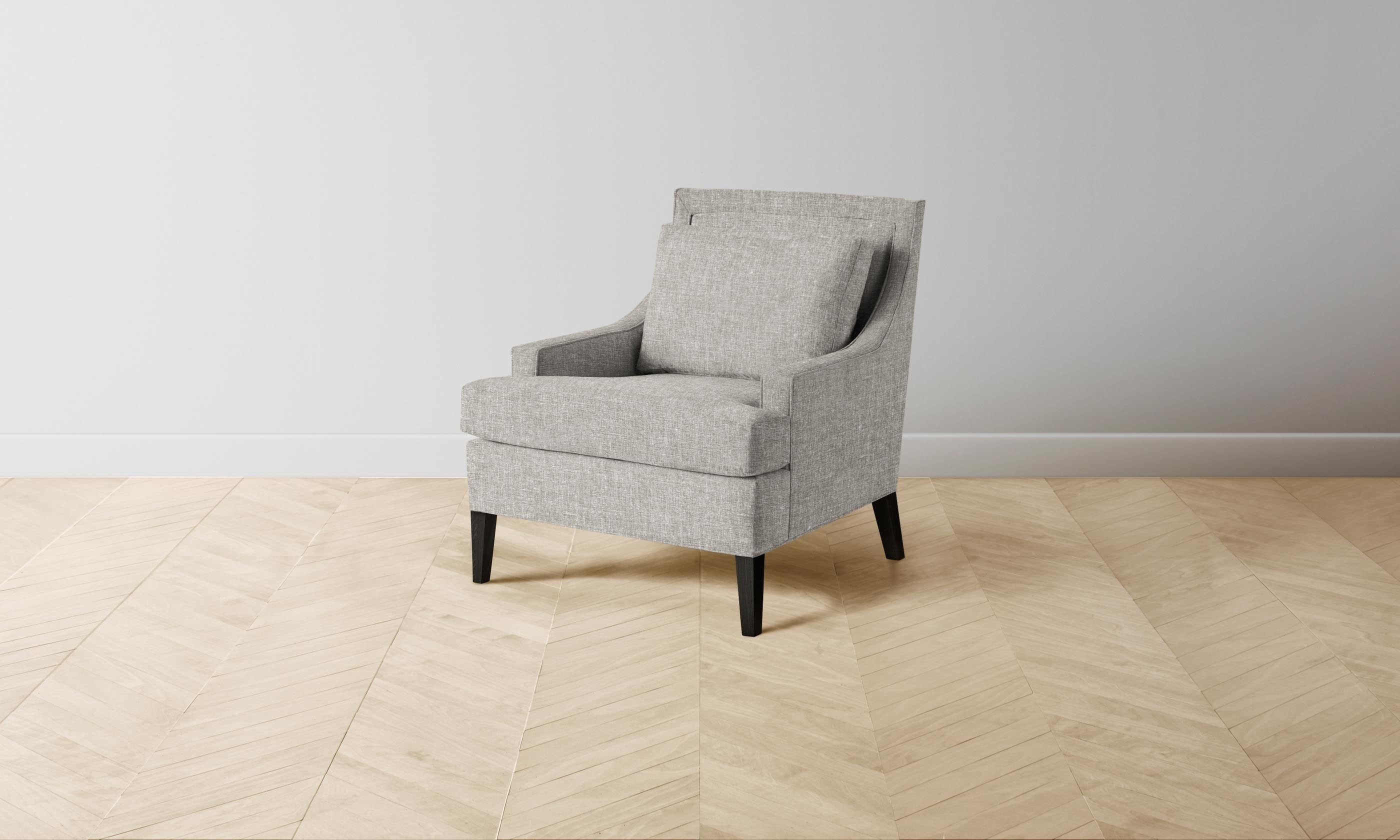
The Maiden Home Downing Chair is what American furniture manufacturing looks like when it's done right at a price most people can reach. It's built in Hickory, North Carolina by a family-owned workroom with generational furniture-making expertise, made to order, and priced in the $1,500-$2,000 range with construction credentials you usually only find on chairs costing two or three times that.
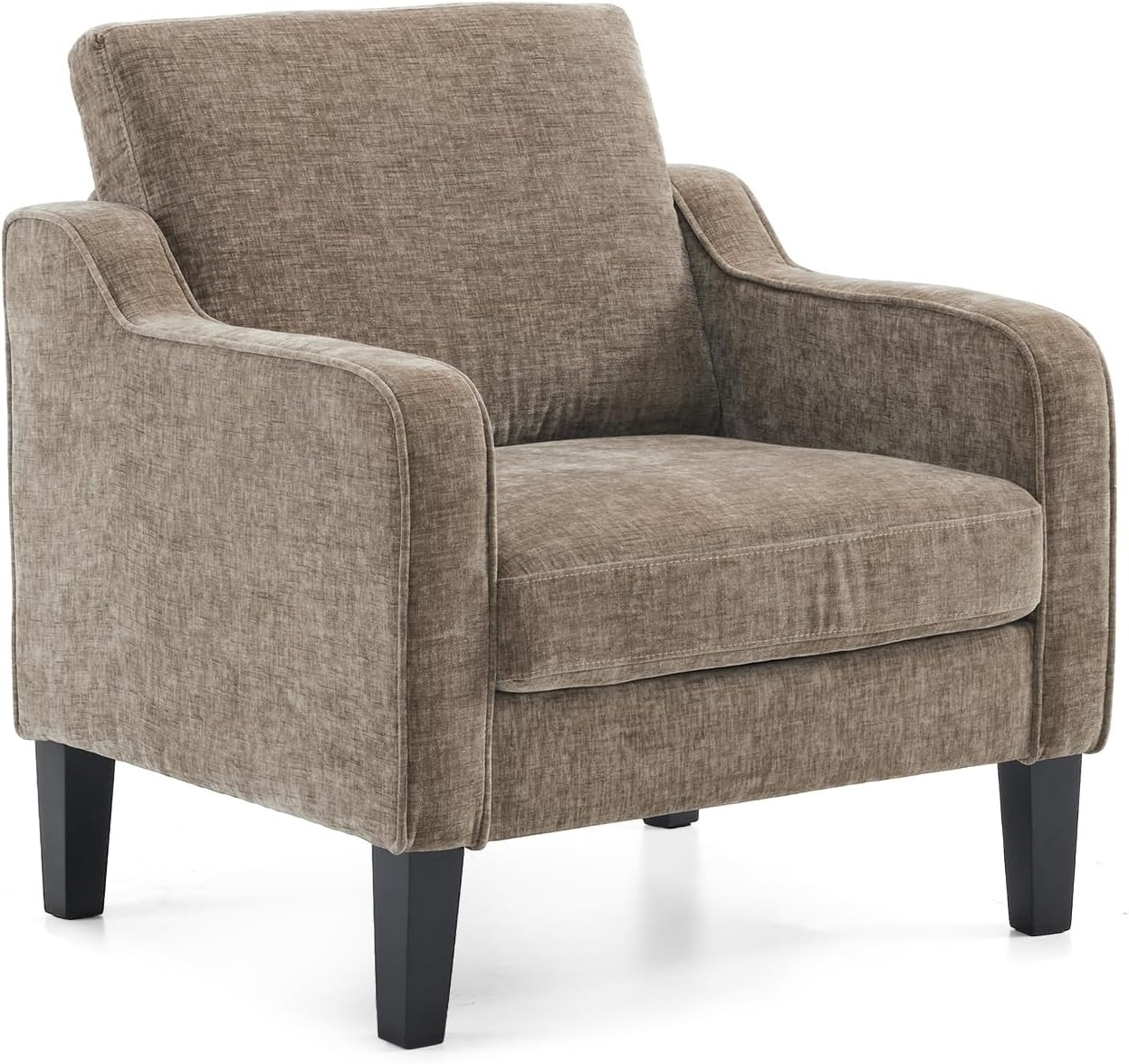
Maiden Home was founded in 2017 by Nidhi Kapur on a specific thesis: that the labor and material quality of traditional American upholstered furniture, kiln-dried hardwood frames, corner-blocked joints, rubber webbing suspension, could be sold at direct-to-consumer prices by cutting showroom overhead and the retail markup that rides along with it. The Downing is one of the brand's signature pieces. Its curved frame and fully upholstered arms give it a classic lounge chair silhouette with enough contemporary restraint to work in traditional and modern rooms alike.
The case for the Downing starts with the frame. Kiln-dried hardwood with double-doweled, glued, and corner-blocked joints is the construction standard behind furniture built to last decades, and it's increasingly rare under $3,000. The rubber webbing foundation, rather than sinuous springs, is a traditional upholstery technique that gives a consistent support surface without the mechanical complexity of coil systems. Solid maple legs sourced from Appalachian forests and certified by the US Forest Association round out a construction story that's unusually transparent for a brand at this price point.
The case against, or at least the case for setting expectations carefully, is more complicated. Lead times come first. Maiden Home advertises 5-7 weeks, but independent owner reports consistently document 8-12 weeks, with third-party delivery carriers adding another 2-4 weeks after production. Then the warranty: the frame and springs carry a lifetime limited warranty, but the fabric and upholstery carry no warranty at all, a gap that's unusual for a brand at this price and worth understanding before you order. Third is the 1-return-per-household-lifetime policy, which makes post-delivery dissatisfaction expensive to resolve.
With those caveats named, the Downing is a compelling option for buyers who prioritize American manufacturing, construction quality, and fabric customization, and who can live with a 10-12 week lead time and the planning horizon that requires. It's the wrong chair for anyone who needs furniture quickly, who wants the flexibility of easy returns, or whose main priority is immediate gratification over long-term quality.
The Downing comes in over 50 fabrics: merino wool, deep-pile mohair, performance bouclé, performance velvet, performance linen, performance chenille, heritage Belgian linen, nubuck leather, and shearling. That range is genuinely exceptional for a brand at this price tier, and the combination of construction quality and fabric variety is the Downing's strongest argument over any competitor we have reviewed.
Maiden Home Downing Chair: Construction Deep-Dive
Frame
The Downing Chair's frame is constructed from kiln-dried hardwood, a process that removes moisture from the wood before construction, preventing the warping, racking, and joint failure that characterizes furniture built with green or improperly dried lumber. Joints are glued, double-doweled, and corner-blocked: three layers of reinforcement that distribute stress across multiple connection points rather than relying on any single joint. This construction specification is the standard by which high-quality American upholstered furniture has been evaluated for generations, and it is meaningfully above the LVL/plywood and staple-and-glue construction that dominates the DTC market. Each piece is built by a small team at the Hickory workroom, with the brand estimating two person-days of skilled labor per piece.
Cushion & fill
The foundation uses interwoven rubber webbing strips rather than sinuous springs. This is a deliberately traditional approach: rubber webbing is labor-intensive to install correctly, provides a consistent support surface across the entire seat area, and does not have the mechanical failure modes associated with coil systems. The Ultracel foam core (1.8 lb density) is wrapped in a silky microfiber jacket. The 1.8 lb density falls at the medium end of the residential foam spectrum, adequate for typical home use with an expected useful life of 8 to 12 years under moderate use. The back cushion fill is silky microfiber with individual channeling to maintain shape over time. The Downing Chair's Ultracel and microfiber construction is a cleaner, lower-maintenance specification that has not generated the same flattening complaints seen with Maiden Home's down-wrapped sofa line.
Upholstery & fabric
CertiPUR-US certification on the foam and GREENGUARD Gold certification on many fabric options confirm that the materials in the Downing meet independently verified health and environmental standards. These certifications are particularly relevant for buyers with environmental sensitivities or households with young children. Fabric options span the full Maiden Home catalog, and the brand's production milestone notifications, cut/sew confirmation, upholstery start, inspection completion, confirm each piece is tracked individually through production.
Legs & base
The maple legs are finished in one of four lacquered hues that highlight the natural wood grain, a detail that distinguishes the Downing from competitors that use turned composite legs with paint or foil finishes. All legs are removable without tools via a threaded bolt system, which is relevant both for assembly and for delivery through narrow doorways. The leg finish options are calibrated to complement the available fabric selections in the Maiden Home catalog.
Dimensions & weight
The Downing Chair is sized as a standard residential accent chair, designed for single-occupant use with a proportionate depth for comfortable seated reading or lounging. Buyers should verify current dimensional specifications on the Maiden Home website, as exact dimensions may vary by arm configuration. The removable legs reduce the shipped height and simplify delivery and stair navigation.
Warranty
Maiden Home provides a limited warranty covering manufacturing defects on the Downing Chair frame and materials. The CertiPUR-US and GREENGUARD Gold certifications on materials provide additional third-party verification of material quality and safety standards. Buyers should review current warranty terms on the Maiden Home website prior to purchase.
Our Ratings
Overall score
Kiln-dried hardwood with double-doweled, corner-blocked joints, rubber webbing, and solid maple legs, a spec more common on $3,000-$4,000 chairs, and the lifetime frame-and-spring warranty holds up with no frame failures out to three years. The soft spot is the 1.8 lb Ultracel foam core, where 2.0+ density would last longer under heavy use. There's no fabric warranty, so pick a performance weave with a 40,000+ rub count.
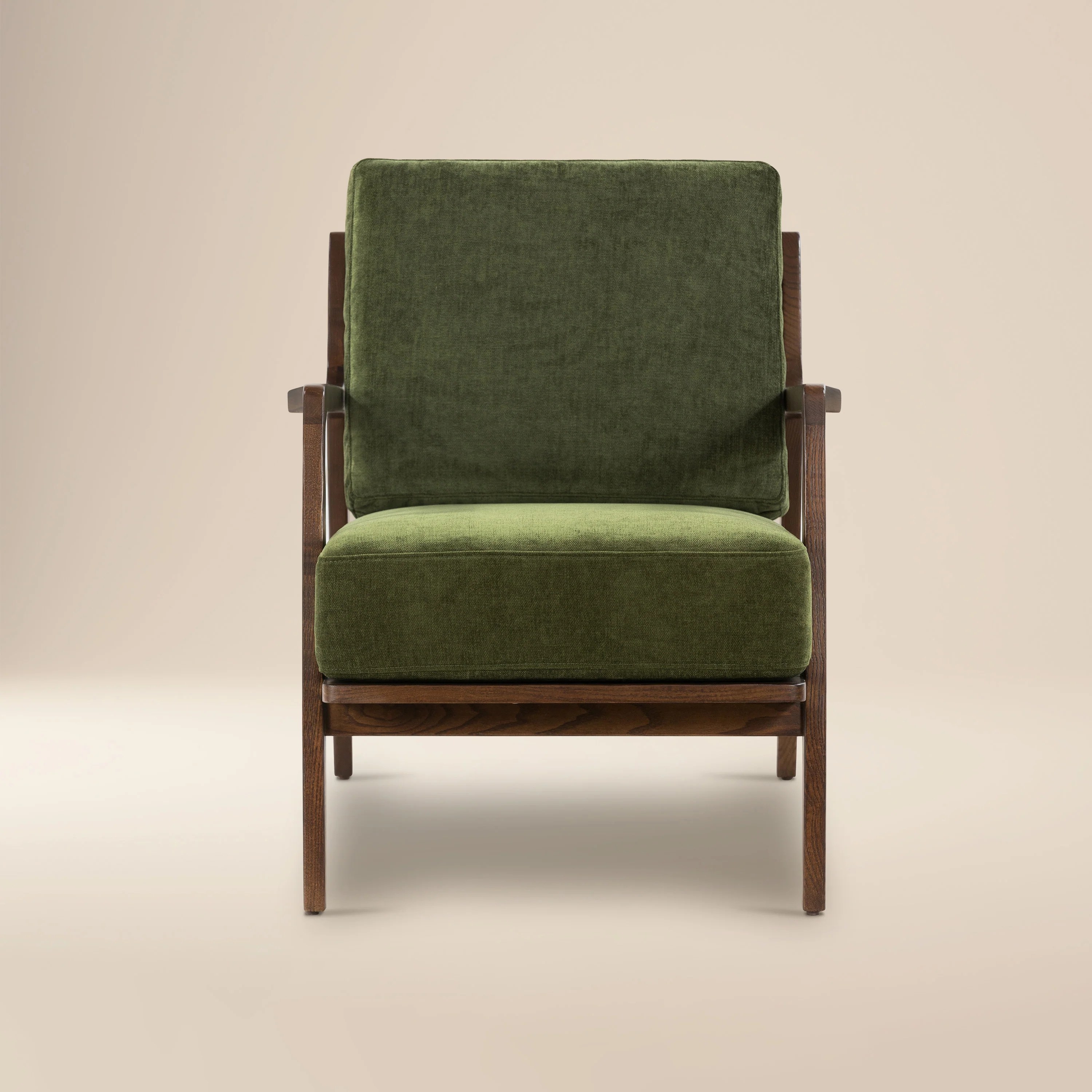
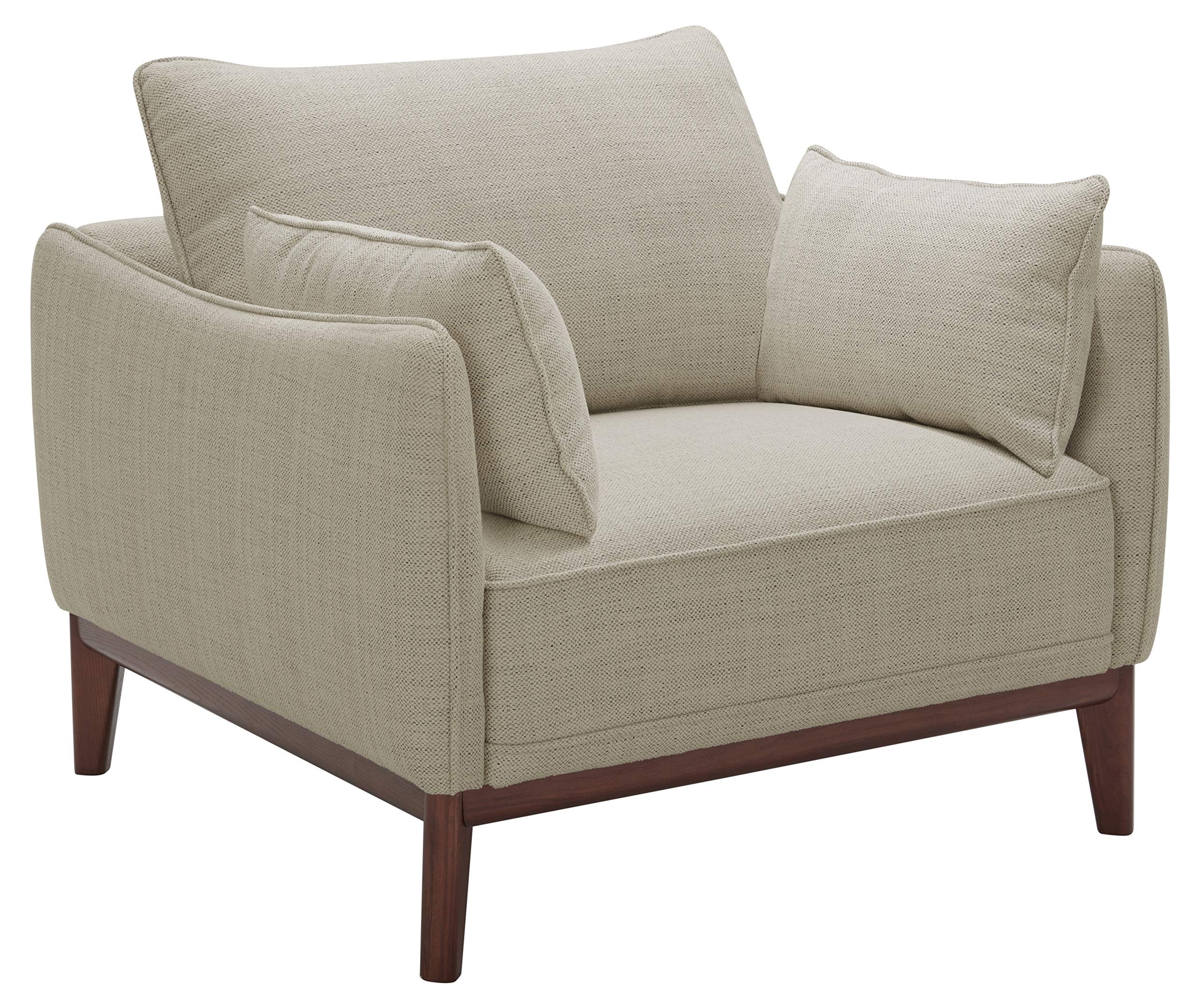
A curved frame gives it a classic, graceful lounge profile, and the fully upholstered arms read more contemporary and enveloping than the exposed-wood Leroy. Its aesthetic edge is fabric: over 50 options, from deep-pile mohair, shearling, and nubuck to heritage Belgian linen alongside performance weaves. That range lets the same silhouette read traditional or spare-modern depending on the cloth, with solid maple legs in four finishes.
At $1,525-$1,633 in entry fabrics, it competes with the West Elm Paidge ($800-$1,200, MDF frame), CB2 Avec ($900-$1,200, import), and Room & Board Metro ($1,200-$1,700, US-made and comparable). Against Room & Board it offers a far wider fabric range, though R&B lets you sit first. Premium tiers like mohair and leather can top $2,500, where better-supported brands catch up. The flat $135 white-glove fee favors furnishing several rooms.
Frequently asked questions
Is the Maiden Home Downing Chair worth it?
At $1,525-$1,633 in entry fabrics, it competes with the West Elm Paidge ($800-$1,200, MDF frame), CB2 Avec ($900-$1,200, import), and Room & Board Metro ($1,200-$1,700, US-made and comparable). Against Room & Board it offers a far wider fabric range, though R&B lets you sit first. Premium tiers like mohair and leather can top $2,500, where better-supported brands catch up.
How is the Maiden Home Downing Chair built?
Kiln-dried hardwood with double-doweled, corner-blocked joints, rubber webbing, and solid maple legs, a spec more common on $3,000-$4,000 chairs, and the lifetime frame-and-spring warranty holds up with no frame failures out to three years. The soft spot is the 1.8 lb Ultracel foam core, where 2.0+ density would last longer under heavy use. There's no fabric warranty, so pick a performance weave with a 40,000+ rub count.
What styles does the Maiden Home Downing Chair work with?
A curved frame gives it a classic, graceful lounge profile, and the fully upholstered arms read more contemporary and enveloping than the exposed-wood Leroy. Its aesthetic edge is fabric: over 50 options, from deep-pile mohair, shearling, and nubuck to heritage Belgian linen alongside performance weaves. That range lets the same silhouette read traditional or spare-modern depending on the cloth, with solid maple legs in four finishes.