IKEA
IKEA LACK Side Table Reviews + Our Editorial Take
By Sam Hollis · Updated October 2026
Independent editorial review. We never accept payment for coverage, though we may earn a commission if you purchase through our links.

Verdict
The LACK shows up across Reddit in a way no other piece of furniture does, less as a purchase recommendation than as a modification platform and a problem-solving tool. In 3D printing (r/3Dprinting, r/ender3), the LACK enclosure is a standard project for containing printer fumes and improving print quality. In r/battlestations it appears constantly as a monitor riser, cable management platform, and desk-adjacent surface. In r/DIY and r/malelivingspace, LACK modifications with contact paper, hairpin legs, or paint get regular attention. Straight furniture reviews of the unmodified LACK barely exist, because buyers understand they aren't buying a quality piece; they're buying a functional object at a price that removes the evaluation entirely. The cultural footprint it has built, as a meme, as a maker's platform, as a symbol of pragmatic furnishing, is genuinely unusual for furniture and says something about what it does well.
Read full take ↓Similar alternatives
Quick Take
The engineering is better than the price suggests: honeycomb cardboard cells spread load so a 4.4-pound table carries 55 pounds of distributed weight. At this price it costs less than most people's lunch, so the only real question is need rather than value. Keep it dry and do not concentrate weight on one spot.
The LACK engineers nothing into something
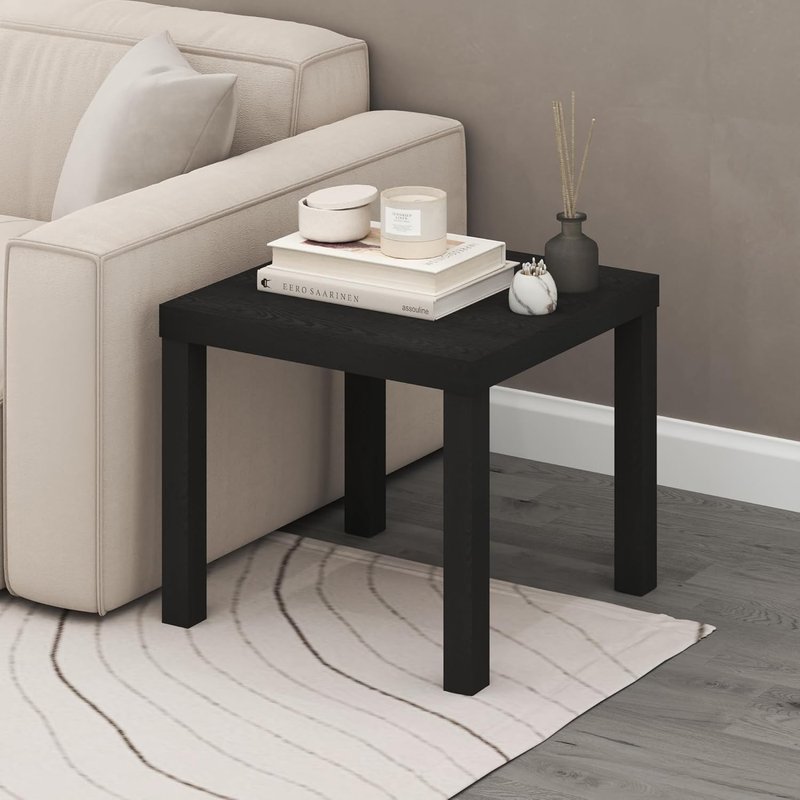
The IKEA LACK side table costs $13. For that you get a square side table with a clean white surface and four legs. It's honeycomb cardboard inside a wood-fiber surface. Not particleboard, not plywood, but a hollow honeycomb core lighter than essentially any solid alternative and fine for normal side table use. The construction is so minimal that the LACK turned into a fixture of engineering and product design discussions, the standing example of doing exactly as little as necessary to get a functional object at a radical price.
The LACK has been in production since 1981 and has picked up an enormous following, not despite the minimal construction but because of what that construction allows. At $13, buyers can run several LACK tables, stack them, modify them, paint them, replace them without feeling it, or just accept that a table costing less than a restaurant meal gets held to different durability standards than one costing $200. Buying at this price is a genuinely different psychological act from buying furniture in the normal price range.
The LACK's cultural footprint runs well past its $13 literal value. People use it as a printer enclosure for 3D printing, where the 'LACK enclosure' is a standard DIY in the maker community. They stack two of them to make a coffee table. They wrap it in wallpaper, washi tape, contact paper, marble film, and every surface treatment anyone has thought of. In gaming and tech desk communities it shows up constantly as a monitor riser, a cable management platform, a fill piece. No other furniture item has this ratio of hack to purchase price.
What the LACK isn't is a quality piece of furniture. Water on the surface will damage it. Much over about 55 lbs risks leg failure, since the legs are hollow too. Move it often and the corners will show it. Buyers know all this and accept it as the $13 contract. What this review asks is whether that contract works for most buyers, and the answer depends on the situation in ways worth going through.
The 3D printer community's adoption of the LACK as an enclosure platform says more about the product than any furniture review can. The 'LACK enclosure', usually two LACK tables stacked vertically with polycarbonate panels added around a Prusa or Ender printer, became a standard DIY project because the LACK's dimensions happen to fit desktop FDM printers, the hollow honeycomb top panels drill easily without special tools, and the $13 price makes the cost of experimenting negligible. IKEA never had that use in mind, which is the point: a platform cheap enough to experiment on, modify freely, and throw away without regret.
The psychology of $13 pricing deserves a direct look. Most furniture purchases run through an optimization: how long will this last, is the quality worth the money, will I regret it. The LACK erases most of that. At $13 the question isn't whether to buy it, it's whether you need a side table at all. If you do, nothing is cheaper and nothing asks less commitment from you. That's why the LACK turns up in starter apartments, college dorms, investment properties, and staged rentals at about the same rate. Financially, the decision carries no risk.
Construction and materials
The LACK is built in a way almost no other furniture is. The tabletop is a hollow honeycomb cardboard core sandwiched between top and bottom wood-fiber panels, then wrapped in paper foil. The honeycomb gives surprising rigidity for the weight, and the LACK weighs about 4.4 lbs, because the hexagonal cells spread force across the surface efficiently. The practical ceiling is around 55 lbs of distributed load on the tabletop, and a good deal less for a concentrated load on one spot.
The legs are hollow too, extruded components with screw-in metal fittings that attach to the tabletop. That keeps the LACK feather-light and easy to carry, and it creates the main failure mode: strike a leg hard where it meets the floor and the hollow structure can crack. Sitting still in a corner, no issue. Moved often or parked in a busy hallway, a real vulnerability.
The surface finish comes in white, black, and wood tones. White sells the most and shows rings and marks plainly if you don't protect it. Get in the habit of using coasters on a white LACK or it won't stay presentable. Edges and corners chip first, and any table that has moved a few times will show edge damage up close.
The weight efficiency of the honeycomb core is genuinely impressive as engineering. A standard wood-panel side table of the same dimensions would run 15-20 lbs; the LACK is 4.4 lbs. That 75% weight reduction costs the table almost nothing in its ability to hold what it will realistically hold. A lamp, a glass of water, a remote, a few books covers the vast majority of side table duty, and the LACK handles all of it without complaint. The failure modes are narrow: concentrated point loads from pressing hard on one spot, impact to the hollow legs, and moisture reaching the cardboard core. All three are avoidable with normal use and moderate care.
The assembly deserves credit for its honesty. The LACK arrives flat and goes together by screwing four legs into plastic thread inserts on the underside of the top. Three minutes, no tools beyond what IKEA puts in the box. Those plastic inserts are the weak link in the leg attachment: overtighten and you strip them, and a stripped hole is essentially unrepairable. Hand-tight plus a quarter turn is the right technique, firm without forcing. LACK tables that have had their legs taken off and reattached repeatedly, common in rentals, end up with play at the attachment points as the tightening cycles wear the plastic out.
Our Ratings
Overall score
The honeycomb cardboard construction is elegant engineering: the hexagonal cells spread load so a 4.4-pound table holds 55 pounds of distributed weight, well beyond its own mass. The failure modes are narrow: concentrated point loads, impact to the hollow legs, and moisture reaching the core. The legs screw into plastic thread inserts that strip if overtightened, the reason most wobbly LACK legs wobble.
Function with aesthetics as an afterthought: a flat top on four legs in white, black, or wood tones, with nothing to love and nothing to object to. The white bestseller works as a visual null that takes up space without asking for attention. The same plainness makes it a great surface to modify, and the DIY community has documented hundreds of contact-paper, paint, and hairpin-leg transformations, agreeing the honeycomb top takes them well.
The value argument works at the category level, not the comparison level: at around $13, the purchase is basically free against any household budget, so the question isn't whether it's a good price but whether you need a side table. In normal indoor use it lasts three to seven years before surface wear or leg play push you to replace it, and at $13 that's fine. Buyers weighing it against $150 solid-wood tables have made a category error.
What People Are Saying
The LACK shows up across Reddit in a way no other piece of furniture does, less as a purchase recommendation than as a modification platform and a problem-solving tool. In 3D printing (r/3Dprinting, r/ender3), the LACK enclosure is a standard project for containing printer fumes and improving print quality. In r/battlestations it appears constantly as a monitor riser, cable management platform, and desk-adjacent surface. In r/DIY and r/malelivingspace, LACK modifications with contact paper, hairpin legs, or paint get regular attention. Straight furniture reviews of the unmodified LACK barely exist, because buyers understand they aren't buying a quality piece; they're buying a functional object at a price that removes the evaluation entirely. The cultural footprint it has built, as a meme, as a maker's platform, as a symbol of pragmatic furnishing, is genuinely unusual for furniture and says something about what it does well.
Reddit and Houzz commentary are weighted 3× against blog and editorial sources in our sentiment score. Brand PR has a well-documented influence on editorial coverage — direct owner reports from message boards tend to be more candid.
What Reddit Is Saying
“I have owned my Lack end tables for at least 7 years. They've outlasted any other piece of furniture I've owned. Best cheap furniture purchase ever.”View thread →
“I have a now discontinued LACK coffee table in white, a large square with a glass top, I have had it since 2009, it still looks perfect. I also got two small side tables that time too, and two shelf units, a 2x2 and a 2x4. They were made better then.”View thread →
“People like to shit on these products because of their simple and bulky look but they have a totally different goal: to provide an affordable alternative. There are so many situations where people can't afford to splurge on expensive items and LACK is great for that.”View thread →
“I have used lack tables for years by my bedside and they are holding up well. The legs can be a bit in even but my kids even crawl on them and they are still holding up. I actually have three in a box waiting to be used for exactly this same purpose. When there is a deal you can get them cheap. The ones I bought I got 3 for 25 bucks plus free shipping.”View thread →
“They're in store. $8 each, just walk into the little computer terminal and search for Lack. They're just small end tables, and I fastened them together with 3d printed parts into a large shelf. Much more cost effective than buying a large shelf unit.”View thread →
“Ikea. the table is called "Lack" and is very cheap. It's basically compressed cardboard with very small blocks of wood in the corners (where the legs screw in).”View thread →
“I originally used a lack table for my 3d printer when I first got it - these are pretty bad for 3d printing - they might seem sturdy but they do wobble like crazy. My prints improved so much after transferring my printer to a more sturdy table. I wouldn't recommend the lack tables for 3d printing at all, unless you're at ultra low speeds - like sub 40mm/s”View thread →
“If your equipment isn't very heavy. The Lack tables I'm using for my enclosure have legs that are essentially paste board and appear to be hollow. There's not much "wood" there to hold anything up.”View thread →
“I tried to make a LACK enclosure and honestly I don’t get the hype cuz it was pretty garbage. Luckily the house I bought had a perfect closet for my printer 🤷🏼♂️”View thread →
Frequently asked questions
Is the IKEA LACK Side Table worth it?
The engineering is better than the price suggests: honeycomb cardboard cells spread load so a 4.4-pound table carries 55 pounds of distributed weight. At this price it costs less than most people's lunch, so the only real question is need rather than value. Keep it dry and do not concentrate weight on one spot.
How is the IKEA LACK Side Table built?
The honeycomb cardboard construction is elegant engineering: the hexagonal cells spread load so a 4.4-pound table holds 55 pounds of distributed weight, well beyond its own mass. The failure modes are narrow: concentrated point loads, impact to the hollow legs, and moisture reaching the core. The legs screw into plastic thread inserts that strip if overtightened, the reason most wobbly LACK legs wobble.
What styles does the IKEA LACK Side Table work with?
Function with aesthetics as an afterthought: a flat top on four legs in white, black, or wood tones, with nothing to love and nothing to object to. The white bestseller works as a visual null that takes up space without asking for attention. The same plainness makes it a great surface to modify, and the DIY community has documented hundreds of contact-paper, paint, and hairpin-leg transformations, agreeing the honeycomb top takes them well.
What do real owners say about the IKEA LACK Side Table?
The LACK shows up across Reddit in a way no other piece of furniture does, less as a purchase recommendation than as a modification platform and a problem-solving tool. In 3D printing (r/3Dprinting, r/ender3), the LACK enclosure is a standard project for containing printer fumes and improving print quality. In r/battlestations it appears constantly as a monitor riser, cable management platform, and desk-adjacent surface.
Options Worth Checking Out
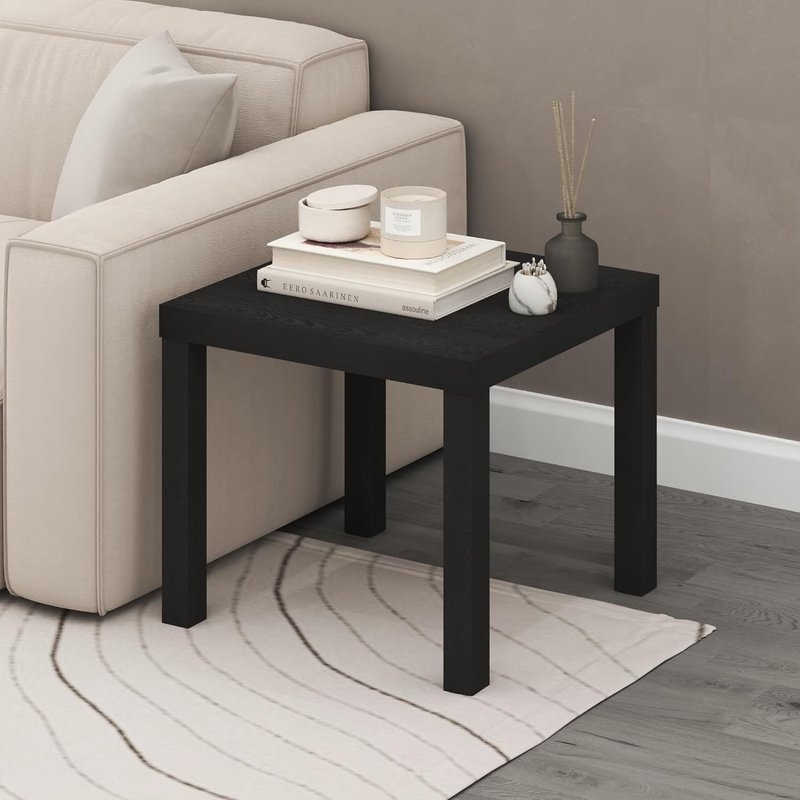
Furinno Classic Square End Table
Simple square parsons-style end table with the same minimal footprint as the LACK. Plain construction, no frills.
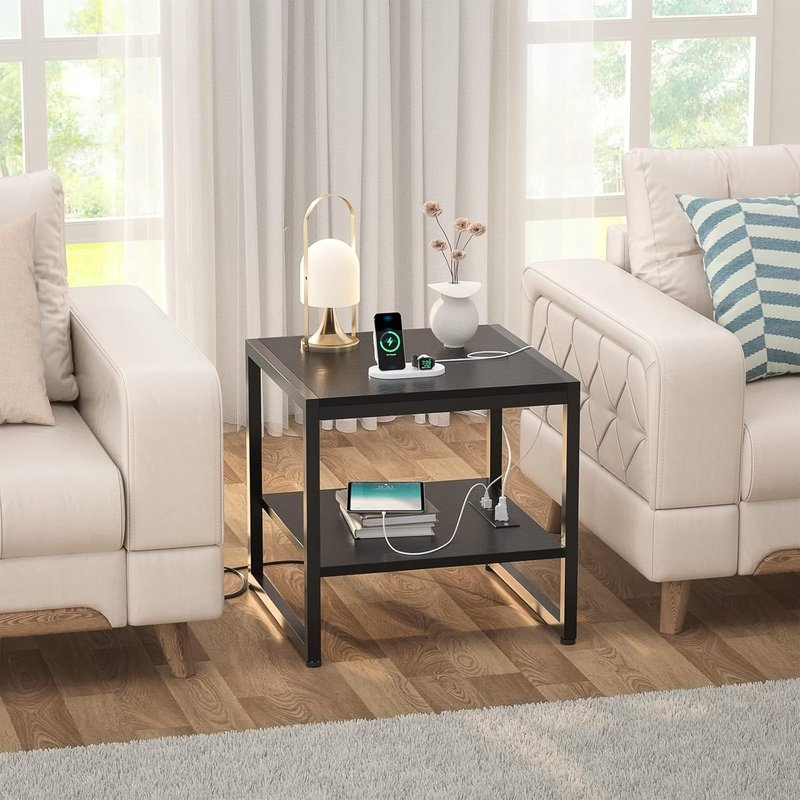
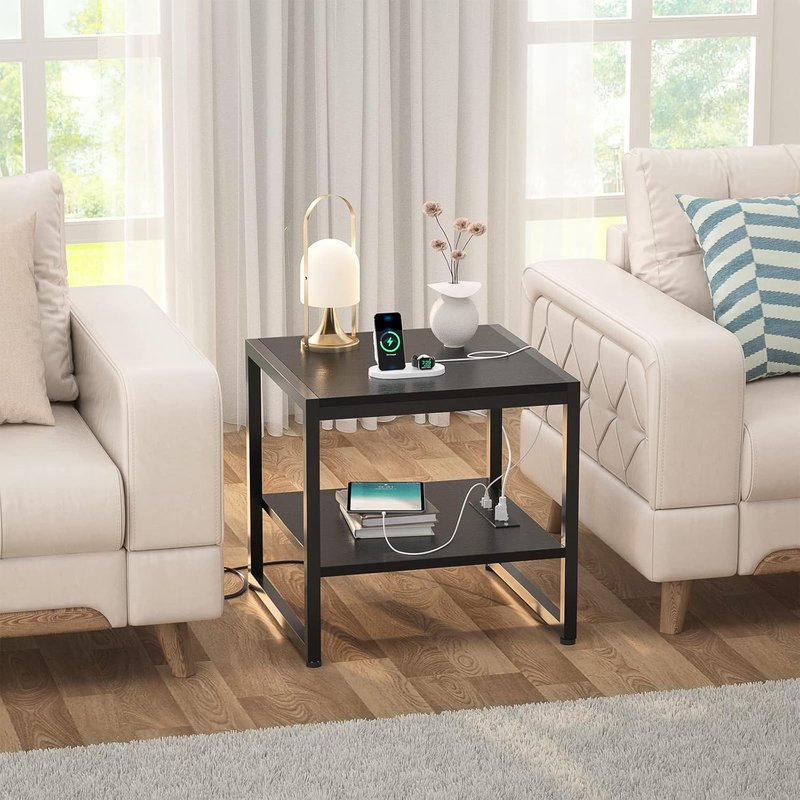
Homieasy End Table with Charging Station
Side table with a built-in charging station, AC outlets, and USB ports. Useful upgrade over a bare LACK if your couch lives far from a wall outlet.
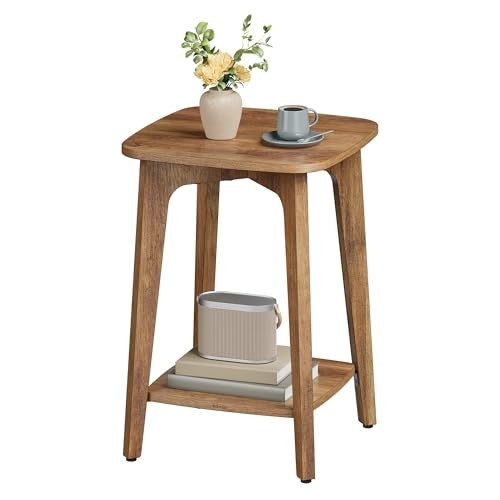
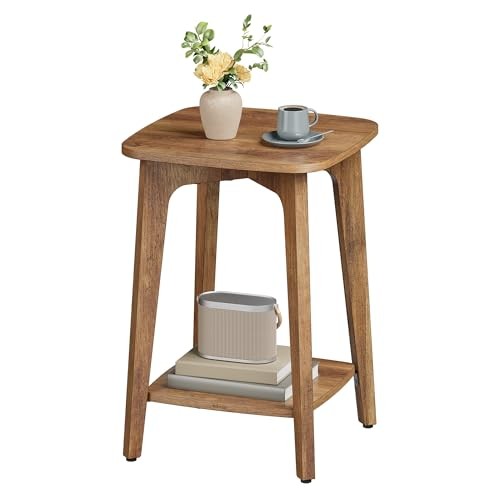
VASAGLE MAEZO 2-Tier Square End Table
A step up in substance from LACK for roughly twice the money. VASAGLE adds a lower shelf and tapered legs, so it stores magazines and a remote instead of offering the single bare surface LACK gives you.
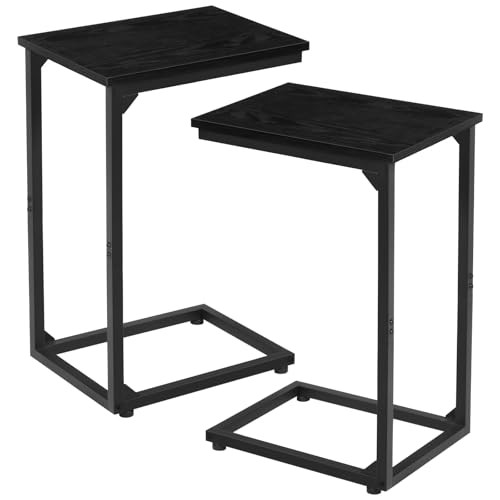
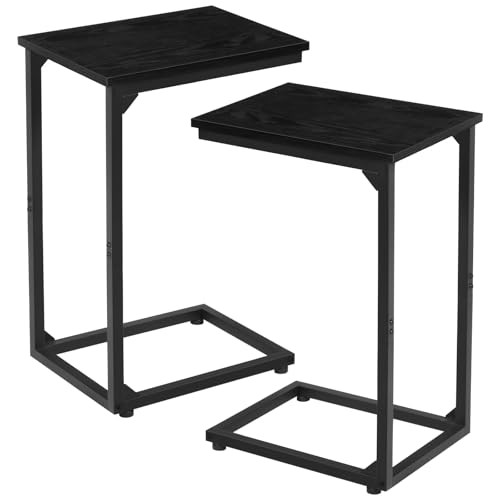
AMHANCIBLE C-Shaped End Table, Set of 2
For LACK shoppers whose real problem is reach: a 21.5-inch square parks beside the sofa, but this C-shape slides its base underneath so the top sits over your lap. Two in the set, and better suited to laptops and dinner plates.
You Might Also Need
Accessories worth grabbing alongside your purchase
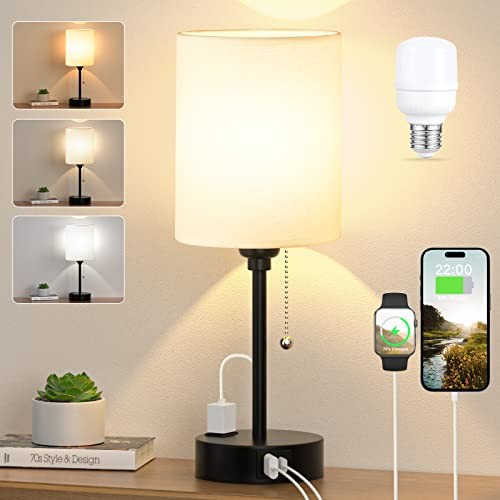
More IKEA Reviews
See all →
How Does It Compare?
Side-by-side breakdowns featuring this product