IKEA
IKEA KALLAX Review: Dimensions, Sizes & Owner Verdict
By Daniel Reyes · Updated October 2026
Independent editorial review. We never accept payment for coverage, though we may earn a commission if you purchase through our links.
Verdict
The KALLAX community is one of the most active around any single furniture piece. In r/vinyl, KALLAX is the default record storage recommendation, discussions are not about whether to use KALLAX but about configuration size, orientation (horizontal versus vertical), and leg height for playing records without bending. In r/boardgames, KALLAX-based game storage is a standard solution for large collections, with the cube dimensions fitting most standard board game boxes and the open-front access making game selection practical. In r/ikeahacks, the KALLAX appears across modifications including bar carts, media consoles, pet furniture, and children's storage systems. The safety discussion, specifically the tip-over risk when loaded, appears consistently across all communities, with universal agreement that the included anti-tip hardware is required for use in any household with children or pets. Multiple community members document multi-year ownership (five to ten years) without structural failure under normal residential use, with the typical failure mode being surface edge chipping from moves rather than frame failure from load.
Read full take ↓Similar storage pieces
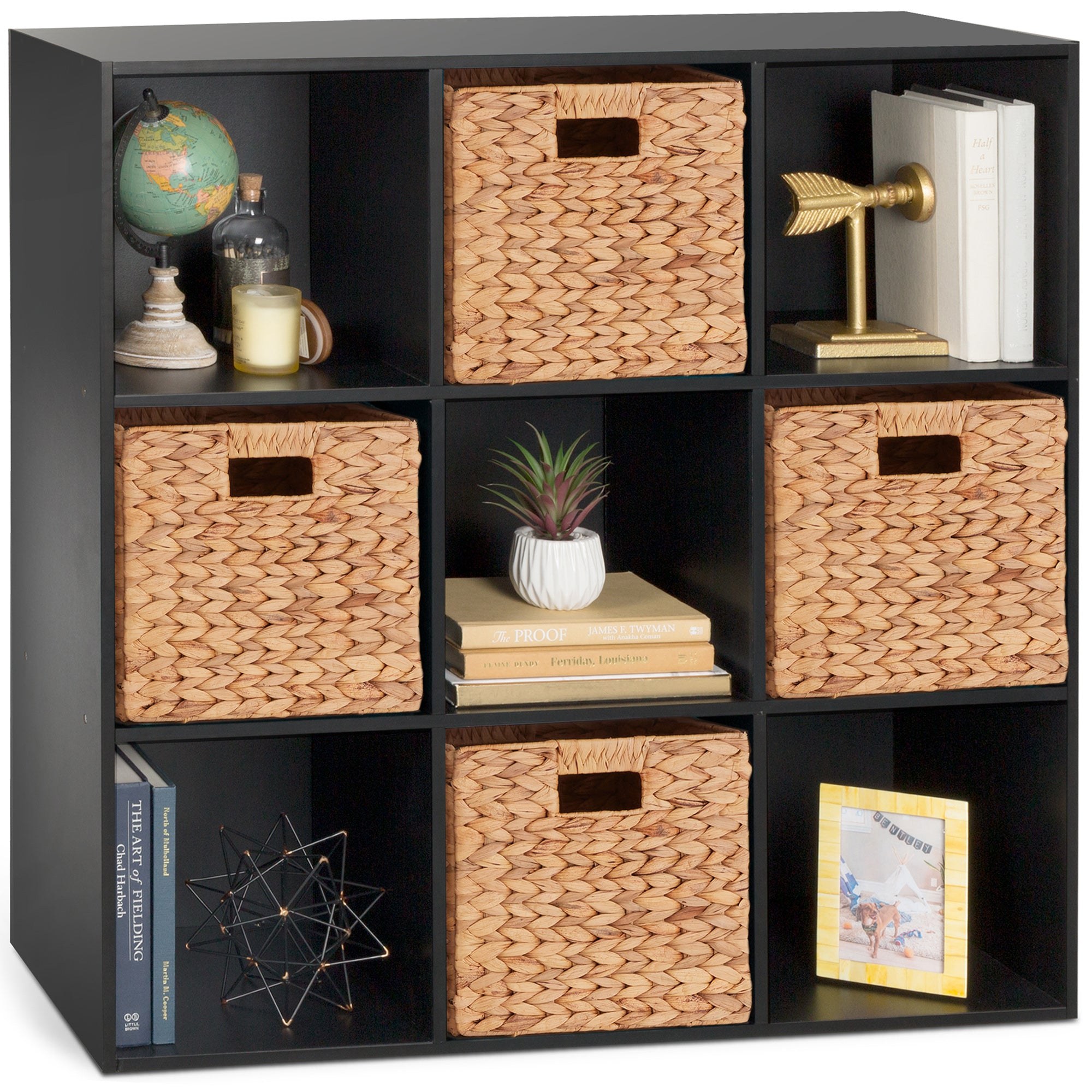
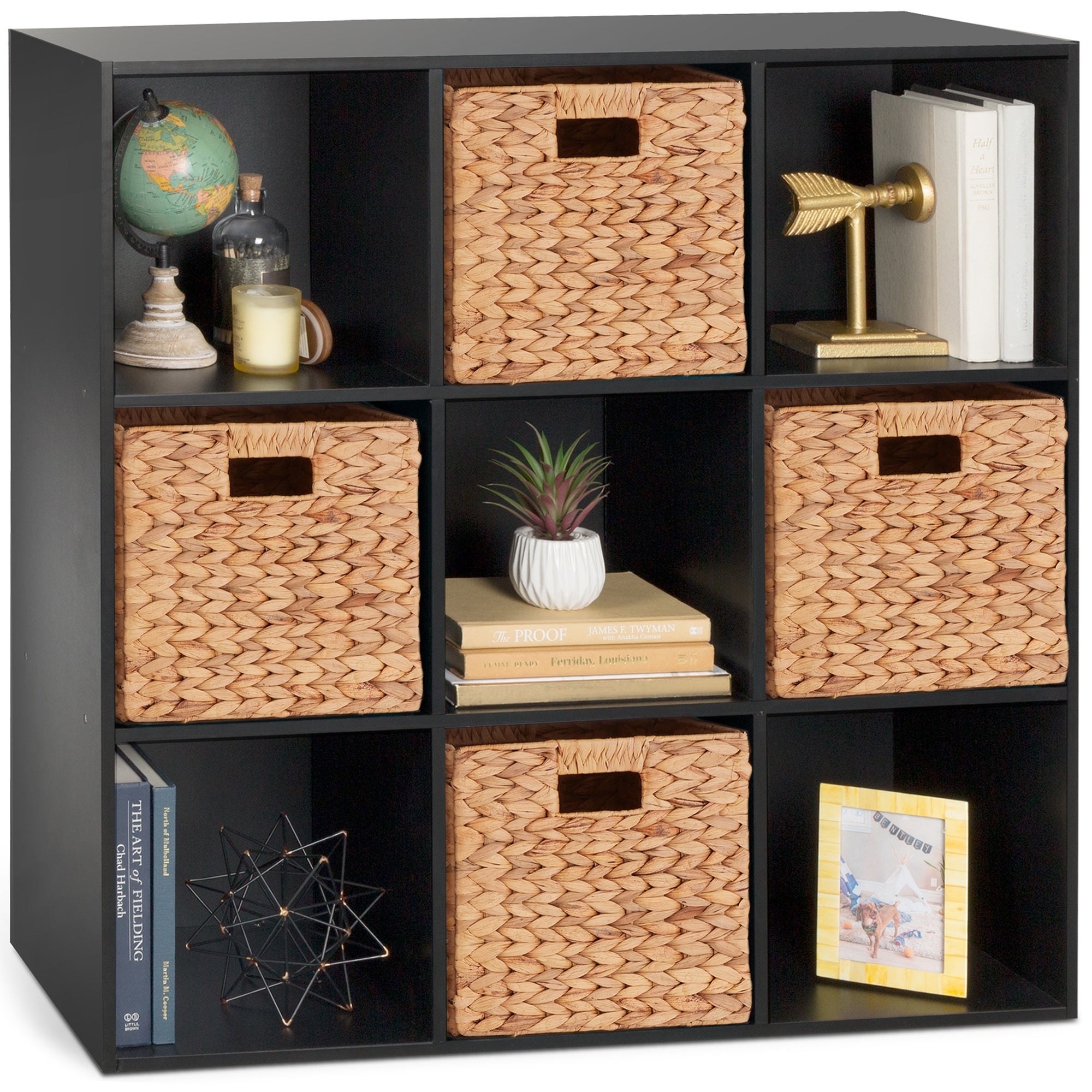
JupiterForce 9-Cube Storage Organizer, 3×3 Cube Bookcase Display Shelf, White
View on Amazon →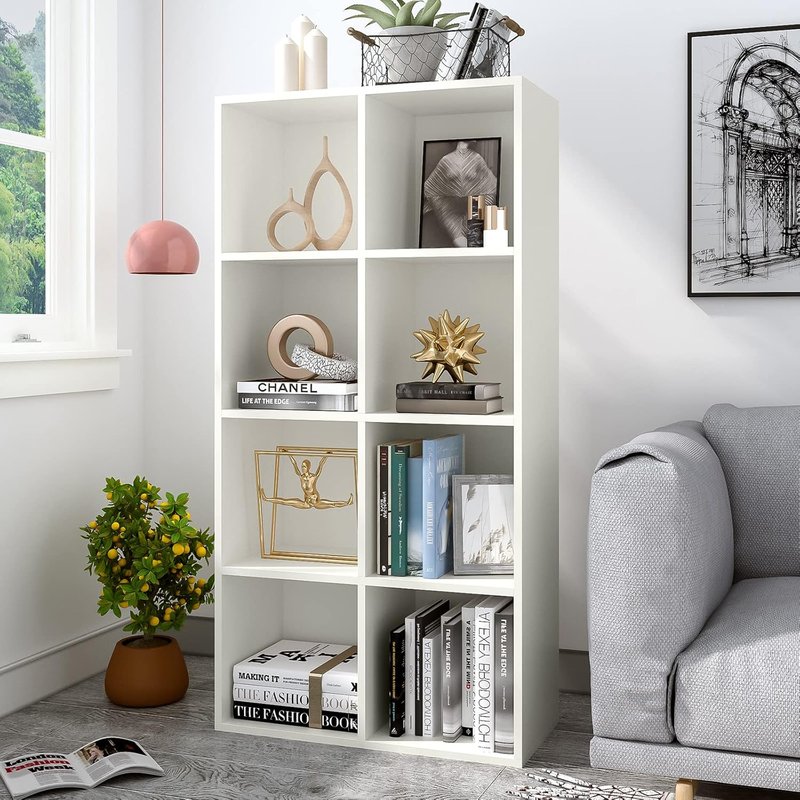
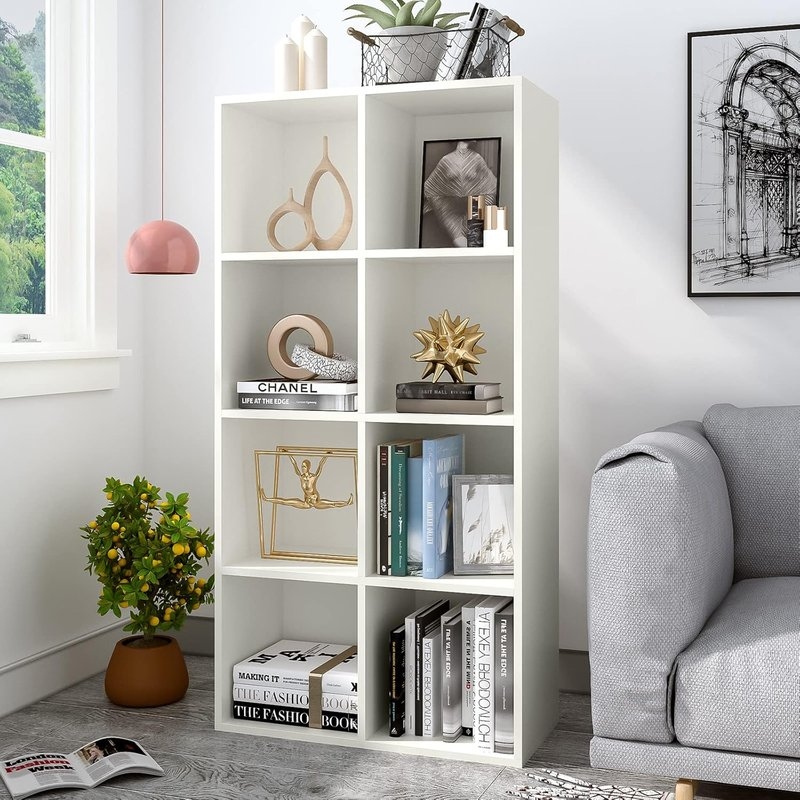
OSCHF 8-Cube Storage Shelf Bookcase, 4-Tier Floor Standing, Warm White
View on Amazon →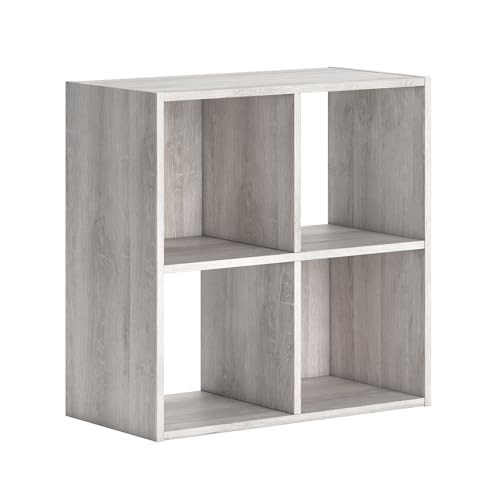
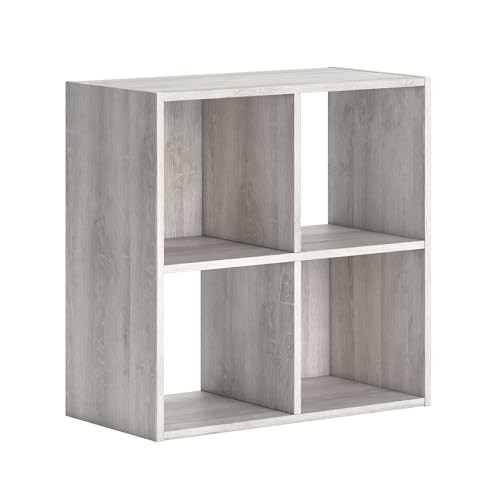
Signature Design by Ashley 4-Cube Storage Organizer
View on Amazon →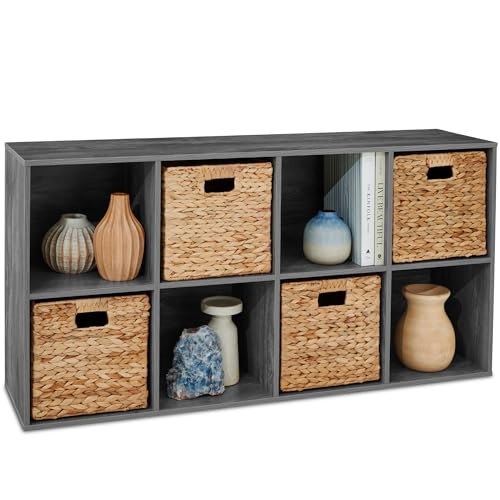
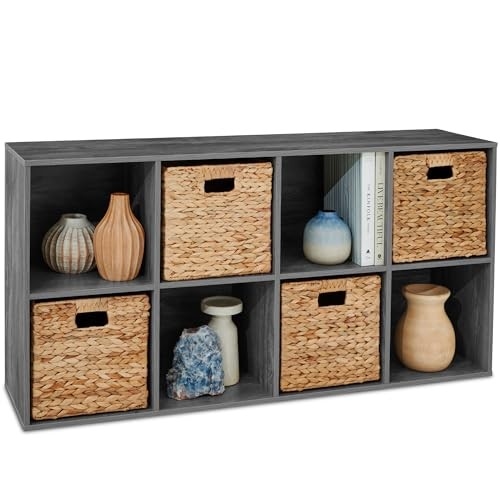
Best Choice Products 8-Cube Storage Organizer
View on Amazon →Quick Take
The storage-per-dollar here is essentially unchallenged, and the accessory range is why it stays useful. The honeycomb paper core keeps weight down and handles distributed loads like books and records fine, though a point load deflects more than solid particleboard would. Add inserts to turn open cubes into closed storage as your needs change.
How a $120 shelf unit became a cultural institution
The IKEA KALLAX isn't furniture. It's infrastructure. In the twenty-plus years since its predecessor, the EXPEDIT, first appeared in IKEA stores, this cube-grid shelving system has been pressed into service as a vinyl record cabinet, a board game library, a children's toy organizer, a TV console, a room divider, a closet substitute, and a hacking platform for everything from home bars to cat condos. No other piece of mass-market furniture has generated as many DIY modifications, Reddit threads, YouTube tutorials, or devoted communities. It isn't the best-built shelf unit you can buy. It is, by a considerable margin, the most adaptable and the most cost-effective, and at approximately $120 for the 2x4 white configuration, the value proposition is close to unarguable.
The core construction and feature set stay consistent across every KALLAX configuration, from the compact 1×2 to the 4×4, so this review covers the system rather than any single size. The 2×4 in white is the most widely discussed configuration, particularly among vinyl collectors, whose 13"×13" cubes comfortably fit a 12-inch LP sleeve with a few inches of clearance. The key facts hold regardless of size: particleboard and fiberboard construction with a honeycomb paper core, ABS plastic edge banding, no back panel, wall-mounting capability, and a modular insert ecosystem spanning drawer units, door inserts, DRONA fabric boxes, and purpose-built accessories. Assembly usually takes 60-90 minutes solo.
What the KALLAX is, and what it isn't
The KALLAX is not solid wood and was never meant to be. The panels are particleboard with a fiberboard facing and a honeycomb paper core in the thicker structural panels. The edge banding is ABS plastic. Visible surfaces get an acrylic paint finish in white, or a foil laminate in the wood-effect colors. This is standard for flat-pack furniture in the $60-$200 price range, and it's a deliberate engineering choice: the honeycomb core keeps weight low while holding enough rigidity for the loads these shelves handle. Each cube is rated for approximately 29 lbs of load, plenty for records, books, board games, or fabric storage boxes.
What it isn't: heirloom furniture, a shelf that survives multiple moves without careful disassembly, or a unit you can attack with saws and screws without understanding the material. The honeycomb core leaves very little thickness for screw purchase outside the designated cam-lock positions. Treat any modification that puts screws through the panel faces as permanent. Reddit is full of excellent KALLAX hacks, and all of them start from knowing what the material will and won't accept.
Vinyl record storage, the dominant use case
The vinyl community's adoption of the KALLAX borders on unanimous. Interior cube dimensions of approximately 13 inches wide by 13 inches tall take a 12-inch LP sleeve with clearance, and each cube holds approximately 60-80 records depending on sleeve thickness. A fully loaded 2x4 KALLAX comes out around 500-640 LPs. One known issue at maximum vinyl loads: the 2x4 and larger configurations can develop a slight sag in the center horizontal panel over time. Legs at the midpoint fix it, either the IKEA steel KALLAX legs or third-party options from a hardware store. There's no back panel, so records are visible from the rear; plenty of collectors add a plywood back, and plenty leave it open for cable management.
The insert ecosystem and hackability
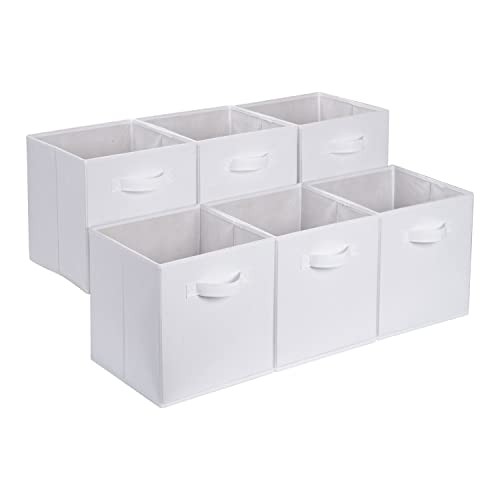
IKEA sells a substantial catalog of KALLAX-specific inserts: door inserts, drawer inserts, wine rack inserts, and the DRONA fabric boxes in multiple colors. Third-party manufacturers make purpose-built KALLAX accessories too, including record dividers, gaming storage holders, and custom wood door panels. That accessory ecosystem is why the KALLAX works as a platform instead of simply a shelf. One base unit can be open shelving, a closed cabinet, or a mix of both, and the inserts pull out and move between units.
What $120 buys
At approximately $120 for the 2x4 white, the KALLAX delivers storage-to-dollar value that comparable cube shelving can't match. The price-to-utility ratio is exceptional. Target and Amazon cube shelving runs $80-$150 without the insert ecosystem or the structural consistency. Solid wood cube shelving starts around $300. Custom built-ins start at $1,000. The KALLAX sits at a price where the construction trade-offs, particleboard, no back panel, finite screw-hold capacity, are almost entirely paid for by what you get for the money. If you need functional, configurable storage on a minimal investment, this is the obvious recommendation. Be honest about what it is: particleboard infrastructure, not furniture. If that's what you need, it delivers.
The dimensions are worth stating precisely, because most of the secondary use cases rest on them. Each square opening is 13" wide × 13" tall × 15¼" deep. That's close to, but not identical to, a standard 12-inch vinyl record at sleeve width (12.375"), which is why the vinyl storage use case works with a small amount of clearance per slot. LP records stand upright in KALLAX cubes without tipping or sliding once the cube is at least two-thirds full. The 15.25" cube depth takes standard US letter-size bankers boxes and most board game boxes, which is why board game storage comes up so consistently in community recommendations. Knowing the numbers lets buyers plan a specific storage application before purchasing instead of adapting afterward.
KALLAX dimensions and sizes
Every KALLAX shelving unit shares the same 15 3/8-inch (39 cm) depth, and each cube opening measures about 13 x 13 inches (33 x 33 cm) inside, which is why the standard IKEA inserts, fabric bins, and 12-inch records fit so neatly. What changes between models is the grid of cubes. Here are the common sizes, given as width by height:
Every current US shelf unit, width by depth by height, read off the measurements block on each art number's own IKEA listing. Depth is 15 3/8 inches on all of them, and IKEA rates every size at 29 pounds per shelf no matter how large the unit is.
- 1x1 (single cube): 16 3/8 x 15 3/8 x 16 in (42 x 39 x 41 cm), art 20301554
- 2x1 (wide pair): 30 1/8 x 15 3/8 x 16 1/8 in (77 x 39 x 41 cm), art 90301555
- 1x4 (tall column): 16 3/8 x 15 3/8 x 57 5/8 in (42 x 39 x 147 cm), art 40631638
- 2x2: 30 1/8 x 15 3/8 x 30 1/8 in (77 x 39 x 77 cm), art 20631639
- 2x4 tall, or 4x2 on its side: 30 1/8 x 15 3/8 x 57 5/8 in (77 x 39 x 147 cm), art 20631663
- 3x3: 43 7/8 x 15 3/8 x 43 7/8 in (112 x 39 x 112 cm), art 00415599
- 3x4: 43 7/8 x 15 3/8 x 57 5/8 in (112 x 39 x 147 cm), art 90637299
- 4x4: 57 7/8 x 15 3/8 x 57 5/8 in (147 x 39 x 147 cm), art 10637302
- 5x5: 71 5/8 x 15 3/8 x 71 5/8 in (182 x 39 x 182 cm), art 90637303
Worth checking if you are cross-referencing elsewhere, because several widely copied figures are off by an eighth to a quarter inch. The 3x3 is often published as 44 1/8 inches when IKEA's specification says 43 7/8, the 1x1 as 16 3/8 square when its height is 16, and the 4x4 as 57 7/8 square when its height is 57 5/8. IKEA contributes to this: on the 3x3 its own product title still reads 44 1/8 while the measurements directly below read 43 7/8. For a tight alcove, measure from the listing for the exact art number you are buying.
Depth stays a constant 15 3/8 inches (39 cm) on every size, so a KALLAX sits shallower than a typical bookshelf, which is part of why it works as a low room divider or a bench under a window. One buying note: if you are ordering inserts or bins, measure for the roughly 13-inch cube opening, not the outer frame.
Honeycomb core, and what it will carry
Panel materials
KALLAX panels are particleboard with a fiberboard facing. The thicker structural panels, top, bottom, and side verticals, carry a honeycomb paper core to cut weight while keeping stiffness. IKEA is upfront about this in their materials disclosure, and the r/IKEA and r/vinyl communities have documented it extensively. The honeycomb core isn't a recent cost-cutting change, it has been in the KALLAX and the EXPEDIT since both designs were introduced. Practical implication: screw-holding capacity lives in the outer layers only. Cam-lock fittings work well because the material was engineered around them. Screws driven into panel faces away from the factory hardware positions will strip.
Finish and edge banding
The white KALLAX uses an acrylic paint finish IKEA describes as 'printed and embossed acrylic paint.' It's durable for shelf use and it chips at the corners under heavy impact. The edge banding is ABS plastic, which protects the raw particleboard edges during assembly and use. Wood-effect color variants use a foil laminate rather than paint, and that can lift at the edges with sustained moisture exposure.
Load capacity
IKEA rates each KALLAX cube at approximately 29 lbs (13 kg) of distributed load. The top surface is rated for approximately 55 lbs (25 kg). A full cube of 60-80 LPs typically weighs 15-25 lbs, comfortably inside that. For dense books or heavier materials, keep the 29 lb per cube limit in mind. At maximum load across a 2x4 or larger unit, add leg support at the midpoint to keep the center panel from sagging.
Wall mounting and anti-tip
The KALLAX includes anti-tip L-brackets and can be wall-mounted horizontally. Compared with tall drawer-based furniture, its wide footprint, open back, and lack of drawers make it inherently more stable. IKEA still recommends wall-anchoring in households with children, and rightly so, because like all tall IKEA storage the KALLAX can tip forward if a child climbs the front cubes. That's the job the included anti-tip L-brackets do. Wall-mounting hardware holes come pre-drilled at the top rear panel.
Assembly
Figure approximately 60-90 minutes for one person, 45-60 for two. The cam-lock and dowel system is standard IKEA flat-pack. The common assembly error is misidentifying the top versus bottom panel. One documented quality-control issue in recent production runs: some users report soft or breakable dowels, though this affects a minority of units.
Our Ratings
Overall score
Structural panels use a honeycomb paper core that cuts weight while staying stiff enough for shelves; distributed loads (books, records, baskets) are fine, but a point load deflects more than solid particleboard would. Each cube is rated near 29 lbs distributed, the top for 55 lbs. The ABS edge banding beats paper-foil edges, and with no back panel it isn't self-squaring, so it must go against a flat wall to avoid racking.
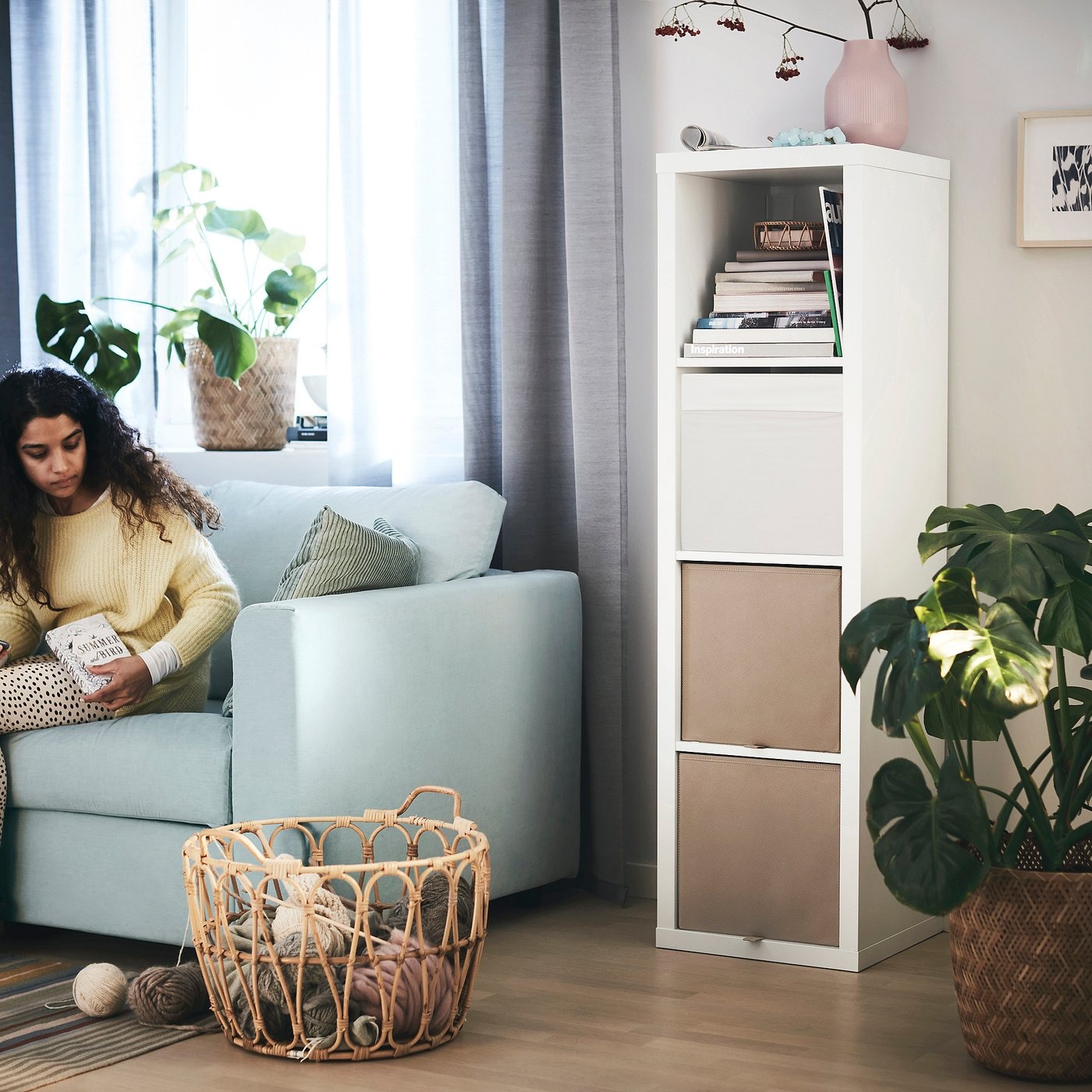
Grid minimalism, a matrix of square openings that reads organized rather than expressive; in white it recedes into the wall and lets the contents talk, in black-brown or wood effect it states more. The insert ecosystem is the main style lever: DRONA boxes for a uniform closed look, fabric baskets to soften, or a mix of open and closed cubes. Wall-mount it, stand it on legs as a credenza, or run it vertical, unusual range for the price.
At $120 for the standard 2x4 white unit, the storage-per-dollar is essentially unchallenged; cube shelving from Target or Wayfair runs $80-$150 for flimsier construction and no accessory line. Inserts at $10-$35 turn open cubes into closed storage without buying more furniture. For storage you'll rearrange, move, or replace within five to seven years, replacing a $120 unit beats comparable storage at $300-$500.
What People Are Saying
The KALLAX community is one of the most active around any single furniture piece. In r/vinyl, KALLAX is the default record storage recommendation, discussions are not about whether to use KALLAX but about configuration size, orientation (horizontal versus vertical), and leg height for playing records without bending. In r/boardgames, KALLAX-based game storage is a standard solution for large collections, with the cube dimensions fitting most standard board game boxes and the open-front access making game selection practical. In r/ikeahacks, the KALLAX appears across modifications including bar carts, media consoles, pet furniture, and children's storage systems. The safety discussion, specifically the tip-over risk when loaded, appears consistently across all communities, with universal agreement that the included anti-tip hardware is required for use in any household with children or pets. Multiple community members document multi-year ownership (five to ten years) without structural failure under normal residential use, with the typical failure mode being surface edge chipping from moves rather than frame failure from load.
Reddit and Houzz commentary are weighted 3× against blog and editorial sources in our sentiment score. Brand PR has a well-documented influence on editorial coverage — direct owner reports from message boards tend to be more candid.
What Reddit Is Saying
“I've seen lots of offerings comparable to a kallax. None of them are as cheap though. It's hard to compete with the Amazon of furniture.”View thread →
“OP mentioned the cardstock corrugation inside as if it were a bad thing, but it supports and distributes the weight very well. Yes, it's no match for solid wood, but it's fifth of the price and holds records nicely”View thread →
“My son has both a threshold (target) (2x4) and Kallax cube (4x3) set up in his room. We haven't had problems with either, but the Kallax definitely just feels more solid. I would go Kallax between the two, personally, if I could pick only one.”View thread →
“I have several Kallax units in my house holding a few thousand LPs. Assembly was a breeze. They all have 6" legs on them that I purchased at Home Depot. Any unit that is 4 cubes wide needed additional legs in the middle to prevent sagging.”View thread →
“They have never sagged or shown any signs of failing in the many years I've had them. You simply can't get that much reliable record storage for that cheap anywhere else.”View thread →
“Just bought a 1x2 and a 1x4 and didn't notice anything weird in pairing with my four-year old 2x2. I think folks with issues are comparing Expedit to Kallax, which was a big change in quality.”View thread →
“over the years I've built at least 20 Kallax and Expedit shelves and the 2x4 I build recently was a complete piece of crap. The dowels might as well be built out of paper with how easily they break, I must have broken 8 of them.”View thread →
What Houzz Is Saying
“The ones from Walmart and Home Depot have smaller cubes. It’s usually fine. I chose to go with the Kallax in our Schoolroom/Office, as our binders were too tall to fit into the smaller cube storage. The bins that fit the larger cubes are more expensive and harder to find (outside of IKEA) though, if that’s a factor for you.”Source →
“Another possibility--build a base that is just slightly taller than the baseboard to sit the shelving on. Then the units will be next to the wall & you can anchor them with the original brackets.”Source →
“Attach a piece of wood the thickness needed to the wall, paint it to match the wall. Then fasten the kallax to it.”Source →
“I would think that any IKEA would have replacement pieces for mounting. Otherwise, you need the strength of cabinet mounting hardware with the appearance of nothing being there since the kallax is open shelving.”Source →
What Others Are Saying
“Since replacing the EXPEDIT in 2014, the KALLAX has quietly earned cult status as one of IKEA's most hackable pieces—and for good reason.”Source →
“I stacked two KALLAX units with a space in between to form a counter space. The combination reaches the top of the 9.5' high room.”Source →
“This well-priced unit is sturdy, easy to put together, movable, can be disassembled, and low in offgassing, but scratches easily.”Source →
“Kallax's laminate is pretty but can't be repaired or refinished if it gets dinged or scratched.”Source →
Frequently asked questions
Is the IKEA KALLAX worth it?
The storage-per-dollar here is essentially unchallenged, and the accessory range is why it stays useful. The honeycomb paper core keeps weight down and handles distributed loads like books and records fine, though a point load deflects more than solid particleboard would. Add inserts to turn open cubes into closed storage as your needs change.
How is the IKEA KALLAX built?
Structural panels use a honeycomb paper core that cuts weight while staying stiff enough for shelves; distributed loads (books, records, baskets) are fine, but a point load deflects more than solid particleboard would. Each cube is rated near 29 lbs distributed, the top for 55 lbs. The ABS edge banding beats paper-foil edges, and with no back panel it isn't self-squaring, so it must go against a flat wall to avoid racking.
What styles does the IKEA KALLAX work with?
Grid minimalism, a matrix of square openings that reads organized rather than expressive; in white it recedes into the wall and lets the contents talk, in black-brown or wood effect it states more. The insert ecosystem is the main style lever: DRONA boxes for a uniform closed look, fabric baskets to soften, or a mix of open and closed cubes. Wall-mount it, stand it on legs as a credenza, or run it vertical, unusual range for the price.
What do real owners say about the IKEA KALLAX?
The KALLAX community is one of the most active around any single furniture piece. In r/vinyl, KALLAX is the default record storage recommendation, discussions are not about whether to use KALLAX but about configuration size, orientation (horizontal versus vertical), and leg height for playing records without bending. In r/boardgames, KALLAX-based game storage is a standard solution for large collections, with the cube dimensions fitting most standard board game boxes and the open-front access making game selection practical.
Options Worth Checking Out
JupiterForce 9-Cube Storage Organizer, 3×3 Cube Bookcase Display Shelf, White
OSCHF 8-Cube Storage Shelf Bookcase, 4-Tier Floor Standing, Warm White
8-cube open bookshelf in a warm white finish, same grid storage concept as KALLAX at a competitive price, doubles as a TV stand up to 55".
Signature Design by Ashley 4-Cube Storage Organizer
A brand-name 4-cube in the KALLAX mold for a smaller footprint. Ashley builds furniture for a living, so the panel finish and hardware are a step up from the no-name cube shelves that dominate this search.
Best Choice Products 8-Cube Storage Organizer
The closest match to a KALLAX 4x2 at 11 inch cube openings, which is the dimension that matters if you already own bins or records. Established seller with real support, unlike most cube-shelf listings.
You Might Also Need
Accessories worth grabbing alongside your purchase
More IKEA Reviews
See all →
How Does It Compare?
Side-by-side breakdowns featuring this product