IKEA
IKEA BILLY Bookcase Reviews + Our Honest Verdict
By Sam Hollis · Updated August 2026
Independent editorial review. We never accept payment for coverage, though we may earn a commission if you purchase through our links.
Verdict
The BILLY has an enormous and generally positive presence across Reddit communities in DIY, interior design, home organization, and apartment living. The DIY and home improvement side focuses on built-in hack potential, and r/DIY regularly features BILLY-based library installations that rank among the most-upvoted posts in the furniture category. The hack scene has its own communities on Instagram and Pinterest where owners share modification results. Interior design communities are harder on it: the limits of particleboard construction come up frequently, alongside comparisons with solid wood alternatives at higher price points. The near-universal consensus is that the value argument is unchallengeable for pure book storage, and that buyers who want furniture that looks expensive or survives a decade of heavy use with no degradation should budget more. Multiple long-running threads document BILLY installations from the 1990s still in service with their original shelves intact, which suggests that in ordinary residential book storage the construction outlasts what the materials would predict.
Read full take ↓Similar storage pieces
Why 110 million BILLY bookcases have sold
IKEA says a BILLY bookcase sells roughly every five seconds somewhere in the world. Since its introduction in 1979, more than 110 million units have been produced, which arguably makes it the most successful furniture product in history. Working out why takes about one sentence: it costs $79, it holds standard books and objects without drama, it needs no special tools to assemble, and it fits in the trunk of a sedan.
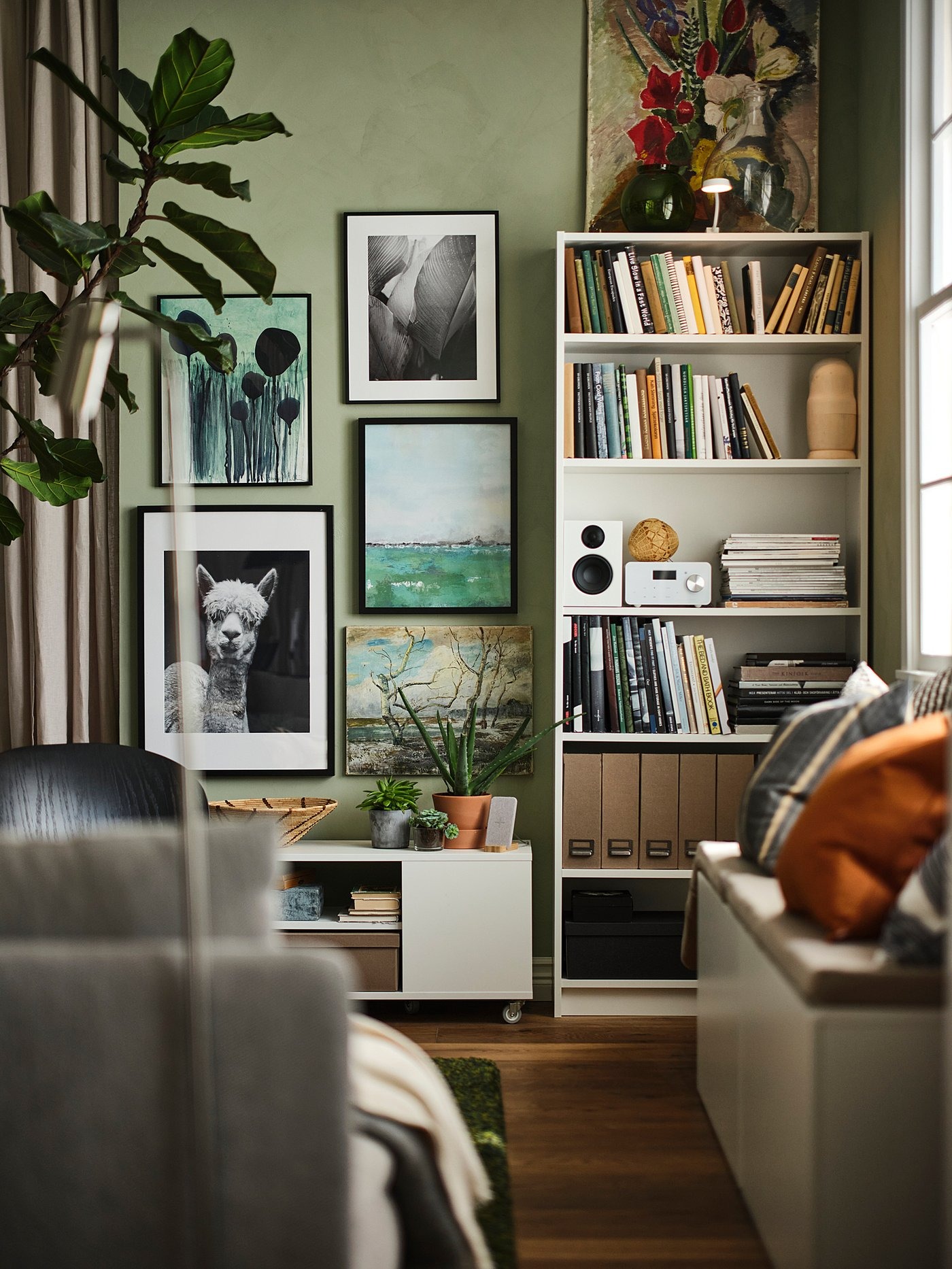
The BILLY is a particleboard bookcase with adjustable shelves and a paper foil surface in white, black-brown, or several wood tones. By any traditional measure it isn't a high-quality piece of furniture. The particleboard core hates moisture and swells if it gets wet. Shelves bow under heavy loads, especially large format art books or stacked vinyl records. The foil finish chips and scratches over the years, mostly at edges and corners. None of that is controversial, and IKEA has never claimed otherwise.
It succeeds anyway because it clears the threshold of adequacy that most people in most situations find sufficient. Books stay on shelves. Objects get displayed. The white finish recedes visually and lets the contents dominate. The adjustable shelf heights swallow an unusually wide range of object sizes. And at $79, when a shelf finally bows or a corner chips, the replacement math is far friendlier than it is on a $400 bookcase.
Then there's the DIY hack community that grew up around it. IKEA's own BILLY range includes extension units, glass doors, and add-on panels. The third-party market adds everything from face frames to crown molding to feet risers. What you end up with is a platform rather than a product, a starting point for built-in shelving installations that would cost thousands of dollars from scratch and a few hundred this way.
That hack scene is one of the stranger phenomena in modern furniture retail. IKEA sells height extension units, glass door add-ons, and oxbow frames that integrate with the standard case. Beyond IKEA, third-party manufacturers make face frames, crown molding, baseboard transitions, pilaster columns, and feet risers cut to BILLY dimensions. So a $79 bookcase becomes the structural core of a wall-to-wall, floor-to-ceiling built-in library, typically $500-$1,500 for a full wall against $5,000-$15,000 for the same installation built from scratch by a carpenter.
Ubiquity buys one more thing that's easy to overlook: parts availability. With hundreds of millions of BILLY bookcases in circulation, spare shelves, shelf pins, back panels, and hardware come from IKEA stores, the secondhand market, and third-party suppliers. A bowed shelf costs about $15 to replace. A set of shelf pins runs $3. Cheap repairability like that is genuinely rare at this price point, where most competitors use proprietary hardware that becomes unavailable the moment the product line is updated.
Construction and materials
The BILLY is particleboard with a paper foil surface finish. Particleboard is a composite of wood chips and adhesive pressed into panels: structurally consistent, easy to work with, not moisture-resistant, not as strong as solid wood or MDF, and not repairable once damaged. The paper foil goes on every visible panel and does the finish work, clean and smooth when new, worn at the edges over time. Shelf pins are plastic, a common cost reduction that matters under heavy loads.
Shelves rated for standard book loads (approximately 22 lbs per shelf at the rated load) hold up reliably in normal use. Load a full shelf with heavy photography books, encyclopedias, or records and bowing becomes a real possibility. Adding a middle support strip or a backer board modification, which IKEA sells as an add-on, improves shelf stability significantly.
Assembly is the classic IKEA cam lock and dowel system, straightforward for a competent assembler, usually thirty to forty-five minutes for a single unit. The back panel is thin hardboard that squares the case, and attaching it properly is the assembly step that matters most for preventing racking. Multiple BILLY units combine side by side, and with BILLY height extension units, into larger wall arrangements. The modular system is well conceived and it scales.
The back panel deserves more attention than it gets, because it carries the BILLY's long-term stability. That thin hardboard provides the structural squaring that keeps the case from racking. Attach it badly and the case will gradually lean under load. IKEA's instruction to nail the back panel at multiple points along each edge is correct, and skipping or shortcutting it is the primary cause of BILLY units that develop a lean over time. In the hack community, swapping the standard hardboard back for a thicker panel, 1/4" plywood or MDF, is a common modification that stiffens the case meaningfully and gives a better substrate for paint or wallpaper treatments.
Shelf bowing under heavy loads is real but manageable. The rated load of approximately 22 lbs covers weight distributed across the full shelf. A single large art book standing at the center is a concentrated load that stresses the particleboard harder than 22 lbs of evenly spread paperbacks. For heavy or oversized loads, the standard BILLY fix is a center support strip, a thin strip of wood glued front to back along the underside of each shelf, which dramatically increases resistance to bowing and never shows.
Our Ratings
Overall score
Particleboard with paper-foil facing, exactly as advertised: dimensionally stable but not moisture-resistant, not repairable once damaged, and weaker than solid wood under sustained heavy loads, which is why the score sits low. For normal book use those limits stay theoretical. Heavy loads bow shelves, fixable with a center support strip, and the thin hardboard back supplies the case's resistance to racking, so nail it well or swap in plywood.
The design philosophy is strategic invisibility: a bookcase that disappears behind its contents. In white, the bestseller, it reads as an extension of the wall and passes for built-in even in a rental. The clean rectangular form has no dating details, which is why the 1979 design still looks current. It scales modularly, and with face frames and molding a BILLY array can look like custom millwork.
At $79 for a full-height case with adjustable shelves, the value is almost implausible: particleboard rivals from Target or Walmart run $60-$100 for shorter units, and solid wood starts above $300. The hack ecosystem does the rest: a wall of built-in-looking shelving runs $500-$1,500 in materials versus $5,000-$15,000 from a carpenter. Nothing else touches it on cost per shelf inch. The limits are real but do not change that.
What People Are Saying
The BILLY has an enormous and generally positive presence across Reddit communities in DIY, interior design, home organization, and apartment living. The DIY and home improvement side focuses on built-in hack potential, and r/DIY regularly features BILLY-based library installations that rank among the most-upvoted posts in the furniture category. The hack scene has its own communities on Instagram and Pinterest where owners share modification results. Interior design communities are harder on it: the limits of particleboard construction come up frequently, alongside comparisons with solid wood alternatives at higher price points. The near-universal consensus is that the value argument is unchallengeable for pure book storage, and that buyers who want furniture that looks expensive or survives a decade of heavy use with no degradation should budget more. Multiple long-running threads document BILLY installations from the 1990s still in service with their original shelves intact, which suggests that in ordinary residential book storage the construction outlasts what the materials would predict.
Reddit and Houzz commentary are weighted 3× against blog and editorial sources in our sentiment score. Brand PR has a well-documented influence on editorial coverage — direct owner reports from message boards tend to be more candid.
What Reddit Is Saying
“This trick is pretty popular on Pinterest and was suggested by my fiancee. Basically I bought four Ikea Billy Bookcases in 15" depth. (Note: I wanted the extensions to make them taller but Ikea only sells those in the 11" depth currently).”View thread →
“In 50 years, they'll be posting another diy and saying wtf, someone just stuck an IKEA Billy in here?”View thread →
“1905: How to make a cheap and easy closet. Step one, frame in a shelf and plaster around it. 2017: How to make a cheap and easy built-in shelf. Step one, permanently install IKEA shelves and then frame them in.”View thread →
“How does the melamine surface of the bookcase contrast with the painted trim? I have thought about doing something like this before, but I wasn't sure if the end product would look strange because you'd have the plastic-y look of the cabinet next to the wood.”View thread →
What Houzz Is Saying
“We have around 32 feet of Billy bookcases and have owned them for about 10 years, moved them halfway across country once and the are loaded down with books. We have a more modern style and they fit in well. Very hard to beat for the price and are pretty easy to assemble once you get past the first one.”Source →
“We have had Billy bookcases with a TON of books on them and do not have quality issues, believe it or not. We've had them for years. Pros: -Customizable in many ways (width, height, doors) -Slim profile/baseboard cutout helps with the "built-in" feel -Continuously available, in case needs change -Easy on the wallet Cons: -Limited color choices -Very, very basic look when standing alone (look better in a wall-to-wall setup) -Not great for oversized books as they are not deep (which is also a pro)”Source →
“We got an estimate for built-in bookcases in our living room recently - $8K. I found Billy bookcases available in the color (white, which is really off-white), height, and combined width that they fill the same space almost perfectly. $220! We just got them this past weekend. No, they do not look as good as built-ins would in our old house, but they provide us with the shelf space we need while we save some pennies for the real thing someday.”Source →
“I have Billy bookshelves that I added solid doors on a couple bottom Units, left others open and added glass doors to the uppers. We added the height extenders with glass doors because we have high ceilings. They fill one wall and go around the corner. We screwed them to the wall in a bedroom upstairs. I'm thrilled with the quality for such a small investment. They look impressive. I don't keep paperbacks and they are very solid. If I ever sell this house, they are staying here. IKEA things should be put together once for best results.”Source →
“I purchased a Billly bookcase over 20 years ago when our oldest went off to college. It's now in our basement and still going strong. Fast forward to a few years ago when I purchased another one and found when assembling it, the cam locks are now plastic(!) instead metal. The newer one is still sturdy, but I was disappointed to see this change.”Source →
“We had them in our kids' playroom many years ago. The shelves don't hold much weight so while they were fine for toys I would not use them for books. Your craft supplies should be fine.”Source →
Frequently asked questions
Is the IKEA BILLY Bookcase worth it?
At $79 for a full-height case with adjustable shelves, the value is almost implausible: particleboard rivals from Target or Walmart run $60-$100 for shorter units, and solid wood starts above $300. The hack ecosystem does the rest: a wall of built-in-looking shelving runs $500-$1,500 in materials versus $5,000-$15,000 from a carpenter. Nothing else touches it on cost per shelf inch.
How is the IKEA BILLY Bookcase built?
Particleboard with paper-foil facing, exactly as advertised: dimensionally stable but not moisture-resistant, not repairable once damaged, and weaker than solid wood under sustained heavy loads, which is why the score sits low. For normal book use those limits stay theoretical. Heavy loads bow shelves, fixable with a center support strip, and the thin hardboard back supplies the case's resistance to racking, so nail it well or swap in plywood.
What styles does the IKEA BILLY Bookcase work with?
The design philosophy is strategic invisibility: a bookcase that disappears behind its contents. In white, the bestseller, it reads as an extension of the wall and passes for built-in even in a rental. The clean rectangular form has no dating details, which is why the 1979 design still looks current.
What do real owners say about the IKEA BILLY Bookcase?
The BILLY has an enormous and generally positive presence across Reddit communities in DIY, interior design, home organization, and apartment living. The DIY and home improvement side focuses on built-in hack potential, and r/DIY regularly features BILLY-based library installations that rank among the most-upvoted posts in the furniture category. The hack scene has its own communities on Instagram and Pinterest where owners share modification results.
Options Worth Checking Out
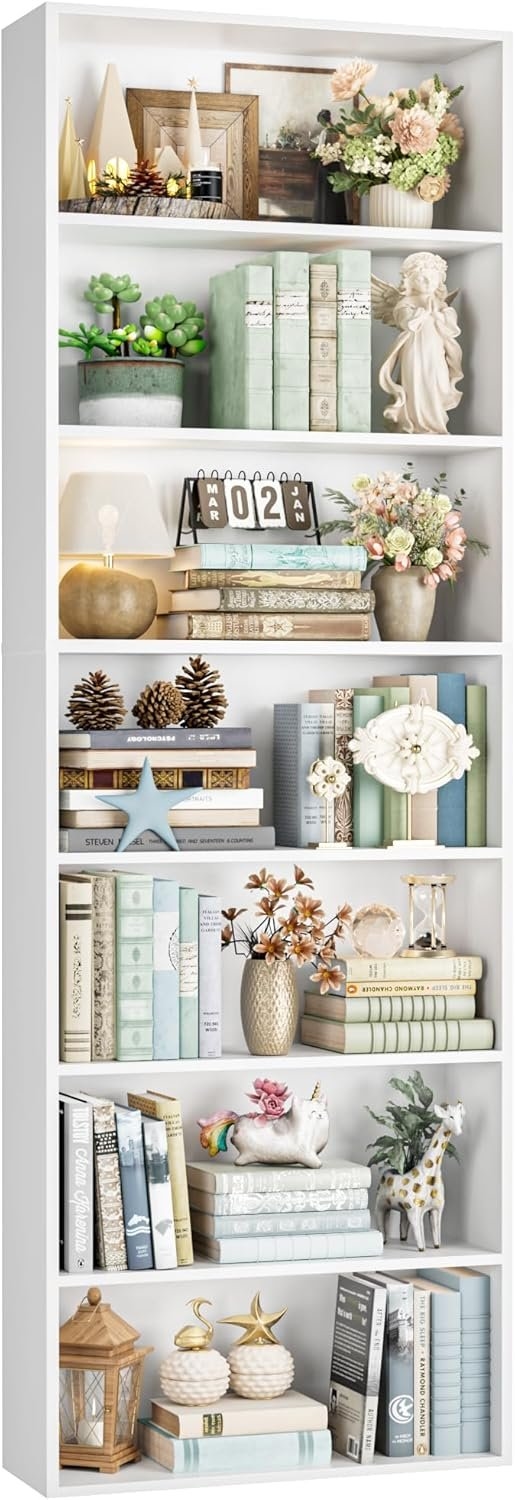
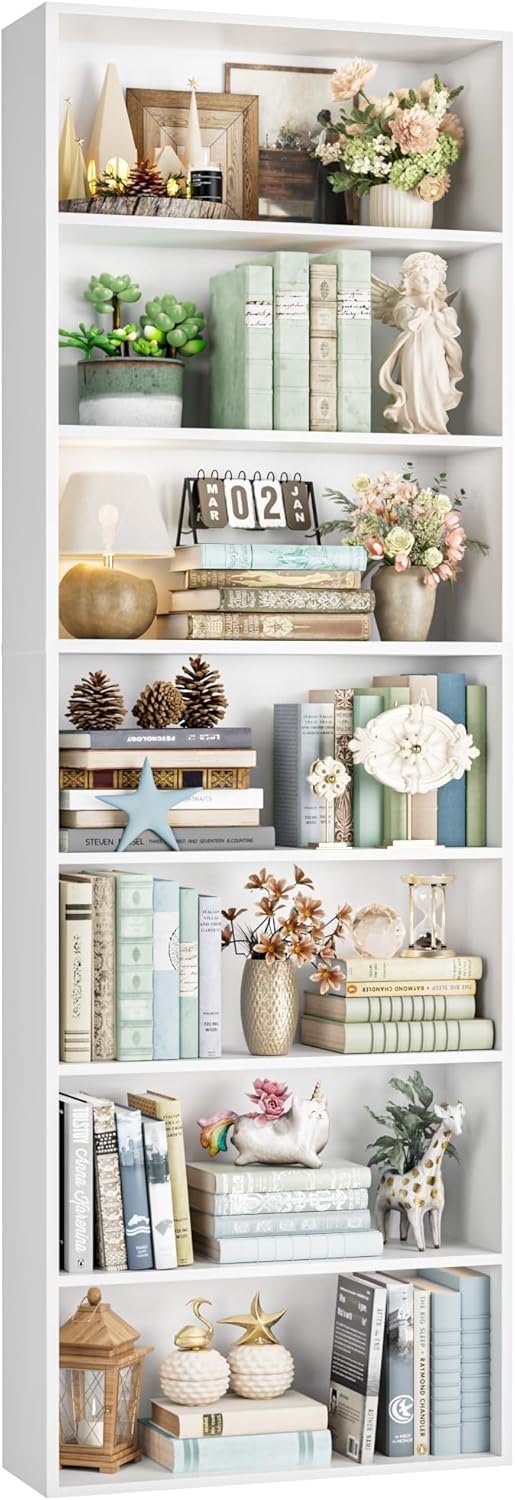
FACBOTALL 82" 7-Tier Open Bookshelf, Freestanding, White
Tall 82-inch open shelving with seven tiers, comparable in vertical capacity to the BILLY at a similar price. Skips the flat-pack assembly headaches.
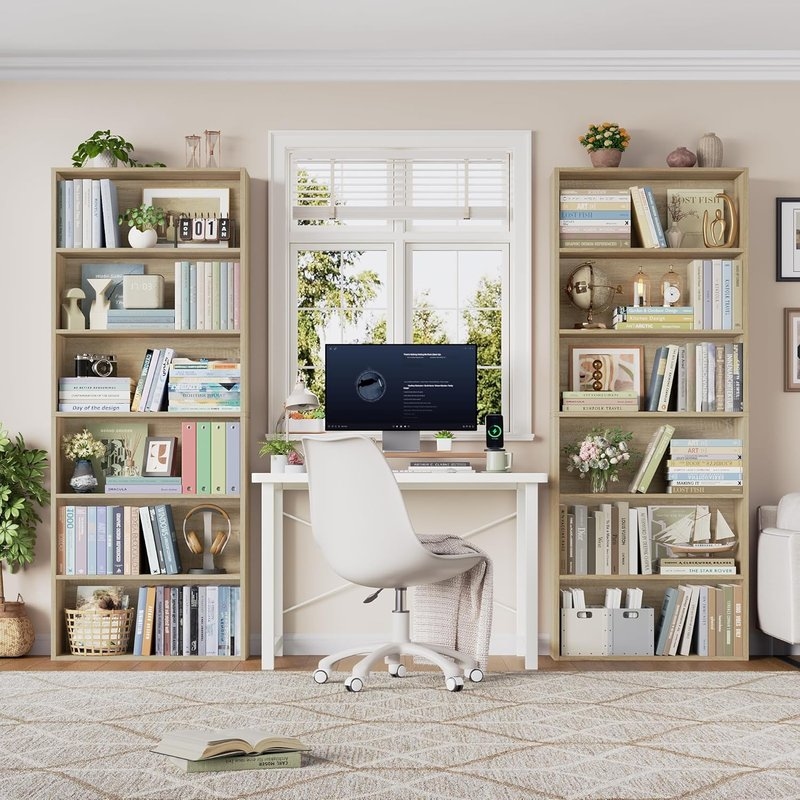
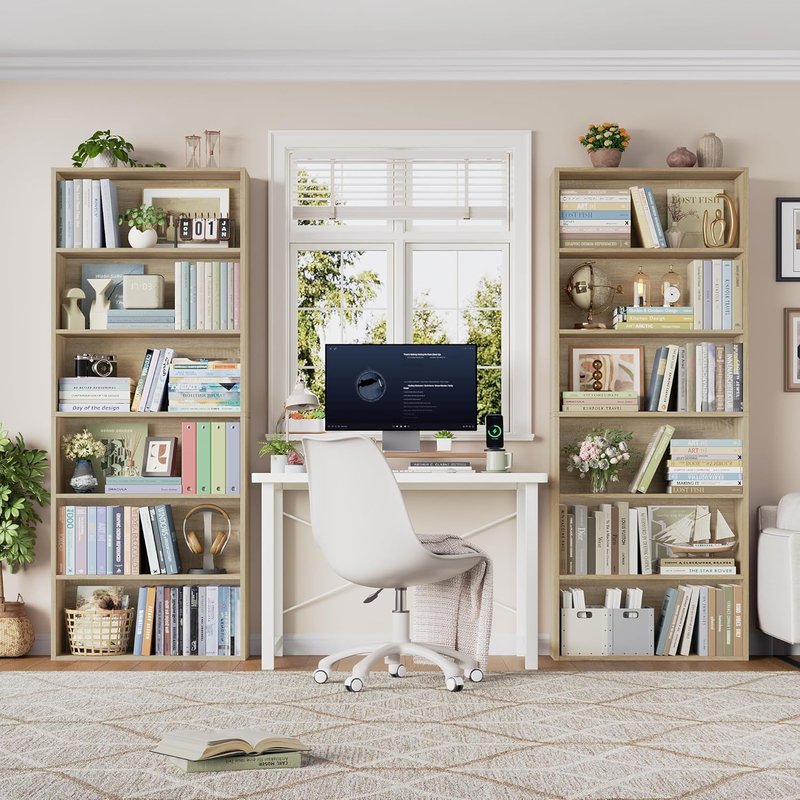
FOTOSOK 6-Tier Open Bookcase, Freestanding Tall Bookshelf, Light Oak
Six-tier freestanding bookcase in warm light oak. A clean BILLY alternative when you want a wood-tone finish instead of laminate white.
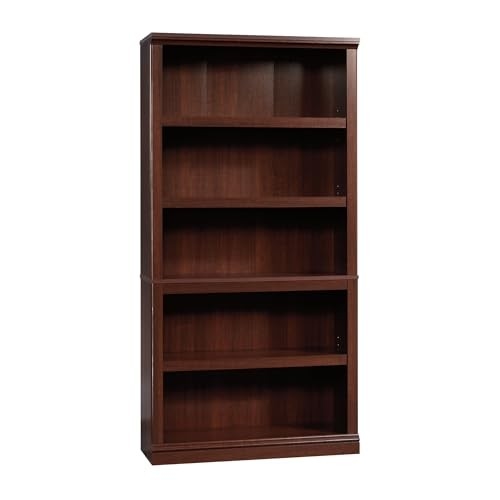
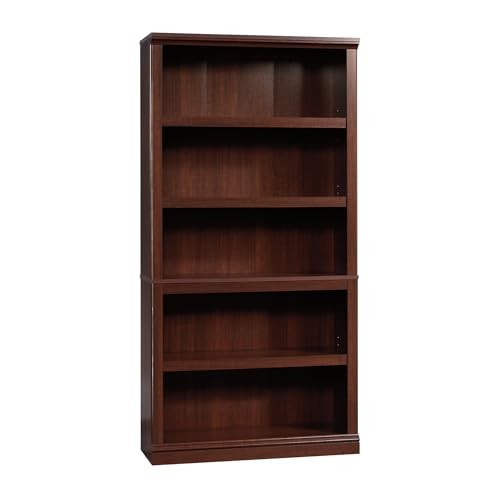
Sauder 5-Shelf Bookcase, Select Cherry
For buyers who want a name-brand build rather than another sub-$100 flatpack. Sauder's 5-shelf unit runs about double BILLY's price, with adjustable shelves and a warmer cherry finish that suits a study or den more than a white minimalist wall.
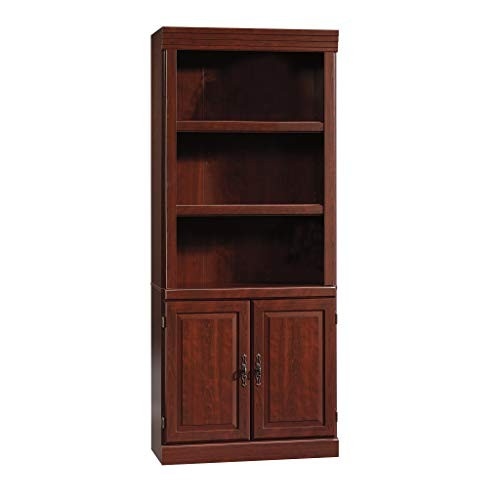
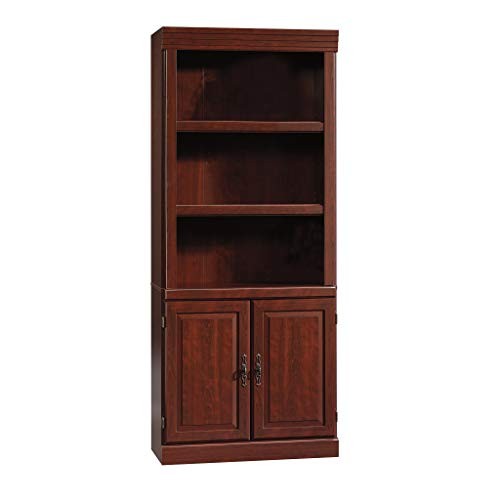
Sauder Heritage Hill Library Bookcase with Doors
The closest Amazon answer to a BILLY fitted with OXBERG glass doors, without chasing two IKEA part numbers. Doors keep dust off books and hide clutter, though the classic cherry reads traditional next to BILLY's plain white.
You Might Also Need
Accessories worth grabbing alongside your purchase
More IKEA Reviews
See all →
How Does It Compare?
Side-by-side breakdowns featuring this product