Castlery
Castlery Hamilton Sectional Reviews + Our Editorial Verdict
By Daniel Reyes · Updated August 2026
Independent editorial review. We never accept payment for coverage, though we may earn a commission if you purchase through our links.
Verdict
There is a meaningful body of real-owner commentary on the Hamilton across Apartment Therapy, Refinery29, and social channels. Across 1-2 year ownership reports the consensus is that the sofa holds up well structurally, the comfort profile is genuinely 'perfect height' with the right balance of support and softness, and the aesthetics keep working across a range of living room configurations. The most consistent praise goes to assembly: two people, no tools, ten to twenty minutes. The most consistent complaint is Castlery's delivery infrastructure, which uses third-party logistics carriers (RXO, FedEx) with a documented hit-or-miss reliability record. Multiple reviews note sofas delivered late, delivered with missing components, or marked as delivered before arrival. Castlery's own customer service is email and text based, with documented response times of several days. Those are operational problems rather than product quality problems, and they hit a meaningful minority of buyers. The $50 Room of Choice delivery upgrade reduces the risk of logistics issues without eliminating it. On the Hamilton specifically, as opposed to Castlery broadly, community sentiment runs about 80/20 positive: buyers who receive their sofa in good condition are largely satisfied at the 1-2 year mark. The lowest-maintenance path is to order in Smoke Grey performance weave, select the Room of Choice delivery upgrade, and budget 3-4 weeks from order to white-glove placement.
Read full take ↓Similar sofas
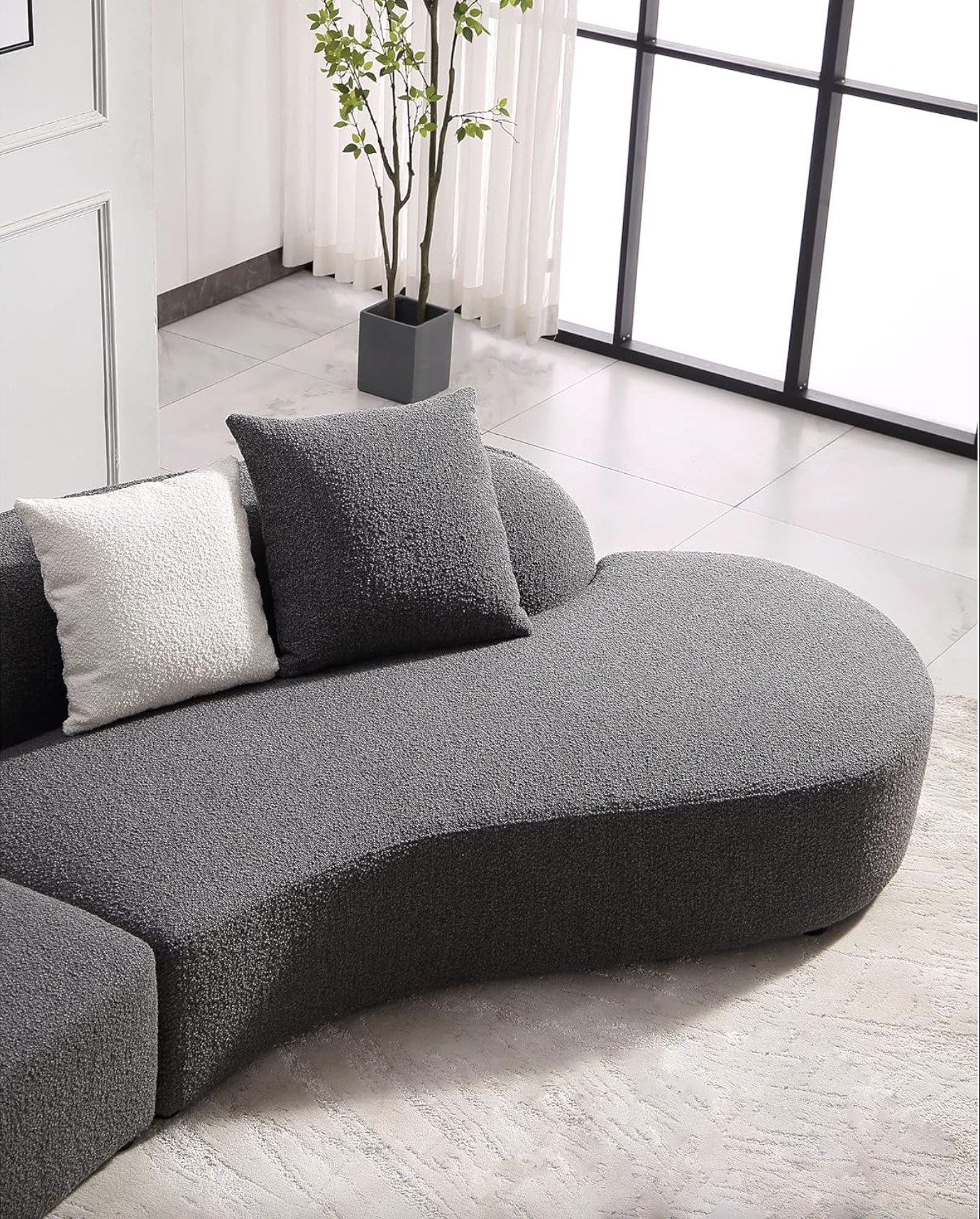
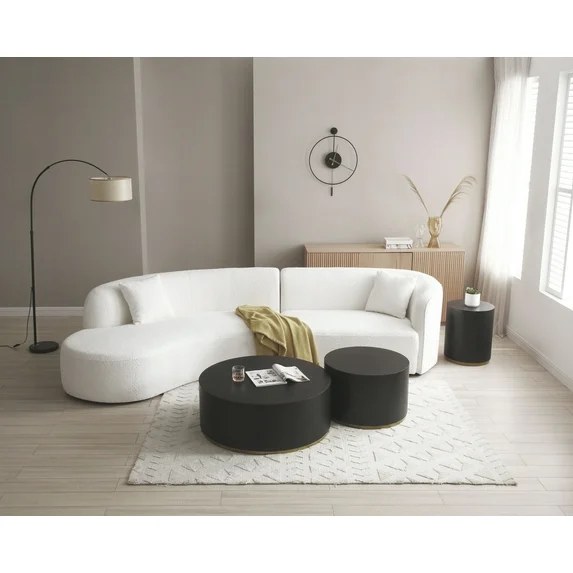

The cloud dupe that mostly earns its reputation
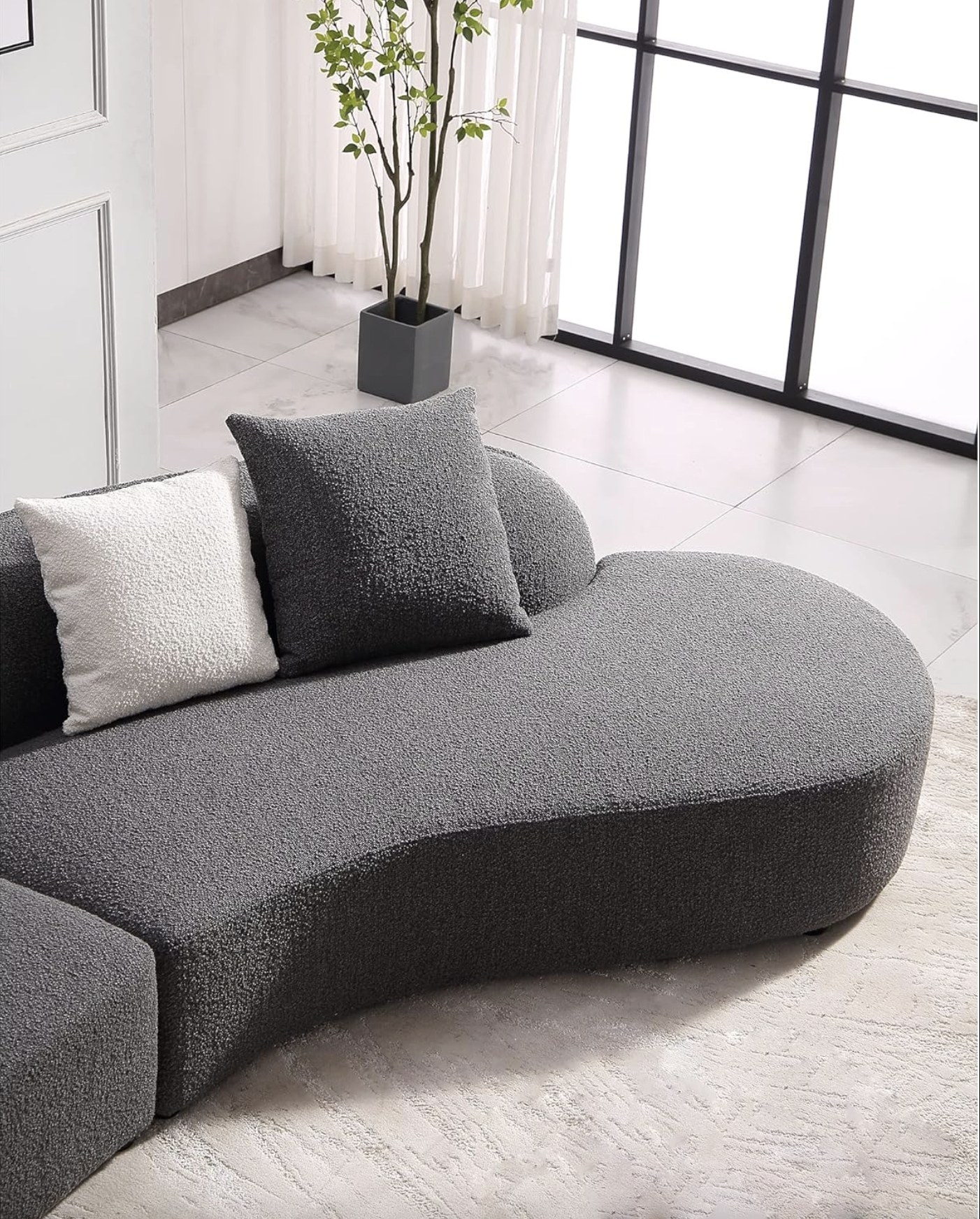
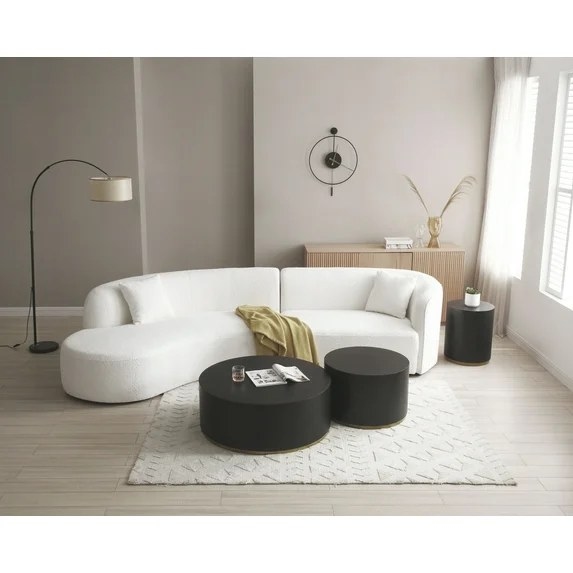
The Castlery Hamilton Round Chaise Sectional sits in a crowded slot: the organic-modern sectional that looks like it belongs in an RH showroom but is priced for the rest of us. At $3,039 it isn't cheap, but it's roughly $5,000-$10,000 less than the cloud-and-curve sectionals it clearly means to evoke. Whether that price gap comes with an equivalent quality gap is what this review answers.
Castlery is a Singapore-based DTC brand that has built real momentum in the US over the past five years, on clean design, faster shipping than domestic custom brands, and relentless social media presence. The Hamilton Round Chaise Sectional is probably its most recognizable piece. The rounded chaise terminus and low-profile silhouette photograph beautifully, and a generation of apartment decorators has landed on it as the answer to the cloud sofa trend without the cloud sofa price. Knowing what you're buying, and what you aren't, is the work here.
My honest read: this is a strong sectional at its price point, one of the better-executed pieces in the affordable-luxury segment. But affordable luxury is a phrase that needs unpacking. The Hamilton delivers real value in design, removable covers, and pocket spring cushion construction. It falls short of true luxury in its engineered wood frame (LVL and plywood rather than solid hardwood), its performance polyester upholstery, and the delivery and customer service infrastructure behind it. That's a description of a specific trade-off Castlery makes at $3,039, and it's a reasonable one for the buyer who goes in knowing about it.
One note on where Castlery sits in the market: its strongest selling proposition is the design-to-dollar ratio, not the construction-to-dollar ratio. If the Hamilton's silhouette and organic-modern aesthetic are what pull you in, and frame durability is a secondary concern, you're the target customer. If you're evaluating it as a long-term investment in construction quality, the comparison set shifts and the value math gets more complicated. Read it as an exceptional-looking sectional with above-average cushion construction for the money, not as a piece that will perform like a $10,000 sofa for a third of the price.
The frame and the cushions
The frame is LVL (laminated veneer lumber) and plywood, reinforced with stainless steel legs. LVL is a structural engineered wood made from thin veneer sheets bonded together, dimensionally stable and resistant to warping, which matters meaningfully in a sofa that spans over ten feet. It isn't solid hardwood, and Castlery says so plainly. At this price tier, LVL/plywood is the industry standard; solid hardwood construction typically begins at $5,000 or more. Frame quality at the two-to-three year mark comes back consistently solid across multiple long-term owners.
The cushions are where the Hamilton separates itself from most DTC sectionals in its range. The seat cushion fill uses pocket springs surrounded by foam and fiber. Pocket springs keep the cushion from bottoming out under sustained weight, which is the chronic failure mode of pure foam or pure fiber cushions, and they give the Hamilton the deep-but-supportive feel that owners describe as disproportionately good for the price. Back cushions are fiber fill and need more regular redistribution. The suspension system uses sinuous S-coil springs, mid-market standard and appropriate for this price category.
Removable covers, and the fabric on them
The construction feature that separates the Hamilton from most DTC sectionals is fully removable covers on both the frame and the cushions. They come off with no tools, connect via concealed zipper systems, and machine wash on a cold gentle cycle. That addresses one of the main ways fabric sofas die, the gradual accumulation of staining and soil that's irreversible on fixed-cover pieces. Furniture marketing consistently underrates removable covers and multi-year ownership consistently overdelivers on them, particularly in households with pets or children.
The upholstery is 97% polyester and 3% acrylic in Castlery's performance fabric. What you get is stain resistance and washability; the real-world limitation is that performance polyester fabrics pill. Castlery includes a pilling disclaimer in its own fabric care documentation, an unusual degree of transparency that should be read as informed consent rather than reassurance. On the performance weave variants, pilling reports are meaningfully less common than on the linen and bouclé options; owners of the Smoke Grey performance weave report multi-year satisfaction with the fabric surface. The leather variant, at a higher price point, drops the pilling concern entirely.
Assembly, warranty, and the cost of getting it in the door
The rounded terminus of the chaise, the Hamilton's visual signature, comes from a separate curved frame section that connects to the main frame via integrated clips. Assembly of the two sections takes under twenty minutes with two people and requires no tools. The modular construction also means the two sections can be separated for moving through narrow doorways, a genuine practical benefit in apartments. Few sectionals in this price range make a third-floor walk-up feasible.
Warranty coverage is tiered: 10 years on the frame, 2 years on foam and cushions, 1 year on fabric. The 1-year fabric warranty is the shortest among comparable DTC sofas and the weakest element in an otherwise respectable coverage package. The distance between the 10-year frame number and the 1-year fabric number tells a story, since the component most visible to the owner in daily use has the shortest coverage.
At $3,039, the relevant comparisons are the RH Cloud Sectional ($9,000-$18,000), the CB2 Decker ($1,800-$2,200 in a considerably smaller configuration), and the West Elm Haven ($3,000-$4,500 in comparable size). Against the Haven, the Hamilton's pocket spring cushion construction and removable covers are genuine advantages. Against RH, the Hamilton is in a different tier entirely, and priced accordingly. Buyers who can time a purchase to a Castlery promotional event (20-25% off sales are recurring) get strong value for a well-executed organic-modern sectional. The $50 Room of Choice delivery upgrade is non-optional for buyers above a ground floor, so budget for it and add 3-4 weeks from order to white-glove placement.
Castlery Hamilton Round Chaise Sectional: a construction deep-dive
Frame
The frame is LVL (laminated veneer lumber) and plywood, reinforced with stainless steel legs. LVL is a structural engineered wood product made from thin veneer sheets bonded together, dimensionally stable and resistant to warping, which matters more than it might sound in a sofa that spans over ten feet. It isn't solid hardwood, and Castlery is transparent about that. At this price tier, LVL/plywood is the industry standard; solid hardwood construction typically begins at $5,000 and above. The rounded terminus of the chaise, the Hamilton's visual signature, comes from a separate curved frame section that connects to the main frame via integrated clips.
Cushion and fill
The suspension system uses sinuous (S-coil) springs, another mid-market standard, and the right choice for a sofa in this price category. What lifts the Hamilton's cushion construction above most competitors is the seat cushion fill: pocket springs surrounded by foam and fiber, topped with a fiber-filled back cushion. The pocket spring element is the key differentiator. It keeps the cushion from bottoming out under sustained weight, which is the chronic failure mode of pure foam or pure fiber cushions, and it gives the Hamilton its deep-but-supportive feel. Back cushions use fiber fill and make the back support softer and more enveloping.
Upholstery and fabric
The upholstery is 97% polyester and 3% acrylic in Castlery's performance fabric. The consumer-facing benefit is stain resistance and washability; the real-world limitation is that performance polyester fabrics pill. Castlery includes a pilling disclaimer in its own fabric care documentation, an unusual degree of transparency that should be read as informed consent rather than reassurance. On the performance weave variants, pilling reports are meaningfully less common than on the linen and bouclé options; owners of the Smoke Grey performance weave report multi-year satisfaction with the fabric surface. The standout feature is fully removable covers on both the frame and the cushions, which allow machine washing on a cold gentle cycle.
Legs and base
The stainless steel legs carry structural load and do visual work in the Hamilton's overall look. Because the two frame sections separate, the sofa can move through narrow doorways, a genuine practical benefit in apartments. Assembly of the two sections takes under twenty minutes with two people and requires no tools, with connection via integrated clips that hold the sections securely in use.
Dimensions and weight
The Hamilton is a large-format sectional spanning over ten feet in its chaise configuration. The rounded chaise terminus adds additional seating depth at the end of the sectional. Check current dimensional specifications on the Castlery website for your specific configuration, since dimensions vary by module. The two-section construction aids apartment delivery through standard doorway widths.
Warranty
Coverage is tiered: 10 years on the frame, 2 years on foam and cushions, 1 year on fabric. The 1-year fabric warranty is the shortest among comparable DTC sofas. The 10-year frame warranty is competitive. The gap between those numbers tells the story: the component most visible to the owner in daily use has the shortest coverage. Factor that into your expectations, particularly given the noted tendency of performance polyester fabrics to pill over time.
Our Ratings
Overall score
Honest mid-market build. Pocket-spring seat cushions keep the seats from bottoming out the way foam-only sofas at this price do, and the fully removable cushion and frame covers are the standout for anyone with pets or kids. The LVL frame and sinuous springs are right for the tier, and owners find the frame solid at the two-to-three-year mark. The weak spot is the 1-year fabric warranty.
Few direct-to-consumer sofas at this price have a silhouette this distinct. The rounded chaise terminus turns a conventional L-shape into something sculptural, and the low, fully upholstered profile plays up the shape down to the stainless feet. Castlery keeps the palette tight, Brilliant White and Smoke Grey performance weave plus a leather variant, favoring execution over variety, and Smoke Grey is the safe, widely flattering pick.
At $3,039 the Hamilton is priced above most direct-to-consumer sectionals and well below the luxury pieces it references, and its pocket-spring cushions and removable covers are genuine advantages over rivals like the West Elm Haven. The 20% restocking fee and the near-mandatory $50 Room of Choice delivery upgrade are real added costs. Bought at full price it's fair value, and Castlery's recurring 20-25% sales make it strong.
Frequently asked questions
Is the Castlery Hamilton Sectional worth it?
At $3,039 the Hamilton is priced above most direct-to-consumer sectionals and well below the luxury pieces it references, and its pocket-spring cushions and removable covers are genuine advantages over rivals like the West Elm Haven. The 20% restocking fee and the near-mandatory $50 Room of Choice delivery upgrade are real added costs. Bought at full price it's fair value, and Castlery's recurring 20-25% sales make it strong.
How is the Castlery Hamilton Sectional built?
Honest mid-market build. Pocket-spring seat cushions keep the seats from bottoming out the way foam-only sofas at this price do, and the fully removable cushion and frame covers are the standout for anyone with pets or kids. The LVL frame and sinuous springs are right for the tier, and owners find the frame solid at the two-to-three-year mark.
What styles does the Castlery Hamilton Sectional work with?
Few direct-to-consumer sofas at this price have a silhouette this distinct. The rounded chaise terminus turns a conventional L-shape into something sculptural, and the low, fully upholstered profile plays up the shape down to the stainless feet. Castlery keeps the palette tight, Brilliant White and Smoke Grey performance weave plus a leather variant, favoring execution over variety, and Smoke Grey is the safe, widely flattering pick.