Arhaus
Arhaus Kipton Sofa Reviews + Our Editorial Verdict
By Sam Hollis · Updated September 2026
Independent editorial review. We never accept payment for coverage, though we may earn a commission if you purchase through our links.
Verdict
Community sentiment on the Kipton splits sharply. Design blogs and long-term owners with problem-free units are intensely loyal, calling it the best furniture purchase of their lives, praising the Crypton fabric's real-world stain resistance, and recommending the Deep 44" configuration without hesitation. Independent review aggregators tell a harder story, with Arhaus's overall service scores dragged down by quality control failures and slow warranty response. So it's exceptional when it goes right, frustrating when it doesn't, and expensive enough that the variance matters.
Read full take ↓Similar sofas
Quick Take
Handcrafted in North Carolina with one of the better construction specs at its price: a cross-directional hardwood laminate frame, no-sag recycled steel springs, and seat cushions combining dense plant-based foam with sterilized down. Cross-directional lamination resists warping and splitting better than single-direction solid wood. Choose between the Slim Arm and Wide Arm on proportion, since the build underneath is the same.
Overview
The Arhaus Kipton is one of the most coveted sofas in the premium mid-market, handcrafted in North Carolina, available in both Slim Arm and Wide Arm configurations, and backed by one of the better construction specs at its price point. The frame is built from cross-directional hardwood laminate with no-sag recycled steel springs, and the seat cushions combine dense plant-based foam with sterilized down and feather wrap plus interconnected coil springs, a combination that delivers a genuinely plush sit with long-term support. Arhaus offers the Kipton in an extensive range of fabrics, leathers, and slipcovers, including Crypton performance fabric as a standard option (not an upcharge), a meaningful differentiator for households with kids, pets, or white couches.
At prices ranging from roughly $4,400 for a sofa to $8,500 and beyond for a fully configured sectional, the Kipton sits well above the West Elm or Article tier and closer to Restoration Hardware or Maiden Home. The community that loves it really loves it, some buyers call it the best furniture purchase of their lives. But the variance in quality control is real and well-documented, and the customer service response to warranty claims is an area where Arhaus has drawn sustained criticism.
Construction & build quality
The Kipton's frame is crafted from cross-directional hardwood laminate, a layered, engineered wood construction that resists warping and cracking better than standard kiln-dried solid wood in some orientations. The spring support system uses no-sag springs made from recycled steel, providing even weight distribution across the seat. Seat cushions feature a three-layer construction: a dense foam core made partially from plant-based materials, a surrounding layer of sterilized down and feather, and flexible interconnected coils made from recycled steel running through the cushion's interior. The back cushions use resilient memory fiber supported by flexible elastic webbing rather than springs. Arhaus offers a lifetime warranty on frames and spring support systems, and a 3-year warranty on cushion cores.
In practice, most long-term owners report strong structural integrity. The frame does not wobble or creak, and the seat suspension holds its shape well even with daily use over multiple years. Cushion performance is more uneven: seat cushions consistently receive praise for holding their form, while back cushions are the single most common complaint across community platforms. Some owners, particularly those with the Landsbury and Paxton models, describe back cushions that deflate visibly and require refluffing after every use. On the current Kipton specifically, this complaint appears less pronounced, with the memory fiber fill providing better recovery than older configurations, but it still surfaces enough to warrant mention.
Cushions don't deflate or need to be fluffed up after months of use. If you have kids or pets and a dream of a white couch, this is the couch for you.
, thedecorformula.com, Crypton Nomad Snow sectional owner, 3+ years
The back cushions do not hold their shape. At all. Ever. It is so frustrating. Would I do it again? Probably not, not for what we paid.
, thriftydecorchick.com, long-term Arhaus sectional owner
The wide variance in these experiences suggests batch-level quality control inconsistencies rather than a systemic design flaw. Buyers who receive a well-built unit tend to keep it for years with strong satisfaction; those who receive a unit with cushion or seam issues can face a frustrating warranty process.
Style & aesthetic
The Kipton earns its strongest scores on design. Its clean, low-profile silhouette works across contemporary, transitional, and classic room styles, it doesn't force a specific aesthetic on the room. The Slim Arm configuration reads more architectural and modern, while the Wide Arm version has a slightly more generous, approachable feel. The Wide Arm in particular has developed a devoted following among buyers who initially passed on the Kipton before discovering it was available, many describe finding it as a turning point in their furniture search.
Fabric selection is one of the Kipton's genuine competitive advantages. The Crypton performance lineup includes dozens of colors and textures across neutral, warm, and saturated tones. Notable options include Nomad Snow (a popular creamy white with strong stain resistance), Adria Chocolate (a rich warm brown), and Wiley Snow (a cooler white-gray). Crypton fabrics are offered at no upcharge versus standard upholstery, a meaningful value given how much competitors charge for performance fabric upgrades. Leather and slipcover options are also available for buyers who want something different.
I originally passed this couch up because of the slim arms and kept looking for something with a wider arm. Then I saw online that there was an option to get it with a wide arm and I was sold. We've been so happy with this.
, thesunnysideupblog.com, Wide Arm Kipton owner
Price-to-Value
The Kipton is priced at a level where quality control issues become significantly more damaging to the value calculation. A seam failure or back cushion deflation problem that might be forgivable on a $1,500 sofa is genuinely frustrating on a $6,000 sectional, and Arhaus's warranty service responsiveness has drawn sustained criticism, with some owners reporting weeks of unanswered warranty inquiries. Aggregate review scores on independent platforms (PissedConsumer, reviews.io) sit around 1.5-1.8 out of 5, driven largely by post-purchase service failures.
For buyers who receive a well-built unit, the Kipton delivers excellent long-term value. The construction is meaningfully above the West Elm or CB2 tier, the Crypton fabric performs as advertised, and the aesthetic has proven durable over years of use. The Deep 44" configuration in particular is widely recommended for households that prioritize lounging comfort, the added seat depth makes a noticeable difference for taller buyers or anyone who wants to curl up rather than sit upright. White Glove delivery is standard and consistently praised: professional setup, packaging removal, and often delivery windows of just two weeks for in-stock configurations.
The honest verdict: the Kipton is the kind of sofa that, when it goes right, earns lifelong brand loyalty. When it goes wrong, the support experience can be bruising. Order material swatches before committing, inspect delivery carefully, and document any issues immediately.
Where owner opinion splits
Community sentiment on the Kipton is genuinely split in ways that are worth understanding. Design and lifestyle blogs, where owners self-select for positive experiences and tend to be the most vocal, are overwhelmingly enthusiastic. Independent review aggregators tell a harder story: Arhaus as a brand scores very low on Trustpilot and PissedConsumer, largely driven by quality control failures and service issues that occurred after purchase.
100% worth the price. The quality does reflect the jump in price though by a long shot. It has held up great, even with a toddler at home, cushions don't get that saggy easily.
, vivandtimhome.com, 3-year Crypton Kipton owner
Seams ripping on sectional after six months. Replacement sofa also arrived defective, seam issues and spring issues.
, reviews.io verified buyer
The most consistent praise centers on comfort depth (especially the 44" deep configuration), Crypton fabric performance, and the NC craftsmanship when production quality lands right. The most consistent criticism is back cushion deflation on older configurations, seam failures on some units, and Arhaus's slow customer service response when warranty issues arise.
Laminated frame, coil-sprung cushions
Frame
The Kipton Sofa is built on a cross-directional hardwood laminate frame made in North Carolina by Arhaus upholstery artisans. Cross-directional lamination stacks wood grain layers perpendicular to each other in alternating plies, which resists warping and splitting better than single-direction solid wood construction. For dimensional stability under residential use, it's functionally equivalent to kiln-dried hardwood. The North Carolina production origin reflects Arhaus's commitment to domestic upholstered furniture manufacturing, which helps both quality consistency and supply chain accountability. It comes in Slim Arm, Wide Arm, and Slope Arm configurations, all sharing the same structural frame specification.
Cushion & fill
Seat cushions use a three-layer construction: a dense plant-based foam core, a sterilized down and feather wrap around the foam, and interconnected recycled steel coils integrated into the cushion. That's an unusually detailed seat cushion specification for the price tier. The coil layer keeps the cushion from bottoming out under sustained weight, which is how pure foam or pure down cushions fail, and the down wrap gives the cloud-like surface softness foam can't produce on its own. Back cushions use resilient memory fiber with elastic webbing support, which holds shape and position without daily refluffing. The combination is a deliberate balance between comfort and how much maintenance you want to do.
Upholstery & fabric
Crypton performance fabric is included at no upcharge across the Kipton line, which stands out, since most competitors charge a premium for performance fabric upgrades. Crypton is a proprietary performance fabric technology with moisture barrier properties and stain resistance built into the fiber structure rather than applied as a surface coating, so the performance doesn't wash out over cleaning cycles the way topical treatments do. QC inconsistency has been documented across some Kipton production runs, mostly in cushion fill distribution and seam alignment, so inspect delivery thoroughly and document any issues immediately for warranty claims.
Legs & base
The suspension system uses no-sag recycled steel springs, sinuous springs made with recycled steel content, running front to back across the seat frame. No-sag springs give consistent support across the seat surface and outlast webbing alternatives under sustained loading. The recycled steel specification fits Arhaus's broader sustainability positioning. Leg options vary by configuration and are meant to complement the arm style and fabric you choose.
Dimensions & weight
The Kipton comes in Slim Arm, Wide Arm, and Slope Arm configurations, with dimensional variations between each. Verify specific dimensions for your chosen arm configuration on the Arhaus website. This is a full-scale residential seating piece, so the room needs clearance for the full depth and width of whichever configuration you pick.
Warranty
Arhaus provides a lifetime warranty on the frame and springs, and a 3-year warranty on cushion cores. The lifetime frame and spring warranty is among the strongest in the residential sofa market and carries real long-term value. The 3-year cushion core warranty is above average for the category. Keep your purchase documentation and read the current Arhaus warranty terms for any exclusions on fabric or finish.
Our Ratings
Overall score
A cross-directional hardwood laminate frame built in North Carolina, with alternating perpendicular plies that resist warping better than single-direction solid wood. The seat cushion spec is unusually detailed for the tier: a plant-based foam core, a sterilized down and feather wrap, and interconnected recycled steel coils that stop the bottoming-out that ends pure foam and pure down cushions.
Offered in Slim Arm, Wide Arm and Slope Arm on the same structural frame, so the choice is proportion rather than build. Crypton performance fabric is included at no upcharge, where most competitors treat it as an upgrade.
Crypton at no extra cost is worth real money, and the coil-and-down cushion is a genuine step above the tier. What holds the score down is quality control: fill distribution and seam alignment have been inconsistent across some production runs, so inspect carefully on delivery.
What People Are Saying
Community sentiment on the Kipton splits sharply. Design blogs and long-term owners with problem-free units are intensely loyal, calling it the best furniture purchase of their lives, praising the Crypton fabric's real-world stain resistance, and recommending the Deep 44" configuration without hesitation. Independent review aggregators tell a harder story, with Arhaus's overall service scores dragged down by quality control failures and slow warranty response. So it's exceptional when it goes right, frustrating when it doesn't, and expensive enough that the variance matters.
Reddit and Houzz commentary are weighted 3× against blog and editorial sources in our sentiment score. Brand PR has a well-documented influence on editorial coverage — direct owner reports from message boards tend to be more candid.
What Houzz Is Saying
“Just looked at the Kipton and it doesn't look like a bulky sofa or visually heavy. The frame and arms are streamlined and you get the most out of the available sitting space. If you pulled out your current sofas out to where these would be, that should have given you a very good idea of the space that will be taken up by the new ones.”Source →
“We bought a Kipton sofa and the extra coverage - we will not ever buy anything from Arhaus again the couch gets very little use and yet the cushion casings are misshapen. They look too small for the filling. when i contacted Arhaus after a few months of owning the sofa, they referred me to the company who has the warranty- they denied coverage saying it was normal wear- so irritating to pay for warranty that doesnt do anything. Buyer Beware of Arhaus.”Source →
“44" seems really deep. Unless you or others in your family are very tall, I wouldn't think that you'd need something that deep. I also believe that Arhaus is overpriced for what you get”Source →
“I would just buy them but Arhaus has an awful return policy which makes me hesitant.”Source →
Frequently asked questions
Is the Arhaus Kipton Sofa worth it?
Handcrafted in North Carolina with one of the better construction specs at its price: a cross-directional hardwood laminate frame, no-sag recycled steel springs, and seat cushions combining dense plant-based foam with sterilized down. Cross-directional lamination resists warping and splitting better than single-direction solid wood. Choose between the Slim Arm and Wide Arm on proportion, since the build underneath is the same.
How is the Arhaus Kipton Sofa built?
A cross-directional hardwood laminate frame built in North Carolina, with alternating perpendicular plies that resist warping better than single-direction solid wood. The seat cushion spec is unusually detailed for the tier: a plant-based foam core, a sterilized down and feather wrap, and interconnected recycled steel coils that stop the bottoming-out that ends pure foam and pure down cushions.
What styles does the Arhaus Kipton Sofa work with?
Offered in Slim Arm, Wide Arm and Slope Arm on the same structural frame, so the choice is proportion rather than build. Crypton performance fabric is included at no upcharge, where most competitors treat it as an upgrade.
What do real owners say about the Arhaus Kipton Sofa?
Community sentiment on the Kipton splits sharply. Design blogs and long-term owners with problem-free units are intensely loyal, calling it the best furniture purchase of their lives, praising the Crypton fabric's real-world stain resistance, and recommending the Deep 44" configuration without hesitation. Independent review aggregators tell a harder story, with Arhaus's overall service scores dragged down by quality control failures and slow warranty response.
Options Worth Checking Out
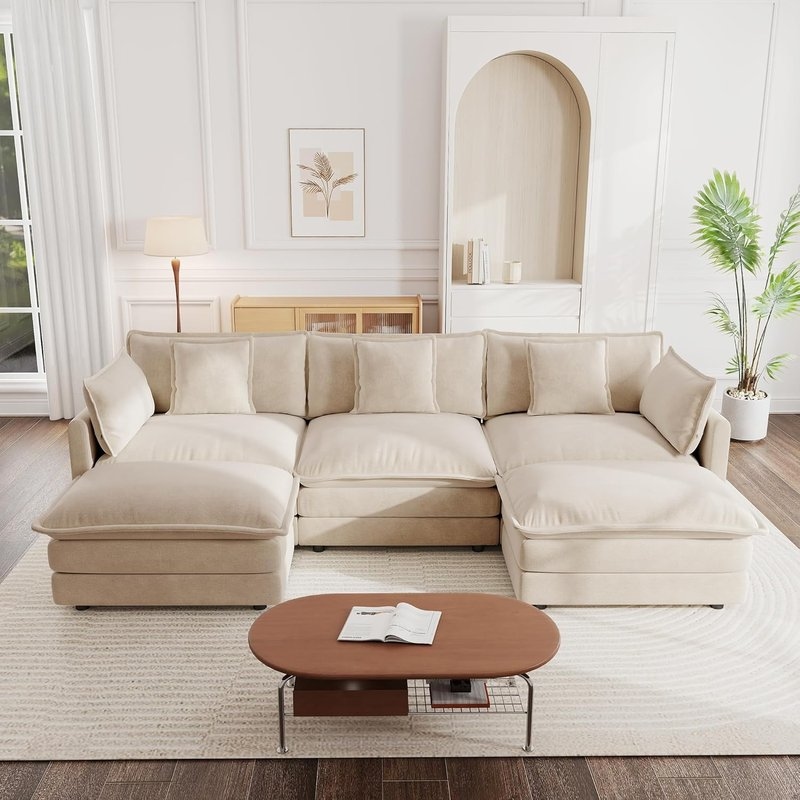
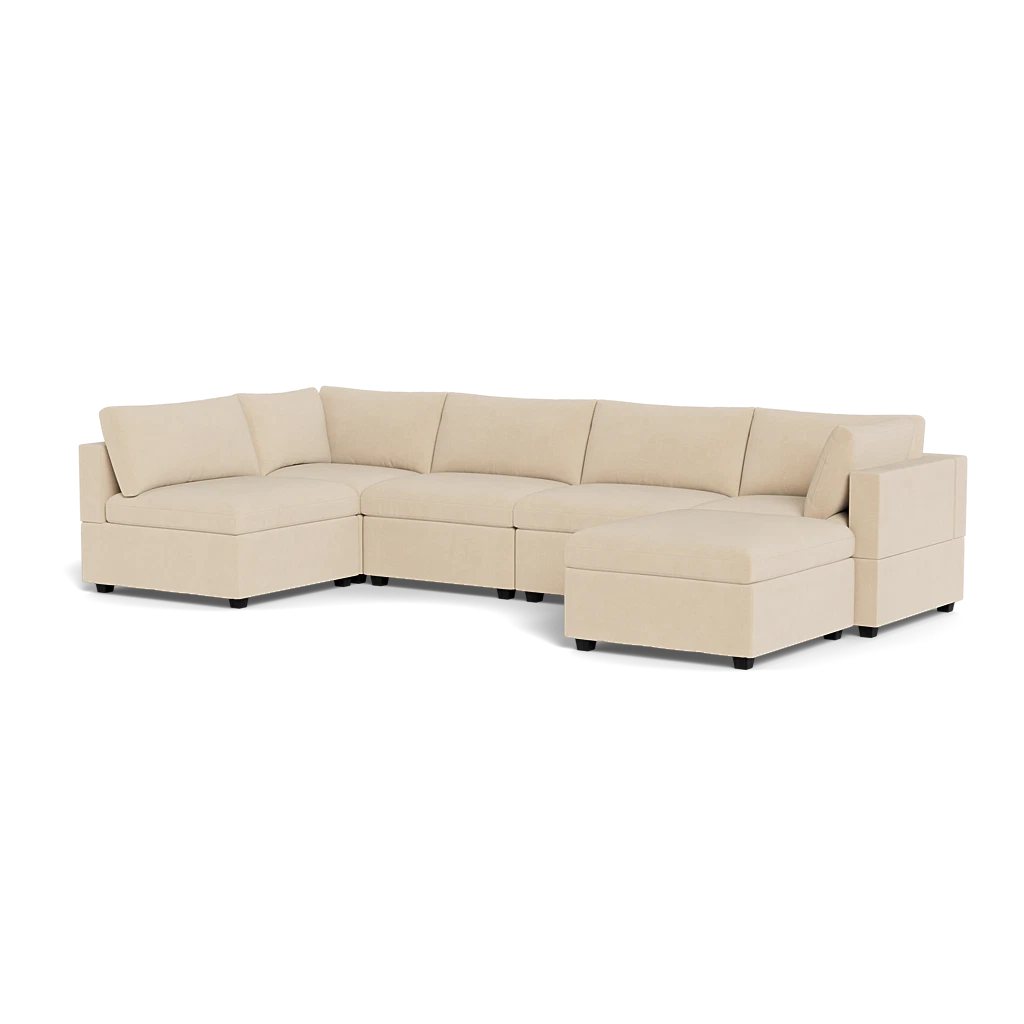
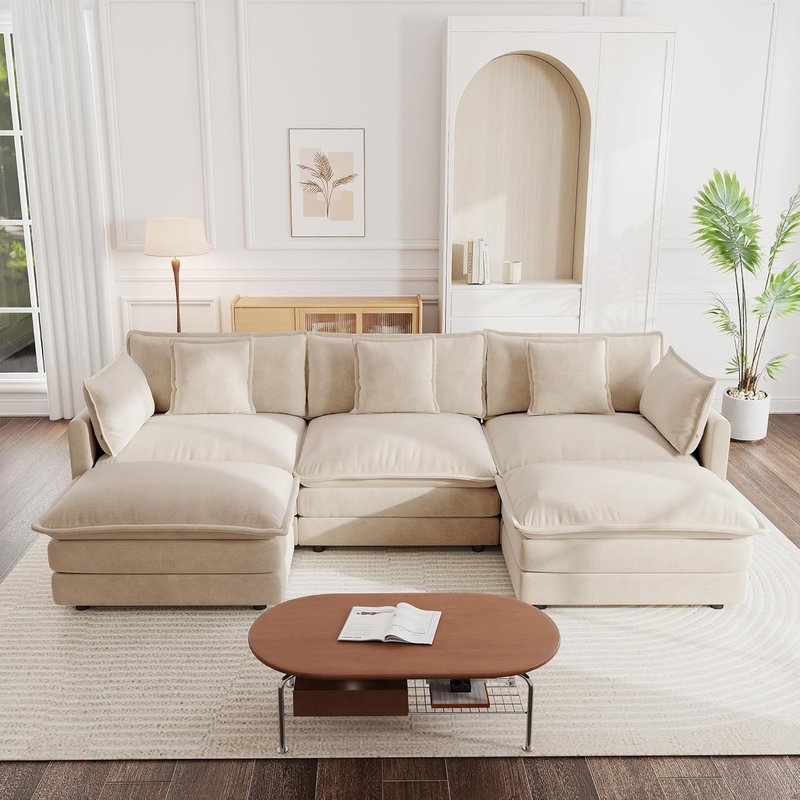
Mikibama 111" U-Shaped Modular Cloud Sectional
U-shaped modular cloud sofa with movable seats spanning 111.5 inches. Deep seat depth and a low-arm profile comparable to the Kipton at a fraction of the price.
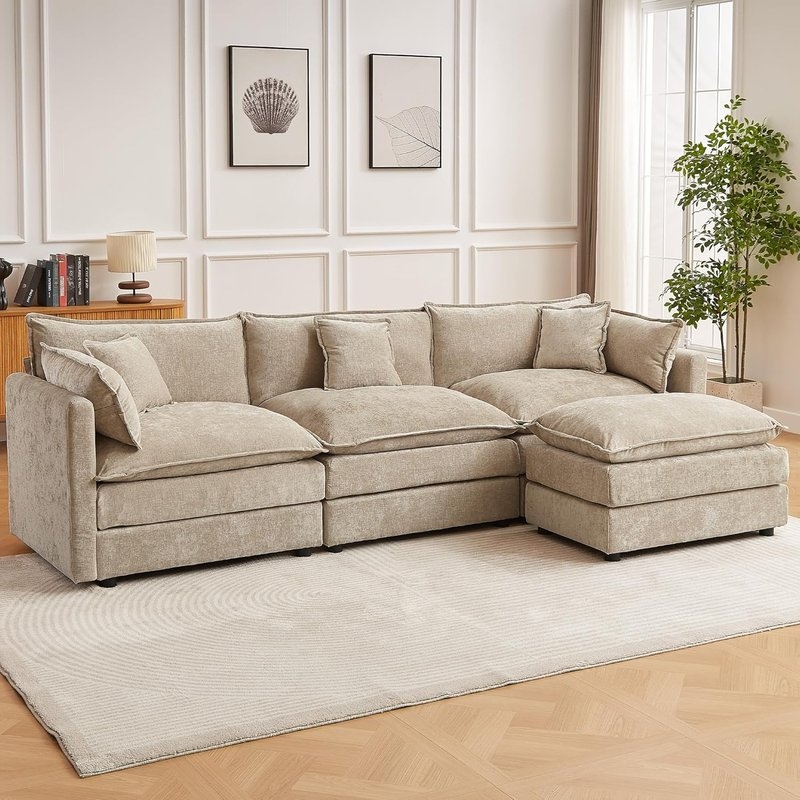
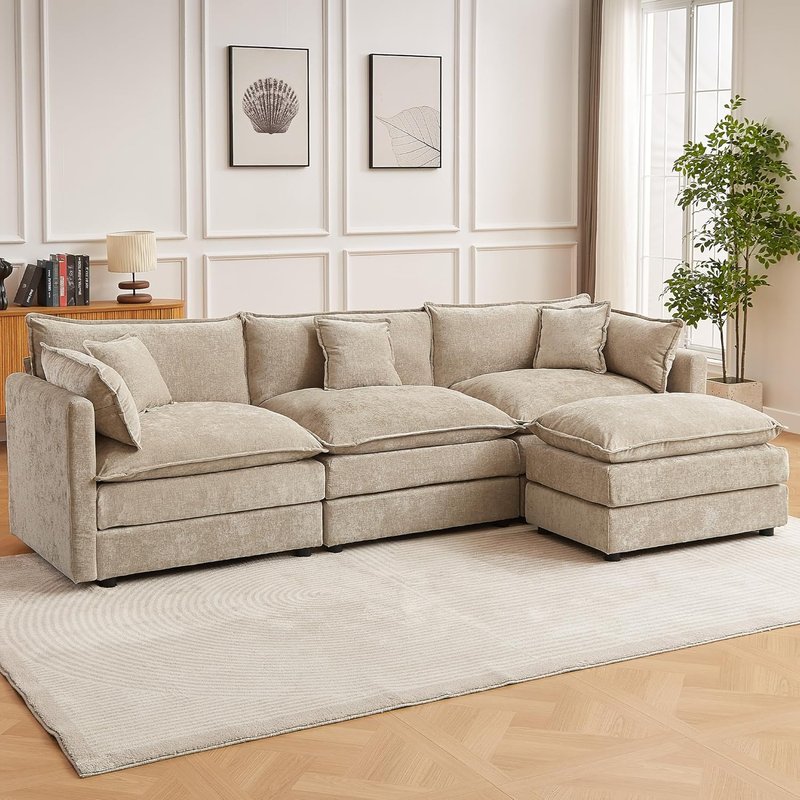
Saows 112" L-Shaped Cloud Sectional with Armrests
112-inch L-shaped sectional with thin low armrests and modular layout. Echoes the Kipton's tailored silhouette without the luxury markup.
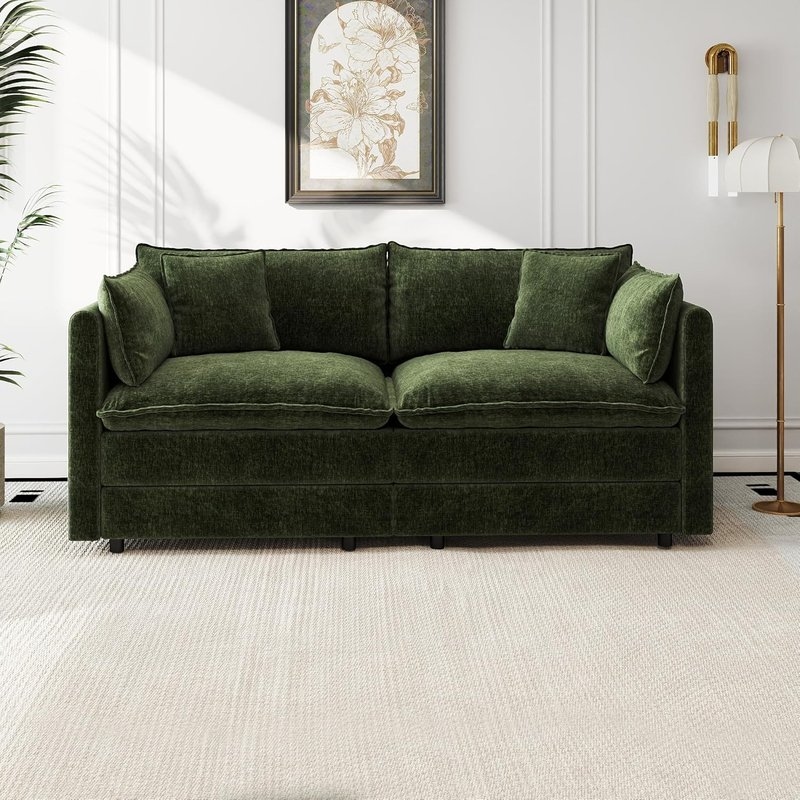
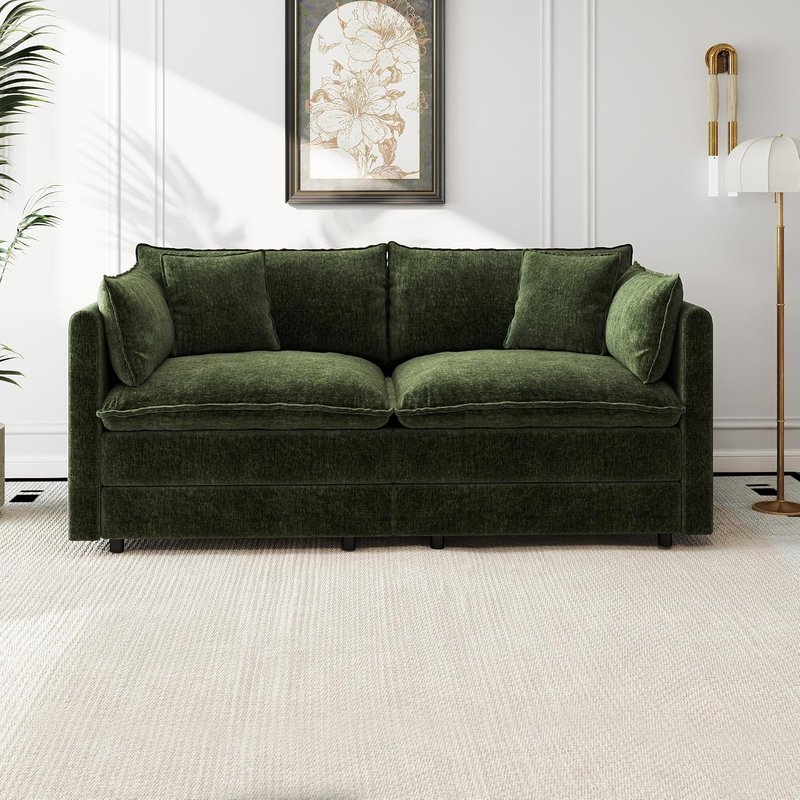
Aoowow 77" Deep Chenille 2-Seater Cloud Sofa
Compact 77-inch chenille cloud sofa with a deep seat for tighter rooms. Convertible loveseat format keeps the Kipton's low-arm aesthetic in a smaller footprint.