Litter-Robot 4 vs PetSafe ScoopFree — Which Self-Cleaning Litter Box?
By Erin Mitchell · Updated July 2026
Independent editorial guide. We never accept payment for coverage, though we may earn a commission if you purchase through our links.
Quick Take
Short version: Litter-Robot 4 is the $699 premium pick for multi-cat households, long-haired breeds, and anyone who wants to scoop once a month instead of once a day. PetSafe ScoopFree is the $200 entry-level alternative for single-cat homes where the upfront price of a Litter-Robot is the dealbreaker, with the trade-off that you replace a $20 crystal litter tray every 2 to 3 weeks instead of scooping a waste drawer once a month.
The two solve the same problem in opposite ways. Litter-Robot rotates a globe of clumping clay litter and drops waste into a sealed drawer below, so you keep using whatever clumping litter you already buy. ScoopFree rakes a disposable tray of silica crystals and pushes waste into a covered end of that same tray, and when it saturates the whole tray goes in the trash. Those trays are the ongoing cost story.
Two cats or more, or one cat over 12 pounds, and the Litter-Robot 4 is the honest recommendation despite the price. One smaller cat, and the ScoopFree is enough box. See picks ↓
Self-cleaning litter boxes used to be a gimmick. The first generation of automated rakes from the early 2000s jammed constantly, terrified cats, and broke inside a year. The current category is a different animal. Two products do most of the volume, Whisker's Litter-Robot 4 at the premium end and PetSafe's ScoopFree at the entry tier, and both work for the cat populations they were built around.
Features aren't what separates them. It comes down to cat count, cat size, and whether you'd rather pay $699 once and buy cheap clumping litter forever, or pay $200 once and feed the box $20 crystal trays for the life of the cat. What follows is how each one cleans, what changes when you swap crystal litter for clumping, and which household should buy which box.
How each one cleans
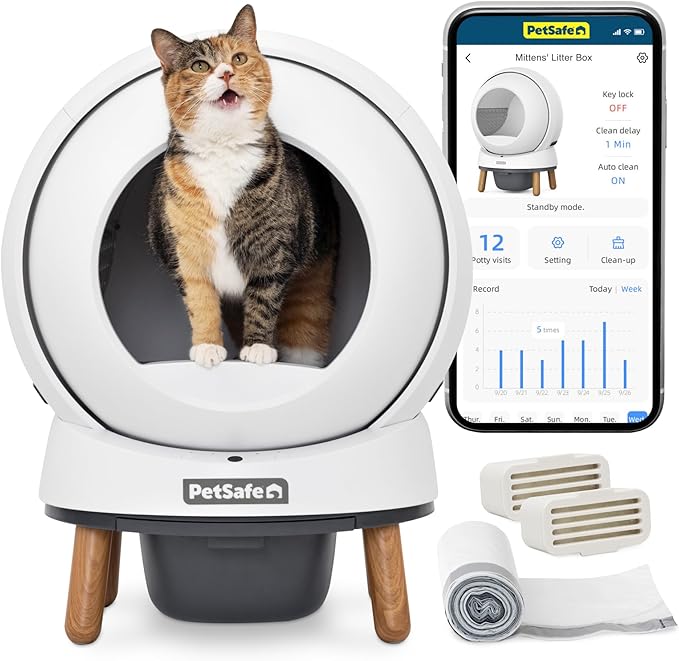
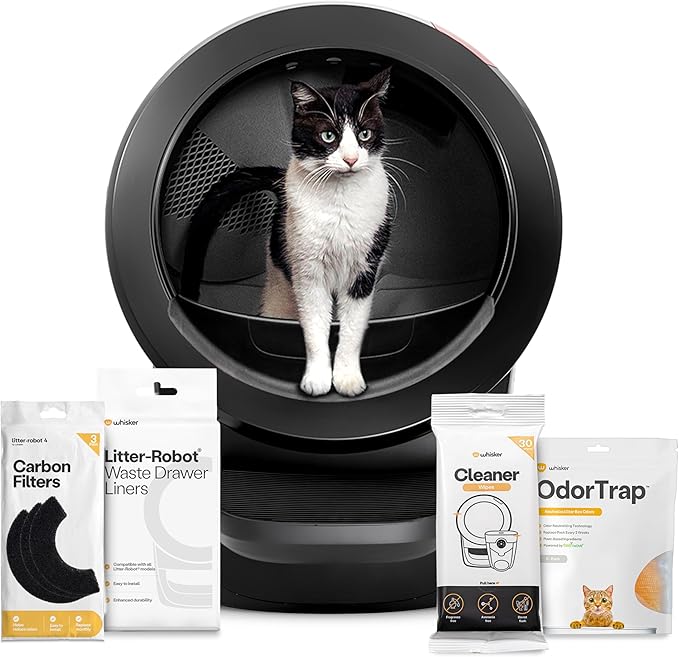
Litter-Robot 4 is a sphere. The cat walks in through a front opening, uses a bed of standard clumping clay litter inside the globe, and leaves. A weight sensor in the base registers that the cat is gone, waits 7 minutes for clumps to form, then rotates the globe through 180 degrees. A sieve inside separates clean litter from clumps: clean litter falls back to the bed, clumps drop through a trap door into a sealed waste drawer below. The drawer takes a standard kitchen trash bag and needs emptying every 7 to 30 days depending on cat count.
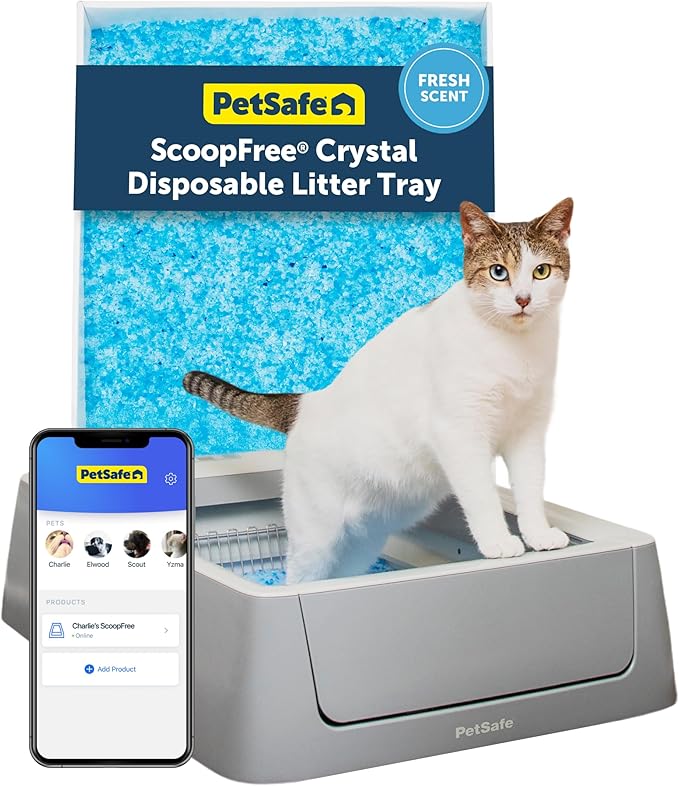
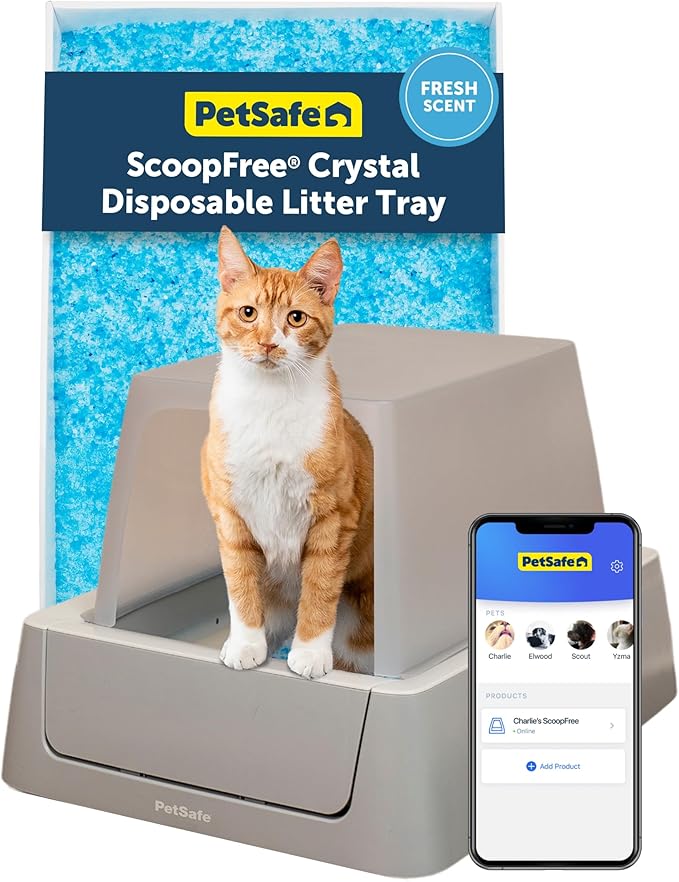
PetSafe ScoopFree is a flat rectangular tray under a low-walled hood. The tray comes pre-filled with blue silica crystal litter. After the cat leaves, the box waits out a configurable delay (5, 10, or 20 minutes) and drags a metal rake across the tray, pushing solid waste into a covered trap at one end. Urine soaks into the crystals and evaporates over time. When the crystals saturate, usually every 2 to 3 weeks for one cat, you throw out the whole disposable tray and drop in a new one.
Crystal litter (ScoopFree) vs clumping (Litter-Robot)
Crystal silica and clumping clay behave very differently, and the choice goes well beyond which one the cat prefers. Silica crystals absorb urine and dehydrate solid waste. Odor control is good, but you learn nothing about urine volume. Vets routinely ask owners how much their cat is peeing as an early kidney and diabetes indicator, and crystal litter erases that signal. Clumping clay leaves you urine clumps you can see and weigh.
Clumping clay tracks more. The clay dust that clings to paws is across the apartment within a week, and the Litter-Robot doesn't fix that, because it's a property of the litter and not the box. ScoopFree crystals are heavier, don't stick to paws the same way, and track noticeably less. Households with hard floors and a Roomba notice the difference. Households with carpet care less.
Cost per month is the other big delta. A 40 pound bag of clumping clay runs $15 to $25 and lasts a Litter-Robot owner 4 to 8 weeks. A ScoopFree replacement tray runs $18 to $22 and lasts one cat 2 to 3 weeks. Over three years the consumables math favors the Litter-Robot by a wide margin in multi-cat households, and lands near break-even for single-cat homes.
Multi-cat handling
Multi-cat households are the main reason to spend $699, and the Litter-Robot 4 handles them well. The waste drawer holds roughly a week of waste for three cats, and the cycle runs after each cat finishes, so the bed is clean for the next one in line. Whisker's app tracks per-cat use by weight, which is genuinely useful for catching the cat who stopped going.
ScoopFree is built around one cat. Two cats will saturate a crystal tray in 10 to 14 days instead of 21, which pushes the consumables cost past what a Litter-Robot owner pays for clay. The rake also handles one set of waste at a time, so if two cats use it back to back, the second cat is stepping on the first cat's leftovers. Workable for two small cats. Not for three.
Footprint
Both units are bigger than a standard open litter pan, and both need clearance for the cat to get in and for the lid or globe to open. Litter-Robot 4 takes a 22 by 24 inch footprint and stands 29 inches tall, which fits a bathroom corner or a laundry room but won't tuck under a vanity. ScoopFree is lower and wider, roughly 27 by 19 inches and 7 inches tall with the hood, so it slides under more furniture but eats more linear floor.
Cord placement matters for both. Litter-Robot needs a wall outlet within 6 feet and can't run on battery, so a power outage stops the cycle until power returns. ScoopFree has the same constraint. If the only obvious litter spot in your apartment is a closet with no outlet, an extension cord with surge protection is the workaround.
Cost of ownership (consumables)
Three year consumables math for one indoor cat. Litter-Robot 4: $699 upfront, plus roughly $200 to $300 a year in clumping clay litter, plus $40 a year in carbon filters and waste drawer liners (or trash bags if you DIY the liners). Three year total lands around $1,400 to $1,700.
ScoopFree for that same one cat: $200 upfront, plus roughly $360 a year in disposable crystal trays ($20 every 2 to 3 weeks), plus $20 a year in carbon filter refills. Three year total, roughly $1,340 to $1,400. Call it a wash. The Litter-Robot pulls ahead per cat the moment you add a second one, since clay litter scales far more cheaply than disposable trays.
Who should buy Litter-Robot 4
Two or more cats. Any cat over 12 pounds; the entry sensor on the Litter-Robot 4 is reliable on cats up to 20 pounds, where smaller boxes and older self-cleaners struggled. Households where the owner is gone 8+ hours and wants the box to handle itself. Owners who read the urine clump as a health indicator. Long-haired breeds, where crystals get caught in paw fur.
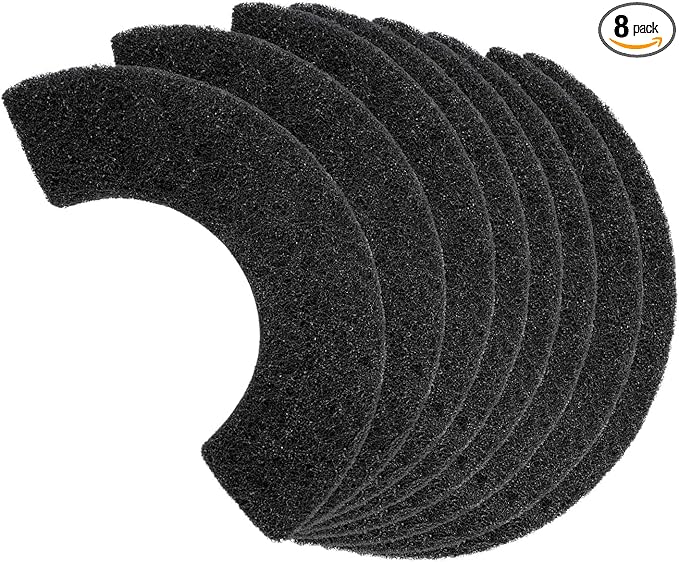
Buy it with the Whisker app set up, the waste drawer lined with a standard 8 gallon kitchen bag, and a 40 pound box of low-tracking clumping clay litter. Dr. Elsey's Ultra is the consensus pick. The carbon filter in the drawer needs replacing every 1 to 2 months, and third-party 8-packs from Amazon work as well as Whisker's branded filters at a quarter of the price.
Who should buy PetSafe ScoopFree
One cat under 12 pounds. Apartments where $699 on a litter box is not happening. Households with hard floors and high tracking sensitivity, where the lower track rate of crystal litter is the win. Owners who hate the idea of touching used litter at all, ever: the disposable tray system means you never scoop and never empty a drawer, you just lift out a sealed tray and throw it away.
Buy the smart connected version (B0D4GHS7V6 here) only if the app matters to you. The non-connected version (B087C6XZCL) is the same rake mechanism for $150 less. Stock 6 replacement trays at purchase to lock in the bulk price, since per-tray price on Amazon swings from $16 to $24 depending on the week.
Verdict
For multi-cat households the Litter-Robot 4 is the right answer even at $699. The consumables math favors it inside the first year, it handles multiple cats better, and the build quality supports the 7+ year ownership horizon that justifies the upfront cost. For single-cat homes with budget constraints, the PetSafe ScoopFree is enough box and the right pick. One cat and no budget constraint goes to the Litter-Robot too, on the strength of the app and the clay-litter consumables story.
Recommended
Products related to this guide.