KitchenAid Artisan vs Pro 5 Plus — Which Stand Mixer for Real Baking?
By Maya Chen · Updated July 2026
Independent editorial guide. We never accept payment for coverage, though we may earn a commission if you purchase through our links.
Quick Take
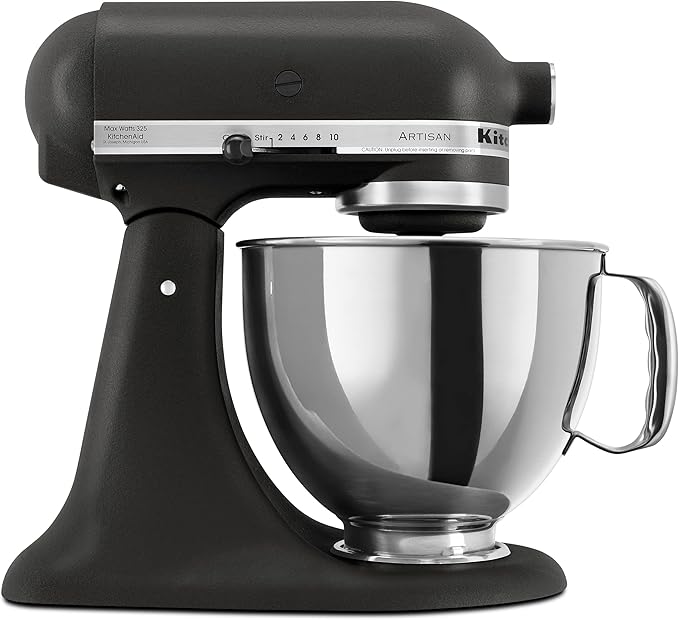
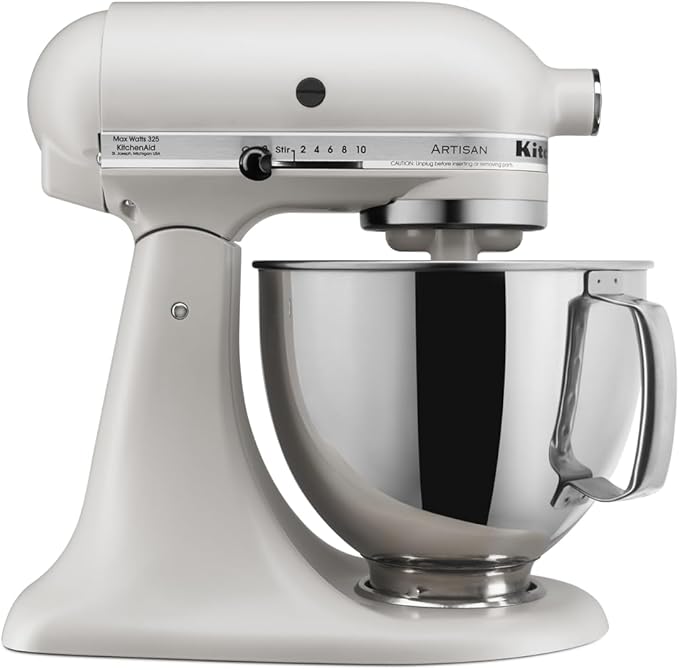
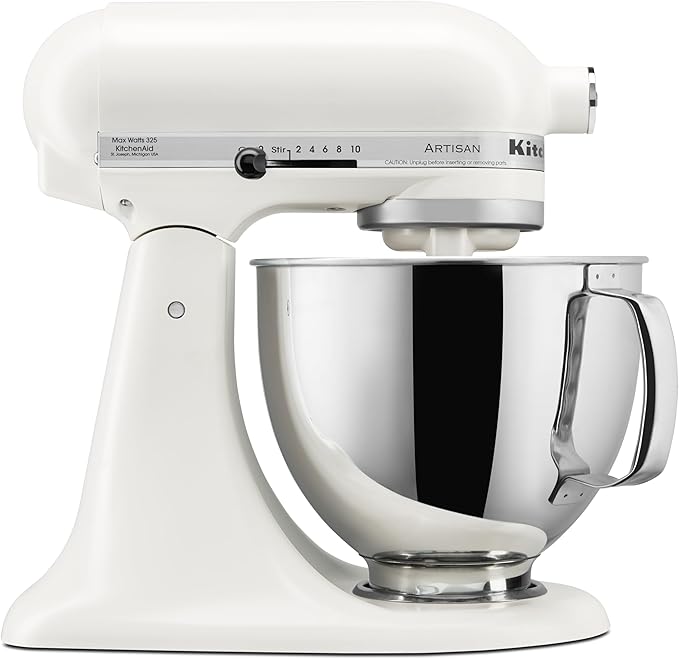
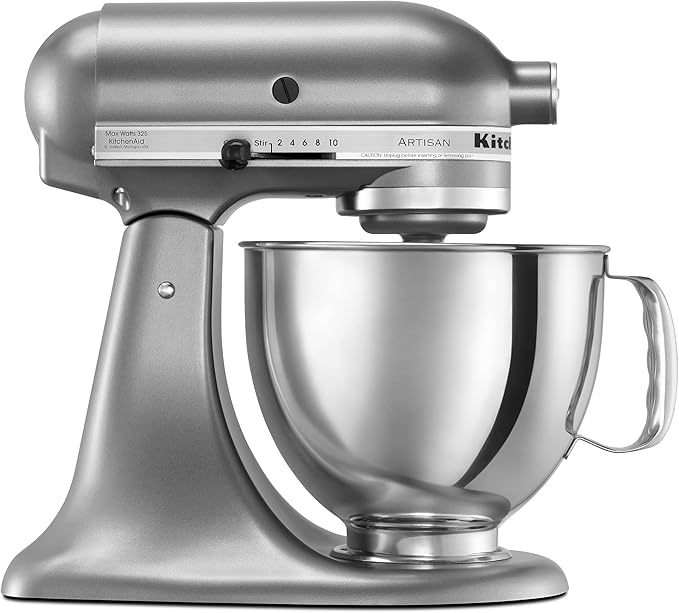
For the typical home baker who makes cookies, cakes, and the occasional loaf of bread, the KitchenAid Artisan KSM150PS is the correct answer. The 5-quart tilt-head holds enough for double batches, the 325W motor handles every recipe a non-professional kitchen runs, and the tilt mechanism makes adding ingredients and scraping the bowl genuinely easier than a bowl-lift. It's the mixer most people should buy.
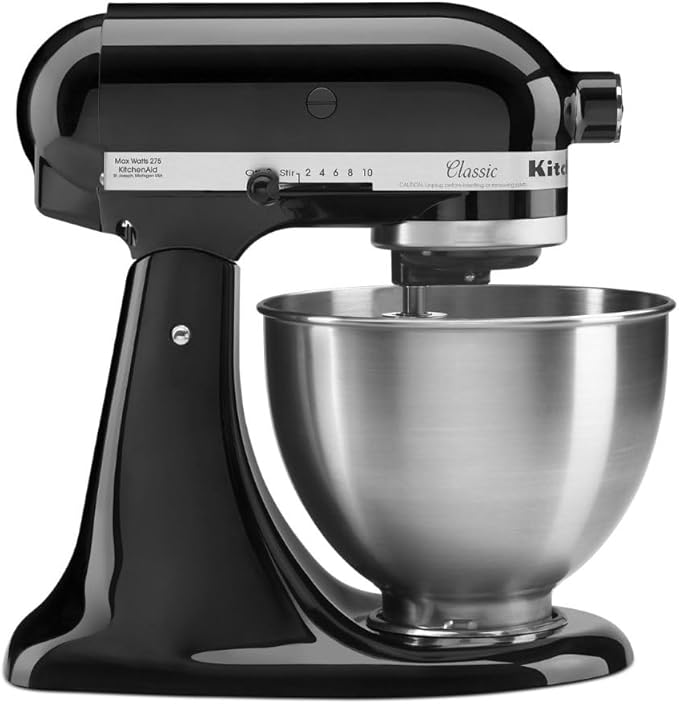
The Professional 5 Plus KV25G0X is the right call for one specific buyer: someone whose output is 50 percent or more bread, pizza dough, or other high-hydration heavy doughs. The bowl-lift mechanism and the 575W motor aren't about doing more of the same job. They're about doing a different job. The Pro 5 Plus kneads stiff dough without walking across the counter and without straining the motor. Bake cake half the time and bread the other half and the Artisan still wins. Cross the bread-heavy line and the Pro 5 Plus is worth it.
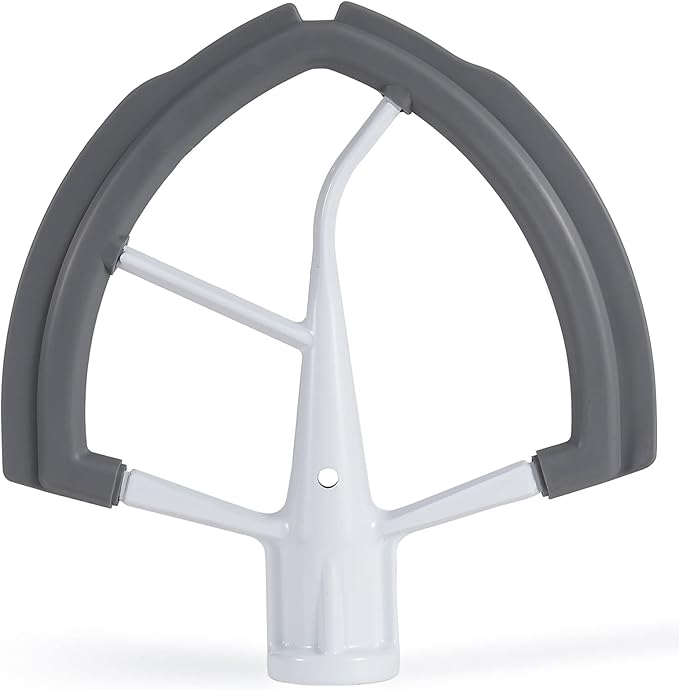
Both mixers take the same attachments through the power hub, and the Flex Edge beater is the one accessory that pays for itself either way. See picks ↓
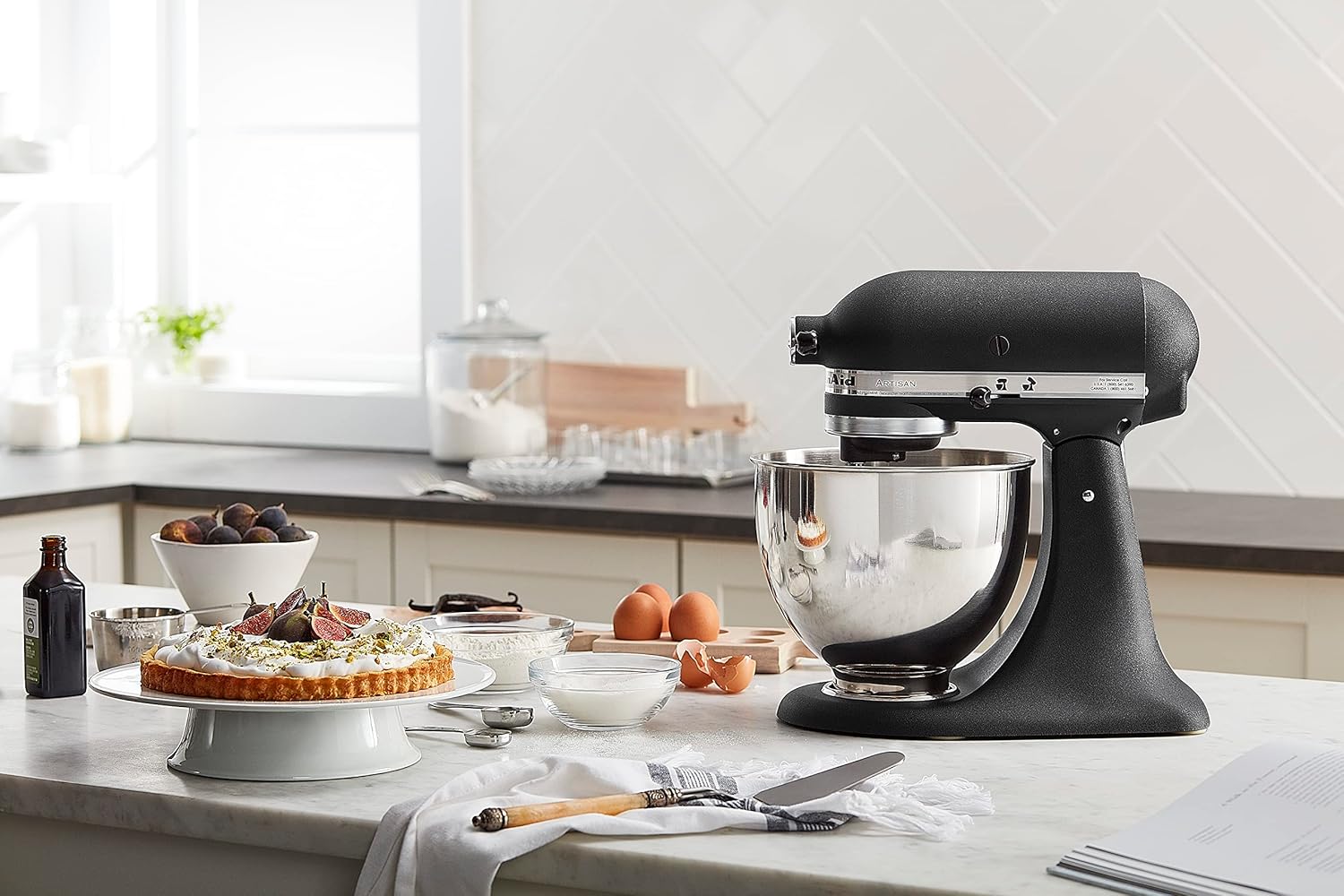
KitchenAid sells more than a dozen stand mixer variants, but a home baker is really choosing between two: the Artisan KSM150PS and the Professional 5 Plus KV25G0X. Same accessory ecosystem, same brand reliability, and a price gap that usually lands at $50 to $100 once promotions are factored in. Budget isn't what decides this one. How you bake is.
The Artisan is a 5-quart tilt-head with a 325W motor. The Pro 5 Plus is a 5-quart bowl-lift with a 575W motor. Mechanism and motor, those two differences drive everything else: how the mixer feels on the counter, how it handles dough, and who should own which one. Here are the trade-offs, and a concrete recommendation by baker type.
Tilt-head vs bowl-lift mechanism
The Artisan tilts the motor head backward to open up the bowl. Flip the latch, pivot the head up, and the beater swings clear. Adding flour, scraping the sides, swapping attachments, all of it is faster on a tilt-head because nothing is in the way. The bowl itself drops in and out of a locking ring on the base.
The Pro 5 Plus keeps the motor head fixed and uses a crank lever to raise the bowl up to the beater. The bowl has two arms that lock into rails on the base, so you can't lift it off. What you get is rigidity. The bowl-lift design holds the beater at a precise height under heavy load, which is why every commercial KitchenAid is bowl-lift rather than tilt-head. What you give up is access. You're reaching down and around a standing motor head every time you add an ingredient.
Motor power, 325W vs 575W
KitchenAid lists the Artisan motor at 325 watts and the Pro 5 Plus at 575 watts. Wattage measures input, not output, so the more useful spec is what each one kneads without straining. KitchenAid rates the Artisan for up to 9 cups of flour and the Pro 5 Plus for up to 14 cups, per their respective product pages.
In practice this matters in exactly one scenario: stiff doughs. A single batch of cookie dough, a cake, whipped cream, mashed potatoes, the Artisan handles all of it without protest. Double batches of bagel dough, large batches of pizza dough, or any recipe pushing past 6 to 7 cups of bread flour, and the Artisan starts to strain, the motor warms, and the torque can walk the mixer across the counter. The Pro 5 Plus, bowl locked into rails and the heavier motor turning, doesn't flinch.
Bowl capacity and dough hook
Both mixers are nominally 5-quart capacity. The Pro 5 Plus bowl really is 5 quarts. The Artisan bowl is 5 quarts on paper, but usable capacity is smaller because the tilt-head geometry eats up headspace clearance. Put in loaves, the Pro 5 Plus takes a 4 to 5 loaf batch of bread dough where the Artisan tops out at 2 to 3 loaves.
The dough hooks are different shapes too. The Artisan ships with a C-shaped dough hook, the Pro 5 Plus with a spiral dough hook. The spiral is meaningfully better at developing gluten in high-hydration doughs because it folds and stretches instead of dragging. Bake bread weekly and the spiral hook by itself is an argument for the Pro 5 Plus.
Color and aesthetic
The Artisan ships in over 20 colors, and it's the mixer KitchenAid builds for the countertop-as-decor buyer. Empire Red, Ice Blue, Pistachio, Hibiscus. It's meant to be seen. If the mixer is going to live on the counter, and it should, because mixers in cabinets get used a third as often, the Artisan's color range is a real factor.
The Pro 5 Plus comes in a much narrower palette, mostly silver, black, and a couple of muted colors. It's a tool and it looks like one. If you want the mixer to disappear into a stainless-and-white kitchen, that's fine. If you picked a kitchen color palette on purpose, the Artisan is the obvious choice.
Who should buy the Artisan
Buy the Artisan if your baking is mostly cookies, cakes, frostings, quick breads, and the occasional pizza or bread loaf. That's 80 percent of home bakers. The tilt-head is easier to live with day to day, the 325W motor is enough for everything in that category, and the color options matter more than people admit.
Buy the Artisan too if counter space is tight. The tilt-head design is a little shorter and lighter than the Pro 5 Plus, and lifting the bowl straight up and out matters in a small kitchen where the mixer slides under a cabinet shelf.
Who should buy the Pro 5 Plus
Buy the Pro 5 Plus if more than half your baking is bread, bagels, pizza dough, or other high-hydration heavy work. The bowl-lift mechanism keeps the bowl locked under load, the spiral dough hook develops gluten properly, and the 575W motor takes double batches without straining.
Buy the Pro 5 Plus too if you've ever owned an Artisan that walked across the counter mid-knead. That's the symptom the bowl-lift design exists to eliminate. If that exact frustration is why you're upgrading from a tilt-head, this is the answer.
Verdict
For most home bakers the Artisan KSM150PS is the right mixer. There's a reason it's the model KitchenAid sells the most of: the tilt-head is more usable, the motor covers the work a typical home kitchen does, and the color range makes it a countertop fixture. Pay the $50 to $100 premium for the Pro 5 Plus only if you have a specific, recurring need for stiff dough capacity. If you do, the Pro 5 Plus is a genuinely different machine and worth every dollar.
Either way, add the Flex Edge beater at purchase. It scrapes the bowl as it mixes, which kills the single biggest reason home bakers stop the mixer mid-recipe. It fits both the tilt-head Artisan and the bowl-lift Pro 5 Plus, but they're different parts, so buy the one that matches your mixer.
Recommended
Products related to this guide.