Coway AP-1512HH Mighty vs Levoit Core 300 — Air Purifier Showdown
By Sam Hollis · Updated July 2026
Independent editorial guide. We never accept payment for coverage, though we may earn a commission if you purchase through our links.
Quick Take
The Coway AP-1512HH Mighty is the bigger, smarter machine: it covers rooms up to 361 square feet, has a built-in particle sensor with an AQI ring that auto-adjusts fan speed, and remains the long-running Wirecutter favorite in this size class. The Levoit Core 300 covers 219 square feet, has no sensor, and runs around $100. They are not really competing on the same job.
Buy the Coway if the room is larger than 220 square feet, if pet dander or seasonal allergies are the trigger, or if having the purifier handle itself (auto mode + sleep dimming) matters more than saving $130. Buy the Levoit Core 300 if the room is a bedroom or home office under 220 square feet, the main concern is cooking or kitty-litter odor, and the budget is hard at $100. Both run quietly on sleep mode; both use real HEPA. The split is room size and whether you want a sensor doing the thinking.
Filter replacement is the cost-of-ownership tiebreaker most buyers ignore on day one. See picks ↓
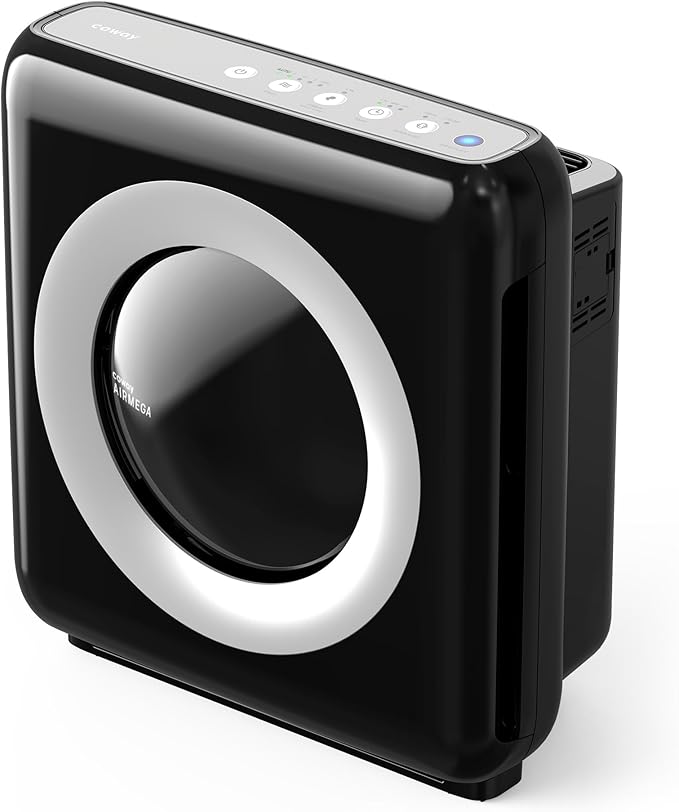
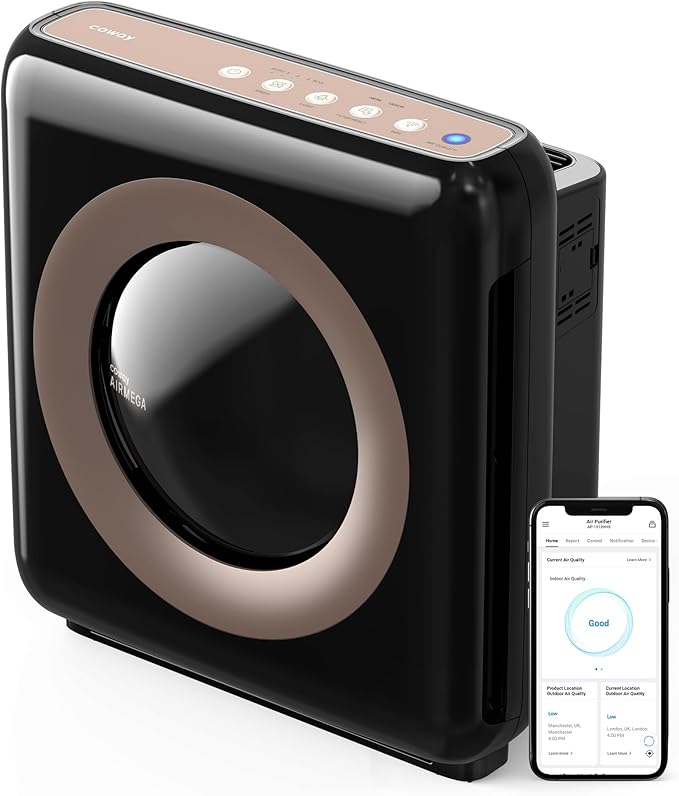
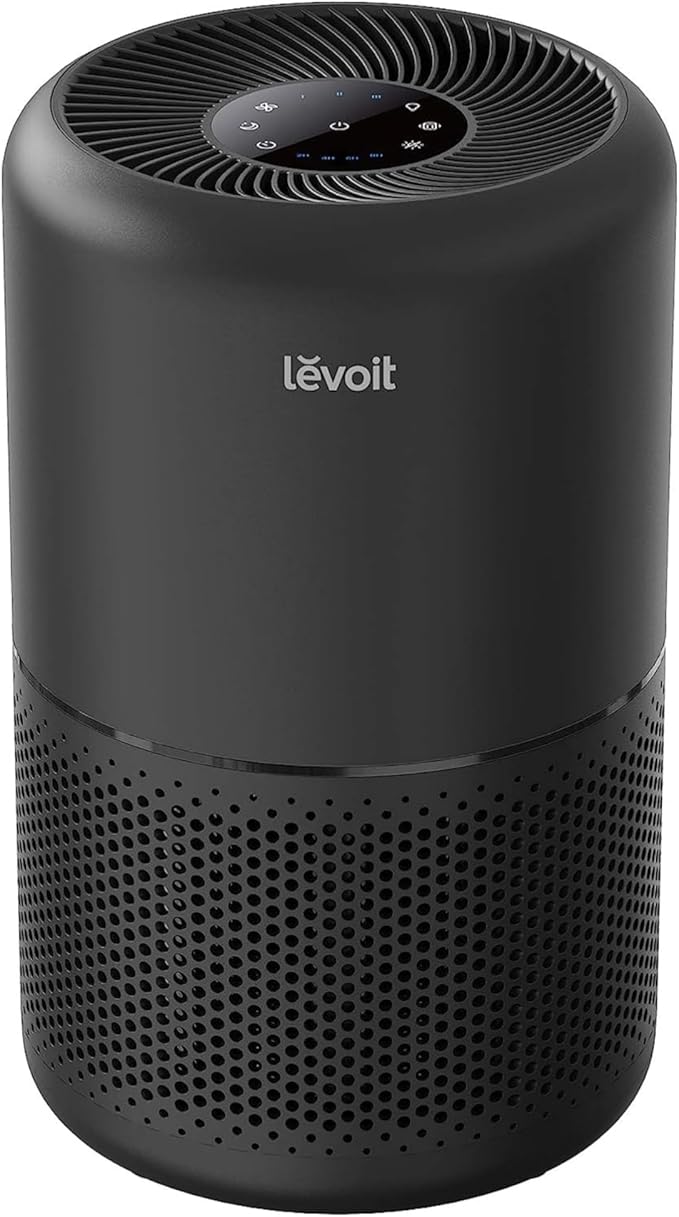
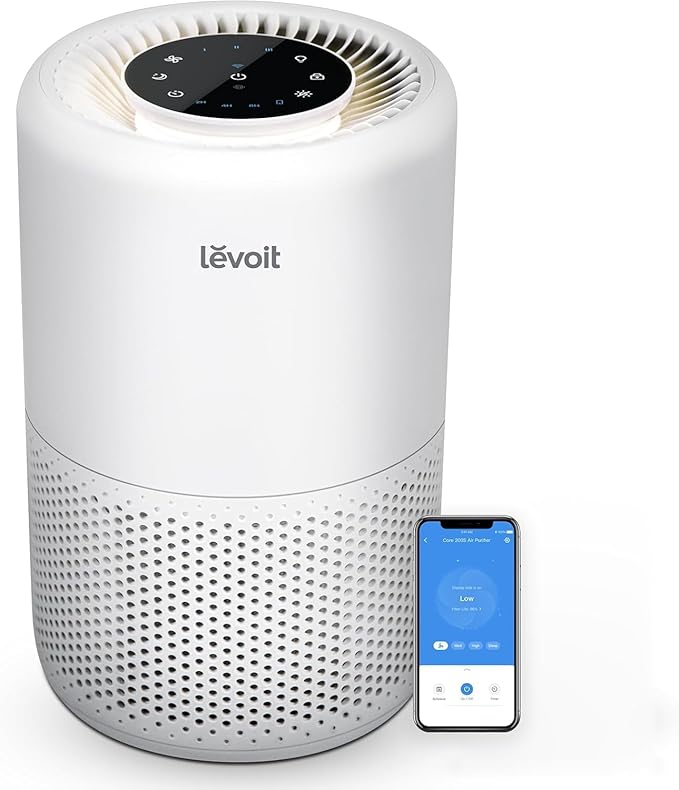
This is a head-to-head between two air purifiers that get cross-shopped constantly and shouldn't. The Coway AP-1512HH Mighty has been the default mid-size HEPA recommendation since 2015, with a particle sensor, an AQI indicator ring, and 361 square feet of rated coverage. The Levoit Core 300 is the $100 entry-level workhorse: smaller footprint, smaller motor, 219 square feet, no sensor.
They get compared because they both show up in the same Amazon search results and both have stellar review counts. They are not the same product. The Coway is built for a living room or a primary bedroom in a house with pets. The Levoit is built for a nightstand in a small bedroom or a desk in a home office. The right pick depends almost entirely on the square footage you are trying to clean and whether you want a sensor running the fan for you.
Room size coverage: 361 vs 219 square feet
Coway rates the AP-1512HH Mighty for 361 square feet at the AHAM standard 4.8 air changes per hour. Levoit rates the Core 300 for 219 square feet at the same standard. That gap is not marketing padding; it reflects a meaningfully larger motor and a CADR roughly 60 percent higher on the Coway.
Practical translation: the Coway handles a 12 by 24 foot living room or a primary bedroom plus en-suite. The Levoit handles a 14 by 14 foot bedroom or a typical home office. Putting a Core 300 in a living room is not a saved-money win; it is a slower clean-air delivery rate, which means higher fan speeds for longer to hit the same particle reduction, which means more noise and more wear.
Filtration stack: both real HEPA, different add-ons
Both purifiers use a true HEPA filter rated to capture 99.97 percent of particles at 0.3 microns. The Coway adds a 4-stage stack: pre-filter, deodorization (activated carbon) filter, true HEPA, and an ionizer (off by default and worth leaving off). The Levoit Core 300 runs a 3-stage stack: pre-filter, true HEPA, and an activated carbon layer that comes in three swappable variants depending on the buyer's main problem (original, toxin absorber, pet allergy, smoke remover).
That filter-variant flexibility is a Levoit-specific quirk worth knowing. If the main problem is kitty litter odor or cooking smoke, the Core 300's swappable carbon layer is genuinely useful and Coway has nothing equivalent. If the main problem is pollen and dust, both machines clean equivalently per pass and the size difference is the only variable that matters.
Noise on sleep mode: both around 24 dB
Both purifiers publish sleep-mode noise figures in the same range. Coway lists the AP-1512HH Mighty at 24.4 dB on the lowest setting. Levoit lists the Core 300 at 24 dB on sleep mode. In practice both are quieter than a typical refrigerator hum from across the room and neither will wake a light sleeper at sleep-mode setting.
Where they diverge is the top end. The Coway's high setting is noticeably louder than the Levoit's because the motor is moving more air. If you plan to leave the unit on auto mode and let it ramp up during cooking or vacuuming, the Coway will get to a fan speed the Levoit physically cannot reach. Bedroom users on low: tie. Living room users on auto: the Coway is louder when it is working.
Filter cost of ownership over 3 years
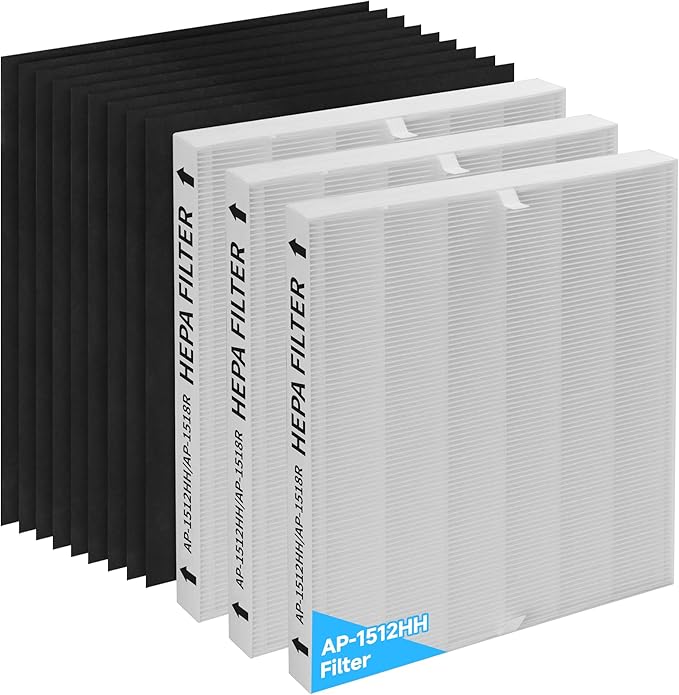
Coway publishes a 12 month true HEPA replacement interval at 8 hours a day. First-party replacement filters run about $40 to $55 per cycle. Third-party Coway-compatible 3-packs are widely available around $20 to $40 for the full set including carbon pre-filters. Three years of running costs land at $60 to $165 depending on whether you stay first-party or trust the aftermarket.
Levoit publishes a 6 to 8 month true HEPA replacement interval at the same usage. First-party replacements run about $35 each. Three years of running costs land closer to $105 to $175 first-party, before counting that the Core 300's smaller filter holds less dust per cycle and benefits less from third-party compatibles. The Coway has the long-run filter cost advantage, particularly if you are comfortable with the well-established aftermarket 3-pack market.
Sensor and auto mode: only the Coway has it
The Coway AP-1512HH Mighty has a built-in particle sensor and an AQI indicator ring on top that goes blue, purple, pink, or red based on current air quality. In auto mode the fan ramps up when the sensor detects particles (cooking, vacuuming, a pet shaking off) and ramps down when air clears. It also has a sleep-mode dimmer that kills the indicator lights so the ring does not glow at night.
The Levoit Core 300 has no sensor, no AQI display, and no auto mode. The fan speed is whatever you set it to manually. For a bedroom where you pick a speed at night and leave it, this is fine and arguably preferable (no surprise ramp-ups). For a living room or kitchen where particle load varies hour to hour, the lack of automation means either running the fan high all day (noise) or running it low and accepting slower response when smoke or cooking particles spike.
Who should buy the Coway Mighty
Buy the Coway if any of these apply: the room is over 220 square feet, there is a shedding pet, seasonal allergies are the main trigger, you want the purifier to handle itself on auto mode, or you want the longer-term filter cost advantage. The Coway is the more capable machine and the long-running Wirecutter pick in this size class for a reason. At $230 it is roughly $130 more than the Levoit; for most living rooms and primary bedrooms that delta is the right spend.
Who should buy the Levoit Core 300
Buy the Levoit if the room is a bedroom or office under 220 square feet, the budget is firm at $100, and the main complaint is odor (kitty litter, cooking, light smoke) where the swappable carbon filter variants are genuinely useful. The Core 300 is the right answer for a nightstand purifier where the goal is set-and-forget at a single fan speed and the room is small enough that the smaller CADR is not a bottleneck.
The verdict
Default to the Coway AP-1512HH Mighty unless the room is small or the budget is hard. It covers more square footage, has the sensor and auto mode the Levoit lacks, and costs less to run over three years thanks to longer filter intervals and a healthy aftermarket. The Levoit Core 300 stays a real recommendation for the specific case it was built for: a small bedroom or office at the $100 price point. They are both good purifiers. They are just answering different questions.
Recommended
Products related to this guide.