Best Weighted Blankets Under $80 (Cooling + Standard, 2026)
By Erin Mitchell · Updated July 2026
Independent editorial guide. We never accept payment for coverage, though we may earn a commission if you purchase through our links.
Quick Take
Four brands are worth taking seriously on the under-$80 weighted-blanket shelf: YnM, Bare Home, ZonLi, and Topcee. They all use glass beads rather than poly pellets, they all use small pocket grids that keep the fill from bunching, and they all come in 15 to 20 pound options covering the 130 to 200 pound body-weight band where most adults sit. The 10 percent rule still holds: pick a weight that's roughly 10 percent of your body weight, give or take a pound.
The split at this price is fabric. Standard microfiber covers (YnM, Bare Home, Topcee) run warm, which is great in fall and winter and rough in summer. Cooling bamboo covers (ZonLi, Luna) breathe better and feel cooler to the touch, but they cost more and the cooling effect is relative, not magical. Sleep hot year-round and you should pay for bamboo. Sleep cool to neutral already and mostly want the pressure, and the standard YnM is the value play. Jump to the five blankets that survived the price-and-spec coherence test below. See picks ↓
Weighted blankets went mainstream around 2018, and the under-$80 tier has settled into a small set of brands that ship what they describe. Almost everything at this price uses glass beads now (poly pellets are louder and lumpier), pocket grids have gotten smaller so the fill doesn't pool at your feet, and Amazon is the dominant channel because the major brands skipped specialty retail entirely.
This guide is for the buyer who wants a 15 to 20 pound blanket, won't spend over $80, and wants a straight answer on cooling versus standard microfiber. The picks below are sized for single-sleeper coverage (48x72 to 60x80 inches). If you want a king-sized blanket two adults can share, the under-$80 ceiling won't hold; budget closer to $130.
The 10 percent body-weight rule
Blanket makers and most occupational therapists point to the same guidance: pick a blanket that runs roughly 10 percent of your body weight. A 150 pound adult wants a 15 pound blanket. A 200 pound adult wants 20 pounds. Pressure that's too light feels like nothing, and pressure that's too heavy feels restrictive, especially if you shift positions overnight.
A few practical notes. The rule is a starting point, not a prescription. Side sleepers who tend to feel pinned should size down a pound or two. If you share the blanket with a partner who is heavier than you, don't split the difference; buy two blankets sized to each sleeper, because a 20 pound blanket on a 130 pound sleeper feels claustrophobic. Children follow stricter pediatric guidance and are out of scope here.
Glass beads versus poly pellets
Every blanket recommended below uses micro glass beads. Poly pellets were the original fill, but they're larger, lighter per volume, and louder when you move. Glass beads are denser, so the same weight fits into a thinner blanket that drapes better. They're quieter too, and they don't hold odor the way plastic pellets can over time. The trade is that glass beads can feel slightly cool to the touch on first contact, which hot sleepers like and nobody else notices. Either way the blanket warms up to body temperature within a few minutes.
Pocket size matters more than you think
The pocket grid is the quilted square pattern that holds the fill in place. Older and cheaper blankets use large pockets, 4 to 5 inches across, and the fill migrates when you move. By morning the foot of the blanket outweighs the chest, which defeats the point. The blankets below all use small pockets, roughly 2 to 4 inches, so the distribution stays even overnight. Comparing two blankets in the same weight class, the smaller-pocket one is almost always the better buy, even at a small price premium. It's the single spec most worth optimizing for in the under-$80 tier.
Cooling bamboo versus standard microfiber
Standard microfiber covers (YnM Classic, Bare Home, Topcee) are warm. That's good news in fall and winter and in cool bedrooms. In a 75-degree summer bedroom without strong AC, they'll make you sweat. If that describes you, the cooling-bamboo tier (ZonLi cooling, Luna bamboo) is worth the upgrade: the bamboo viscose face breathes more, wicks moisture better, and sits closer to neutral in temperature.
One honest note on cooling claims. A cooling weighted blanket is still a 15 pound blanket lying on top of you. It's cooler than standard microfiber, not cooler than having no blanket at all. If you run very hot and haven't slept under a comforter in years, a weighted blanket of any kind may be the wrong product.
The four brands worth buying at this price
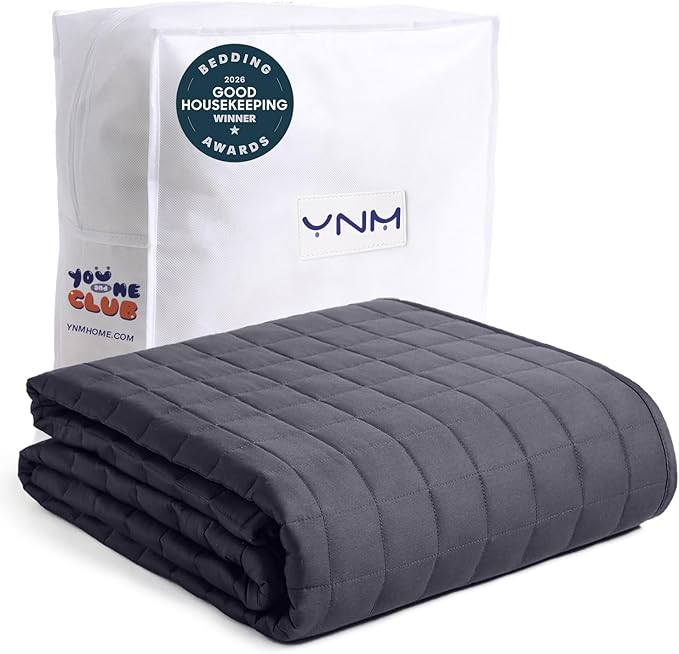
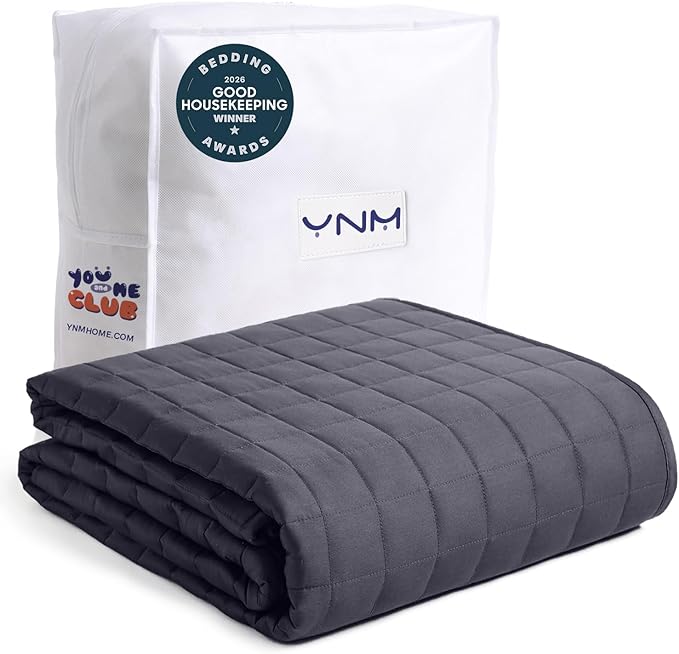
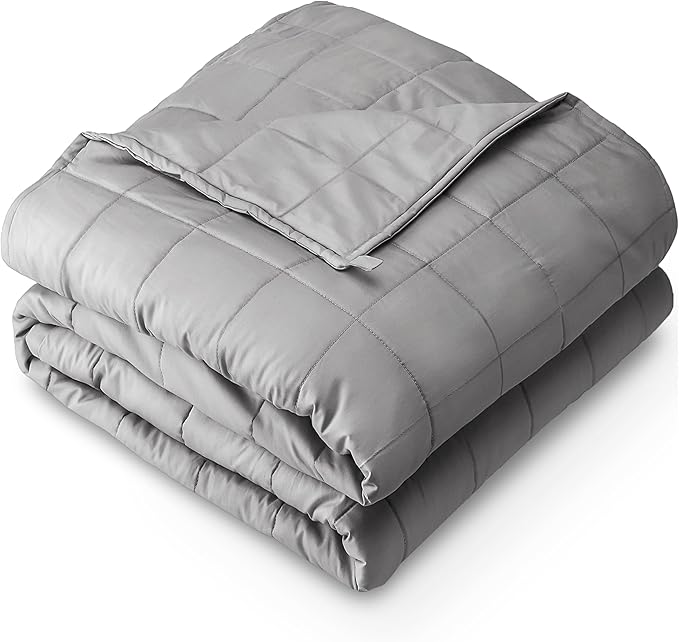
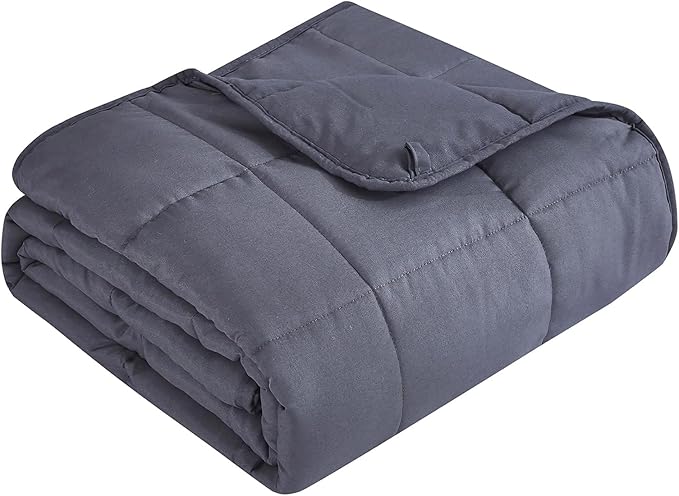
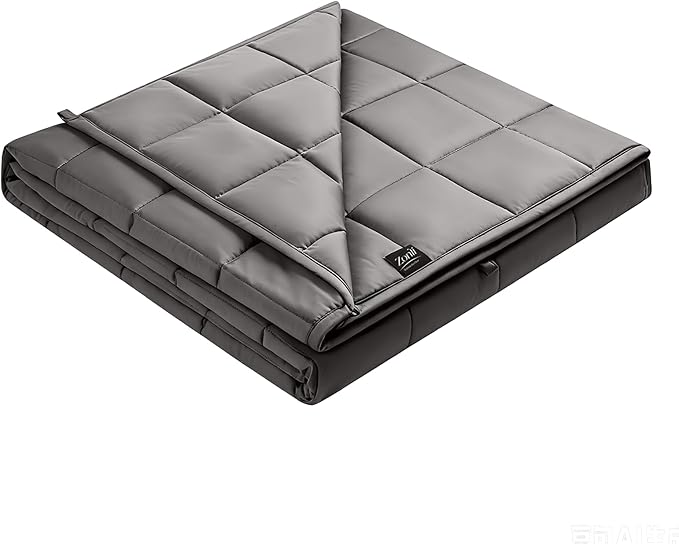
YnM is the volume leader and sells more weighted blankets on Amazon than every other brand combined. Build quality is consistent, the 7-layer construction is the de facto standard, and the pockets are small enough to keep the beads from migrating. Bare Home is the value-conscious alternative, usually a few dollars under YnM at the same weight class, with comparable cover material and similar sizes. ZonLi is the cooling specialist in this tier, and its bamboo viscose cover is the main reason to pay over $60 in this guide; the standard microfiber ZonLi is fine but no different from YnM. Topcee is the heavy-weight value play, the only brand here that fits a 20 pound queen-sized blanket under $40, which is a meaningful saving for sleepers in the 180 to 220 pound band.
What not to buy
Skip poly pellet fill at this price. Skip any listing that doesn't show the pocket grid size, since that usually means the pockets are large. Skip the $25 no-name listings, where the seam construction tends to fail within months and the fill leaks into the wash. And skip duvet-cover-only options unless you already own a blanket to put inside.
Recommended
Products related to this guide.
Frequently asked questions
What are the best weighted blankets under $80?
YnM Weighted Blanket (15 lbs. The default answer for most single adults in the 140 to 160 pound band.
What are the best budget weighted blankets under $80?
YnM Weighted Blanket (15 lbs. The cheapest YnM size that still hits the 10 percent rule for a 150 pound sleeper.
What are the best premium weighted blankets under $80?
ZonLi Cooling Bamboo Weighted Blanket (15 lbs. The cooling pick.