The Best Wedge Pillows for Acid Reflux on Amazon (2026)
By Maya Chen · Updated July 2026
Independent editorial guide. We never accept payment for coverage, though we may earn a commission if you purchase through our links.
Quick Take
For nighttime acid reflux, the wedge has to lift the torso, not only the head, at a 30-45 degree incline so the stomach sits below the esophagus. A 7-8 inch wedge that only elevates your pillows won't do it. Look for a 10-12 inch height with a slope long enough (24-28 inches) that the lower back is supported too. The MedCline Reflux Relief System is the clinical-grade option, the Kolbs 12-inch wedge is the strong mid-priced default, and the InSen and BIEEZZK adjustable sets suit sleepers who want to dial the angle in night by night.
The trade-off is comfort. A steep wedge can press on the lower back and slide you down during the night, side sleepers especially. A memory-foam top layer over a firmer polyurethane base feels more livable than a single-density block. Washable covers matter more than buyers expect: reflux brings night sweats and the occasional spit-up, and a wedge with a non-removable cover turns unpleasant fast. Jump to the wedges below that handle the GERD-specific incline-plus-comfort trade-off, plus the replacement cover and accessory picks that keep a wedge sustainable past the first month. See picks ↓
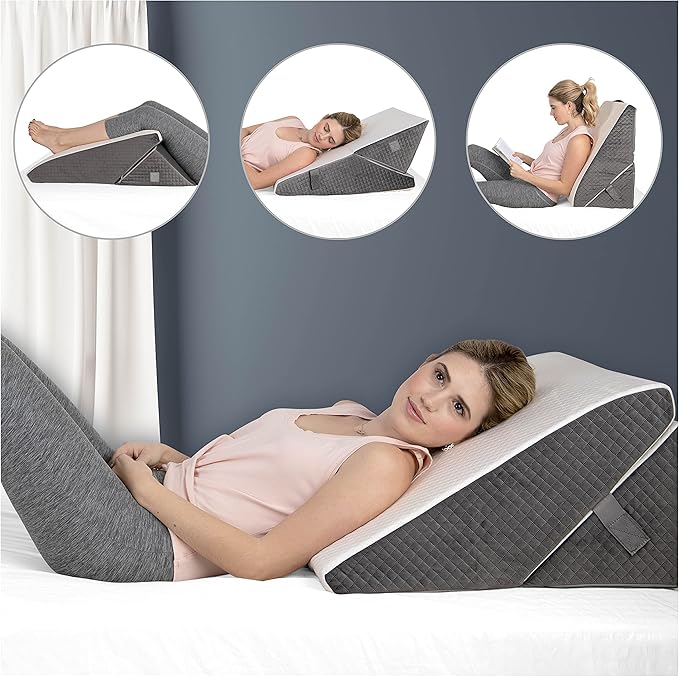
Nighttime acid reflux is a positional problem. Lie flat and stomach contents pool against the lower esophageal sphincter, with no gravity to push them back down. The standard non-drug fix, and what most GI clinicians recommend, is elevating the head of the bed 6-8 inches or sleeping on a wedge that does the same thing. Stacked pillows fail, because they bend the neck without raising the torso.
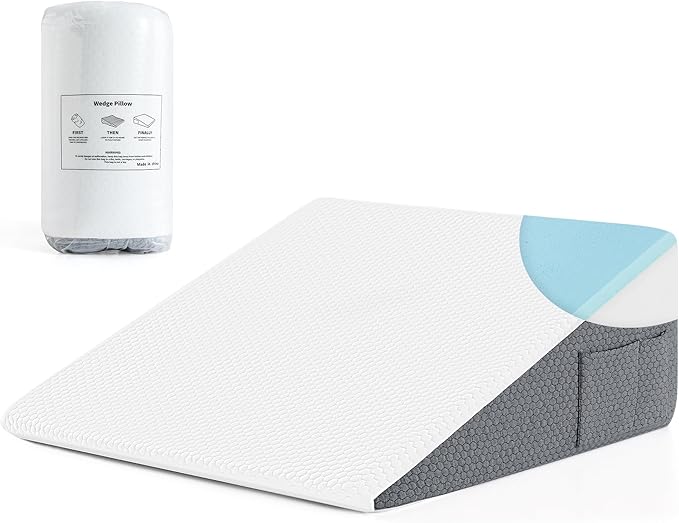
A real wedge pillow is a foam ramp 10-12 inches tall at the high end, sloping down 24-28 inches to a thin edge that tucks under the lower back. The picks below run from $40 to $270, cover geometries from fixed-angle to multi-piece adjustable, and flag the cover situations that decide whether a wedge is washable at all. The Reddit quotes at the bottom cover the supplement and habit stack that GERD sufferers pair with a wedge.
What incline angle works for GERD
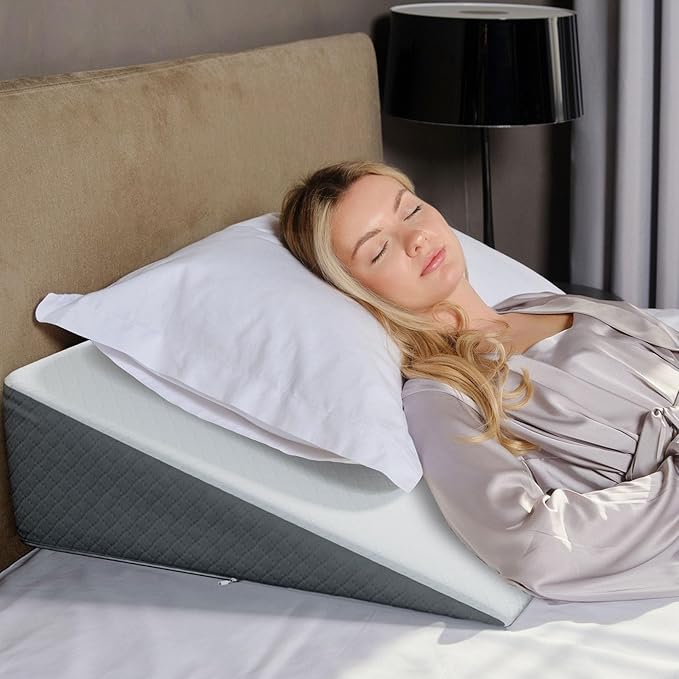
The position that matters is torso-elevated, not head-elevated. Bending only at the neck, which is what stacked pillows do, compresses the abdomen and can make reflux worse. A wedge lifts everything above the lower back as one plane and keeps the stomach below the esophagus at roughly a 30-45 degree angle.
Height: 10 inches at the minimum, 12 inches is where most people land. Below 10 inches the elevation doesn't do enough. Above 12 inches the angle gets uncomfortable for most sleepers and the slide-down problem takes over.
Foam density and the comfort trade-off
A single-density polyurethane block is the cheapest construction and feels like sleeping on a ramp. Most well-reviewed wedges put a memory-foam top layer, usually 1.5-2 inches, over a firmer base. The memory foam contours to the back and takes the edge off the pressure point at the hips where a single-density wedge digs in.
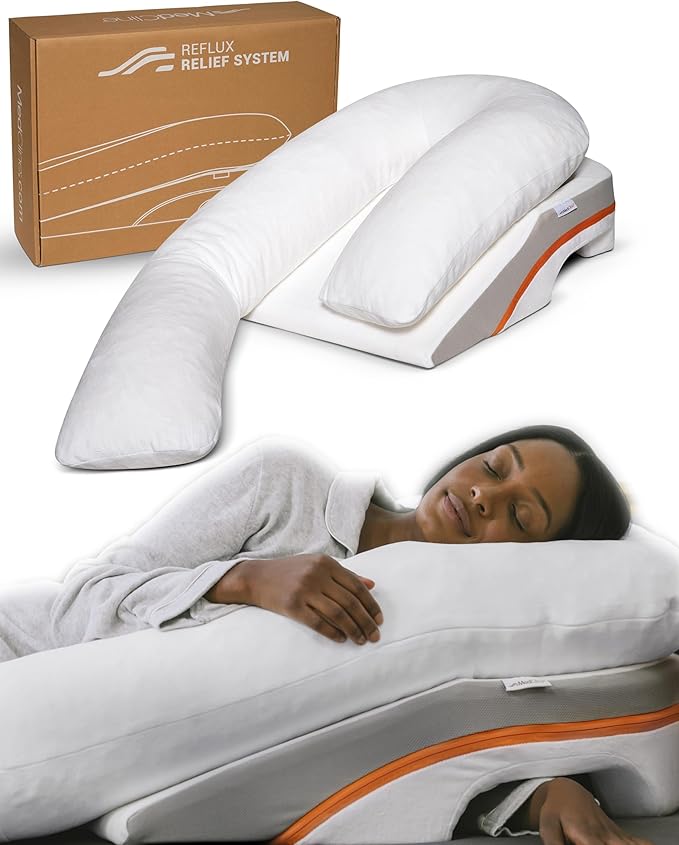
Side sleepers have the hardest time. The wedge has to be wide enough, at least 24 inches, that you don't roll off, and a body pillow or knee pillow alongside it stops the slow rotation back to flat. The MedCline system attacks this directly, with a cutout for the lower shoulder and an integrated body pillow.
Cover material and washability
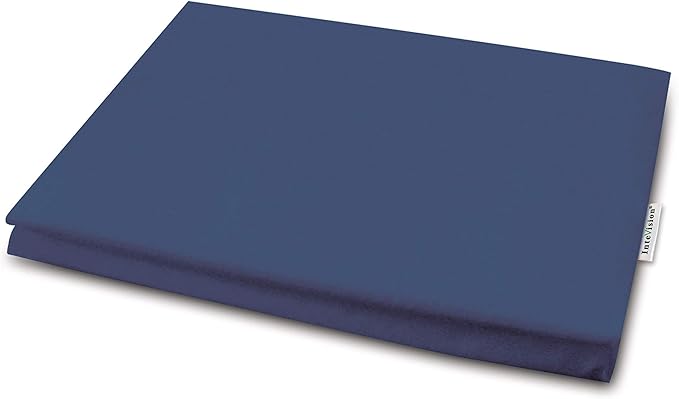
Reflux tends to come with night sweats and the occasional spit-up, especially in the first weeks of treatment. A wedge with a non-removable cover smells permanent within a month. Every pick below has a zip-off, machine-washable cover except where noted, and the InteVision replacement covers are listed separately for the older fixed-cover wedges that still work but smell.
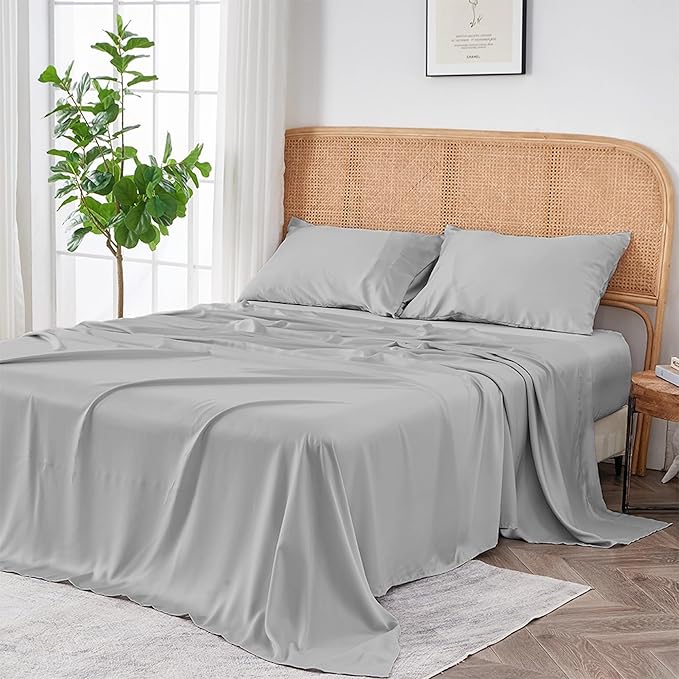
Bamboo-blend covers wick moisture better than the plain polyester covers that ship with most budget wedges. Cotton percale stays cooler and wrinkles. Both wash fine. Skip anything that ships with a polyester-velour cover, which traps heat.
Fixed-angle vs adjustable multi-piece sets
Fixed-angle wedges, the Kolbs and Cushy Form pattern, are a single foam ramp. Firmer, more stable, and good for 3-5 years before the foam compresses. Adjustable sets like the BIEEZZK and InSen ship with 2-3 stackable foam pieces, so you change the angle by adding or removing layers.
Adjustable is better if you don't know yet what angle works for you, or if your reflux only flares some nights. The cost is stability: the layers separate a little overnight and the stacked geometry shifts. If you already know you want a steep, fixed angle, a single-piece wedge is more comfortable.
What to pair with the wedge
A wedge alone doesn't solve reflux. The standard stack also means no eating within 3 hours of bedtime, an evening dose of an acid reducer (most commonly famotidine or a PPI), and staying off your personal trigger foods. The Reddit thread below covers the supplement layer GERD veterans add: slippery elm as capsule or powder, DGL (deglycyrrhizinated licorice) chewables, and when to take each.
None of those replace the wedge. They're complements, taken on top of the positional change. The wedge is the foundation. The supplements and acid reducers handle the trigger-food nights when reflux breaks through the elevation.
How long a wedge lasts
A polyurethane wedge with a memory-foam topper holds its incline 3-5 years before the foam compresses out of it. A pure memory-foam wedge softens faster, often noticeably within 1-2 years. The MedCline system, denser foam and a more constructed shell, is rated for longer at 5x the price of the basic wedges, so cost per year of use comes out comparable. Replacement covers (the InteVision Egyptian cotton case is the most common) add another 1-2 years of usable life when the foam is still firm but the original cover is shot.
Recommended
Products related to this guide.
What owners say
Real owner reports from the threads and editorial sources we drew on for this guide.
“Well, I love slippery elm in either capsule form or powder. There's also DGL chewables. So if you ever want to consider supplements, those are good. Otherwise, it seems like you have a good system.”
— r/AcidReflux / MinionKevin22
“Interesting, I’ve never heard of slippery elm. Anyway, thanks for the advice! I might consider experimenting with these supplements to speed up my recovery process.”
— r/AcidReflux / TheRealSlimeballDae
Frequently asked questions
What are the best wedge pillows for acid reflux?
Kolbs Bed Wedge Pillow (12-inch. The 12-inch height hits the GERD sweet spot, and the memory-foam top over a firmer base avoids the ramp-on-the-back feel of single-density wedges.
What are the best budget wedge pillows for acid reflux?
Kolbs Bed Wedge Pillow (7.5-inch). Same Kolbs construction and washable cover as the top pick, in the shorter 7.
What are the best premium wedge pillows for acid reflux?
MedCline Reflux Relief System. The clinical-grade option, with an integrated body pillow and shoulder cutout that solves the side-sleeper rotation problem the cheaper wedges do not address.