Best Under-Bed Storage Containers with Wheels (2026 Buyer's Guide)
By Erin Mitchell · Updated July 2026
Independent editorial guide. We never accept payment for coverage, though we may earn a commission if you purchase through our links.
Quick Take
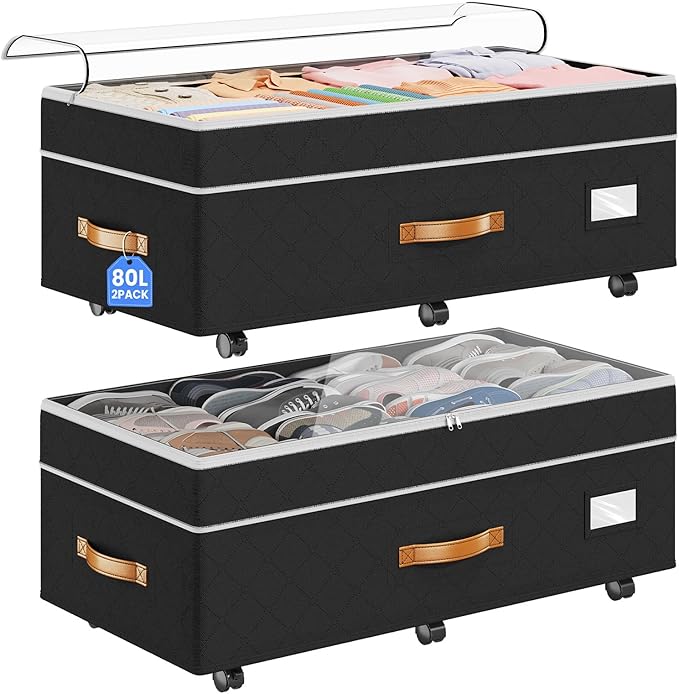
For most bed frames with 6-9 inches of clearance, a 2-pack of low-profile bins on 360-degree wheels in the $28-40 range is where the value sits. The Yecaye 80L metal set is the default answer: low enough to roll under standard platform frames, rigid enough to hold winter blankets and shoes without sagging, and the two-bin value gets the per-bin price under $15. Two things change that. Under 6 inches of clearance you need a softside fabric bag, no rigid frame, no wheels, sliding on its own bottom. And if finding things in the dark under there matters to you, put clear lids and a labeled front panel ahead of capacity. Capacity is easy to overbuy. Visibility is what makes the bin get used. Jump to the metal, fabric, and 2-pack picks below, each matched to a specific clearance height and use case. See picks ↓
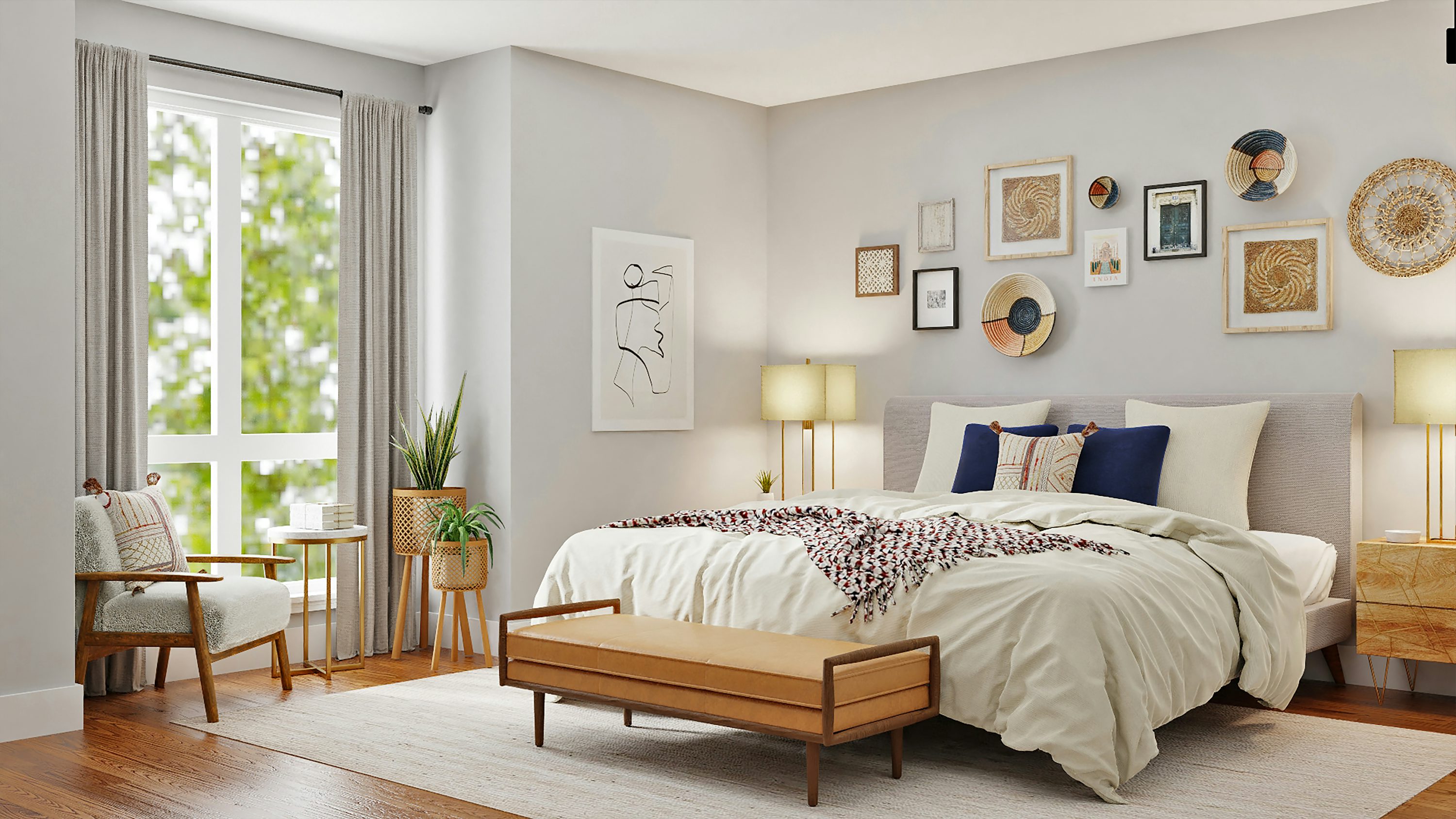
Under-bed storage looks simple on the listing page and comes back three weeks later because the bin was an inch too tall for the bed frame, or the wheels seized on carpet, or the clear lid turned out to be a cardboard flap. The category has improved in the last two years. 360-degree swivel wheels with brake locks are standard at the $30 tier now, metal-frame bins have replaced flimsy plastic for anything carrying weight, and the 2-pack format has pushed per-bin prices below $15.
This guide covers rolling bins specifically, sorted by frame construction and clearance height. Under 6 inches of clearance, softside fabric is the right answer and the rolling category is the wrong shelf. Everything below assumes you've measured your bed frame's bottom-rail-to-floor height and subtracted half an inch for wheel and lid clearance.
Measure clearance first, then pick a frame type
Bins that don't fit are the number one reason this category gets returned. Standard platform beds run 8-13 inches of underbed clearance. Storage beds and bed-in-a-box frames on basic legs run 6-9 inches. Metal bed frames with a center support bar usually clear 7-8 inches at the rails, but the support bar itself may only clear 5 inches, which limits where bins can park. Most rolling bins on Amazon land at 6-7 inches tall including wheels, so a 7-inch bin wants roughly 7.5 inches of clearance to roll freely. Tighter than that and you're looking at fabric softside bags instead (typically 5-6 inches tall, no wheels, sliding on the fabric bottom). At 9 inches or more you can move up to the taller metal frames, which hold more and still roll.
Metal frame vs fabric softside
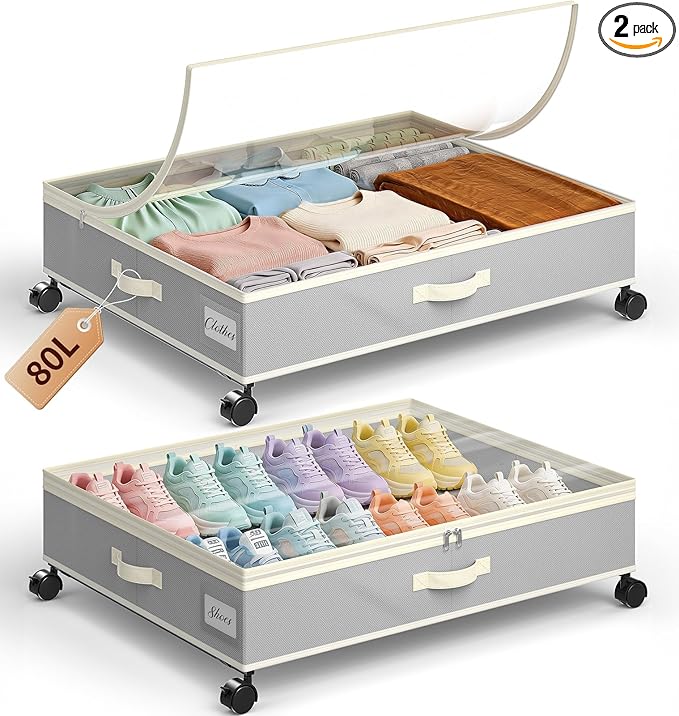
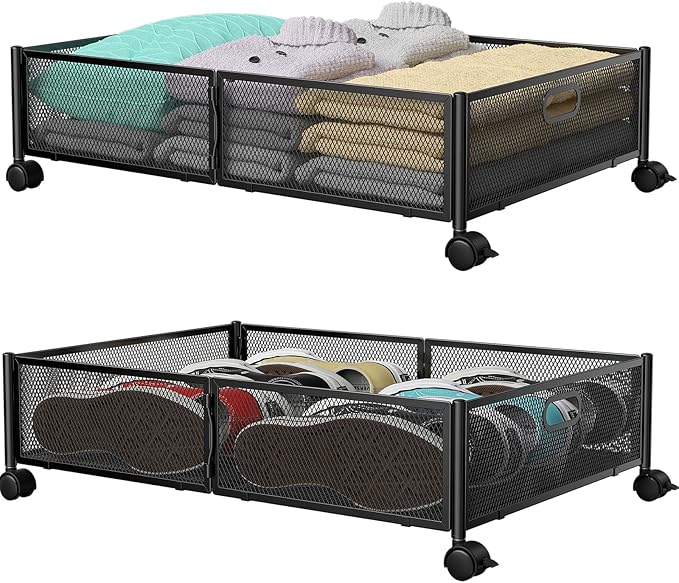
Metal-frame bins, usually a crossed iron-wire cage with a fabric or plastic liner, hold their shape under weight and rigid items. They roll better on hard floors and short-pile carpet, and the wire cage keeps the lid flat when the bin is half-empty. They also weigh more empty (the PHINOX 60L ships around 4 pounds) and take a minute to assemble out of the box.
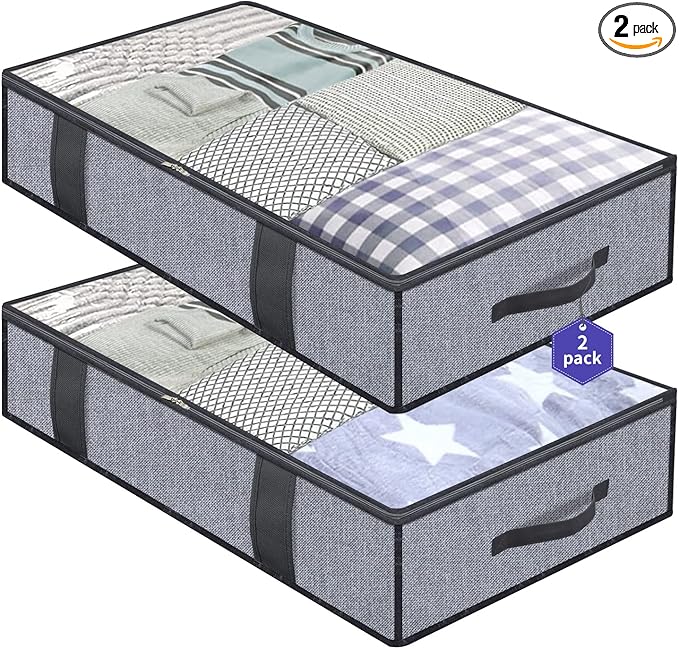
Fabric softside bins are lighter, fold flat when you're not using them, and ship fully assembled. They sag when half-empty, which is fine for blankets and bedding and bad for shoes that need to stay paired. The fabric also slumps inward when you open the bin, so finding one specific item is harder than in a rigid frame. Default to metal for shoes, books, and anything with a defined shape you want to keep visible. Default to fabric for seasonal bedding, off-season clothes, and anything you compress to fit.
360-degree wheels with brake locks
Cheap under-bed bins still ship with fixed-direction wheels that roll forward and back and nothing else. On carpet those are useless, and they force you to yank the bin straight out from one specific angle, which usually means dragging the frame across the floor. 360-degree swivel wheels fix that. Brake locks, small switches on two of the four wheels, stop the bin drifting when the floor tilts slightly, which matters on older hardwood.
Wheel quality is what you're paying for between the $28 and $40 tiers. The cheaper sets use a plastic wheel housing that flexes under weight; the mid-tier uses a reinforced housing with a metal axle. Under 25 pounds per bin, the cheap wheels are fine. Load it with books or kitchen overflow and the reinforced housing is what keeps a wheel from popping off its axle.
Clear window and label panel
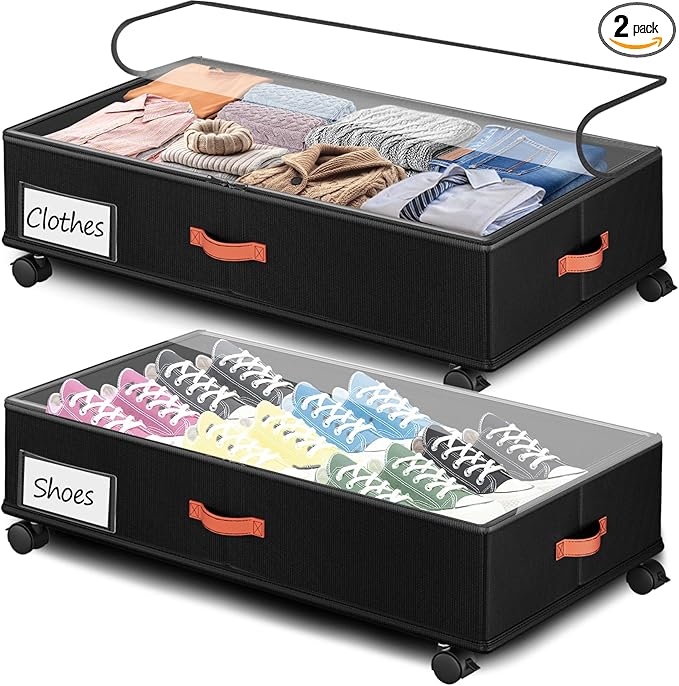
Two features decide whether a bin gets used or becomes a graveyard for last winter's gloves. First, a clear lid or clear window, so you can see what is inside without pulling the bin out. Second, a front label slot or a panel you can write on or tape a label to. Missing both, the bin becomes 'I forgot what is in here' within two months.
The 2-pack format works against you here. Two bins under one bed tend to end up with similar contents, off-season clothes and miscellaneous, and unlabeled you'll pull out the wrong one every time. Labels are cheap, take 30 seconds to write, and double the useful life of the bin.
2-pack value math
Almost every bin in this category ships as a 2-pack now, and the per-bin math is the reason. The Yecaye 80L 2-pack lands around $30, so each bin is $15. Comparable single bins run $20-25, meaning the 2-pack saves roughly $10-20 even if you only need one. The catch is shipping volume. Two bins under one queen frame usually fit side by side; under a full or twin it gets crowded fast, and the second bin may end up in a closet. Skip the 4-pack unless you're storing for a family of four or doing a small business. The per-bin discount thins out at 4-pack scale and the bins start competing for the same square footage.
Carpet vs hardwood
Wheels behave differently on different surfaces. Hardwood and tile are easy, anything rolls. Short-pile carpet, under half an inch, needs a wider wheel base, which is why 360-degree wheels matter more on carpet than they do on hardwood. Thick carpet or a plush rug under the bed defeats any rolling bin, and the fabric softside option wins there instead, sliding on its own fabric bottom without catching on carpet fibers.
When to skip rolling entirely
If your bed has a built-in storage drawer, storage beds, captain's beds, ottoman beds, you don't need this category at all. Under 5 inches of clearance, no rolling bin will fit and you want a flat softside slider, often marketed as an under-bed sweater bag. And if you have a box spring on a basic metal frame with minimal clearance, the fix is usually a bed riser kit rather than a low-profile bin: 4-inch risers create 6-7 inches of additional clearance and let you use the standard 80L bins.
Recommended
Products related to this guide.
Frequently asked questions
What are the best under-bed storage containers with wheels?
Yecaye 80L Under Bed Storage with Wheels. The default 2-pack for standard platform beds with 8 inches or more of clearance.
What are the best budget under-bed storage containers with wheels?
Onlyeasy Foldable Underbed Storage Bags. The right answer when clearance is under 6 inches or when you are storing seasonal bedding instead of shoes.
What are the best premium under-bed storage containers with wheels?
PHINOX Under Bed Storage with Wheels (Upgraded Crossed Iron Wire). Upgrade pick for heavier loads.