The Best Stand Mixers for Home Bakers on Amazon (2026)
By Maya Chen · Updated July 2026
Independent editorial guide. We never accept payment for coverage, though we may earn a commission if you purchase through our links.
Quick Take
For most home bakers the KitchenAid Artisan tilt-head is the right answer, and has been for two decades. The 5 quart bowl handles a double batch of cookies or one loaf of bread dough, the tilt-head makes scraping easy, and the planetary action reaches the bowl edges without a spatula tour every 30 seconds. It's the modal purchase in this category for good reason, and the one we'd spend our own money on first.
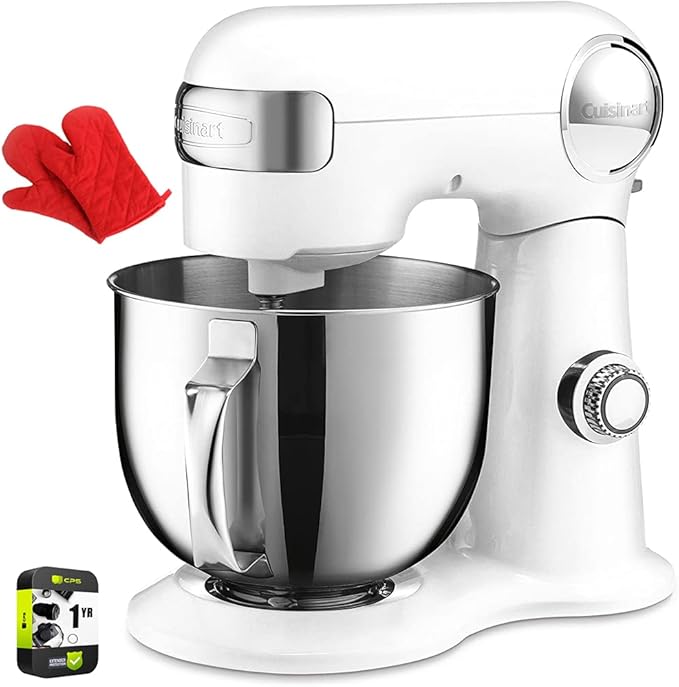
Bake bread weekly or run double batches regularly and you should step up to the KitchenAid Professional 5 Plus bowl-lift. The bowl-lift design is steadier under heavy dough loads and the motor is rated for longer continuous run times. If the budget is hard under $250, the Cuisinart SM-50 and Hamilton Beach Eclectrics are the two value picks that hold up. Everything else in the sub-$200 band is a gamble on motor longevity. Cheap stand mixers die at the motor or the gearbox, usually within 18 months of regular use. The picks below were filtered for motor warranty length and gearbox construction, not feature count. See picks ↓
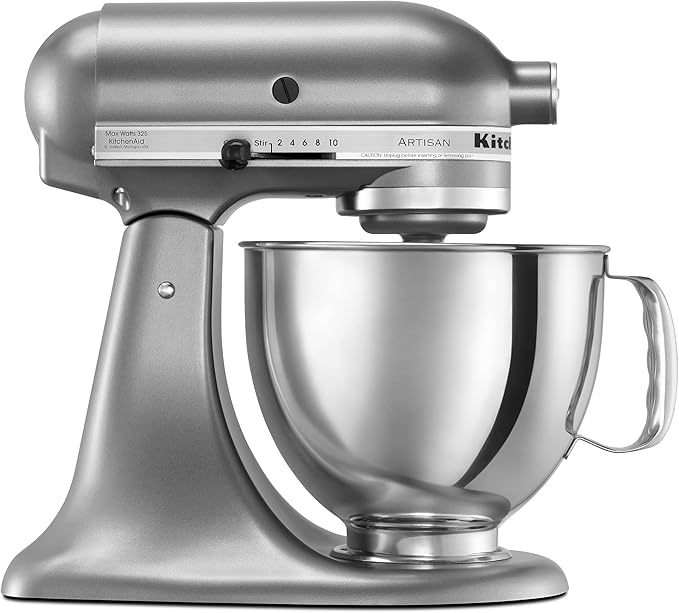
Stand mixers are one of the few kitchen categories where the obvious answer is also the right one. KitchenAid has owned this segment for 40 years, and the Artisan tilt-head at roughly $380 to $500 is what most home bakers should buy.
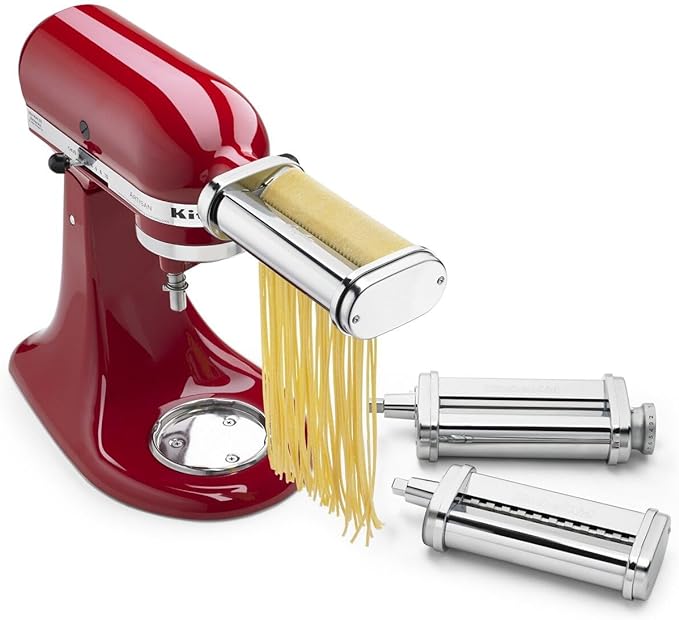
The interesting questions are when to step up to a bowl-lift, when a value brand like Cuisinart or Hamilton Beach makes sense, and how to read the specs that predict longevity. The picks below cover five tiers, from the workhorse bowl-lift down to a sub-$220 budget option, plus a pasta attachment for the Artisan or Classic that turns a stand mixer into a fresh pasta setup. We filtered on motor wattage and warranty, gearbox material (metal beats plastic, every time), and bowl capacity matched to the batch sizes people really bake.
Tilt-head vs bowl-lift, and which one you need
Tilt-head mixers (Artisan, Classic) hinge the motor head up and away from the bowl, so you can scrape, swap attachments, and add ingredients without the bowl in the way. Easier to live with day to day. The trade-off is stability: under stiff bread dough at high speed the head can flex a little and walk the mixer across the counter.
Bowl-lift mixers (Professional 5 Plus, Professional 600) keep the motor head fixed and raise the bowl into place on a lever. Mechanically steadier, and the motors are usually rated for longer continuous run times. Bake bread weekly, run double batches, or push past 5 cups of flour at a time and the bowl-lift is the right call. Cookies, cakes, the occasional loaf? Tilt-head, and it's easier to use.
Why 5 quart is the right default
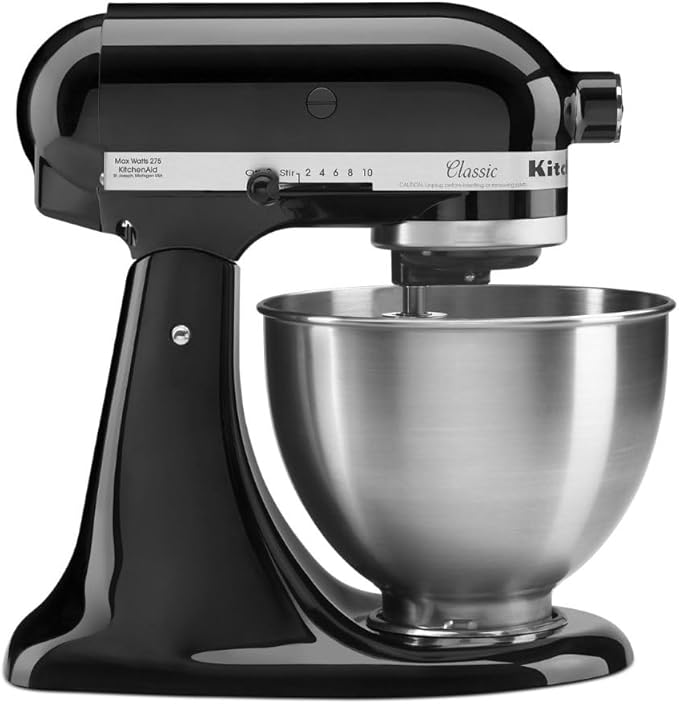
Bowl capacity sounds like a more-is-better spec. It isn't. A 5 quart bowl handles a double batch of standard cookies, one loaf of bread (3-4 cups flour), or a two-layer cake, which covers 90% of home baking. The 4.5 quart Classic is borderline for double batches. The 6 quart Pro 600 is too much bowl for most kitchens, and small batches whip poorly in it because the beater can't reach the bottom.
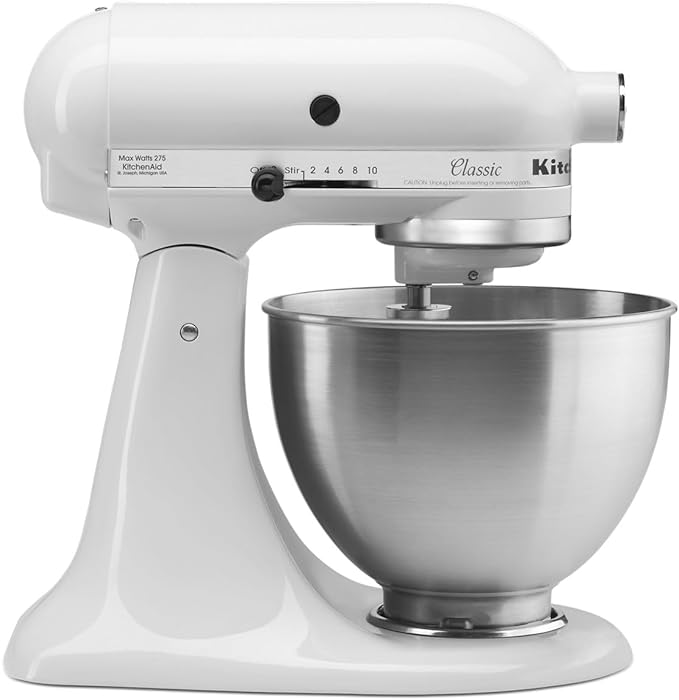
If you only ever bake single batches, the 4.5 quart Classic saves money and counter space. If double cookie batches or two loaves at once are routine, jump to the 5 quart Pro 5 Plus. For almost everyone in between, the Artisan at 5 quarts is the one.
Motor wattage is mostly marketing
Wattage numbers on stand mixers don't compare across brands. KitchenAid rates its motors at sustained output; plenty of competitors rate at peak draw, usually 2-3x the sustained number. A 300 watt KitchenAid will out-knead a 700 watt no-name mixer every time.
What matters instead: gearbox material (metal gears, not nylon), warranty length on the motor (1 year is the floor, longer is better), and whether the manufacturer publishes a continuous run time rating. KitchenAid doesn't always publish run times, but the gearboxes are metal and the warranty network is real. Cuisinart and Hamilton Beach are honest about their specs in this category and have held up better than the other value brands.
The KitchenAid color and price game
The Artisan ships in 30 plus colors, and the price varies by color, not by feature. Empire Red, Onyx Black, and Contour Silver are usually the cheapest. Limited-edition colors carry a $50 to $150 premium for identical hardware. If color isn't a priority, buy whichever standard color is cheapest the week you check.
Refurbished KitchenAids from authorized sellers deserve a look too. Shorter warranty, 6 months instead of 1 year, but the motor and gearbox are the durable parts and a refurb unit has already survived its burn-in period. Expect roughly 20% off retail.
Attachments that earn the upgrade
The KitchenAid attachment hub turns a stand mixer into a pasta roller, meat grinder, ice cream maker, or food processor. The pasta roller and cutter set (KSMPRA) is the attachment a home baker should buy: fresh pasta dough is exactly the kind of stiff dough a stand mixer handles better than a person, and the roller turns dough into sheets in minutes.
The meat grinder and food processor attachments work, and they're niche. Most home cooks are better served by a dedicated food processor, since the attachment is slower and smaller. The ice cream attachment is fine but needs 24 hours of freezer time before use, which kills spontaneity.
Three things not to buy
Sub-$150 stand mixers from no-name brands. The motors are honest about wattage, but the gearboxes are nylon and the bowl-locking mechanisms are plastic. Both fail within 18 months of weekly use. The Hamilton Beach Eclectrics at roughly $220 is the floor for a stand mixer worth buying.
Hand mixers marketed as stand mixer replacements. A hand mixer is a different tool for a different job. It won't knead bread dough and it won't whip stiff peaks in a 5 quart bowl without burning out. If you only bake occasionally a hand mixer is fine, but it's no budget stand mixer.
Off-brand KitchenAid attachments claiming universal fit. The attachment hub is a precise spec, and cheap clones fit loosely, which chews up the hub over time. Stick with KitchenAid-branded attachments or established third parties with good fit reports.
Storage, counter footprint, and the move-it problem
Stand mixers are heavy. The Artisan weighs roughly 22 pounds, the Pro 5 Plus closer to 29. They aren't meant to move on and off the counter between uses. If counter space is tight, work out the mixer's permanent home before you buy. A mixer that lives in a cabinet because it's too heavy to lift gets used three times a year and then resented.
If it has to live in a cabinet, a rolling appliance lift, an adjustable shelf that pops up and locks at counter level, is the cheapest solution and adds maybe $80 to the total cost. Anyone who bakes more than monthly will get that money back.
Recommended
Products related to this guide.
Frequently asked questions
What are the best stand mixers for home bakers?
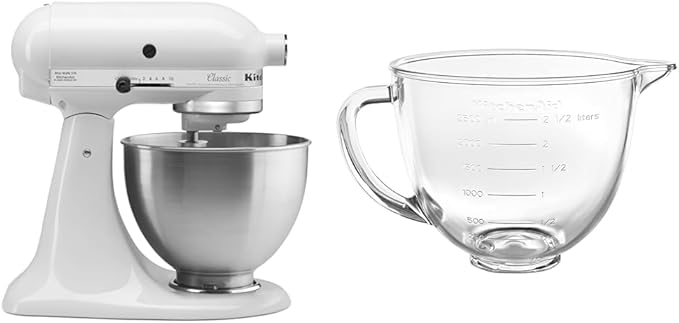
KitchenAid Artisan Series 5 Quart Tilt-Head Stand Mixer. The default answer for home bakers and has been for 20 years.
What are the best budget stand mixers for home bakers?
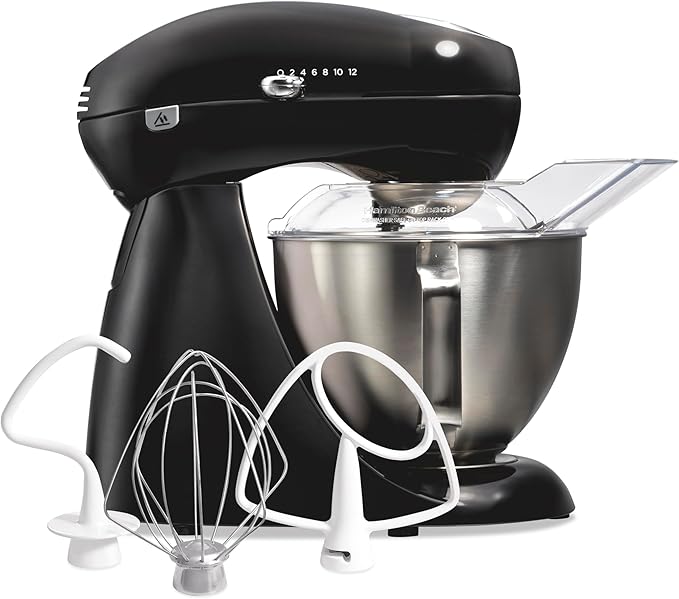
Hamilton Beach Eclectrics 4.5 Quart Stand Mixer. The floor for a stand mixer worth buying.
What are the best premium stand mixers for home bakers?
KitchenAid Professional 5 Plus Series 5 Quart Bowl-Lift Stand Mixer. Step up for serious bakers.