The Best Sheet Pans for Roasting on Amazon (2026)
By Maya Chen · Updated July 2026
Independent editorial guide. We never accept payment for coverage, though we may earn a commission if you purchase through our links.
Quick Take
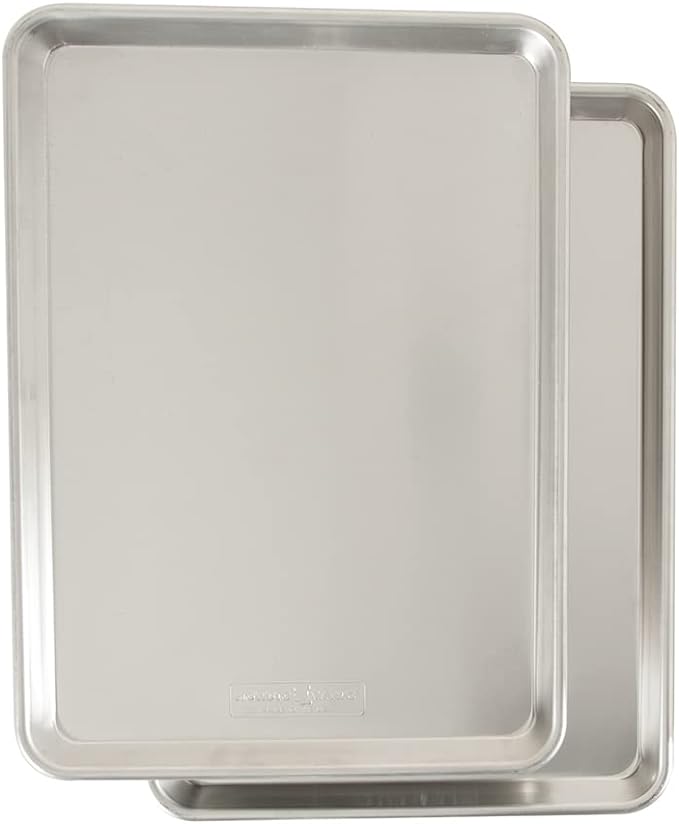
For most home cooks the right roasting sheet pan is a heavy-gauge natural-aluminum half sheet, roughly 18 x 13 inches, with a rolled, wire-reinforced rim. That combination heats fast, browns evenly at 425-450F, and skips the dramatic warp-and-pop that thin pans pull when a hot oven meets cold oil. The Nordic Ware Natural Aluminum Commercial Baker's Half Sheet, about $33, is the default answer.
The picks below split into three lanes: bare aluminum for maximum browning, aluminized steel with a light coating for easier release, and ceramic-coated for delicate proteins. Thickness matters more than the name on the pan. Anything under 0.8mm gauge will warp, and that holds at every price point. Match the pan to how hot and how often you roast rather than to the finish you like looking at.
Jump to the sheet pans we'd buy for roasting at 425F-plus, with notes on which lane each one belongs in. See picks ↓
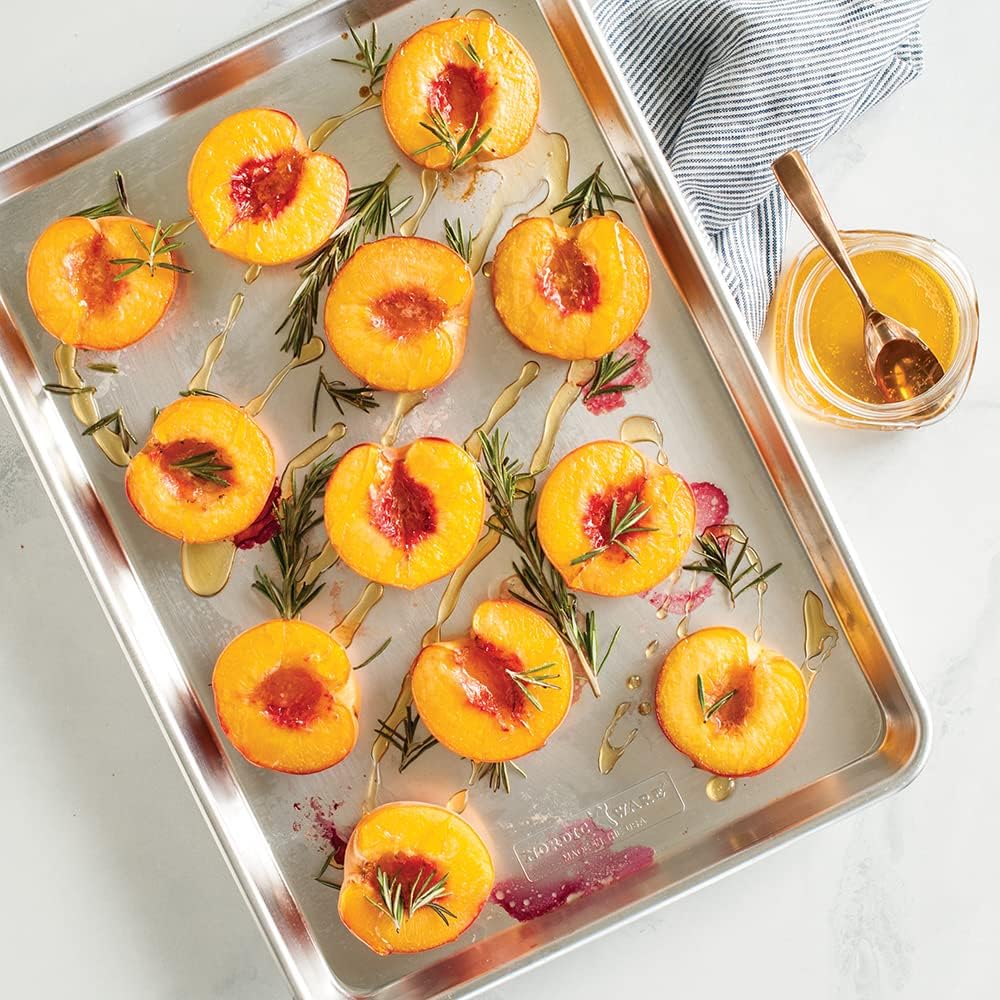
A sheet pan for roasting is doing a different job than a sheet pan for cookies. Roasting wants high dry heat, 425F and up, fast surface contact for browning, and a rim tall enough to catch rendered fat without letting it pool into a steam bath. Most thin-gauge pans sold as "cookie sheets" can't manage that. They warp, or they hand you pale steamed vegetables.
So the picks here are filtered on one question: do they stay flat at 450F and brown food properly. Gauge, rim construction, and surface material decide that, and the brand stamped on the pan mostly doesn't. Below is what to look for and which Amazon-stocked pans hold up.
Bare aluminum browns better
Aluminum moves heat roughly four times faster than stainless steel and considerably faster than any coated alternative. Put a vegetable on a preheated aluminum pan and it starts browning within seconds instead of sitting there releasing water first. Bare metal also shrugs off the 450-500F oven temperatures that produce real caramelization on roots, brassicas, and chicken skin.
Coatings, nonstick or ceramic, cap the safe oven temperature lower, typically 425F for nonstick and around 450F for ceramic, per the manufacturer guidance printed on most listing pages. They also put a thin layer between the food and the metal, which dulls browning. That's a genuine trade-off, not marketing copy.
Why pans warp
Thin sheet pans warp because the metal expands faster than the rolled edge can contain it. You know the sound: the bang of a pan popping convex in the oven, oil sliding to one side, half the food burning while the other half stays raw. The fix is heavier-gauge aluminum, 0.8mm or thicker, with the rim wrapped around a steel wire core. The steel constrains the expansion.
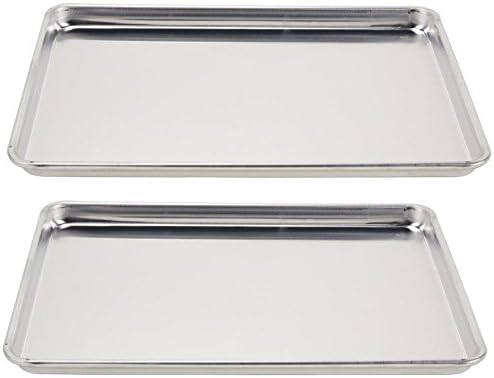
Both the Nordic Ware and Vollrath picks are built that way. Pans without it, meaning the cheap restaurant-supply 12-packs all over Amazon, will warp on the third or fourth high-heat session no matter what the label says about being "commercial."
Half-sheet vs quarter-sheet vs full-sheet
Half-sheet, roughly 18 x 13 inches, is the size that makes sense in a home oven. It fits a standard 30-inch range with room for air to circulate, holds enough vegetables to feed four people, and slides into a normal cabinet. Quarter-sheets work as a second pan for a small side but get cramped fast for a full dinner. Full-sheets, 26 x 18 inches, don't fit most residential ovens.
Every pick below is a half-sheet. If a listing calls itself a half-sheet but measures 17 x 12 or smaller, the seller shaved an inch to fit smaller stock, so check the dimensions field before you buy.
When a coating earns its place
Bare aluminum stains, develops a patina, and grabs anything with sugar or skin protein unless you line it with parchment. If you hate that cleanup, or you roast a lot of fish, salmon, or sticky-glazed proteins, a coated pan is the practical answer.
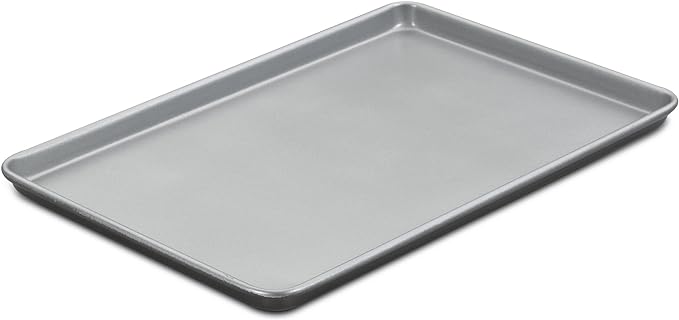
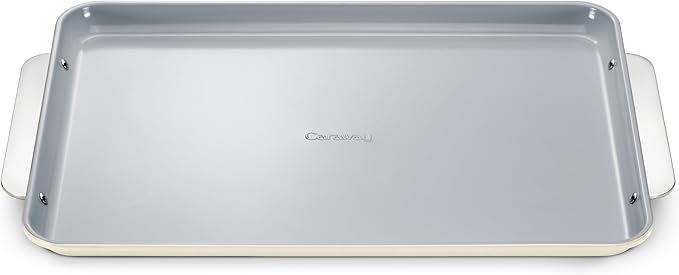
Nonstick, the Cuisinart pick, is the cheapest way in and tolerates moderate roasting heat. Ceramic, the Caraway pick, costs more but does better with skin-on fish and tofu and sidesteps the PTFE conversation entirely. Neither one will out-brown bare aluminum. That's the trade you're making.
Pans to avoid
Skip dark-coated steel sheet pans that aren't aluminized. The dark surface pushes past browning into burning on the underside of thicker vegetables, and a steel base warps sooner than aluminum. Skip insulated air-bake pans for roasting too, since slowing heat transfer is their entire purpose and the opposite of what you want.
Skip the unbranded 12-pack restaurant-supply listings unless you're running a kitchen for a living. The gauge is thinner than the single-pan version of the same product, the rims are sometimes unreinforced, and warranty support barely exists.
How long a good sheet pan lasts
A heavy-gauge aluminum half-sheet from Nordic Ware or Vollrath, used several times a week, lasts 10-20 years and outlives most of the cookware around it. The aluminum darkens as you use it. That's seasoning, not damage, and browning improves along with it. Replace the pan when the rim cracks or it takes a permanent warp.
Coated pans, nonstick or ceramic, are wear items by nature. Figure 3-5 years out of a nonstick sheet, a bit more from ceramic if you keep metal utensils off it. Plan on replacing them; they won't give you the multi-decade run bare aluminum does.
Recommended
Products related to this guide.
Frequently asked questions
What are the best sheet pans for roasting?
Nordic Ware Natural Aluminum Commercial Baker's Half Sheet. The default answer for high-heat roasting.
What are the best budget sheet pans for roasting?
Cuisinart Chef's Classic Pro Nonstick Bakeware Sheet Pan. The under-$25 nonstick option for cooks who want easy cleanup on sticky glazes and sheet-pan dinners.
What are the best premium sheet pans for roasting?
Vollrath Wear-Ever Heavy-Duty Half Sheet Pan. The pan restaurants actually use.