The Best Outdoor Movie Projectors for Backyard Cinema on Amazon (2026)
By Erin Mitchell · Updated July 2026
Independent editorial guide. We never accept payment for coverage, though we may earn a commission if you purchase through our links.
Quick Take
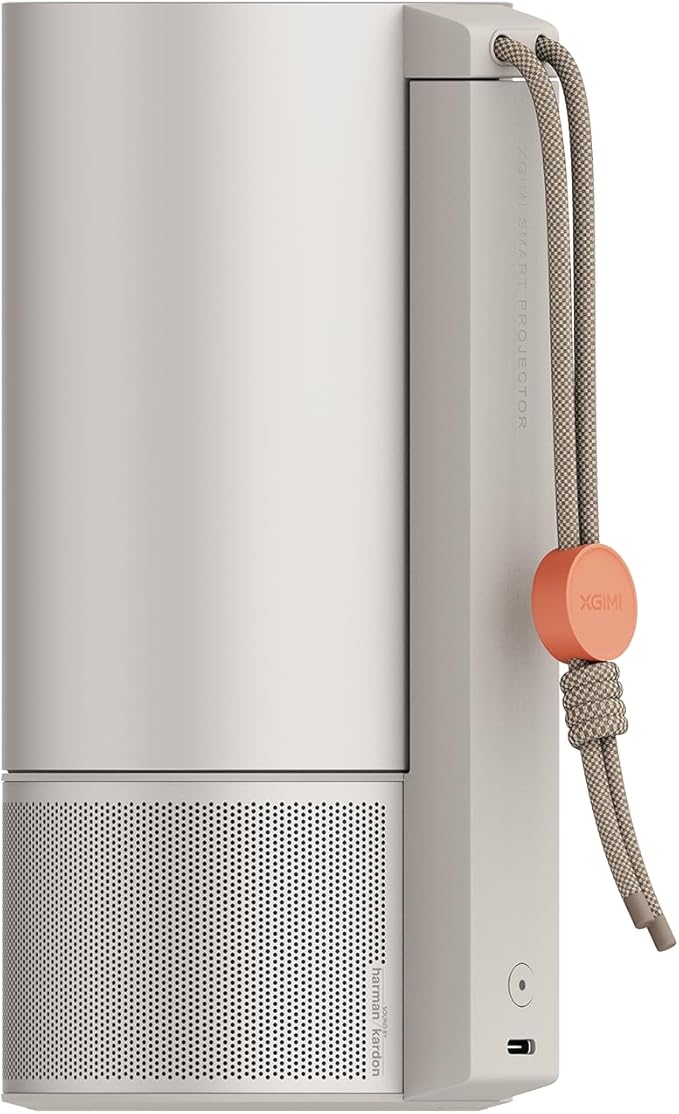
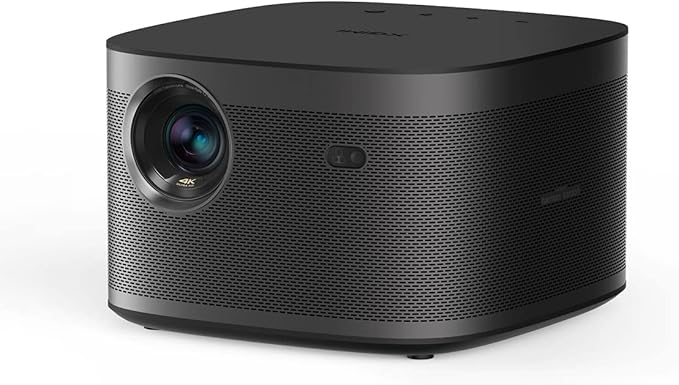
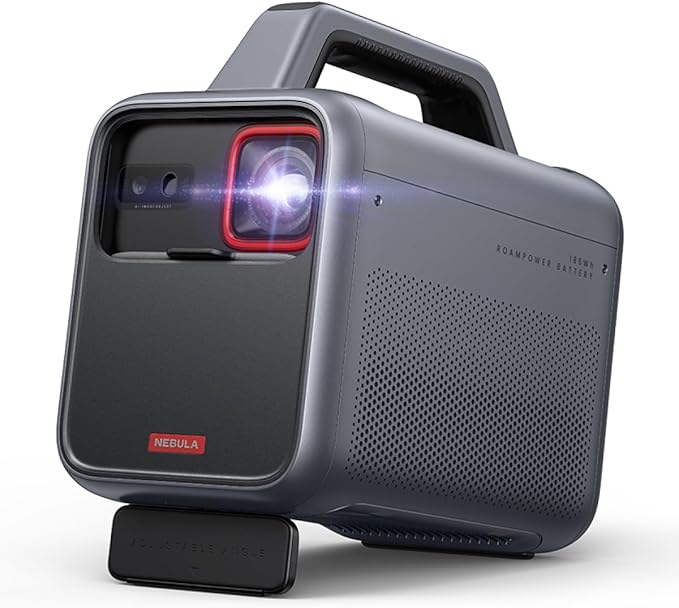
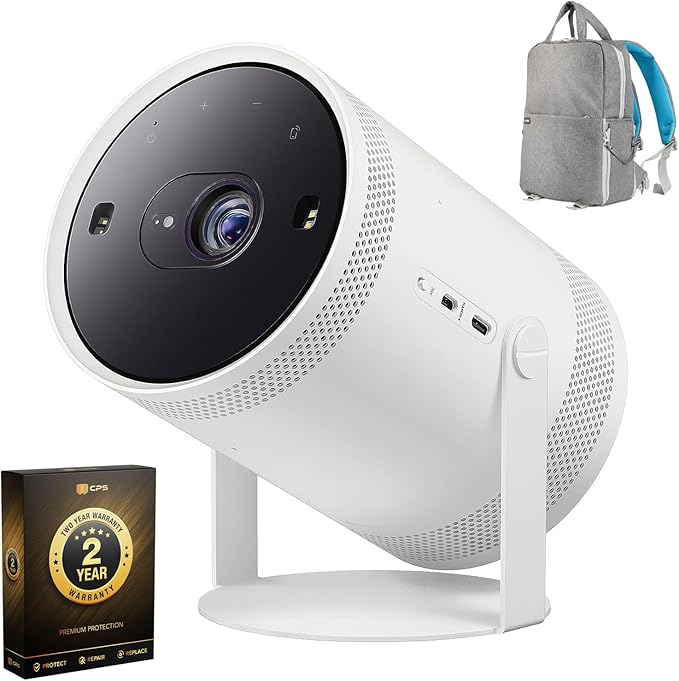
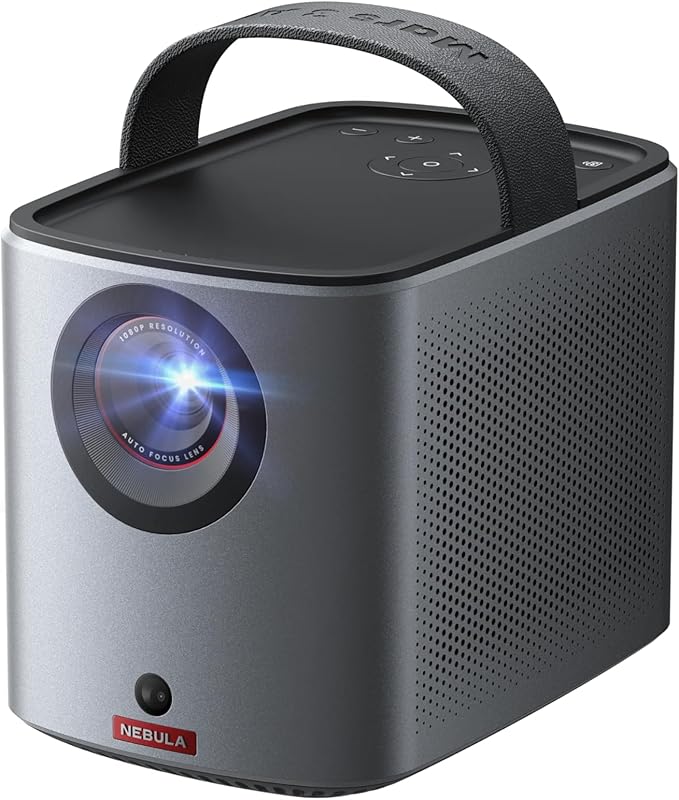
Backyard cinema is a brightness problem first and a sound problem second. Indoor projectors marketed at 200 to 400 ANSI lumens look fine in a blacked-out home theater and wash out completely on a patio at 8pm in August. What works outdoors starts around 400 ANSI lumens for portable battery units and climbs to 2300+ ANSI lumens for plug-in laser models. Under 400 ANSI you need full astronomical dark and a true matte screen, which is where most of the complaints in this category come from. The picks below split into three tiers. At the premium end, the XGIMI Horizon Ultra gives you Dolby Vision and 2300 ISO lumens from a triple-laser engine that holds image quality on a 120 inch lawn screen well before sunset finishes. In the middle, the Anker Nebula Mars 3 gives up some brightness for a built-in battery, IPX3 splash resistance, and a carry handle, the right trade if you move the thing between yard, garage, and camping trips. The XGIMI MoGo 3 Pro and Samsung Freestyle 2nd Gen anchor the portable smart TV tier for smaller screens and patio use. Pair any of them with a tensioned outdoor screen instead of a bedsheet. The screen surface drives perceived brightness as much as the projector spec sheet does. See picks ↓
Backyard movie nights have gone from novelty to a real product category on Amazon. The dominant outdoor build now is a sealed unit, battery or plug-in, with Android TV or Google TV onboard, auto-keystone and auto-focus, and either an LED or triple-laser light engine. Those have gotten good enough that one $800 to $1,500 box throws a watchable 100 to 120 inch image on a lawn screen before full dark. The problem is the lumen number in nearly every Amazon listing, because most of those are not ANSI lumens. A unit listed at 12,000 lumens is usually quoting a marketing figure that works out to 200 to 400 ANSI lumens, and that is not enough outdoors until well after sunset. The picks below were filtered on genuine ANSI or ISO lumen specs, light engine type, and whether the unit survives a damp patio.
ANSI lumens, ISO lumens, and the marketing lumen problem
The most useful spec on an outdoor projector listing is ANSI lumens or ISO lumens, the newer and comparable standard. Both measure light output against a standard test pattern. Marketing lumens, source lumens, and LED lumens are not standardized, and they typically run 30 to 60 times inflated against ANSI. For a 100 inch image outdoors, the rough rule: 400 to 600 ANSI lumens after full dark, 800 to 1500 ANSI lumens at twilight, and 2000+ ANSI lumens if you want to start the movie before sunset finishes. Under 400 ANSI you are committing to a 9pm start in summer, which is fine for adults and rough on a kids movie night.
LED, lamp, or laser
Three light engines ship in this category. LED is the cheapest and runs cool, but it tops out around 500 to 800 ANSI lumens. Lamp projectors get brighter, though the bulb is a consumable at $80 to $150 every 3000 to 5000 hours. Triple-laser engines, meaning RGB laser, are the new premium standard: 2000+ ANSI lumens, 20,000+ hour rated life, and the widest color gamut in consumer projection. For a backyard that hosts 10 to 20 nights a year, LED is fine as long as the screen stays under 100 inches and the show starts after dark. Go bigger, or start earlier, and triple-laser is the only engine that genuinely fixes the brightness problem.
Battery or plug-in
Battery projectors trade brightness and runtime for setting up anywhere without an extension cord. The Anker Nebula Mars 3 is the clearest example: 1000 ANSI lumens, 5 hours of battery, IPX3 splash resistance, and a carry handle. Plug-in units like the XGIMI Horizon Ultra are brighter, sharper, and quieter, but they need a weatherproof outlet within extension cord range. If the projector lives in the garage and comes out for the occasional movie night on the same patio, plug-in wins on image quality and longevity. If it goes camping, to the park, or to different corners of the yard, battery wins even at the brightness cost.
Onboard smart TV versus a streaming stick
Most current outdoor projectors come with Android TV or Google TV built in, so Netflix, Disney+, YouTube, and Prime Video run with no separate streaming stick. The exceptions matter: some Anker Nebula models route Netflix through a sideloaded workaround instead of a certified app, and image quality can drop that way. If you already own a Chromecast, Fire TV Stick, or Apple TV, an HDMI input matters more than the onboard OS. Every pick below has at least one HDMI port.
The screen surface controls how bright the picture looks
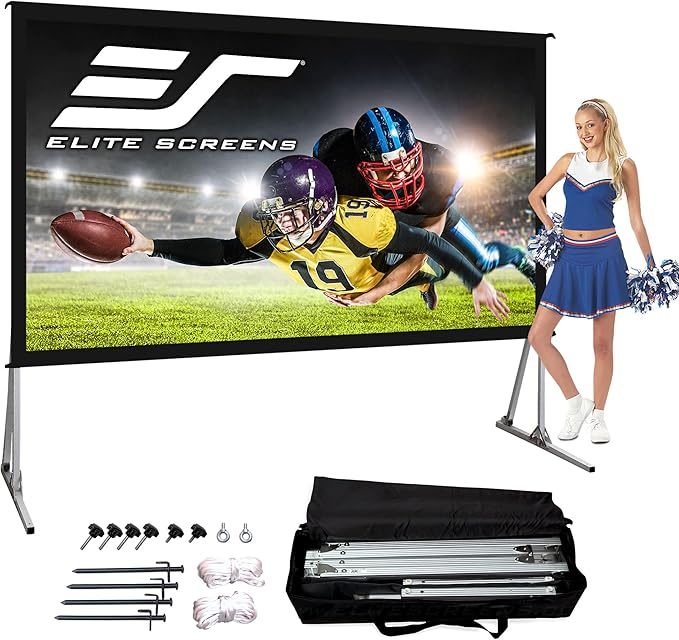
A bedsheet on a fence is the most common backyard cinema setup and the most common reason people return projectors. Sheets absorb and scatter light, cutting perceived brightness 30 to 50 percent against a proper screen. A $180 to $300 tensioned outdoor screen with a true matte white surface is the best money you can spend here after the projector itself. For lawn use, look for grommeted edges and tie-down points rather than a freestanding frame, since freestanding outdoor frames catch wind and tip over. The Elite Screens Yard Master line covers both formats and is the default pick in this price band.
Weather, dew, and storage
Outdoor projectors are not waterproof unless the listing says IPX4 or higher. Dew is the underrated problem in late-summer backyards. Leave a projector on the patio table past midnight and it collects enough moisture on the lens and vents to fog the image or, over a season, corrode the insides. Bring it in after every use, or buy a hard carry case rated for outdoor storage. The Nebula Mars 3 has its carry handle; everything else does better with a third-party case. Use the lens cap too, since dust on the lens does as much long-term damage as one rainstorm.
The built-in speaker is rarely enough
Built-in speakers here run from acceptable, the XGIMI Horizon Ultra and Samsung Freestyle 2nd Gen, both Harman Kardon tuned, down to barely adequate on most LED units under $500. Even the good ones lose to a backyard's ambient noise from traffic, AC units, and neighbors. A Bluetooth speaker paired to the projector fixes the volume problem cheaply. For tighter audio-video sync, a wired 3.5mm or optical connection beats Bluetooth, which adds 100 to 200ms of lag you will notice on a dialogue-heavy film.
What to skip
Any projector advertising 10,000+ lumens under $300. The math does not work, since a genuine 1000 ANSI lumen unit costs $500+ in parts. Those listings quote marketing lumens and deliver 150 to 250 ANSI in practice, nowhere near bright enough for outdoor use.
Lamp-based projectors at this point in the market, unless the price is dramatically below equivalent LED or laser units. Lamp replacement over 3 to 5 years eats the price gap, and lamps fail without warning.
Any unit without an HDMI input. Wireless casting on its own is fragile in a backyard where the Wi-Fi signal drops off at the edge of the yard. HDMI plus a streaming stick is the reliable path.
Recommended
Products related to this guide.
Frequently asked questions
What are the best outdoor movie projectors for backyard cinema?
XGIMI MoGo 3 Pro Portable Smart Projector. The best balance of brightness, portability, and onboard streaming under $400.
What are the best budget outdoor movie projectors for backyard cinema?
Anker Nebula Capsule 3 Laser Portable Projector. The cheapest unit here that uses real laser optics rather than LED.
What are the best premium outdoor movie projectors for backyard cinema?
XGIMI Horizon Ultra 4K Projector with Dolby Vision. The brightest, sharpest pick here and the only one that holds image quality at twilight on a 120 inch screen.