The Best Mason Jars for Pantry Storage on Amazon (2026)
By Daniel Reyes · Updated June 2026
Independent editorial guide. We never accept payment for coverage, though we may earn a commission if you purchase through our links.
Quick Take
For a pantry full of dry goods like flour, rice, beans, pasta, and oats, wide-mouth quart Ball jars are the workhorse: standard 12-packs run $28-37, the wide mouth makes scooping easy, and the two-piece metal lid stays airtight as long as the rim is clean. Buy two cases, label them, and the pantry is done.
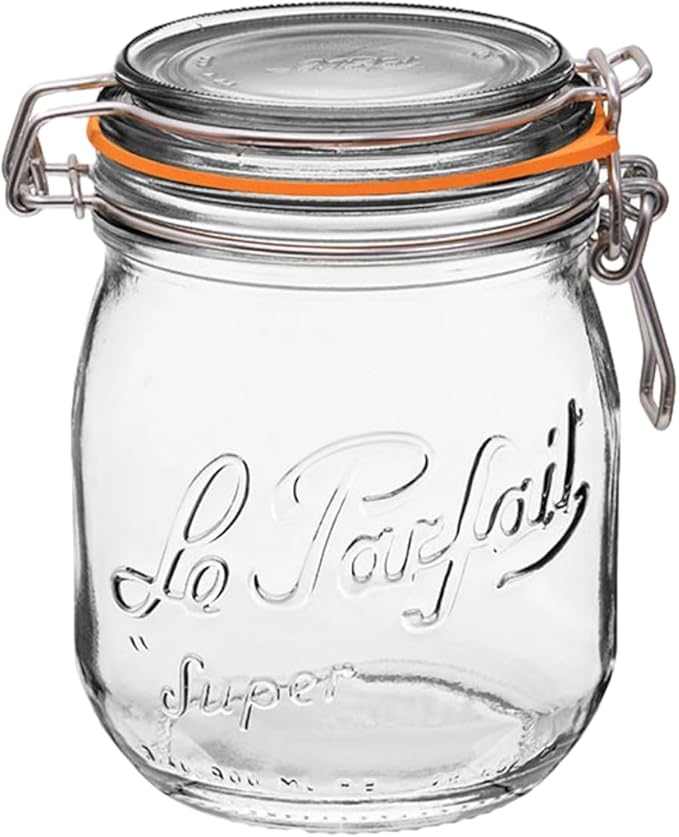
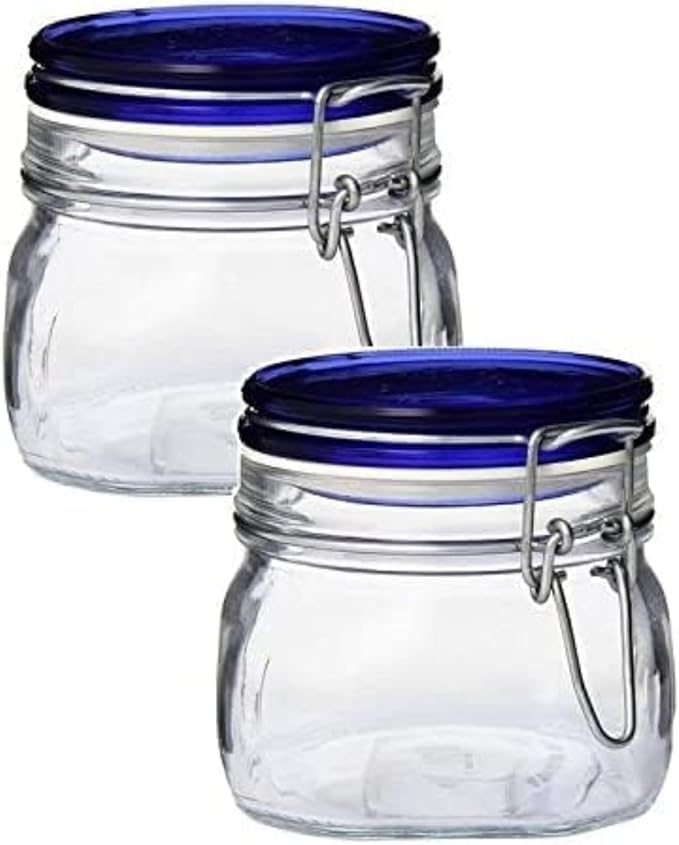
If you want a tidier display on open shelves, a clamp-and-gasket jar (Le Parfait or Bormioli Rocco Fido) looks better, opens faster one-handed, and takes a replacement gasket when the old one tires. The trade-off is price per ounce and a fixed shape that doesn't stack as cleanly. Mix both styles: wide-mouth Ball for bulk staples behind the doors, clamp jars on the visible shelf.
Jump to the specific Ball, Kerr, Le Parfait, and Bormioli sets we'd buy for a working pantry. See picks ↓
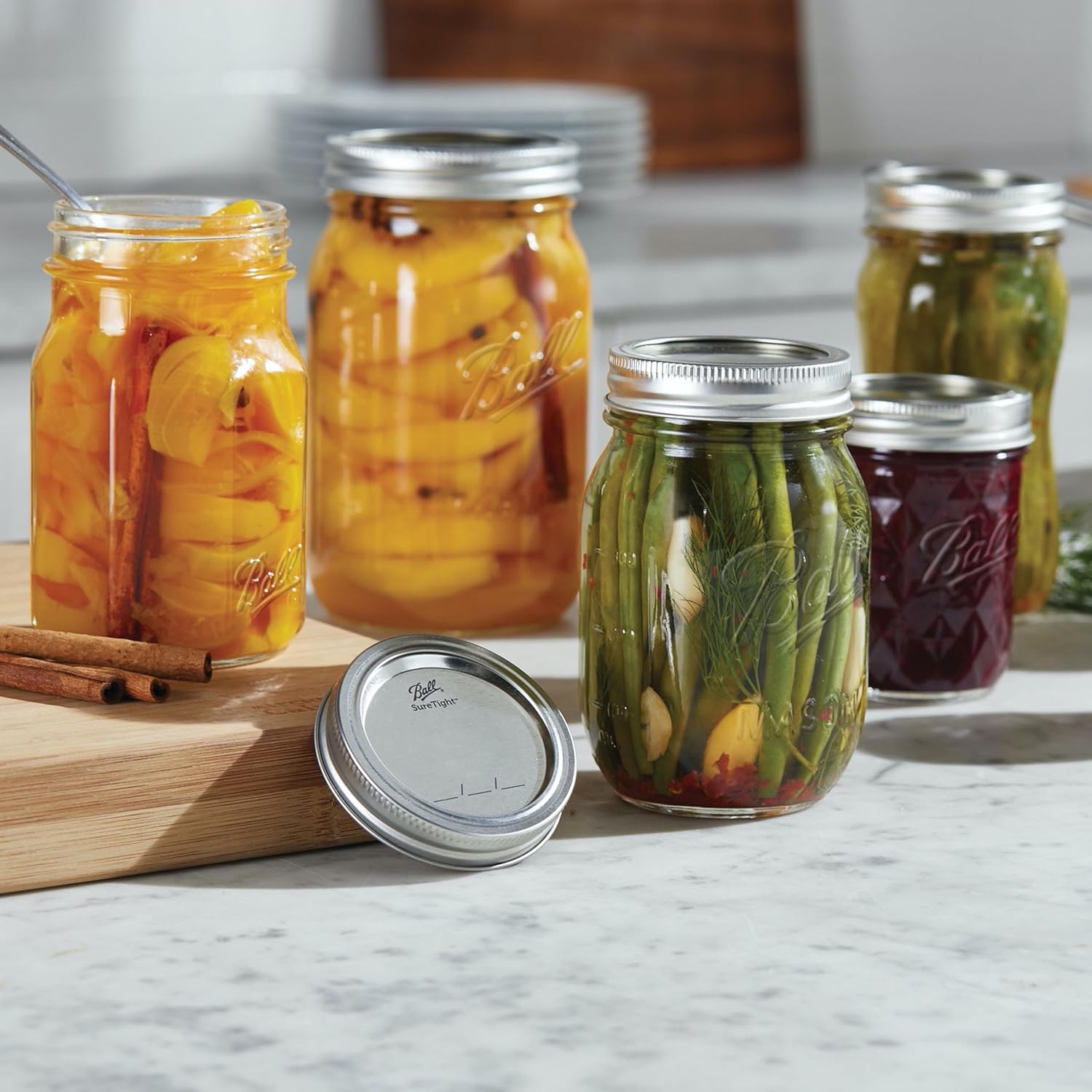
Mason jars get oversold for almost everything except the one job they were made for: storing dry goods in a pantry. The glass is non-reactive, the two-piece lid forms a real seal, and the shape was built for canning shelves, so cases stack predictably.
The catch is that mason-style jars aren't all built the same. Threading varies, wide-mouth versus regular-mouth changes how easily a measuring cup fits, and the European clamp-and-gasket jars (Le Parfait, Bormioli Rocco Fido) solve a different problem than the classic Ball-and-Kerr threaded lid. This guide splits the categories and names a specific pick for each pantry job.
Wide-mouth quart is the default pantry size
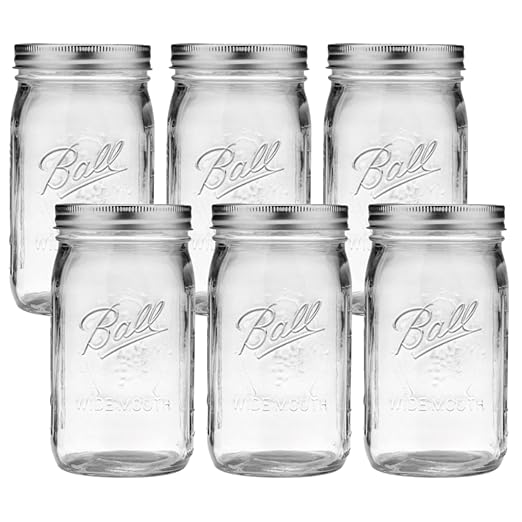
A 32-ounce wide-mouth Ball jar holds about 4 cups of flour, 4 cups of sugar, or 3 cups of rice. That maps cleanly onto how most recipes are written, so decanting a 5 lb bag of flour into two quart jars finishes the bag and leaves no half-full sack flopping around the shelf.
Wide-mouth matters more than people expect. A standard 1-cup dry measure drops inside the wide-mouth opening without scraping the rim. Regular-mouth jars mean a funnel for nearly every refill. Save regular-mouth for what you pour instead of scoop: oils, vinegars, spice blends.
The two-piece lid is the point
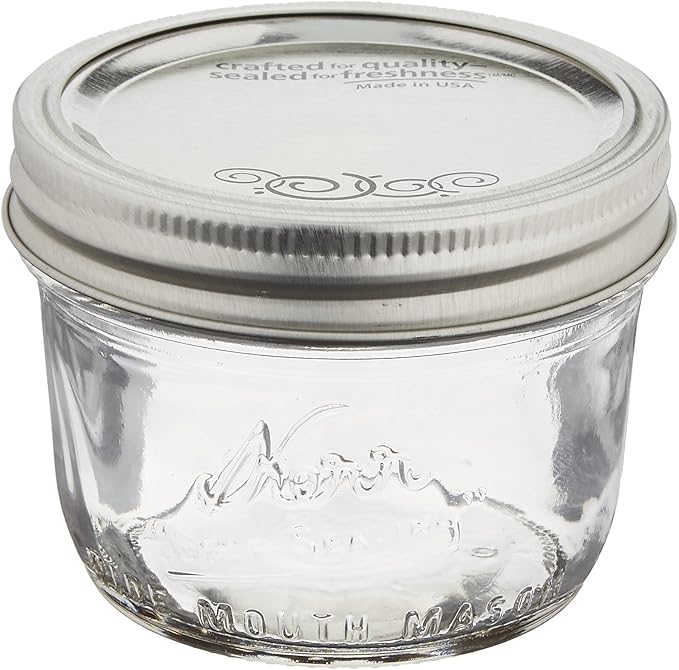
The flat disc plus screw band that ships with Ball and Kerr jars is why the seal holds. The disc carries a thin rubber gasket molded onto the underside, and as long as you wipe the rim clean before sealing, the lid sits flush and the jar stays air-tight enough for dry pantry storage.
The complaint is that the disc rusts if the jar goes through the dishwasher or sits damp. For non-canning pantry use, swap the two-piece lid for a one-piece plastic storage lid (Ball sells them in 8-packs). They run $4-7 a pack and last indefinitely. Keep the two-piece lid for canning.
Pints and half-pints for things that move slowly
Spices, baking powder, vanilla beans, dried mushrooms, sprinkles, and anything else measured in teaspoons belong in pint or half-pint jars. A wall of matching half-pints reads as organized. The same volume in mismatched bags reads as a mess.
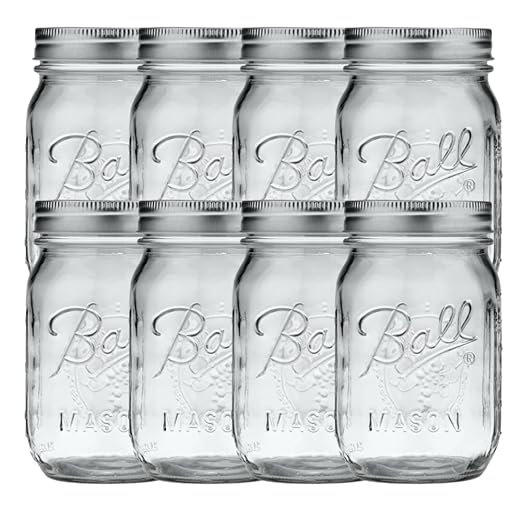
Kerr and Ball half-pints are interchangeable now that Newell owns both brands, so buy whichever 12-pack is cheaper. Regular-mouth is fine here, since pouring out a teaspoon of cinnamon doesn't need wide-mouth access.
Clamp jars fix the rust and the display
Le Parfait and Bormioli Rocco Fido jars use a glass lid with a rubber gasket and a stainless wire clamp. The glass-on-glass seal can't rust, the clamp opens one-handed (useful when the other hand has flour on it), and they look better on an open shelf than a row of mismatched threaded jars.
Le Parfait is the prettier of the two, with the iconic French silhouette; Bormioli Rocco Fido is chunkier and cheaper. Gaskets on both wear out after a few years, and a replacement set runs about $10. The downsides: rounded shoulders waste shelf space next to a straight-walled mason jar, and the clamp breaks more easily than a screw band.
Anchor Hocking Heritage Hill canisters
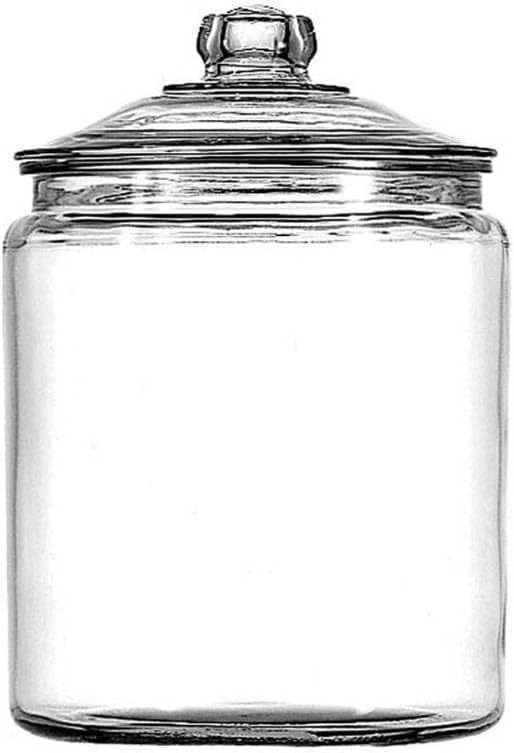
Anchor Hocking's Heritage Hill jars are pressed glass canisters with a sealing lid, sold in graduated sets. They aren't mason jars in the threaded-lid sense, but they earn a place in this guide because the wide opening and stable cylindrical base make them right for the things you scoop with a measuring cup several times a week: sugar, flour, rolled oats.
The lid is glass with a silicone gasket. The seal handles dry goods, though it isn't as positive as a Ball two-piece lid. Treat these as the front-of-counter canisters rather than the back-of-pantry bulk storage.
Glass isn't perfectly inert
The glass itself is non-reactive, but the lid material matters. Standard tin-plated discs can leach trace metals sitting on acidic foods (vinegar, fermented things). For pantry storage of dry goods that's irrelevant. For pickling, fermenting, or oil storage, plan on a plastic storage lid or a Le Parfait glass-and-gasket jar.
Beeswax wraps, silicone stretch lids, and repurposed wine corks are workable stopgaps when a lid goes missing, but none of them seal the way a screw band does. Use them on jars you open daily. Don't use them on grain bins that sit untouched for a year.
Buying logic in two lines
Buy a 12-pack of wide-mouth Ball quart jars and a pack of plastic storage lids, which handles the bulk staples. Add a 4-jar set of Le Parfait or Bormioli Fido for the open-shelf items, and a 12-pack of regular-mouth Kerr or Ball pints for spices and small things. That's the entire pantry, sorted, for under $120.
Recommended
Products related to this guide.
What owners say
Real owner reports from the threads and editorial sources we drew on for this guide.
“What about the silicon lids? I looked and there are stretchy ones specifically for jars.”
— r/ZeroWaste / p3333333333
“Or a beeswax wrap. That's what I use for my grains that I get into fairly frequently.”
— r/ZeroWaste / birdtune
“It's not really zero waste but a rubber band wrapped around plastic or wax paper should seal spices well enough. You could probably repurpose food wrapping waste to do this. Parafilm also works but is highly specialized and most people don't have it unless they work in a lab or do grafting. I have also doubled over aluminum foil and pressed it down over a jar in a pinch - not airtight but sufficient for things like beads or something I'll eat fairly soon.”
— r/ZeroWaste / AnnBlueSix
“How about cork? You can cut to size or use old wine corks if they fit”
— r/ZeroWaste / a_mix_of_all_of_this
“If you get conical ones, they will fit a variety of neck sizes.”
— r/ZeroWaste / cocoamix
“Tapered rubber stoppers might be easy to find too, and would be easy to keep sanitized, depending on what they're filled with”
— r/ZeroWaste / fasoi
“If you can't figure out a lid solution, these make for excellent propagation vessels or bud vases.”
— r/ZeroWaste / comebackasatree
“This is good for general storage but keep in mind that the majority of 3d printer filaments are not food safe”
— r/ZeroWaste / bonyagate
“No spices will absorb any smell given off by the filament and if the print gasses off as it fully cures the spices may absorb that as well.”
— r/ZeroWaste / mad_marbled
“Because it can take years to fully off gas, and by that time the cheap plastic is too brittle to use for air-tight lids.”
— r/ZeroWaste / fear_eile_agam
“What about taking a branch about the width of the jars. Cut 1/2inch sections, and carve them down a little on one end to fit.”
— r/ZeroWaste / amycsj