The Best Knife Sharpeners for Home Cooks on Amazon (2026)
By Sam Hollis · Updated June 2026
Independent editorial guide. We never accept payment for coverage, though we may earn a commission if you purchase through our links.
Quick Take
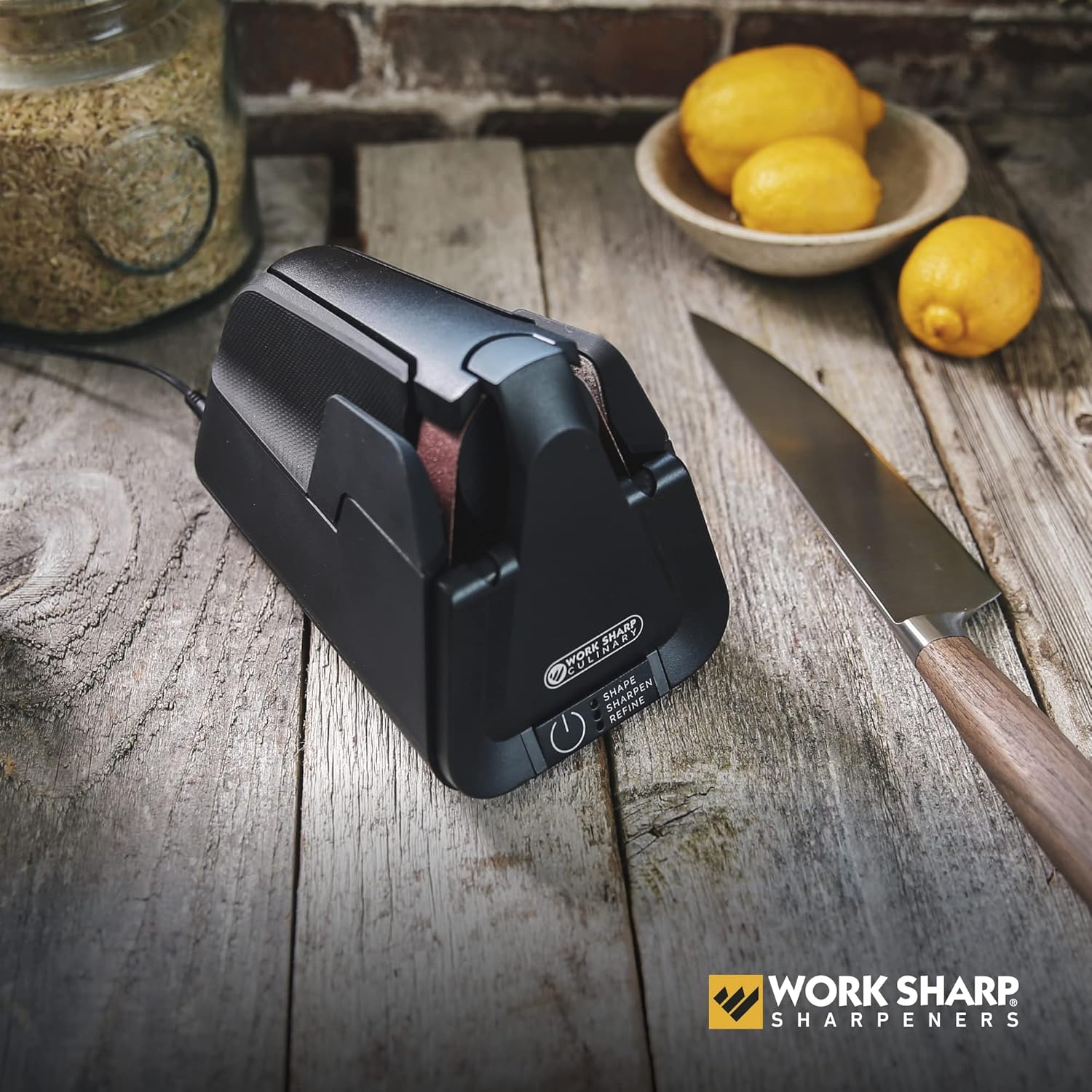
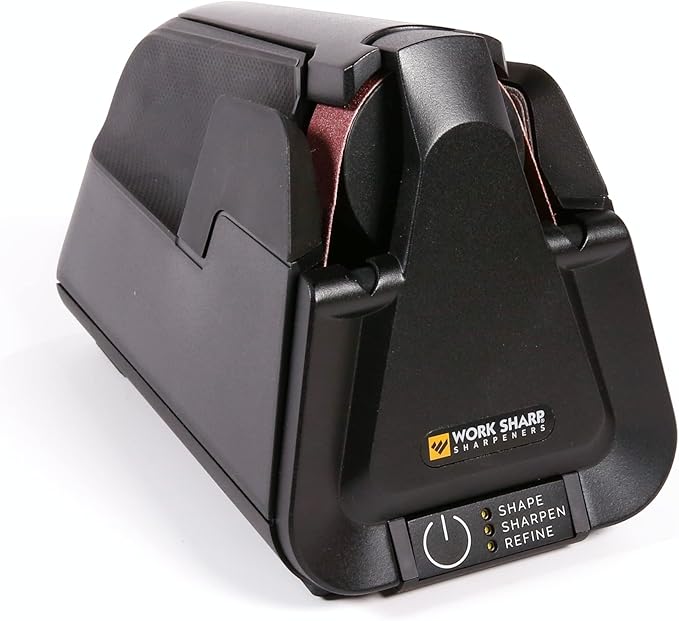
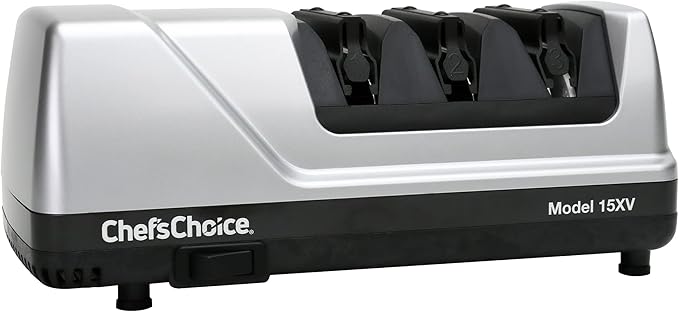
For most home cooks an electric three-stage sharpener is the answer. The Work Sharp Culinary E5 at around $150 handles standard Western 20-degree edges and Asian-style 17-degree edges, takes a dull knife to slicing-an-onion sharp in a few passes, and holds the angle for you, which is where hand-sharpening usually falls apart. If you own Japanese steel and want a finer polished edge, the Chef'sChoice Trizor 15XV at around $166 has been the pick for 15-degree geometry for years.
Owners are clear on one point. A honing rod or steel is not a sharpener. It straightens a folded edge between sharpenings, which is why a steel-only routine eventually stops cutting through onions cleanly. Plan on one or two real sharpenings a year on a chef's knife you use regularly, and hone in between. Budget pull-throughs work, they just eat more steel, so save them for inexpensive workhorses and paring knives. Below are the electric, pull-through, and pocket sharpeners worth buying right now, plus the honing rod to pair with whichever one you pick. See picks ↓
A sharp kitchen knife is the biggest jump in cooking quality most home cooks can buy for under $200, and the cheapest one to keep. Knives don't go bad. Their edges fold over from contact with cutting boards, bones, and the side of the sink, and a good sharpener undoes that damage in minutes. Kitchen sharpeners split into four categories: electric multi-stage units, manual pull-throughs, whetstones, and honing rods. This guide covers the first three, for buyers who want a tool that works without a learning curve, plus a rod for the in-between maintenance every kitchen should be doing.
What your knives need
Most home knives are German-style steel with a 20-degree edge per side, or Japanese-style steel at 15 to 17 degrees per side. That angle is what a sharpener grinds against, so it decides what you can use. An electric with fixed slots for both angles handles a mixed knife block. A 15-degree-only unit will reprofile a 20-degree German blade, which is not what you want.
If you don't know your angles, the rule of thumb holds up. Wusthof, Henckels, Victorinox, and Mercer chef's knives are 20-degree. Shun, Global, Miyabi, and similar Japanese-style knives run 15 to 17 degrees. The manufacturer's specs page settles it.
Electric, pull-through, or stone
Electric three-stage sharpeners are the fastest route from dull to sharp. Diamond-coated wheels grind a fresh edge, then a finer wheel polishes it. They take off more steel than a stone does, so use them in moderation, but a home cook sharpening twice a year will wear out the knives first.
Manual pull-throughs cost less and need no outlet. What you give up is edge quality. A $20 carbide pull-through grinds aggressively and leaves a coarser edge than a $150 electric. On a $30 Victorinox or a beater paring knife, fine. On a $200 Shun, no.
Whetstones give the sharpest edge of the three and remove the least metal per sharpening, and they want practice and a held angle in return. One Reddit cook's version of it: anyone serious about knife performance ends up on stones eventually. There are no specific stones in this guide, because the right stone depends on your knife and your skill level. If you're stone-curious, start with a combination 1000/6000 grit and spend a few hours on YouTube before you touch the good knife.
The honing rod isn't optional
A honing rod, sometimes called a steel, doesn't sharpen. It pushes an edge that has folded over from use back into line. That's why a steel takes a knife from "not cutting an onion cleanly" back to "cutting an onion cleanly" without removing any metal: the edge was still there, just bent.
Skip the rod and you'll be on the sharpener every few months instead of once a year. Skip the sharpener and lean on the rod alone, and one day no amount of honing brings the edge back. Owners on r/Cooking are blunt about it. A steel buys you time between real sharpenings, it doesn't stand in for them.
Holding a consistent angle
The way hand-sharpening goes wrong, on a stone or in an unguided pull-through, is inconsistent angle. Every pass at a slightly different angle rounds the edge off until it stops cutting. That's the strongest argument for an electric with angle-fixed slots, since the machine holds the angle instead of your wrist. Every pick in the electric tier below has guided slots.
How often to sharpen
A chef's knife doing daily vegetable prep wants sharpening once every six to twelve months, with honing about once a week. A paring knife used a few times a week can go a full year between sharpenings. Test it by slicing a tomato without sawing, or by slicing through a sheet of printer paper held vertically. Fail either one and it's time.
The ones to leave alone
Avoid the ultra-cheap $5-10 carbide pull-throughs sold under generic brands. The carbide V is aggressive, takes off more metal than a real sharpener, and leaves a burr that won't survive the first onion. The Sharpal Pocket below is the floor of what's worth buying.
Don't sharpen serrated knives on any of the picks below unless they have a dedicated serrated slot. The Chef'sChoice Trizor 15XV has one; most electrics don't. Run a serrated bread knife through a straight-edge slot and it loses its teeth.
Recommended
Products related to this guide.
What owners say
Real owner reports from the threads and editorial sources we drew on for this guide.
“Get yourself a good boning knife. And a stone to sharpen it. I dont really expect much out of those sharpening steels/rods With a sharp knife and proper technique you can get it to maybe 30 seconds or shorter once you know what you are doing. 2.4 min per is alot of time per thigh.”
— r/Cooking / MrPetomane
“Steels don’t sharpen at all; they hone (straighten the blade). They’re helpful between sharpening—which should be done a lot more frequently than most of us do it.”
— r/Cooking / Burnt_and_Blistered
“I used to be pedantic about this phrasing. But you know, if a steel takes my knife from "not cutting cleanly through an onion" to "cutting cleanly through an onion", then it's fuckin sharper than it was before the steeling.”
— r/Cooking / skahunter831
“Sure, it’s not like a steel does nothing. It’s just that it’s not actually sharpening. FWIW I read somewhere you should use your steel before every knife use. Since most meaningful chopping tasks will fold the edge a bit that keeps you on top of it between sharpening.”
— r/Cooking / Ezl
“That’s 2.4 minutes per thigh. This is a long time. With not a lot of practice you can easily do it in ~30 seconds. Less with a razor sharp knife.”
— r/Cooking / lucerndia
“It’s just practice. Any sharp knife should be fine. Once you’ve done this a few more times you’ll be much faster.”
— r/Cooking / This_is_a_bad_plan
“I use a cheap-ass paring knife I keep in a sheath in my utility drawer when my good Shun paring knife (that gets absolutely abused in my kitchen) is dirty. It's good enough and if you have a cheap-ass sharpener to go with it will work just fine. No need to get expensive if you're just performing a single task. For kitchen workhorses, a more substantial investment is absolutely worth it.”
— r/Cooking / LilOpieCunningham
“Best bang for your buck is absolutely Victorinox. Their boning knife has decent edge retention, good flexibility, and they're only 40 bucks. If you want a lithe nicer Zwiling makes probably the best one on the market before you start paying for exotic materials and slight differences.”
— r/Cooking / McGeets
“X50CrMoV15 is a good kitchen knife steel and this knife doesn't carry a premium price increase like the Victorinox brand.”
— r/Cooking / BCR12
Frequently asked questions
What are the best knife sharpeners for home cooks?
Work Sharp Culinary E5 Electric Kitchen Knife Sharpener. The best all-around electric sharpener for a mixed knife block.
What are the best budget knife sharpeners for home cooks?
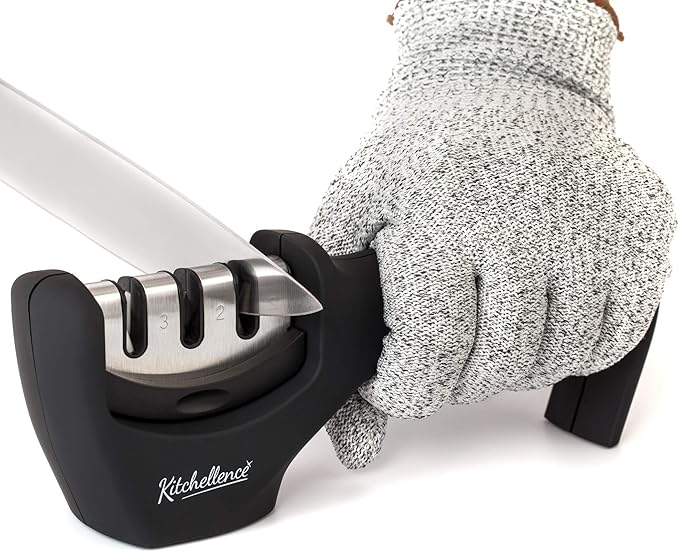
4-in-1 Kitchen Knife Accessories: 3-Stage Knife Sharpener Helps Repair. Brand-name budget pick recommended by editorial review.
What are the best premium knife sharpeners for home cooks?
Chef'sChoice Trizor 15XV EdgeSelect Professional Electric Knife Sharpener. The long-running pick for Japanese-style 15-degree edges.