The Best Gooseneck Kettles for Pour-Over Coffee on Amazon (2026)
By Maya Chen · Updated July 2026
Independent editorial guide. We never accept payment for coverage, though we may earn a commission if you purchase through our links.
Quick Take
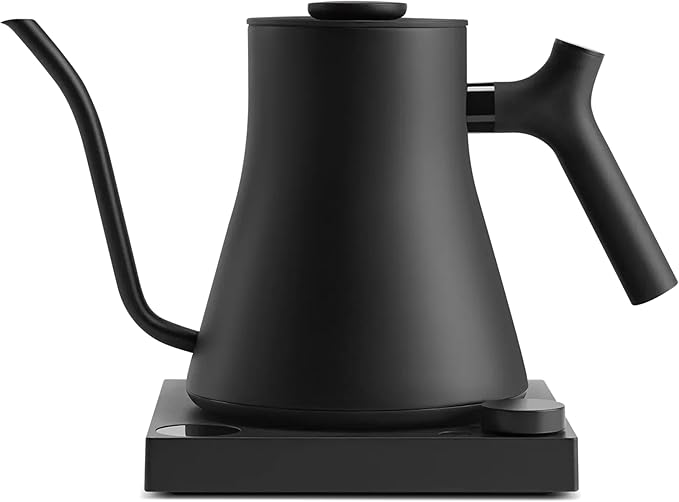
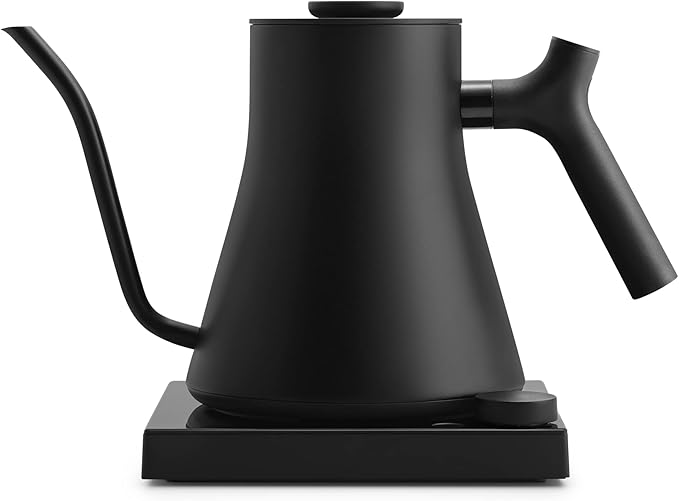
For most pour-over drinkers the Fellow Stagg EKG is the kettle to beat: variable temperature in 1F increments, a hold function that parks water at brew temp for 60 minutes, and a counter-weighted gooseneck spout that pours a pencil-thin stream over the bloom without dumping. It's overpriced if all you need is boiling water for an immersion brewer like an AeroPress or Cafelat Robot, where any cheap kettle works.
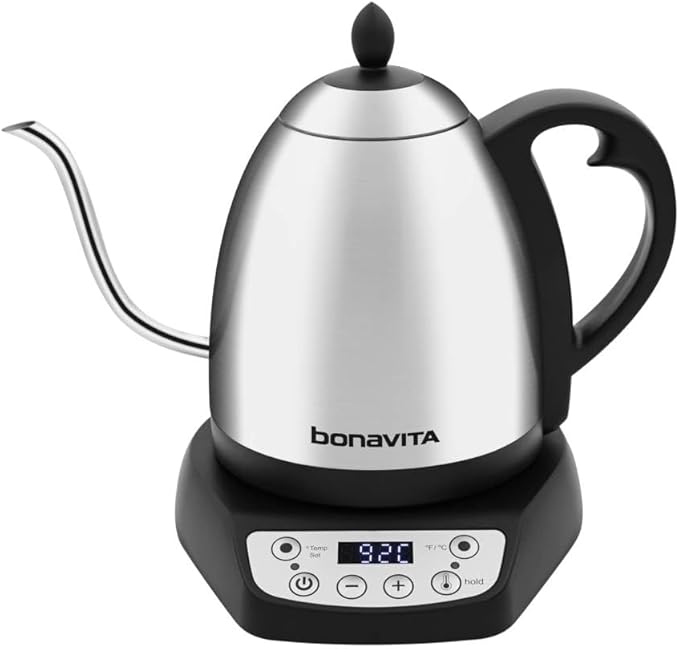
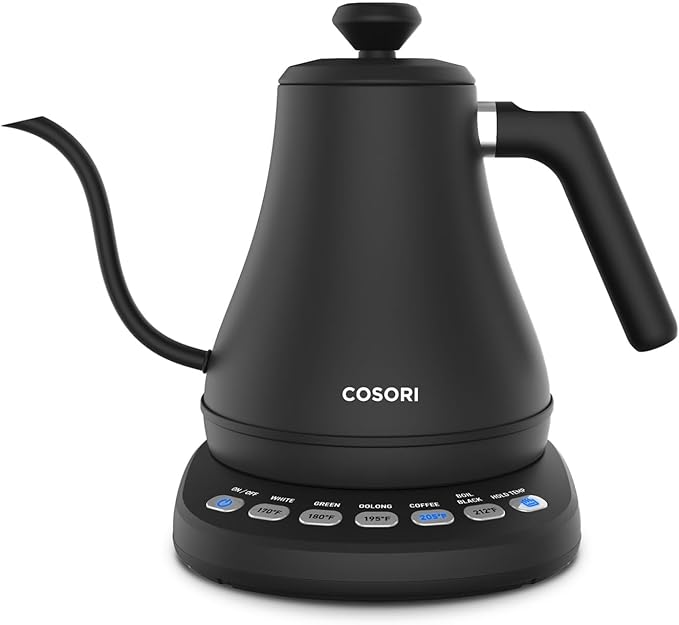
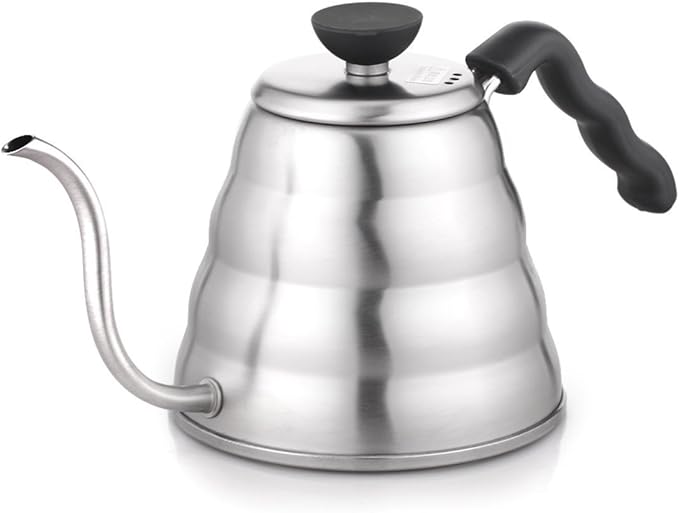
Below that, the picture splits. The Cosori 0.8L variable-temp kettle covers 90 percent of what the Fellow does for a third of the price, the Bonavita 1.0L is the long-running quiet workhorse that pre-dates Fellow, and the Hario Buono is the stovetop gooseneck that BuyItForLife regulars keep recommending because it has nothing electric to fail. Match the kettle to how you brew: if your method needs a specific water temp, get variable; if it doesn't, save the money and put it toward a better grinder.
Jump to the gooseneck kettles that pour clean, hit the temperature they promise, and survive daily use without the spout sagging or the base going dead. See picks ↓
A gooseneck kettle does one job: deliver a narrow, controllable stream of water at a known temperature, so the bed of coffee in a V60 or Kalita Wave gets evenly saturated instead of channeled. That's the whole brief. The rest is execution: how stable the temp hold is, how the spout pours at low flow, how the handle balances when full, and whether the thing falls apart in two years.
Most of the noise in this category comes from two cohorts talking past each other. The pour-over crowd argues over 1F temperature steps and PID stability. The immersion-brewer crowd (AeroPress, French press, Cafelat Robot) points out that you only need boiling water and any $30 kettle does it. Both are right about their own setup. The picks below cover both lanes and flag which is which, so a Robot owner doesn't blow $180 on features they'll never touch.
What a gooseneck does for pour-over
The spout shape exists to slow the flow. A standard kettle dumps water in a wide column that punches through the coffee bed, blowing out channels and leaving dry pockets. A gooseneck lets you draw a stream the width of a pencil, which is what every V60, Kalita, Chemex, and Origami brewer is built around. When a recipe says 'pour in slow concentric circles starting from the center,' it's assuming a gooseneck.
For immersion brewers the spout shape is irrelevant. AeroPress, French press, and lever machines like the Cafelat Robot just need hot water in the chamber. Owners in those communities are blunt about it.
When variable temperature matters
Light roasts (think Nordic-style, Onyx, Sey, Tim Wendelboe) tend to brew best at the upper end, 200-208F. Dark roasts do better lower, 195-200F, so you don't pull out bitter compounds. If both live in the same cupboard, variable temperature pays for itself in cup quality.
If the kettle is feeding a Robot, an AeroPress, or a moka pot, boiling water is the answer and a $30 stovetop kettle does the job. The Fellow's 1F precision is wasted there.
Electric versus stovetop
Electric goosenecks plug into the wall, hold temp on a hot plate, and finish heating in 3-5 minutes. The catch is that the base, the PID board, and the heating element are all failure points. Stovetop goosenecks are close to indestructible: a metal vessel with a spout. They take longer to heat and need a separate thermometer, or a calibrated guess, if precise temperature matters.
For a kitchen-only setup where the stove is right there, stovetop is the BuyItForLife answer. For a coffee station in a bedroom, an office, or anywhere without a burner, electric is the only real option.
Spout geometry and pour control
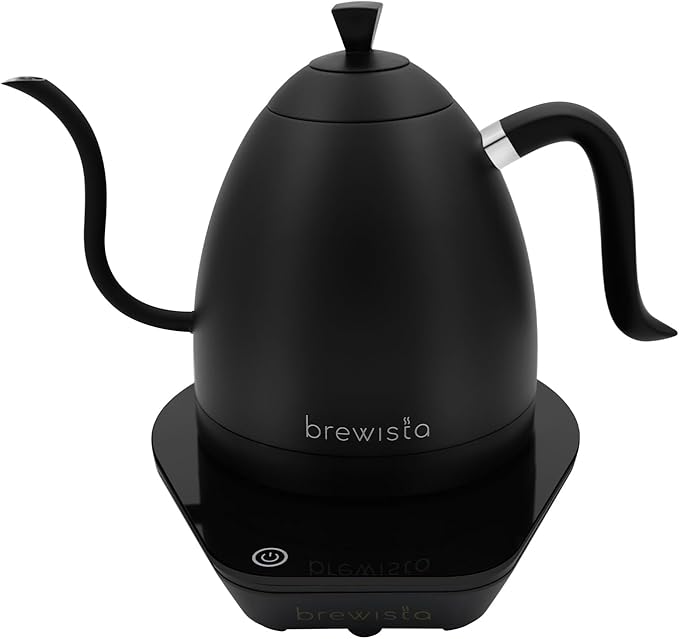
Gooseneck spouts don't all pour the same. The Fellow Stagg's spout is counter-weighted with a heavy handle, so tipping the kettle 5 degrees gives you a fine, predictable stream. The Hario Buono's spout is wider at the tip than the Fellow's, which makes for a slightly fatter pour even at low angles, popular for the rhythmic agitation Hario itself recommends for V60s. The Brewista Smart Pour 2 uses a narrower tip than either.
Cheaper kettles sometimes ship with a rough spout seam, and the stream forks or dribbles at low flow. It's the single most common complaint on budget goosenecks, so check it on first use. An out-of-the-box dribbler should go back.
Capacity and balance
Most pour-over kettles in this guide run 0.6L to 1.0L. A single V60 cup uses about 250g (8.5 oz) of water, so 0.6L covers two drinks before a refill. The Fellow Stagg EKG at 0.9L and the Bonavita at 1.0L fit better for back-to-back brews, or for a household where several people drink coffee.
Balance matters more than capacity. A full 1.0L kettle held at the wrist is around 2.5 pounds. Mount the handle too far forward and the pour gets wobbly toward the end of the cup as your wrist tires. Counter-weighted handles (Fellow, Brewista) beat straight-stick handles (Hario Buono) here.
The Robot / AeroPress shortcut
If you brew with a Cafelat Robot, AeroPress, French press, or moka pot, a gooseneck is optional. Boiling water from any kettle works. Owners in r/espresso say so directly. The money goes further on the grinder, which is the single largest variable in cup quality across every brewing method.
If you want a gooseneck anyway for visual control pouring into a Robot's basket, a budget model (Cosori, Hario) does the job. The premium variable-temp electrics are overkill for that.
Durability and the kettle graveyard
The most common failure mode on electric kettles is the base going dead after 1-3 years. The kettle itself is fine, but the proprietary base stops talking to it and replacement bases for older models are scarce. That's why the BuyItForLife crowd points to stovetop Hario kettles, which have no electronics to fail.
Among the electrics, the Bonavita has the longest track record (it predates Fellow by years), the Fellow has the strongest current support and accessories ecosystem, and the Cosori is the cheapest to replace if it dies. Pick the failure mode you can live with.
Recommended
Products related to this guide.
What owners say
Real owner reports from the threads and editorial sources we drew on for this guide.
“You only need boiling water for the Robot, as you know since you own one, so no need to upgrade there. Why not go for a gooseneck stovetop version? You wouldn't need a plug at all. Alternatively, my Epica does 165, 170, 185, 190, 200, and 212F, and cost about $30. You don't need anything more. Grinder is a whole different issue. I'd basically spend all $500 here if you can, and the DF54 (I have), Niche, and Eureka Mignon espresso are all popular (in addition to the ones you listed).”
— r/espresso / sergeantbiggles
“I’m in the same boat. Buying a Cafelat robot and drink the same. I just don’t see what a really expensive kettle provides. It boils water like all the others. Looking for convincing arguments. I have a separate hario gooseneck that I pour boiling water in to. Might lose a fraction heat but that’s all I can think of”
— r/espresso / keavenen
“Not getting a stovetop as the coffee setup is in my room and the kitchen is on a different floor. Will look into the kettle and grinder options you have mentioned, thanks :)”
— r/espresso / AlchiManche
Frequently asked questions
What are the best gooseneck kettles for pour-over coffee?
Fellow Stagg EKG Electric Pour-Over Kettle. The reference electric gooseneck for pour-over.
What are the best budget gooseneck kettles for pour-over coffee?
Cosori Electric Gooseneck Kettle 0.8L. Covers 90 percent of what the Fellow does for a third of the price: variable temperature, hold function, 0.
What are the best premium gooseneck kettles for pour-over coffee?
Fellow. Brand-name premium pick recommended by editorial review.